
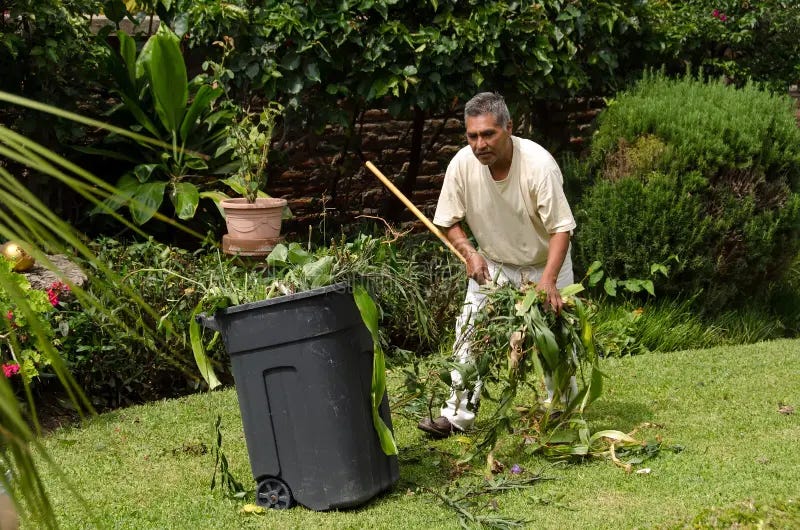
Don Hilario was only 19 years old when he left Michoacán, Mexico.
Up until then, his life had been shaped by the countryside — chickens, corrals, crops, and the smell of wet earth after the rain. He came from a campesino family where work was never optional; it was simply life itself.
As a child, he learned how to plant, care for animals, and survive long days under the sun. But he also learned something else: hard work alone was not always enough to survive.
Little by little, necessity pushed him north.
He did not leave because he wanted to abandon his land. He left because he wanted to help sustain it.
Like millions of Mexicans, he migrated searching for something simple: the possibility of giving his family a better life.
Because the migrant dream was never an individual dream.
It was never just about “making it” alone.
Migrants carry their parents, siblings, children, and entire communities on their backs. People migrate looking for work, but also searching for hope for those they love.
Don Hilario crossed the desert walking for four days and four nights.
His youth pushed him forward through exhaustion, hunger, fear, and uncertainty. He walked through brutal daytime heat and freezing nights. Every step hurt, but returning home empty-handed hurt even more.
Eventually, he arrived in California and settled in Oxnard, where he began working in the fields planting and picking strawberries.
There, he learned quickly — but he also suffered.
The workdays started before sunrise. After hours bent over the soil, his body ached constantly. Pesticides burned his throat. The heat weighed heavily on the workers. But every paycheck meant food, rent, and money sent back home to Michoacán.
Like thousands of farmworkers, Don Hilario helped sustain one of the most powerful agricultural industries in the United States while often remaining invisible himself.
California produces more than a third of the country’s vegetables and over three-quarters of its fruits and nuts, much of it harvested by immigrant labor. More than 70% of farmworkers in the United States are immigrants, the majority from Mexico and Central America.
After several years in the fields, a man from Sinaloa gave him an opportunity in landscaping.
He started by carrying tools, learning plant names, and watching how ordinary yards could be transformed through hard labor. Little by little, he mastered the trade and eventually became independent.
Landscaping changed his life.
Over time, he was able to buy his own equipment, build a client base, and create something more stable for his family. It was never easy. There were days without rest, weeks working seven days straight, and years when his body seemed to exist only for work.
But the sacrifice had meaning.
Along the way, he met his wife. Together they built a family and raised three children — two sons and one daughter.
And that is when the dream became something even greater.
Because for workers like Don Hilario, success was never about luxury or wealth. Success meant making sure his children would not have to endure the same hardships. It meant paying for their education. It meant creating stability. It meant breaking cycles of poverty.
Through decades of hard work, he was also able to help his two younger brothers continue their studies and become professionals.
That is what people often fail to understand about migration.
Behind every landscaper, farmworker, cook, or construction worker, there is an entire network of lives being sustained by that labor. Migrant workers rarely work only for themselves.
They work for the children here.
For the parents back in Mexico.
For siblings trying to stay in school.
For families surviving through remittances.
For the collective dream of survival and dignity.
Today, millions of migrants continue to sustain essential sectors of the U.S. economy. In California, immigrant workers dominate industries such as agriculture, landscaping, construction, cleaning services, and food processing.
More than 2.4 million people work in U.S. agriculture alone. In landscaping and groundskeeping, hundreds of thousands of immigrant workers perform the labor that keeps cities, schools, parks, and neighborhoods functioning every day.
And yet, they often remain invisible.
Don Hilario’s story will probably never appear in history books or political speeches. But it is written in the fields he worked, the home he was able to buy, the education he provided for his children, and the opportunities he helped create for his entire family.
Like him, millions of migrants have spent their lives working with their whole bodies to sustain two countries at the same time.
Because while their hands help build the United States, their labor continues feeding and supporting Mexico as well.
And although it is rarely acknowledged, migrant labor has been one of the greatest forces sustaining working-class families on both sides of the border.
No posts
Comments
Nothing yet. Say the first thing.
Sign in to join the conversation.