
This is Last Week in Collapse, a weekly newsletter compiling some of the most important, timely, soul-crushing, ironic, amazing, or otherwise must-see/can’t-look-away moments in Collapse.
This is the 240th weekly newsletter; it’s available on Reddit here, sans images. Last week’s July 19-25, 2026 edition is available here if you missed it last week. Thank you for subscribing to the Substack!
——————————
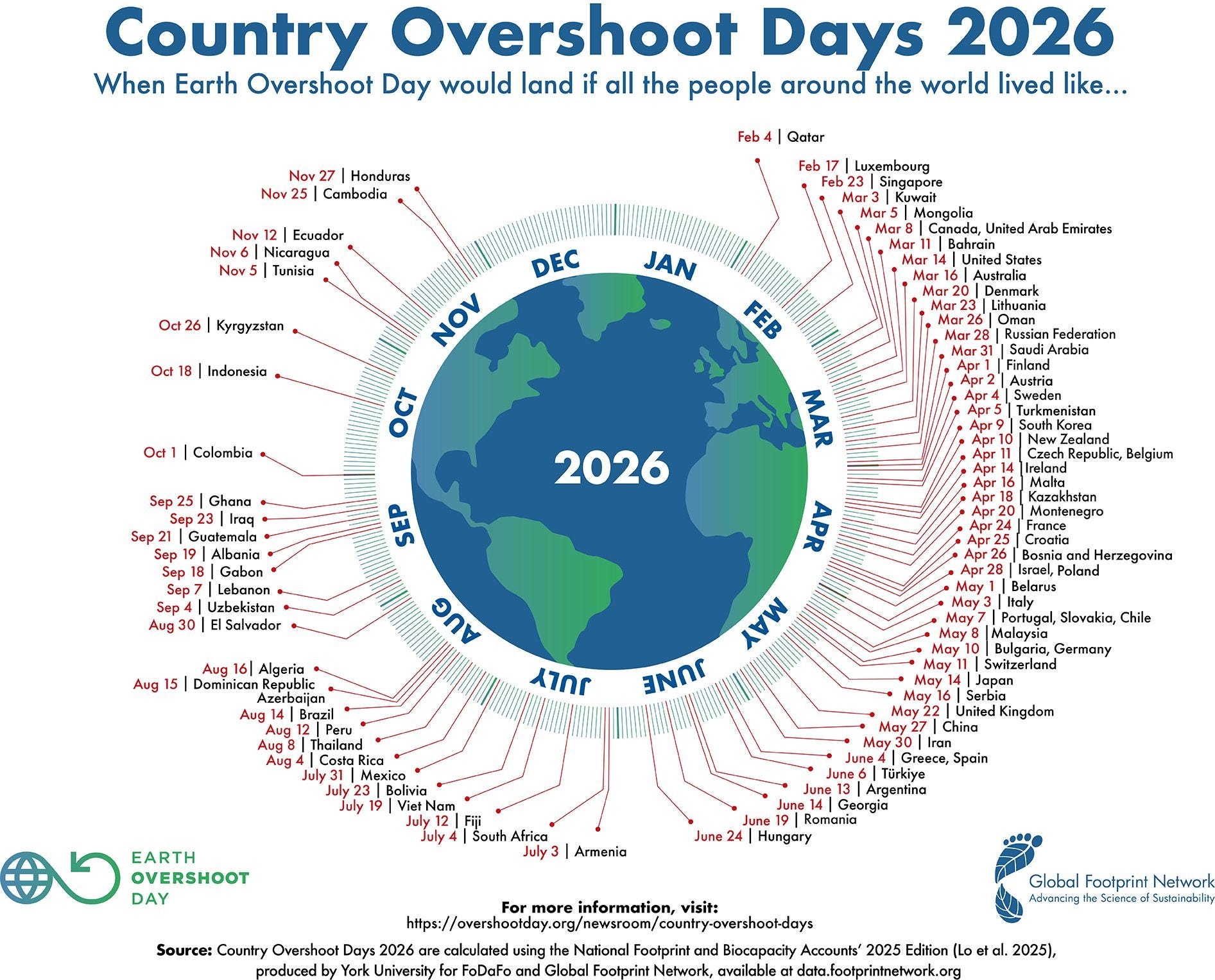
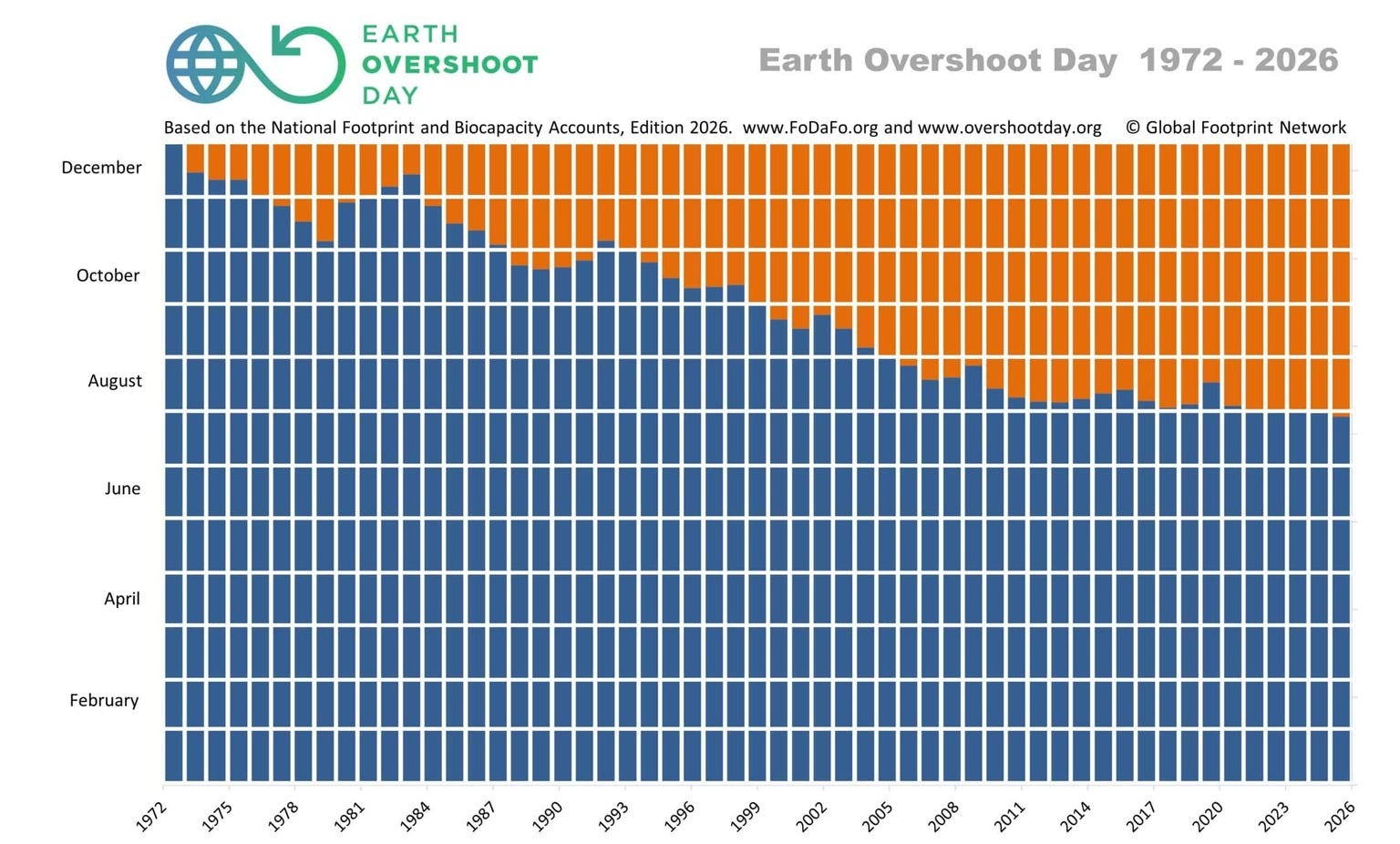
Earth Overshoot Day—when our green planet used up its biocapacity for the year—fell on Thursday, July 30 this year. In other words, we cannot regenerate our resources faster than we use them; it would take 1.73 earths to sustain our species’ growing consumption levels, and over 20 years of “of complete planetary rest and recovery” to reset our “ecological debt.” That’s for the planet; individual countries hit their own Overshoot Day on other days, depending on their consumption levels. Qatar’s is on February 4, so there would need to be 10+ earths to sustain their consumption levels, if scaled to the rest of our species (pop: 8.3B). Canada and the UAE mark their Day on March 8; the U.S.A. on March 14, Russia on March 28; Saudi on March 31; France on April 24; Japan on May 14; the UK on May 22; China on May 27; South Africa on July 4; Mexico on July 31; Colombia on October 1; and Honduras on November 27.
Another calculation judges a country’s “Deficit Day” based on when the country has used up its “domestic biocapacity budget” based on how much land & sea it has, and therefore “biocapacities larger than their own Ecological Footprint do not have deficit days….These countries’ biocapacity exceeds their Ecological Footprint for consumption.” There are 16 such countries, including Canada, Gabon, Russia, and Peru, to name a few. The Overshoot Day for 2025 was July 24, but “The change in date is largely driven by an upward revision of the ocean’s ability to absorb carbon, plus smaller adjustments, which pushed the date eight days later, while real-world deterioration pulled it two days earlier, netting six days later for the Earth Overshoot Day date. In other words, most of the shift reflects updated data rather than an actual reduction in overshoot.” A 53-page report accompanied the occasion, explaining the meaning of overshoot, how calculations were made, and the implications of our species’ unsustainable way of life.
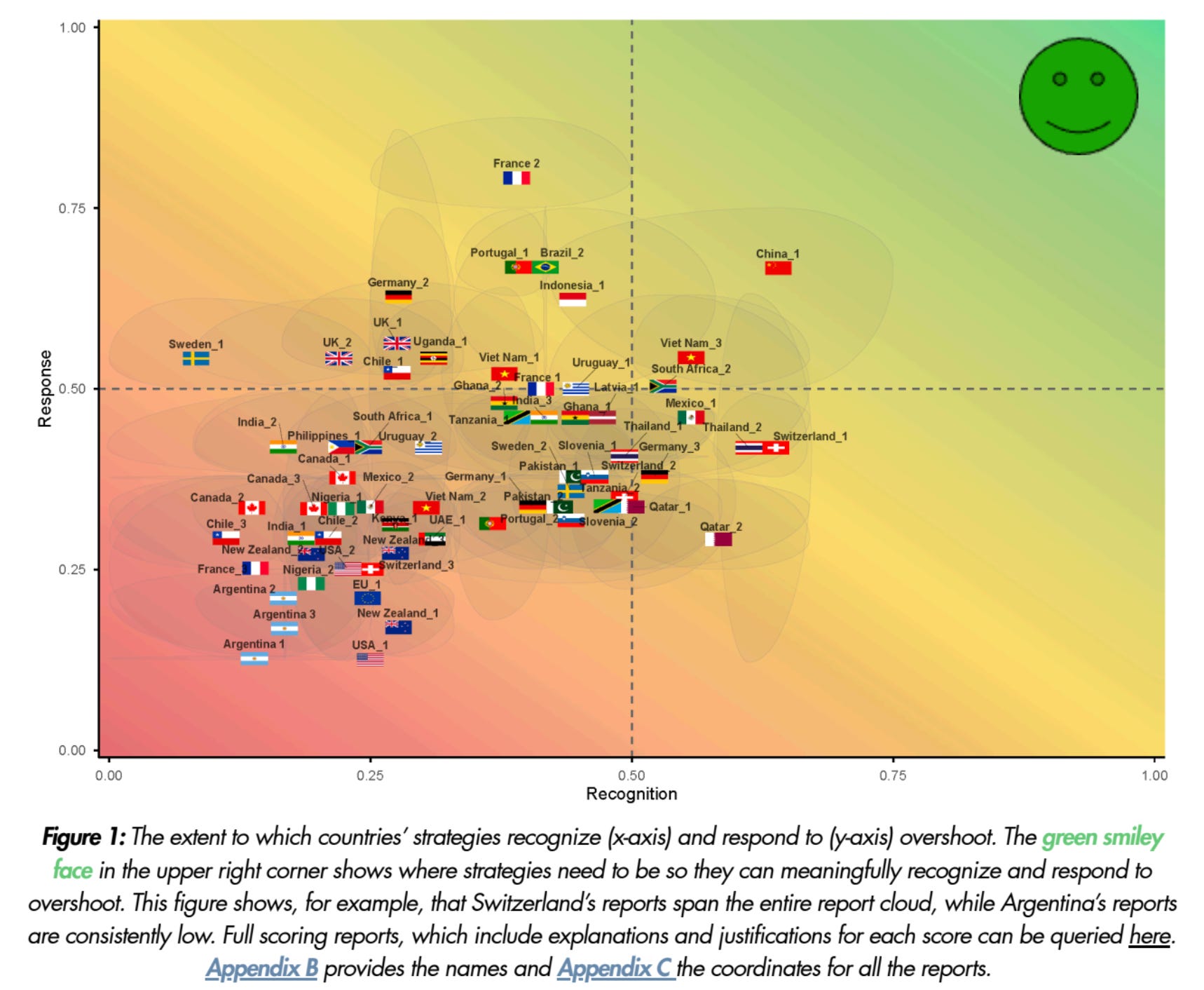
“Humanity is in ecological overshoot: we are taking more from our planet than the planet’s ecosystems can renew….Human demand has been increasing since humanity crossed the one-planet threshold in the early 1970s, contributing to climate disruption, biodiversity loss, and resource depletion….very few governments treat this reality as a central pillar of their planning….resources barely register in how we usually talk about the economy. GDP counts money changing hands, not the physical stock being drawn down to make that possible. This dematerialized way of seeing the world, where growth is just a number going up without any apparent physical consequences, has left us with a blind spot exactly where it matters most….By ‘overshoot and its implications,’ we refer to the predictable and potentially rapid escalation of climate disruptions and resource constraints….Ecological overshoot means demand exceeds what ecosystems can regenerate. This is now a global reality….Overshoot is driven significantly by humanity ’s easy access to fossil fuels. With relatively little effort, economies can tap an enormous, versatile, high-quality energy source, one that in turn accelerates their ability to access non-fossil resources and boost agricultural production….biocapacity becomes the material bottleneck…” -excerpts from the report’s first ten pages
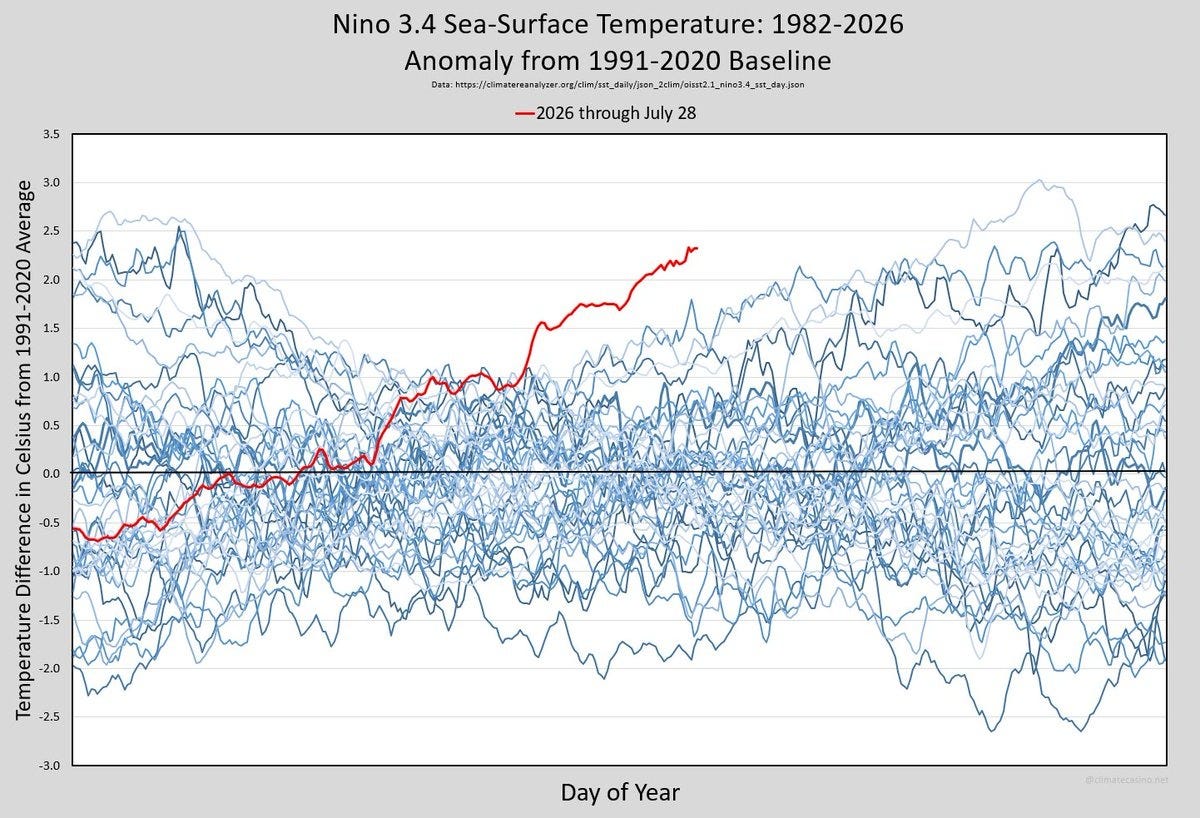
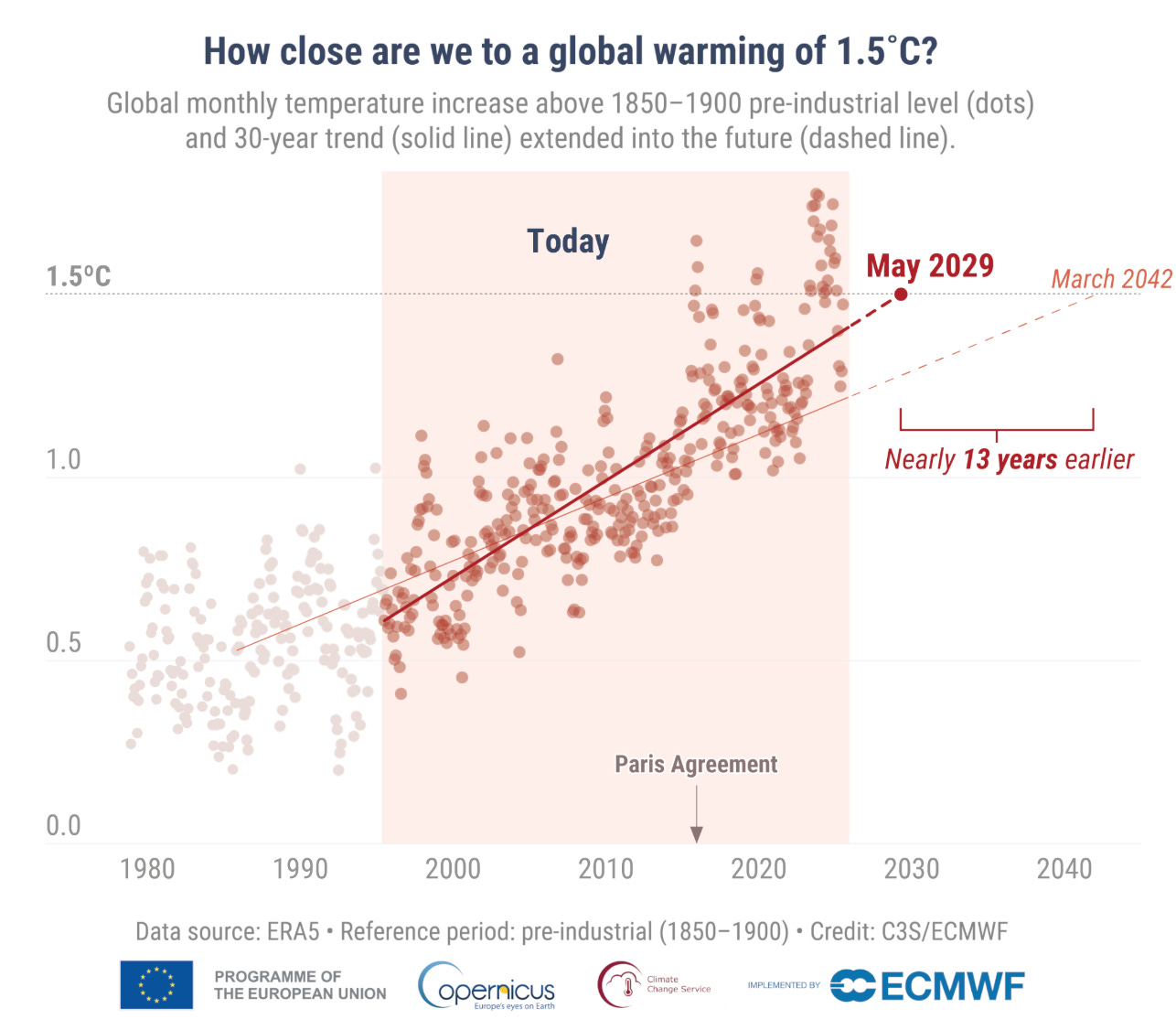
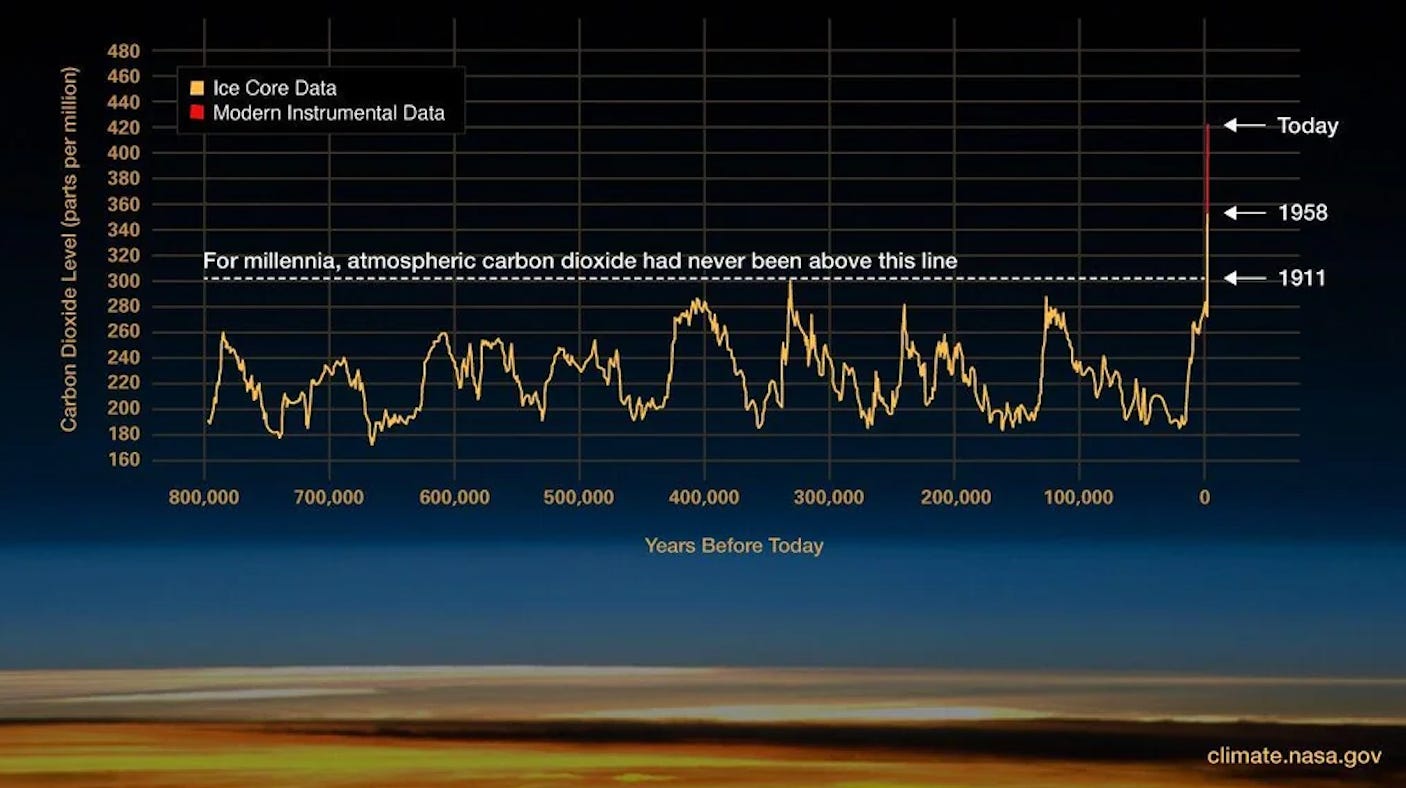
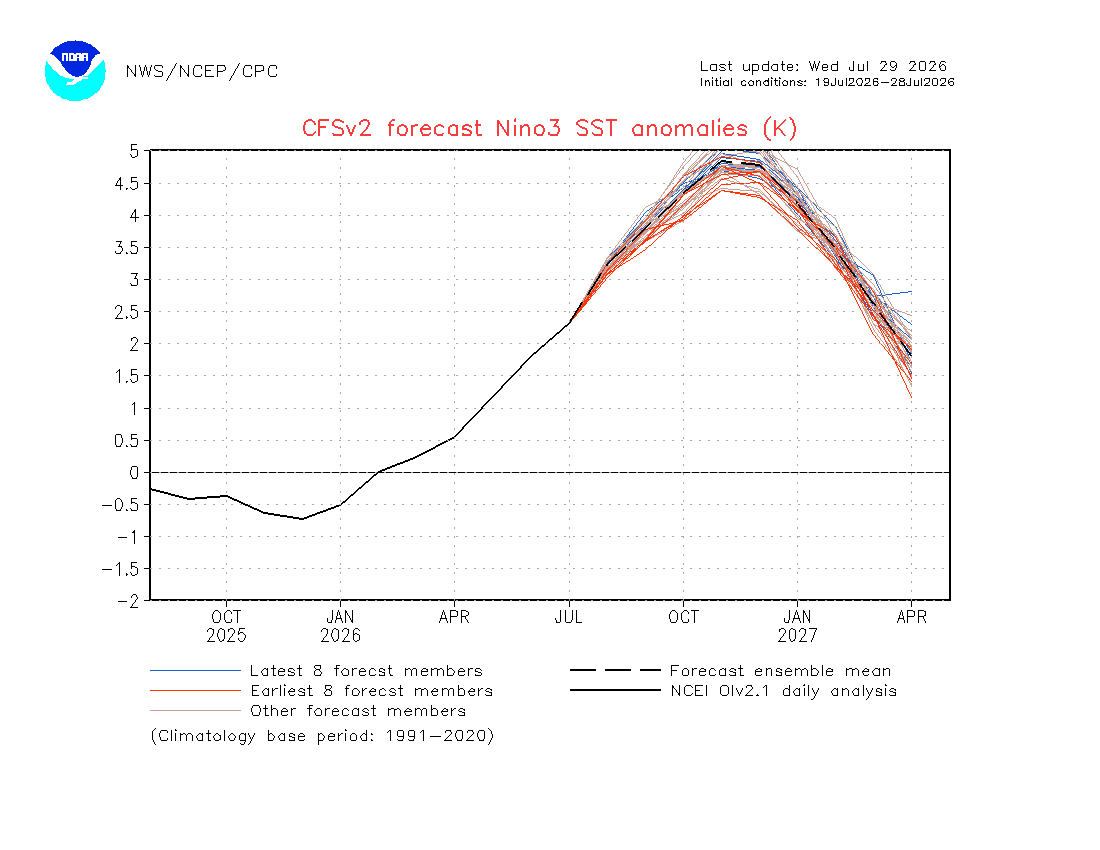
The sea surface temperature anomaly for the equatorial zone El Niño 3.4 again continues setting new records for this time of the year, over 0.8 °C warmer than any other July, with projections that continue rising. Scientists say that there is a real possibility, perhaps 40%, that El Niño will push global temperature averages above 2 °C by early 2027—even as the 2015 Paris Agreement agreed to try to limit warming to 1.5 °C over a 20-year period which has not yet been reached. 11 years later, the expected year where the 1.5 °C average will be hit is in 2029, 13 years earlier than predicted. When the Paris Agreement was made, atmospheric CO2 ppm was at 400 ppm; today it is 432 ppm. And overall temperatures of the top two meters of ocean water are over 1.25 °C warmer than the 1940s.
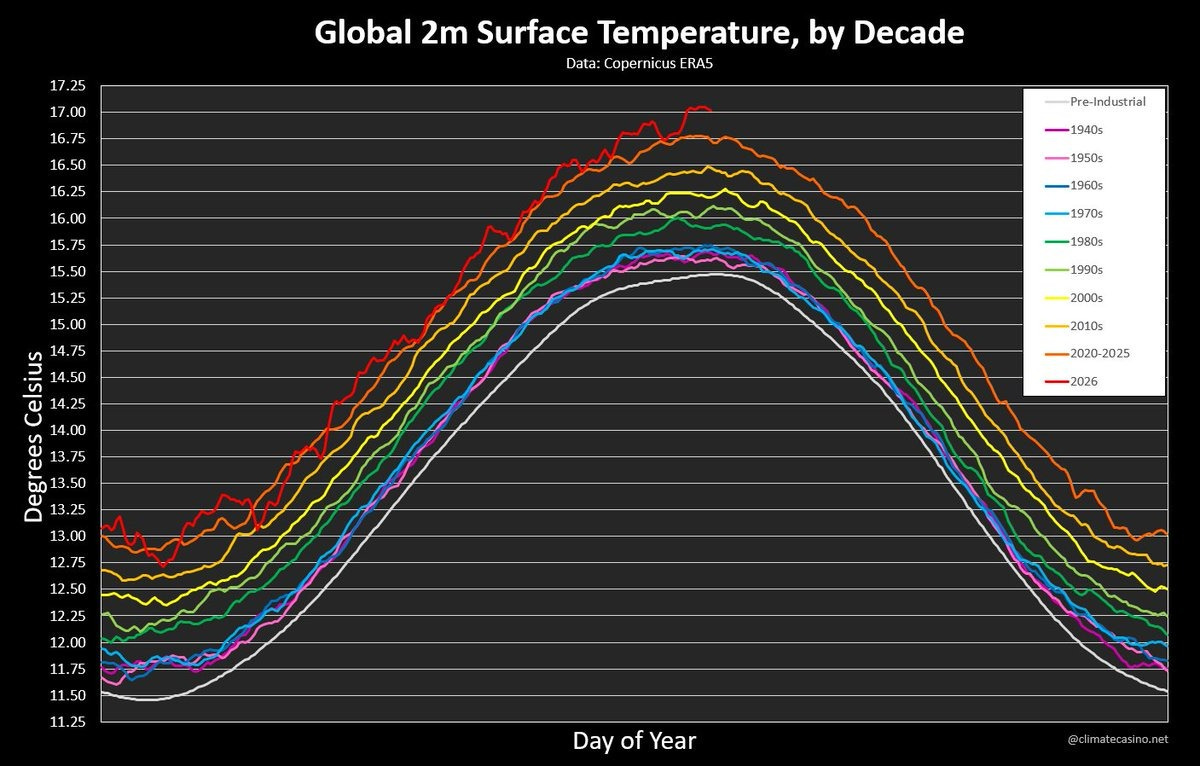
Martinique recorded its hottest July day at 34.6 °C (94 °F). Some Siberian locations felt record warm nights at over 25 °C (77 °F), while places in South Korea felt new daily highs, and Southeast Asia’s minimum temperature records continue. Meanwhile flooding in South Asia killed dozens across Bangladesh, Afghanistan, parts of China, and scores in India. And an avalanche in Pakistan killed 11 climbers.
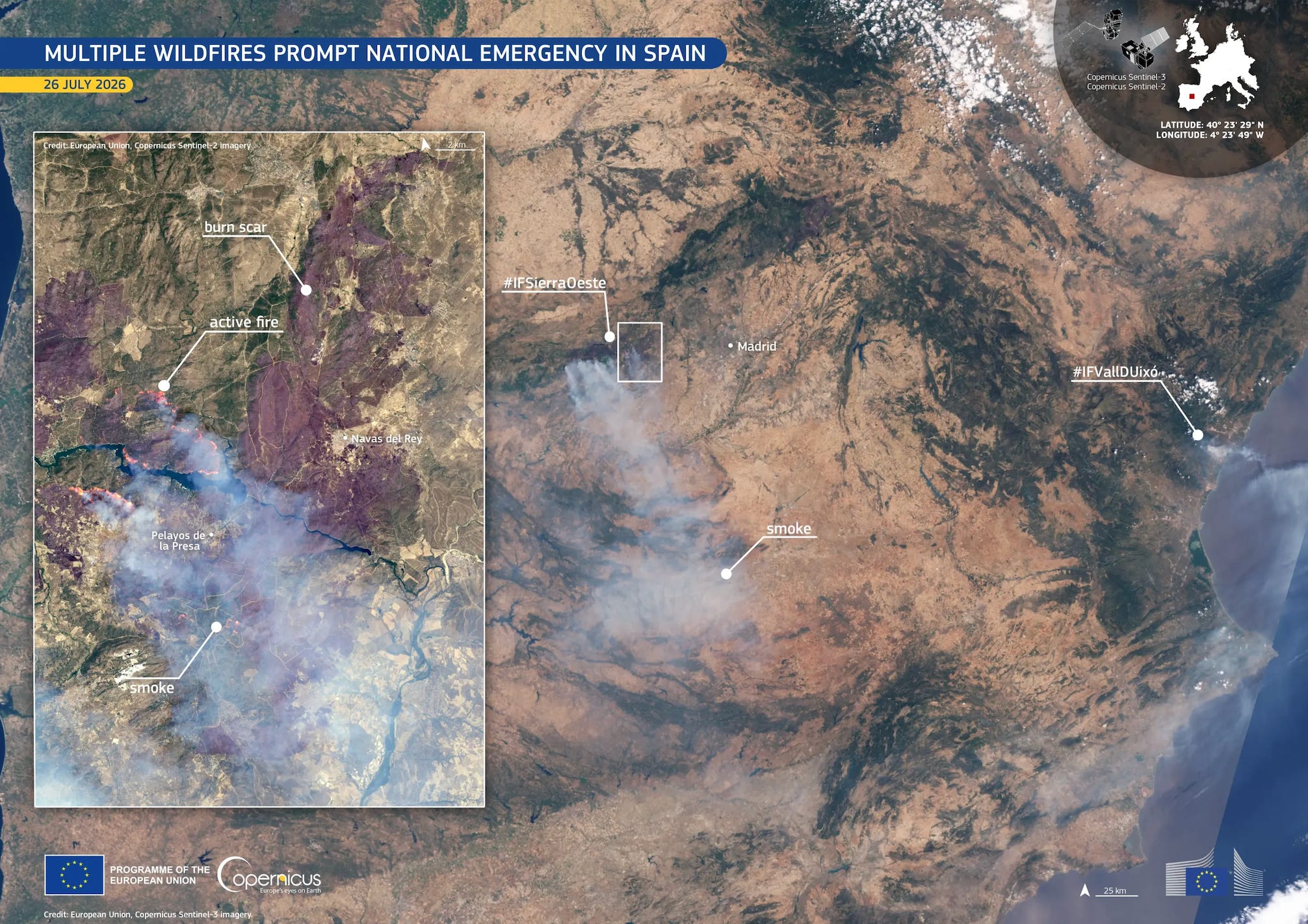
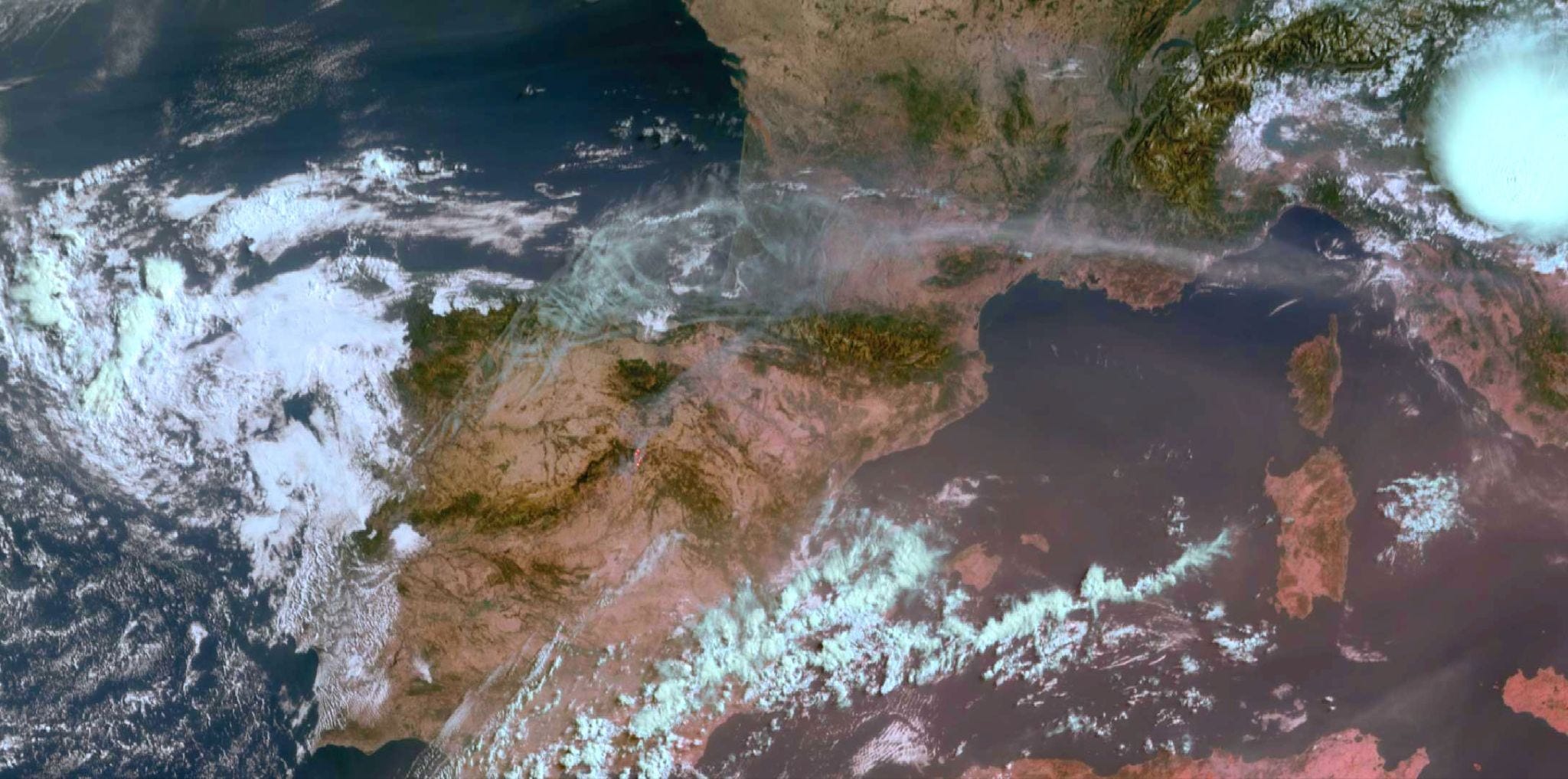
An “Omega Block” is a slow-moving or stationary atmospheric situation where a high-pressure zone (with drier, warmer air) gets trapped between two low-pressure zones, resulting in prolonged weather conditions for the affected area. Meteorologists warn that an Omega Block is coming from record-breaking North Africa to Europe in early August, afflicting a stretch of the continent from Portugal to Poland—and probably bringing record temperatures along with it. The heat dome will probably amplify the wildfires already raging across parts of Spain and France, which have combined forced the evacuation of some 350,000+ people (though some have since returned to their homes). Begun the Pyrocene has. It’s no coincidence that Spain’s 3 worst wildfires in the last 65 years all happened within two years of each other. As research shows from the aftermath of the 2023 Hawai’i wildfires, the psychological impacts of devastating wildfires can last for many years afterwards, in addition to the environmental, economic, and health repercussions.
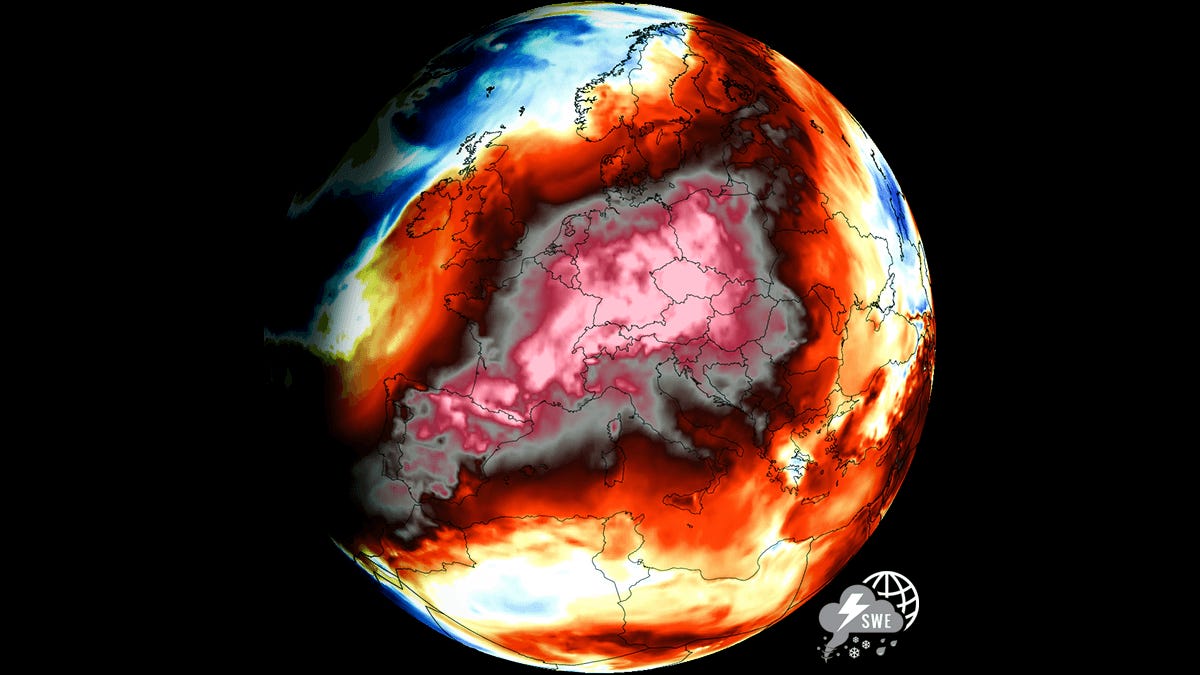
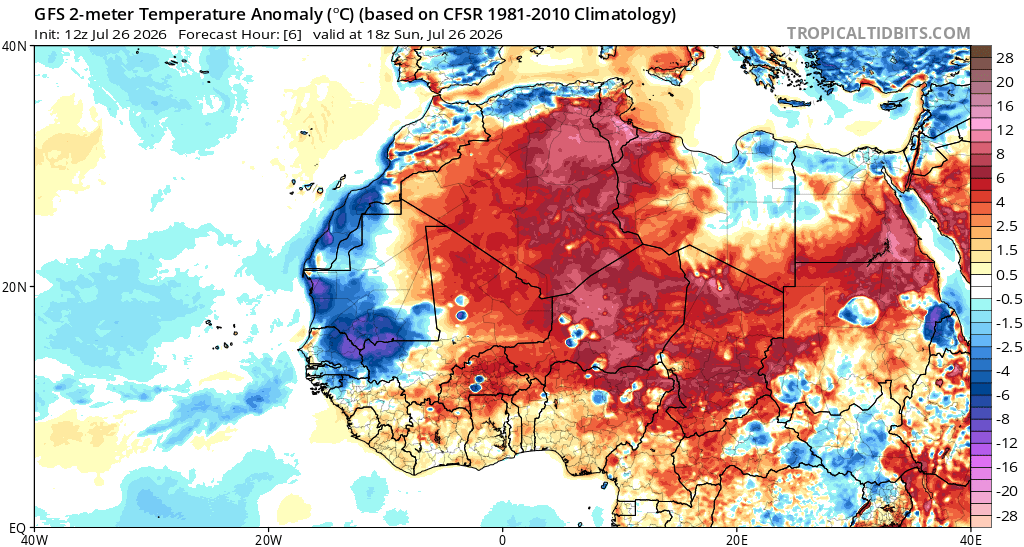
Crete (pop: 650,000) is also struggling with wildfires across the island that have killed three firefighters, and still counting. This visual guide to Europe’s wildfires sheds some light on the record-breaking nature of some of the blazes, plus temperature forecasts, satellite imagery (another here ), and the human toll. And Spokane, Washington is partially evacuating as wildfires near the center of the city (pop: 230,000).
How are people managing the heat waves? Parts of Morocco are seeing temperatures in the mid 40s °C (110s °F), and have begun retreating indoors during the worst of the urban heat islands. Shops shift their hours to the nighttime, so do pedestrians and others. But the schedule change is not really organized from on high, or even by grassroots communities; it is instead an emergent adaptation, mostly unspoken and understood by those who have to live through this new normal. Water resources are declining as well, forcing drip-irrigation and new livestock practices that may soon become untenable. The government meanwhile is trying (late in the game) to scale up water conservation through dams and water infrastructure, plus constructing desalination plants.
The Nile River’s levels continue dropping, with downstream implications for war-torn Khartoum (pop: almost 7M). Here the people have started to dig community wells even deeper, while others cart in water from more distant sources that, for now, remain reliable. Water prices have predictably spiked, and fuel shortages have also impeded the boiling & disinfection of water, leading to increased risk of water-borne illnesses. The Danube River has also fallen to record lows in Budapest (metro pop: 3.3M).
At least 34 people died following an earthquake in Japan on Tuesday. The 6.8 quake hit Kumamoto (metro pop: 720,000), in Japan’s southwest, displacing about 9,000 people as well. Many of the dead came from a mall that Collapsed from the earthquake, which also triggered a gas explosion. Meanwhile, more than half the UK is in official Drought, Mongolia experienced a week of record temperatures with minimums near 30 °C, and another heat dome is coming to the southern U.S. and northern Mexico.
Hurricane Genevieve strengthened to the first Category 5 storm of the year, while Hurricane Fausto weakened and missed Hawai’i. Although Genevieve is expected to miss the West Coast of the U.S., there will still be an increased risk of strong waves and possible flooding.
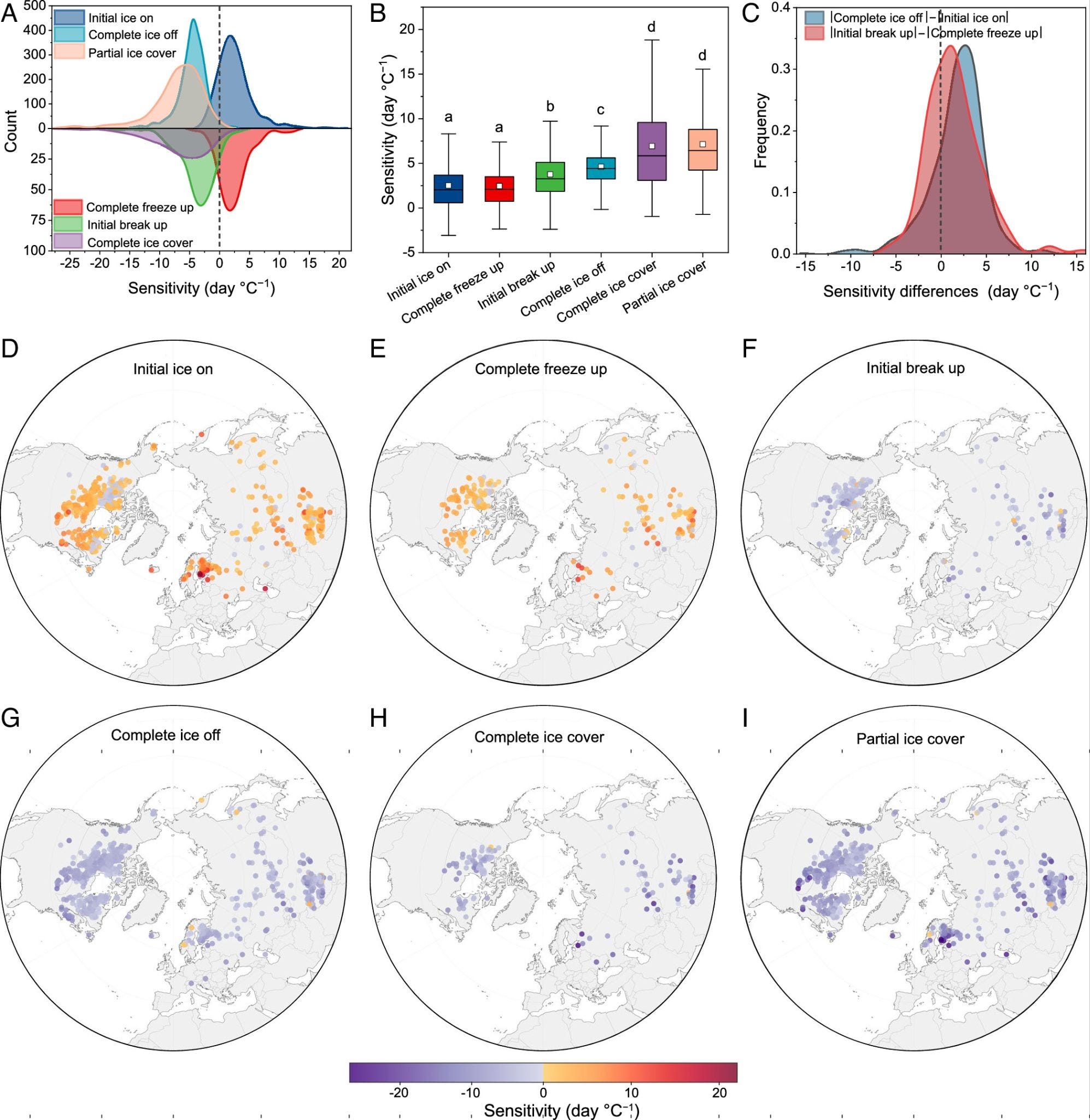
A PNAS study on melting lake ice found that “many mid-latitude lakes are currently transitioning into this state of extreme vulnerability” and that lake ice coverage in the Northern Hemisphere might be 40 days shorter by 2100. They warn that “many temperate and southern boreal lakes are nearing a state of heightened vulnerability where marginal warming will trigger abrupt and potentially irreversible ecological shifts.”
——————————
Have we entered an age of “decadence without pleasure?” This well-written piece from The Guardian theorizes that our age of hyper-consumption, endless distractions, and spectacle have left us profoundly numb, unfulfilled, and spiritually impoverished. Not to mention rising inequality, psychological fallout from social media, and the ongoing displacement by AI. Did this sense of disconnect accompany the fall of ancient empires?
One popular author and Substacker affirms that civilization as it is must break down under the tremendous weight of its unmanageable complexity. This friction has been a long-time coming, and what comes next, she says, could be “terrifying” but also historically a moment of “incredible human flourishing.” She says that Collapse is already underway in places like Sudan and Gaza. “Anyone who tries to tell you when and how collapse is going to happen, I wouldn’t believe them….what’s collapsing is the post-industrial, colonialist, extractivist, growth-based system. If we tether ourselves to that system, we will go down with it….The way it’s going, the ultra-rich and the tech bros are going to take everything anyway. The market is going to collapse, the millionaire set will suddenly be without assets, and that’s when revolution happens.”
Another article published last week addresses “eco-anxiety,” particularly among young people, and how to manage “doomism” and still live a fulfilling life. She says there are two parts to this feeling: 1) the biosphere is being degraded by Drought, heat, topsoil erosion, resource extraction, etc., and, more importantly, 2) nobody really seems to be doing anything about it and the people in charge are derelict in their duty. The anxiety can be nearly immobilizing among some readers, who feel helpless and burnt out—and whose “climate anxiety” is not recognized as a medical diagnosis. One professional suggests building up emotional resilience through bite-sized engagement with difficult topics.
Starvation in Uganda led to the deaths of at least 19 people over the previous weekend, following months of Drought in one region. Cuba is loosening its import rules away from its strict government-managed model in a desperate attempt to boost its ailing economy and resource shortages.
Antalya (pop: 1.4M) is beginning preparations for COP31, the annual climate conference that will assemble tens of thousands of people in November to discuss and dismiss solutions to global climate change and its consequences. Bird flu has been detected in several Australian states, confirming local spread of the illness that first arrived on the island in June 2026.
A study in Sustainable Development suggests that there would be great benefits in reducing the planet’s population in half, to about 4B—gradually, by the year 2200. The study explains the relationship between a growing population and wildlife numbers, CO2 emissions, energy consumption, freshwater extraction, mineral use, plastics production, pesticide use…and what sustainable levels of those factors would be. The writers believe that “Gently ending and reversing population growth and moderating per capita impacts is a pro-nature and pro-human strategy.”
Comments
Nothing yet. Say the first thing.
Sign in to join the conversation.