
It’s time for a little break in the routine here to explore how we learn empathy and integrity from the stories we engage in. I have certainly talked at length about Mister Rogers, the epitome of children’s media, but outside of targeted children’s media, we don’t usually think about how the stories we consume might be shaping us. Make no mistake, though, because stories shape us all the time.
While we can all surely quickly come up with any number of blockbuster movies that do have some morality to them, like the “good guys” winning or the big problem being conquered somehow, it probably takes everyone just a little bit longer to think of popular stories that have deeper and more complicated themes or highlight not just goodness but how to be good. These kinds of stories aren’t especially rare, but they can be a little more uncommon and a little harder to find that are both done well and appealing to a wide audience.
Spoiler warning: Major and minor spoilers for My Dress-Up Darling in manga and anime form!

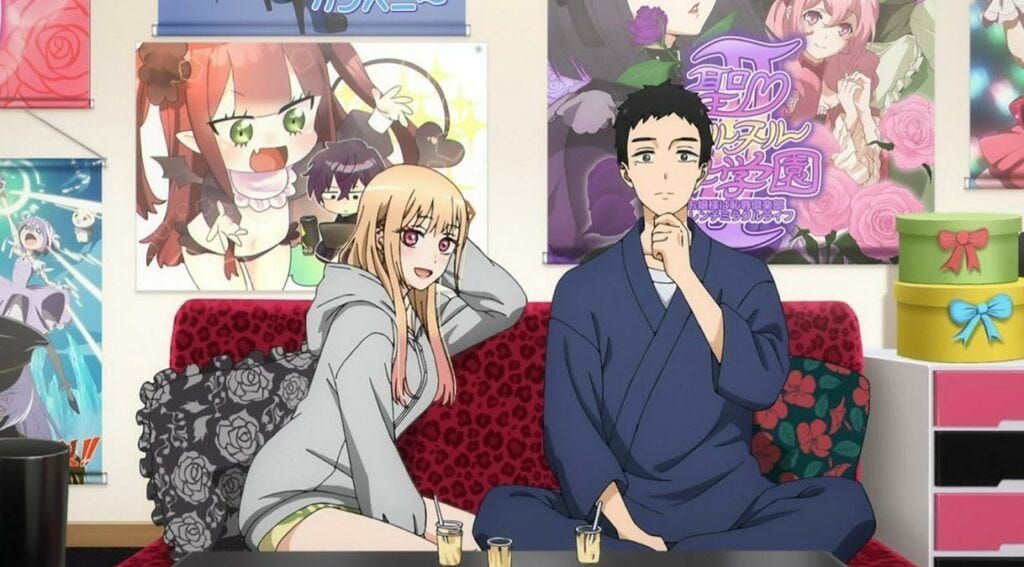
My Dress-Up Darling (Sono Bisuku Dōru wa Koi o Suru) is a completed manga that ran from January 19, 2018 to March 21, 2025 that follows Wakana Gojo and Marin Kitagawa, two high school students who come together when Marin coincidentally finds Wakana using the sewing machines at school and asks him to help her make her cosplay outfit. Gojo is the grandson of a hina doll maker and wishes to follow in his grandfather’s footsteps, believing fervently that his gender makes him weird and creepy for loving hina dolls so that he never manages to make friends at school. Kitagawa is the cool girl in the class, both beautiful and an actual working model, but she is kind to others and relentless in her dislike of and defense against judgement or bullying. The manga was turned into an anime with two seasons. The anime didn’t cover to the end of the manga, but there are no current plans for a season three or a movie to complete the story.
There are several themes to this story, including a teenage romance, mastering creative skills related to cosplaying, and making friends. Gojo and Kitagawa serve different purposes for different audiences, but are both appealing to their wide audience. Gojo is extremely shy and anxious, yet he is not just a stand-in for straight male audiences as he is a shining example of a character made for the female gaze. Gojo is quite obviously enamored with Kitagawa from the first moment we see her on screen, but he is highly respectful nearly to a fault throughout the entire story. Kitagawa is into mature cosplays and is unashamed to show off some skin, so she definitely serves the purpose of fan service, but this story isn’t constantly focused on Kitagawa’s curves and in spite of its mature moments in theme (Kitagawa’s first cosplay is a character in an erotic video game), it’s incredibly wholesome.

Gojo’s social trauma as a child is that the little neighbor girl, Non-chan, who was trying to be friends with him after the death of his parents was upset by Gojo’s disinterest in her in favor of being so impressed with and interested in hina dolls. The girl tells him that dolls are for girls and that she hates him. We learn later in the manga (and not yet in the anime, if it does have a completion at some point in the future) that this girl was frustrated that Gojo was so engrossed in hina dolls after being so sad about the loss of his parents and, being a little girl, lashed out in a way that Gojo, who was also a young child, never understood until they met again years later and the girl explained. But Gojo is unaware that anyone might accept him for who he is, a young man who loves and wants to make hina dolls. He fears his classmates having any idea that he is interested in dolls and fervently believes that no one will like or understand him, until one day when the sewing machine at home breaks and he goes to the sewing room at school believing that no one will see him there only to be discovered by Kitagawa. Kitagawa, as it turns out, is there to use the sewing machines, even though she is very clueless. This is how they team up to make Kitagawa’s cosplay, but before this, Kitagawa bumps her head against his desk, gets up, and is concerned for Gojo. Gojo is shocked that Kitagawa knows his name and talks to him kindly. Then he overhears her friends describing Kitagawa being hit on by a guy who tries to pick her up by putting down the anime character on her bag. She says fervently that “making fun of the things people like is not hot” and Gojo’s mind is blown at how Kitagawa is “accepted for who she is” in spite of how they both have such different lives (he describes this as how they “live in two different worlds”).
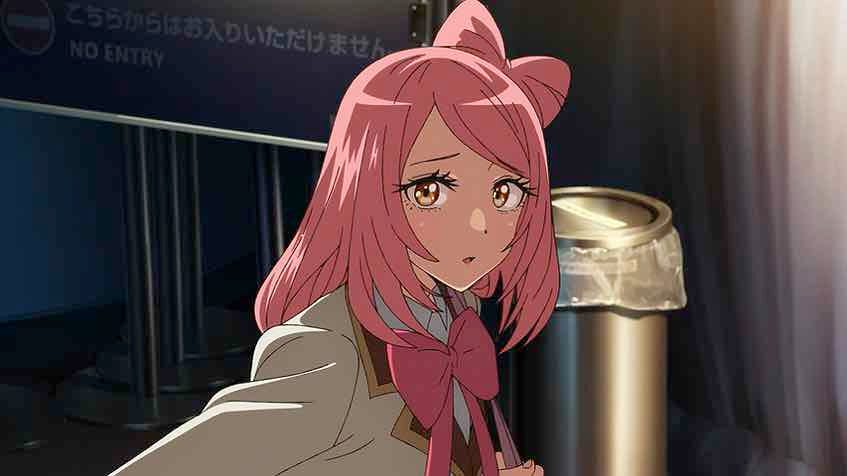
As Kitagawa and Gojo spend more time together, with Kitagawa working her extroverted magic to pull Gojo out of his shell somewhat, Kitagawa begins making the point that accepting everyone for who they are is top priority. Gojo begins to see that he can be accepted as he is and his own ability to see others as they are shines, too. As the pair meet other people who like to cosplay, both characters demonstrate acceptance and interest in seeing others, and they are met with characters who do this as well. Each time they meet someone new who exposes them to some new idea about cosplay or some new beautiful thing to check out (like Gojo’s first time at the beach or his first time seeing fireworks), Gojo practices empathy and compassion more and more and Kitagawa is often more and more moved by the stories of the new friends they meet. When Gojo and Kitagawa meet Himeno Amane, a young man who cosplays as female characters so well that he feels compelled to let admirers know that he is a guy just in case that makes others uncomfortable, Kitagawa becomes overwhelmed with emotion when she hears his story. He tells the pair about how he started cross-dressing when his sister suggested it and that she and their mother not only approved but encouraged it. He also describes his first girlfriend as having asked him out but then when she discovered his dresses, she went from disbelief that he wasn’t involved with another woman to disgust, telling him to throw all of the dresses away and stop cosplaying. Kitagawa is tearful and angry on his behalf, but he says to her not to worry, because he broke up with that girlfriend over it.
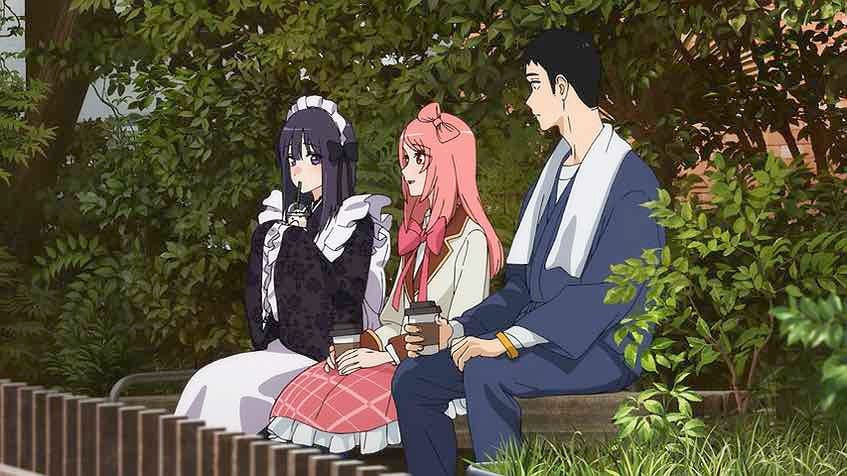
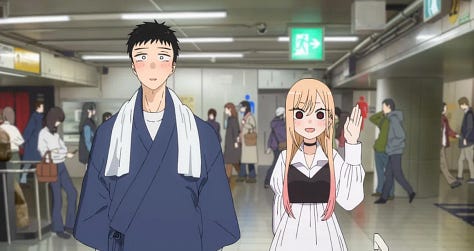
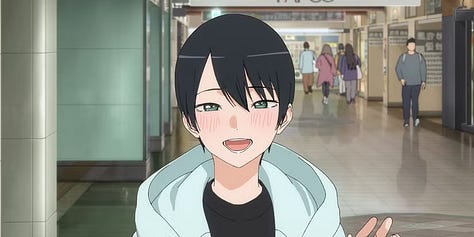
Such a large portion of this wholesome story (I call it wholesome in spite of its sexual themes, because none of the underage characters are actually doing sexually inappropriate things outside of Kitagawa’s “sexy” outfits) is simply Kitagawa leading the way in modeling respect, love, and integrity for the characters and the audience. Gojo’s fear turns to strength and he is soon able to express his acceptance of others that was already there inside him, waiting to feel safe enough to come out.
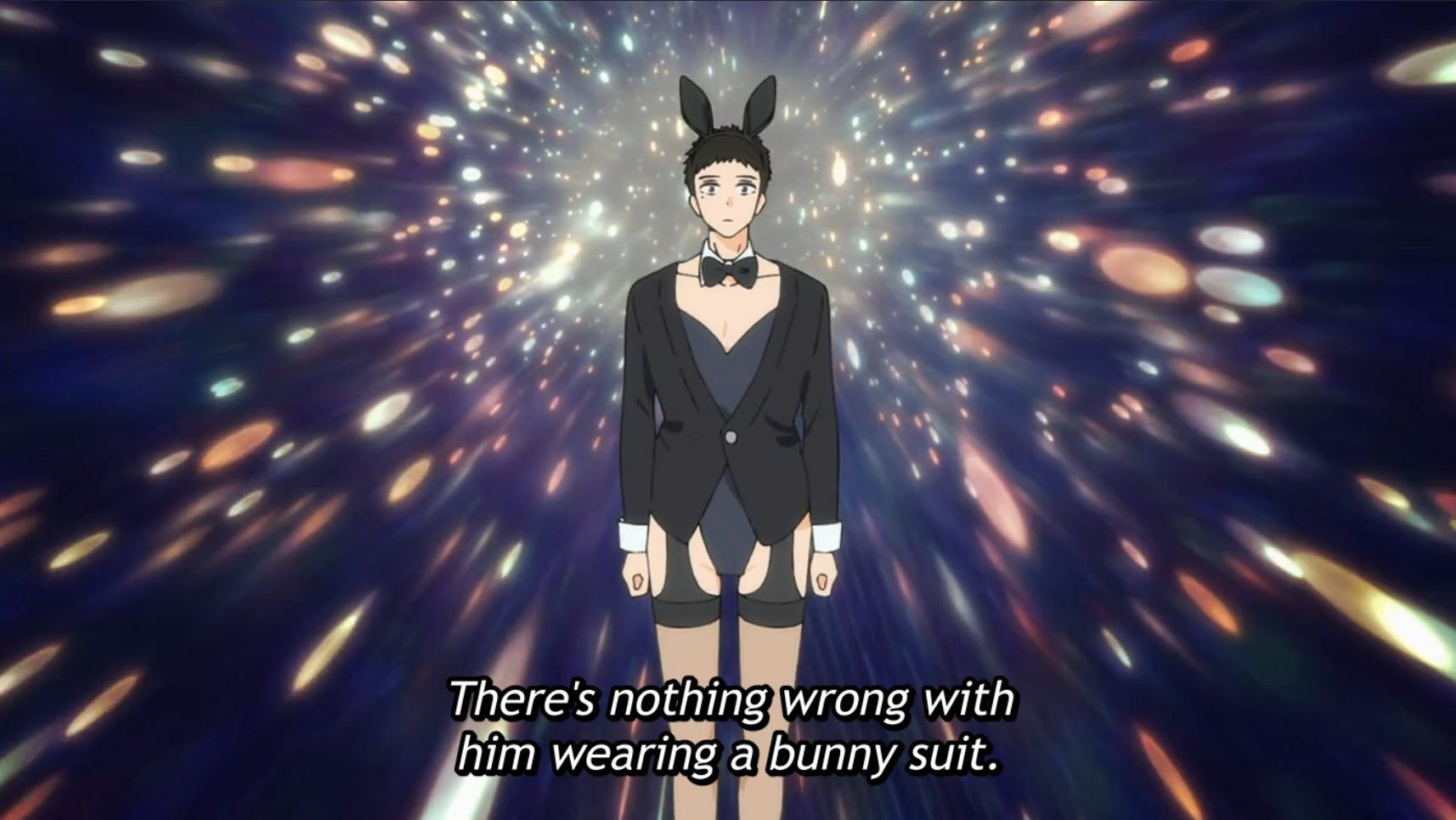
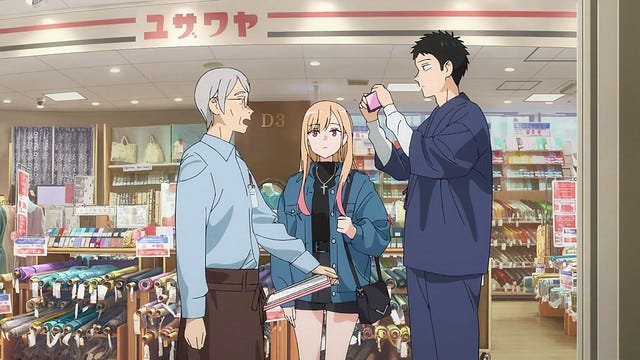
As Kitagawa and Gojo become more entrenched in the cosplay community, they discover more and more people of all ages are also respectful, open, and loving. At first, the older gentleman who sells fabric to Gojo sees Gojo’s bunny suit plans and thinks the costume is for Gojo, but as much as this man, Usami-san, finds that surprising, he is determined that whatever brings joy to the young man in front of him should get his best efforts to help find the right fabrics. When he discovers the bunny suit is for Kitagawa, he even profusely apologizes for his misunderstanding to Gojo. Gojo’s not offended, and is quick to appreciate Usami-san’s experience and assistance because of Usami-san’s positive support. Gojo returns for Usami-san’s advice from time to time. Kitagawa and Gojo’s clear and steadfast resolution that everyone’s joy is worthy and never deserving of shame is nearly contagious.
The romance piece of this story is also a bit enmeshed in integrity. Kitagawa and Gojo both care so much about each other, and being respectful of the other’s feelings, that they fear confessing their deeper romantic feelings to each other. The confession doesn’t happen in the anime (at least, not yet, and hopefully there will be a conclusion to pair with the manga), but in the manga, Kitagawa tries to build up courage to clearly confess to Gojo several times, finally thinking that perhaps Gojo is simply not interested in her that way. Finally, she takes his guarded behavior after their most intense cosplay yet, Haniel, an angelic demon type character that draws so much attention for the costume’s perfect attention to detail and Kitagawa’s spot-on embodiment of the character that even the anime’s creator is searching for Kitagawa, as a sign that Gojo is not into her and that she should stop hoping to confess and pursue him. Gojo, whose self-esteem still hasn’t quite fully grown up in regards to his own romantic worthiness, still believes that he is protecting Kitagawa by never letting anyone think of them as a couple, because he believes her to be out of his league. Gojo feels Kitagawa’s pulling away and, in spite of himself, confesses his love for her while accepting that his love must be wrong and that his confession probably destroys their friendship. Of course, this confession is met with Kitagawa’s absolute delight and their relationship is confirmed as respectful and lifelong (or at least, they do grow up and get married, as shown in the manga). As a couple, they have reached the peak of integrity both within their new romantic relationship and with all their friends, family, and larger community.
The sweet little high school romance about the cool girl and the shy dollmaking crafter boy has more to remind us of than it seems. Behind the fan service, Kitagawa’s fan girl attitude, and Gojo’s teenage boy anxieties is a story where characters reject meanness and inflicting shame in order to feel better. We engage with this story and we also learn and relearn how to see ourselves clearly and be interested in and respectful of others. It’s often easy to find stories with characters who perform integrity, but are so perfect about it that they don’t have the same effect as Gojo and Kitagawa. Gojo and Kitagawa pull audiences into their view of the world and we grow with them. Each character has their moments to examine the nature of their interactions with other people and recognize their interest and delight in seeing others as they are and caring for them as they are. Appreciating the joy of others never needs to be a perfectly shared interest, and these two genuinely do like to support the passions of others with sincerity.
This is the sort of story that I wish could touch everyone. Even so far into adulthood, it’s still much too easy to look around and find people who are not moving through the world with integrity and are eager to shame others to bring them down. These characters put in effort to truly see each other rather than letting impressions or assumptions fuel judgmental or conditional relationships.
* My Dress-Up Darling season 1 has recently been added to Netflix in the US. If you haven’t seen it, or just haven’t seen it in a while, binging it soon might be really fun!
No posts
Comments
Nothing yet. Say the first thing.
Sign in to join the conversation.