
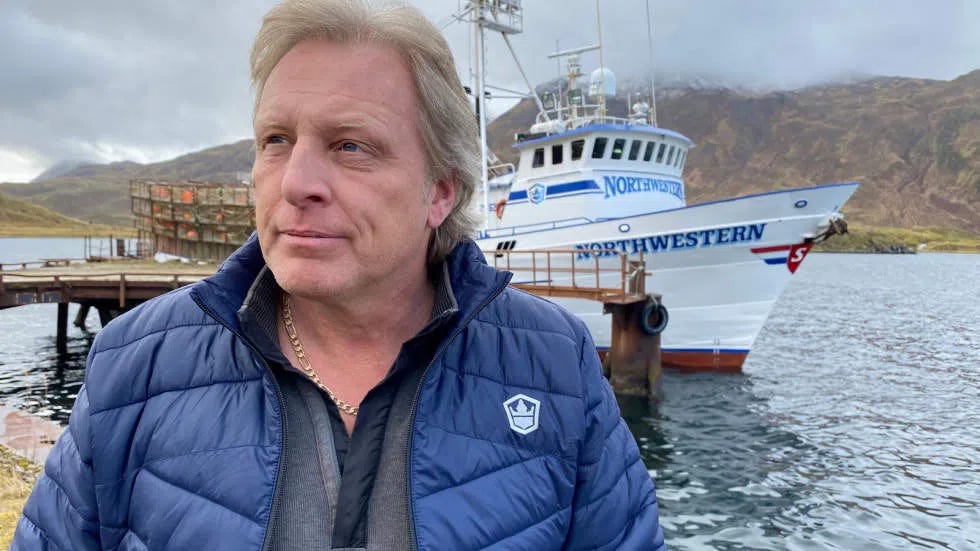
Few television shows have brought the brutal reality of the sea into living rooms around the world like Deadliest Catch.
At the center of the series stands one of its most recognizable captains: Sig Hansen.
To millions of viewers he is the hard-driving captain of the crab vessel F/V Northwestern, battling storms and ice on the Bering Sea.
But behind the television persona lies a much older story — one rooted in a small fishing community on the Norwegian west coast.
Sigurd Jonny Hansen was born on April 28, 1966 in Seattle.
Yet the family story begins across the Atlantic in Åkra, a fishing community on the island of Karmøy.
His father, Sverre Hansen, emigrated from Norway to Seattle in 1958.
Like many Norwegian fishermen who settled in the Pacific Northwest, he found work in the fishing industry. Seattle’s Ballard neighborhood had long been a hub for Scandinavian immigrants.
At home the family spoke Norwegian.
Sig has often said that as a child he spoke fluent Norwegian — specifically a dialect from Karmøy. But in first grade, a note from the school encouraged his parents to stop speaking Norwegian at home so he would adapt more easily to English.
The language faded, though he still understands much of it today.
Sig Hansen grew up in Ballard, historically one of the most Norwegian neighborhoods in America.
In the late 19th and early 20th centuries thousands of Norwegian fishermen and sailors had settled there.
The cultural heritage is still visible today:
Norwegian bakeries and restaurants
the Nordic Museum
and the large annual Syttende Mai Parade Seattle
Sig Hansen still participates in the celebration many years.
Ballard remains one of the strongest Norwegian cultural enclaves in the United States.
Fishing was not simply a job in the Hansen family.
It was a multi-generational tradition.
Sig’s grandfather was a fisherman in Norway, and his father Sverre became a pioneer of the Alaskan crab fishery after moving to the United States.
During the 1960s Norwegian fishermen were among the first to seriously pursue opilio crab in Alaska waters.
The work was dangerous but profitable.
It also helped create one of the most intense fisheries in the world.
Sig Hansen first went to sea as a teenager.
At 14 years old he began working on his father’s vessel.
By the age of 24 he took over as captain of the Northwestern.
Over the years he helped transform the boat into one of the most successful crab vessels operating in Alaska.
One of the things he often emphasizes is safety.
Despite decades of fishing in some of the most dangerous waters in the world, the Northwestern has maintained a remarkable safety record.
No crew member has ever died aboard the vessel.
In the deadly Bering Sea crab fishery, that is extremely rare.
The Bering Sea crab fishery is often described as the most dangerous job in commercial fishing.
Winter storms can bring:
freezing temperatures
massive waves
heavy ice accumulating on deck
Crews work around the clock setting and hauling heavy steel crab pots.
Fatal accidents have historically been common in the industry.
This harsh reality is exactly what made the television series Deadliest Catch so compelling.
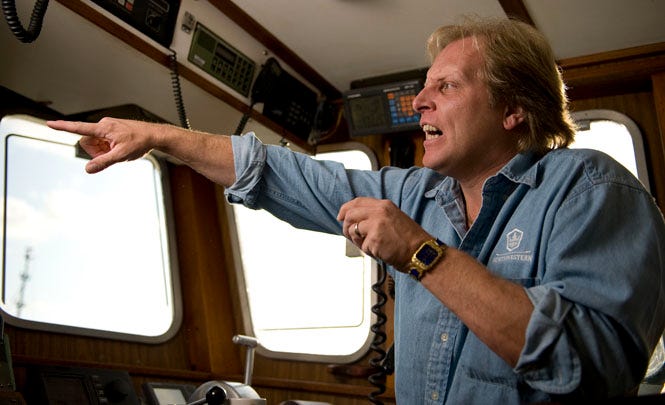
When Deadliest Catch premiered on Discovery Channel in 2005, Sig Hansen quickly became one of the central figures of the series.
Unlike many reality shows, the danger portrayed on screen was real.
The series followed the crews of crab boats working in the Bering Sea, documenting:
storms
equipment failures
medical emergencies
and the enormous financial risks of the fishery.
Over time the show became one of Discovery Channel’s biggest global hits.
Sig Hansen’s intense leadership style — demanding, stubborn, but deeply protective of his crew — made him one of the most recognizable captains on the show.
He later appeared in spin-offs such as Deadliest Catch: The Viking Returns, which explored his Norwegian roots.
Despite spending most of his life in the United States, Sig Hansen has maintained strong connections to Norway.
He visits Karmøy frequently and participates in local events.
In recent years he and his wife June have restored an old sildesalteri (herring salting factory) on the small island Mortholmen outside Karmøy.
The project has become a cultural and event venue tied to the local fishing heritage.
For Hansen, it represents something of a homecoming.
Sig Hansen is married to June Hansen, who also has Norwegian roots.
Together they have three daughters.
One of them, Mandy Hansen, has followed directly in her father’s footsteps.
She now works aboard the Northwestern and has gradually taken on more responsibility in the operation.
In earlier years Sig Hansen believed that women on fishing boats brought bad luck — an old maritime superstition.
His daughter proved him wrong.
Today she is widely seen as the future captain of the Northwestern.
The dangers of the job are not limited to storms.
In 2016 Sig Hansen suffered a heart attack while filming Deadliest Catch.
The incident was broadcast in one of the show’s most dramatic episodes.
He later suffered another heart attack in 2017.
Despite these serious health scares, Hansen eventually returned to the wheelhouse.
Sig Hansen’s life reflects a long historical connection between Norway and the Pacific Northwest.
For more than a century Norwegian fishermen played a major role in the fisheries of Washington, Alaska, and the Bering Sea.
Entire communities — like Ballard in Seattle — were shaped by Norwegian migration.
Sig Hansen became one of the most visible representatives of that tradition.
Through television, millions of viewers have seen the world of crab fishing that Norwegian immigrants helped build along the American Pacific coast.
And at the center of it all stands a captain whose roots trace back to a small fishing village on Norway’s west coast.
From Karmøy to the Bering Sea.
A Norwegian fishing story — told on a global stage.
Comments
Nothing yet. Say the first thing.
Sign in to join the conversation.