
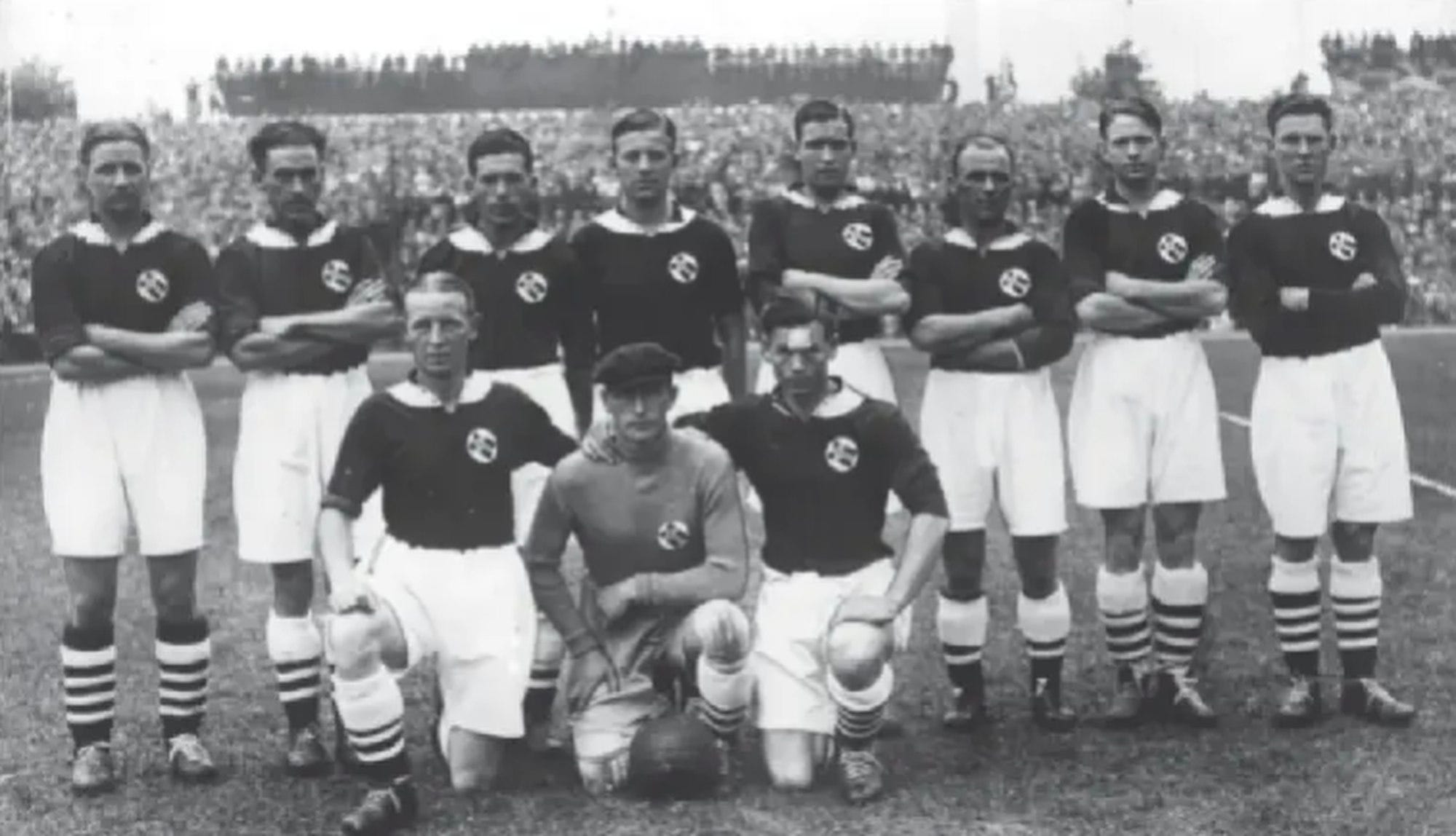
He was one of Europe’s finest footballers before the Second World War, a World Cup star from Stavanger who nearly signed for Arsenal. Then war intervened. Arrested as a Norwegian police officer, Reidar Kvammen survived imprisonment in the Nazi concentration camp at Stutthof before completing one of the most remarkable comebacks in Scandinavian football.
This free article is not as Norwegian-American as the others, but with the World Cup i found it suitable.
Every World Cup introduces us to new heroes.
Some become legends because of what they achieve on the pitch.
Others become unforgettable because of what happened after the final whistle.
Few stories illustrate that better than Reidar Kvammen.
Born and raised in Stavanger on Norway’s southwest coast, Kvammen was among the country’s greatest footballers before the Second World War. He played in the 1938 FIFA World Cup, attracted interest from Arsenal, and became one of the faces of Norwegian football during its first golden era.
Then history intervened.
Within a few years, the gifted winger who had entertained thousands of spectators across Europe found himself imprisoned by the Nazis, first at Grini and later in the concentration camp at Stutthof.
It is a story of football, war, survival—and extraordinary resilience.
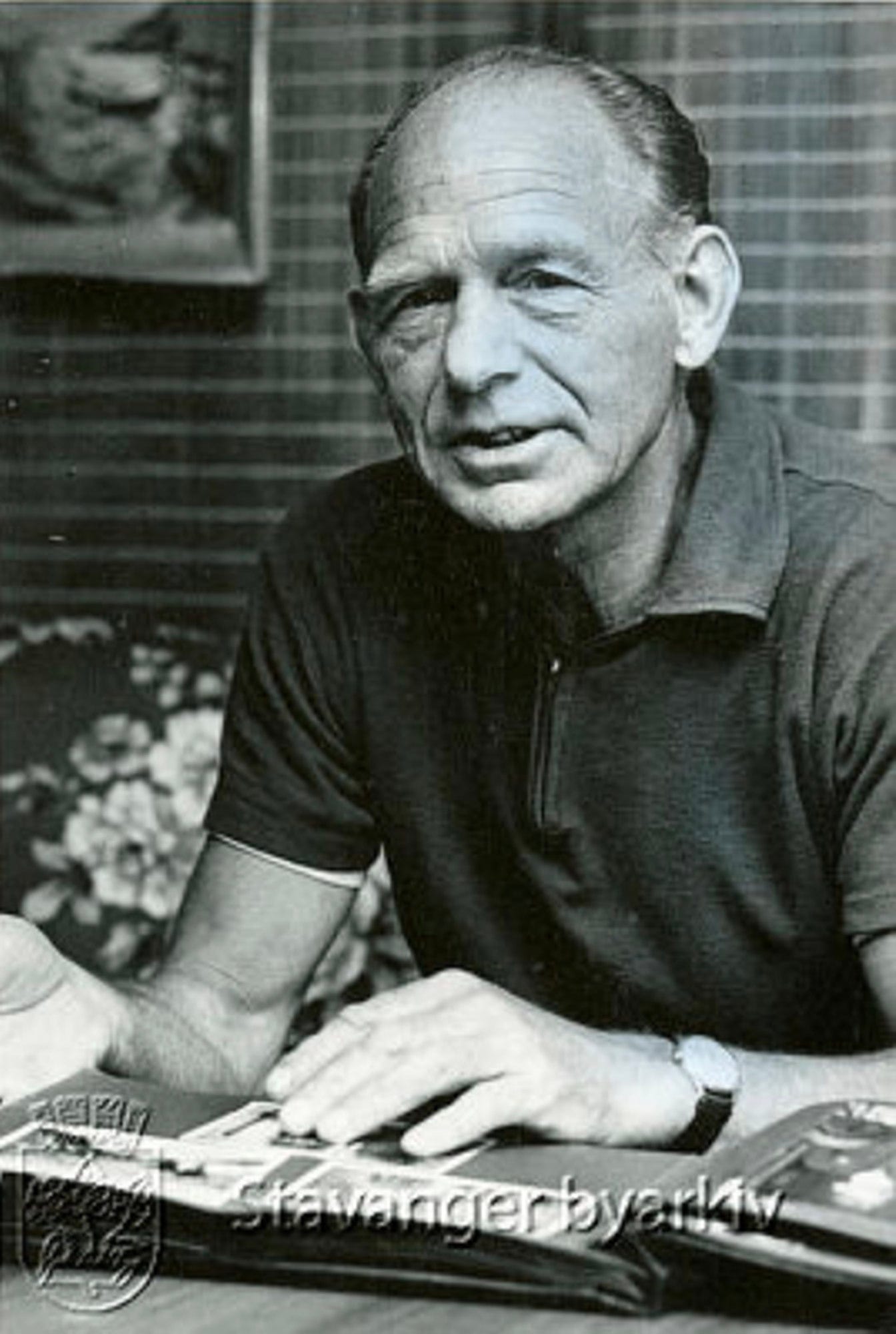
Reidar Kvammen was born on 23 July 1914 and grew up in Stavanger, where football quickly became his passion.
He joined Viking FK as a teenager and made his first-team debut at just sixteen years of age. Small in stature but fearless, he possessed exceptional dribbling skills, remarkable balance and a creativity that made him one of Norway’s most exciting attacking players.
His rise was rapid.
He debuted for Norway in 1933 and soon became a regular in a national team entering what many still regard as its greatest pre-war period.
At the 1936 Olympic Games in Berlin, Norway stunned Europe by winning the bronze medal. Kvammen was one of the team’s brightest stars, helping establish Norway as an emerging football nation.
Norwegian football was strictly amateur in the 1930s.
English football was not.
Following Norway’s successful qualification for the 1938 FIFA World Cup—where Kvammen scored in both qualifying matches against Ireland—his performances attracted attention far beyond Scandinavia.
During a visit to London’s Highbury, Arsenal manager George Allison reportedly wanted to sign the Norwegian immediately.
For many players, it would have been the opportunity of a lifetime.
Kvammen declined.
He had just graduated from the Norwegian Police Academy and believed a stable career mattered more than professional football. Looking back years later, he admitted he had sometimes wondered what might have happened had he accepted Arsenal’s offer.
History, however, had very different plans for him.
The 1938 FIFA World Cup featured only sixteen teams.
Norway’s reward for qualifying was perhaps the toughest draw imaginable: defending world champions Italy.
The match took place in Marseille on 5 June 1938.
Few expected Norway to trouble the Italians.
Instead, they produced one of the greatest performances in Norwegian football history.
After Arne Brustad equalised, Norway held the favourites at 1–1 before Italian striker Silvio Piola finally scored the winner in extra time. Italy would go on to lift the World Cup trophy, while Norway returned home with admiration from the international press.
French newspapers praised Kvammen’s elegant attacking play, and his reputation continued to grow across Europe.
It should have been the beginning of the finest years of his career.
Instead, it became the end of an era.
Germany invaded Norway on 9 April 1940.
Football suddenly seemed insignificant.
As a police officer in Stavanger, Reidar Kvammen faced a choice that had nothing to do with football.
In the early hours of 16 August 1943, German soldiers arrived at his home during Aktion Polarkreis, the coordinated arrest of Norwegian police officers across occupied Norway. Like hundreds of his colleagues, Kvammen was taken into custody and imprisoned, first in Stavanger and later at Grini prison camp outside Oslo.
The German occupation authorities demanded that they sign a declaration of loyalty to the Nazi-controlled police administration and agree to serve the occupation regime.
Reidar Kvammen refused.
So did 270 other Norwegian police officers.
Their refusal sealed their fate.
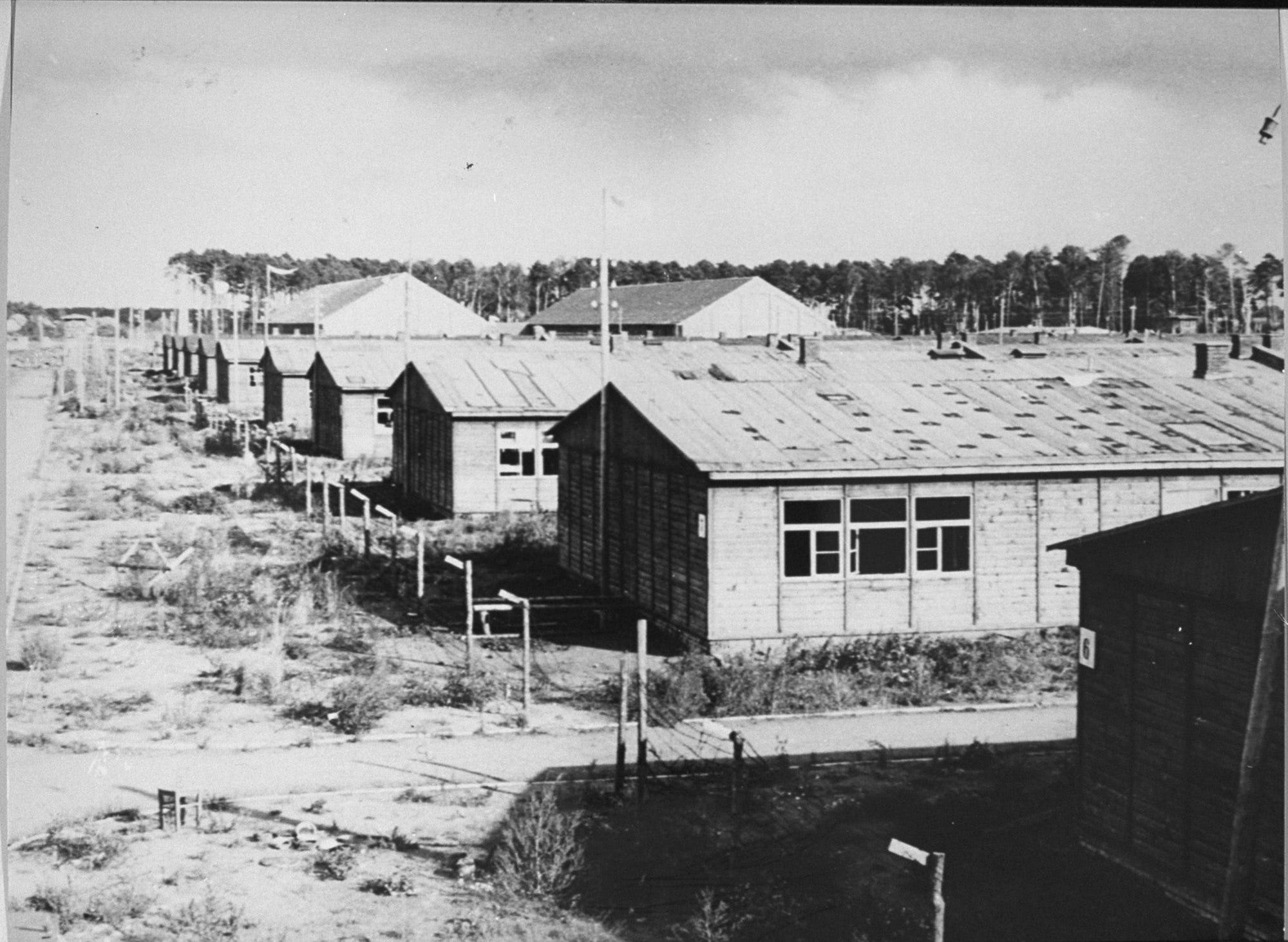
In December 1943, all 271 men were deported to Stutthof, a Nazi concentration camp near Danzig. They were not sent there because they had taken up arms or carried out acts of sabotage. They were imprisoned because they refused to betray their oath and serve an occupying power.
Not all of the 271 policemen returned home.
Those who survived often carried the camp with them for the rest of their lives. Many suffered from poor health, nightmares and depression long after the war had ended. Like so many survivors of Nazi concentration camps, few spoke openly about what they had endured.
The football star who had stood toe-to-toe with Italy at the 1938 World Cup was now simply one prisoner among 271 Norwegian policemen whose greatest act of courage was refusing to say yes.
Despite the brutality of Stutthof, the Norwegian police prisoners built a remarkable sense of solidarity.
They organised lectures, cultural evenings and, whenever circumstances allowed, football matches.
The games could not erase the hunger, forced labour or constant uncertainty.
But for a short while they reminded the prisoners who they had been before the war.
Among the men imprisoned at Stutthof was another police officer from Stavanger: my grandfather, Lars Waage.
He and Reidar Kvammen shared the same captivity.
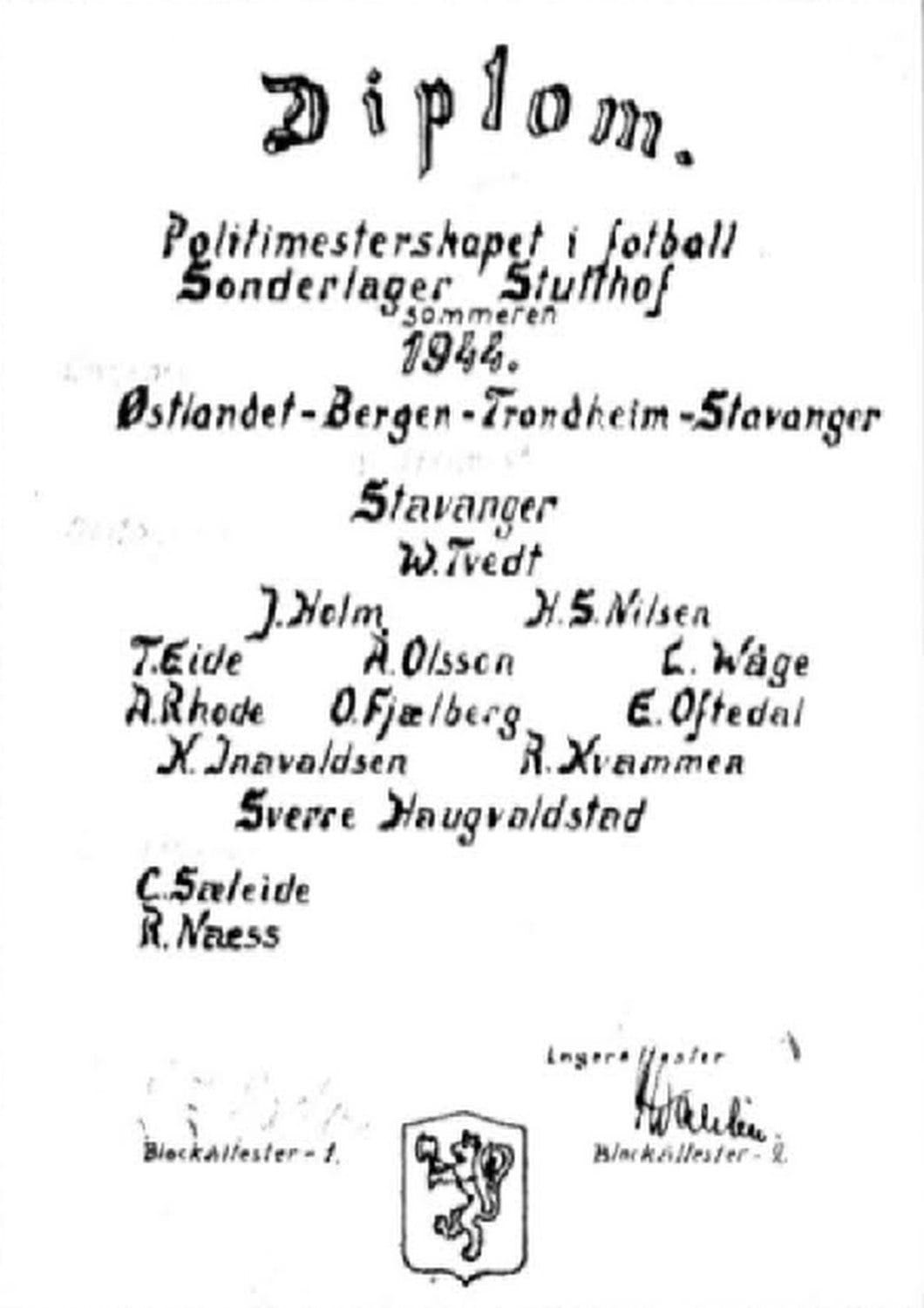
One surviving team sheet from one of the camp’s football matches lists both men in the same line-up.
It is a remarkable historical document.
One name belonged to one of Norway’s greatest footballers.
The other to an ordinary policeman.
Inside the concentration camp those distinctions disappeared.
They were simply teammates trying to preserve a fragment of humanity in circumstances designed to destroy it.
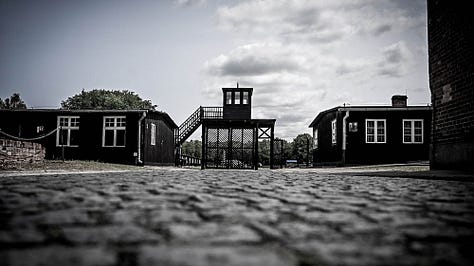
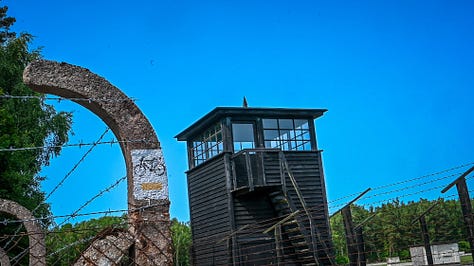
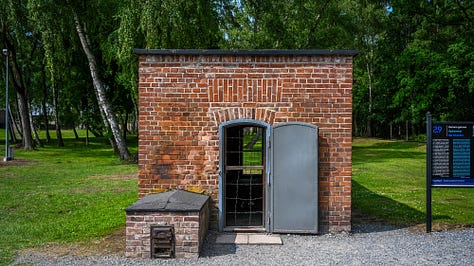
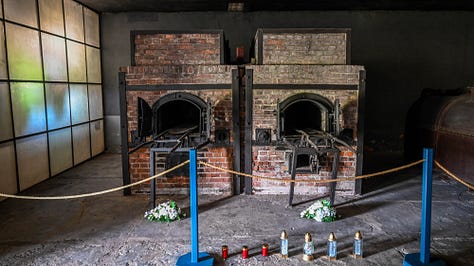
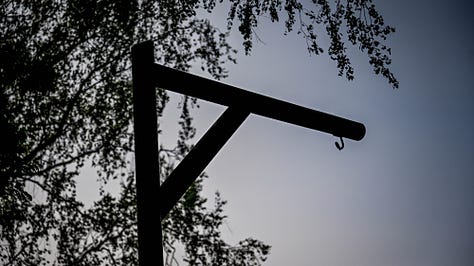
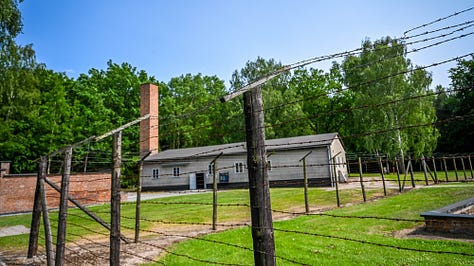
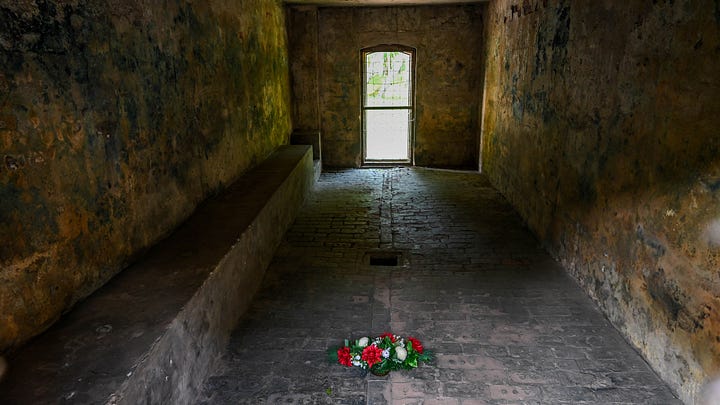
Life inside Stutthof was unimaginably harsh.
The prisoners endured hunger, disease, exhausting labour and constant fear.
As the Soviet Army approached in 1945, many prisoners were forced onto deadly evacuation marches.
Kvammen survived.
When peace finally came, he returned to Norway physically broken and in need of rehabilitation in Sweden before he could even consider playing football again.
Many assumed his career was over.
They were wrong.
Against all expectations, Reidar Kvammen returned to elite football.
He fought his way back into Viking’s first team and once again represented Norway.
In 1948 he helped Norway defeat Denmark, and over the following years he achieved another historic milestone.
He became the first footballer in Scandinavia to earn fifty international caps.
When he retired in 1952, he had played 51 internationals, scored 17 goals for Norway and an astonishing 202 goals for Viking—a club record that still stands.
Those statistics alone would have secured his place in Norwegian football history.
His wartime experiences make his legacy even greater.
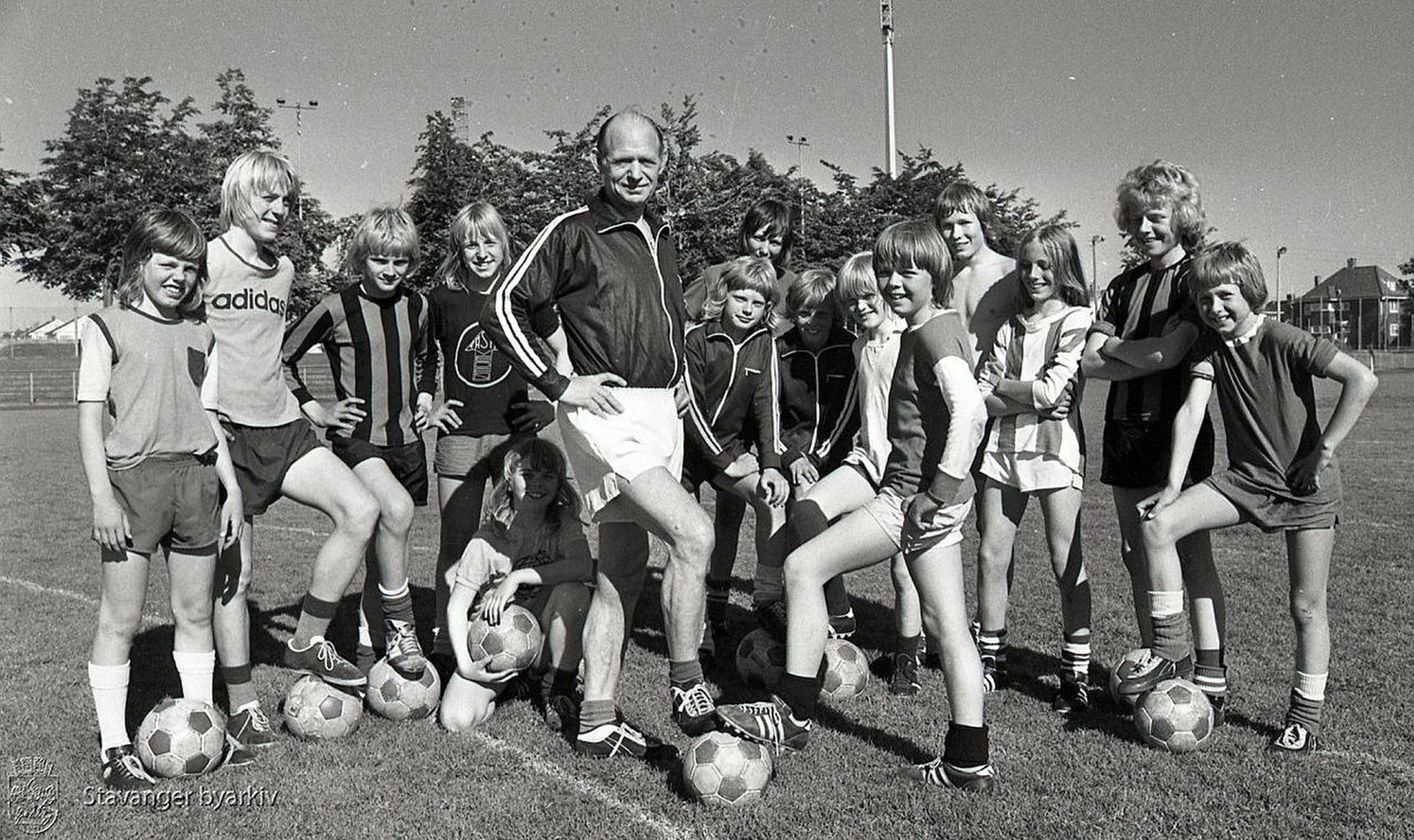
Today, visitors to Stavanger stadion Stavanger are greeted by a statue of Reidar Kvammen at Reidar Kvammens plass (Reidar Kvammen´s Square).
Most know they are looking at one of the greatest players ever to wear the club’s shirt.
Far fewer know that the same man once stood behind barbed wire in a Nazi concentration camp.
Or that, inside that camp, football once again became part of his life—not before thousands of cheering supporters, but on makeshift pitches surrounded by prisoners who refused to surrender their dignity.
Among them was my grandfather.
Somewhere in the archives survives a faded team sheet from one of those matches.
It bears two names from Stavanger.
Reidar Kvammen.
Lars Waage.
One had represented Norway at the World Cup.
The other had never played before a crowd.
In Stutthof, they were simply two Norwegian policemen, two teammates and two survivors.
That may be the most remarkable football story to come out of Stavanger.
P.S. Reidar Kvammen was not the only Viking FK player among the 271 Norwegian police officers deported to Stutthof. Fellow Viking player Kåre Ingvaldsen also refused to pledge loyalty to the Nazi-controlled police administration and was sent to the same concentration camp. Unlike Kvammen, Ingvaldsen was only beginning his football career when the war intervened. He survived the camp, returned to Stavanger, and went on to win the Norwegian Cup with Viking in 1953. The fact that two Viking footballers endured imprisonment together in Stutthof remains a little-known chapter in both Norwegian football and wartime history.
Comments
Nothing yet. Say the first thing.
Sign in to join the conversation.