
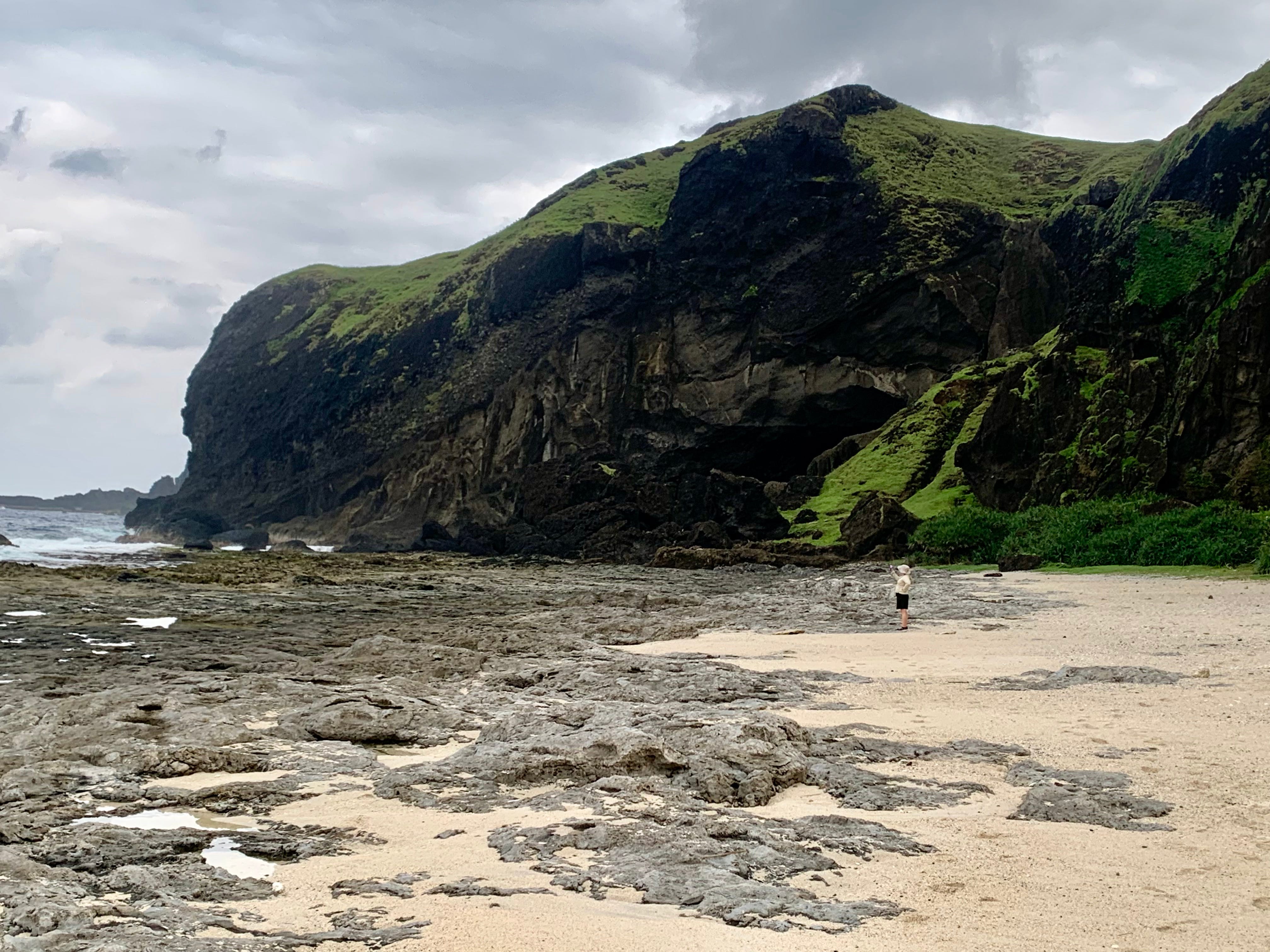
Green Island
I know I could be writing about all sorts of things, from the too-small defense budget to the Trump-Xi talks, but honestly, I don’t feel like it. Although I published my last post after it happened, I’ve been on a short break since my cat passed away and want to ease back into it. I know cats aren’t people, but losing a cat really is like losing a family member. I didn’t cry a lot because we’ve been expecting it, but internally I’m gutted.
So instead of politics, let’s talk tourism. I’ve not only had a lot of travel writing work recently, and I also had a few friends visit Taiwan. One came with her own friends, rented a car and drove around the island. The other stayed with me and I did one of my favorite things: trotting around Taiwan as not just a friend but a bespoke tour guide while I get to enjoy the country I call home.
I just love doing it. I get to practice my Mandarin beyond the usual “where are you from” and “wow, you can use chopsticks”, I get to take people to my favorite destinations, and it’s very important to me that my visiting friends leave Taiwan with a good impression. I’d do it professionally but I’m not sure I’d enjoy guiding people I don’t already know.
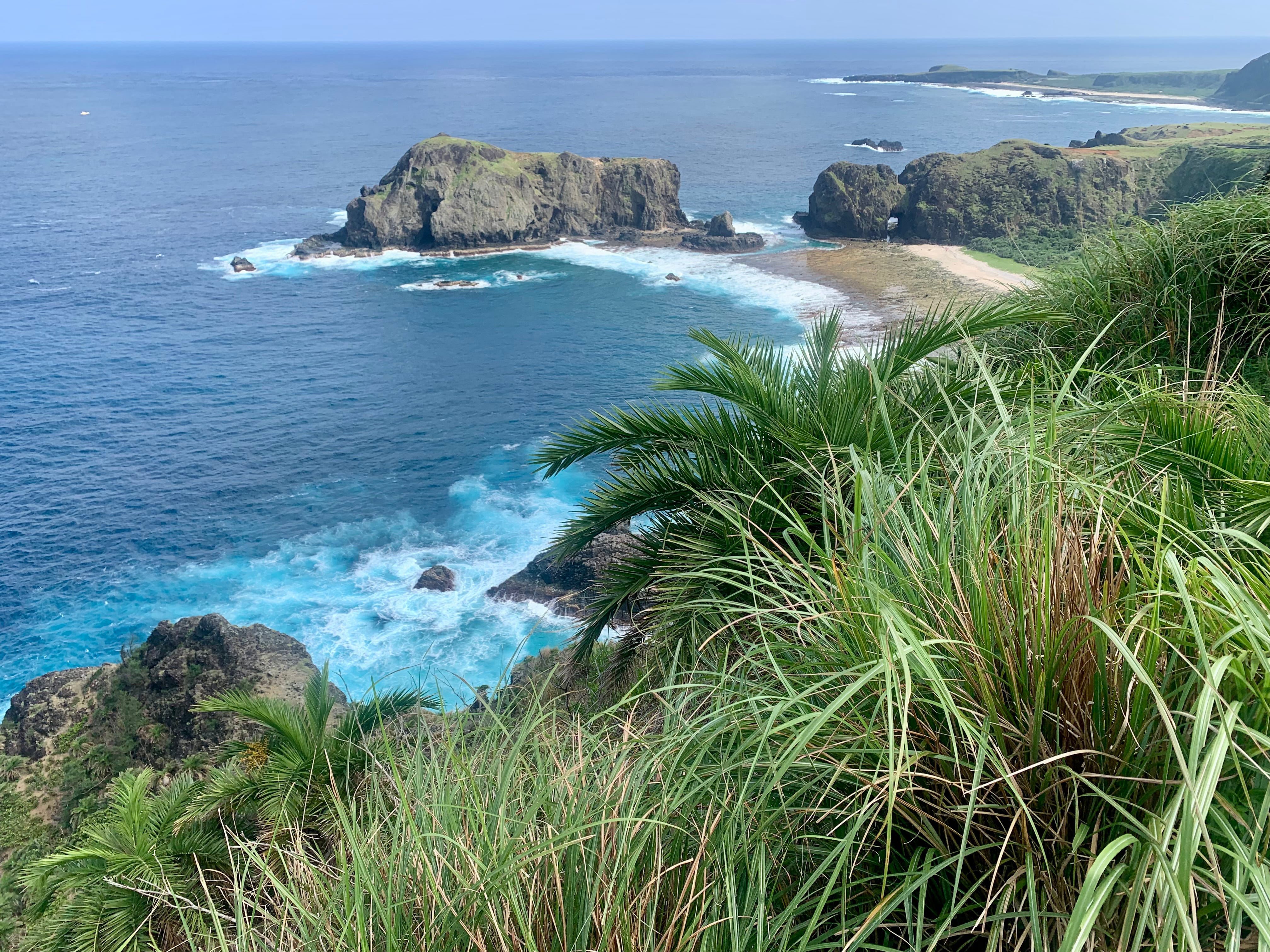
There are downsides to traveling in every country, however, and during these two visits I became curious about what my friends might not have enjoyed, or what they found difficult about traveling in Taiwan. Or, honestly, what I think might be difficult for foreigners taking a trip in Taiwan, for any reason.
The first thing I’ve come to realize might be a problem is traveling to Taiwan’s outlying islands if you don’t know how you’re going to arrange transport.
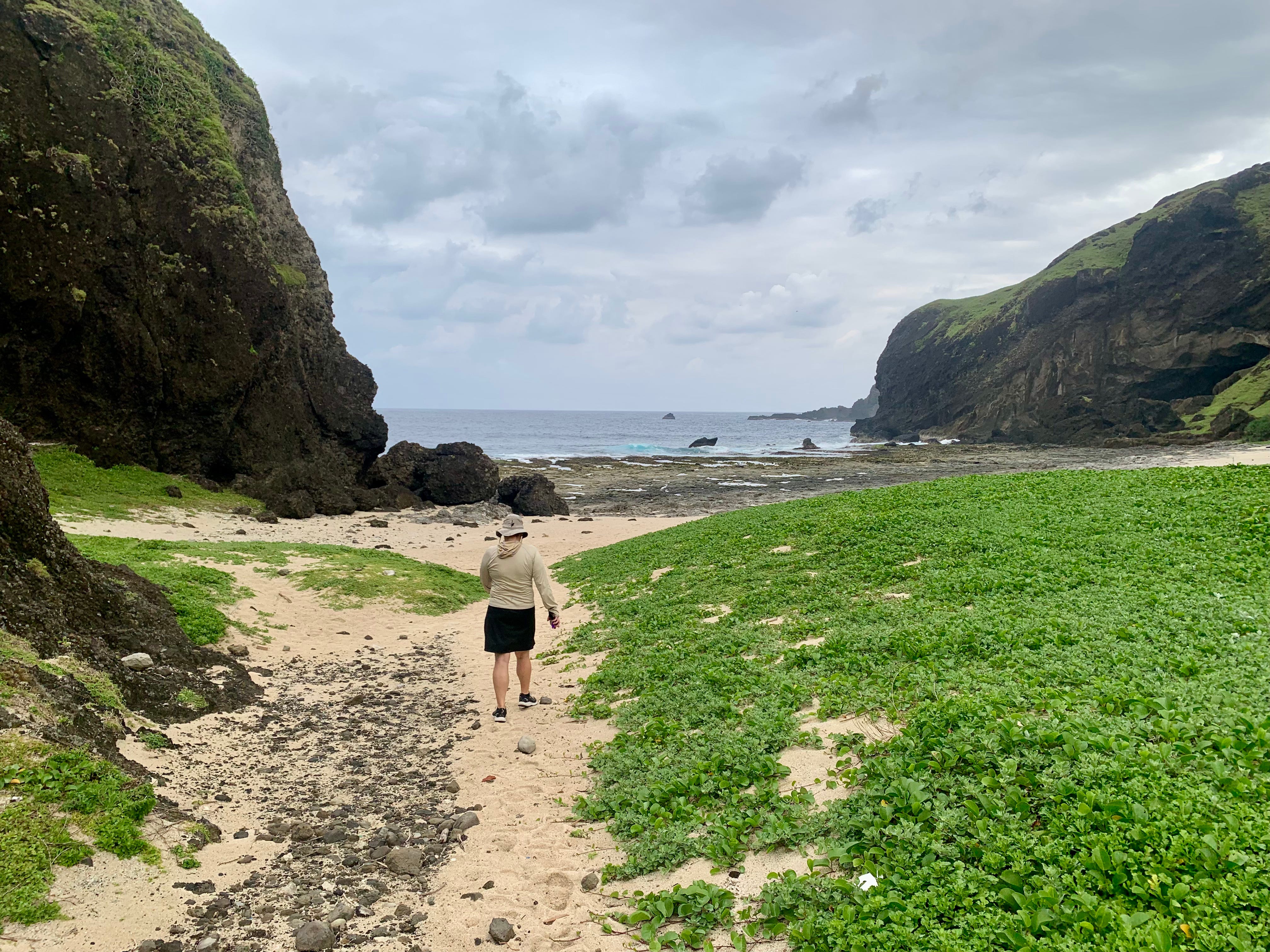
On both Green Island this year and Orchid Island last year, I ran into people at the ferry terminal who had not thought ahead. They’d assumed Taiwan was an easy, friendly place where it’s always possible to get some kind of transportation. They were mistaken.
It’s not only a problem in terms of renting, but arranging and paying for rentals. I cannot stress this enough: if you are going to Green Island, Orchid Island or frankly any outlying island (though Kinmen isn’t so difficult), arrange everything in advance, think about transport before you get there, get an international driving permit, and especially on Green and Orchid Islands, bring lots of cash.

On Orchid Island, it was a European woman who lacked an international driving permit. The last time I was there, the car was a loaner from the hotel owner’s friend and they didn’t even ask for our names let alone proof we could drive. Now, everything is done according to the law, and not even scooters (none of them electric on the island) can be rented without an IDP. I’m not saying the law is a bad thing, just that it’s tough for travelers who don’t know. So she found herself at Orchid Island, her hotel on the other side of the island, with no transport and no means of renting any.
She was frustrated and frankly surprised that one could land somewhere in Taiwan and be squarely SOL in terms of getting where you need to go. She hadn’t expected it.
The ferry port workers found me — “I heard you speak Chinese, maybe you can help” — and I got everyone understanding the problem before I had to get on the boat. My suggestions were that the hotel pick her up and she rent a bike to at least see that side of the island, or they find someone who will drive her around and she pays them well for it. I don’t know what happened next but I hope she had a satisfactory trip.
I’d rented a car in advance (I was traveling with a family with a child, and I dislike riding scooters) through my hotel; they contacted the guy who rents them. I used Mandarin to do this, but everyone involved appeared to speak enough English to deal with foreign tourists who can’t. The hotel used Line, which many foreign tourists don’t have and have never heard of.
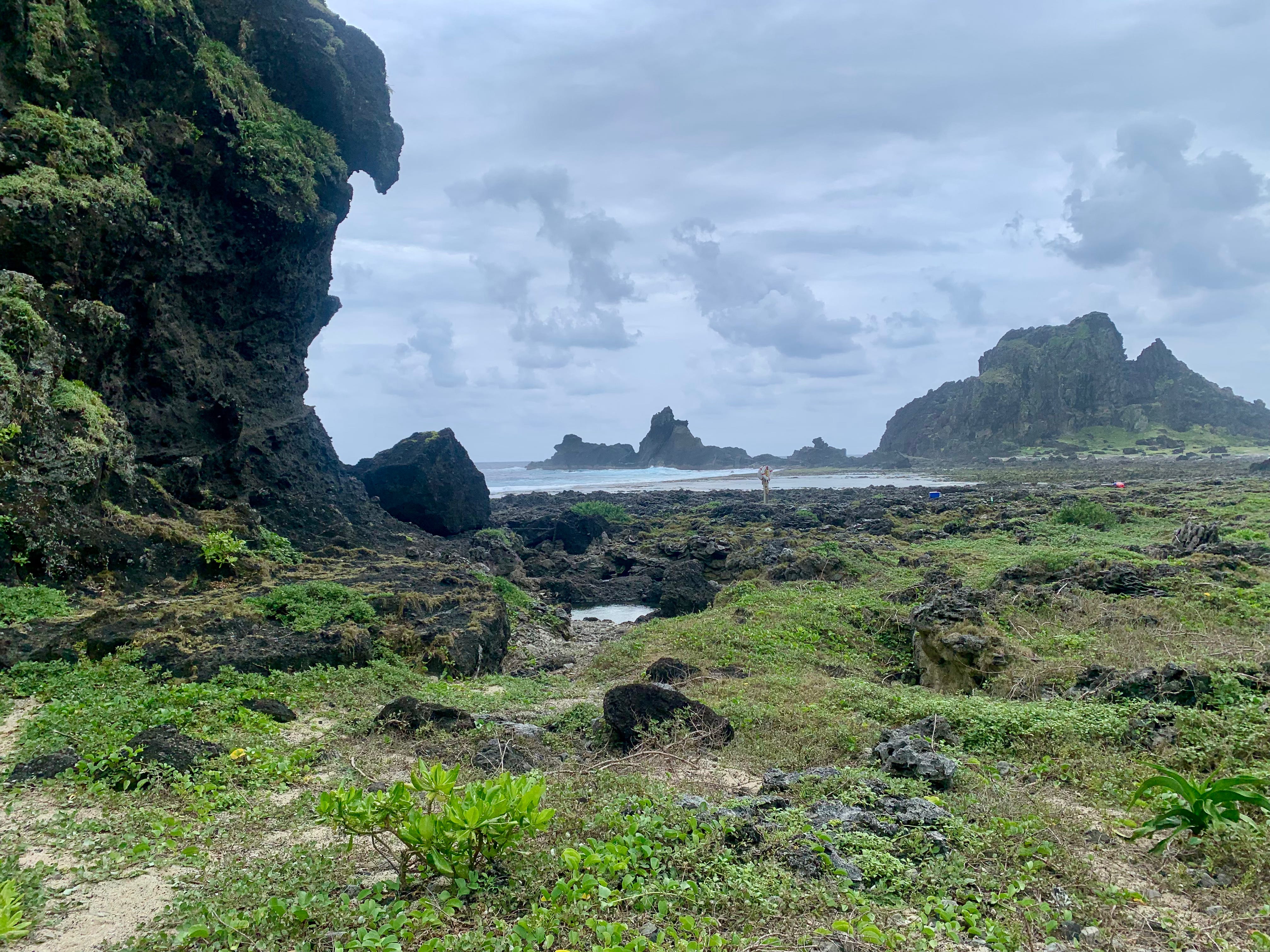
The only means of payment for the car is cash, or a bank transfer to the post office bank, which only people with a Taiwanese bank account can do. The only ATMs on Green Island are post office ATMs, which don’t accept foreign cards. My friends were lucky they had a resident with them who could pay for everything, and we could square it later.
When we arrived on Green Island, we ran into a Singaporean family who, once again, landed on the island assuming they could take a taxi to their hotel and figure out transport later, or rent a car on the spot. At least one family member had an IDP. Electric scooters would have been immediately rentable, but none of them felt comfortable on a scooter.
We ended up giving them a ride to their hotel, and they were able to talk to our car guy who said there would be rentals available later that afternoon. I assume if I hadn’t been there that someone else would have helped them, but it was clearly a difficult situation to be in.
I had arranged a car in advance. I got the information for the one (1) car rental service on Green Island from the hotel I booked. They spoke English, and it turned out the car rental guy spoke some too (I hadn’t realized this because I arranged it all in Mandarin), but the hotel used Line, which most Western travelers don’t have. I could only contact the car rental through a phone call, which would be expensive, at least, if I’d done it outside Taiwan. All payment was in cash, up front. No problem, but if a foreign tourist used to using a payment app for everything and ATMs that take foreign cards on the Taiwan mainland shows up, they’re going to have a problem.

I always rent cars because I’m not very comfortable on scooters, but mostly on these islands, scooters are what’s available. That’s a problem for foreigners who can’t or won’t ride them.
This is not to imply I’m a better traveler. I’ve just been here for a long time and know the deal. I also don’t mean to say that Taiwan should bend over backwards to be a completely easy travel destination, or that it’s okay for travelers to show up naive, without having done their research. All travel will have bumps, difficulties, surprises. That’s part of the adventure.
I do think, however, that either these travelers are not being given good information. Is it not stated in guidebooks, or are today’s travelers simply not reading them? How am I running into multiple people who just don’t know what they need to know to visit these islands? Is there anything we can do tourism-wise to make it a little more straightforward for foreign visitors?
I’m not sure, really. There probably isn’t demand for a better bus system (Orchid Island, I believe has a very minimal bus service). A tourist bus that stops at the main sights and runs multiple times a day — perhaps once an hour — during shoulder and peak seasons would be lovely, but something tells me the scooter rental racket would oppose it.
Banks whose ATMs take foreign cards don’t have much incentive to set up ATMs on these islands. There’s no big incentive to be active on an app that’s not Line. The rule that one needs an IDP to rent anything is annoying, sure, but it makes sense. I did always think it was a bit funny that in the past, a car would be handed to me without any sort of check that I could drive it.
My visiting friend brought up another issue: her trip was very smooth, but that’s because I arranged it all. She admitted she’d have had no idea how to get ferry tickets without just showing up at the port and hoping for the best.
“The hotel helped me arrange them,” I said.
”Right, and I wouldn’t have known to ask the hotel.”
Admittedly this is not a huge problem: Google “Taitung to Green Island Ferry” and all sorts of answers pop up, including ways to buy them on Klook or KKDay. Most Westerners, in my experience, have never heard of these apps, but I use both and they are generally reliable.
Arriving back at the ferry port, last year we ran into a problem. All the smart kids had arranged pick-ups in advance. I’d assumed there would be taxis hanging around. There were not. Finally one drove by and I was able to snag him before the other dozen or so people who’d been caught out could get him (would have shared, but we were four people). I knew this time to arrange a pick-up to meet us at the port to take us into Taitung city. (By the way, there’s not much to do in Taitung that’s not a long drive out of town. If you have a few hours to kill there between your ferry and your train, I’m not sure how you kill them without hanging out at a cat cafe as we did. Not a complaint, just saying.)
Transportation in the rest of Taiwan is also something of a problem. It’s possible to get around the cities, even the ones with poor public transit like Tainan, with a combination of walking and Uber. (Not Taitung though — no Uber there). One issue we ran into with just walking around Tainan is that it was so hot that my friend truly struggled. We had to rest in cafes a lot, and at one point return to the hotel so she could take a cool shower just to feel better. The city could really use a functioning bus system that covers the city comprehensively. And if you build it, I promise, they will come.
Outside the cities, however, Taiwan is not friendly public-transit wise. In Japan, I was able to get to and explore the small temple town of Koyasan by train, funicular and bus, with a special “Koyasan pass” that gave us discounts. It wouldn’t have even occurred to me to rent a car. In Taiwan, other than hiring a driver for certain trips (say, Hualien to Taitung), I don’t really know how to show visitors the beauty of Taiwan’s countryside without driving. There are a few places accessible by public transit, but not nearly enough, and not my favorite places.
I would prefer not to tell friends coming to visit that they should get an IDP. I would prefer that they didn’t have to. But as it is now, it’s essential if you want to get out of the cities.
I suppose I can drive, I just don’t want to — and I truly won’t in cities. I know people will defend this dearth of public transit by saying that’s just how Taiwan is, people like to drive (again, no: if you build it, they will come), Taiwan doesn’t think about tourism in this way. That last one is true, just unfortunate if you happen to be a visitor who loves nature but doesn’t drive. And Taiwan isn’t a ‘low-cost’ destination like Vietnam or India where hiring a driver is a minimal expense.
The discussion of transit issues sparked a debate at our shared dinner table in Tainan. While munching on delicious yakitori at 老厝1933, the friend who’d rented a car pointed out these transit issues and said that if Taiwan wants to present itself to the world as a first-world “or at least second-word” travel destination, it would have to deal with the poor public transit (although she did say the trains were quite good).
I didn’t like hearing this, and neither did my other friend. I think of Taiwan as more advanced than the US in many respects, from the health care system to Taipei’s MRT (I just wish we had more of that in other cities) to the high-speed trains to the superior Internet. As my other friend said, if Taiwan is a “second-world” country, we have to be prepared to call the US one, too. The US, after all, has even worse public transit than Taiwan, by a wide margin.
Taiwanese don’t typically compare their country to the US though, they compare Taiwan to Japan. And Japan, by an even wider margin, has Taiwan beat on public transit. Maybe that’s part of why all those tourists are going to Japan now, and only a trickle are coming to Taiwan.
There was one other issue that my friend-with-a-car ran into: she lost something valuable on a hike in southern Taiwan. When she noticed it was missing, she reported it at a police station in Kaohsiung. They helped her contact the local police station for the forest recreation area. There was a significant language barrier, but ultimately they suggested she call the park as someone would comb the trail for her.
In this way, Taiwan once again outshines the West. If you lose something of value in the US, Europe, Australia etc., you can assume it’s gone forever. In Taiwan, there is at least the possibility that you’ll get it back.
The problem was, she did call the park. Nobody at the office spoke English. She asked me to call for them, but I was on a flight to Taitung when she contacted me so I didn’t see the message until much later. By the time I arranged a phone call, more than 24 hours had passed so the staff was unwilling to comb the trail (the item was not in Lost and Found). They were irritated that the local police hadn’t contacted them, because according to the park rangers, they should have.
I know this is a one-off issue, and one could argue that you shouldn’t bring anything on a hike that you’d be heartbroken to lose. Okay, fine. And I don’t expect that everyone will speak English; the language barrier could be an issue in any country, including the much-vaunted Japan.
But the police dropped the ball and didn’t help out doing a fairly simple thing for a foreign visitor, which they could have done and everyone I talked to agreed they should have done. My Taiwanese friends also felt this is how it should have happened. Especially in the south, I generally find Taiwanese people are much more hospitable and helpful than that. Their actions were…not hospitable.
I’m not trying to say that Taiwan is unfriendly to tourists. I don’t believe that’s true. In fact, I find it to be an easier country for tourists to travel in than when I moved here twenty years ago. More and more temples, for example, have foreign-language brochures so you can learn something about the temple beyond “wow, cool, another temple”. Although I’d prefer paper copies of maps of tourist sites in foreign languages (ideally English and Japanese, perhaps also Korean and a selection of Southeast Asian languages), there are often QR codes for foreign language versions. It’s not perfect, but it’s something. There are apps now like Klook and KKDay that can help tourists book experiences and transport. If they know to download Line, they can talk to hotels and other service providers.
When I first moved here, with terrible Mandarin, the best I could do sometimes was exactly what those hapless tourists did on Green and Orchid Islands: just show up and hope for the best.
Green and Orchid Islands are some of Taiwan’s most beautiful places. One might argue that we don’t need more tourists going there; they’re small and can’t handle much more volume. Perhaps, but I shouldn’t run into someone who’s found themselves stranded at the ferry port every time I go, either.
I do think there’s room to improve, however. Better public transit. Better information, somewhere, for travelers. Perhaps this means better travel guides, or getting people to actually read travel guides again. This is a personal pet peeve, but let’s end the QR code ordering system at restaurants, especially if the only option is Mandarin. I can use them, but I find myself ordering for everyone if no one else can.
That’s a weird place to end this post, but I’m not sure what else to say. Taiwan is better than it used to be for foreign tourism, but there are ways in which it could be a bit more hospitable. Travel is always going to come with difficulties, so it would be silly to say Taiwan should be this perfect, seamless travel destination. Of course, it won’t be, for everyone. And I suppose you could point to many other countries and say “well, it’s easier to travel in Taiwan than…Tajikistan”, and that would be true (probably — I’ve never been to Tajikistan). However, Taiwan does seem to want to present itself as a friendly, easy and open destination, whereas nobody expects Tajikistan to be easy.
Taiwan is still one of the easier countries to travel in, I suppose, although it lags significantly behind Japan and South Korea in public transportation.
I just think, in the spirit of continuous progress, that a few amenities tourists (and locals) use could be a little less challenging than they are.
No posts
Comments
Nothing yet. Say the first thing.
Sign in to join the conversation.