
Sarah put her sleepy baby down for a short nap at 5:00 am. For some reason she had not nursed as well during the night. Sarah’s milk had come in and, for the previous few days, the baby had been nursing well, every two to three hours. Sarah awoke before the baby did and went to check on her. She noticed her right arm and leg gently twitching. The twitching did not stop when she picked up her one-week-old infant. She called out to her husband to come and see, and what he observed was repetitive jerking movements of her arm and leg on one side. They bundled their daughter up and headed to the children’s hospital emergency department (ED).
In the ED, the baby had an apnea spell, a breathing pause. which lasted thirty seconds, so she was placed on a cardiorespiratory monitor. Her jerking movements had ceased, but she was unarousable. The pediatrician noted her to be floppy and unresponsive. When the baby’s jerking movements resumed, the doctor gave her an anticonvulsant medication to stop what she felt to be seizures. While Sarah stood by, feeling terrified and helpless, her baby had another, longer apnea spell and the doctor and nurses inserted an endotracheal tube and placed her on a ventilator, a breathing machine. She was then transported to radiology for a CT scan of her brain, and the plan was to admit her to the NICU immediately after.
As she waited, Sarah was in pain from her engorged, throbbing breasts. When she and her husband were given the results of the CT scan by the pediatrician, they were shocked. The doctor informed them that their baby had an intracranial hemorrhage, or bleeding into her brain. Sarah burst into tears and her husband sat there stunned but attempted to comfort his wife. They had done everything right during the pregnancy, and Sarah’s labor and delivery at full-term had gone smoothly. Their daughter’s newborn exam had checked out normally. She nursed well after birth, and all three went home together on the third day, feeling elated and optimistic.
When the pediatrician in the ED asked Sarah if her daughter had been given a Vitamin K shot, she was startled about this question, but she answered, “No, I didn’t think it was necessary.” She told the doctor that she and her husband had decided to be very selective about which vaccines were given to their baby.
This clinical scenario is no longer rare. For several unfortunate reasons, vitamin K injection refusal rates are increasing in the U.S., Canada, Australia, and Europe.
Newborns receive a vitamin K intramuscular (injection) shot at birth to prevent a rare but serious condition called vitamin K deficiency bleeding (VKDB). This bleeding disorder can occur because newborns naturally have low levels of vitamin K, which is essential for blood clotting. Without enough vitamin K, their blood does not clot properly, leading to dangerous bleeding in various parts of the body, including the brain.
This common deficiency is a normal physiological reality rather than a medical anomaly, and it is influenced by poor placental transfer of Vitamin K and a sterile newborn intestinal tract at birth. Newborns lack the intestinal bacterial flora necessary to synthesize their own vitamin K. In addition, low concentrations of Vitamin K in breastmilk mean that breastfed infants maintain low levels until they begin consuming solid foods.
Prior to 1961, approximately 1% of all newborns experienced serious spontaneous bleeding episodes during the first week (historically referred to as “hemorrhagic disease of the newborn”). This condition carried a high mortality rate. Studies tracking infants who did not receive vitamin K prophylaxis found that classic vitamin K deficiency bleeding (VKDB) affected roughly 1 in every 60 to 1 in 250 newborns.
Oral viatmin K is poorly absorbed in the newborn and takes nearly two to three weeks to achieve a steady state. An intramuscular (IM) injection acts as a physical reservoir in the muscle tissue, releasing vitamin K slowly into the bloodstream over several weeks.
Recently, pediatricians, neonatologists, and emergency physicians have reported treating an increasing number of infants suffering from severe, preventable complications from vitamin K deficiency bleeding (VKDB), which can lead to life-threatening brain hemorrhages, seizures, long-term disabilities, or death.
U.S. nationwide data from the records of more than five million newborns were analyzed and recently published in JAMA showing that the percentage of newborns in the U.S. going without the preventative vitamin K injection rose from 2.9% in 2017 to 5.2% in 2024 - a huge, 77% increase.
A study from the Karolinska Institute in Sweden examined over 2 million live births from 2003 through 2021. The findings revealed that infants lacking documentation of IM vitamin K had 1.52-fold higher overall odds of bleeding and nearly 3 times higher odds of intracranial hemorrhage during their first six months of life.
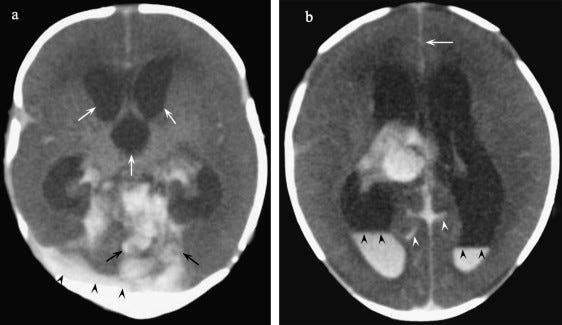
Newborn brain hemorrhage, also called a brain bleed, presents with jerking of the arms or legs, (seizures), decrease level of consciousness, extreme sleepiness, decreased tone (floppiness), weak sucking and trouble feeding, and/ or high-pitched cry. Sometimes a bulging fontanelle (soft spot) is the only sign.
Neonatal intensive care is generally required for diagnosis and stabilization. Often neurosurgery is required – placing a shunt for hydrocephalus (build-up of cerebrospinal fluid within the brain).
Long-term outcomes from intracranial hemorrhage include cerebral palsy, other neurological deficits, and long-term disabilities.
In the podcast linked below, Dr. Ari Brown, author of Baby 411, and Toddler 411, and I discuss this topic among many others that concern parents today. Enjoy!
Parents who refuse vitamin K for their babies are more likely to skip other recommended health protections. In the U.S., parents who refuse vitamin K are 90 times more likely to refuse both the hepatitis B vaccine and eye medicine meant to protect newborns from potentially blinding infections. In Canada, those who refuse vitamin K are 15 times more likely to not have their child vaccinated by 15 months old. In New Zealand, they are 14 times more likely.
Vitamin K refusal has increasingly been swept up in broader post-pandemic health care and vaccine hesitancy, medical mistrust, and online misinformation.
Parental concerns include pain, preservatives they believe to be harmful, and the impression that they have been given inaccurate information.
The pain is brief and minimal.
No dangerous preservatives are contained in the Vitamin K shot. In some formulations, benzyl alcohol is used as an antimicrobial preservative, which is not dangerous to newborns in one low dose.
Rhetoric from the HHS and CDC about mistrust of vaccines is negatively influencing many parental decisions.
Medical information about the need for IM Vitamin K after birth for all newborns is correct.
My fervent wish is that parents begin to trust over sixty years of pediatric guidance from the American Academy of Pediatrics and your pediatrician about your newborn infant’s need for IM vitamin K after birth.
When you do not trust our recommendation, the risks for your newborn are simply too great.
Scott K, Miller E, Culhane JF, et al. Trends in vitamin K administration among infants. JAMA. 2026;335(3):272-274. doi:10.1001/jama.2025.21460
Simatou E, Tsamantioti E, Hallstrom A. et al. Vitamin K prophylaxis in newborns and bleeding in infancy. JAMA Pediatrics 2026 https://pubmed.ncbi.nlm.nih.gov/42440325/ (DOI: 10.1001/jamapediatrics.2026.2606).
Comments
Nothing yet. Say the first thing.
Sign in to join the conversation.