
By Kay Drew, MD
I’m always a bit uncomfortable when I’m asked to talk about what I wryly call “my brilliant career.” Once I completed my neonatology training in 1982, I took a few months off to recover from the burnout I experienced by the end of fellowship. (It was also time to attempt to start a family with my husband, if we were ever going to do that. I was all of 31, which seems like the dawn of fertility nowadays.) As an individual who was prone to depression, I wasn’t sure I ever wanted to work full-time in my chosen field. Once I’d recovered from fellowship, I began moonlighting in a local community hospital whose neonatology service, a Level 2 unit, was run by a (male) former colleague. This position proved to be enough for me to keep my hand in while I figured out what to do with all of this training long-term.
My first child, a girl, was born a little over a year after I finished my fellowship. I took my neonatology boards that autumn, while my husband cared for our daughter in a hotel room and I dashed out to nurse her between the morning and afternoon exam sessions. After several months of full-time motherhood, my erstwhile colleague invited me back to work part-time in the daytime as well as take backup call on weekends, which I gratefully accepted. (Full-time motherhood, I could see, was not for me.) Things went swimmingly until I got pregnant again (unplanned) and found out it was twins! When I called my colleague to tell him the news, he was quite put out; he assumed I must have had fertility issues, even though my first child was only 15 months old. (LOL.) I worked until about 20 weeks, when yet another ER visit for suspected preterm labor turned out to be the real thing and I was put on bedrest for the duration of the pregnancy. (Prior to this event, I’d had a busy weekend on backup call, wherein I actually drank some sherry to quiet my contractions--!)
I took about 4 months off after my (healthy full-term) twin daughters arrived. My first day back at work was largely taken up with a childcare crisis which, thankfully, was soon resolved. About 4 years after the twins were born, the hospital where I’d been employed underwent a change of management and started the process of becoming a Level 3 center, which I didn’t want to be part of. I started working as a moonlighter at a large (8 to 10K annual deliveries) suburban hospital, which worked well for me; within a few years, I began job-sharing with another woman along with some moonlighting. This continued for another decade. Around 1999, I moved to a different Level 2 community hospital, where I worked—first part-time and then full-time—until I retired in 2011.
So that’s the just-the-facts version of my story. The feelings are, of course, more complicated. I really wanted to spend more time with my children as they grew up than a more typical “full-time” job would permit. But I also carried a deep ambivalence about practicing medicine in the first place. I loved the field of neonatology; but I knew I needed to construct my life in such a way that I had some time for reflection, writing, and other pursuits, as well as family life. I didn’t want to get sucked into the vortex of not being able to turn off the faucet of preoccupation with patients, fear of making mistakes, etc.—all the sufferings that a conscientious physician is prone to. When I was there, I was there. But, mental-health-wise as well as family-wise, I just couldn’t afford to be totally caught up in my work.
Of course, there was a downside to all this. I was always an outsider, never really part of “the group.” This was especially true at the large suburban hospital, where mere moonlighters and part-time people were not privy to decision-making (or bonuses)—which, on the face of it, was perfectly fine; being reminded of it frequently wasn’t. And then there was the censure of colleagues who felt entitled to question my decision to work part-time: the female pediatrician who, while examining one of her patients, said, “And that’s enough for you?” when I responded to her query about my status. Not to mention the male pediatrician in the group a good friend (female) practiced in, who told her that he thought I should not have taken up a man’s place in medical school--! (That old chestnut?? I never knew why my friend had told me this; and she objected when I wrote the guy a letter expressing, politely, my views on the matter. Needless to say, our friendship suffered.)
The last years of my practice were a respite from all this. My boss and most of the other physicians were female; and we worked with a couple of nurse practitioners, also female. Throughout my career, I had always had a good rapport with nurses; some of the ones I worked with are friends to this day, more of them than the doctors I worked with.
On the whole, I’m glad I did what I did. I treasure the time I had with my children, and I was glad I had an opportunity to volunteer in their classrooms and the PTA, attend their games and practices, etc., which I probably wouldn’t have done otherwise. I’m glad I followed my own inner voice rather than acceding to the expectation that a physician has to work 60—80 hours a week in order to be taken seriously. To my mind, the 60—80 hour-a-week model is a male one, a patriarchal one—it works just fine for men who have wives, maybe not so well for women with families, even when they have good help. (Who knows, maybe it doesn’t work that great for most of us, female or male.)
As time goes on, I feel less guilty about having prioritized my personal life—mental health, marriage, and children—over a traditional model of practicing medicine. And I was lucky to practice in a specialty where I could do shift work and make a part-time job a viable option. As I said before, even when I worked part-time, when I was there, I was there. And I don’t think I could have done that if I’d practiced “full-time.”
Perhaps I was a woman ahead of my time. With the significant increase in women practicing medicine compared with when I started out, I’ll bet the 60—80 hour a week model has taken a hit. I certainly hope so.

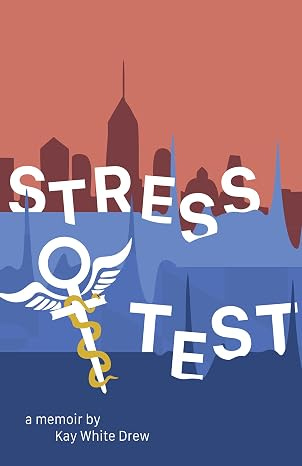
Kay has written a memoir, published in 2024, about her training from medical school through her internship, her very own “Stress Test.” Her book is available here.
If you enjoy these stories, please hit the❤️ button below and restack by hitting the 🔄️ button. Then other people can find our work. Thanks for reading!
Comments
Nothing yet. Say the first thing.
Sign in to join the conversation.