
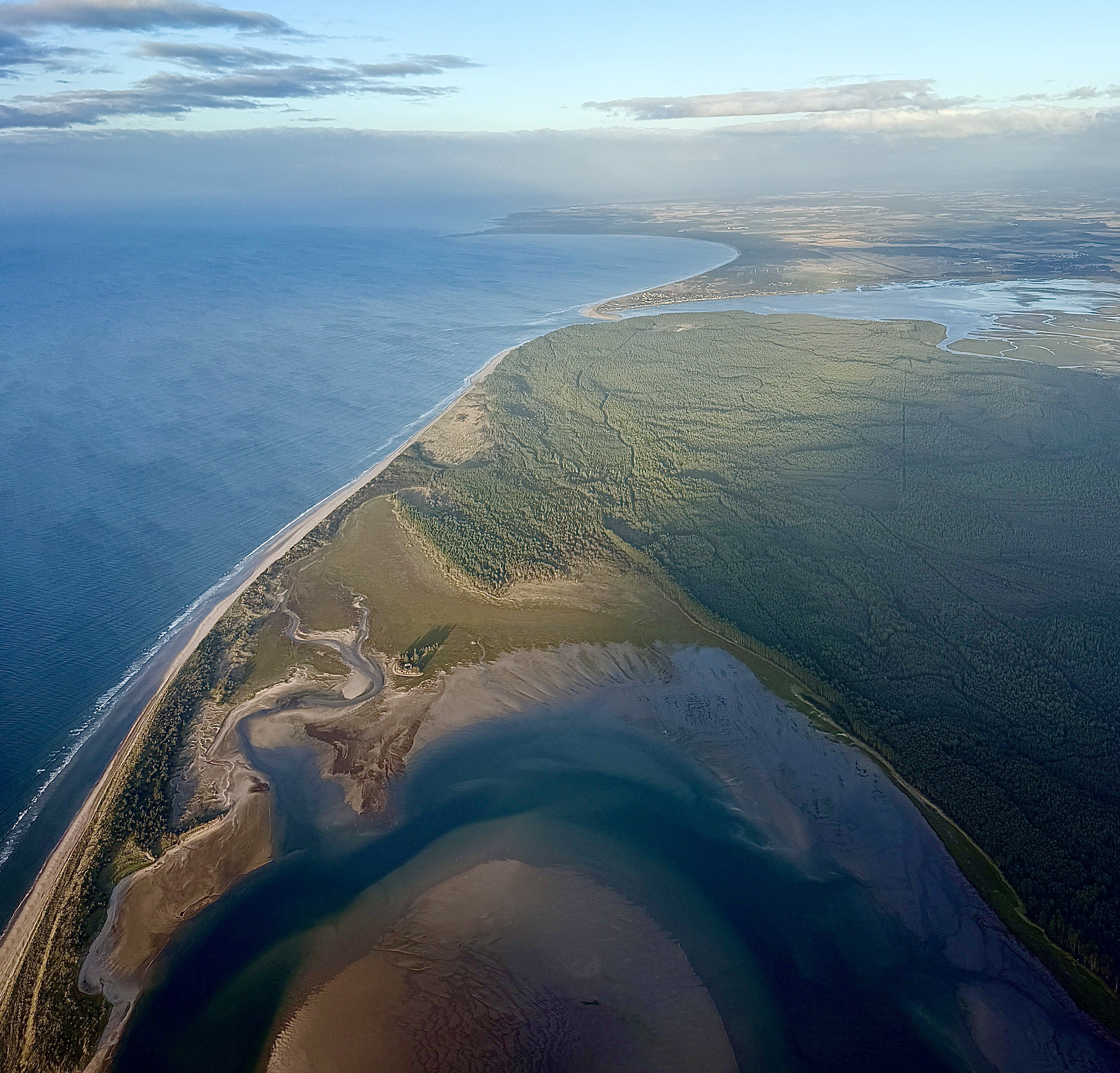
On the southern shores of the Moray Firth, between the towns of Nairn and Forres, you will find a vast expanse of forest known as Culbin. Today it is a hub for timber production, recreation and biodiversity, but just over a hundred years ago it was a virtual desert of drifting sand that had destroyed the livelihoods of the landowner and his farming tenants.
Winds of Change
Historically, Culbin Estate had been a thriving agricultural community. Its low-lying soils were renowned for strong yields of crops like barley, earning it the title of the Granary of Moray. It was home to many families, farms and crofts, and played an important role in the local area.
In the seventeenth century those fortunes changed drastically. The sand dunes that bordered the estate were part of a naturally shifting system held together by marram grass. The people who lived and worked there regularly pulled the marram to thatch their cottages and barns, completely unaware that by doing so they were weakening their only line of defense against the moving sands. As the density of marram declined, the dunes became more mobile and the sand began to creep steadily inland, covering fields and threatening homes.
This movement continued for a sustained period, bolstered by the silt brought down by the River Findhorn over hundreds of years previously. Then, in 1694, a series of unprecedented storms known as the Great Sand Drift overwhelmed the estate. Farms and settlements were buried and there was no choice but to abandon the area to the advancing dunes. The laird at the time, Alexander Kinnaird, lost his lands and fortune, and the community lost its homes and livelihoods forever.
A year later the Scottish Parliament passed an act forbidding the pulling of marram, but the protection came far too late for Culbin. For more than two hundred years the area remained an unstable expanse of shifting sand, with natural vegetation unable to re-establish.
Shifting sands
Several attempts were made in the nineteenth Century to try and stabilise the edges of the dunes with Scots pine (Pinus sylvestris),but the establishment of the Forestry Commission in 1919 after the First World War created the institutional conditions for more ambitious action.
During the war, Britain had exhausted a significant proportion of its timber reserves, and had become acutely aware of its dependence on imported timber. Increasing domestic production therefore became a national objective. At the same time, the Forestry Commission was tasked with identifying lands of limited agricultural potential that might be suitable for afforestation.
The Culbin Sands presented both a problem and an opportunity. On one hand the site was exceptionally difficult, consisting of loose, nutrient-poor sand with almost no established vegetation. On the other it offered a large expanse where new methods for dune stabilisation and experimental planting could be attempted without displacing productive farmland.
In 1921 the Forestry Commission began the acquisition of Culbin, with tree planting commencing the following year in a small area to the west. One of the first major trials on the dunes began in 1923 and involved the systematic planting of marram grass alongside predominantly Corsican pine (Pinus nigra), which was chosen for its tolerance of dry conditions. One row of trees, followed by one row of marram grass was planted to help stabilise the sands while the trees established.
However, over the next ten years it became clear this method was not a viable long-term solution, as the marram grass was repeatedly blown out, exposing the tree roots to the elements.
Brilliant Brash
Across the areas where the marram technique had been employed, there were major losses of trees, so attention turned to protecting the survivors.
Elsewhere on Culbin, vegetation like broom was encroaching and becoming an issue, requiring its own management through cutting. It was decided to use the cuttings as a cover over the sand to protect the trees. This quickly proved far more effective than planting them alongside marram.
The idea developed through further pilot experiments using the lower stems cut from trees, otherwise known as brash. In 1937 the Forestry Commission began a programme of thatching on the open sand, which involved laying the brash with its butt ends facing the windward direction. This not only created a natural windbreak against the constant movement of sand, it also helped retain moisture around young trees, and added nutrients to the soil. Sweepings from haylofts were sometimes spread over the thatch as well, to encourage the growth of grasses and other small plants that would aid in further stabilisation and enrichment of the ground.
While the thatching was successful, it was an ambitious and resource hungry undertaking. Approximately forty tonnes of material were required per acre, which was the equivalent of the brash produced from four acres of forest. There was limited suitable material available on site, so the brash had to be brought in from local forests.
The thatch was laid first, and once it had settled, tree planting would begin, usually during the winter months. All saplings were grown by the Forestry Commission and planted out at around three years of age. Pine was the chosen species for the site, with Corsican pine used exclusively on the sand dunes, Scots pine on the better flats and lodgepole pine (Pinus contorta) on the poorer, wetter flats. Other species, including silver birch (Betula pendula), established themselves naturally, the seed source having arrived within the brash.
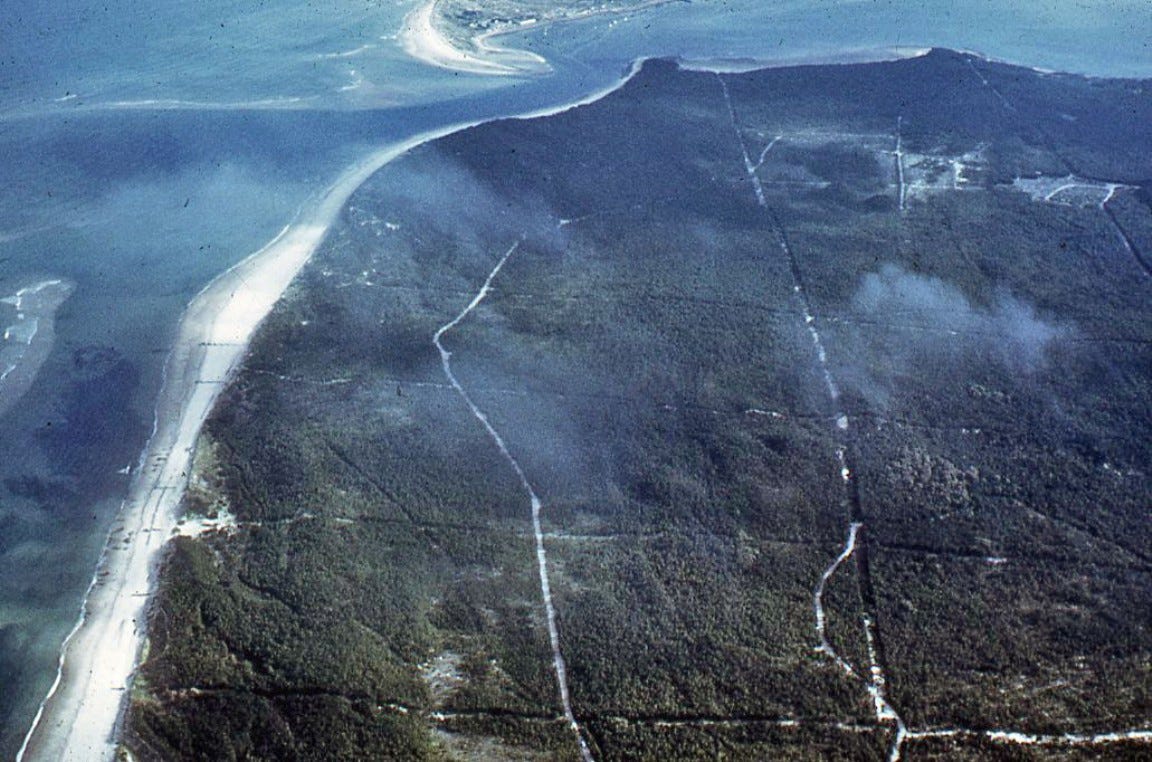
The planting programme started well but was severely hindered by the Second World War. However, in 1948 the scale of work increased substantially, and between one hundred and two hundred and fifty acres were thatched and planted each year. The programme was completed by the late 1960’s, by which time more than four thousand acres of drifting sand had been reclaimed.
Reaping the Rewards
Today, Culbin Forest remains in the ownership of the Scottish Government and has evolved into a thriving, diverse landscape of national importance. It is managed by Forestry and Land Scotland (FLS) under two primary objectives: to create woodlands of high environmental value for species, habitats, and landscape, and to produce a quality crop of timber. A secondary objective is to manage the woodland as an important recreational resource for the communities of Nairn, Forres, and the surrounding area.
In terms of environmental value, the forest lies within the Culbin Forest and Findhorn Bay Site of Special Scientific Interest (SSSI). It forms a mosaic of intertidal flats, sand and shingle bars, dunes, dune-slacks, salt marsh, heath, freshwater bodies, freshwater marshes, and woodland, making it the largest sand dune system in the UK.
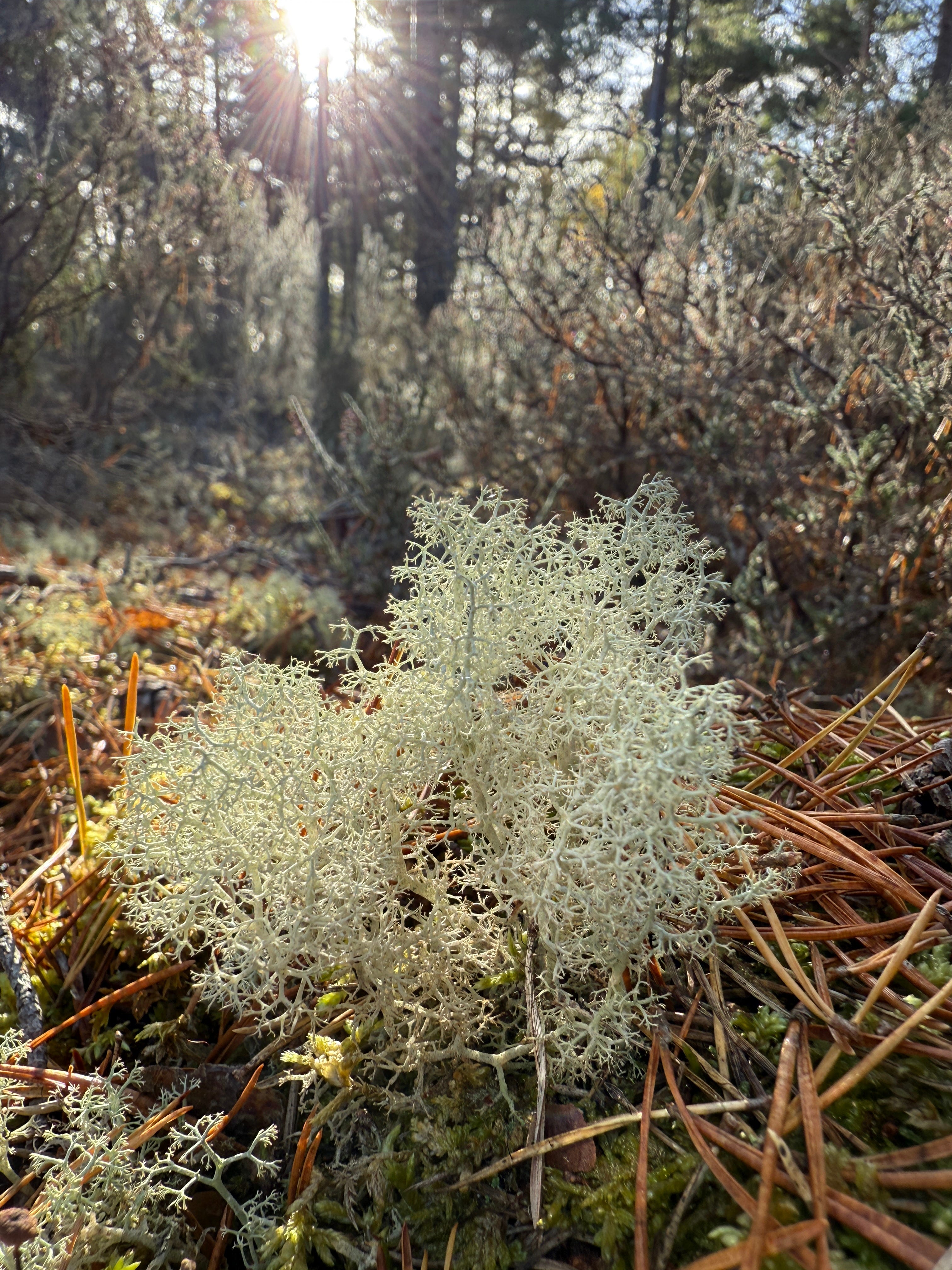
The biodiversity of Culbin is remarkable. Over 550 flowering plants and 450 species of fungi have been recorded, including rare species such as single-flowered wintergreen (Moneses uniflora) and the sand deceiver (Laccaria maritima), which is found nowhere else in Britain. Its internationally important lichen assemblages carpet parts of the forest floor, while the woodland and dunes provide habitats for a whole host of wildlife, including red squirrels, pine martens, birds, and amphibians.
What is particularly impressive is that the forest has developed this level of biodiversity while continuing to be managed for commercial objectives, something which is largely due to the management approach taken.
Traditionally, commercial forests are often clear-felled once trees reach maturity, but this approach was not suitable at Culbin because of the shifting sand dunes and the risk of exposing them. To protect both the landscape and its ecological features, the forest has long been managed using a Low Impact Silvicultural System (LISS). This method maintains continuous forest cover, encourages natural regeneration, and allows selective harvesting.
There are exceptions, with small areas of clear-felling up to two hectares permitted. These have proved useful in helping manage the disease Dothistroma needle blight (DNB), which has increasingly affected the forest. Culbin continues to serve as an important site for research, with Forest Research studying tree growth, health, and management techniques, while other organisations monitor and study the many species that inhabit the forest.
Timber production at Culbin began in the 1950s, with the first thinning’s helping to generate income and establish a productive woodland. Today, the harvested timber is sold to make products like fenceposts, chipwood, and construction materials, with around 95% sold to markets in northeast Scotland.
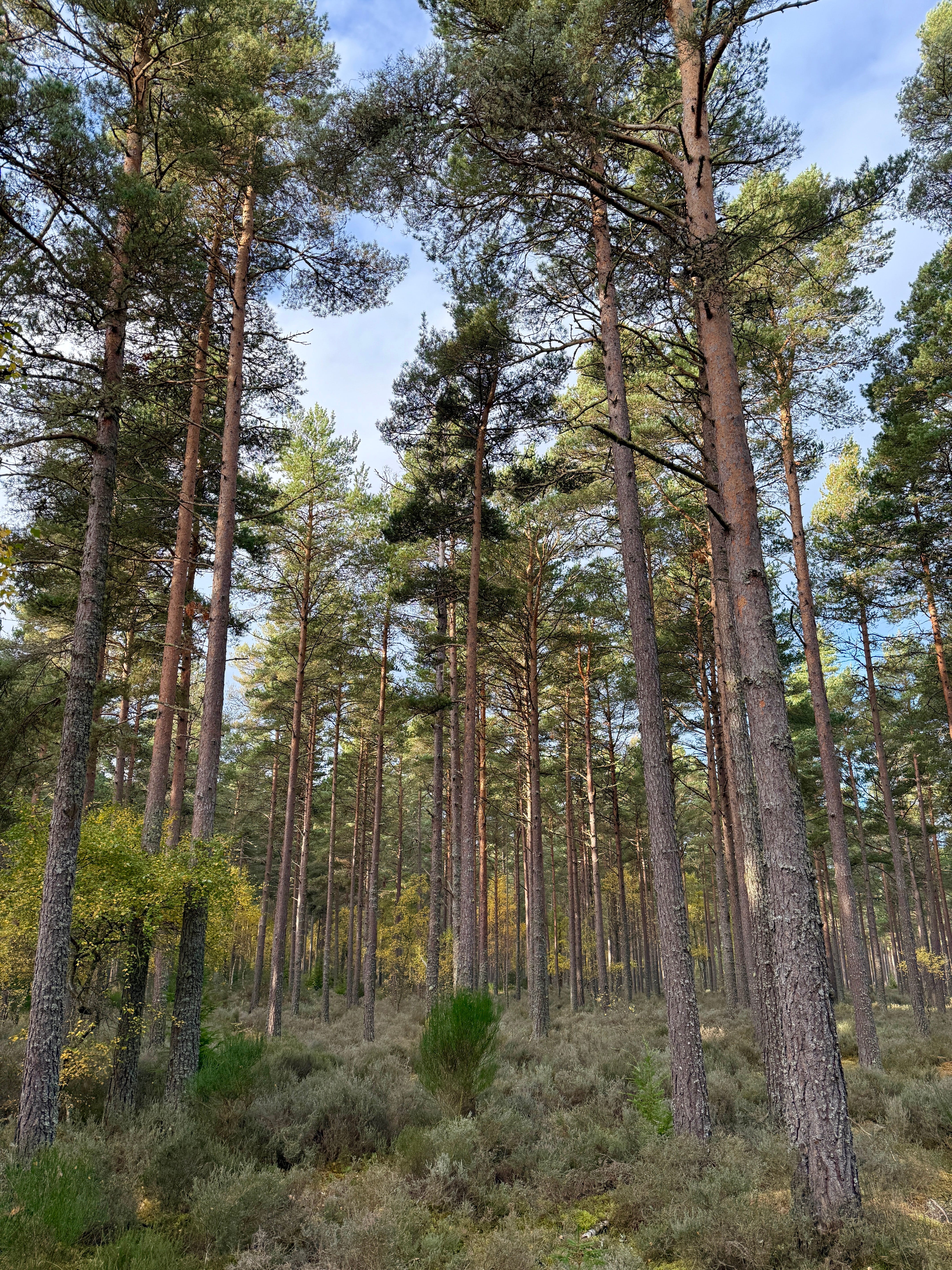
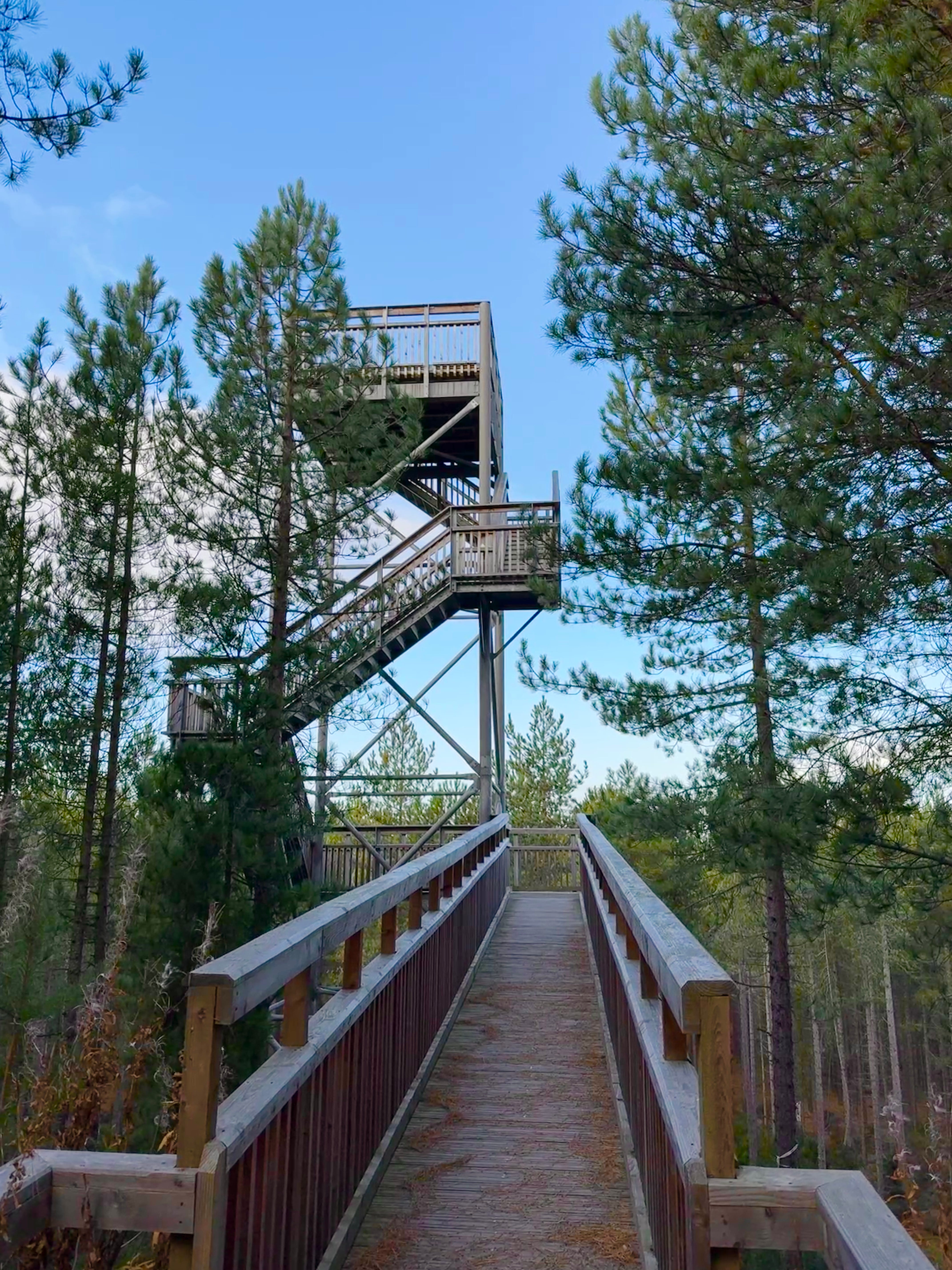
From a social perspective, Culbin Forest is an important recreational resource, providing a network of waymarked trails and tracks used for walking, cycling, and horse riding. It is a popular destination for locals and visitors alike, with the Hill 99 route and view from the top of the fire tower a personal favourite.
Proving What’s Possible
Culbin’s story is a testament to the ambition and vision that shaped those early efforts. In just over a century, a landscape once devastated and widely considered beyond recovery has been transformed into a productive and biodiverse forest. It is one of the clearest demonstrations of what can be achieved at a landscape scale through sustained, targeted restoration, proving that even the most damaged environments can be brought back to life.
If you would like to learn more about the Forestry Commission’s work at Culbin, this is a great film from 1955:
No posts
Comments
Nothing yet. Say the first thing.
Sign in to join the conversation.