
Welcome to the second edition of Rural Reads. This month we are celebrating National Tree Week in the UK, which runs from 22nd to 30th November, so it feels only fitting to focus on the theme of trees and forests.
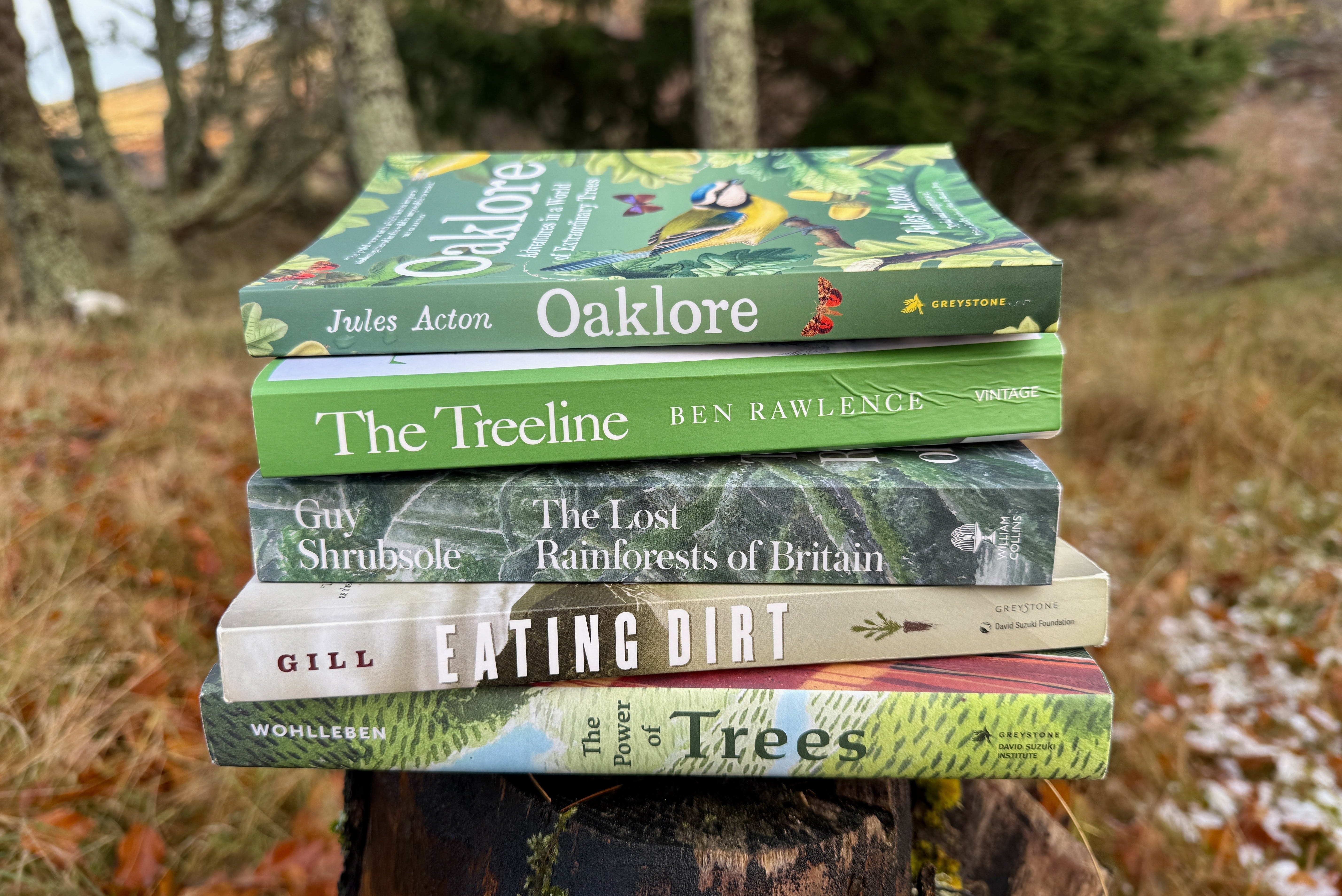
The Lost Rainforests of Britain by Guy Shrubsole
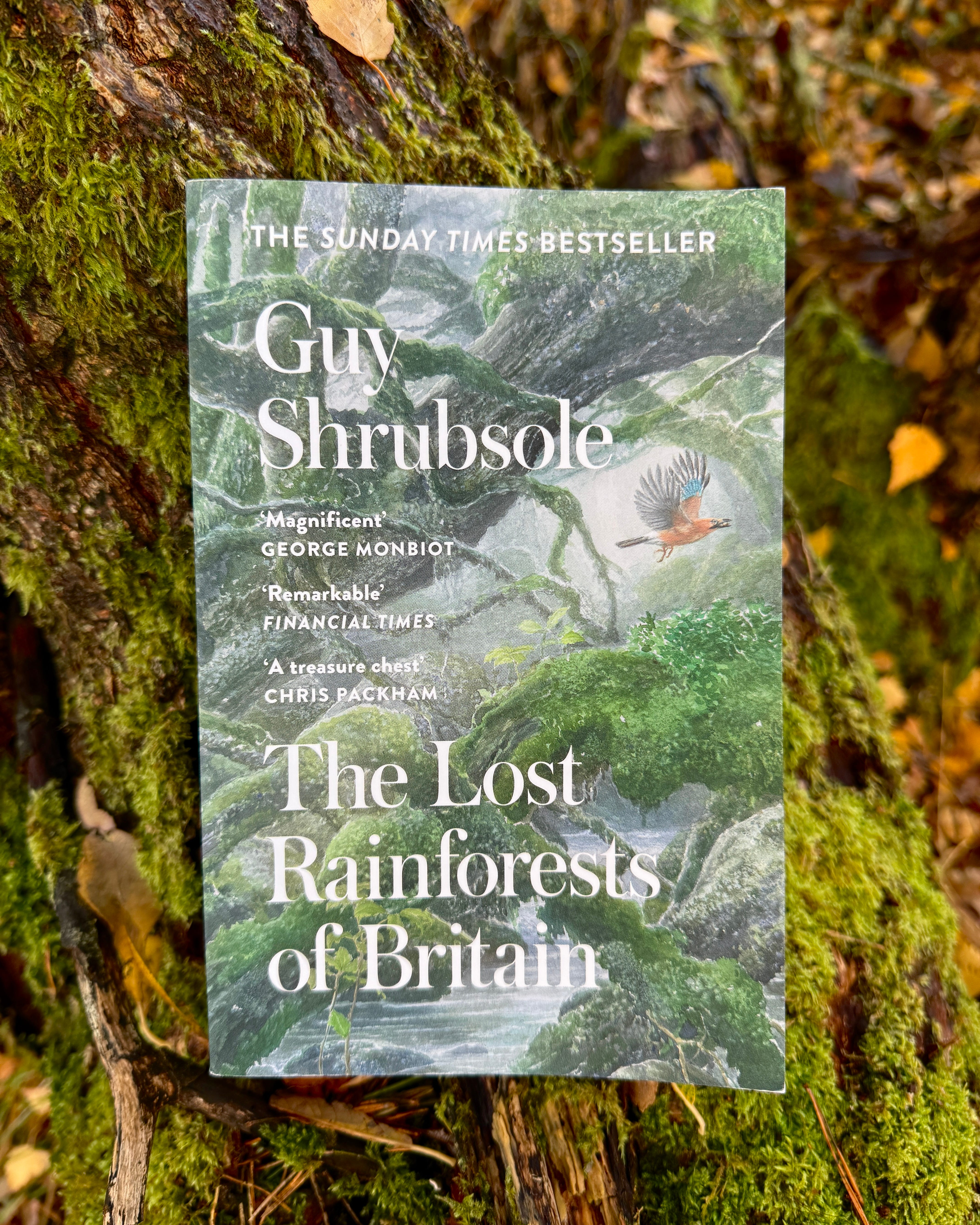
This is probably one of the most important and influential books on conservation I have read in the last few years, as it has brought the plight of our native temperate rainforests into the mainstream spotlight.
The term rainforest has become synonymous with the tropical climates of the Amazon, but temperate rainforest covers just 1% of the earth’s surface and is a globally rare habitat, with fragments that can still be found across the UK.
Through well researched insights and fascinating descriptions of green and enchanting worlds, this book explores the location, history and ecology of these fragments, from the Western Highlands and the Lake District, to Wales, Devon and Cornwall. It is so evocative in places that you will want to jump in the car and visit immediately!
At the heart of this exploration though are the reasons why our temperate rainforests in Britain have become so threatened, and what we need to do to save them. The need for increased deer management and rhododendron control is quite rightly at the forefront.
But rather than focussing on the negatives, this book is framed more positively, seeking to raise awareness and inspire us to become part of the author’s restoration agenda, and his quest to bring back Britain’s lost rainforests. It certainly inspired me.
A worthy winner of the Wainwright Prize for Conservation in 2023.
‘A visit to a rainforest feels to me like going into a cathedral. Sunlight streams through the stained-glass windows of translucent leaves, picking out the arches of tree trunks with their haloes of moss. They’re places that at once teem with life, yet have a sepulchral stillness to them.’
Guy Shrubsole
Eating Dirt by Charlotte Gill
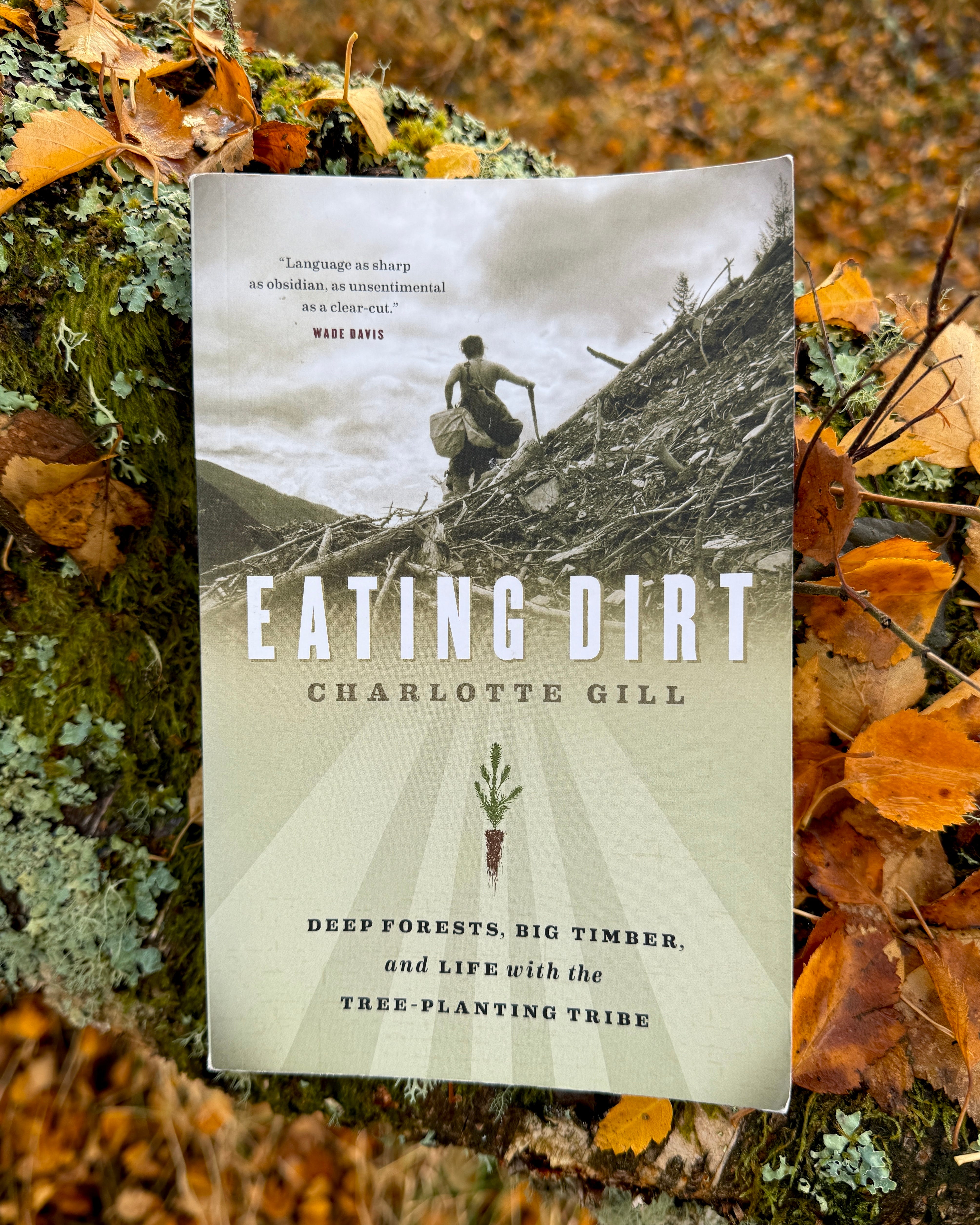
Set in the forests of British Columbia, this book centres on Gill’s life as a tree planter. Anyone who harbours romantic notions about tree planting will find this a sobering read, as it paints a powerful and raw picture of the hardships of working and living in such an isolated and physically demanding environment, and the toll it can take.
From her first planting season as a rookie to her last as a ‘crusty’ veteran, the stories are vivid and intense, and there were times when I found myself holding my breath. The daily battle she and her crew face against the weather in winter, bugs in summer, bears all year round and the fatigue from doing one of the most physically demanding jobs on the planet, is relentless.
The descriptions of the logging trade are tough to read, revealing the terrifying environmental cost of deforestation in pursuit of profit, but she doesn’t shy away from the stark reality of clear-cutting old growth forests and her deep criticism of that.
But ultimately it is about people and the deep connection within the tree planting tribe. Bonded by shared hardship and resilience, by the end you start to get to know the different characters and what drives them to do this job season after season.
It is a book that will stay with you long after you finish it.
‘We fall out of bed and into our rags, still crusted with the grime of yesterday. We’re earth stained on our thighs and shoulders, and muddy bands circle around our waists, like grunge rings on the sides of a bathtub. Permadirt, we call it.’
Charlotte Gill
The Power of Trees by Peter Wolleben
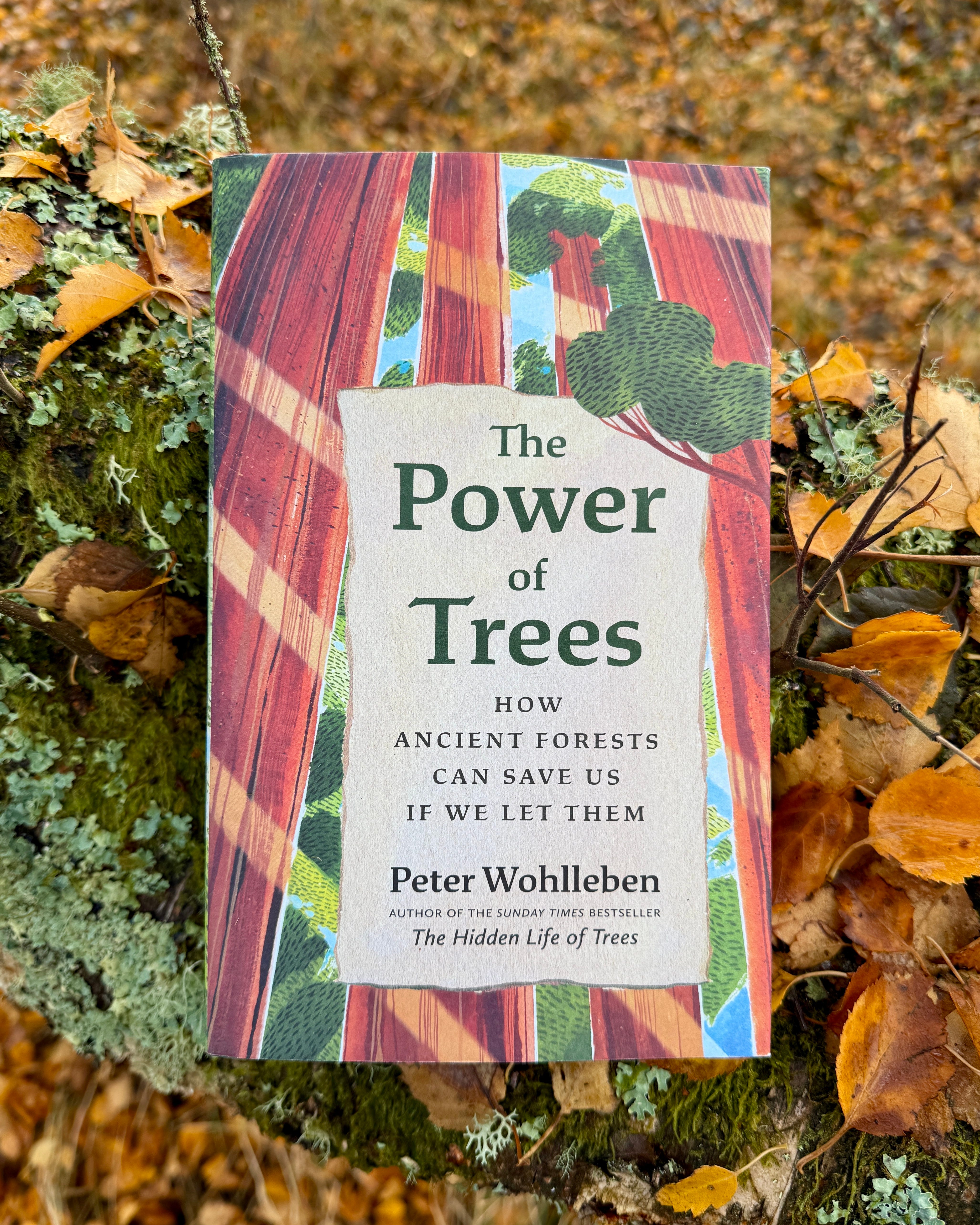
You may recognise the author from his international bestseller The Hidden Life of Trees, which drew on groundbreaking scientific discoveries showing that forests are social networks that operate and communicate like families. This book builds on those themes, by examining the critical role ancient forests play in mitigating climate change.
It provides a genuinely fascinating insight into how trees leverage their vast stores of knowledge and adaptive capabilities, passed down through generations, to respond to environmental change and stress. The explanation behind these processes is well presented, with clear examples that make it an engaging and easy to understand.
The author is also known for his somewhat controversial views on current silvicultural practices, and this critique is a recurring theme throughout the book. One of his core arguments is that mass tree planting causes more ecological harm than good. While challenging to read, there is merit to his views, supported by both his own experience and emerging research on how forests influence climate. Rather than planting, he argues that the best approach to protecting ancient trees, and ourselves, is to allow these natural systems to recover on their own.
It is a thought-provoking contribution to the wider conversation on how we manage and value our forests
‘If we allow them to, forests will return, at least in places where forests still grow, even if the trees right now are suffering. Forests have always needed to regenerate because catastrophic events have been their constant companions for hundreds of thousands of years.‘
Peter Wohlleben
Oaklore by Jules Acton
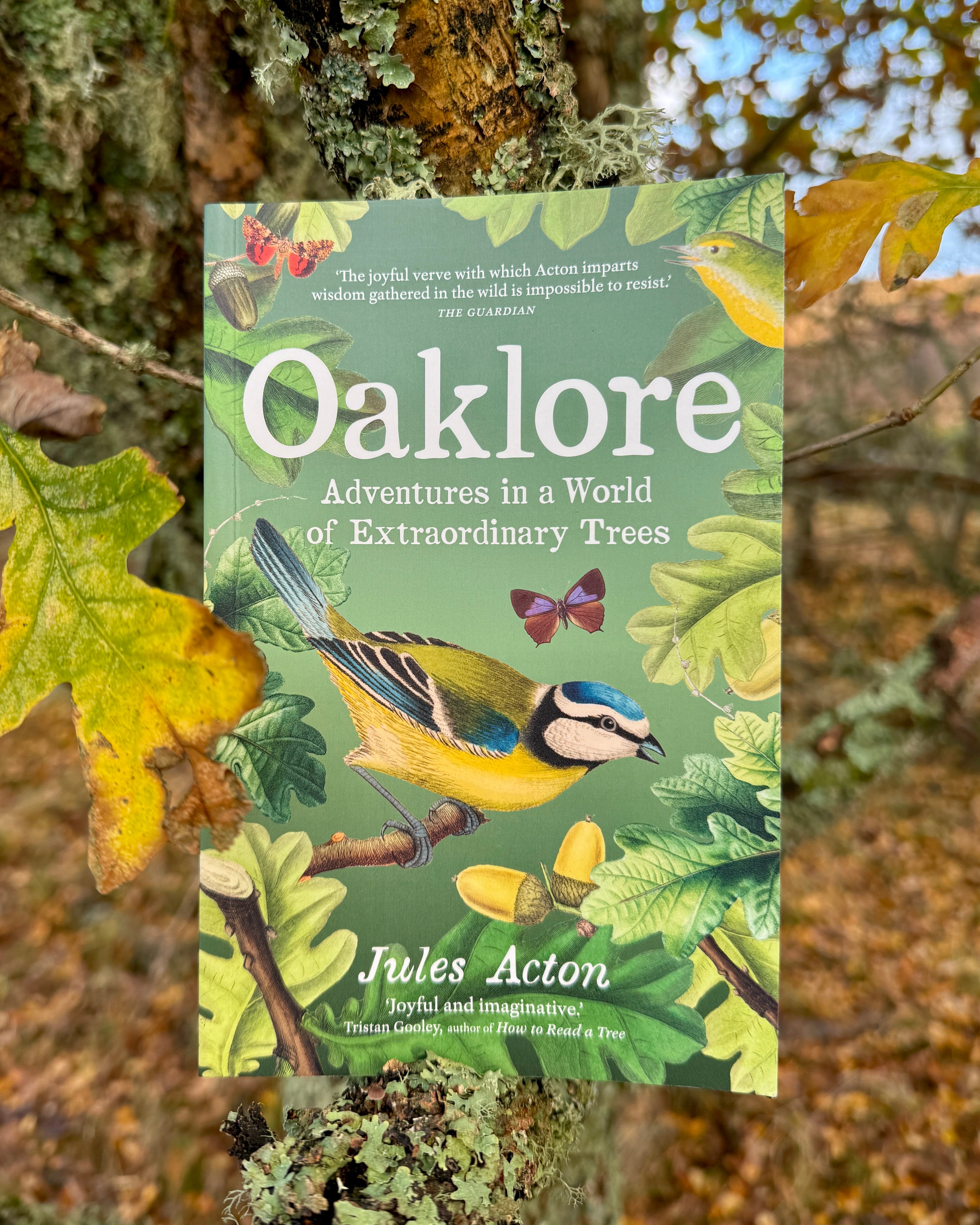
Oaks have long been an intrinsic part of the British landscape, woven into our history, culture and landscapes. They are perhaps our most iconic and cherished native tree, yet many people are not aware they are also ecological strongholds, capable of supporting up to 2,300 species.
This book brings oaks to life, inviting the reader to view them in a whole new light. It is packed with interesting stories and facts, from the sheer scale of biodiversity they support, to their influence in Shakespeare’s writing, their role in sheltering royals during times of war, and the value of acorns as a food source. There is even a recipe for bread rolls made with acorn flour that I am keen to try.
The author is clearly very passionate about oaks (her surname means ‘oak place’!), although she is quick to point out she is not a forester or an ecologist, simply someone with a deeply rooted interest. But it is written in a way that makes it very accessible to a wide audience, often feeling as though we are learning alongside her.
One of the most important themes she raises is the need to increase legal protection of our trees, particularly in the context of planning and development, and how we can all play our part. She makes the argument that if we understand trees and the life they support, we are more likely to value them, and if we value them, we are more likely to protect them.
A very timely reminder.
‘Really look into the oak tree and a glorious thing happens, a new world opens up, a universe of animals and plants and fungi and bacteria,, all of them getting on with the important stuff of life: looking for a home, raising their young, sniffing out something to eat, and also, on occasion, finding something with which to pick a bit of a fight.’
Jules Acton
The Treeline by Ben Rawlence
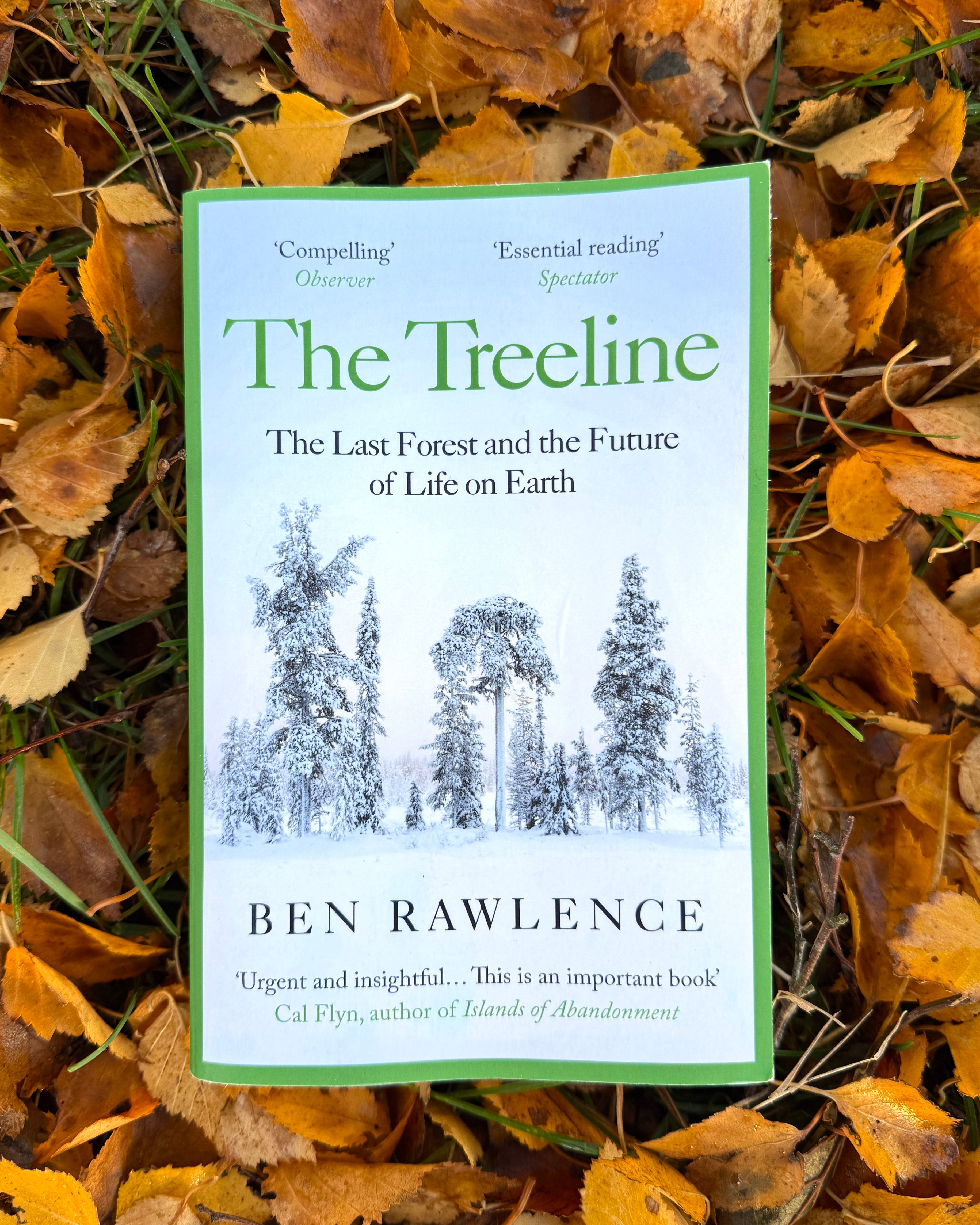
The boreal forest, also known as the taiga, is a vast expanse of deciduous and coniferous forests covering the far northern regions of the earth. Spanning roughly 1.5 billion acres, it contains approximately one-third of the planet’s trees. But the accelerating impact of climate change is causing the boreal to push further north, with the Arctic treeline creeping towards the pole over the last fifty years.
In this book, Rawlence travels along the treeline, from Scotland to Scandinavia, and then through Siberia, Alaska, Canada and Greenland, chronicling the effects of climate change on the landscape, biodiversity and indigenous people who live there. The main characters of the story are six species of tree (Scot pine, larch, birch, poplar, rowan and spruce), providing an amazing perspective into the critical role trees play in our ecosystems, and the deep interconnection between humans and nature.
At the same time, it is also deeply devastating in its assessment of those relationships, and the impact of capitalism and colonialism. While there are gestures of hope, he views climate change as a force largely beyond our control and accelerating faster than any model predicted. Although the book is beautifully written and meticulously researched, I am not entirely convinced by his premise that despair is the first step towards repair.
However, it makes a compelling case that the fate of forests and humanity are inextricably linked.
‘If we want to be part of the assemblage of species that coevolves to survive the coming upheaval then we need to revive that essential entanglement with other living things. We all need to learn once again how to think like a forest.’
Ben Rawlence
If you have read any of these books, I would love to hear what you thought of them. Equally if you have any recommendations you would like to share, please post them in the comments.
You can catch up on Rural Reads: Nature Conservation here.
Future ‘Rural Reads’ themes will include:
Farming
Species re-introductions
People
Thanks for reading!
No posts
Comments
Nothing yet. Say the first thing.
Sign in to join the conversation.