
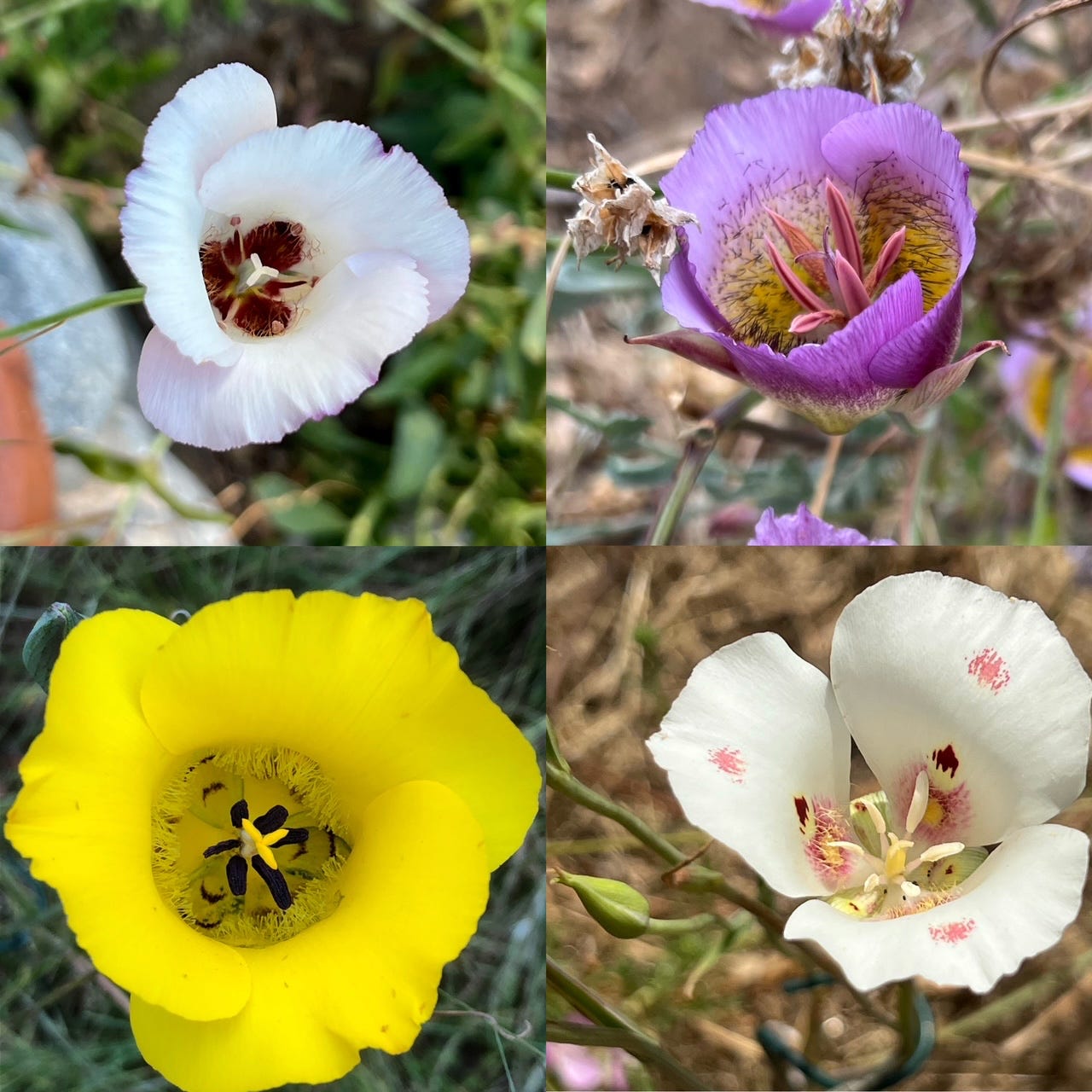
In “The Land of Little Rain,” Mary Austin describes a hillside dotted with Mariposa Lilies in the Eastern Sierra over a century ago as “…peacock-painted bubbles of Calochortus, blown out at the tops of tall stems.” I can’t possibly top that, so I’ll simply concur that California’s jewel-like geophytes are truly among the most exquisite of California’s native flora.
Found in a wide variety of biomes, from grassland to chaparral, geophytes are plants that arise once a year from an underground “storage organ,” such as a bulb, corm, tuber or rhizome. Given their kaleidoscopic beauty, you’d be forgiven for assuming that every California native garden would be bursting with geophytes, but you’d actually be mistaken. In fact, it isn’t uncommon to find even well-established, large-scale native gardens without a single Bloomeria, Lilium or Dipterostemon.
“But, but…how could that possibly be?” you ask incredulously.
Well, first of all, a good geophyte can be hard to find. Although availability has definitely improved, until recently, you’d be lucky to find any bulbs or corms for sale at your local native plant nursery, ever. Even larger and well-stocked operations usually have an extremely limited number of geophytes available, and only once a year, while they’re still dormant in early fall. The handful of specialty sites that offer California native geophytes online quickly sell out, and if you aren’t among the lucky few, you have to wait an entire year just to try again.
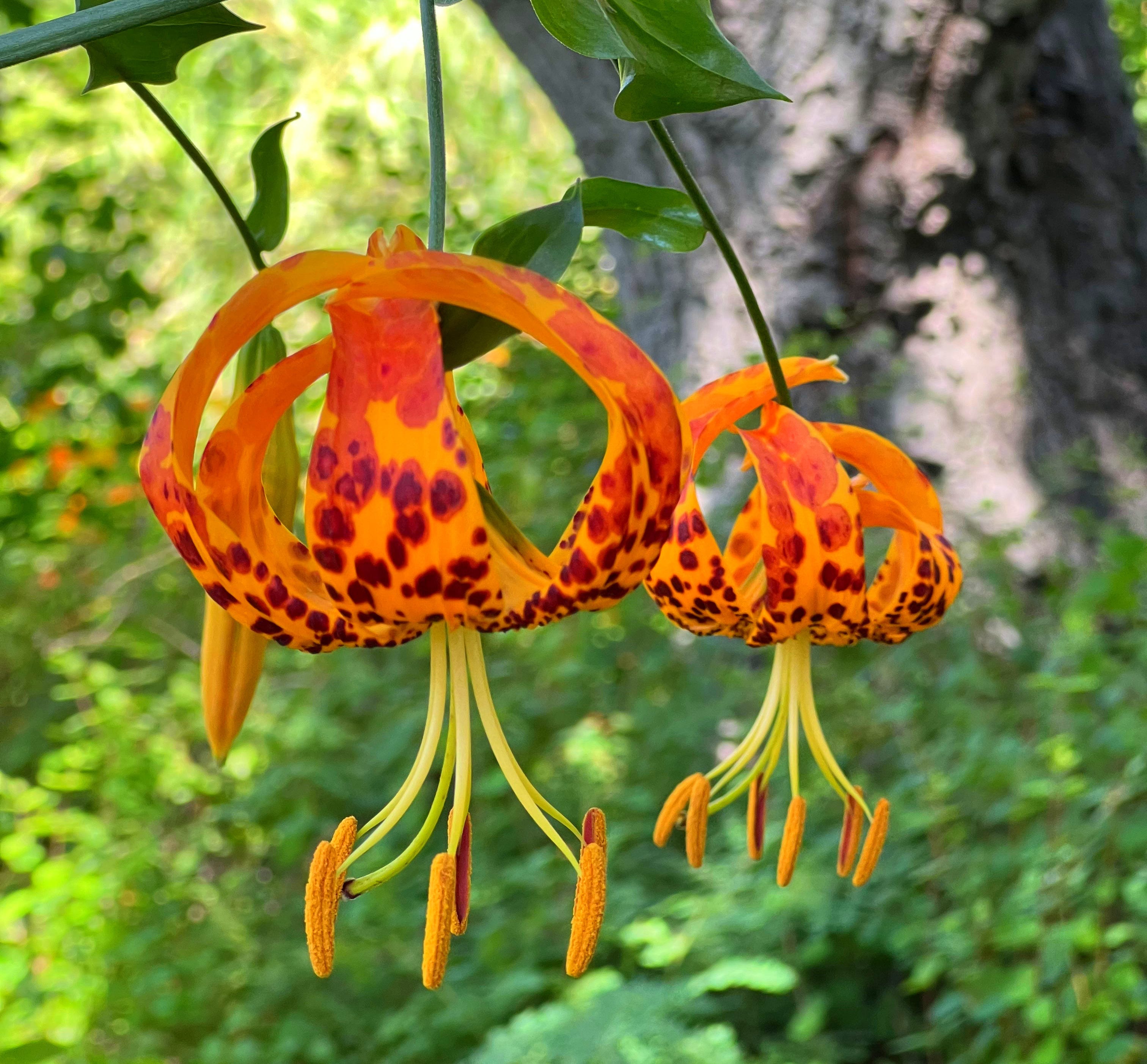
I’m aware that this level of demand would seem to refute my thesis, but it’s really more an issue of supply, an artifact of the time and effort it takes to bring a typical native geophyte from seed to flowering plant. While the most infamous among them may be Spotted Humboldt’s Lily (Lilium humboldtii ssp. ocellatum), which can take 4-5 years to reach flowering size, propagating nearly all of California’s native geophytes to the point where they can be planted out takes an average of 2-3 years. That’s a lot of time, space, labor and resources to invest in something the size of a hazelnut, which also explains why they can be rather pricey – when they’re available at all.
Then, if you actually manage to get your hands on some native bulbs or corms, what the hell are you supposed to do with them? Uncertainty over planting depth, placement, exposure, watering and protection from predators appears to put off even seasoned native gardeners.
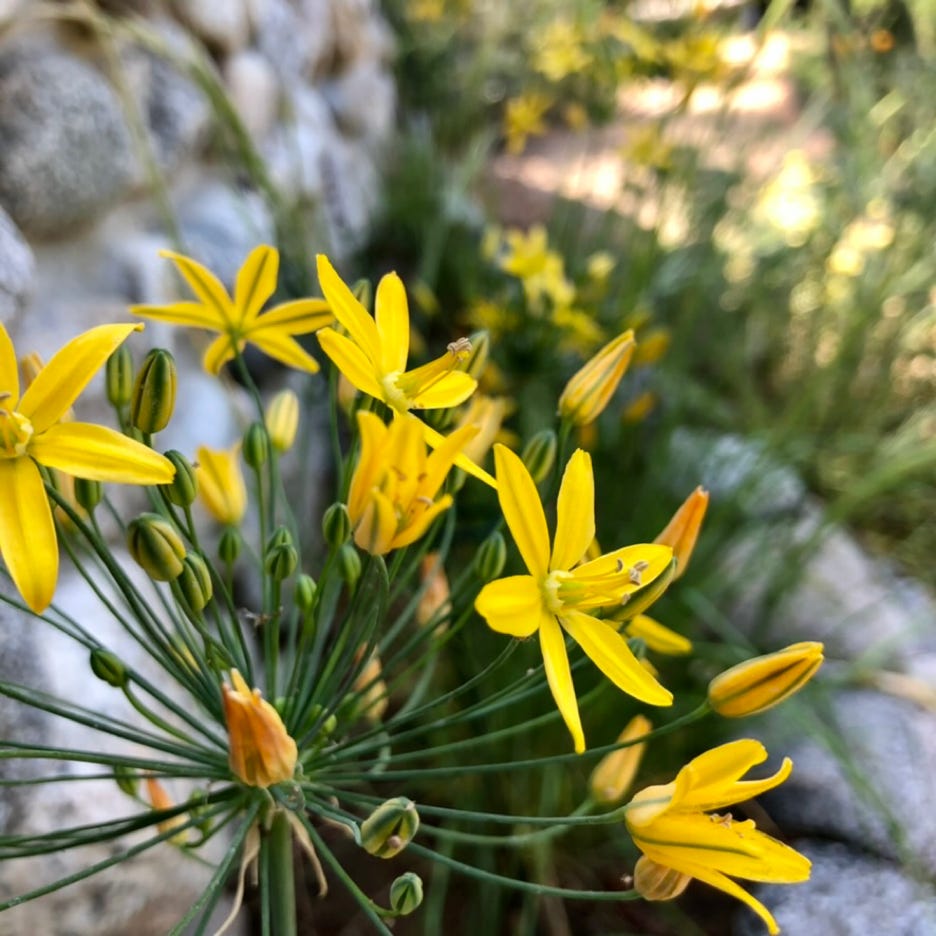
Finally, geophytes may represent a bridge too far for the “I Am Embarrassed by Summer Dormancy” crowd. And yes, it’s simply a fact that your garden’s shimmering cluster of Common Goldenstars (Bloomeria crocea) in spring will wither away by summer, leaving a patch of bare ground with nothing to catch your eye but their dry, denuded stalks. (Geophytes aren’t classified as “spring ephemerals” for nothing.) What’s more, even though they’re essentially invisible above ground at least half the year, they must still be cared for according to their cultural needs below ground. In other words, geophytes combine the evanescence of an annual with the maintenance requirements of a perennial. In practical terms, this means that they continue to take up valuable garden real estate that could otherwise be used for plants that you can, you know, actually see. It also means having to keep the surrounding soil as dry as possible throughout the summer, which admittedly limits what you can plant in their vicinity.
All of these challenges notwithstanding, I am here to tell you that not one of them is insurmountable or reason enough to deny yourself the pleasure of being able to enjoy the sheer gorgeousness of California’s geophytes in your own backyard. What I’ve learned over the years is that the rumored difficulty of gardening with these plants has been grossly exaggerated, based, as it is, on the well-deserved reputations of a few genuinely finicky species. So, for those of you I haven’t already scared off, I’ve put together the following set of FAQs based on my own experience growing geophytes over the years. If you’re a geophyte neophyte – one of those native gardeners out there who’s been reluctant to give bulbs a try – I hope it will encourage you to include these truly magical plants in your own wild landscape.
But first, a word from our sponsor:
Native geophytes are best planted out in late fall to early winter, once the weather has cooled and the days are shortening. I’ve found that planting just before or soon after the first rain of the season is ideal. If you do choose to plant them out before the rainy season has begun, be prepared to keep the surrounding soil uniformly moist until you observe shoots starting to emerge.
Pick a spot in your garden that receives little-to-no supplemental water during the dry season. If they get too much water in the summer, native geophytes may rot from the unnatural combination of elevated soil temperatures and regular moisture. If you don’t have such a spot, establishing one will be an essential part of successfully introducing geophytes to your garden.
It’s also important to consider your geophytes’ surroundings. These commonly diminutive plants can easily get lost or overwhelmed by larger perennials and shrubs. An exception to this rule may be the Mariposa Lilies (Calochortus species), which can often be found poking up through thickets of chaparral stalwarts like California Buckwheat (Eriogonum species), Mountain Mahogany (Cercocarpes betuloides) and Black Sage (Salvia mellifera).
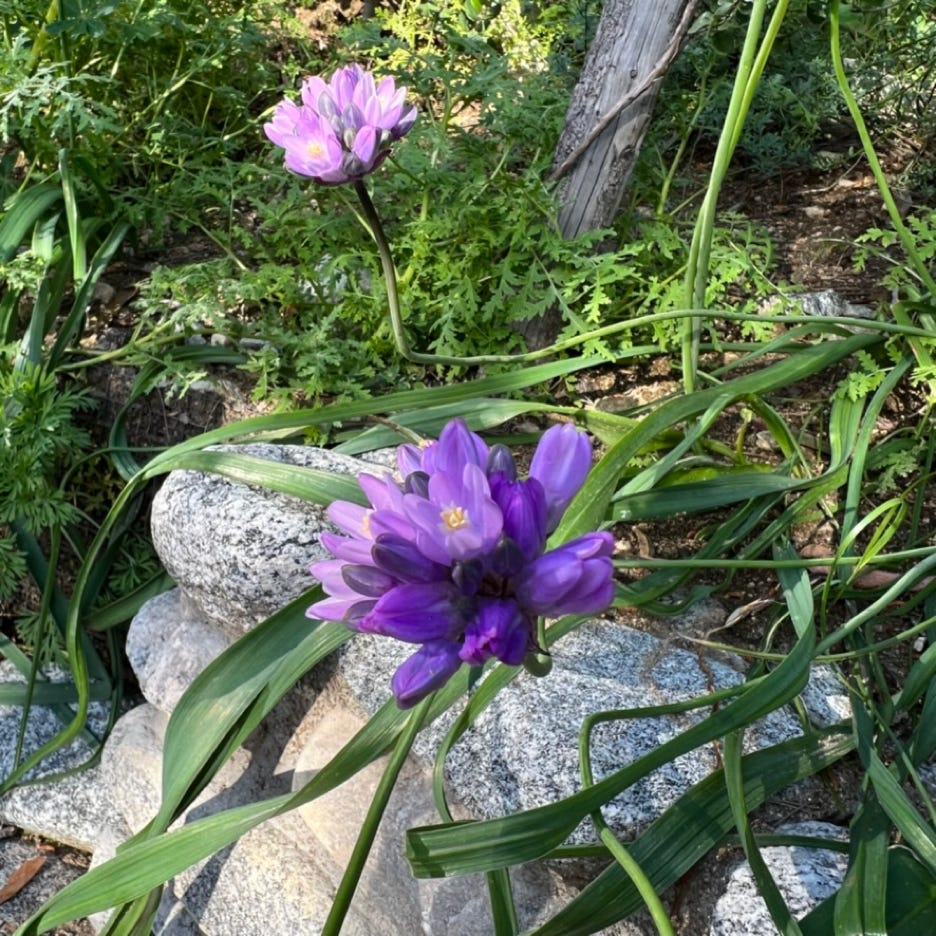
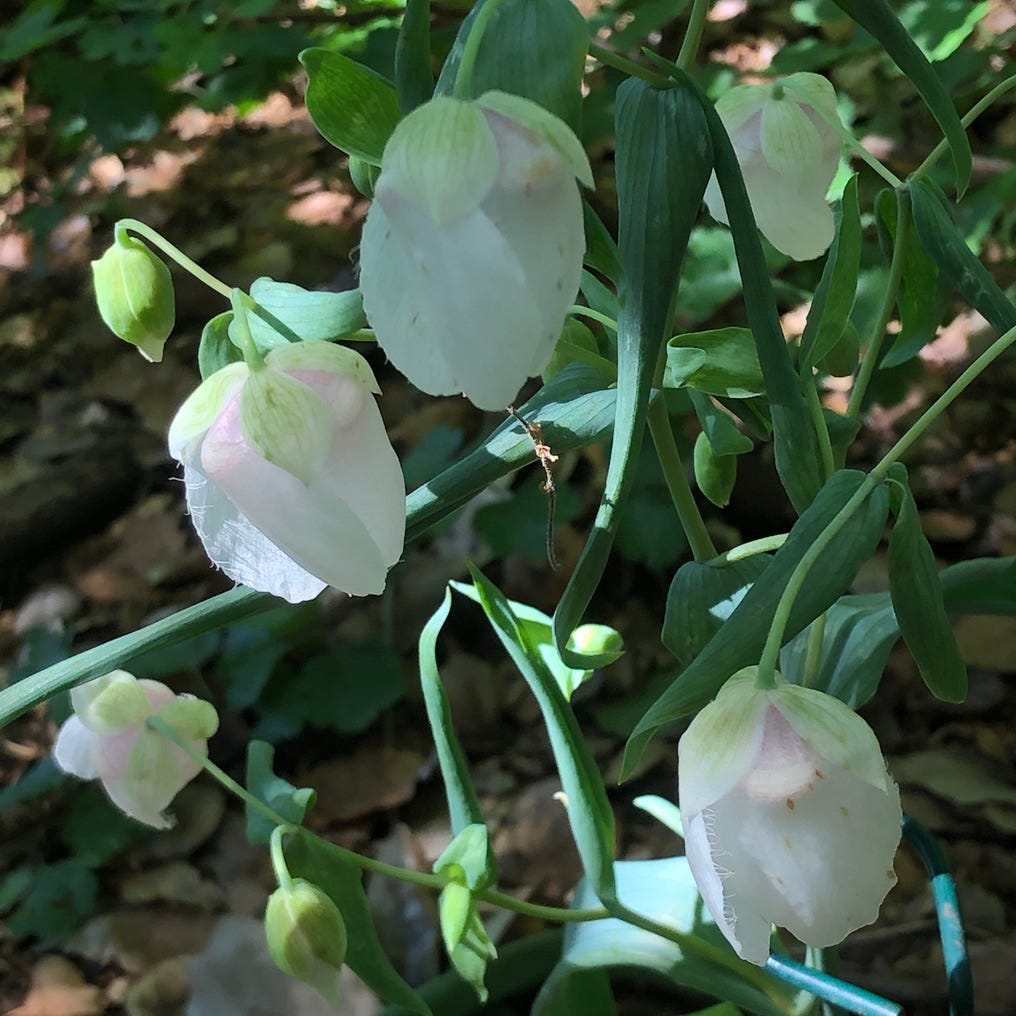
With the exception of Spotted Humboldt’s Lily (Lilium humboldtii ssp ocellatum) and the Globe Mariposa Lillies (such as Calochortus albus), which prefer dappled shade, most of our local native geophytes need full to part sun. Blue Dicks (Dipterostemon capitatus), probably the most forgiving of all native corms, thrive in sunny exposures, but will also bloom reliably in the dappled shade of woodland gardens.
Natural companion plants for the meadow-y set of bulbs and corms would be Needlegrasses (Stipa species), smaller-scale herbaceous perennials like Blue Eyed Grass (Sisyrinchium bellum), other geophyte species and various annuals. Geophytes found in Coastal Sage Scrub or Chaparral will do well interplanted among small to mid-size summer-dry species like Wooly Bluecurls (Trichostema lanatum); Golden Yarrow (Eriophyllum confertiflorum); White Sage (Salvia apiana); California Aster (Corethrogyne filaginifolia); Coastal Prickly Pear (Opuntia littoralis); and Chaparral Yucca (Hesperoyucca whipplei). While most of these plants experience summer dormancy to varying degrees, they will provide your bulb zone with at least some visual structure during that part of the year when geophytes’ energies have retreated to their storage organs underground.
Native geophytes won’t tolerate sitting in soggy soil, so pick a spot in your garden with excellent drainage. Obviously, woodland species will benefit from more loamy soils with a bit of organic matter, while those found in coastal sage scrub or chaparral will appreciate leaner, sandy or granitic soils. All geophytes will appreciate a gentle slope, where gravity enhances drainage.
Step 1: Dig a narrow planting hole a little wider than the circumference of the bulb. (A dibble or a small planting auger and drill can come in handy here.) There are various opinions on the proper depth of the planting hole out there, but most often, it’s described as being about three times the length of the bulb or corm from base to tip. A planting hole that is a little too deep is said to be better than one that’s too shallow, but I’ve found that, in the final analysis, it isn’t all that critical. Do make sure that the bottom of the planting hole has a layer of loose fill to improve drainage and encourage deep rooting.
Step 2: Fill the hole with water and let it completely drain. Repeat if the soil is particularly dry.
Step 3: Back-filling to the proper depth, place the bulb or corm in the planting hole with its fatter side down (where the roots emerge). Lightly compact the soil as you continue to fill.
Step 4: Water the geophyte in after planting. It will help to create a berm around the hole when planting on slopes to make sure the water percolates into the surrounding soil rather than running off.
Keep the soil moist until you see the first sprouts peeking above the soil line. This can be anywhere from days to months, depending on the time of year, weather and individual species. Water occasionally after that if winter rains don’t materialize.
Pro Tip: Mark the spot where your geophytes are planted with something that won’t quickly deteriorate so that you don’t try planting something in the same spot while they’re dormant and accidentally dig them up. I use steel landscaping fabric staples for this purpose.
In my experience, mammalian predators are one of the most frequent causes of geophyte failure, preceded only by regular summer watering. You may want to protect your geophyte from squirrels or raccoons, who like to dig them up and eat them (or just dig them up for the fun of it, which is somehow more annoying). Cut out a 4-6” square of 1/2” hexagonal chicken wire and place it over the planting hole, staking the square into the ground with landscaping staples.
Protecting your geophytes from gophers will require protection underground. I make narrow, tubular “cages” out of 20-gauge, 3/4”, galvanized chicken wire, which seems to do the trick. Just cut out a piece of wire the depth of your planting hole and roll it up, bending over the loose wires at the cut edge to fasten the tube together. Fold and crimp the bottom together in the same way. A dowel or pipe the width of your wire cage can be a useful shaping tool.
After flowering, allow the soil surrounding the bulb to dry out as seed sets and the flower stalk and leaves wither. You can either leave the bulb alone and in place over the summer, or you can dig it up during dormancy if you’re planning to move it somewhere else later in the year. If you’re going to cut down the spent stalks, be sure to wait until they’ve fully senesced. The energy of the plant is returned to geophyte’s storage organs as it dries out and you don’t want to interrupt the process before it’s complete. Don’t water at all for the rest of the summer.
Like any other summer-dormant California native intolerant of moisture when soils are warm, geophytes’ first-year survival in the garden is a roll of the dice. The plant will either make it through its first summer or it won’t, but watering likely won’t improve its chances and may actually make them worse.
If you do dig a bulb or corm up, keep it in a cool, dark, dry place, safe from rodents (an indoor closet or garage is ideal) until the fall. Be sure not to store it in an airtight plastic bag or container which could encourage mold – a regular paper envelope will do. I store dormant bulbs and corms in my basement, buried in open plastic containers filled with vermiculite or planting medium to keep them cool, dark and dry. Some corms, like Blue Dicks, eventually produce multiple offsets or bulblets, which can be dug up and stored while dormant for replanting in the fall.
When it’s time to plant the geophyte out again in the fall or winter, you can either replant it in the ground or in a small-ish plastic nursery pot until it sprouts and starts to develop this season’s root system before placement in the garden.
As noted, one of the most difficult aspects of gardening with native geophytes is the fact that there are so few sources available. These are the best I’ve found.
TPF is by far the best local source for California native bulbs and corms. The biggest selection is available at their fall plant sale in October when native bulbs/corms are dormant. Late winter into spring, they often have some geophytes already started in 4” pots, which takes the guesswork out of planting depth. For the last several years, they’ve offered one-gallon Spotted Humboldt’s Lilies in early spring.
The best online source for native bulbs and corms, but as usual with geophytes, it’s all in the timing. Telos is a relatively small operation and their entire native inventory quickly sells out each year, so monitor the site, set your alarm and prepare to be first in line as soon as they start accepting orders.
Department of Shameless Self-Promotion:
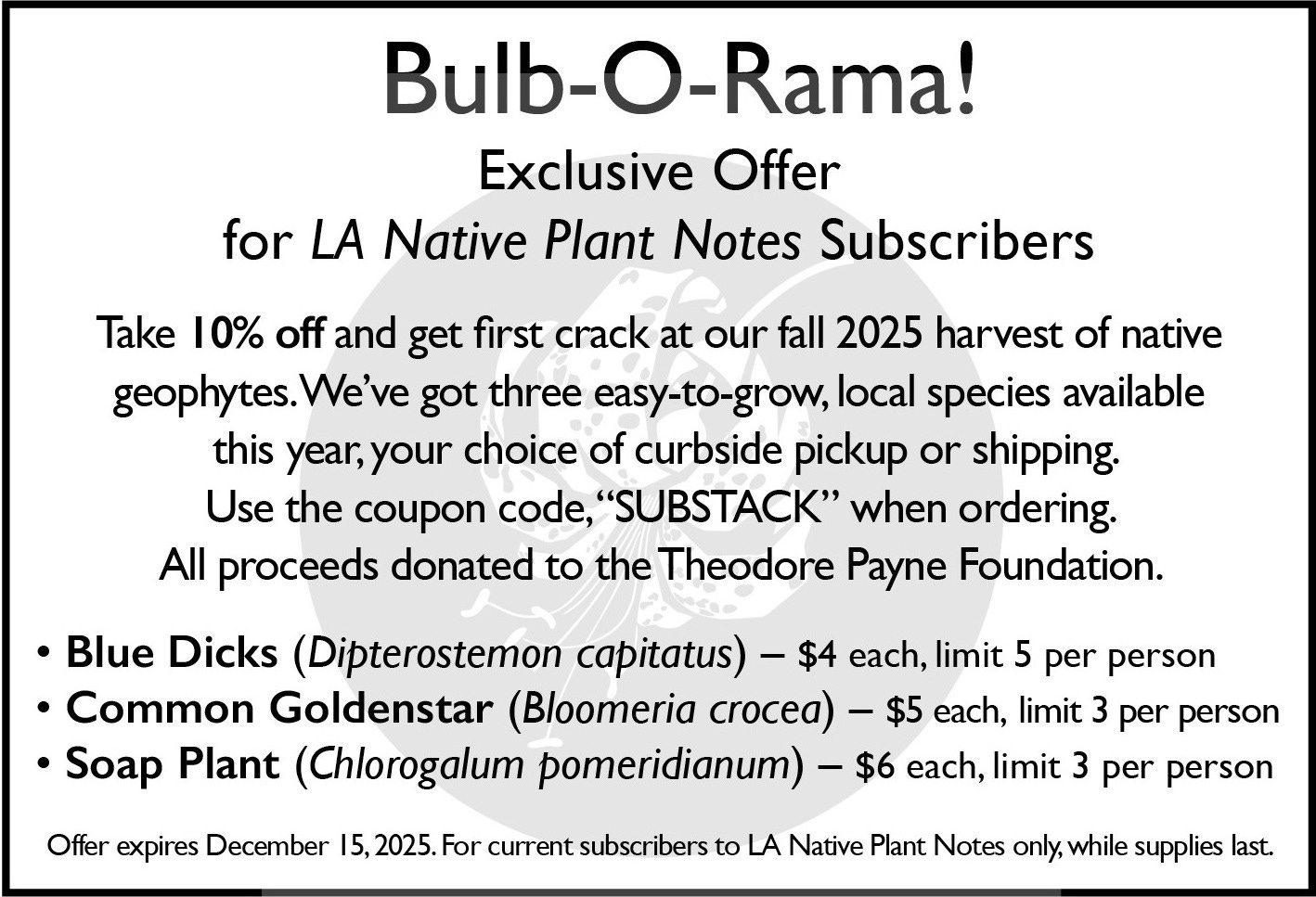
As noted above, LANPS is offering a number of local geophyte species for sale during the 2025 planting season. In addition to these, other geophytes currently in production for future availability include Scarlet Larkspur (Delphinium cardinale), Spotted Humboldt’s Lily (Lilium humboldtii ssp. ocellatum), Chaparral Zygadene (Toxicoscordion fremontii) and various Calochortus species. Stay tuned!
– Eric Ameria
Comments
Nothing yet. Say the first thing.
Sign in to join the conversation.