
Summary: Behind Cobb Mountain Elementary School, the three-quarter-mile Boggs Ridge Nature Trail offers a compact lesson in the area’s ecology, geology and human history. Interpretive signs trace Indigenous presence, logging, volcanic rock, watersheds and the plants and animals of the conifer forest. Longtime Friends of Boggs Mountain volunteer Darlene Hecomovich helped create many of those signs, including a set lost when the Valley Fire destroyed her home and garage in 2015. Today, the trail serves both local students and walkers as a small outdoor classroom tied to the wider landscape of Cobb Mountain.
“You are surrounded by glorious plant life with descriptive signs to identify what you are seeing — from the magnificent Douglas fir to the diminutive plants below.” — Darlene Hecomovich
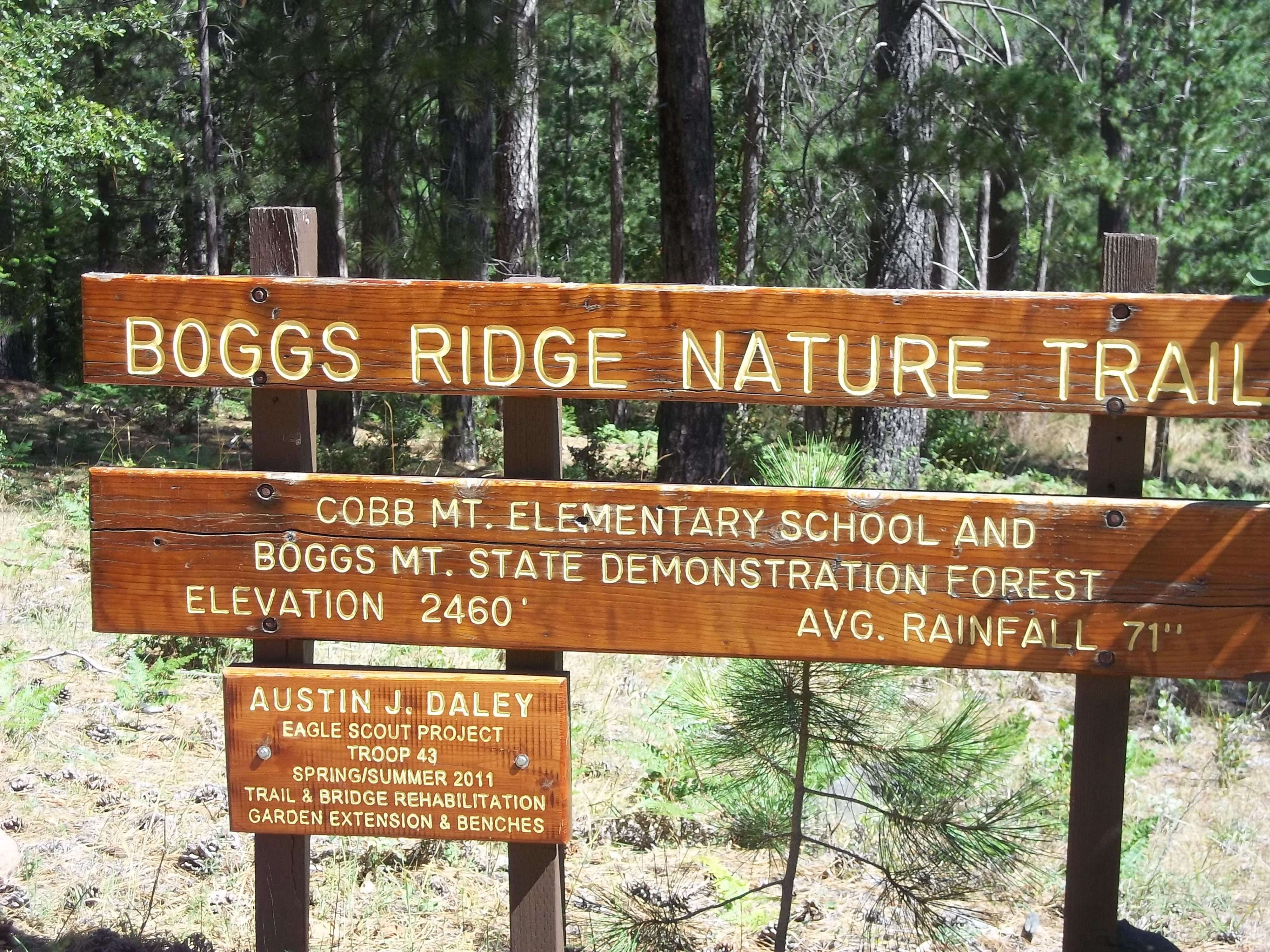
COBB, Calif. — Just behind Cobb Mountain Elementary School in the unincorporated mountain community of Cobb is a small but worthwhile trail called Boggs Ridge Nature Trail. Sometimes confused with nearby and much larger Boggs Mountain Demonstration State Forest, this 50-acre woodland, perfumed with pine and cushioned by needles, is great for an after-school or weekend walk. Go on your own or with Friends of Boggs Mountain volunteers when they schedule one of their walks.
The FOBM website explains a bit of the prehistory about this area. The lands up here were once home to the Eastern and Southeastern Pomo, Clear Lake Wappo, Lake Miwok and Patwin groups. It has been determined archaeologically that some groups lived in the area, where they hunted and thrived, for thousands of years. Temporary native camps found in the vicinity explain this through lithic or stone-tool workshops and arrowhead chipping “stations.”
Boggs Mountain was named in honor of Henry Boggs, a Missouri resident who first set foot in Lake County in 1864, arriving more than a decade after John Cobb, for whom Cobb Mountain was named. Boggs controlled ventures such as a gristmill, a steam-powered sawmill and a wood-planer along the eastern portion of the Boggs Mountain forest. He bought and had logged much of the area by 1884, after which it was clear-cut by subsequent owners all of the way up to 1949. After that, the California Division of Forestry, now called CAL FIRE, acquired 3,433 acres to complete the demonstration forest located near this little park.
One of FOBM’s founding members and a longtime volunteer, Darlene Hecomovich, 92, has lived in Lake County all her life. She grew up at nearby Seigler’s Resort, one of many hot-springs resorts in the area, this one run by her family. Many of the interpretive signs along the trail that give historical, geological and botanical facts to enhance your walk were created by Hecomovich.
“The trail is a delight,” she said. “You are surrounded by glorious plant life with descriptive signs to identify what you are seeing — from the magnificent Douglas fir to the diminutive plants below. It’s a pleasant walk while you learn about the habitat in which you live. The trail is about three-fourths of a mile long with a modest amount of elevation and some uneven trail surfaces. It offers stunning views of Cobb Mountain and the surrounding area.”
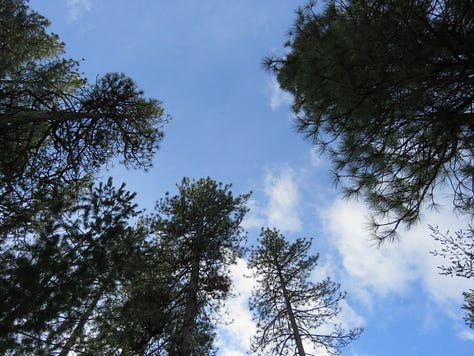
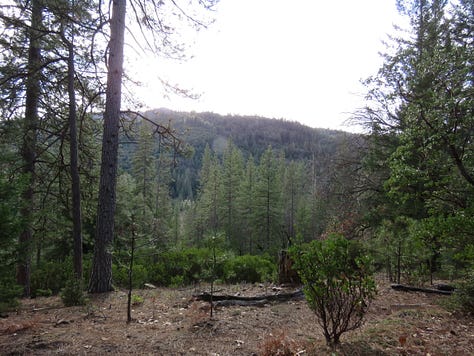
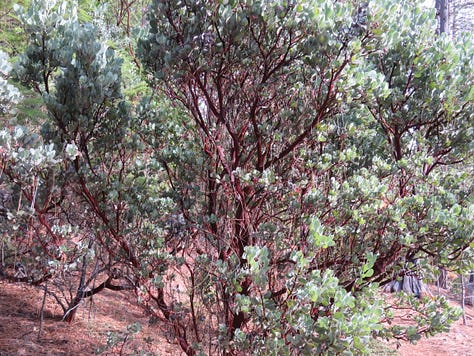
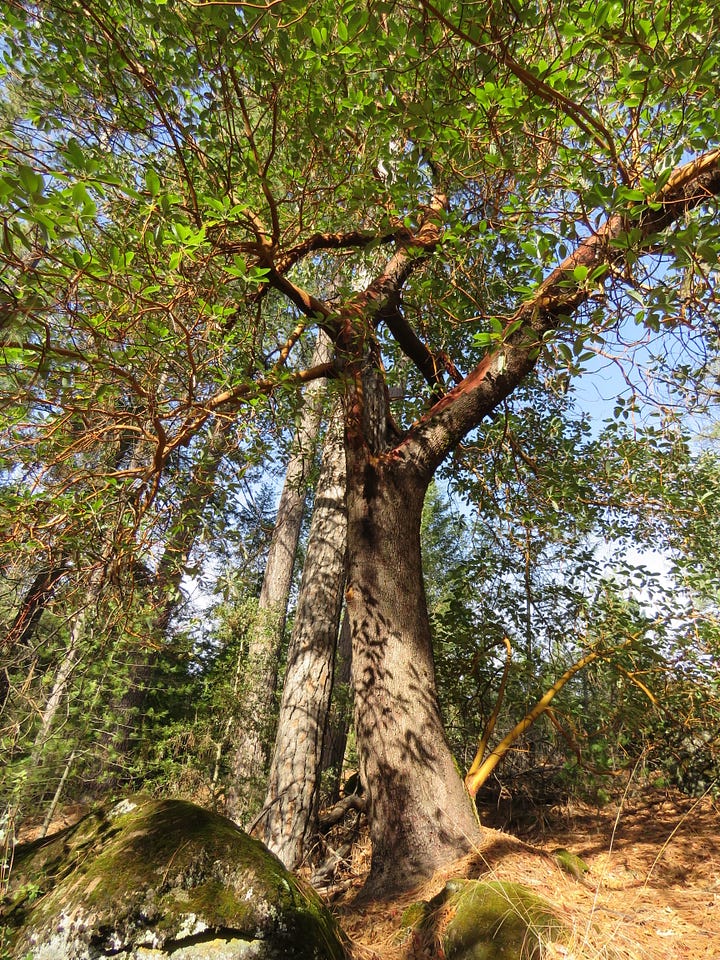
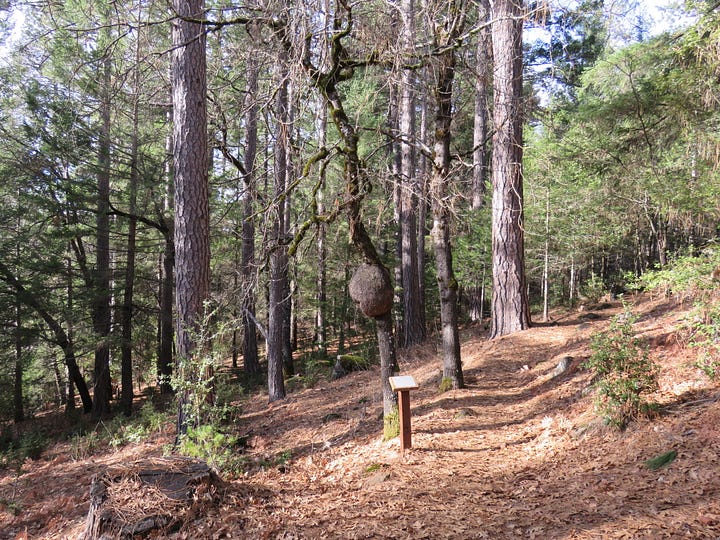
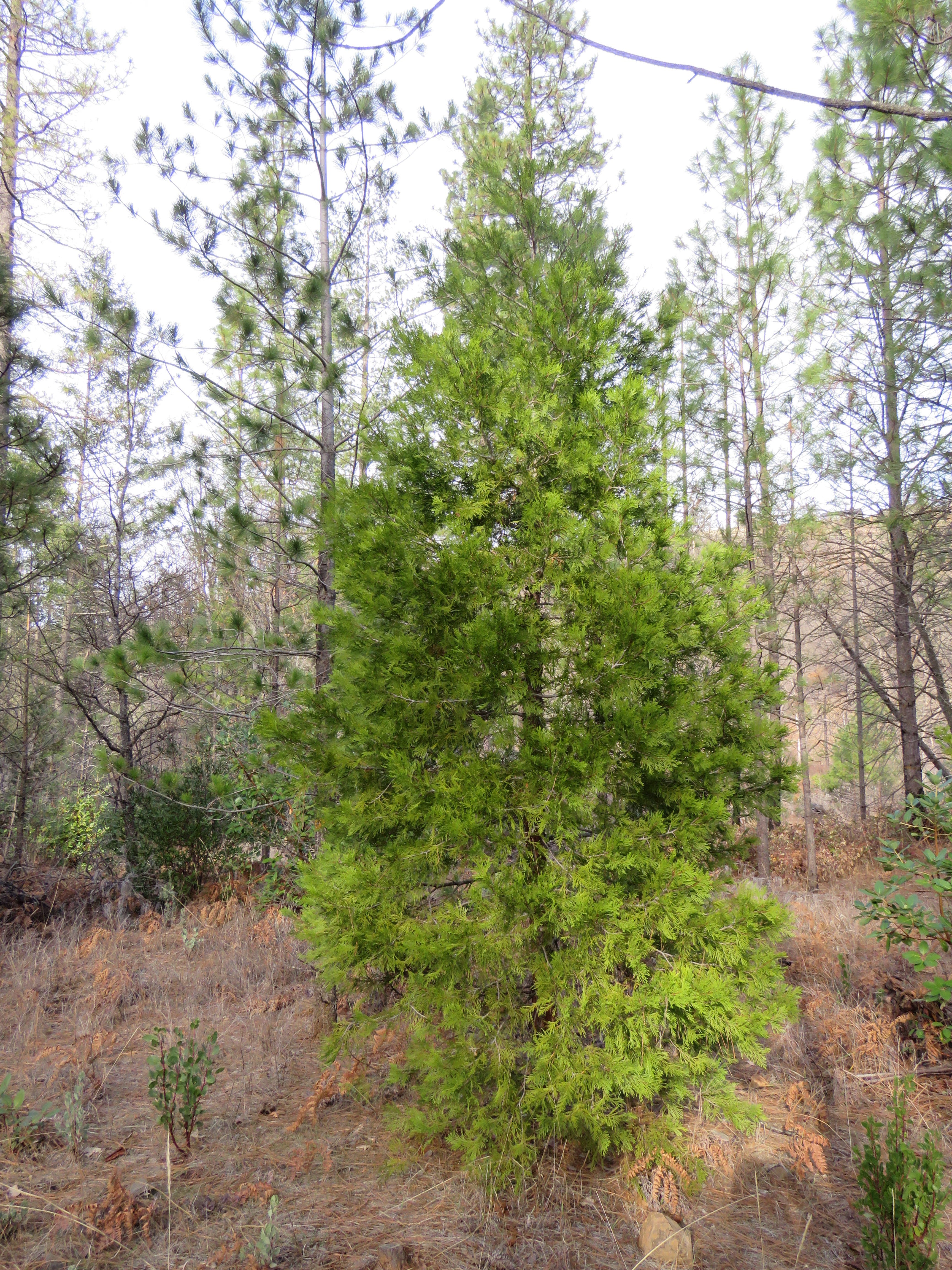
Many plants are still in abundance here in this coniferous ecosystem despite the Valley Fire burning off some of it in 2025. They consist of trillium, oak mistletoe, white fir, Douglas fir, California fescue, California bay laurel, coffeeberry, sugar pine, Pacific madrone, mountain dogwood, canyon live oak, California black oak and many more. Animals that call Boggs Ridge Nature Trail home include the dusky-footed wood rat, gray fox, black bear, striped skunk, mountain lion, western gray squirrel, Sonoma chipmunk, black-tailed jackrabbit, black-tailed deer and raccoon, along with myriad other critters.
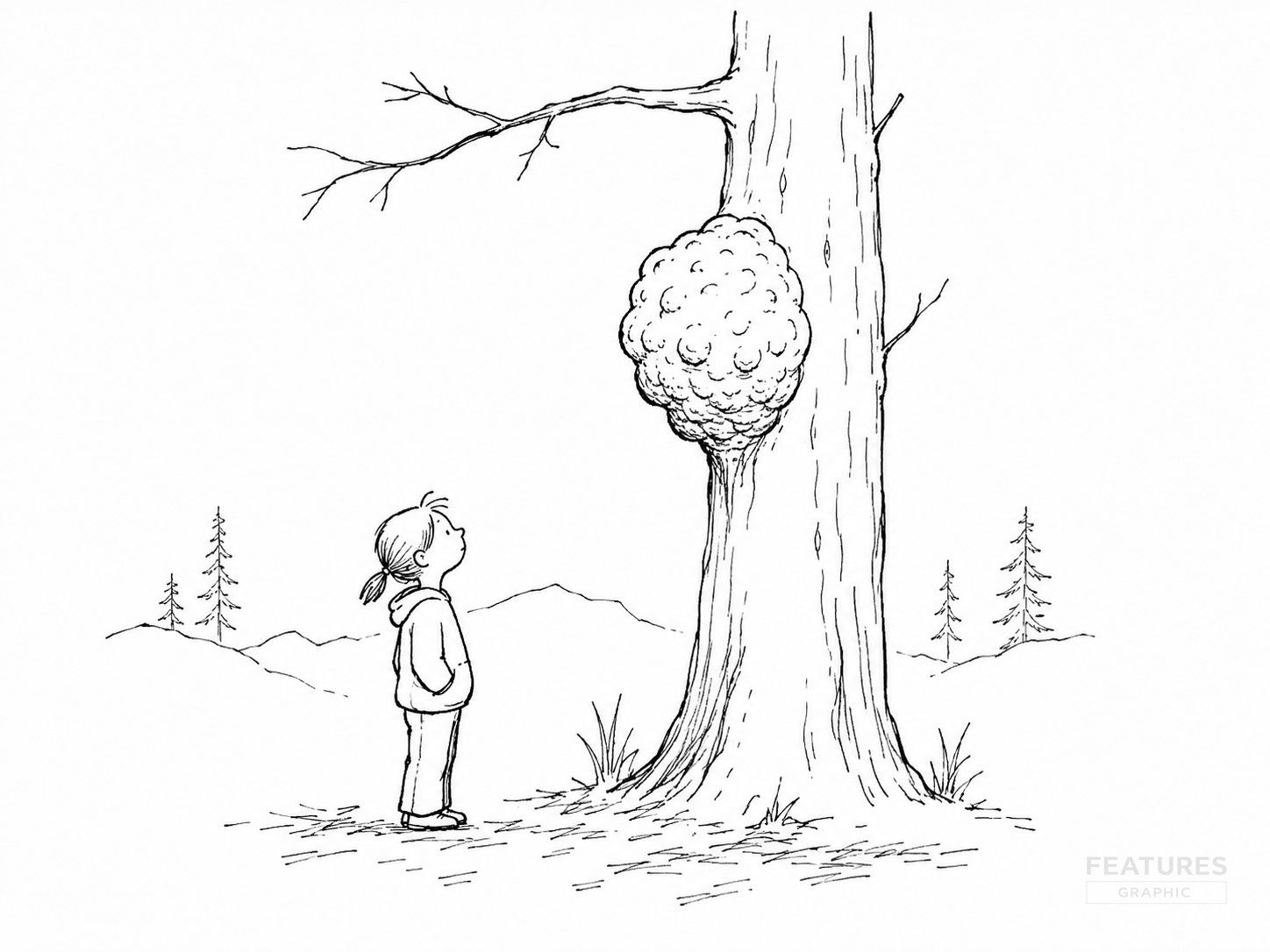
One tree of interest is the misshapen tree with huge galls.
“Typically, oak galls are caused by insects, most notably wasps, that lay their eggs on leaves, buds, stems and branches,” Hecomovich said. “The hatching larvae stimulate the surrounding tissue to swell and grow into a gall. This tree, however, is infected with crown gall, which is a bacterial infection of trees. Almost certainly it will one day structurally fail at the gall.”
The geology here at Boggs Ridge Nature Trail is fascinating — the Boggs Mountain andesite boulders, for example. Andesite, an igneous volcanic rock, began in a scorching fluid state. Since Boggs Mountain State Forest sits upon a lava cap that is around a mile wide by 3.5 miles long, andesite is exposed throughout many areas of the forest. These flows are understood by geologists to have originated from a Clear Lake volcanic lava flow. They are dated at 1 million to 2 million years old.
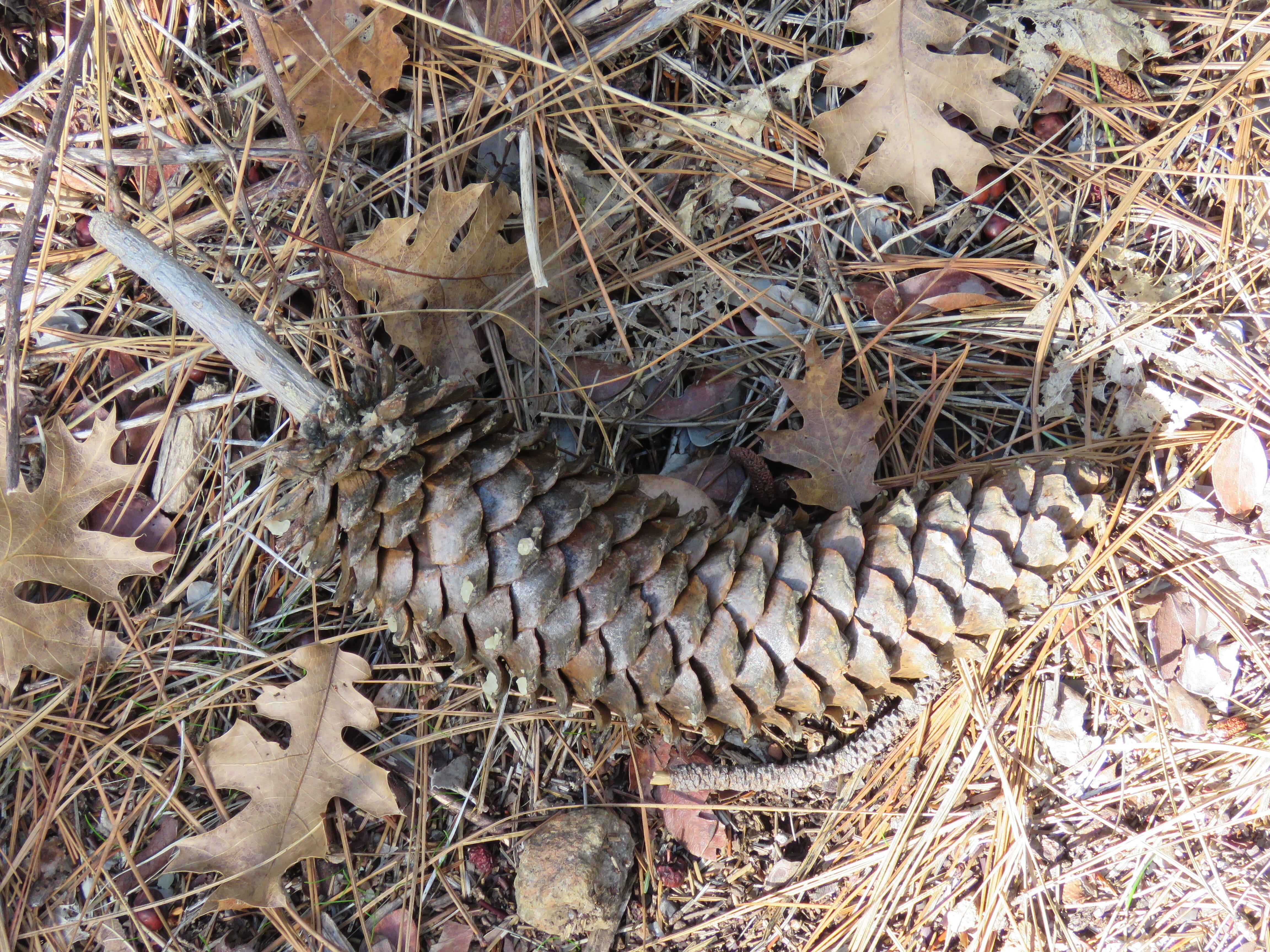
The trail is set amongst the Putah and Cache Creek watersheds and is a living classroom for both the general public and the local schoolchildren who use it for class work. The wonder of a watershed, a hydrologic system, is that it eventually makes its way to the Pacific Ocean. The trail sign traces its route by way of Kelsey Creek, Clear Lake, Cache Creek, Cache Creek Dam and the Capay Valley. As the creek leaves Capay Valley it enters the northern Central Valley, eventually entering a settling basin east of Woodland with excess water flowing through a flood control canal into the Sacramento River.
Water from the south side of Cobb and Highway 175 drains into Putah Creek, which flows into Lake Berryessa and continues on to Putah Creek, eventually entering the Sacramento River. The Sacramento River drains into the Sacramento-San Joaquin River Delta, which in turn drains into the San Pablo Bay. After traveling hundreds of miles through creeks, lakes, and bays, the water enters the San Francisco Bay and its final destination, the Pacific Ocean.
Hecomovich related a touching story of the park’s interpretive signs’ beginnings.
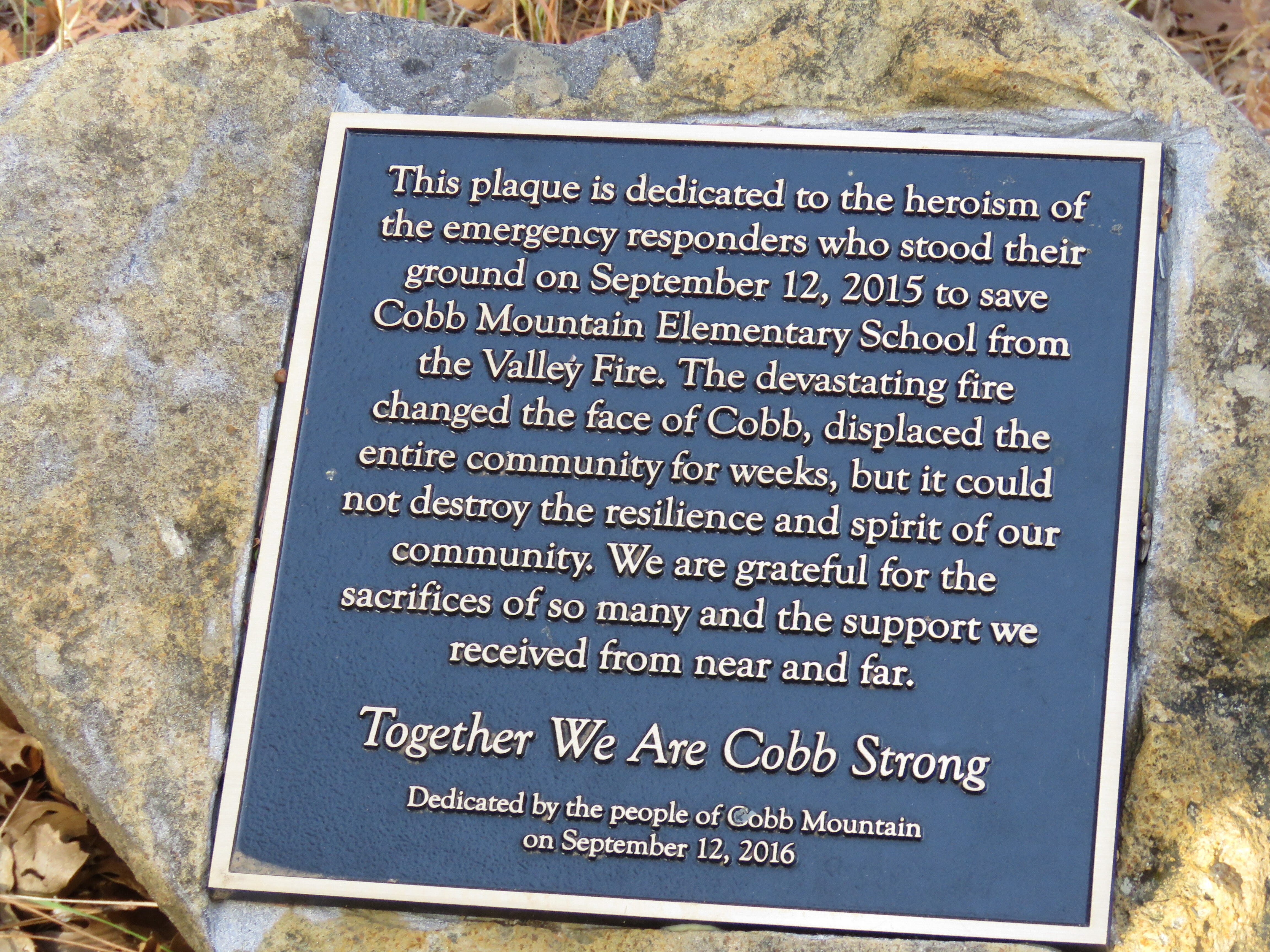
“Unrelated to the trail, a grand celebration had been planned for the 30th anniversary of the opening of the Cobb School on Sunday, Sept. 13, 2015. At this point, the trail had been created but the signs were yet to be installed, so, Friends of Boggs Mountain decided to display the signs in their booth at this anniversary celebration. On the day previous to the celebration, I was in possession of the signs and had them in my car so I would be all set for Sunday. I was also going to Berkeley on Saturday for a theater presentation and decided it would not be a good idea having the metal signs swishing back and forth in my car while driving to Berkeley, so I removed them and left them in my garage.”
That day, however, the Valley Fire burned her home, her garage and all of the signs. And because the school was also in the path of the fire, no anniversary celebration occurred.
Ultimately the school was spared from the fire.
Along with the permanent interpretive trail signs are seasonal signs that go up.
“A couple of posters I have made for seasonal plants that would be in full display only a few months out of the year are laminated then stuck into the ground with metal skewers adjacent to the plant,” Hecomovich said.
She went on to say that the turkey tails, which have the shape and coloration of actual turkeys’ tails, and witch’s butter plants are two favorites of the Cobb students.
Other information signs, some created by other individuals whose names were not available. They include information about Cobb Mountain and John Cobb, Boggs Mountain and Henry Boggs, the Cobb Mountain Elementary School Garden, the Valley Fire and Cobb Mountain Elementary School.
For more information, please visit the Friends’ Facebook page.
—
Kathleen Scavone, M.A., retired educator, is a potter, freelance writer and author of “Anderson Marsh State Historic Park: A Walking History, Prehistory, Flora and Fauna Tour of a California State Park,” “People of the Water” and “Native Americans of Lake County.” She loves hiking, travel, photography and creating her single-panel cartoon, “Rupert.”
—
The views, opinions and data presented in this article are those of the author and do not necessarily reflect the official policy, position or perspective of Lake County Features or its editorial team. Any content provided by our authors is their own and is not intended to malign any group, organization, company or individual.
Our illustrations are produced through a multistep process of generative tools, digital sketching and photo editing, often starting from our own images or sketches.
No posts
Comments
Nothing yet. Say the first thing.
Sign in to join the conversation.