
Summary: The Lower Lake Schoolhouse Museum brings together the region’s educational, geological, industrial and cultural history inside a restored 1877 landmark. Its exhibits range from Lake County diamonds and Chinese mining artifacts to an early winery, World War I memorabilia and a section of the famed valley oak El Roble Grande. Ongoing renovations are refreshing the historic schoolroom and other displays while volunteers continue the preservation work that saved the building decades ago.
“The original Schoolhouse was built in 1877. In the late 1980’s the Schoolhouse building had fallen into disrepair. Its future did not look bright. A group of community members became concerned.” — Roberta Lyons
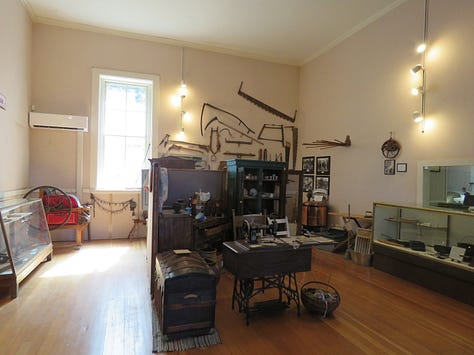
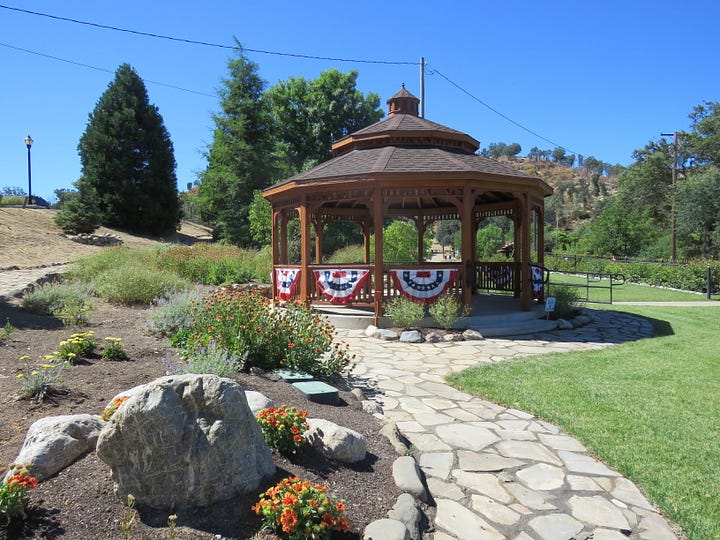
LOWER LAKE, Calif. — I recently visited Lower Lake Schoolhouse Museum to drop off some stoneware pottery embellished with Lake County diamonds that I had made for the museum gift shop. Run by Gabriele Fellows, this is where you can find local history books and locally made gift items. The circa 1877 building stands on a hill surrounded by bucolic lawns and is packed with displays of local history. Outside are an ancient oak and an inviting new gazebo. Flagstone walks with electrical conduits enable outdoor music and invite other venues to join in.
In addition to running the gift shop, Fellows is also responsible for greeting visitors, conducting oral history interviews, scanning historic photographs and updating records in the catalog, She is also the treasurer for the Lower Lake Historical Schoolhouse Preservation Committee, which is the nonprofit organization that raises funds for the museum.
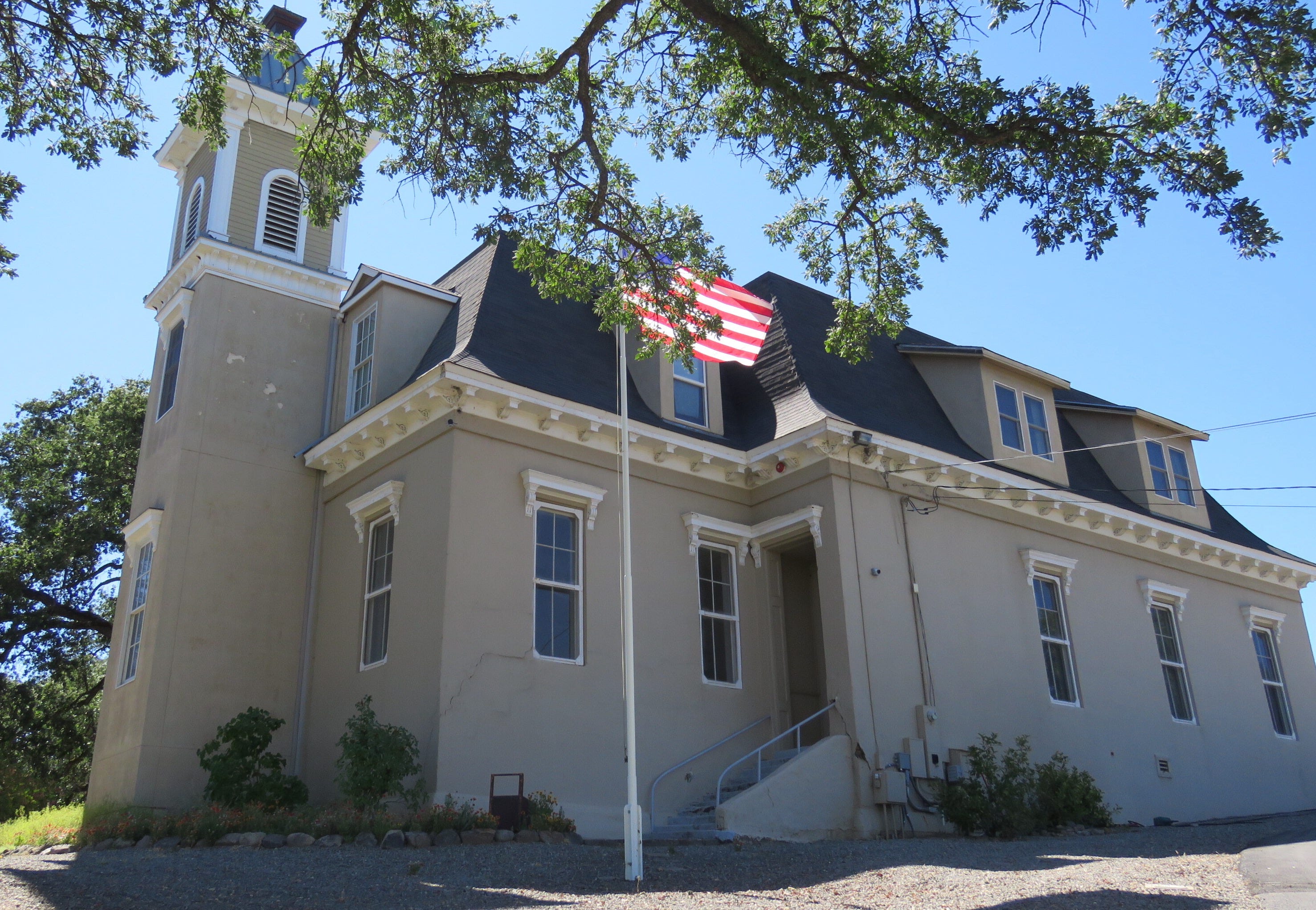
The old schoolhouse employed a mansard or Second Empire style of roof, a popular architectural style between 1855-85. Just after construction in January 1877, the building suffered a fire. The museum’s first curator and namesake of the museum’s auditorium, Jane Weaver, gathered information from a historic 1870s newspaper, The Lake Democrat:
“On Wednesday morning last occurred in Lower Lake one of the most cruel disasters it has ever fallen to the lot of a Christian community to bear. At that hour the new schoolhouse, just roofed in, was discovered to be on fire, and now, nothing but its blackened brick walls are left standing. The people of Lower Lake have worked hard and stinted themselves in many ways that this edifice should rear itself over the heads of their children, and to have their long cherished purpose defeated and their work laid in ashes by a drunken loafer is enough to rouse them to commit some extravagance against the perpetrator should he be discovered. A man named Goforth, we are informed, sold on Tuesday his shirt for 4-bits and on that same evening purchased fifty cents worth of whiskey at Green’s Saloon. In a drunken condition he asked for a night’s lodging at a house near the new schoolhouse. During the night some one was heard in the building talking and shouting. After the fire, Goforth made his appearance in town and was immediately arrested. A lot of carpenter tools and unused lumber under the building were destroyed, together with the recently erected woodwork, the walls along remaining, it is hoped, uninjured. The loss has not yet been fully estimated, but it will reach over $1500.”
Soon the schoolhouse was repaired, and classes were held in three rooms with three grade levels per room. Heat was courtesy of woodstoves as there was no electricity, and water was hauled in since there was no plumbing. The building’s bell tower suffered some damage during the April 18, 1906, earthquake. School was held here until 1935.
Today the museum is being refurbished again. Curator Anthony Guardio recently spoke at the Judge’s Breakfast meeting in Clearlake about improvements now underway. The grant award of $75,000 that came to the museums prior to his position is helping to remodel the schoolroom of the Lower Lake Schoolhouse Museum as well as to aid in several other museum projects in the county’s three museums.
The freshly painted schoolroom portion of the building will be assembled once again, allowing visitors to take in the old-timey antique student desks, books, period-appropriate teaching aids such as blackboards, a pot-bellied stove, authentic school bell and slates that students used in the 19th century. The Victorian parlor with its authentic antiques and charm is getting a refresh.
In preparation for writing my book, “Anderson Marsh State Historic Park — A Walking History, Prehistory, Flora and Fauna Tour of a California State Park,” I had the privilege of meeting, volunteering with and interviewing descendants of Winifred Minden, born in 1913, and her brother Ted (John Theodore) Anderson, born in 1908. Both attended school at the Lower Lake Schoolhouse. One story related to me was about the trapping they performed at the ranch in order to keep coyotes from their chickens. One day before school Ted trapped a skunk and took it with him to the schoolhouse, where he was promptly asked to leave since no one enjoyed the lingering aroma of skunk scent emanating from his overalls.
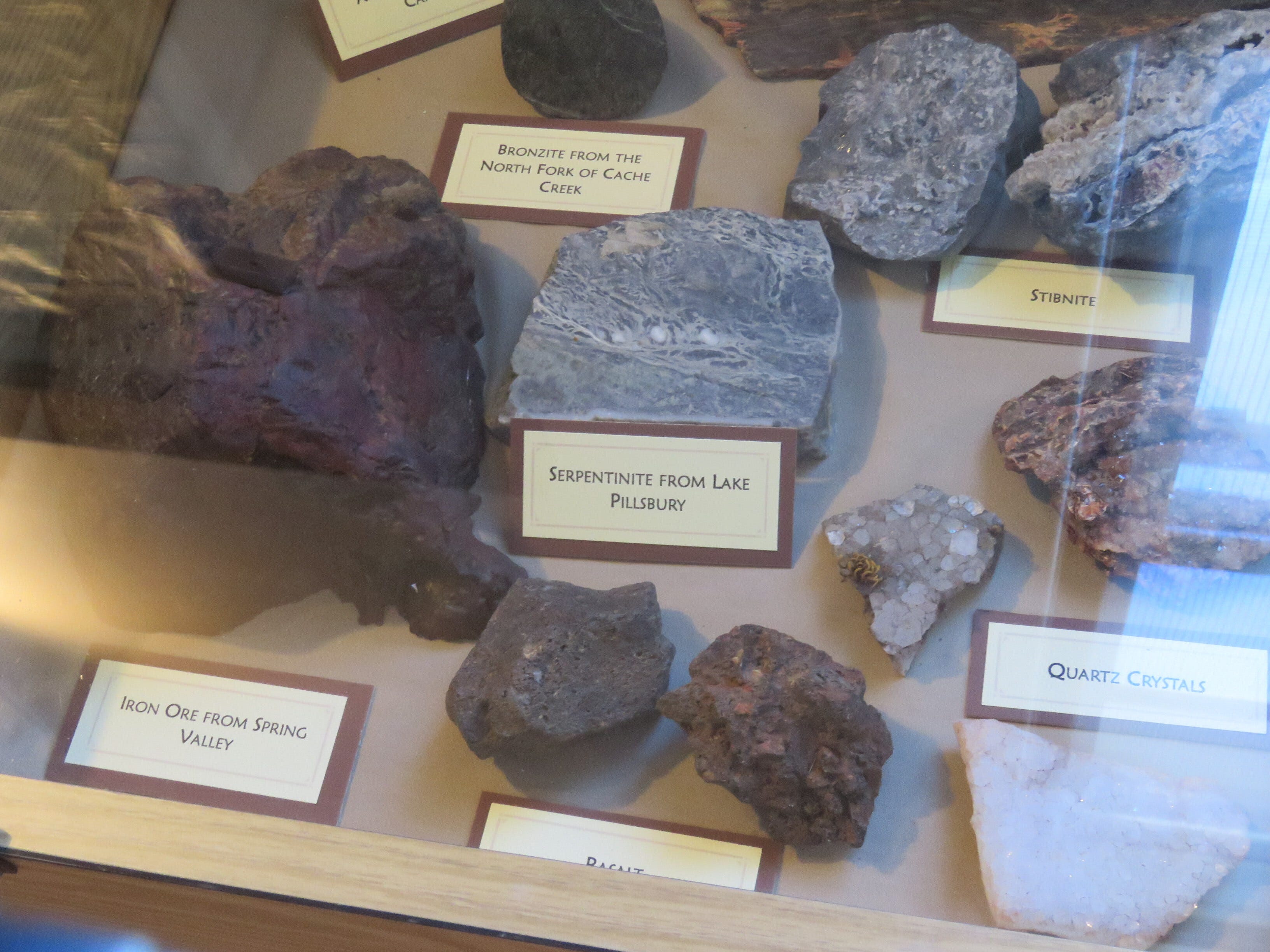
The abundant historic displays found on the museum’s first floor include a geology display with specimens of local rocks and minerals such as serpentinite, the California state rock; iron ore from Spring Valley; bronzite from the north fork of Cache Creek; and Lake County diamonds.
These diamonds can be found most easily after a rain, when they gleam in the sunshine across vineyards, roads and parks. They are most often clear but are sometimes lavender. Not considered true diamonds, Lake County diamonds rate at 7.8 on the Mohs Scale of hardness, while a true diamond rates a hardness of 10. They formed during the high temperatures of the local volcano, Mount Konocti, when it erupted around 10,000 years ago. Indigenous Pomo people called them moon tears as they were said to be the tears the moon shed when she fell in love with a young Pomo chieftan and Sun, her brother, made her go back to the sky. These lustrous crystals formed at around 1,000 degrees F. They have been used industrially, and they facet beautifully to make striking jewelry.
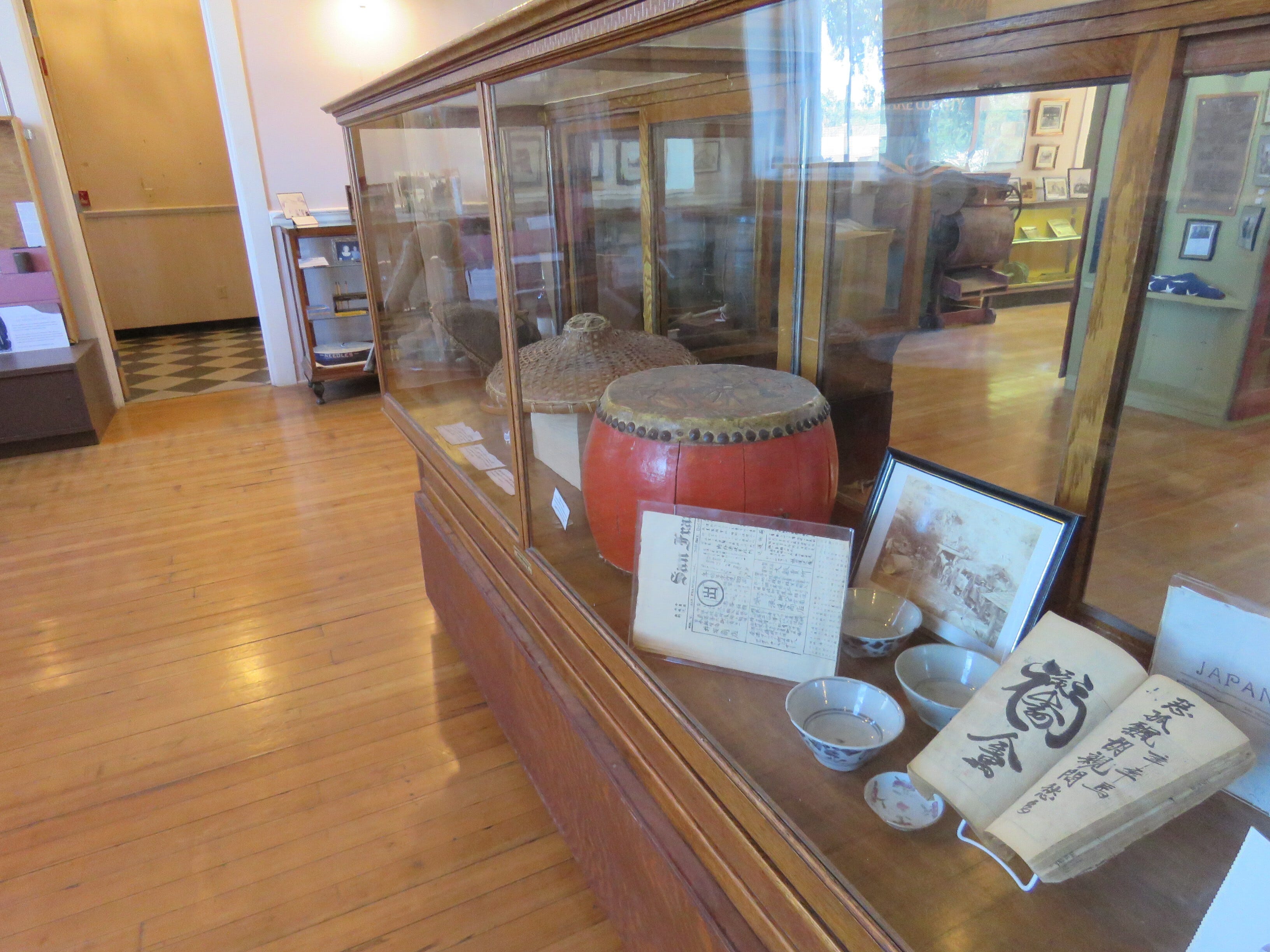
The Chinese display at the museum includes hats, a drum, money and more. These items tell a poignant story of the Chinese laborers who worked in the quicksilver mines of Lake County, such as the Great Western Mine, between 1860 and 1900. The museum display says, “The Great Western Mine was one of the largest producing quicksilver mines in the South Lake County area. In 1875, records show that the mine had a population of about 320 people, including 300 Chinese workers.”
To aid the public in learning more about Chinese people in the county, Lake County poet laureate in 2003-04, Carolyn Wing Greenlee, interpreted the Chinese displays here and at the Lakeport’s Courthouse Museum. Greenlee, legally blind since 1985 due to retinitis pigmentosa, is also an artist, musician and writer. She has written numerous books about both her Chinese heritage and blindness that were inspired by her father, who grew up in the Central Valley.
Greenlee’s dozens of books include “Wildflowers in the Snow,” “Inside the Oy Quong Laundry,” “And This Is How I Lived” and “Eternal River.” She owns a publishing company called Earthen Vessel Productions.
“In the early 1990s, I began writing the six-generation memoir of my mother’s family,” Greenlee said, and it opened doors to speak across the nation on the Chinese American experience.”
Mining paraphernalia seen at the museum includes artifacts such as a flask used to hold mercury, an old wood explosives box, blasting caps, a lantern, candleholder that was once attached to a miner’s hard hat and a crucible that was used in the mining process. Signage at the display reads, “After the ore was crushed, the powder was put in crucibles and melted down. The mercury would sink to the bottom and could be separated out.”
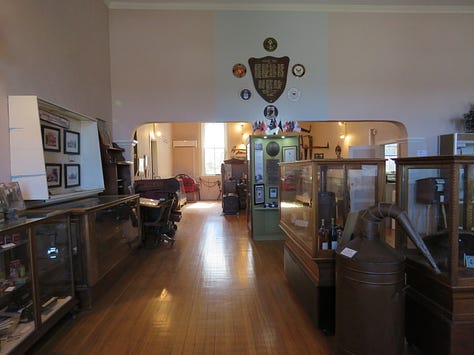
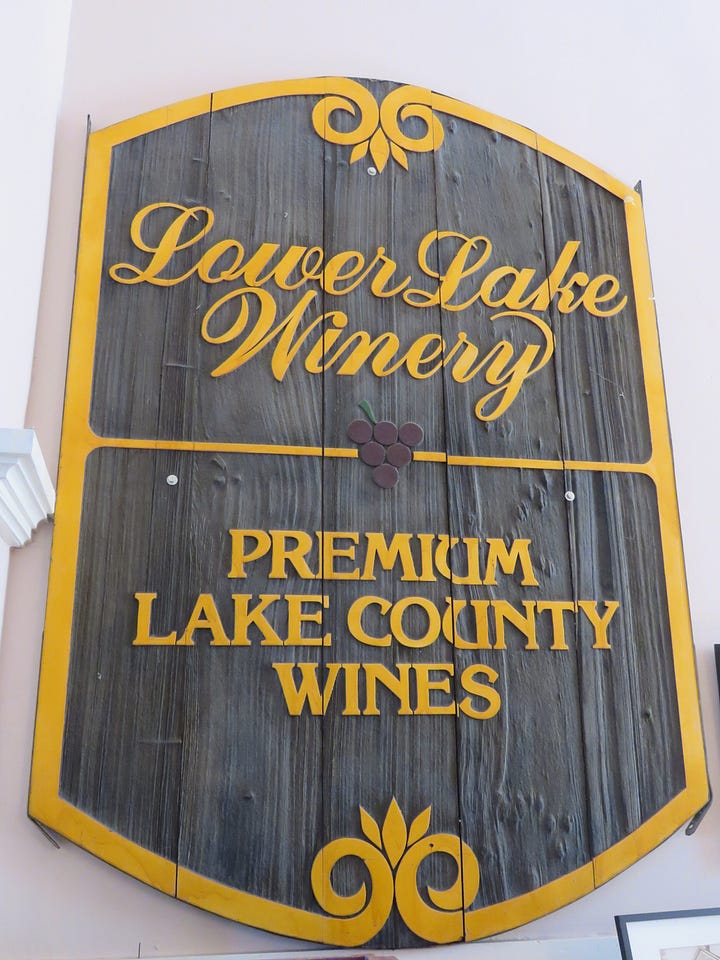
Another exhibit includes a display of the Lower Lake Winery where my husband, Tom Scavone, was once a partner. The partners broke ground in 1976. Established in 1977, this was Lake County’s first winery since Prohibition of the 1920s. They specialized in cabernet sauvignon and produced other varietals, as well. They competed in and won many awards, including the 1980 Orange County Fair commercial wine competition. Here at the museum are some of the wines along with other winery information and a huge sign that once sat off Highway 29 outside of Lower Lake. The last crush occurred in 1979, and the winery was then sold to Ployez Winery.
Locals have Roberta Lyons and some other hard-working volunteers on the Lower Lake Historical School Preservation Committee to thank for restoring the Lower Lake Schoolhouse building, and the LLSPC continues to support the Schoolhouse Museum today.
“The original Schoolhouse was built in 1877,” says a posting by Lyons on Facebook. “In the late 1980s the Schoolhouse building had fallen into disrepair. Its future did not look bright. A group of community members became concerned. They started a nonprofit and began fundraising to save and restore the building, which was, and still is, owned by the county. The founders of the original committee were John and Jane Weaver, Les and Barbara Parker, Roberta Lyons and Roberta Coltman. The Committee began their fundraising efforts and an anonymous donation of $20,000 helped enormously.”
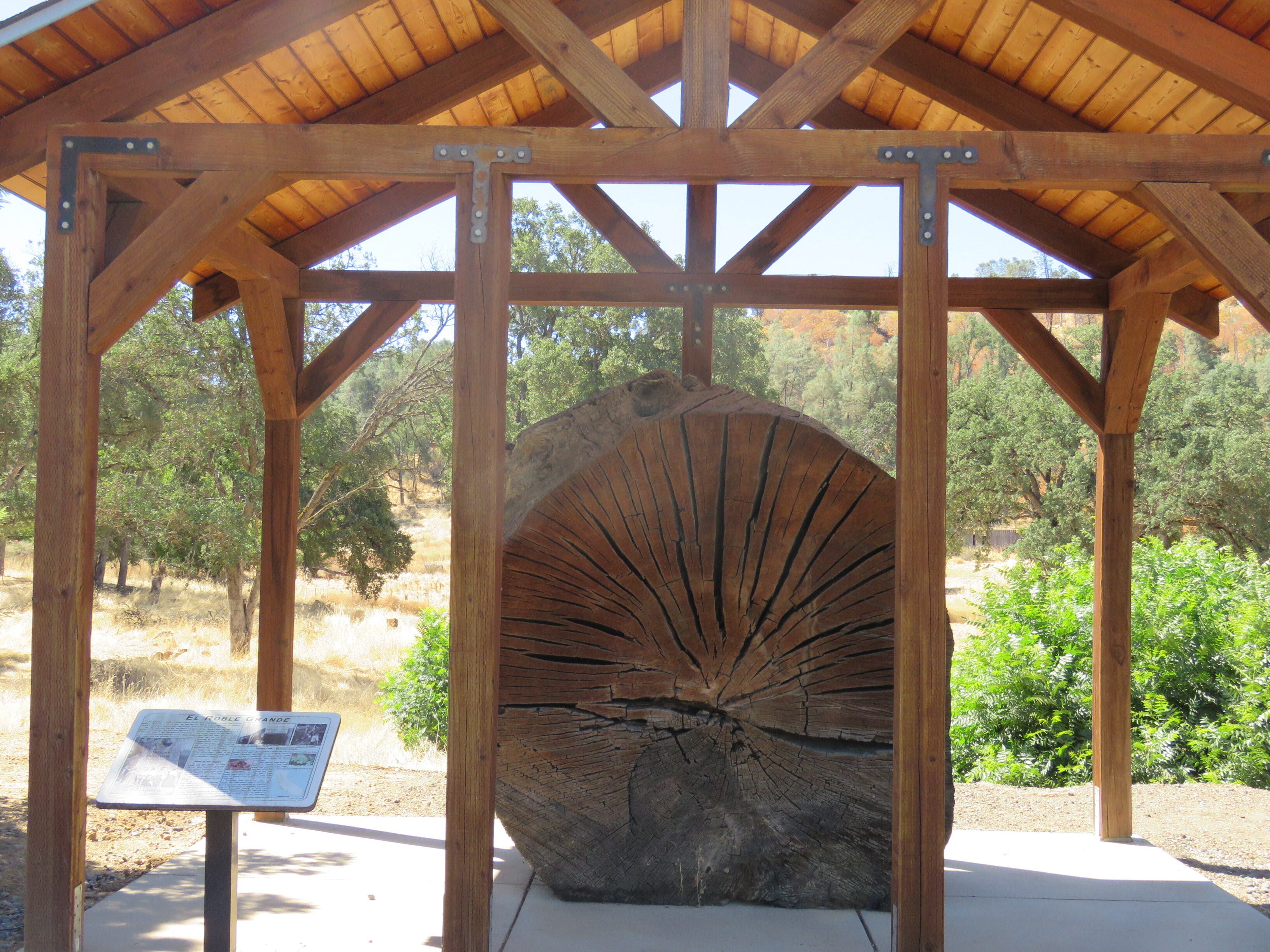
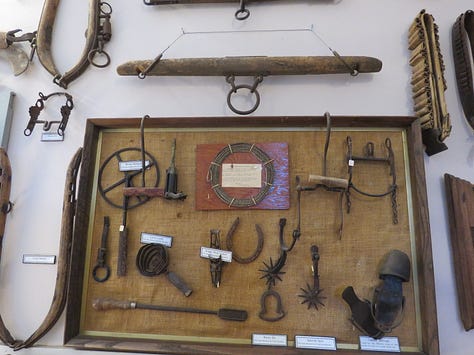
Among the many treasures that await at Lower Lake Schoolhouse Museum is a World War I exhibit that pays homage to soldiers who gave the ultimate sacrifice, antique tools and El Roble Grande. This is the section of a venerable nearby oak that was the largest known valley oak in California. The tree’s rings explain that this specimen was alive about 1592, when Galileo Galilei invented the thermometer and William Shakespeare had just penned “Romeo and Juliet.” The grand old tree toppled during a storm in 1952, and the display is outside the museum in a shaded portion of the parking lot.
Weaver Auditorium is upstairs and can be reach by taking the elevator. It’s a clean, comfortable and inexpensive venue that hosts art shows, meetings, plays, lectures and more. Museum representatives on their Facebook site invite groups and individuals to hold their event there.
Lower Lake Schoolhouse Museum is located at 16435 Main St. in Lower Lake. Hours are Thursday through Saturday, 10 a.m. to 4 p.m. Phone is 707-995-3565, and the Facebook page can be found here.
—
Kathleen Scavone, M.A., retired educator, is a potter, freelance writer and author of “Anderson Marsh State Historic Park: A Walking History, Prehistory, Flora and Fauna Tour of a California State Park,” “People of the Water” and “Native Americans of Lake County.” She loves hiking, travel, photography and creating her single-panel cartoon, “Rupert.”
—
The views, opinions and data presented in this article are those of the author and do not necessarily reflect the official policy, position or perspective of Lake County Features or its editorial team. Any content provided by our authors is their own and is not intended to malign any group, organization, company or individual.
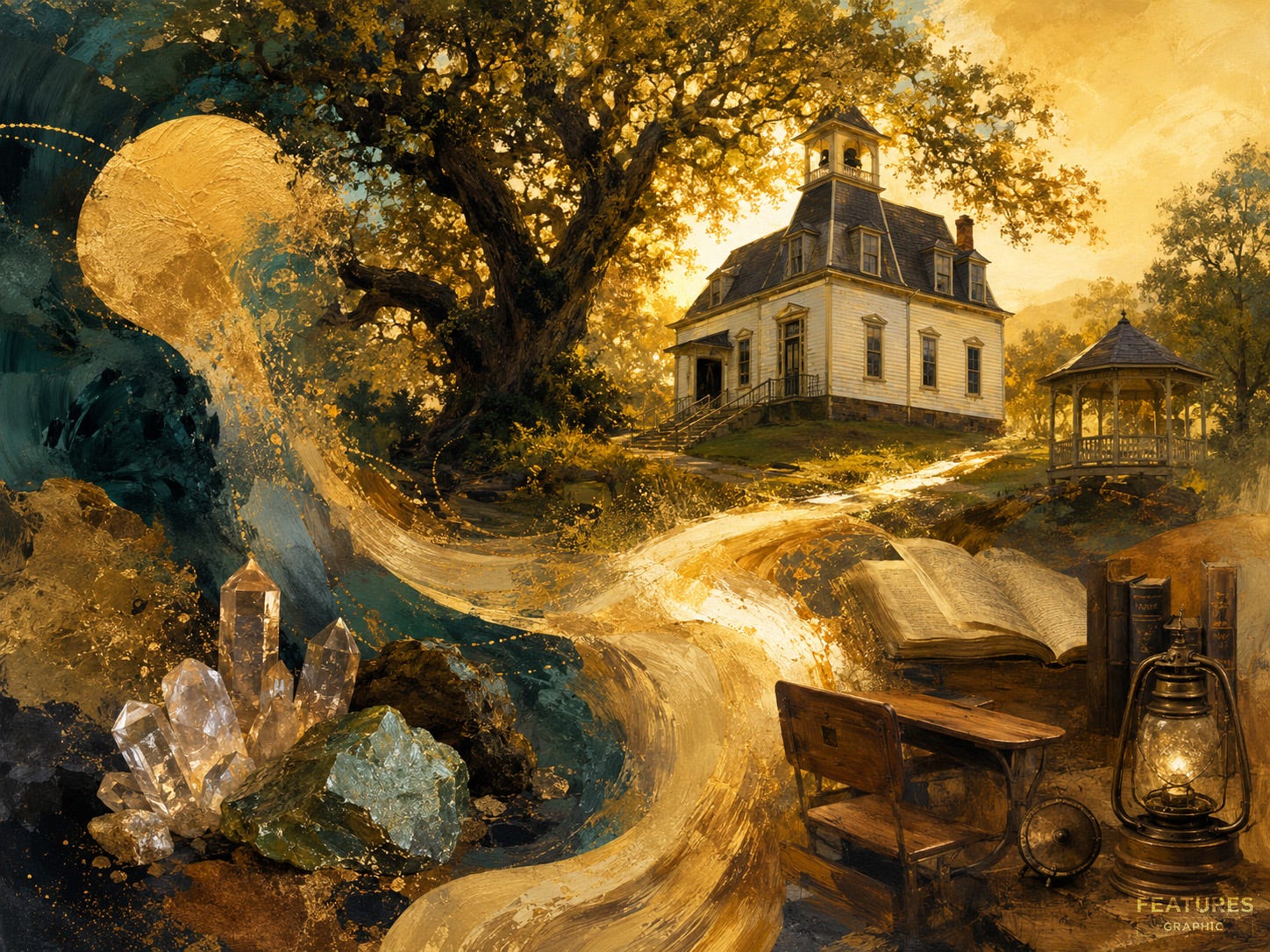
Our illustrations are produced through a multistep process of generative tools, digital sketching and photo editing, often starting from our own images or sketches.
No posts
Comments
Nothing yet. Say the first thing.
Sign in to join the conversation.