
Picture a store selling €2 notebooks and plastic spatulas.
You walk in. You grab something. You leave. You forget the store existed by the time you reach the parking lot.
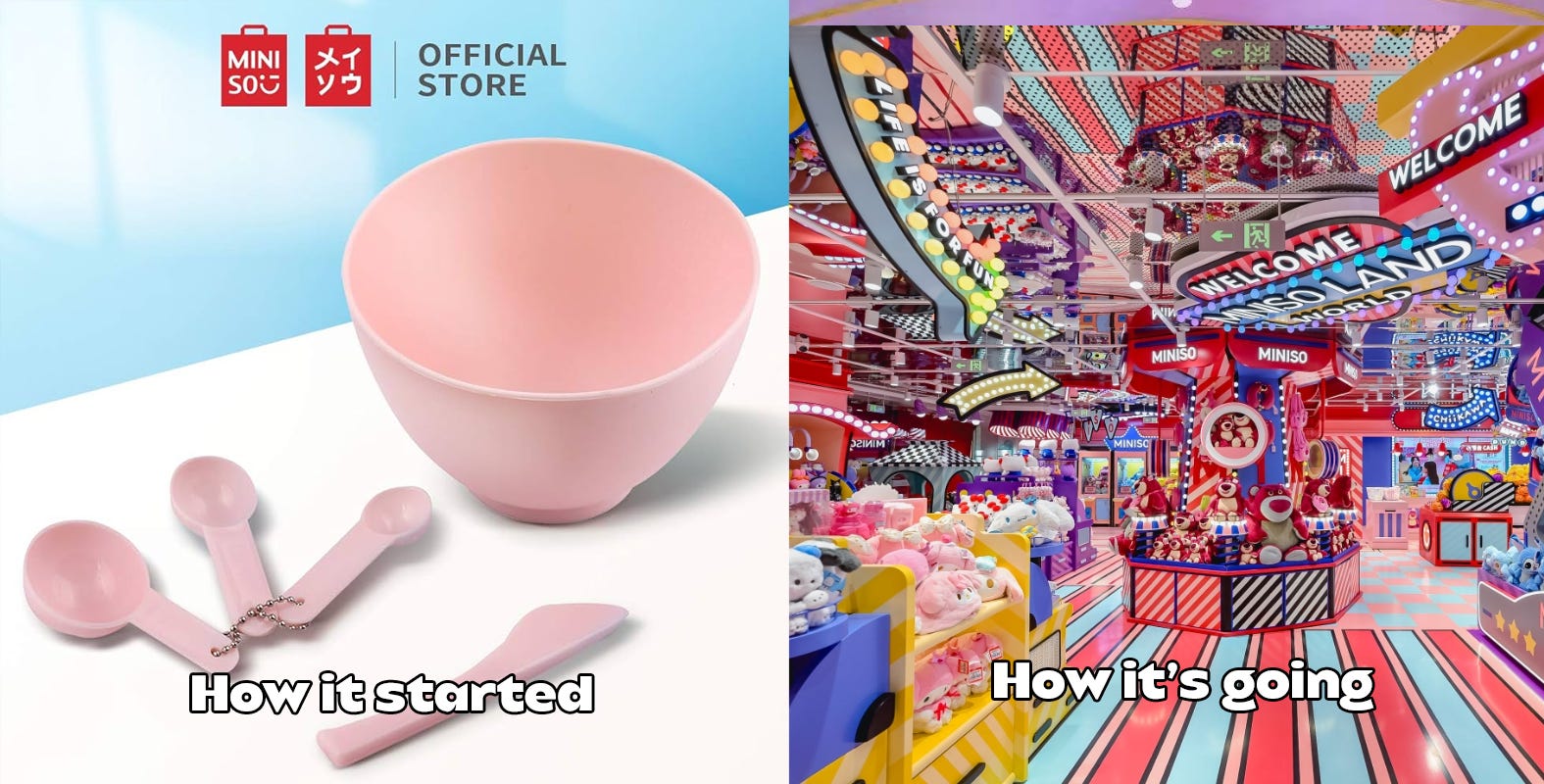
That was Miniso, circa 2019. A cheap Chinese lifestyle chain with 2,000 locations and zero reason for anyone to care about it.
Fast forward to today: nearly 8,000 stores across 100+ countries. $2.4 billion in annual revenue. Gross margins of 44.9%. A 100-million-member loyalty program.
The spatulas didn't change. 🛒
The characters did.
What Miniso figured out, and quietly built into a $2.4B machine, is a three-layer IP strategy. Rented characters. Owned characters. Stores are designed as character universes.
Let's break it down.
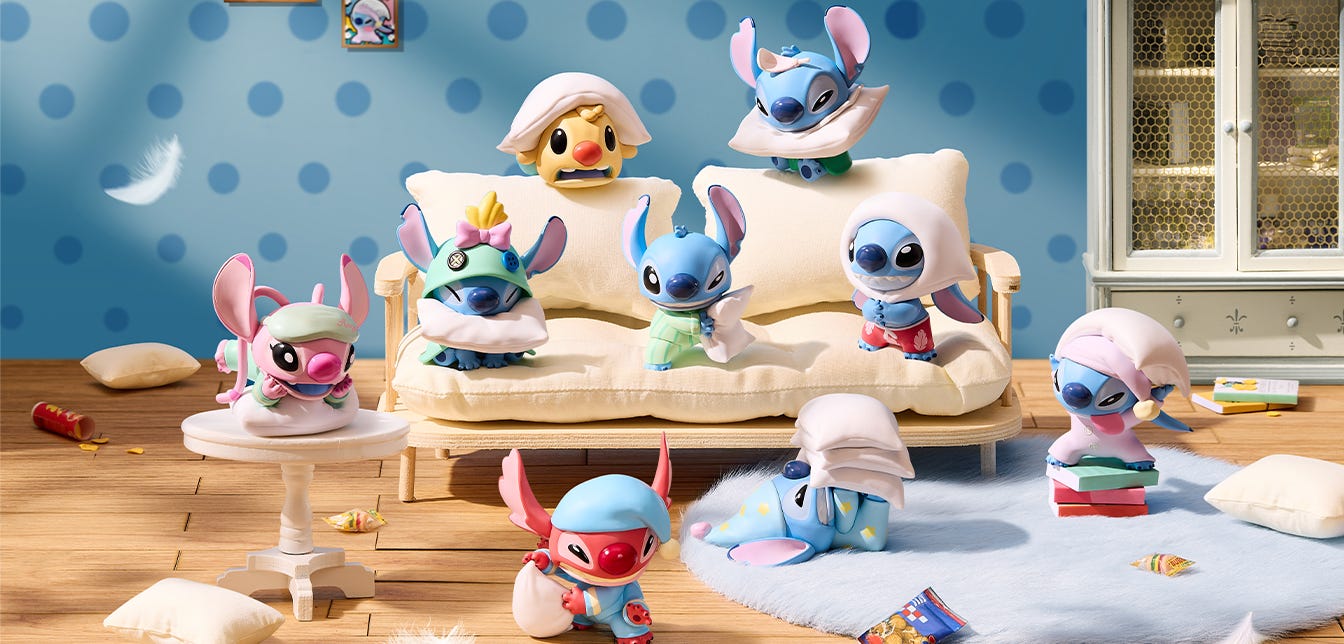
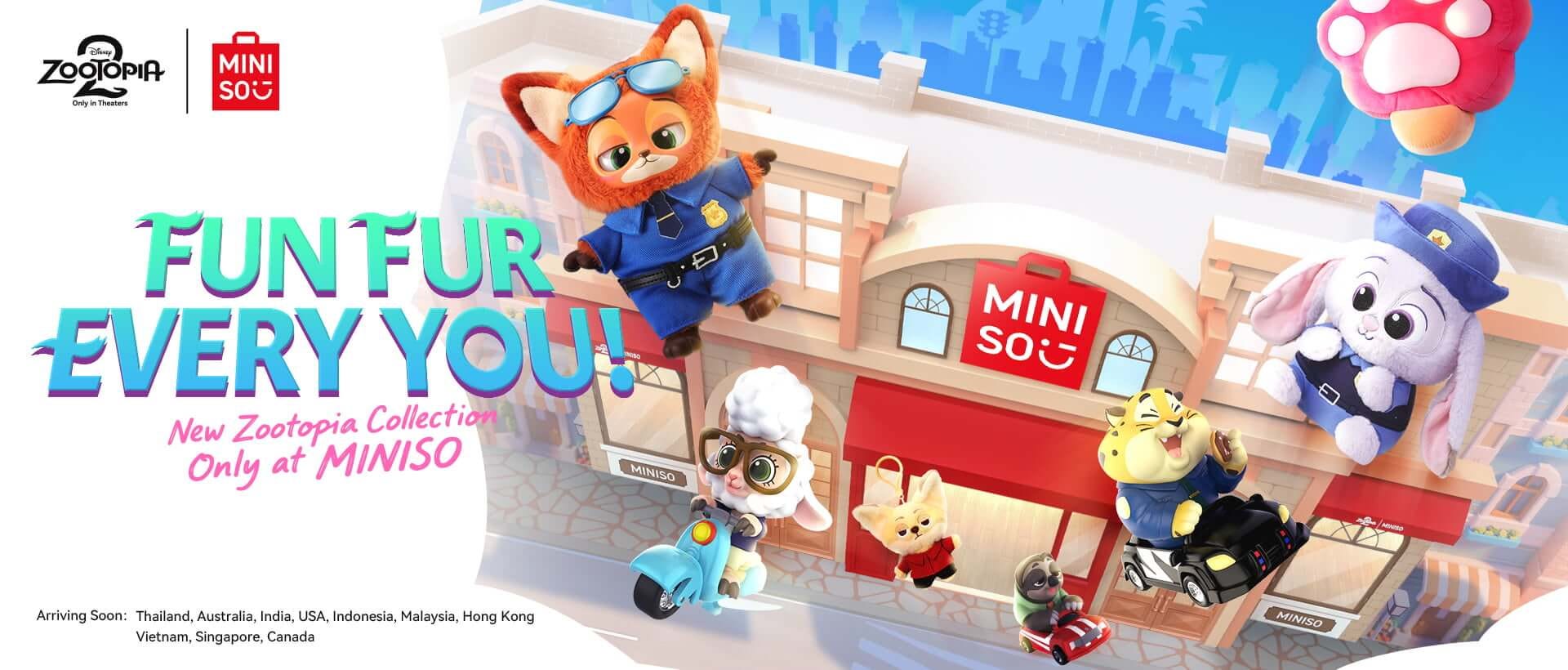
Around 2020, Miniso started licensing characters at scale. Disney. Sanrio. Pokémon. Harry Potter. Barbie. Over 150 global IPs in total, with 10,000+ new IP products launched every year. Annual IP product sales now exceed $1.4 billion.
The blind box category shows this most clearly. In the first three quarters of 2024 alone, they sold more than 30 million blind box pieces. During one New York campaign, blind box sales jumped 64% in a week and generated 170 million social media impressions.
Not from ads. From the characters.
The blind box thing confuses a lot of people: they clock it as a gambling mechanic and move on. But that misses the whole point. Blind boxes only work when you genuinely care which character you get. Nobody queues for a blind box of random generic shapes. The Sanrio collection became Miniso USA's top seller. Disney Villains sold out immediately. US membership grew 250% in 2024. Global membership passed 100 million.
A hundred million people joined a loyalty club for a €5 plastic figure. Sure. The figure just happened to be Hello Kitty. 🐱
Celebrity endorsements work exactly the same way.
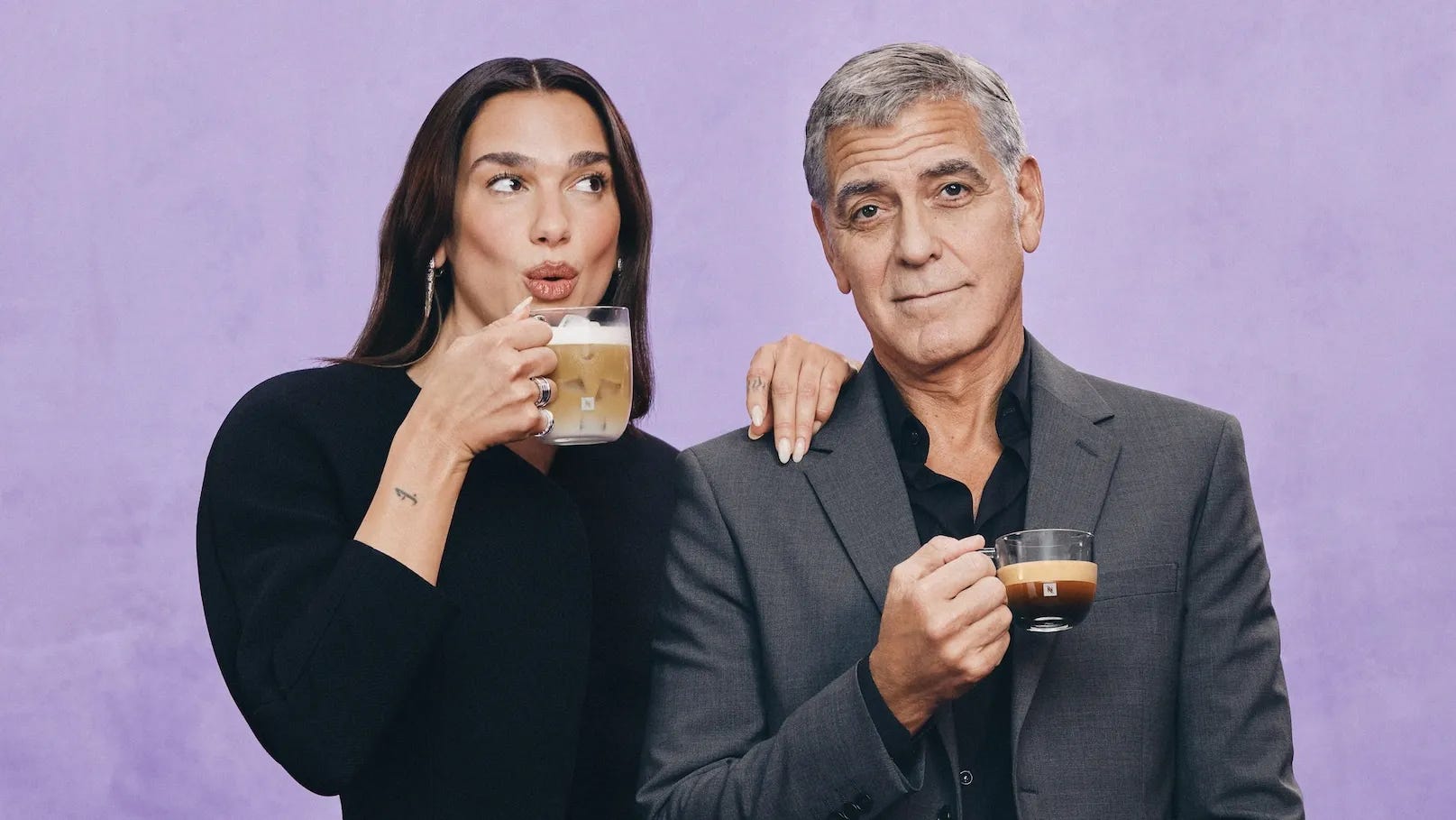
Nespresso built a global identity around George Clooney. Instant recognizability, aspirational associations, years of brand equity. Then Clooney aged out of the brief, and they moved to Dua Lipa. Another contract. Another fee. More equity flowing into a celebrity's pocket instead of an owned asset.
That's the ceiling of rented IP. Every impression you build on someone else's character, whether that's Hello Kitty or George Clooney, is equity you're paying rent on. The landlord can raise prices. Or leave.
You can build a very large business this way. But you can't build a moat.
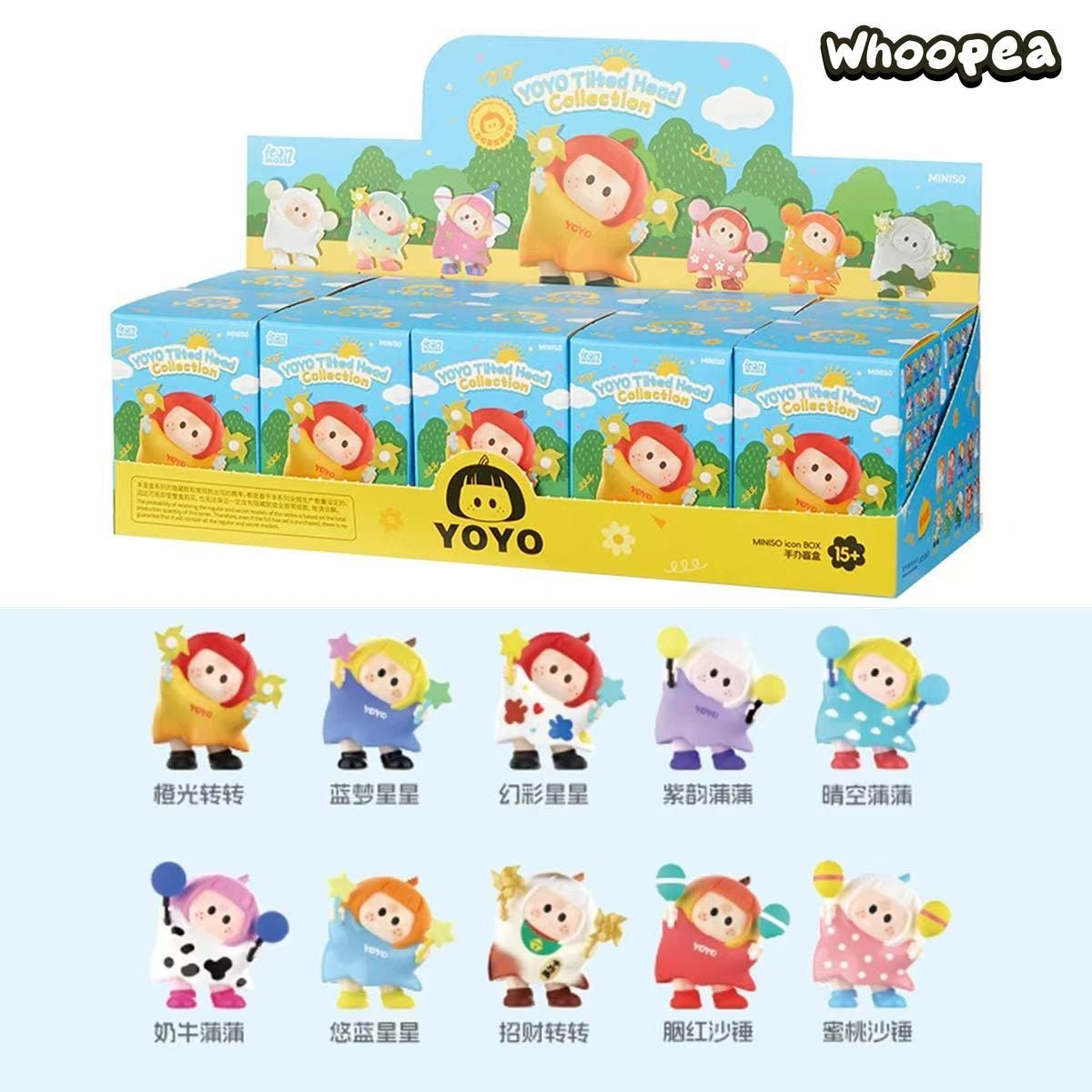
Miniso knew the ceiling existed. So they started building their own characters.
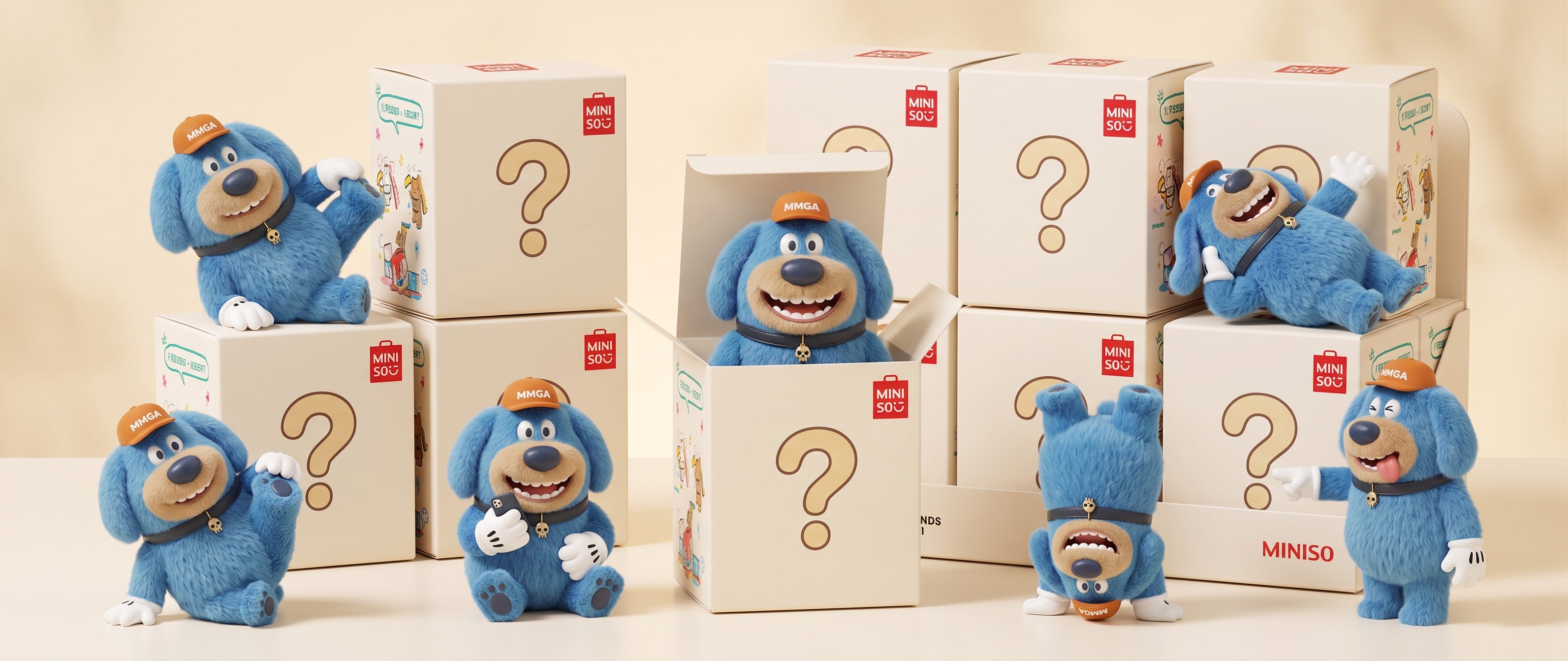
PenPen. DunDun. The Gift Bear family. And YOYO, a proprietary character launched in 2025 with a blind box line that sparked immediate fan customization and a wave of user-generated content the moment it dropped.
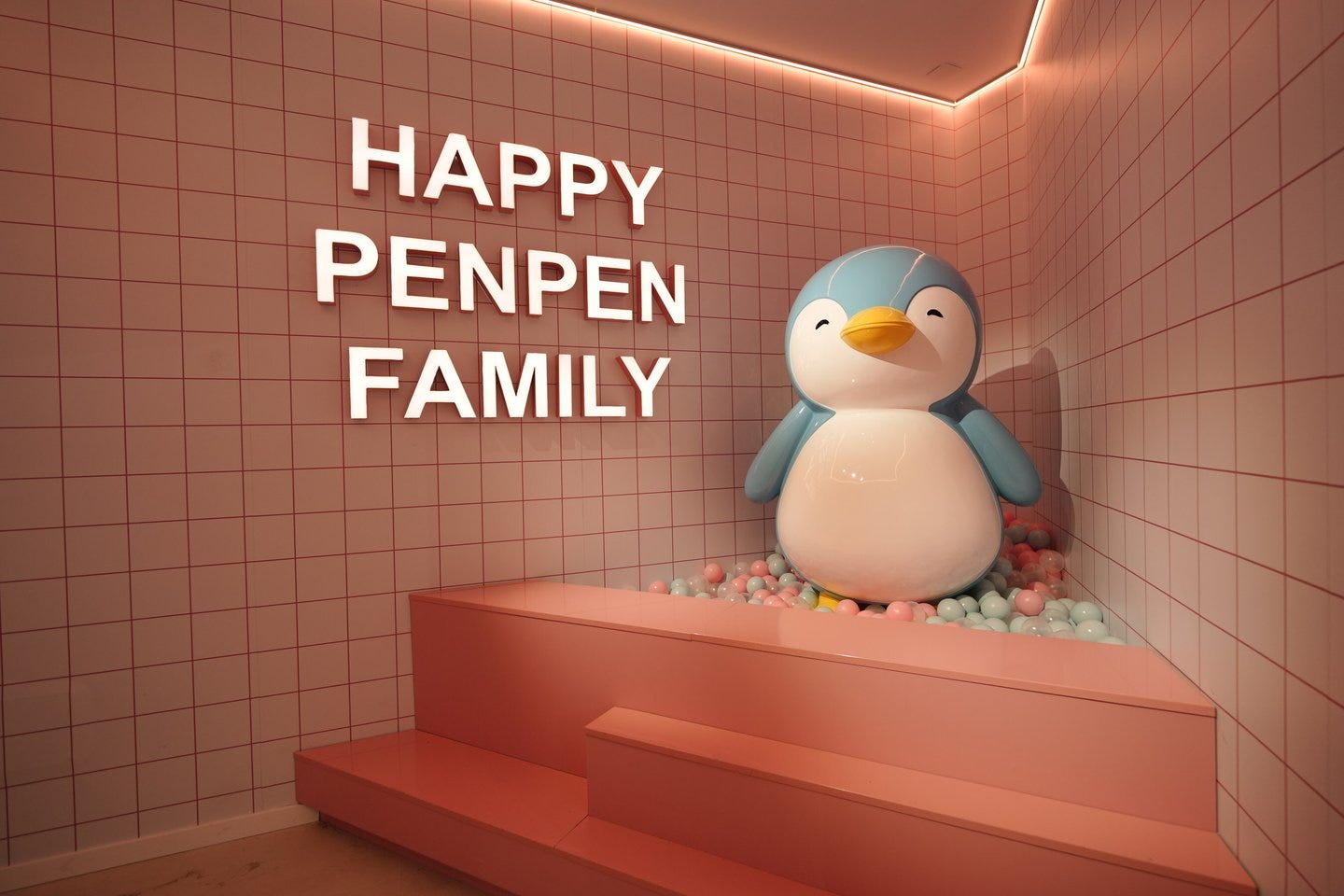
Projected first-year sales for YOYO: 40 million RMB. From a character they invented. And own outright. Forever.
No renegotiation risk. No licensor walking. The fanbase compounds permanently. Their CMO put it plainly in this article:
“Our future competitiveness will come not only from products but also from content, characters, storytelling, and cultural influence.”
A CMO of a $2.4 billion retailer just described their moat as characters and storytelling. Supply chain didn't make the list. Neither did price nor distribution.
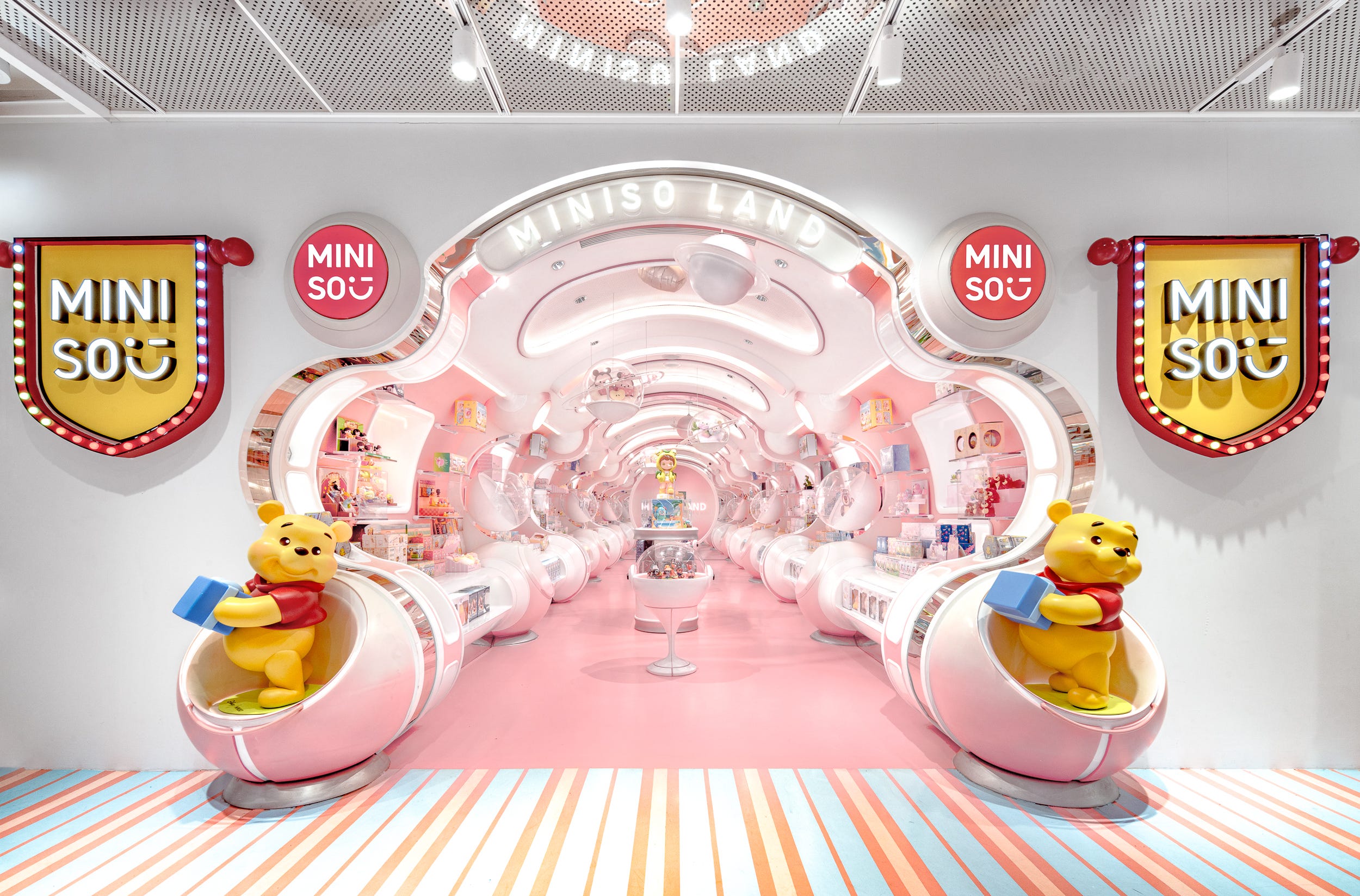
The final layer is physical. Miniso didn't just put characters on products. They rebuilt the entire store experience around them.
Their MINISO LAND flagship in Shanghai hit 100 million RMB in sales within nine months. Monthly sales reached 16 million RMB, with 83% coming from IP products. It won Best New Store Concept at the MAPIC Awards 2025.
These aren't stores. They're brand universes with a checkout counter. You don't browse a MINISO LAND. You enter a world. 🌍
When they opened their Jakarta flagship, 3,000 square meters, the largest Miniso store globally, it set a single-day sales record for the entire brand. Jakarta didn't need more stationery. It needed a giant immersive character experience worth traveling to.
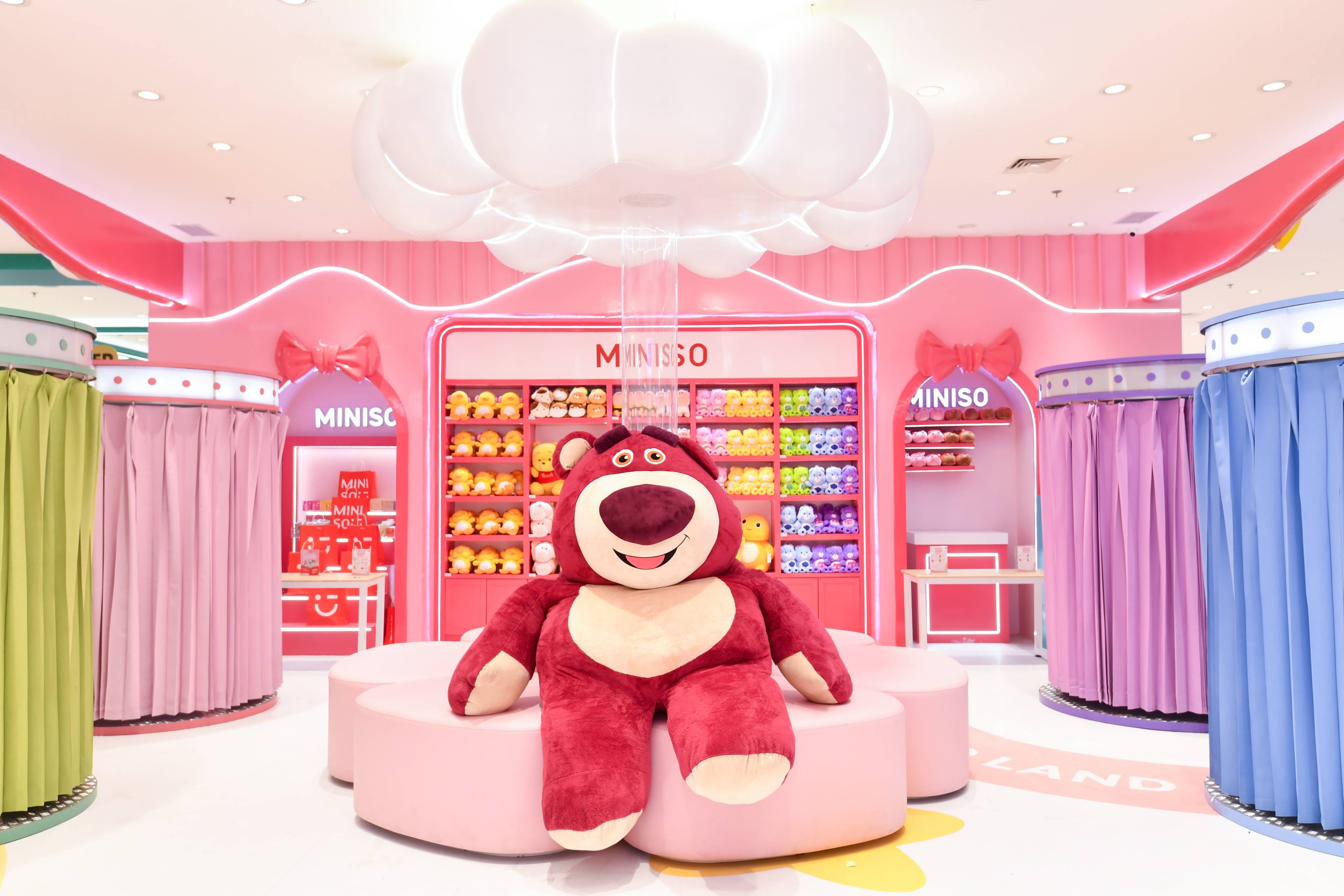
Physical activation in an AI-saturated content environment earns disproportionate reach precisely because it's real and impossible to generate with a prompt.
Rented IP gets you attention fast. Borrow an existing fanbase, and they do the marketing for you. It works, and Miniso used it brilliantly to scale from nothing to everywhere.
Owned IP is where the business starts compounding. Characters you build belong to you permanently. They grow in value with every product, every activation, every piece of content. YOYO's 40 million RMB debut is what year one looks like when the equity stays yours.
Stores built around those characters are the final layer. They convert a retail visit into a brand memory: something people photograph, share, and talk about long after they've left.
Miniso coined "interest-driven consumption" back in 2020 and quietly assembled a $2.4B company around it.
The question is what you build yours around.
Marcel says: Fascinating case study. Now, someone please explain why YOYO is making 40 million RMB and I'm still waiting on my first royalty check. 👀
Book a 20-minute call or browse examples of character-driven brand building in practice.
Not subscribed yet? Join 4,300+ brand builders getting weekly mascot case studies and AI workflows.
Sources
MINISO Group Full Year 2024 Financial Results, https://ir.miniso.com/2025-03-21-MINISO-Group-Announces-December-Quarter-and-Full-Year-of-2024-Unaudited-Financial-Results
MINISO Wikipedia, https://en.wikipedia.org/wiki/MINISO
MINISO USA 250% membership growth press release, https://www.prnewswire.com/news-releases/miniso-usa-achieved-staggering-250-membership-growth-in-2024-underscoring-successful-localization-strategy-302371194.html
MINISO Blind Box Carnival 20 million pieces, https://www.prnewswire.com/news-releases/minisos-global-blind-box-carnival-spreads-joyful-surprises-as-its-blind-box-sales-top-20-million-pieces-for-the-year-302022785.html
MINISO proprietary IP incubation plan and YOYO, https://www.miniso.com/brand/news_167.html
MINISO CMO interview on IP strategy, https://www.brandinginasia.com/qa-robin-liu-ip-led-experiential-retail-is-reshaping-the-foundations-of-global-retail/
MINISO Super IP and Super Store strategy, https://www.retail4growth.com/news/miniso-scales-up-its-ip-led-super-store-strategy-7503
MINISO global growth strategy overview, https://matrixbcg.com/blogs/growth-strategy/miniso
Comments
Nothing yet. Say the first thing.
Sign in to join the conversation.