
When I first came to San Francisco, it was a cold June day. There were tents on every corner, Market Street looked like it hadn’t been hosed down since the Gold Rush, and I wandered into the Tenderloin by mistake. I shared a two-bedroom Airbnb with six people, claimed the couch, and called it a bedroom.
I still thought: ‘This is the greatest place I’ve ever been in my life.’1
I found something special in a place where the air is mild, where things grow without asking permission, where you can be outside for the whole year without hating yourself. Somehow, this weather made me, the nature made me talk to strangers, and made me think bigger.
Now, we should not attempt to copy San Francisco. We can’t copy it, and we should not try. But we can ask: what does nature do to people when it’s generous? Can we be deliberate about it?
Living in Toronto, winter always creates a wall for me. I get boxed in, my world shrinks, and the human contact that ideas are made of withers.
Toronto is not special in this. Hundreds of millions of people across North America spend four months a year in a kind of voluntary indoor exile. And it does not have to be this way.
This article is about working together with nature to explore how we can build something that never quite existed before. I want to investigate how we can create sizeable open-air spaces with a Mediterranean climate and vegetation that persist through the winter in harsh North American cities. A place where you breathe freely, and feel that something good is about to happen.
First things that come to mind are the domes of Biosphere 2 in Arizona and the Eden Project in Cornwall. While being cool as a tourist attraction, these places do not create a feeling of somewhere you want to stay. You have a hermetic dome above you, and uncomfortably moist air which inevitably makes you ruminate on when you are finally going to leave this place.
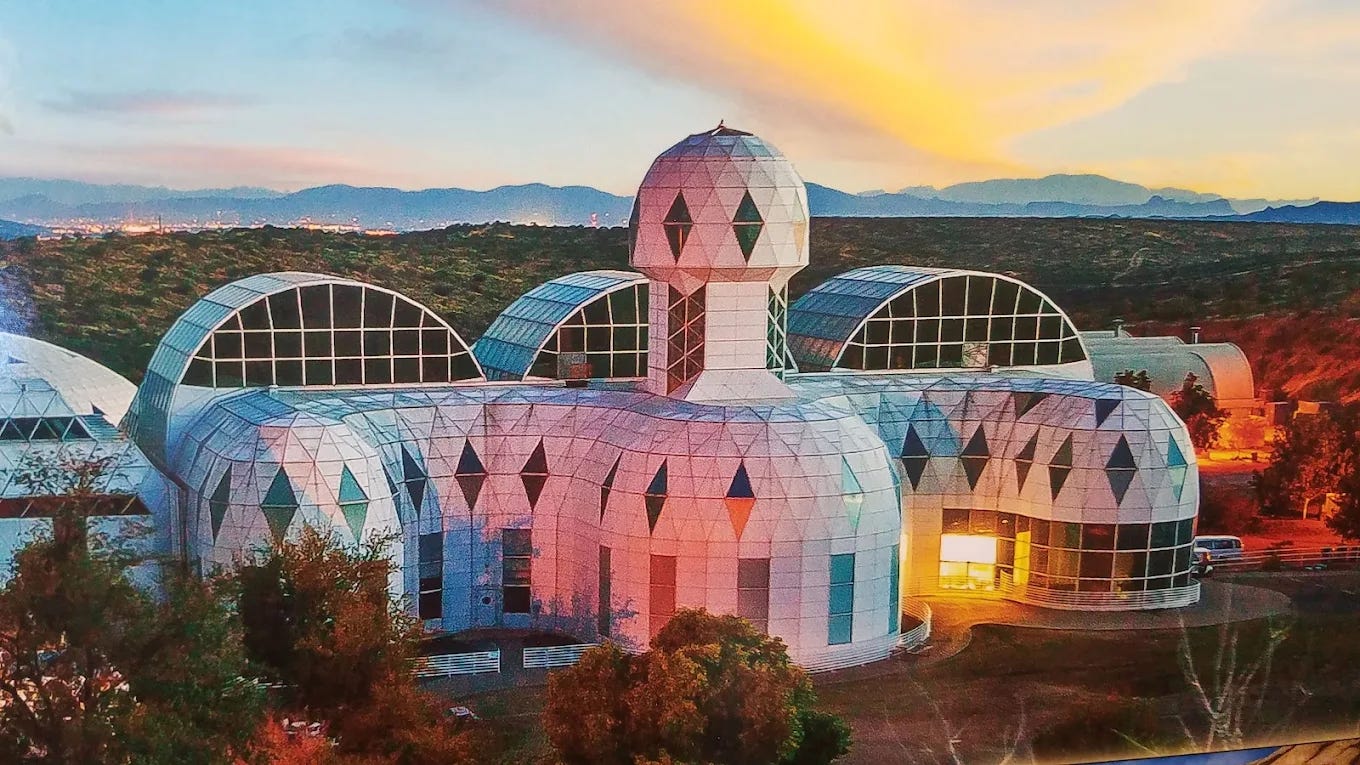
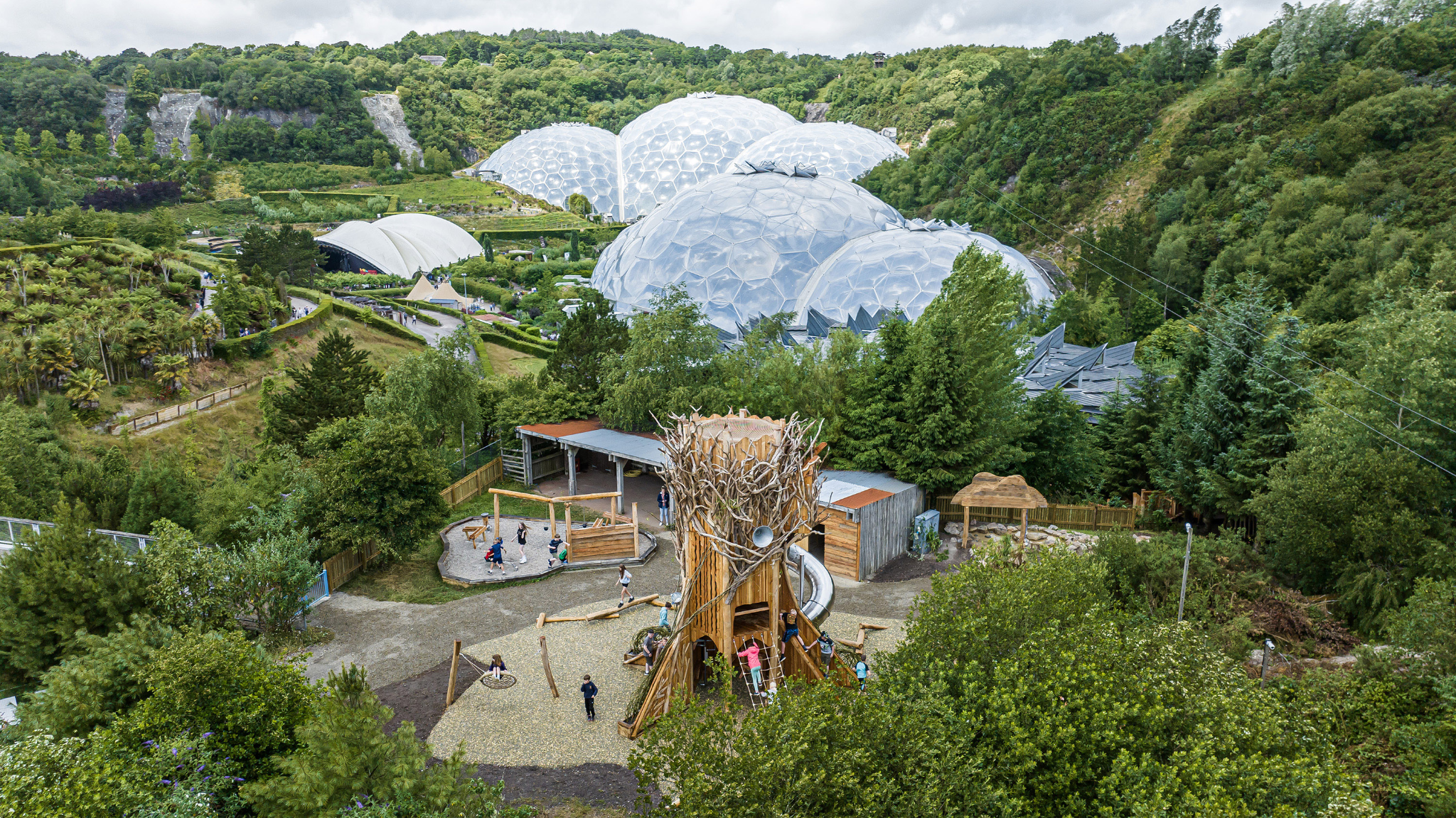
The places that actually move people should not feel engineered at all. A village square in Provence, where old men play cards under an olive tree does not announce itself as an engineering feat. It just makes us feel, without knowing why, that the world is generous. That is a feeling I believe is not possible to put inside domes above.
Let’s use Toronto’s Evergreen Brickworks park as a reference during the winter.
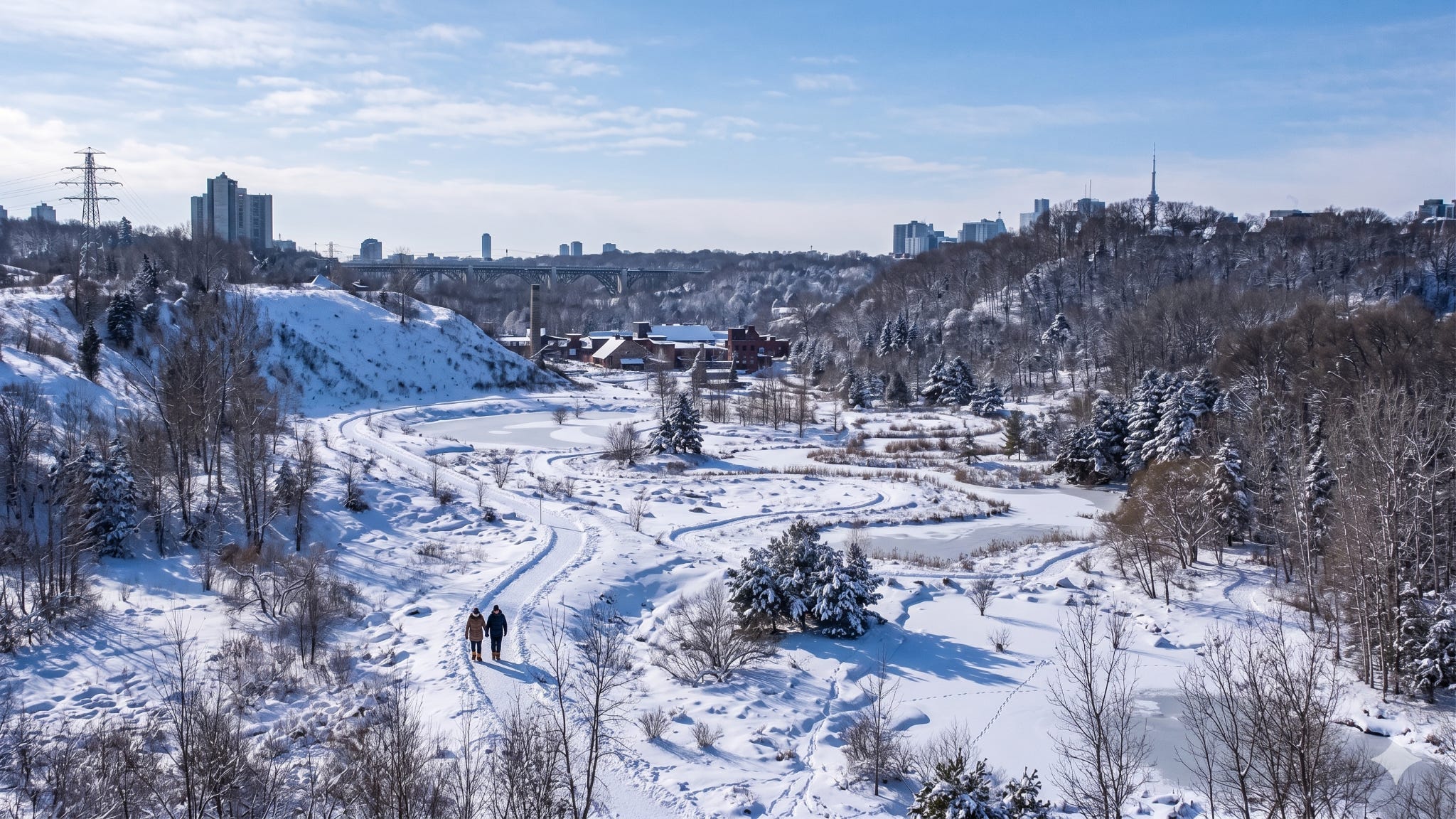
It is beautiful in its own stark way, and deeply, unambiguously Canadian. Bare trees, frozen ponds. A place worth a visit despite the winter.
But in this valley hides a secret opportunity for an evergreen garden. Bare trees can become stone pines and olives. The snow can be lavender and rosemary. The ravine walls naturally block the wind and help contain whatever warmth we put into the park. The air smells like something alive.
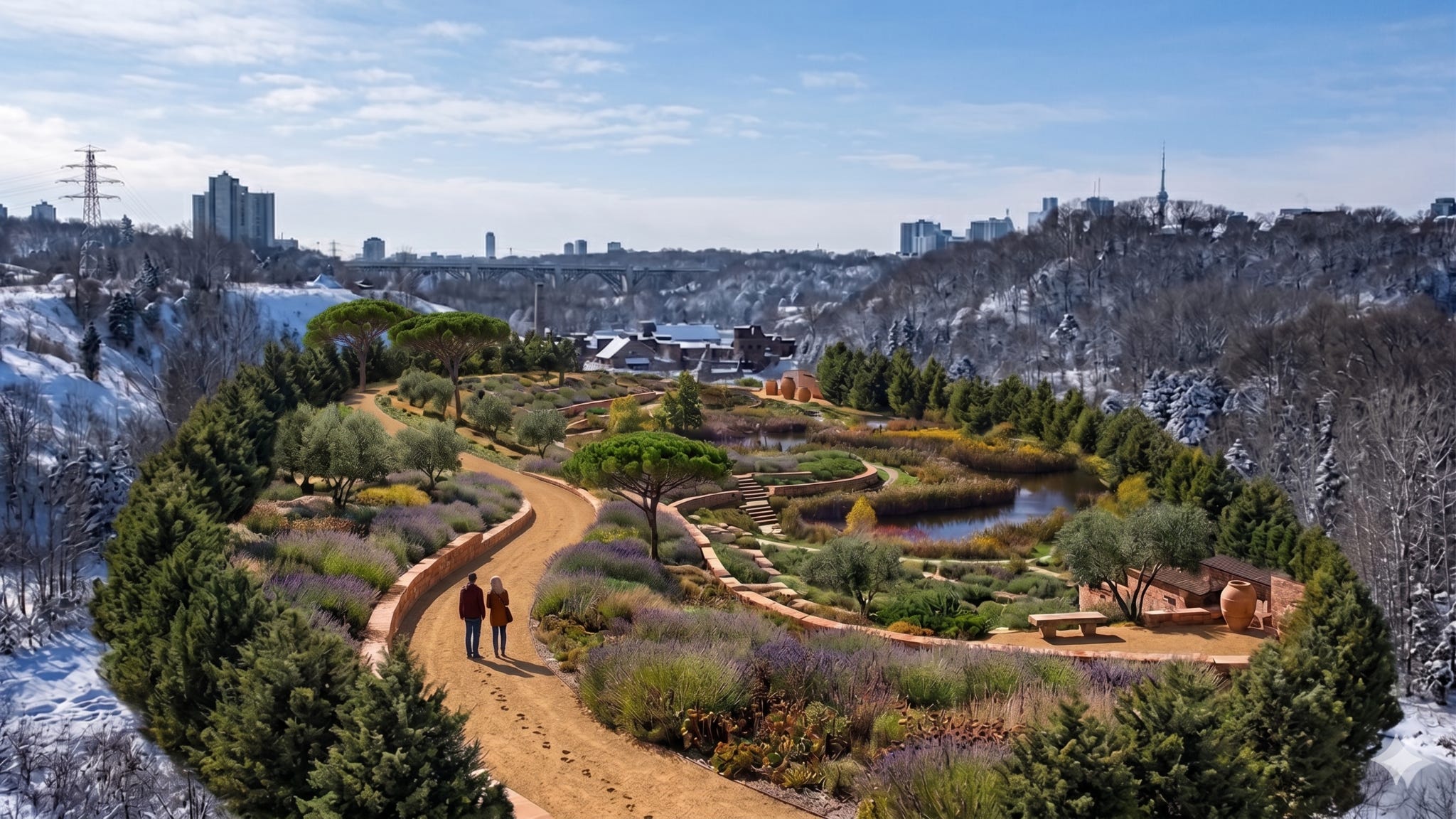
During a harsh winter night, we can introduce a retractable roof to keep the heat inside.
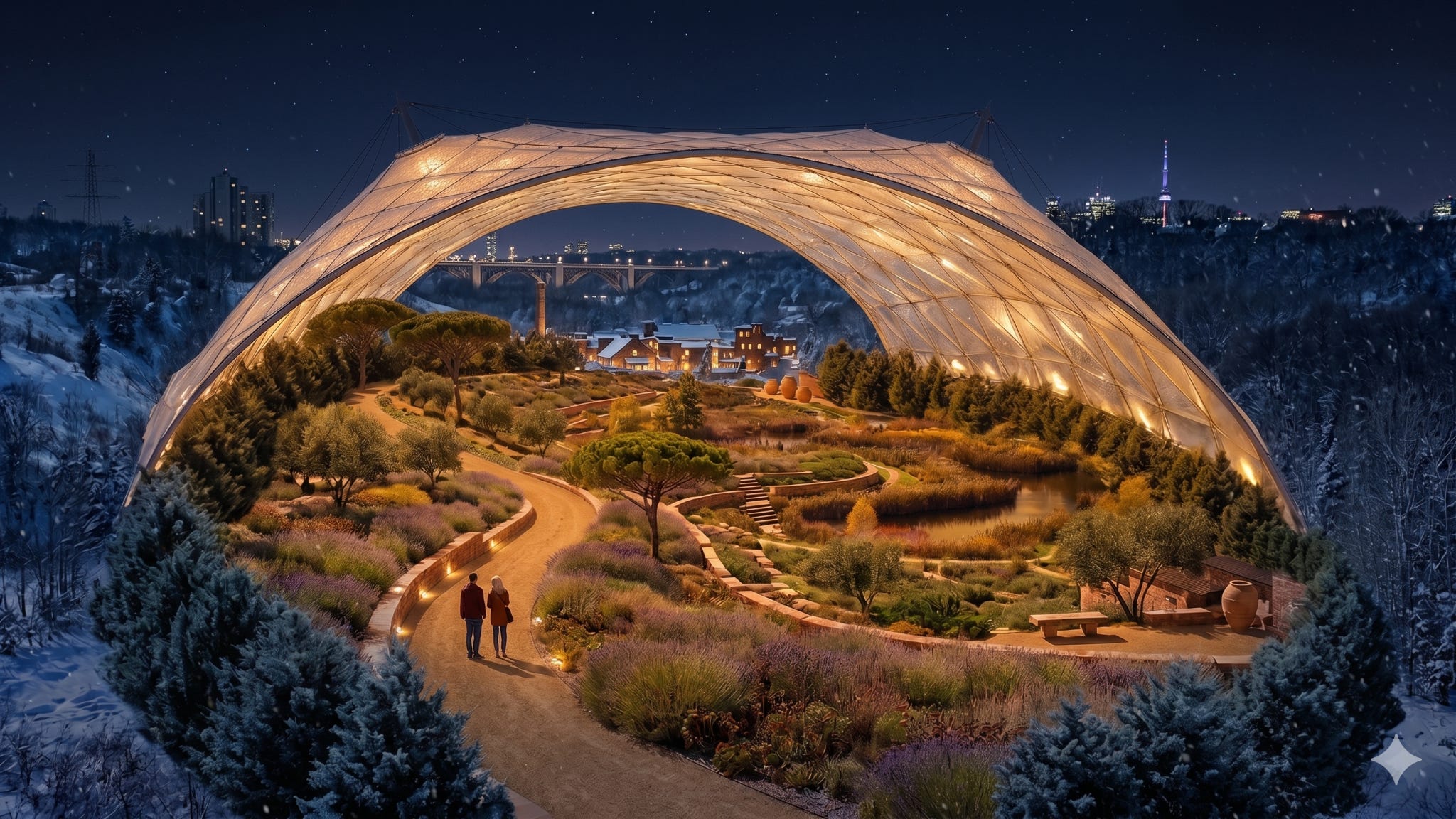
We can split the problem into two layers: what is happening below the ground, and what is happening above it.
Below, Mediterranean plants need fast-draining soil that is sandy, gravelly, and lean. Roots should never freeze, which means the ground needs to be thermally managed through a network of warm water pipes running beneath the surface.
None of these requirements are specifically exotic. Soil can be engineered and imported. The pipe network is the same technology that is under every professional football pitch. The plants themselves (olive, stone pine, lavender, rosemary) are widely grown and commercially available.
It gets more interesting above the ground. The temperature should also stay above freezing year-round, light must be intense enough to sustain growth, and the precipitation cycle needs to maintain wet winters and dry summers.
There is a mismatch between seasonal humidity of North American continental climate and Mediterranean, adding a requirement of discrete humidification and dehumidification systems embedded in the landscape. In terms of light, we would also need to add supplemental growth lighting during the darkest week of winter to experience a broader palette of Mediterranean plants.
I believe that heat maintenance is the key obstacle to solve. Heat losses in an open structure can make everything else impossible. To understand the depth of this problem, we need to understand standard modes of heat transfer.
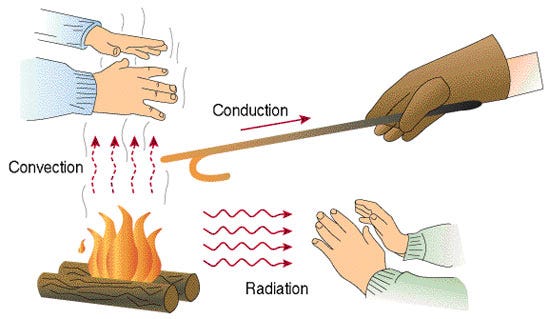
Heat moves three ways. In the winter, heat radiates outwards into a clear sky, it convects by wind, and it conducts slowly into the ground beneath us. To hold a warm climate in an open space is to deal with all three at once. You can not cheaply hold foreign temperature in a volume that is radiating, convecting freely to a sky, and conducting into the cold earth.
This requires multiple layers of heat control.
In addition to the ground heating network to heat roots and walkways, we need to embed heat into the architecture itself. Stone walls, boulders, benches, all of them need to be warm from within to radiate the heat outwards the way Mediterranean limestone would.
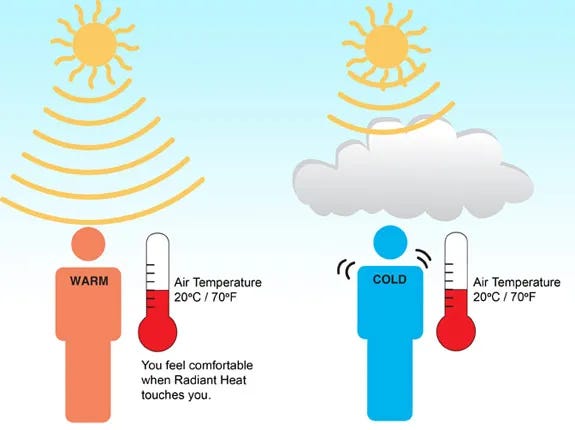
Above that, glowing infrared heaters can be tucked into the canopy of trees along the pathways. They will help create a pleasant temperature for humans and trees by emitting longwave infrared radiation that travels through the air without warming it, and transferring the energy only when it strikes the surface. The key thing is that human comfort outside is governed by radiant temperature, not air temperature. This is why a patio heater feels great even at low temperatures.
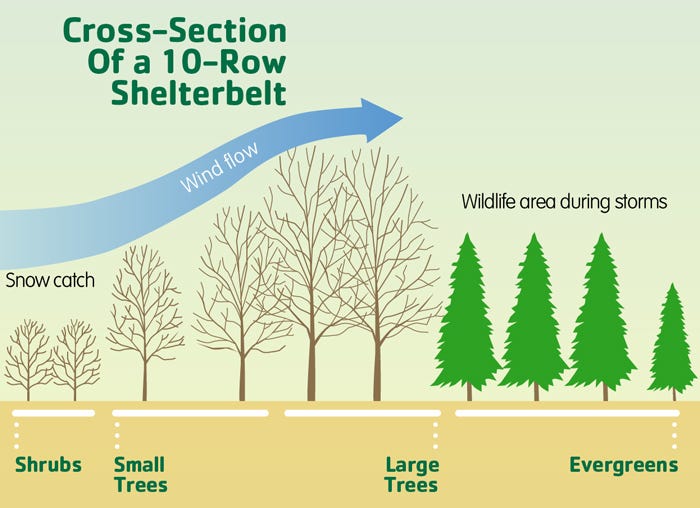
We also need to protect the perimeter of the park from the wind, which can strip away the heat faster than any of the systems above can replace it. The answer is a shelterbelt. It works by breaking the wind into turbulent currents that dissipate before reaching the interior, effectively reducing the wind speed inside the park. At Evergreen Brick Works, the ravine walls already do much of this work for free on two sides, and we can fill in the rest with the shelterbelt.
Lastly, when the sky turns truly hostile during the winter nights, we can deploy an ETFE membrane above the space to close off the radiative loss to the sky. By morning we can retract it away.
While we have already come up with a long engineering list, the whole point is that none of it should be visible to the people inside. Good engineering here is invisible engineering.
What about the construction costs? Who operates it? The permitting? You may be left with numerous objections or questions. I have glossed over several technical and financial details. I admit, we have only scraped the surface of this idea.
This piece is closer to a manifesto than a technical or financial blueprint. It is an argument that the thing is worth doing and the physics allows it. It is possible to make it into a self-sustaining business, while being cheaper than most museums or botanical gardens. All in all, the experience on the other side justifies the effort.
This piece is more than just about plants. It is about creating places where community can gather and grow when the city would otherwise scatter us indoors.
The only thing missing for this to come alive is the stubbornness to build it. And the willingness to believe that February in Toronto doesn’t have to feel like punishment.
Introduction style borrowed from the following NYT piece https://www.nytimes.com/2020/08/24/opinion/jerry-seinfeld-new-york-coronavirus.html
No posts
Comments
Nothing yet. Say the first thing.
Sign in to join the conversation.