
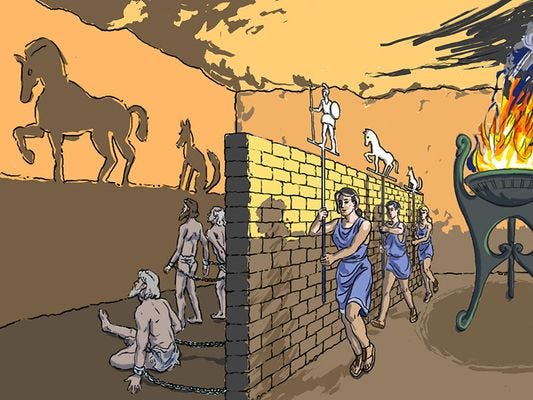
Around 375 BC Plato wrote his famous Allegory of the Cave. He describes prisoners chained in a cave, seeing only shadows cast on a wall by objects passing before fire. From birth, they see nothing but flickering shadows on the cave wall, and mistake these shadows for ultimate reality. It’s the only world they’ve ever known. They hear echoes, believing the sounds come from the shadows. They become good at predicting their patterns, but have no concept of the true objects or the world outside.
Using this analogy Plato postulated that our sensory experiences are simply poor projections of a deeper, ideal reality. He believed that reality is made of forms, which we can only approach through reason.
I remember vigorously debating platonism in my college philosophy class. I had a gut feeling that Platonic forms were real, but I could never quite put a finger on how to properly describe them. My classmate would always yell: “Show me the forms”. I would quietly nod and retreat, unsure what to reply. I thought that the implications of Platonism are not far reaching. Ethics, metaphysics… how are these things relevant anyways? I would not want to waste my time debating them.
But I was wrong. And in this article I want to show evidence that the forms are real. And I can show you where to look.
I will take you through the failure of genomic reductionism, the forgotten wisdom of Waddington’s epigenetic landscape, and recent work showing that neural networks trained on completely different data converge toward shared representations of reality. I will conclude with my own tests whether this convergence exists when we train AI models for drug discovery.
But first, we need to understand what is broken in how we currently think about biology. Let me start with a cautionary tale.
The genomic revolution promised everything from immediate cures for common disease to personalized cancer vaccines and solving aging. However, it turned out that single gene diseases are rare, while the hunt for aging genes was not successful beyond producing some correlatory findings.
The response is always the same. Cancer is still viewed as a matter of a few mutations, and papers regularly try to identify genes that are associated with longevity. “WE NEED MORE DATA” is the common answer that you would hear among these people.
I believe the problem is not a lack of data, but a fundamental framework. We keep searching for the single gene, the single pathway, the single molecule. When we find a correlation between a mutation and cancer, we call it causality. When we can’t reduce a phenomenon to a clear cause, we label it “emergent” and move on, as if naming it explains it.
Reductionism is seductive. If we go deep enough, we will find the lever that controls everything. Haven’t found it in the genome? Go deeper to atomic self-assembly. The cure is always one level down.
But what if the patterns we observe are not reducible to individual components at all?
In the 1950s, Conrad Waddington introduced his “epigenetic landscape” to explain the concept of “emergence”, or how a single genome produces distinct, stable cell types. In his framework, a cell’s fate is like a ball rolling down a landscape of valleys and ridges where each valley is a stable cell type, each ridge a barrier between fates. The landscape itself, not any single gene, is what determines which states are possible.
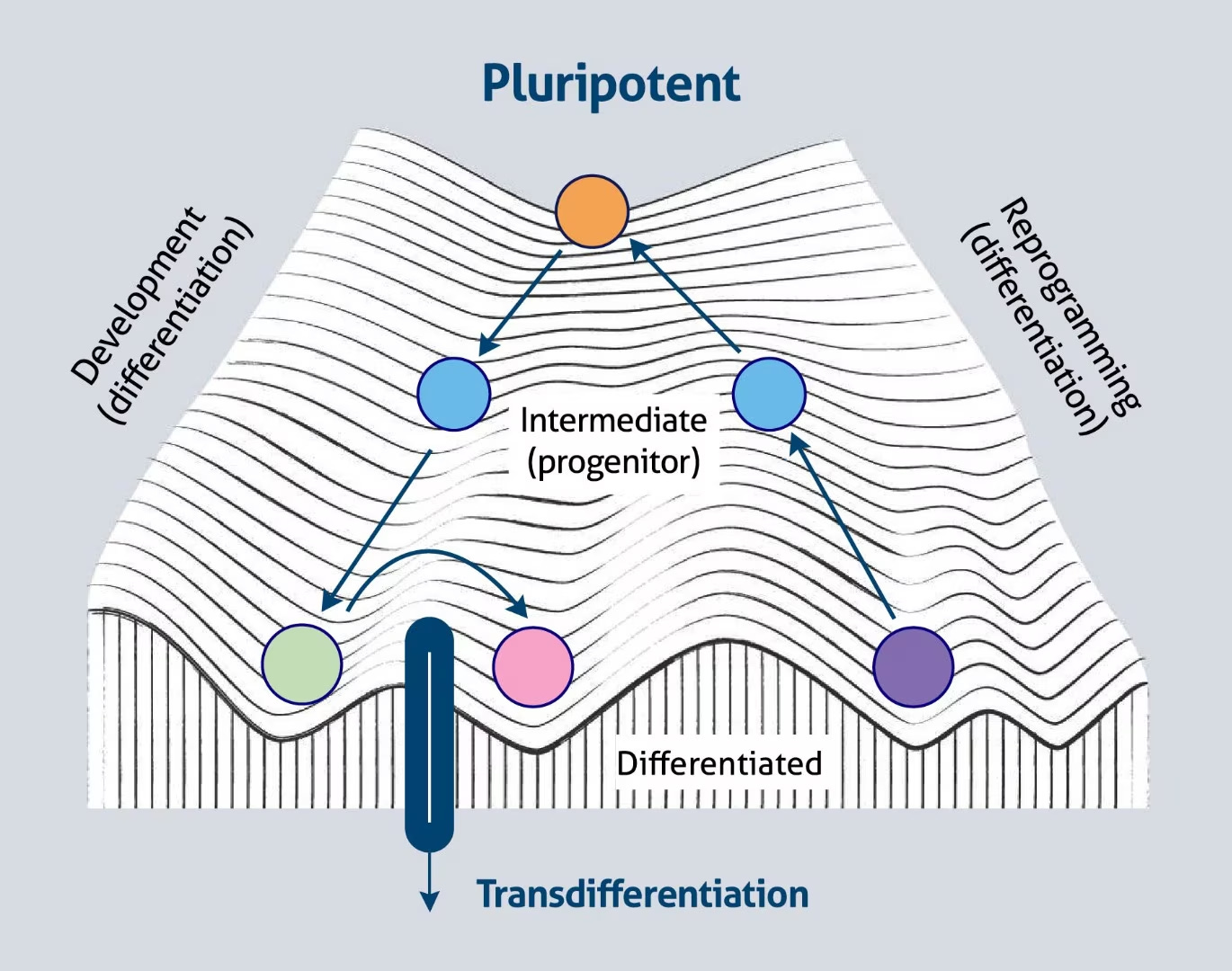
To this day, it is treated as a useful pedagogical metaphor to teach in the classroom. It’s forgotten when it comes to practical research and we return to discussing pathways and molecular cascades.
In 2009, Huang, Ernberg, and Kauffman argued that Waddington’s landscape is more than a metaphor. They showed it can be formally derived from the dynamics of gene regulatory networks.
The key concept is the attractor, which is a stable state that the network naturally settles into. Think of a ball coming down to rest at the bottom of a valley (image above). Each attractor corresponds to a distinct, self-maintaining gene expression pattern (a.k.a cell type). The valleys in Waddington’s landscape are these attractors.
The reason for this line of inquiry was hiding in plain sight. Lung cancer (despite hundreds of random mutations scattered through the genome), has only 4 transcriptomic clusters that account for over 95% of pulmonary neoplasia. Why isn’t there a continuum of tumor types, given that they result from “random” mutational processes?
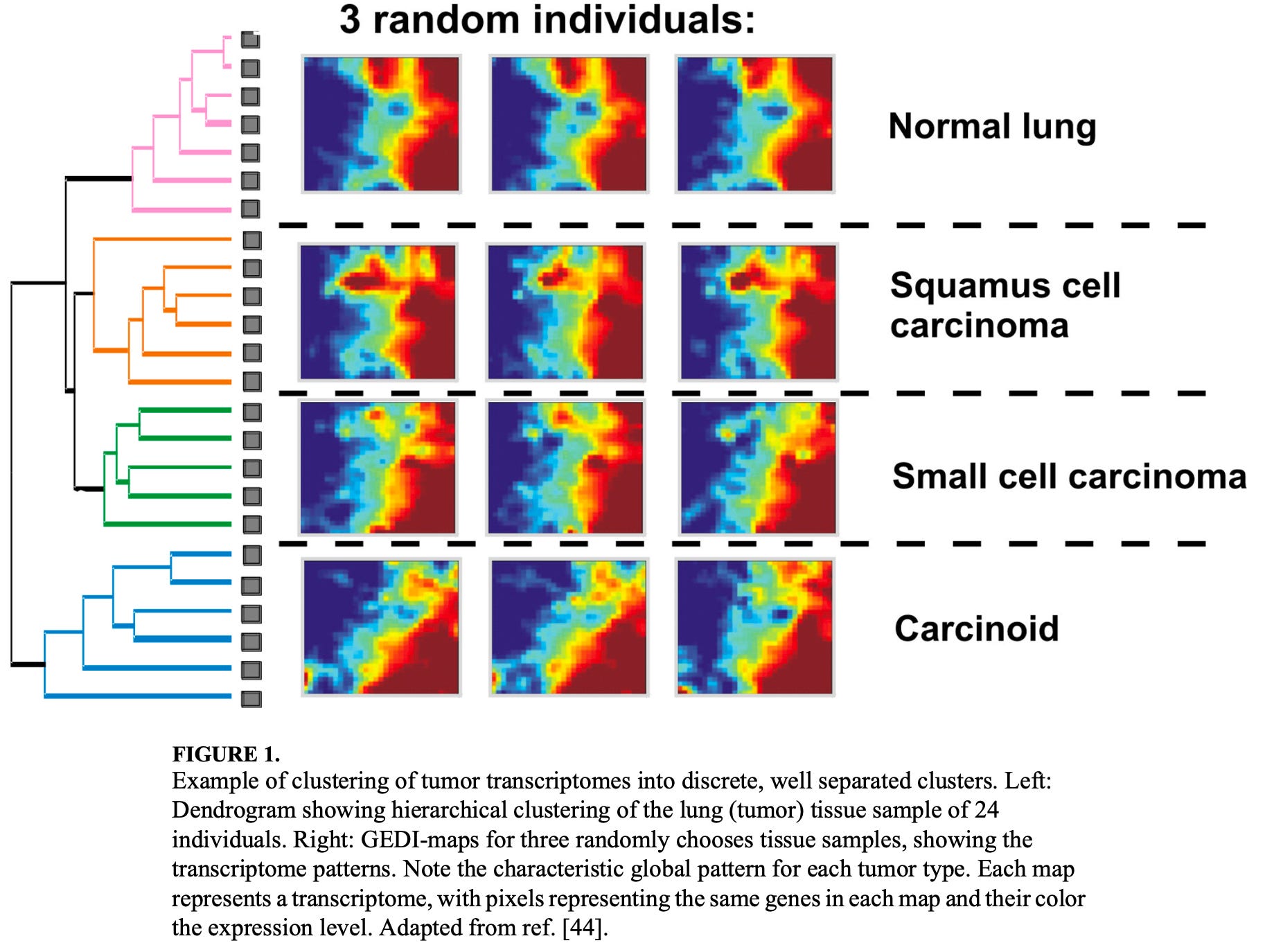
This observation led Huang et al. to a deeper question: “prevailing paradigm of somatic evolution and multi-step tumorigenesis, while useful in many instances, offers no logically coherent reason for why oncogenesis recapitulates ontogenesis.“ Why do cancer cells so consistently exhibit atavistic (ancient) states? Random mutations and selection can not explain this specificity. They noticed that if the cancer cells are trapped in pre-existing abnormal attractors (Platonic valleys that normal development avoids), then the atavistic phenotypes come “for free” encoded in the landscape.
There are other “free lunch” properties that come with attractors. For example, memory. Once a cell enters an attractor, it stays there. You need significant energy (e.g molecular perturbation) to push it over the ridge into a different valley. For instance this explains why just a few transiently expressed factors can permanently transform a cell into a cancerous state.
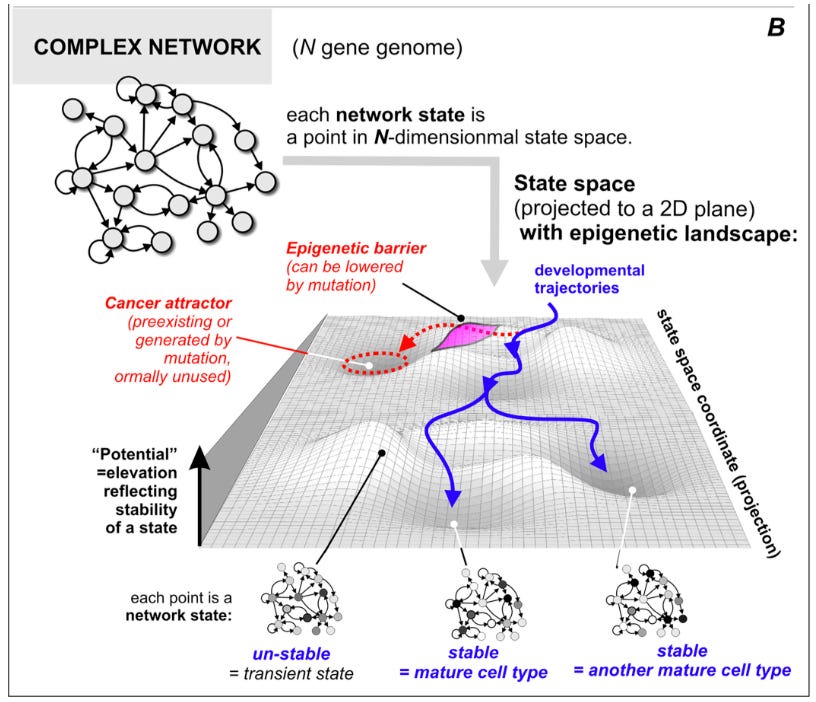
This phrase “for free” is crucial. It means the pattern does not need to be constructed from scratch by evolution or learned from data. It is already there, latent in the structure of the system, waiting to be tapped into. The cancer cells do not evolve toward an atavistic state through mutations, but because the Platonic valley already encodes the state.
This is a signature of a Platonic structure. Same patterns get reused across different contexts because they are attractors in the underlying latent space. Same atavistic network motifs are present in the reversal to atavism during aging, or when you are growing primary 2D cell cultures. Evolution clearly hasn’t been “optimizing” for this. These patterns recur because they are pre-existing attractors in the landscape.
Now I can confidently answer my classmate that the forms are these attractors that exist as stable states in the dynamics of the system waiting to be occupied.
Understanding why this matters requires distinguishing two types of causality: proximate and ultimate.
Proximate causality asks “how” questions. What molecular pathway, what mutation, what signal. Ultimate causality asks a “why” question. Why does this particular stable state exist? Why does this pattern keep recurring across contexts?
Biologists typically think that there are two ultimate causes: genetics and environment. However, these are still proximate mechanisms since they do not answer why these specific states exist in the first place. The structure of reality itself constrains which states are possible and reachable. The attractor landscape is not encoded in any single gene, nor is it purely environmental. It comes from the dynamics of the entire regulatory network. Similarly, a Platonic representation is not learned from any single training example but comes from the statistical structure that all observations share.
Platonic forms operate at the level of ultimate causation. They do not replace molecular details (proximate causality) but provide a framework for understanding why those details organize themselves the way they do. As we will see, this becomes very relevant in things like drug discovery.
If the concept of Platonic representations is correct, it should extend beyond just biology.
Neural Networks also offer a glimpse into this. The Platonic Representation Hypothesis, proposed by Huh et al., states that neural networks trained with different objectives on different data and modalities are converging to a shared statistical model of reality in their representation spaces.
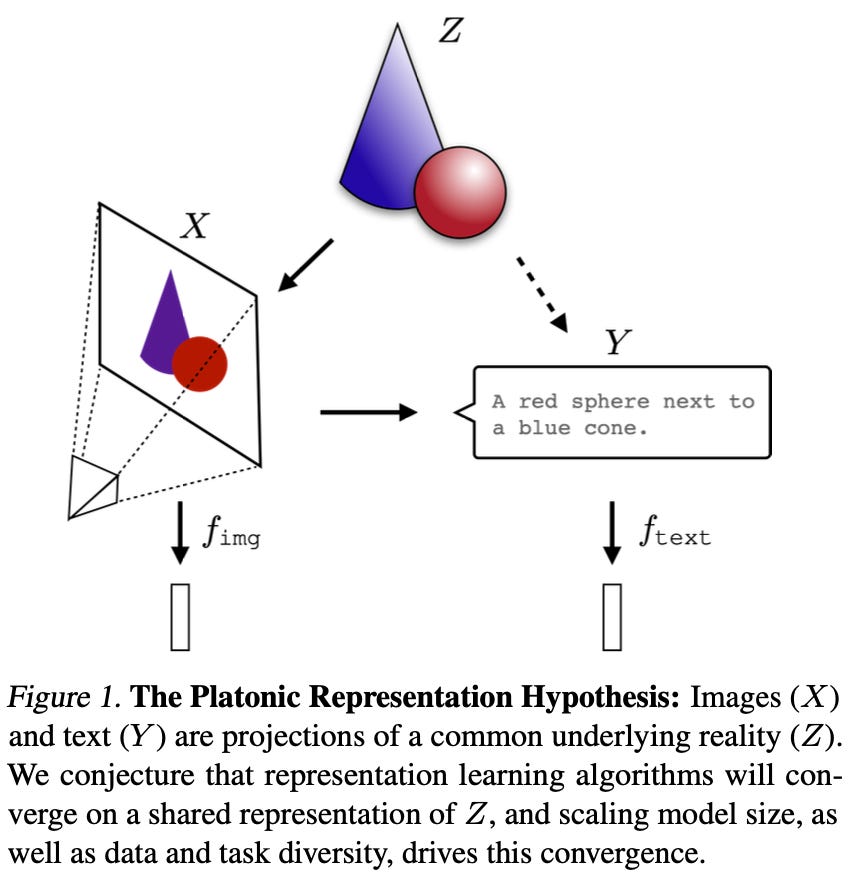
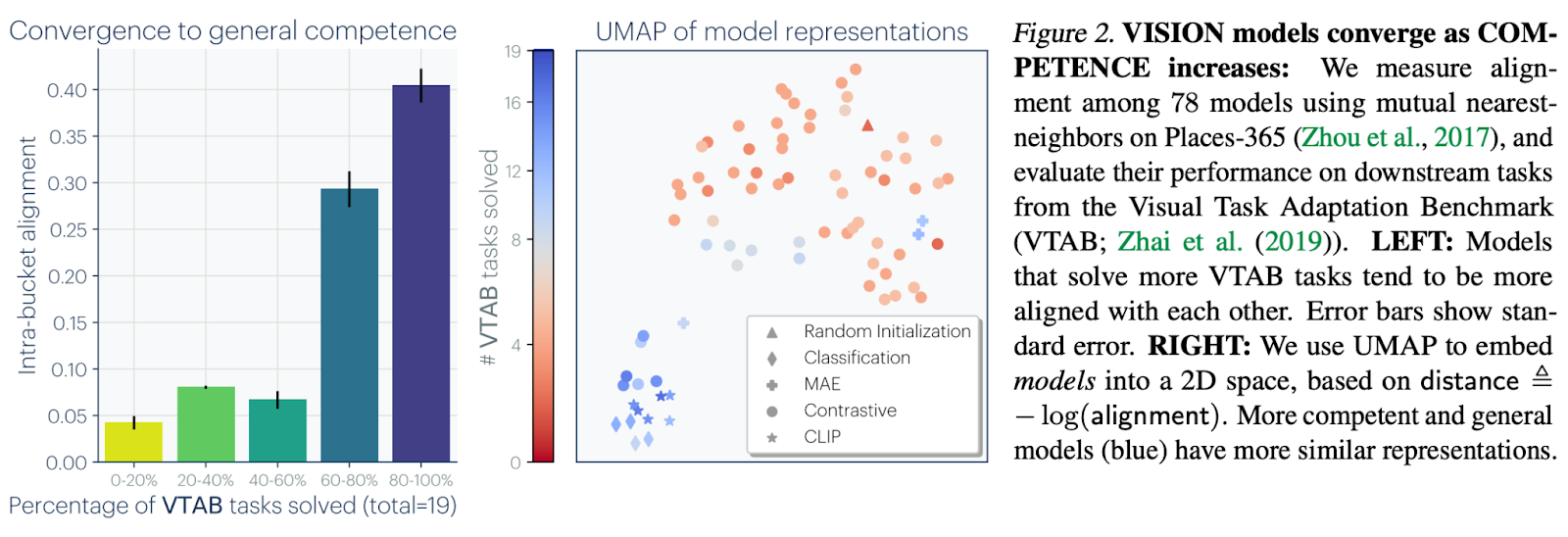
Neural networks trained on completely different data (images versus text) with completely different training objectives are learning increasingly similar representations of the world. The better the model is, the more their internal representations converge. You can think of the training data as the shadows on the cave wall, and the model recovering better representations of the actual world outside the cave.
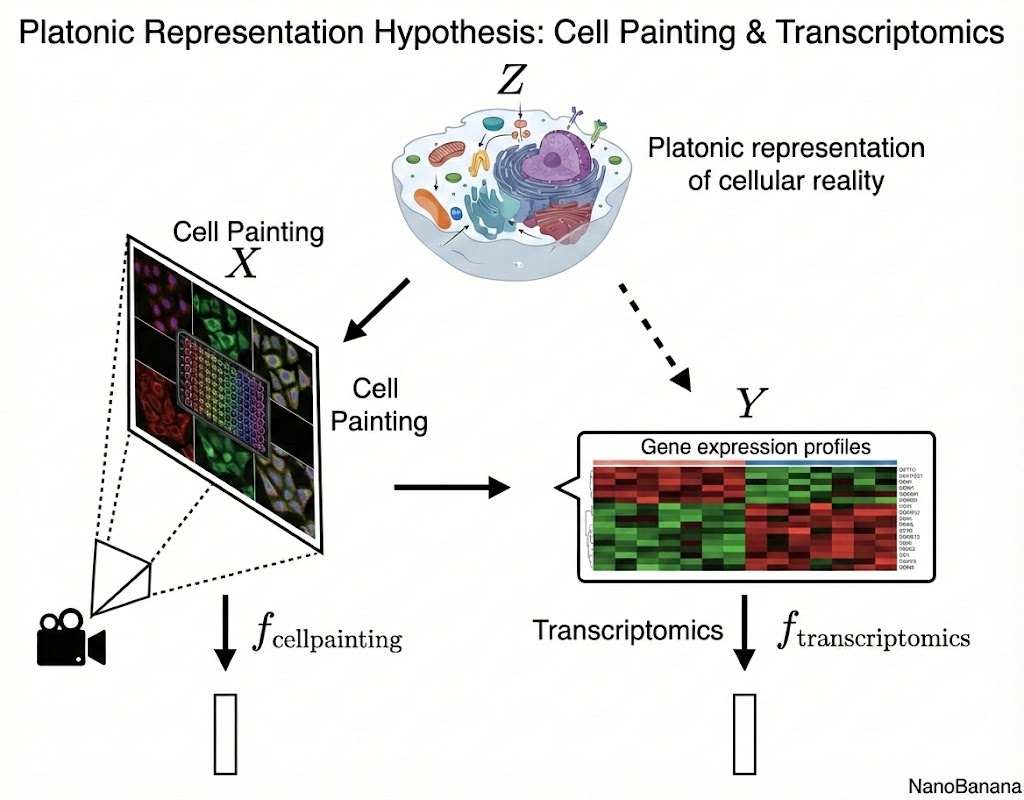
If the Platonic Representation Hypothesis is correct, we should see convergence in biological data too since they are both projecting the same functional state of the cell. Even with primitive models and limited samples. The next part of the article will concern how these concepts are relevant in the context of drug discovery.
If the Platonic Representation Hypothesis holds for biology, we should expect:
Models trained on different modalities should agree on which drugs are similar
This agreement should increase with model scale and data diversity
Supervision should accelerate convergence (by providing shared constraints)
Even unsupervised models should show some alignment (because the underlying biology is shared)
I compare four embedding spaces derived from different biological measurement modalities
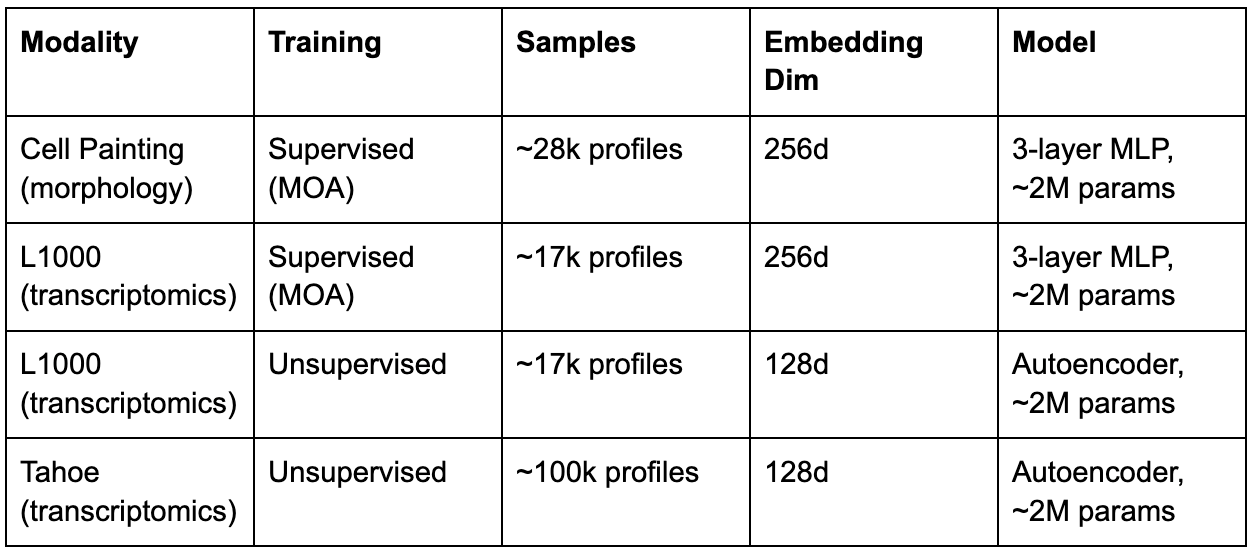
The supervised models predict mechanism of action (MOA) labels with embeddings are taken from the second to last layer. The unsupervised models are simple autoencoders with no label information.
I am not testing if the embeddings are directly compatible. Instead I test whether they agree on which drugs are similar to which other drugs. In other words, we are asking if the geometry of drug relationships in the latent space look the same regardless how you measure it.
I adapt the mutual k-NN metric from Huh et al. to biology by defining “items” as drugs rather than individual samples. For each modality, I compute drug centroids by averaging embeddings across replicates.
We are asking if drug A’s nearest neighbors in Space 1 are {B, C, D}, and its nearest neighbors in Space 2 are {C, D, E}, how much overlap is there? An mNN enrichment of 1× means chance-level agreement and higher values indicate shared structure.
Example of comparing adenosine across Cell Painting and L1000:
CP neighbors: [drug_3, drug_7, drug_2, drug_9, drug_1]
L1000 neighbors: [drug_2, drug_5, drug_1, drug_8, drug_6]
Overlap: {drug_2, drug_1} → 2 out of 5 shared
CP and L1000 embeddings become increasingly aligned as training progresses with mNN enrichment rises across epochs, strongest at small k. Models learn local similarity structure first.
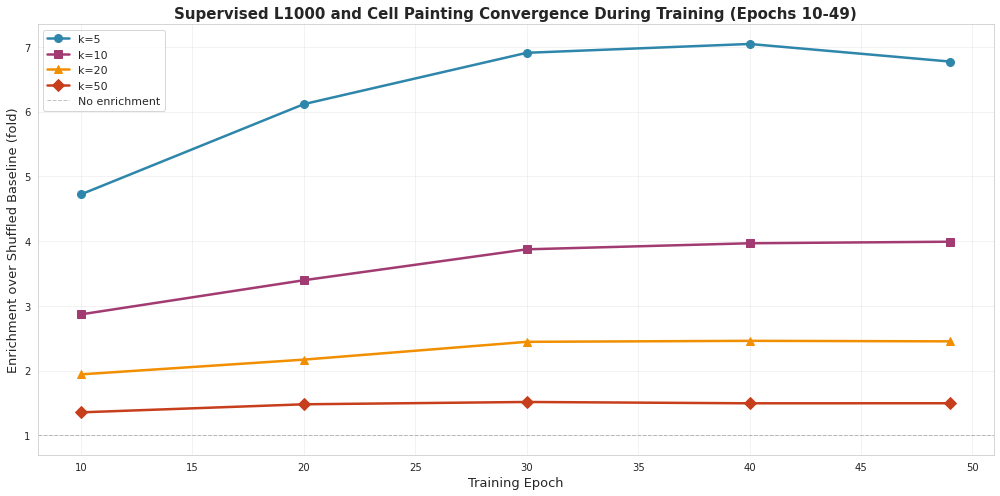
The local neighborhood structure agrees even though the raw embedding spaces are completely different. Importantly, the models weren’t trained to agree on neighborhoods, only on MOA classification.
When I stratify the mNN by MOA class we see that some MOAs have a clear convergence over training while others remain low. There is a clear shared structure across modalities, but obviously with each capturing unique information.
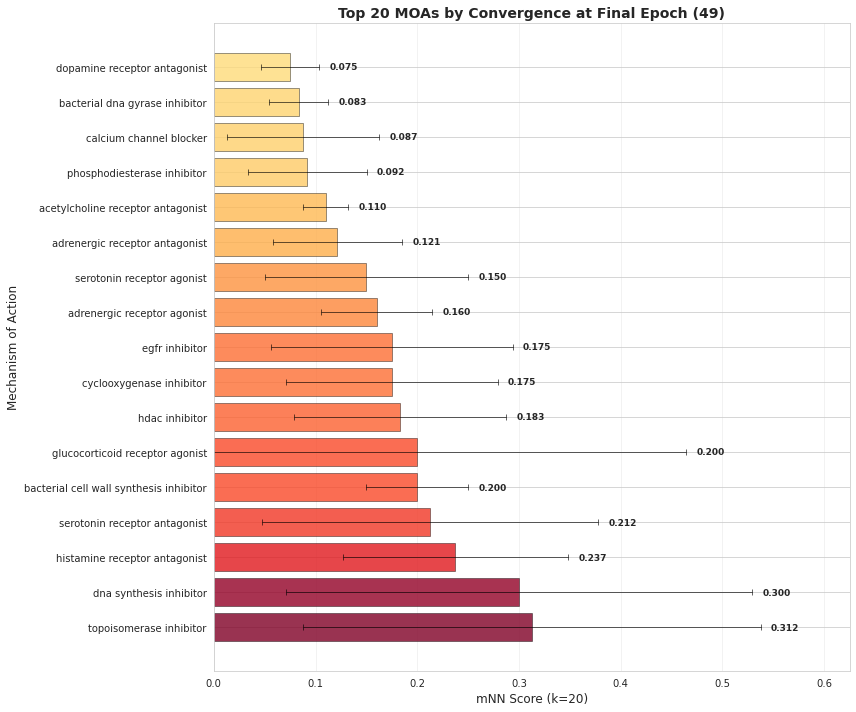
Topoisomerase inhibitors and DNA synthesis inhibitors show the highest cross-modal alignment (mNN = 0.31 and 0.30). GPCR modulators like dopamine, adrenergic, and acetylcholine receptor antagonists cluster at the bottom (mNN < 0.12). When a drug pushes cells into a coherent attractor state (like the DNA damage response), both modalities see the same thing from different angles. The state itself is consistent with changes to the chromatin, morphology, transcriptional programs.
But when a drug makes a localized perturbation that does not engage a coherent cellular program, two modalities seem to capture different fragments. Blocking a dopamine receptor in an osteosarcoma cell doesn’t push the cell into a well-defined attractor.
Now, we can scale this procedure to check alignment between various modalities and methods of training.
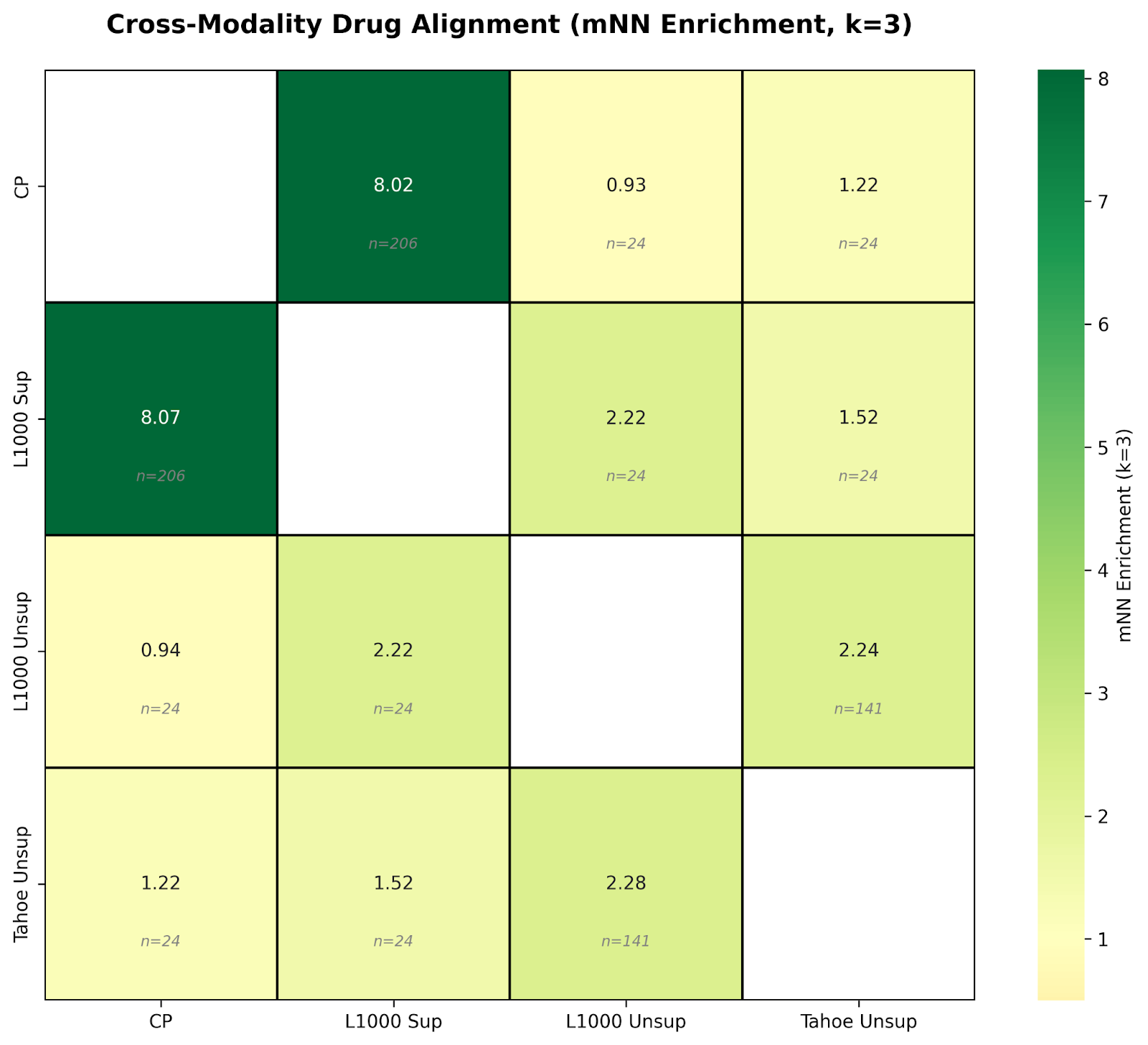
We see that the shared neighborhood structure across different measurement modalities is induced under supervision.
The CP <> L1000 Supervised pair shows the highest alignment (mNN enrichment ~8x). This shows that models trained on the same label space (MOA) converge toward a shared relational structure despite being trained on entirely different measurement modalities (morphology vs. transcriptomics).
Unsupervised models show moderate but real alignment. The L1000 Unsup <> Tahoe Unsup pair achieves ~2.2x enrichment despite using simple autoencoders trained independently on different gene expression datasets. This suggests that even without labels, the underlying biological structure partially surfaces in learned representations.
The goal of this toy example was to test whether Platonic representations exist in the current biological data. Whether different measurement modalities, when learning to represent drugs, converge towards a shared structure even when trained independently.
The answer appears to be yes, with important caveats.
The strongest evidence comes from the supervised setting. Models trained on Cell Painting and L1000 transcriptomics, using the same MOA labels but no shared architecture or training, learn representations where similar drugs cluster together across modalities. This is exactly what the Platonic Representation Hypothesis predicts.
More surprising is that even simple unsupervised autoencoders show partial alignment. The L1000 <> Tahoe comparison demonstrates that two gene expression datasets (with no labels and no architectural sharing) learn overlapping drug neighborhoods. The alignment is modest (~2x) but consistent. Importantly, it emerges from models with only thousands of training samples, compared to the hundreds of millions used in Huh et al.’s original work on vision-language convergence.
This suggests that Platonic structure in biology may be detectable even with primitive models and limited data. The next step would be to extend this work to foundation models like scGPT, Geneformer. If the Platonic Representation Hypothesis holds, we should see mNN enrichment increase with model scale and data diversity.
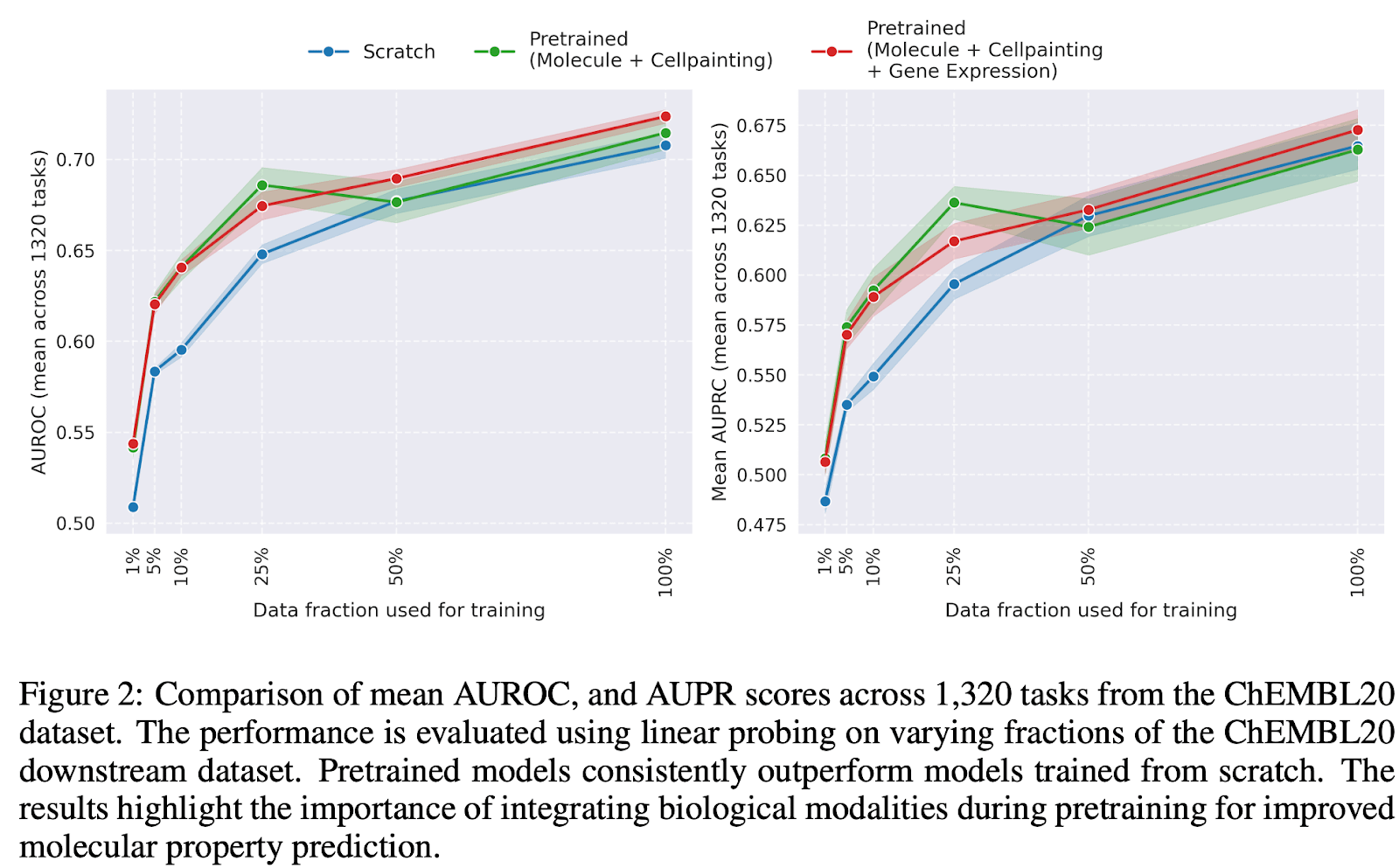
In “Multi-Modal Representation learning for molecules” we see that pretraining a molecular encoder on Cell Painting morphology improves downstream ChEMBL tasks by ~6% in low-data settings. Adding transcriptomics on top gives more gains. This is consistent with a well known phenomenon when pre-training on video helps you increase fine tuning performance on text.
Hopefully you can now see how different biological “shadows” can guide towards the same reality.
What exactly do these embeddings encode? At minimum, they capture where drugs push cells in state space. But they also might encode the attractor basin cells occupy, or even properties of the dynamics that generate those attractors. This distinction matters. Snapshot level representations tell you which drugs have similar immediate effects, while attractor level representations tell you which drugs produce equivalent endpoints regardless of path. Landscape level representations could predict how drugs interact and how resistance emerges. My current experiments can not distinguish these levels. Doing so would require time series data and perturbation combination experiments. But these questions are definitely worth asking.
The implications of Platonism in biomedicine become more interesting when we consider scale.
In their analysis of vision and language models, Huh et al. observed a correlation that the larger the model and the more data it consumes, the more strongly it converges toward a shared representation. Models that aligned more closely with vision showed superior performance on downstream tasks like Hellaswag (common-sense reasoning) and GSM8K (math).
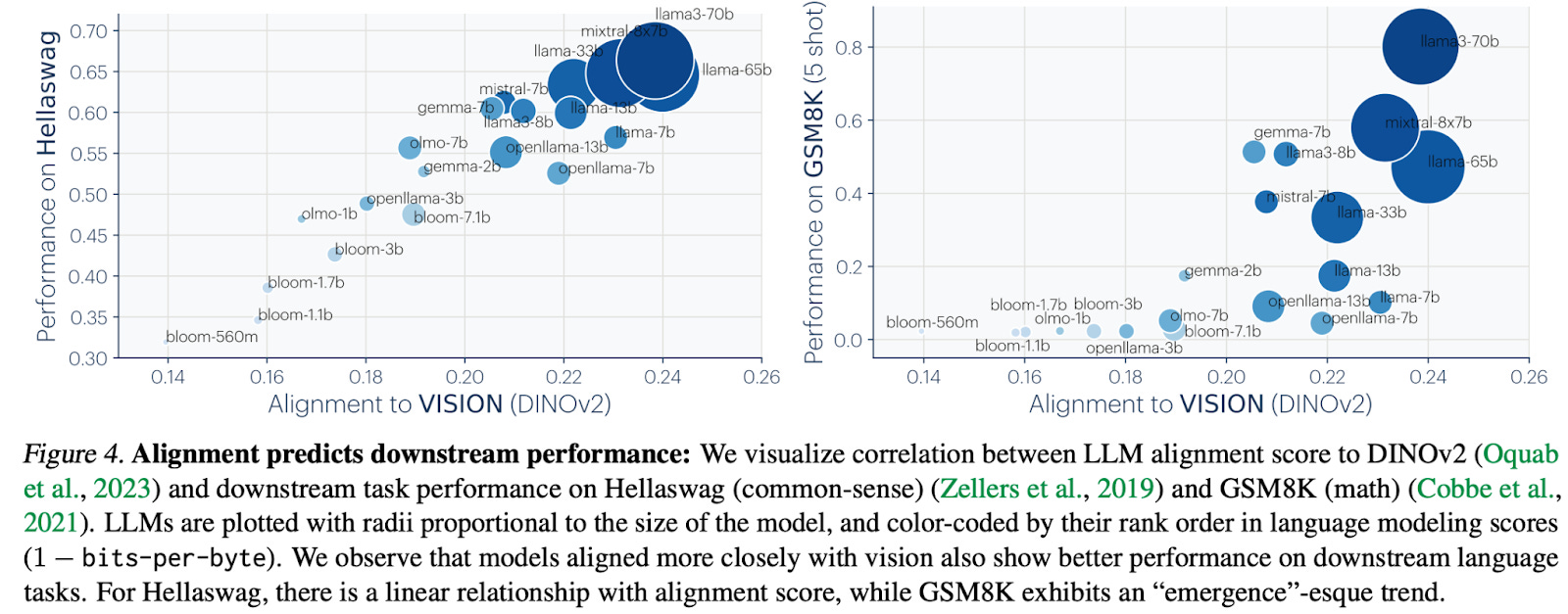
Biology is still in the age of small, siloed data. But if the same scaling principles hold, it suggests at least two things:
Simplified assays may be enough. You just need to capture the relevant Platonic patterns of the system without fully replicating it. Cellarity achieves 88% sensitivity and 100% specificity on liver toxicity using transcriptomics from sandwich cultures. Likewise, Axiom is using “flattened spheroid” with seemingly good performance. These are not perfect models of human liver, but they may be projecting enough of the underlying structure to be useful. Why might simplified assays be sufficient? If we were trying to measure exact cellular state, we would need a high resolution measurement in a physiologically relevant system. But if we are trying to identify the attractor basin a drug pushes into, the task is easier. Attractors are stable and self-maintaining states. A flattened spheroid can’t capture every transcriptional nuance, but it might reliably distinguish a healthy hepatocyte attractor from a stressed hepatocyte attractor from a fibrotic attractor. The platonic structure does the heavy lifting.
Scale and multimodality should compound. The more data you integrate across modalities, the more constraints you place on the learned representation which forces it to capture Platonic structure that works across all tasks. For example, you can predict biological age on par/better compared to most advanced aging clocks using LLMs. Anecdotally, you can prompt LLM to get novel clinically relevant SMILES signatures of a chemical. Asking LLM with a pathway level outcome of a chemical perturbation sometimes gives you better performance compared to frontier perturbational models on a single cell level.
I showed here a modest experiment where drug embeddings learned from morphology and transcriptomics agree on neighborhood structure, and that this agreement increases with training.
But the implications are not modest. For example, cancer becomes less about accumulating the right mutations and more about cells falling into latent attractors that were always present in the landscape. Aging becomes less about reversing molecular damage and more about understanding why cells drift from their proper valleys.
To skeptics who demand to “see the forms”, I can finally point to them. Moreover, these representations are measurable, and not just a philosophical metaphor. Neural networks, cells, mathematical abstraction all offer empirical windows into these representations.
The Platonic world is wide open for you to explore!
No posts
Comments
Nothing yet. Say the first thing.
Sign in to join the conversation.