
This tale is told in three parts, across three posts:
#3 Two Inquests and a Funeral (this post)
If you have read the earlier posts in this series, you will know that Mt Nobbler is located in the Kakanui mountain range of Central Otago, New Zealand and that four young lives were lost there in July/August 1891. Part #1 told you about the location of the tragedy and the people who died. Part #2 detailed how the tragedy unfolded and led to the recovery of four bodies on the mountain. Some information is repeated in this post but only to the extent that it seemed useful to aid memory and provide context.
Between 30 July 1891 and 1 August 1891, four people died on Mt Nobbler. Three bodies were recovered on 2 August 1891. The fourth was recovered on 3 August 1891. All four bodies were taken to Danseys Pass Hotel1. It was there that Inquests were held on 4 August 1891 within view of the bodies. At the Inquests the hotel was referred to as ‘the house of Benjamin Monk’ or ‘the dwelling house of Benjamin Monk’ ‘ known as the Pass Hotel'.
The first Inquest looked into the death of Thomas Meikle. This was followed by an Inquest into the deaths of Alphonso Philip Beer, Robert Blanchard, and James Meikle. The three died together in an avalanche while trying to rescue Thomas. James and Thomas were brothers.
In both cases, the depositions of witnesses were heard before Acting Coroner, Niels Peter Hjorring, Justice of The Peace and before a Jury of six: William Williamson (Foreman); Thomas Forgie; William Jacob; Robert Little; John Henry Stuart; and Richard Gale, all residents of the Kyeburn Diggings.
Thomas had gone rabbiting with his brother, James in the Kakanui mountains on Thursday 30 July 1891. What was intended as a day trip turned into an overnighter when bad weather rolled in without warning. Thomas became too weak to battle against the snow so he and James spent the night under a rock shelter huddled together with their dogs and one blanket between them.
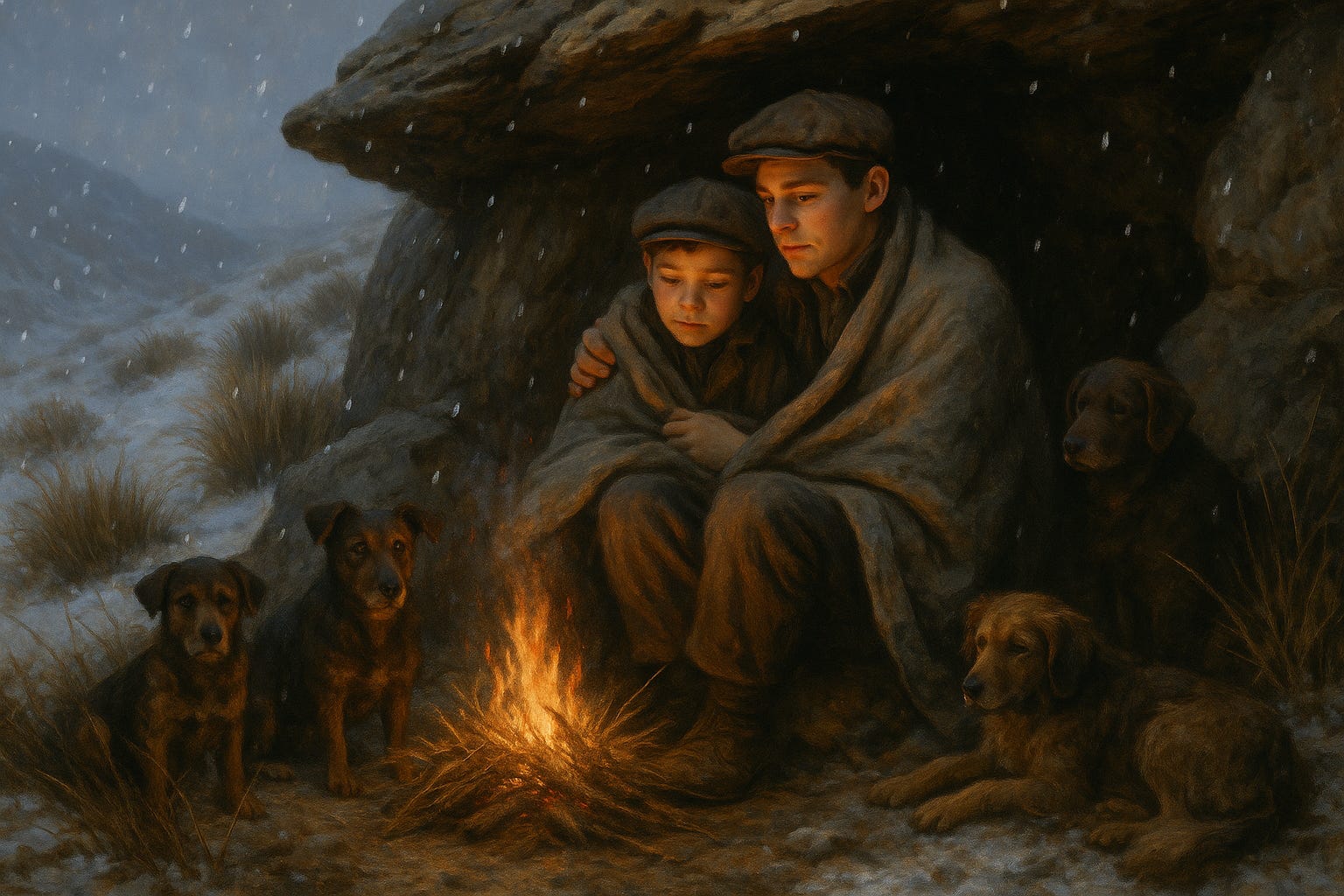
The next morning, the bad weather continued and Thomas was still too weak. James went to get help leaving him with the blanket and some of their dogs for warmth. That was at 5am on Friday 31 July 1891.
The first witness was James Meikle Snr, the father of James and Thomas. James Jnr had come to him for help after leaving Thomas on the mountain on the Friday morning. James Snr confirmed that the body was that of his son, Thomas, and told the Inquest about his and James Jnr’s unsuccessful attempt to rescue Thomas on the Friday afternoon and evening.
They had left about ten minutes after James arrived at 2pm. That was after quickly gathering together food and blankets. The weather was still bad and they had to contend with snow and darkness as night drew in. James became exhausted and they had to give up for the night and head home. They arrived at John Parkers home at about 11:00pm with the intention of ensuring a search would be arranged for the next day.
“… the frost was very severe. James was frostbitten and became quite exhausted. He was frostbitten on both hands and feet. If I had continued, probably both James and I would have lost our way. On reaching Mr Parker, he rubbed the boys feet and made them all right again”.2
He also told the Inquest about the events on the mountain that led to Thomas being stuck there, as told to him by James Jnr.
David McCready was the next witness. He was the owner of McCready’s Station. James and Thomas had his permission to both rabbit on his land and stay at a hut on his property when they were out rabbiting. He told how he had seen James when he came down the mountain for help but he was unaware of Thomas’ predicament as James rushed on his way and didn’t tell him.
“ … I know the deceased Thomas Meikle. He and his brother James had my permission to rabbit on my run, which goes over in the direction of Mount Nobbler in the Kakanui Ranges. They usually camped at my station, but sometimes went home. I have not seen Thomas for some time. There was no one else living at the station except the boys. I was there till nearly dark on Thursday night, but they had not reached home then. I saw James at one o'clock on Friday, but he did not inform me of his brothers state”3.
Last to depose was Police Constable Thomas John Johnstone. Police Constable Johnstone of Naseby told the Inquest about his role in recovering Thomas’ body on Monday 3 August 1891 and described what they saw when they found him:
“… I accompanied a search party of 19 to search for the body of the deceased Thomas Meikle. We went over the other side of the Kakanui Range a little to the East of Mount Nobbler. When about a mile and a half on the other side of the range, we discovered the dogs, and on going down the creek, which is one of the branches of the Maerewhenua, we found the body of the deceased, who was quite dead. One of the dogs was lying on the body. The deceased was lying on his back, his cap covering his face … We removed the body to the Pass Hotel. To all appearances, the boy had died in his sleep …”4
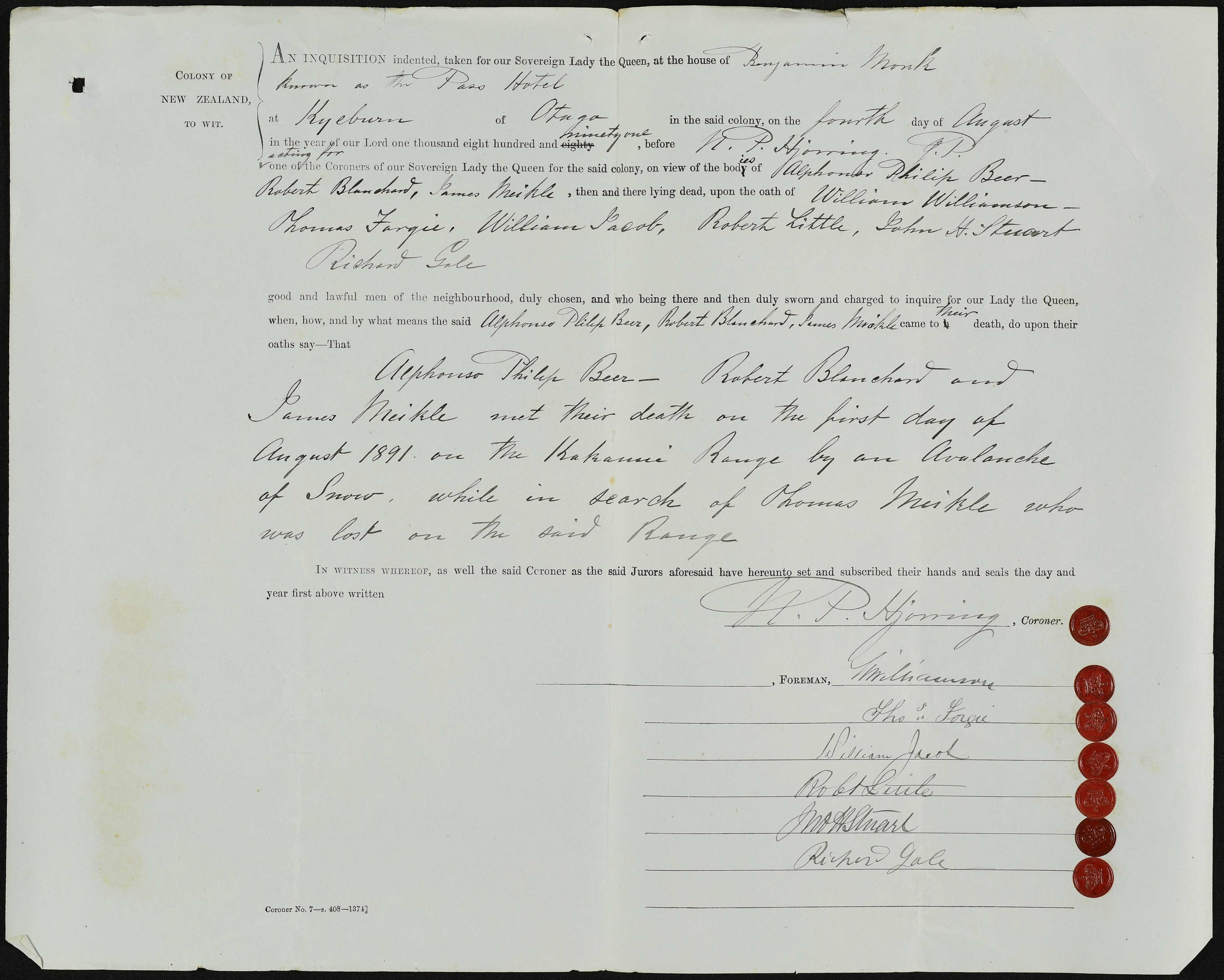
The Verdict of the Jury given under oath and signed by each of them, and the Acting Coroner who presided over the Inquest, was that:
"The deceased Thomas Meikle met his death by exposure in a severe Snowstorm on the Kakanui Range"5

On Saturday 1 August 1891, James Meikle was guiding a nine-man rescue party on to Mt Nobbler in an attempt to find his brother, Thomas Meikle who had become stuck on the mountain.
As James guided the party towards the summit of Mt Nobbler, he realised they were on the wrong spur. In order to reach the saddle more easily, the search party chose a route across a deep snow covered siding on the south eastern mountain face. To get around the siding, the party had to walk in single file.
As they started to cross the deep snow-covered face of the mountain, a mass of snow swept down the mountain at high speed. It came without warning and the first three men - Robert Blanchard, Alphonso Beer, and James Meikle, were swept down the hill some four or five hundred yards, over two precipices, the last one being 50 feet deep and finally landing under the snow wedged between two banks of the creek.
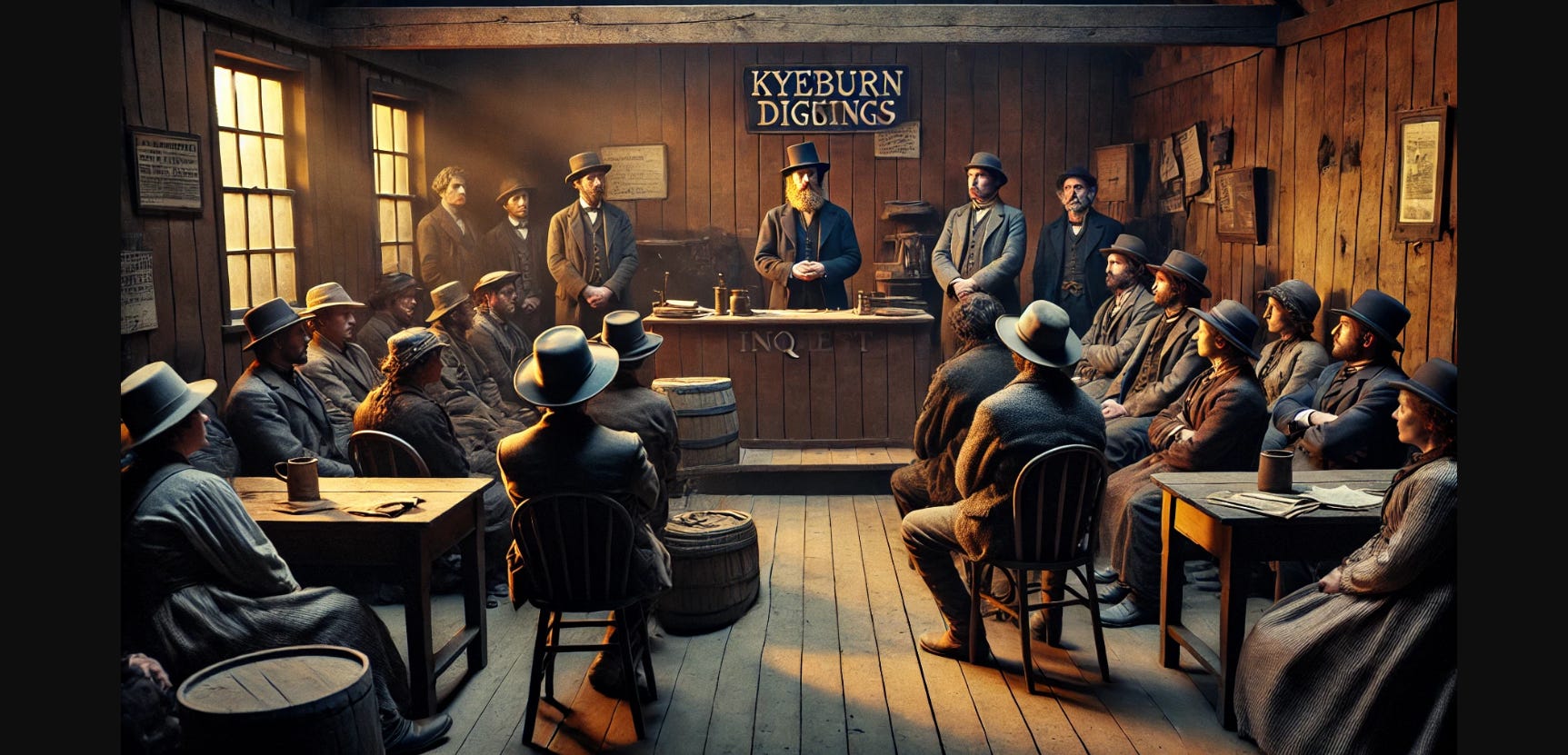
The first witness was Anthony Blanchard. He identified the bodies as being those of Alphonso, Robert, and James. Anthony was Robert’s older brother and had been one of the remaining six of the nine-man rescue party when the avalanche struck.
Anthony told the Inquest what had happened on that day. He explained that, in light of what he had observed, he was sure all three were dead. They did not have the necessary equipment to dig them out so went back down the mountain to alert others:
“… An avalanche of snow suddenly swept the deceased down the hill four or five hundred yards and then into the creek. In their course they were carried over two precipices, the last one being 50 feet deep. I and the rest of the party reached the place where they had fallen and found they had been completely buried in snow. We found no trace of them with the exception of a hat belonging to James Meikle … I am of opinion the fall down the hill was quite sufficient to cause the death of the deceased, and [we] had no hope of finding them alive … it was no use going on as we had all come to the conclusion that we could do nothing in the way of recovering the bodies just then”6.
John Parker was also one of the remaining six from the nine-man rescue party when the avalanche struck. He confirmed that what Anthony had said was true and he explained how he had ridden to Naseby after they came off the mountain to tell the police and rally further assistance.
“I have heard the witness A. Blanchard's evidence, and what he has stated is perfectly true … I rode to Naseby and informed the police of what had occurred, and then asked a number of people to come out next day to assist in recovering the bodies …”7
Last to depose was Police Constable Johnstone from Naseby. He was with the party of men who recovered the bodies on Sunday, 2 August 1891. He said the bodies were found buried in snow “to a depth of from four to six feet” and went on to describe their injuries:
“The first body recovered was that of Robert Blanchard. There was a large incision over the right eyebrow, and the right side of the face seemed to be completely smashed, while the left arm was broken. Alphonso Beer's body was the next recovered. On the head there was a large wound on the back. The next body recovered was that of James Meikle. There were no marks on this body. The bodies were all recovered within a space of about 20ft”8.
There was some discussion as to whether James may have lived a little longer after reaching the bottom. Initially, the police constable said that he thought James may have lived after reaching the bottom in light of his position and lack of injuries:
“Judging from appearances, both Beer and Blanchard must have been dead before reaching the bottom of the gully, but I am inclined to think Meikle lived after reaching the bottom. Both Beer and Blanchard were found with their face downward, while Meikle was lying on his back”9.
However, in answer to a question from the Foreman of the Jury, he said:
“The nature of the fall would probably be sufficient to account for the position in which Meikle's body was found. The weight of the snow which fell on him would probably cause instant death”10.
The Verdict of the Jury given under oath and signed by each of them, and the Acting Coroner who presided over the Inquest, was that:
“Alphonso Philip Beer Robert Blanchard and James Meikle met their death on the first day of August 1891 on the Kakanui Range by an Avalanche of Snow, while in search of Thomas Meikle who was lost on the said Range”11.
On Wednesday 5 August 1891, a funeral procession took all four - Thomas, James, Alphonso, and Robert, from the Danseys Pass Hotel to the Kyeburn Diggings Cemetery.
Many people from the district attended the funeral. According to a newspaper report, eighty horsemen and twenty or thirty traps accompanied the bodies to the Cemetery with the total number of people present at the funeral being 25012. This would have been most of the population of the area.
All four were interred together in the one grave. The Rev. H. J. Davis read the burial service of the Church of England after which, the Rev. J McCosh Smith, the Presbyterian minister, said a prayer.
As suggested from the large turn-out at the funeral, the gravity of this tragedy had reverberated throughout the district causing shock and dismay at the loss of the four young lives on Mt Nobbler. It is not surprising, therefore, that when contributions towards a memorial were called for, sufficient money was soon raised enabling a memorial to be erected on the gravesite.
The memorial reads:
SACRED TO THE MEMORY OF ALPHONSO PHILIP BEER, AGED 28 YEARS ROBERT BLANCHARD, AGED 23 YEARS JAMES MEIKLE, AGED 19 YEARS WHO MET THEIR DEATH AUGUST 1st 1891 IN AN AVALANCHE OF SNOW ON MOUNT NOBBLER IN AN ENDEAVOUR TO RESCUE THOMAS MEIKLE
ALSO, OF SAID THOMAS MEIKLE, AGED 12 YEARS WHOSE BODY WAS FOUND AUGUST 3rd 1891
THIS MONUMENT IS ERECTED BY THE INHABITANTS OF THE DISTRICT, AS A MARK OF APPRECIATION OF THEIR EFFORTS AND AS A TOKEN OF SYMPATHY WITH THEIR BEREAVED PARENTS
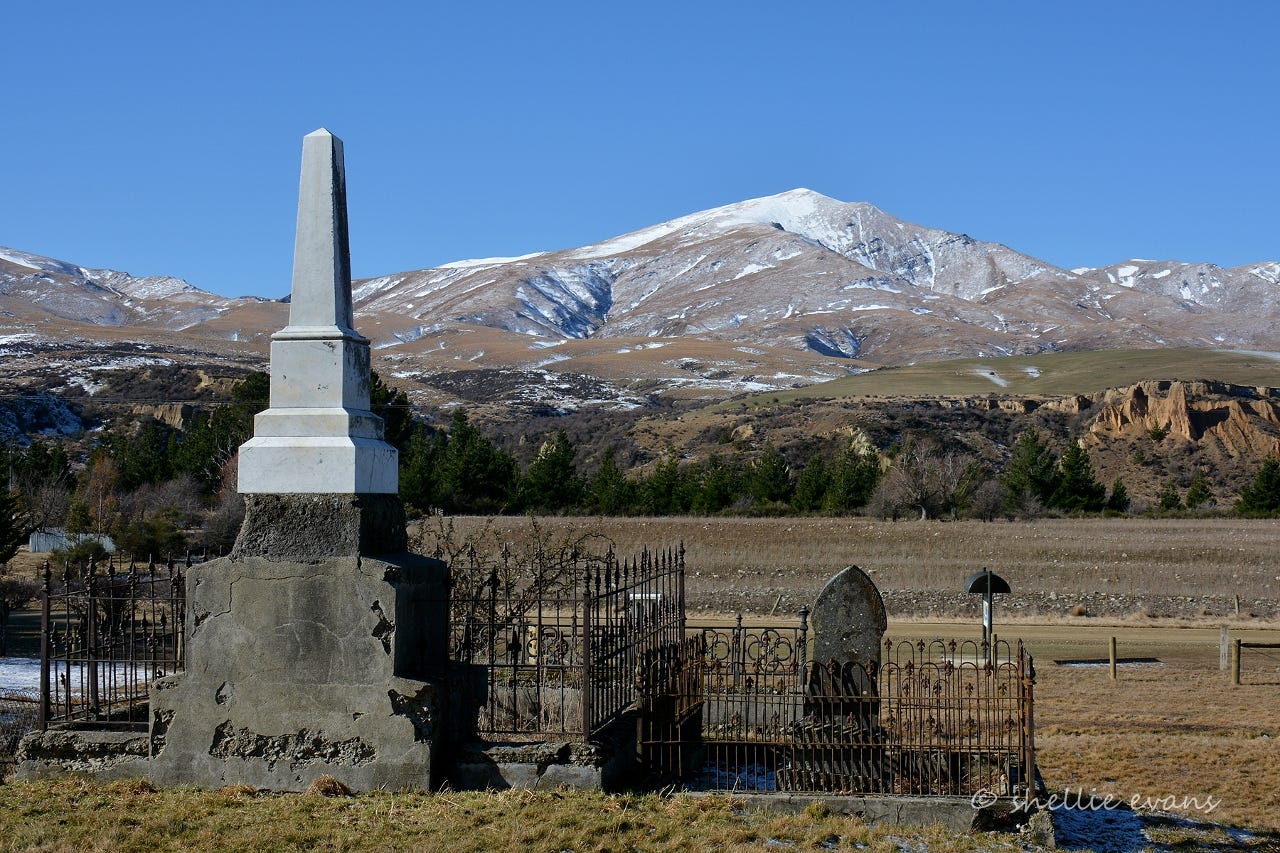
More recently, as a result of its fundraising, the Kyeburn Diggings Cemetery Trust has restored the memorial. The restored memorial was unveiled on 3 November 2024:
The memorial looks out across the Kyeburn Diggings to Mt Nobbler:
If you are already a subscriber to this publication—Kyeburn Diggings One-Place Study—thank you!
If not, and if you would like to receive future posts direct to your email inbox, please subscribe (it’s free!):
The information in this post is drawn from my one-place study website on the weare.xyz platform
You may like to check out my other Substack publication as well:
Danseys Pass Hotel is in the Upper Kyeburn area of the Kyeburn Diggings and close to the beginning of Danseys Pass; a mountain pass that crosses the Kakanui mountain range into the Waitaki valley.
From Anthony Blanchard’s deposition at the Inquest into the deaths of Alphonso Philip Beer, Robert Blanchard, and James Meikle - Coroner’s Inquest File.
From John Parker’s deposition at the Inquest into the deaths of Alphonso Philip Beer, Robert Blanchard, and James Meikle - Coroner’s Inquest File.
From Thomas John Johnstone’s deposition at the Inquest into the deaths of Alphonso Philip Beer, Robert Blanchard, and James Meikle - Coroner’s Inquest File.
From Thomas John Johnstone’s’s deposition - See Note 8.
From Thomas John Johnstone’s’s deposition - See Note 8.
Comments
Nothing yet. Say the first thing.
Sign in to join the conversation.