
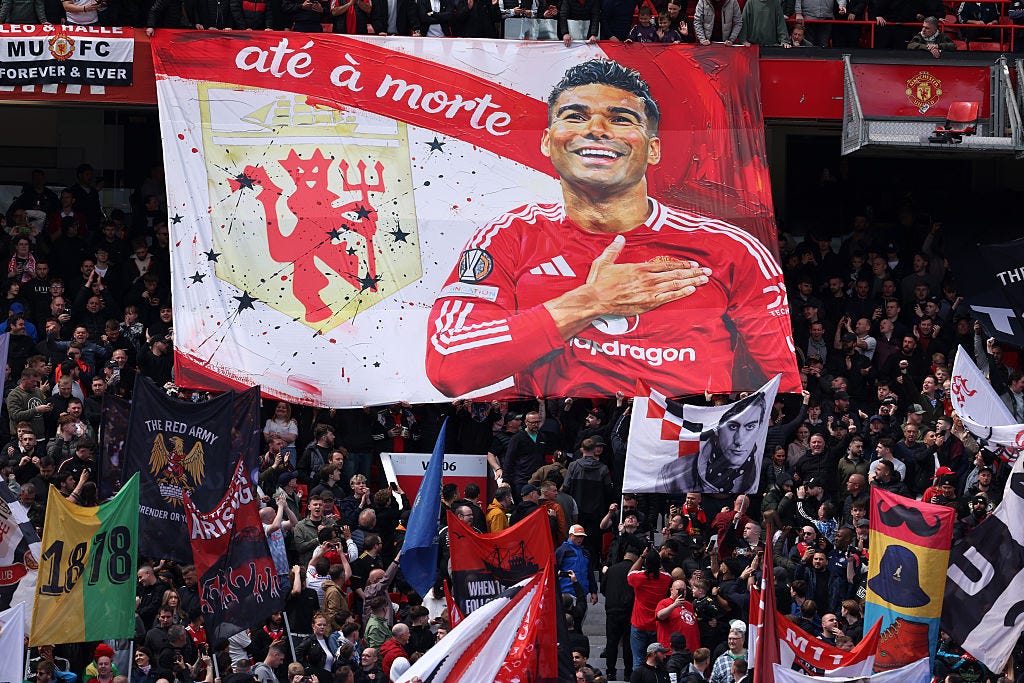
There was never a question that Casemiro would improve Manchester United. What there were was concerns over his age, the money United were set to spend on him, and most importantly the combination of the two.
United paid Real Madrid £60m to sign the 30 year old defensive midfielder who could best be described as “a cheat code.” At the height of his game you put Casemiro in your midfield and you didn’t have to worry about structure or partnerships or any of that. If there was a mess he was going to clean it up.
Casemiro was at the peak of his powers when he signed for United. The concern was given that he was 30 years old, how long would he stay there? The best estimates were that he’d give you two good seasons, then he’d start to decline. The argument against him was simply £60 million is a lot of money to spend on two good seasons knowing you weren’t going to be able to recoup any of it.
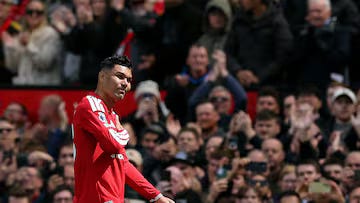
Those estimates turned out to be correct, albeit not in the order anyone thought they’d be. Casemiro turned in a brilliant first and final season, sandwiched around a horrible second year and a better-than-he’s-given-credit-for third. On Sunday he made his final Old Trafford appearances and was given a very deserving send off.
Casemiro’s time at Old Trafford will be remembered fondly but there is still a question of, was he a good signing? The answer to that can be complicated, and will certainly vary from person to person. It reflects the broader question of - what makes a good signing?
There are many different ways to answer that question. Clubs may come up with a system to determine whether a signing is successful or not. Fans might end up having a completely different opinion - as they should, they are probably basing the opinions on completely different metrics.
There are different lenses to view signings. You can look at it through a pure football lens, which may lead you to one answer, but there is also the financial aspect, which is something that in modern football can’t be ignored. Even then, it’s rare for either side to present a black and white answer.
In an ideal world things would be as easy to analyze as Cristiano Ronaldo. United spent £17 million on the 17 year old and sold him for £80 million. In the six years in between there was an FA Cup, two League Cups, a Club World Cup, the Champions League, three Premier League titles and a Ballon d’Or.
It’s impossible to put rules on these things like made x starts, sold for a profit, or won trophies with the club - Bastien Schweinsteiger won the FA Cup with United. United spent big money on Wayne Rooney and moved him on for nothing. If sold for a profit were a box that needed to be ticked, the club’s all time record scorer would not fall into the successful category.
This entire question is clouded in shades of gray. There is no singular correct answer - it’s going to differ based on how you look at it, and even then it’s likely going to differ from one person to the next.
Let’s start by looking at it from the football perspective.
Casemiro leaves the club having scored 26 goals in all competitions. 15 of those 26 goals gave Manchester United the lead in a match, including opening the scoring in the 2023 League Cup final. Three more were equalizers, making roughly 70 percent of his goals high impact goals.
Casemiro’s first season was nothing short of spectacular. Erik Ten Hag put him in the middle of the park and tasked him to do, well pretty much everything, and he did almost everything. It gave United a lot of tactical flexibility to be more aggressive knowing that Casemiro was there to clean up the mess. Marcus Rashford’s 30 goal season may have gotten the plaudits but Casemiro was the reason United were able to finish third and return to the Champions League. This season Casemiro broke the deadlock six times1 helping United once again finish third.
In his four years at Old Trafford Casemiro helped the club reach four cup finals. United would win two of them including their first trophy in seven years.
But the other side of the corn exists too. Casemiro was not in the match day squad for United FA Cup final victory over Manchester City, putting his record in cup finals at one win and two defeats. As good as he was in his first and final years he was not nearly as good in the middle of his contract, and United slumped to 8th and 15th place finishes in the league.2
Those poor performances in the league cannot all be blamed on Brazilian. He is just one player in a team of 11, but you expect your highest paid players to perform like your highest paid players, and for large parts of his contract he did not.
Thanks for reading Kwest Thoughts! This post is public so feel free to share it.
Then there is the business side of things.
Casemiro cost the club a £60 million transfer fee and was given wages widely reported to be in the region of £350k a week. You don’t need an MBA to know that’s a massive investment to make in a 30 year old who will devalue as the life of the contract moves along. That kind of deal has virtually no chance of getting any ROI from a future sale.
Any ROI gained from Casemiro was going to have to come from on-pitch achievements: winning trophies, qualifying for the Champions League, actually winning the Premier League and/or the Champions League.
United certainly didn’t achieve enough of those goals to recoup their money here. They didn’t win the Premier League. They only qualified for the Champions League in two of the Brazilian’s four seasons, and the year they played in the competition they failed to get out of the group.
United did win the Carabao Cup in Casemiro’s first season but the combined prize money from every round of that competition doesn’t even cover one week of Casemiro’s wages. The total prize money brought in from the FA Cup triumph in 2024 would cover just under three months of his wages. Those wins would earn United matchday and broadcast revenue for additional games but those earning can also be offset by paying out additional bonuses in players contracts.
The biggest financial crime of this deal is where United are now. While United’s books may be healthier then they were a few years ago they have still been in financial hell for quite some time. They spent £60 million on a player who did not bring them a great amount of on pitch success. Just four years later they’ll need to spend another £60 million, likely more, to replace him3. That’s a big deal for a club with a lot of needs and money is tight. When you’re going to spend £60 million on a player you want that money going longer than four years.
Whenever I think about Casemiro and the question of whether or not he’s a good signing I can’t help but think of Robin van Persie.
The Dutchman was 28 when he made his £26.6 million move from Arsenal to Old Trafford. According to transfermarkt this was the most expensive transfer of the season, and the conversation at the time focused on how uncharacteristic of a signing this was for Sir Alex Ferguson. Fergie almost never spent this much money on a 28 year old player who would have no resale value.
Van Persie then turned in one of the most sensational individual seasons in United’s Premier League history. He scored 26 goals and pretty much carried United to their 20th league title.
What we didn’t know was Sir Alex Ferguson knew he was going to retire. He saw Van Persie as the missing piece to winning that final title and going out on top. He no longer cared about resale value. The goal of signing Van Persie was to win a title and he delivered on that.
From a business perspective the deal looks a bit different. United paid a big fee for a player and signed him to a four year contract. That player started 35 Premier League matches in his first season but only made 38 starts over the next two years. He left after three years with United recouping just £3.84 million from the sale.
Financially, that’s a bad deal. It’s one you wouldn’t make again. United spent big and only got one good year out of the player. But imagine telling a Manchester United fan that Van Persie was a bad signing. They’d laugh in your face!
That’s sort of where we are with Casemiro. Financially it was a terrible deal. From a football perspective it’s a bit murkier. With Van Persie there was a clear feeling of being the final piece of the puzzle to go on and win the league.
What was the football objective for Casemiro? Win the league? That would have been far too ambitious a goal. Become a title contender? Consistently qualify for the Champions League? They didn’t achieve those goals. While that’s not entirely the fault of Casemiro, the financial commitments of the deal meant that he was taking up a large chunk of the squad’s budget, which played a role in preventing the club from bringing in more of the necessary talent needed to achieve those goals.
But we can’t just ignore what happened on the pitch either. Casemiro’s 2022-23 campaign ranks, in my opinion, as one of the three most fun individual seasons a United player has had in the last 20 years. It’s right up there with Van Persie in 2012-13 and Cristiano Ronaldo in 2007-08.
At a time when feelings around the club were down, Casemiro made things enjoyable again. Where would we be if we didn’t have that?
Sure he may have “only” won the Carabao Cup but it was the first trophy United had won in seven years. Surely there were fans at Wembley who had never seen United lift a trophy in person before. It’s not beyond the realm of possibility that for some, attending a cup final was a life long dream and this would be the only one they’ll ever get to attend. How can you quantify something like that?
Was Casemiro a successful signing?
There will never be a right answer to that question. Some will always be convinced he wasn’t due to the financial sides of the deal. They aren’t wrong. Some will say yes because he did win trophies and he provided United fans with some sensational seasons. They have a right to feel that way. Others may be on the fence. He was great but only for half the time. Can’t argue with them there.
What makes a successful signing? It’s hard to explain. Maybe it’s even harder when it comes to Casemiro. It’s hard to say Manchester United are better for having had him for four years because gestures at the financial picture and the rebuild project that needs to occur but the players in the dressing are better for having had him as a teammate. The fans are happier for having been able to watch a player of his quality every week for four years - these things don’t always happen.
The club should appreciate the time Casemiro spent here and what he brought to the team. They should also never make a signing like this again.
Kwestthoughts is a completely free newsletter and there are no plans to change that. If you’ve ever thought about supporting my work more directly now you can “buy me a drink” or leave a tip as a token of appreciation. Thank you for continuing to support me.
Though interestingly none of the six would go on to be the game winning goal
Though United likely would have finished higher in 2024-25 had Casemiro played more league games
They will need to spend a lot more than that to complete their full midfield overhaul but that is not Casemiro’s fault. That’s just bad squad building as they knew his deal would be expiring
No posts
Comments
Nothing yet. Say the first thing.
Sign in to join the conversation.