
Every now and again a story about plagiarism by a high profile academic pops up in the news. Often universities take the line that the journal(s) in question previously investigated and it’s been resolved: some references have been added, some content has been tweaked. Therefore no further action is required.
But is this sufficient evidence that there was and is no problem, and no need for further questions?
To illustrate the friction that can exist in academic systems when dealing with misuse of others’ work, I’d like to share a brief anecdote from a decade ago.
On two separate occasions, within a relatively short period, I discovered that substantial parts of my work had been reused in scientific publications without clear attribution. I’ll focus on one of them, as the outlook I encountered was much the same for both. I won’t name names, because it was a long time ago now and here I want to discuss how things played out.
Here’s a reminder of the Oxford University definition of plagiarism, for context: “Presenting work or ideas from another source as your own, with or without consent of the original author, by incorporating it into your work without full acknowledgement”.
My experience had started when I’d noticed a new academic book had cited a popular mathematics article I’d written. Curious, I had a look at the preview. To my alarm, a large proportion of the opening chapter was a word-for-word copy of my article. We’re not talking about a handful of sentences; it was paragraph after paragraph after paragraph, almost 1000 words in total.
This was an article I’d poured dozens of hours of my spare time into while working a postdoctoral researcher. And here it was, presented in a way that a reader might reasonably assume was instead work of the senior academics who authored the book.
Three pages into the chapter, one paragraph had a footnote stating that “the present paragraph and others” had been taken from my article, “sometimes word for word”. But there was no acknowledgement of exactly how much had been taken, and no quote marks so the reader would know what was my work. Some of the copied paragraphs also included alternative references, which could give the impression they had come from other sources rather than my article.
I emailed the publisher and the editors of the book series, explaining what had happened. They suggested there had been an “omission” in referencing and it was just “negligence”.
In response, I emphasised that almost 1000 words had been reproduced verbatim by without quotation marks or sufficiently clear attribution. This wasn’t a small citation error.
The publisher proposed adding lots of quotation marks and additional references as a resolution. I argued that this would not be sufficient and that the content should be removed. After further discussion, it was.
When I see a story in the news about an academic accused of plagiarism, I often remember this experience. That doesn’t mean we should assume guilt in all scenarios, of course. As an author, I’m aware how easy it might be for an honest mistake to occur with a small portion of text. Over the years, I’ve put a lot of effort into double checking a paraphrased quote doesn’t get edited into an unattributed paraphrase, and that a citation doesn’t go astray during production. If you’re a researcher, you’ll also know the feeling of having to cut 25 references down to 20 at the last minute to meet journal requirements.
Small mistakes can happen. But we shouldn’t assume that just because a journal or publisher drew a line under a past incident, with some additional quotation marks or references, that it’s always the full story.
‘Everyone gets it wrong sometimes’ is a bad argument when assessing track records
·
December 6, 2024
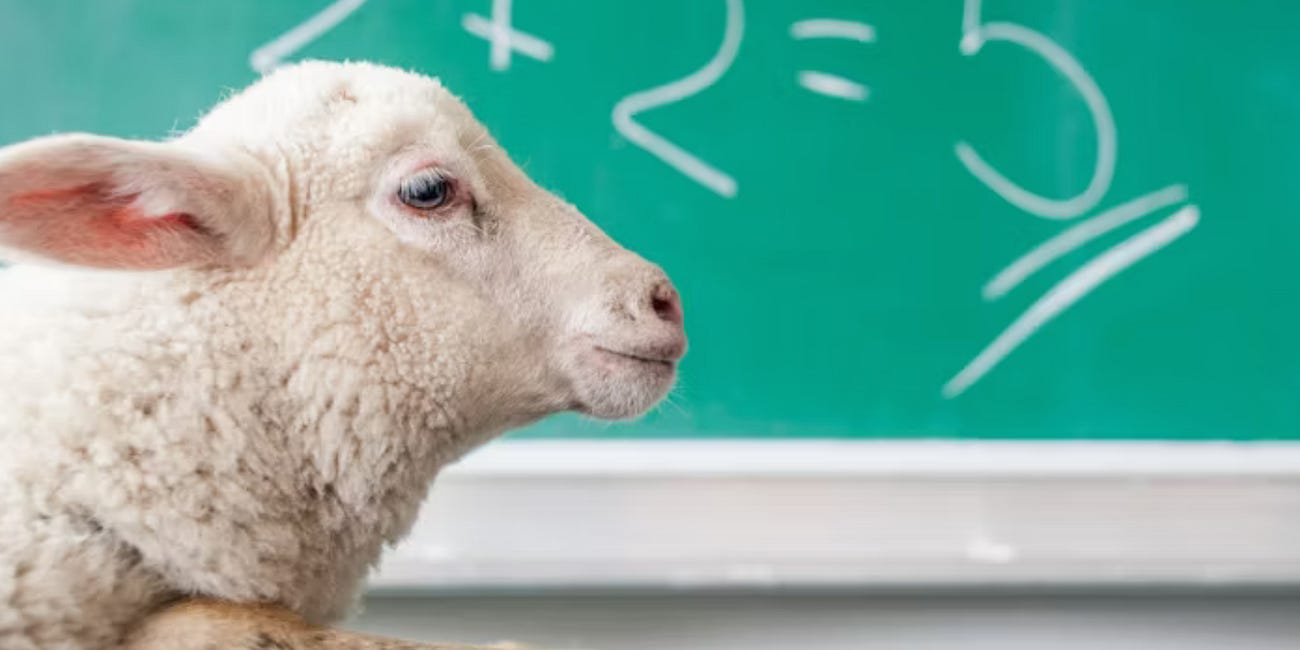
There’s recently been a lot of coverage of the incoming US administration, and nominations of candidates who are underqualified – or in some cases even antiqualified – for major health roles. When their past exploits have (rightly) been scrutinised in public, a common counterargument from their supporters is ‘everyone gets it wrong sometimes’.
No posts
Comments
Nothing yet. Say the first thing.
Sign in to join the conversation.