
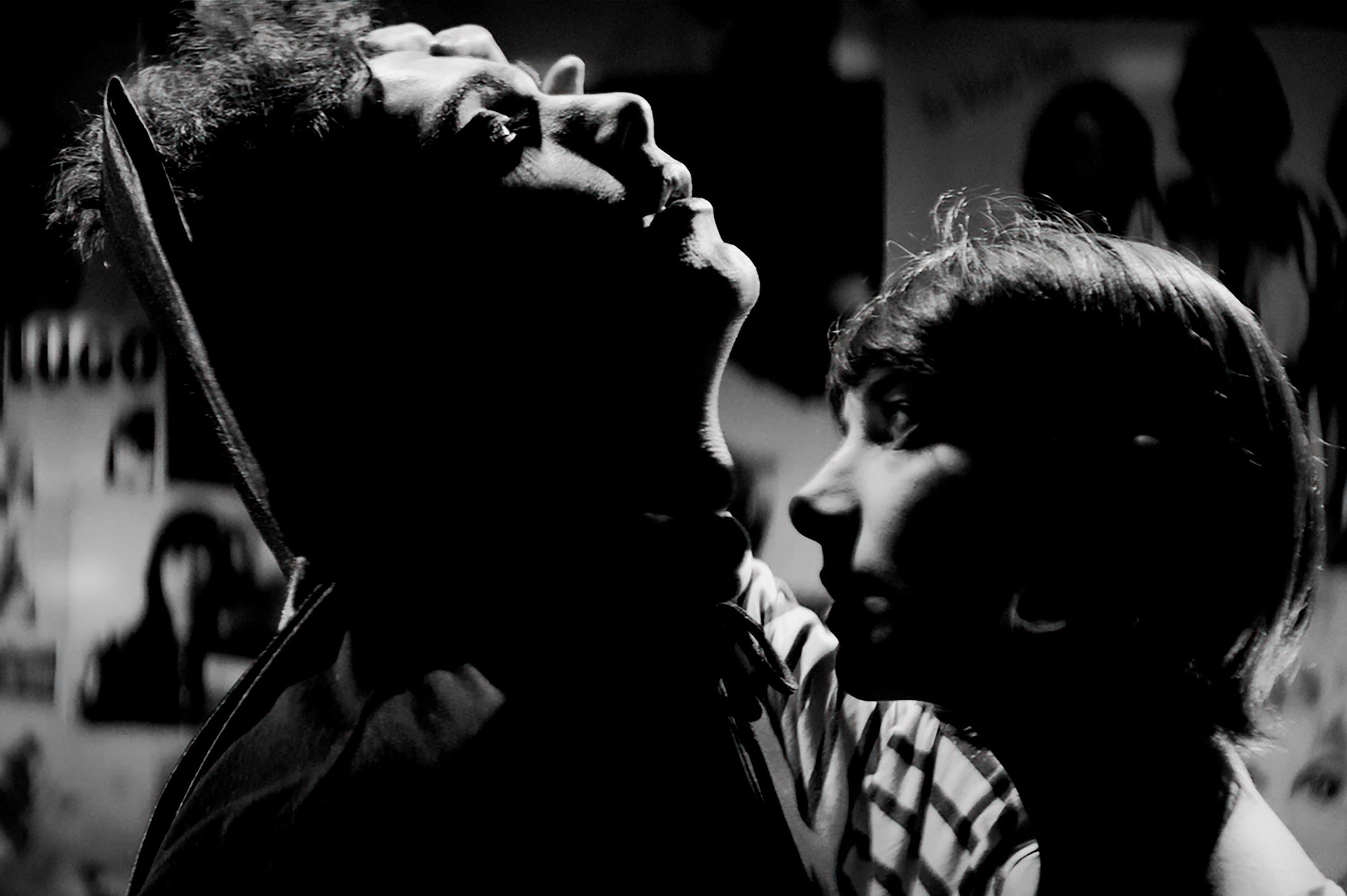
In Fall 2019, I had the opportunity to teach a coveted Film 325 course at San Francisco State, a senior weekend seminar where professors get to select a topic they’re researching and bring 100 students in to explore and discuss the topic for two full days. Given the “American Women Directors” section, I spent the weekend exploring horror films directed by women with my students, following characterizations of the “monstrous feminine.”
Two days of double features -
Friday night: Jennifer’s Body (Karyn Kusama, 2009) & A Girl Walks Home Alone at Night (Ana Lily Amirpour, 2014)
Saturday: The Love Witch (Anna Biller, 2016) & Carrie (Kimberly Pierce, 2013)
The weekend was invigorating and inspiring, one of the most alive genre classes I’d ever taught. Alongside common theoretical figurations of the monstrous-feminine as a site of patriarchal anxiety, feminist violence, and supernatural justice, revenge, and/or pleasure, we read these film texts through the lens of queer and trans film theory, hybridity, and monstrosity. Our discussion of A Girl Walks Home Alone at Night, in particular, opened my research of hybridity in queer and trans cinema, which became a three-semester-long exploration in my courses.
Fall of 2020, the first full semester of the Covid pandemic with enrollment in our department down 30%, I was unaware that it would be my last semester teaching cinema for a long while. I was assigned a single class - my fifth GWAR, or writing on cinema, course. GWAR courses allow you the opportunity to teach on any subject you’d like, and most lecturers choose to explore a subject related to their own research. Remembering our weekend a year earlier, I came back to the monstrous-feminine, excited at the prospect of expanding widely.
Since this was a remote course taught at the height of Covid, I felt both a desire and need to do things differently — students weren’t showing up in the same way they were before, understandably, and I wanted the course to feel more like a film club than a deeply structured writing course. Each week, we held a “Monstrous-Feminine Film Club” screening on Zoom, and our class kept a collaborative viewing list of every monstrous-feminine film any of us had ever seen. The first four weeks of the course, I contributed films we would study together: Carrie (the original this time), A Girl Walks Home Alone at Night, Jennifer’s Body, and the Love Witch. The remaining screenings were determined by class vote — students combed the collaborative viewing list and voted on the ones they wanted to watch and study together. I tallied votes and selected the top four films — Suspiria, Under the Skin, The Autopsy of Jane Doe, and Raw — and collected readings that would supplement our viewing. It was wonderful to be agile, building the course as we went and treating it as a collaborative exploration. At the end of the course, students could write their final paper on any film(s) from the collaborative viewing list, even if we hadn’t viewed them together. I read papers on films I had never seen before (well, saw the day I received their paper) and rejoiced to see them make connections between disparate figurations of monstrous-femininity and theoretical disciplines.
It was the perfect final course in my 5 year lecturing career, one where I’d explored so many ways to bend academia, to flex it to meet student needs (rolling deadlines, collaborative viewing lists, anti-canon syllabi, focus on diy production, creating trans/queer film theory & essay film courses, etc.). Despite the world and circumstances within the department, the class felt animated.
I wanted to share our collaborative viewing list here, to commemorate:
Raw (Julia Ducournau, 2016)
The Lure/Corki Dancingu (Agnieszka Smoczyńska, 2016)
Prevenge (Alice Lowe, 2016)
Trouble Every Day (Claire Denis, 2001)
Lyle (Stewart Thorndike, 2014)
The Witch (Robert Eggers, 2015)
Under the Skin (Jonathan Glazer, 2013)
The Hunger (Tony Scott, 1983)
Alien/Aliens (Ridley Scott, 1979)
The Exorcist (William Friedkin, 1973)
Suspiria (Dario Argento, 1977)
Ginger Snaps (John Fawcett, 2000)
Annihilation (Alex Garland, 2018)
Let the Right One In (Tomas Alfredson, 2008)
Teeth (Mitchell Lichtenstein, 2007)
Black Swan (Darren Aronofsky, 2010)
Midsommar (Ari Aster, 2019)
The Babadook (Jennifer Kent, 2014)
The Perfection (Richard Shepard, 2018)
Suspiria (Luca Guadagnino, 2018)
Autopsy of Jane Doe (André øvredal, 2016)
The Craft (Andrew Fleming, 1996)
Hereditary (Ari Aster, 2018)
The Blackcoat’s Daughter (Osgood Perkins, 2017)
The Conjuring (James Wan, 2013)
Run (Aneesh Chaganty, 2020)
10x10
Ms. 45 (Abel Ferrera, 1981)
Bliss (Joe Begos, 2019)
Belladonna of Sadness (Eiichi Yamamoto, 1973)
Possession (Andrzej Żuławski, 1981)
The Eyes of My Mother (Nicholas Pesci, 2016)
Cat People (Jacques Tourneur, 1942)
November (Rainer Sarnet, 2017)
Rosemary’s Baby (Roman Polanski, 1968)
It Follows (David Robert Mitchell, 2014)
Orphan (Jaume Collet-Serra, 2009)
I Spit on Your Grave (Meir Zarchi, 1978)
I Spit on Your Grave (Steven R. Monroe, 2010)
Saint Maude (Rose Glass, 2019)
Comments
Nothing yet. Say the first thing.
Sign in to join the conversation.