
I’ve mixed feelings about trigger warnings, but because we are all a bit raw in spirit these days, I feel it a courtesy to say that the following article is a story about infant loss—specifically, the death of my beloved nephew.
There are searing moments in life that cut through the fog of the ordinary so sharply that it can take years to find your footing again. And, even when you do, you’re never the same afterwards. The landscape has been permanently marked by the cutting. Nothing is as it once was. Not you, not the way you look at God, and the world, not the way you love, or live, or move and have your being1, because whatever the tragedy, the trauma, and the subsequent grief, you are forever marked by what you have experienced.
The moment Esther, my sister-in-law, called me to tell me that Isaac2, my beloved nephew, who was just 43 hours old, had just breathed his last, was one of these life-altering experiences. We arrived on their doorstep within 10 minutes of receiving that call, because we had been there in town for Isaac’s birth—I had been right there in the room, when Isaac breathed his first labored breaths just a few short hours before.

There’s a lot about that morning in my memory that feels hazy, but I know I howled from some deep place in my soul upon hearing the news we knew might be inevitable, even as we hoped for a different outcome. For nearly 9 months, we’d been praying for miracles, and of all the questions that lingered after Isaac’s death, I kept wondering, did we see miracles, even though he was with us for such a short time? He was after all, born alive, despite one specialists rather blunt caution against believing such a thing could be possible for a baby who had Trisomy 18. And he did breathe on his own, despite the statistics for babies who shared Isaac’s rare diagnosis. And through Christ’s sacrifice, Isaac was healed in death—though that’s not what we asked for.
There’s rarely a day or a week that passes where Isaac doesn’t come to mind. I barely knew him, and he had no opportunity to show us what he loved, or which games he’d like to play, or which toy was his special treasure. We never got to know what foods he loved or despised, or how fast he could pedal his tricycle. Was he an outdoorsy-kind-of-kid, or would he prefer the air-conditioned house to the sweltering Alabama summers? Would he be one of those kids who would bite his ice cream with his front teeth? These are things we’ll never know about Isaac. Questions we’ll hold that will never be answered. But still, given the truth of the matter, did we see miracles?
I think so. There is so much we’ll never get to see Isaac do. And we have seen (and continue to see) God at work.
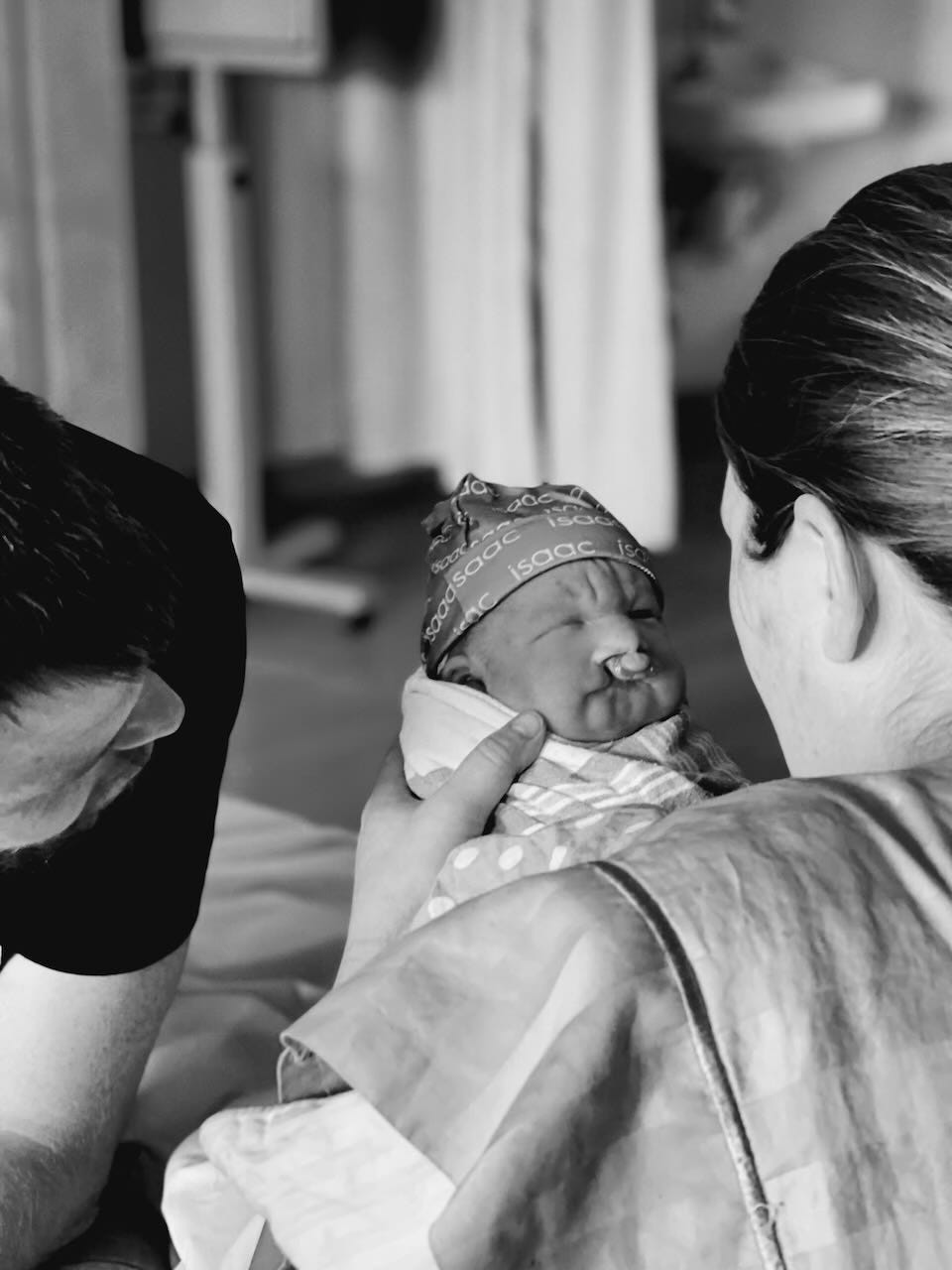
When Esther told me that she was journaling all through her pregnancy with Isaac, I knew that eventually those words would find a home beyond her private journal. When she and I would talk about Isaac, and the ways God was at work in his life, death and in Esther and Clint’s grief, I don’t know how to say it, other than to say we just had a “sense” that even though Isaac’s body was buried, his little life was making ripples in their local community, and in our own hearts even in his absence.
Is it a miracle that someone who lived a whole life in only 43 hours can minister to people in their absence? I think so. I don’t know what else to call it.
A few months ago, when Esther called and told me that she’d written a book about Isaac, and God, I wept before reading a single page. And then when I read it, I wept some more for the holy ways God’s been quietly moving for months.
Esther and I had a long conversation about Isaac, what God’s been up to, and her book, My Song In The Night: Worshipping When The World Goes Dark, and she graciously allowed me to publish it as a podcast episode. You can listen to that HERE.
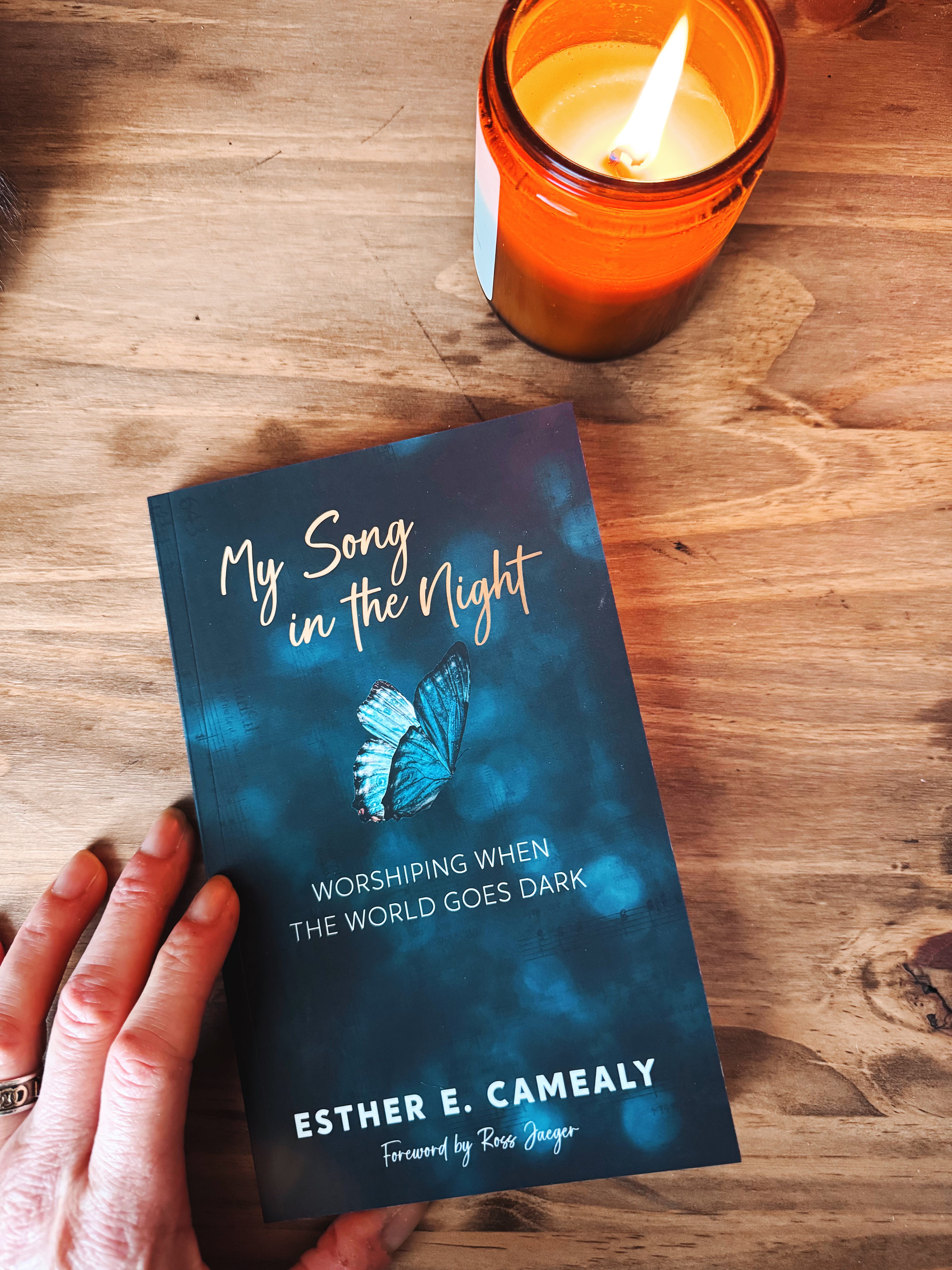
In her book, My Song In The Night, Esther quotes from Ecclesiastes 9, “People can never predict when hard times might come. Like a fish in a net or lards in a trap, people are caught by sudden tragedy” (9:12, NLT). Anybody anywhere can testify that this Word is true.
And what is also true is that there is no trap, or snare, or net, or grief that God Himself does not enter into. The whole of Scripture testifies to this fact. Jesus came and dwelt among us. By His Presence and promise, he binds our wounds—again and again. He holds us close. Esther’s book is a deeply moving testimony of what it looks like to walk intimately with God through the darkest grief, and a stunning testimony of a mother’s love in the face of an impossible diagnosis.
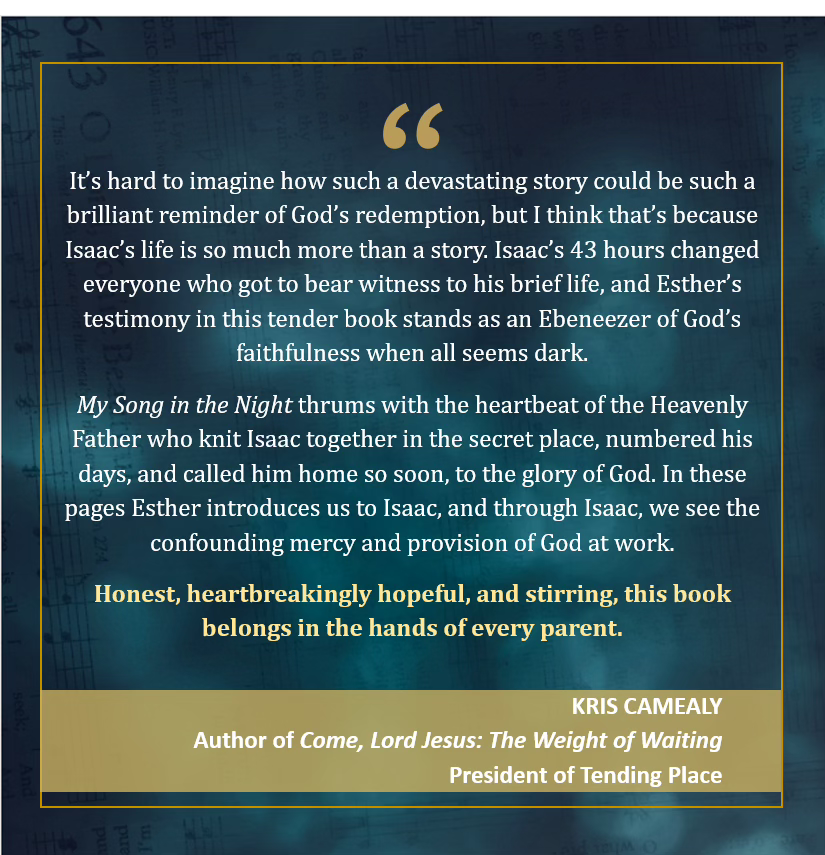
To celebrate the release of this beautiful book, I have ONE copy of Esther’s book to give away. Leave a comment below and I will draw a name. (I apologize but I can only ship to a U.S. shipping address.)
A phrase borrowed from Acts 17:28 “For in him we live and move and have our being.’ As some of your own poets have said, ‘We are his offspring.’” (NIV)
This was the first post I wrote about Isaac just after he died. Reader, take care, it’s raw and tender.
Comments
Nothing yet. Say the first thing.
Sign in to join the conversation.