
Note before I begin: three nights ago I watched “Running on Empty” by Sidney Lumet — holy sh*t, go watch this. River Phoenix is incredible. This is the kind of movie I want to make. I didn’t know it would connect so perfectly to this month’s thematic research (conscientious objection, desertion, hiding out, fear of being caught after doing the morally right thing), but it was perfect. I just don’t have the energy to fold my observations of this movie into this essay at this point, though it’s in my deep notes for sure. And, besides, Substack says this “Post [is] too long for email.” Future self: remember to rewatch this movie when you’re drafting this section. You will need it.
Content Warning: contemporary, literary, and film references of violence, cancer, su*cide, ritual su*cide, colonialist massacre, Iranian strikes, r*pe, sexual coersion — I share this because I know how heavy it is for most of us right now and I write to bring us all clarity. That’s my hope. I do not write to intensify despair.
I’ve been spending this month with medieval warfare for a novel I’m writing — specifically what happens to deserters, and to the landscape around them. Forests burned in their execution. Villages dismantled on the march toward the enemy’s citadel. No mercy socially or actually. If you left, you were already dead; it was just a matter of when the fire found you.
I was in this research when the bombs started falling on Iran.

February 28, 2026 — the US and Israel launched surprise airstrikes on multiple sites across Iran. I was still in Pisces season, still in the medieval dark, and here was the war machine doing what war machines do: moving, consuming, justifying itself in motion. A majority of Americans opposed the strikes almost immediately (Quinnipiac University Poll). I didn’t know that, then, no president in modern polling history had launched a major military operation with the public already against him. Now I do. And now it’s Aries season and the disapproval numbers keep climbing… or dropping… the polls finding majority after majority who oppose the strikes, who think the war benefits someone else more than America — at least its citizens.
This is the swirl I am in with my book. The war machine doesn’t require consent. It only requires bodies — and increasingly, it doesn’t even require those to show up willingly. Young men’s names are now being added to Selective Service rolls automatically, digitally, without the conscious act of registration the old system required. The word conscious snagged in me when I read it. Conscientia — to know together with oneself. The self that cannot unknow what it knows. What’s being taken away in this is exactly that: the moment of self-knowledge the old registration required. You had to show up. You had to sign. Now the state gets there before you do, and it’s much easier with the digital automatism of it.
Okay, but back to the spine of this essay: Aries season arrived in the middle of all this, and I’ve been thinking about what we get wrong about the archetype.
The assumption is that Aries starts wars. Mars-ruled, cardinal fire — sure, there’s truth in that. But Mars is a malefic. In Hellenistic astrology malefics cut, separate, refuse. Ptolemy, writing in second-century Alexandria, described Mars as the planet of excessive dryness — dryness being, in his cosmology, the quality through which all things are separated and destroyed. He lists Mars’s dominion as wars, yes, but also uprisings, the wrath of leaders, sudden deaths. The separator. The one who cuts. And a cut ends things as often as it starts them. The soldier who refuses to fire is still Mars. The women of Athens in 411 BCE who, in Aristophanes’ Lysistrata, withheld their bodies from the men prosecuting the Peloponnesian War — unilaterally, without petition, without asking permission — that is also Mars. The four refusals of South Korea’s 4B movement, formalized after the 2016 Gangnam Station murder of a woman by a stranger who had waited in a public bathroom specifically to kill a female stranger: no dating, no sex, no marriage, no children. The movement spread in the years following the Nth Room sex crime case in 2019 and 2020, in which hundreds of thousands of women and minors were coerced into producing sexual content through Telegram channels. The no that follows that reckoning is not soft. It has the texture of dryness. It separates and destroys — the social contract, the expectation of compliance, the assumption that the body will continue to make itself available to a world it has found monstrous.
And the Sun exalts in Aries — the individual self at maximum power, the conscience most fully alive — which means Aries season is as much about the person who cannot participate in the unending violence as it is about the person who initiates it. The one thing a person can do when the machine has no end and no purpose except its own continuation.
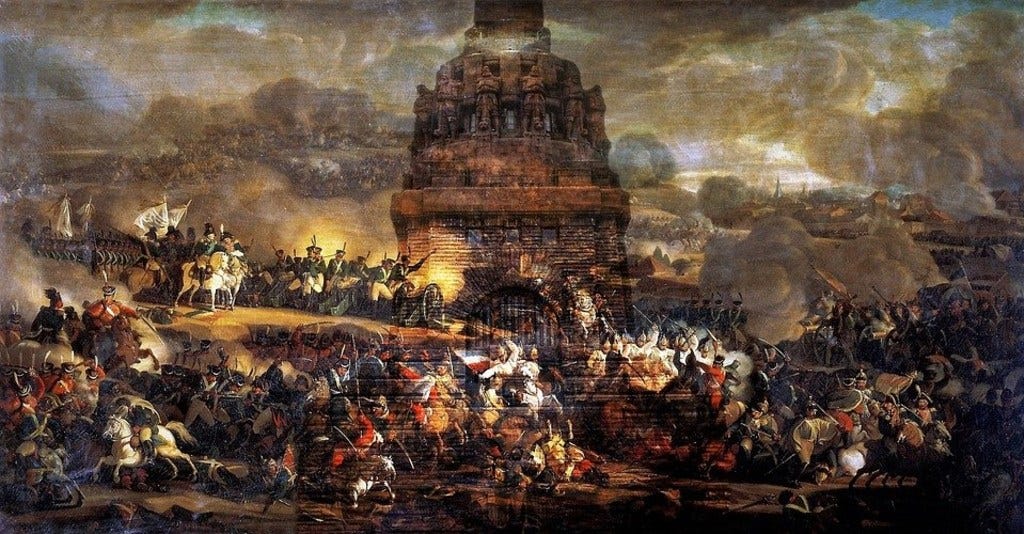
On September 20, 1906, Dutch colonial forces marched inland from Sanur Beach toward the royal palace of Denpasar. They approached the palace hearing wild drumbeats from within the walls. Then the gates opened and a silent procession emerged — the Raja of Badung borne on a palanquin, dressed in white cremation garments, wearing magnificent jewelry, carrying a ceremonial kris. Behind him came his officials, priests, wives, children, retainers, all similarly dressed. They had already received the rites of death. As they advanced, they cast jewelry and gold coins at the Dutch soldiers — as wages, not gifts, for what the Dutch came to grab for themselves anyway. The procession lasted one hour. Eleven to noon. And the death toll was at least one thousand. The Dutch stripped the corpses of valuables and razed the palace to the ground. Two years later, at Klungkung in 1908, the Raja led approximately 200 followers out of his palace in white, armed with a ceremonial kris said by prophecy to devastate the enemy. The kris did not fulfill the prophecy. The Raja was shot and his six wives killed themselves immediately after, followed by the rest of the procession.
Puputan means, in Balinese, the ending. The finishing. The bringing to a close. It is the refusal of the terms of survival. The court of Badung did not believe that existing under Dutch colonial rule constituted living. They chose the form of their own ending over the form someone else had chosen for their continuation. This is Mars at its most absolute: the body that will not be taken. The no so complete it has no remainder.
What shook the Dutch — what their own accounts record as a kind of horror — was not the violence. They had brought the violence. What shook them was that their arrival did not produce surrender. And the war machine expects surrender. It depends on it, requires the other side to eventually calculate that continuation under the new terms is preferable to extinction. The court of Badung declined to make that calculation. They had already done the accounting, collectively, in the days before — the Raja convening deliberations with officials, priests, and community members, reinforcing collective resolve, affirming puputan as the honorable path.
The Sun exalts in Aries. The individual self at maximum power — the one who knows what it knows and cannot unknow it. A rising sun casts the longest shadows. The more fully the conscience comes alive, the larger the darkness it throws behind it.
But notice what the Puputan is made of. The jewelry thrown at the Dutch soldiers was the body’s last transaction, the erotic economy reversed — here is what you said we were worth, here is what we think of the price. The white cremation garments are the body claiming its own ending before the colonizer can. This is the erotic no in its most absolute form: the withdrawal of the body itself.
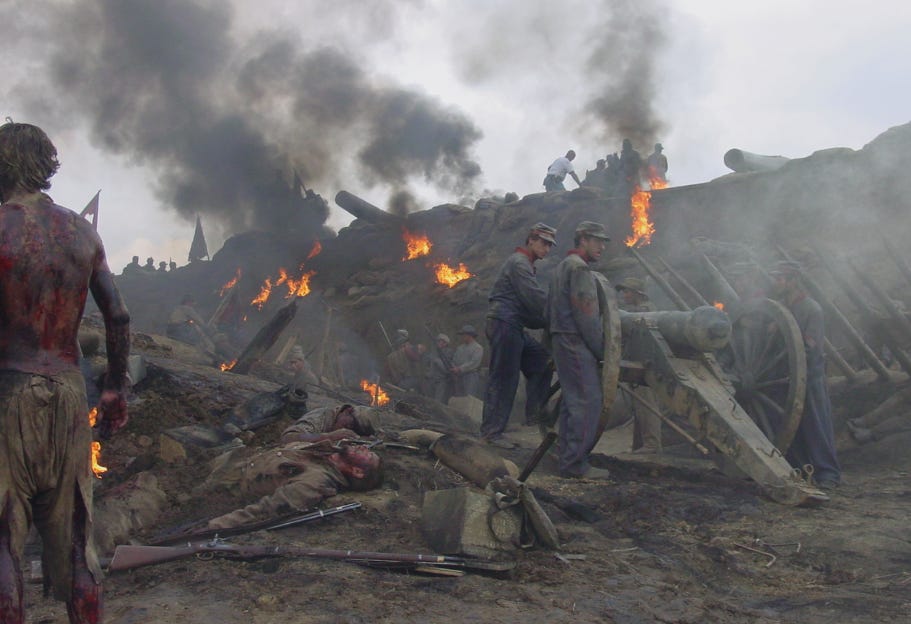
In the current section of my medieval war novel, I received a scene in a dream about three deserters of the war, caught, punished. Most of this section includes horrible human realities beyond my regular comfort, but I am leaning in.
So now I consider what it takes to desert.
You are standing in the middle of a war that has been ongoing long enough to have stopped making sense — long enough that the original cause, whatever it was, has been consumed by the machine that was built to pursue it. The war is no longer about anything except its own continuation. More men, more ground, more burning. Charles Frazier’s Inman, in Cold Mountain, deserts the Confederate Army after Petersburg, after watching what the siege has made of bodies, after a wound gives him an out and he takes it. He doesn’t have a manifesto, like how we might expect a deserter would. But he has Ada — something, someone to live for. He has the specific shape of the life he wants set against the specific horror of what the war is asking him to keep doing. That is the Aries no — what the self cannot continue.
Now you are in the woods. Then, during the civil war, they were called outliers, because they had to “lie out” from their homes to avoid detection. Some lived in caves in the higher mountains, sleeping during the day and coming down to their homes after dark. They bore many names: deserters, layouts, jayhawkers, tories. Some called them mossbacks — because of the vegetation that slowly grew on their clothes while they hid from Confederate troops. By 1863, Confederate conscription officers estimated more than 8,000 deserters and draft dodgers were hiding in the mountains of Alabama and Tennessee alone.
I think this is what Aries courage looks like when the state controls the territory. A cave; the daily renewed choice to not go back, made in the dark, made again the next morning, made again when you hear hoofbeats on the road below. The Home Guards hunting them were often their neighbors and personal enemies.
[Wouldn’t you, assuming you lack Aries placements like me, just give in? Go back, tail between legs, toward obedience?]
The people who hid them took the same risk. Andrew Weddle, a 30-year-old farmer from Floyd County, Virginia, deserted the 54th Virginia and relied on local Union men for shelter. Every time a neighbor fed him and the other deserters, he endangered his wife and three young children. Jeff Rayford, enslaved in Mississippi, regularly cooked and carried food to a man hiding in the Pearl River swamp. “All I had to do was carry the food down after dark, and pretty soon he would step out from behind a tree and say, ‘Here Jeff,’ and then I would hand it to him and run back to the house.” In Yancey County, North Carolina, fifty women banded together and raided a government warehouse, stealing sixty barrels of grain. For the men in the woods; for the conscience that had said no and now needed to eat.
The Sun exalts in Aries. But Mars (Aries’ planetary ruler) is a night sect planet — he operates better under cover, in the dark, without the Sun’s visibility. And so the deserter is not a failed solar hero. He works well, holding the line in the dark, without getting caught.
Notice what the layout man’s no is made of. A body sleeping in a cave, eating in the dark, vegetation slowly growing on his clothes. The mossback. The body that has made itself ungovernable by making itself invisible — by refusing to be where the war machine needs it to be. This is the embodied no at its most animal: the body that hides, that hungers, that persists. Jeff Rayford carrying food to the man in the Pearl River swamp after dark, the man stepping out from behind a tree — “Here Jeff” — and taking the pan and disappearing again. Two bodies transacting in the dark, outside the state’s economy entirely. The food passed hand to hand is as erotic as Lysistrata’s chorus closing the gate — it is the body saying to another body: you matter more than the system that wants you dead.
Only 160,000 of the 359,000 men on the Confederacy’s muster rolls were present by the end of the Civil War. The rest had, in one way or another, said no. Most of them left no record except an absence. I imagine this list with many names crossed out.
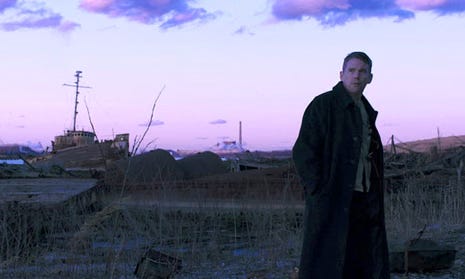
Paul Schrader’s First Reformed is set in a 250-year-old Dutch Reformed church in upstate New York that was once a stop on the Underground Railroad. It is now, by the time the film begins, mostly a tourist attraction. The conscience the building once sheltered has been converted into a historical curiosity. This is what institutions do with the infrastructure of refusal once the refusal is safely in the past — they bronze it.
Reverend Ernst Toller (played by Ethan Hawke), a former military chaplain whose son was killed in Iraq — a deployment Toller himself had encouraged — is approached by a pregnant parishioner to counsel her husband Michael, a radical environmentalist who wants her to have an abortion because he cannot bring a child into a world being rendered uninhabitable by climate change. Toller tries to argue him back toward hope. And he fails. Michael goes to a park and shoots himself (we think). And what Toller is left with is the knowledge Michael planted in him, which will not leave him alone. Toller researches the climate data, the factory emissions, the supply chains — and especially the environmental violence being covered up by perfect hush money that funds the primary church, a mega church that took years to erect.
This is the Saturn no (Saturn being the other planet that is a malefic) arriving inside the Mars no — the long accounting, the compounding consequence, the refusal that has to be maintained over time because the knowledge keeps accumulating. Reverend Toller drinks alone, paces his bare room, writes in a journal he plans to destroy. He is like the layout man in the cave except the cave is a parsonage and the Home Guard is a megachurch funded by an oil company. His church’s 250th anniversary celebration is being sponsored by the industrialist responsible for the local pollution. Toller sees it as a straightforward matter of Christian stewardship but the industrialist calls it complicated. That gap — between what the conscience sees clearly and what the institution needs to call complicated — is the what of this essay. I think.
The Underground Railroad was a network of people who said: I will not participate in the enforcement of this system even at the cost of my freedom. Harriet Tubman made thirteen missions into the South, freeing approximately seventy people, operating at night, in the dark, Mars in the night sect, the conscience that will not announce itself because announcement is death. The people who hid the freedom seekers in their barns and cellars were doing exactly what the Appalachian neighbors did for the layout men — maintaining the infrastructure of refusal, feeding the conscience that had said no and now needed to eat, risking the knock on the door every morning for the sake of someone else’s freedom.
And notice what happens to Toller’s body as the knowledge accumulates. He suspects stomach cancer; he pisses blood; he drinks alone every night; the conscience showing up legibly in his health, or the lack thereof. And as the celebration approaches, with all those in cahoots with the people who deny impact on the world, Toller used his body by strapping an explosive vest to it. We assume, to stop the people who would bring more damage to the earth. The last thing he can do, knowing he will die soon anyhow. Spoiler alert: he does not get to enact his plan for reasons that you can experience if you watch the movie. Which you should.
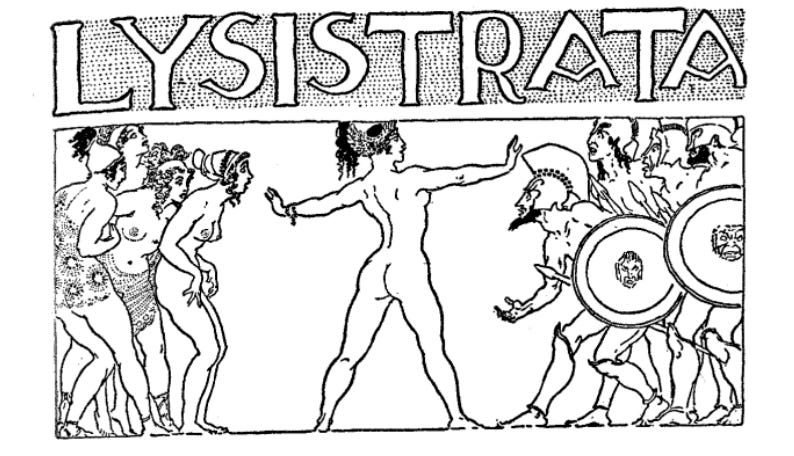
In 411 BCE, with the Peloponnesian War in its twentieth year and no end visible, Aristophanes wrote a comedy about women who decided to stop.
Lysistrata — the name means “she who disbands armies.” The premise is simple and devastating: the women of Greece, led by the Athenian Lysistrata, agree to withhold sex until the men end the war. They seize the Acropolis, lock away the treasury, and close the gate. The comedy comes from male desperation — the men arrive at negotiations visibly, painfully aroused, unable to think about anything except what they’ve been denied. The audience laughs. Ha ha! But underneath the laughter is a proposition so radical it’s hard to believe it’d work in “the real world”: the erotic body is a political body. What it consents to fund is a choice. What it withdraws from is also a choice.
The women of Lysistrata are withdrawing their bodies from the economy of war — from the system that requires their fertility and their labor and their availability to reproduce itself.
Every soldier is someone’s son, yeah?
Every war requires women to keep producing sons.
The no the chorus issues runs deeper than sex: it is reproductive, economic, civilizational, the ground itself declining to receive the seed of what the war requires to continue.
This is Mars in Scorpio rather than Aries — the refusal that goes underground, that operates through depth and withholding rather than heat and declaration. Where Aries flares, Scorpio closes.
What makes it comedy rather than tragedy is the ending: the men agree to peace, desire is restored, everyone goes home to bed. The no was always temporary, a lever, not a lifelong sentence. So the play’s logic is comic logic — disruption followed by reintegration, the social order restored on better terms. Aristophanes is imagining what happens when women briefly access their Mars — their capacity to refuse, to hold a line, to say this far and no further — and what it costs the men who discover that the ground they assumed was permanent can simply decline to be there.
And the comedy is partly the discomfort of watching that. A couple dozen centuries later it is still uncomfortable.

The 4B movement is not offering comic resolution. The four refusals, the four nos: no dating, no sex, no marriage, no children. As a position, as a lifestyle. The gate that Lysistrata’s chorus closed and then reopened, the 4B woman has closed and is not waiting for a reason to reopen. This is the ontological no rather than the tactical no — the difference between I will withhold until you change and I will not participate in a world structured this way, and I am not waiting for it to change.
The cost is identical in structure to every other refusal in this essay. Called unnatural. Called man-hating. Called a threat to the nation — South Korea’s birth rate among the lowest in the world, women blamed for it as if the birth rate were their obligation and not their body. The state has a material interest in their compliance and their no has demographic and economic consequences. This is conscientious objection to a social contract they have read carefully and found, on every page, monstrous.

The Selective Service System now adds names automatically, did you hear? [Late correction: not yet, but it will be true by December 18, 2026] It seems to me the state has learned something from two and a half millennia of conscientious objectors, layout men, Balinese courts, women closing gates: if you wait for the body to decide, the body might say no. So you get there first. You claim the boy’s / man’s body before it knows it’s been claimed. You make the registration happen automatically in the system rather than in the moment of the individual standing at a counter, pen in hand, feeling something move in him that might, if left alone, become a refusal.
What every example in this essay shares is not ideology or strategy or even courage in the conventional sense — it is a somatic fact prior to all of those: the body’s inability to continue participating in something it has recognized as monstrous.
Most of what haunts me in this research is the reality of the war that has no end. The violence that snowballs. The machine that requires your flesh to keep running and offers you the peace that you did not make trouble.
There is a moment — I imagine, placing myself inside the deserter’s moment of decision — when the body simply stops but the war continues around you. I hear that the body says: not me. Not this. Not one more day of this. And the legs turn. And you walk into the woods. And you sleep in the cave. And you eat the food passed to you in the dark by someone who has made the same calculation and decided that your life matters more than your compliance.
The state calls this treason, and has always known what to do with it: the deserter is court-martialed and shot, the objector imprisoned and re-imprisoned, the title stripped. And they make sure every other soldier sees just how terrible the consequences are of refusal.
What has your body already refused that your mind is still negotiating?
Where in your life is the war machine running — the thing that has no end, no purpose except its own continuation — and what would it mean to walk into the woods?
What is the difference, for you personally, between the tactical no — the lever, the temporary withdrawal — and the ontological no, the position, the life?
Whose food have you eaten in the dark? Whose hand passed something through to you when you were hiding, when the state or the system or the institution needed you somewhere else?
What would you be called if you closed the gate and held it? Unnatural? Hysterical? Traitor? And does the punishment tell you something about the effectiveness of the refusal?
Where does your conscience live in your body — and when did it last speak?
For the conscience that cannot unknow what it knows. Shuffle with the question: what is my body already saying no to?
Card 1 — The Knowledge What does the part of you that already knows actually know? The thing that has been accumulating. The data you’ve been reading without admitting you’ve read it. What Michael planted in Toller that would not leave.
Card 2 — The Machine What is the system, institution, or continuation you are being asked to fund with your body? The war. The social contract. The economy of compliance. What requires your presence, your fertility, your availability, your flesh, to keep running.
Card 3 — The Woods What does your desertion look like? The cave. The form your refusal takes when the state owns the daylight. What you would have to do — or stop doing — to make yourself ungovernable.
Card 4 — Who Feeds You in the Dark Who or what sustains the refusal? Jeff Rayford stepping out from behind the tree. The fifty women with sixty barrels of grain. The hand that passes something through when you are hiding. What makes the no survivable.
Card 5 — The Cost What does the punishment look like, and what does it tell you? What the state calls this. What you will be called. What gets stripped. Remember: the severity of the punishment is information about the effectiveness of the refusal.
Card 6 — The Shadow the Rising Sun Casts What becomes visible — and what goes into deeper darkness — when the conscience fully rises? The longest shadows fall at dawn. What the Sun in Aries illuminates in you, and what that illumination throws into relief. What you can no longer pretend not to see.
On the 2026 Iran War
Wikipedia. “2026 Iran War.” Last modified March 2026. https://en.wikipedia.org/wiki/2026_Iran_war.
Malloy, Tim. “U.S. Military Action Against Iran: Over Half of Voters Oppose It, 74% Oppose Sending Ground Troops Into Iran.” Quinnipiac University National Poll, March 9, 2026. https://poll.qu.edu/poll-release?releaseid=3952.
Morris, G. Elliott. “All the Polls on the U.S. War in Iran So Far.” G. Elliott Morris (Substack), March 6, 2026.
.
IMEU Policy Project and Demand Progress. “Majority of Voters Disapprove of Trump’s Strikes Against Iran, Support War Powers Resolution.” Data for Progress, March 19, 2026. https://www.imeupolicyproject.org/polls/iran-israel-2026.
On the Puputan
Wikipedia. “Dutch Intervention in Bali (1906).” Last modified January 20, 2026. https://en.wikipedia.org/wiki/Dutch_intervention_in_Bali_(1906).
Wikipedia. “Puputan.” Last modified January 27, 2026. https://en.wikipedia.org/wiki/Puputan.
Military History Fandom Wiki. “Dutch Intervention in Bali (1906).” Accessed March 20, 2026. https://military-history.fandom.com/wiki/Dutch_intervention_in_Bali_(1906).
Voice of Indonesia. “The Puputan Badung War of 1906, The King and the Balinese People Fought to Death.” Accessed March 20, 2026. https://voi.id/en/memori/13898.
On Civil War Desertion and the Layout Men
NC History Center on the Civil War, Emancipation & Reconstruction. “Whiteside Mountain’s Civil War Soldier’s Cave.” March 2, 2018. https://nccivilwarcenter.org/whiteside-mountains-civil-war-soldiers-cave/.
Bynum, Victoria. “War Happens in Dark Places, Too.” Contingent Magazine, March 3, 2019. https://contingentmagazine.org/2019/03/03/war-happens-in-dark-places-too/.
Appalachian Genealogy. “Civil War Deserters in the Mountains: Genealogical Clues in Court Records.” November 5, 2025.
.
Crutchfield, James A. “Chapter Two: The Effects of Confederate Deserters on the Floyd County Homefront.” Virginia Tech Digital Library. Accessed March 20, 2026. https://vtechworks.lib.vt.edu/bitstreams/33f8a36c-af12-42b5-9b7c-0e2023a370f0/download.
Appalachian Memories. “Women of the Mountain War: Defiance and Survival in Civil War Appalachia.” December 16, 2024. https://appalachianmemories.org/2024/12/16/women-of-the-mountain-war-defiance-and-survival-in-civil-war-appalachia/.
Inscoe, John C. Review of Mountain Partisans: Guerrilla Warfare in the Southern Appalachians, 1861–1865. Civil War Book Review 2, no. 1 (Winter 2000). https://repository.lsu.edu/cgi/viewcontent.cgi?article=1410&context=cwbr.
On First Reformed
Wikipedia. “First Reformed.” Last modified March 2026. https://en.wikipedia.org/wiki/First_Reformed.
IMDB. “First Reformed — Plot Summary.” Accessed March 20, 2026. https://www.imdb.com/title/tt6053438/plotsummary/.
On Hellenistic Astrology and Ptolemy
Ptolemy, Claudius. Tetrabiblos, Book I, §§ 4–24. Translated by F. E. Robbins. Loeb Classical Library. Cambridge: Harvard University Press, 1940. Hosted at LacusCurtius. https://penelope.uchicago.edu/thayer/e/roman/texts/ptolemy/tetrabiblos/1b*.html.
Ptolemy, Claudius. Tetrabiblos, Book II, §§ 4–9. Translated by F. E. Robbins. Loeb Classical Library. Cambridge: Harvard University Press, 1940. Hosted at LacusCurtius. http://penelope.uchicago.edu/Thayer/E/Roman/Texts/Ptolemy/Tetrabiblos/2B*.html.
Comments
Nothing yet. Say the first thing.
Sign in to join the conversation.