
Saturday’s post came off an old drive. I wrote it at seventeen or eighteen, and it was meant to run through all four seasons. Winter is the only one left. There was a dead computer somewhere in there, and a lost drive, and a move between cities, and now I have no memory of what spring did or what happened in autumn.
That is probably how most writing dies. A drive that does not spin up one afternoon.
The piece is overwritten. The similes arrive in queues. It is a boy who has just worked out that sentences can be made to do things and is doing all of them at once.
It also has something I have been trying to get back for years. He commits absolutely. He never stops to wonder whether the theatre metaphor is too much, and I think that is the only reason any of it works.
Tuesday brought Essay VI, The Return to the Beginning, on what an order does when its authority thins and it reaches backwards for the sacred to hold itself up. Robespierre is in it, in a sky-blue coat, walking down a papier-mâché mountain.
And while I was away, David T Etheredge gave At the End of Time Part I the FLEX Emoti for Literary Craft at Write Club, the first one awarded. This is the same Write Club where three people told me the story was thin on sensory detail. I am keeping both of those.

Last week I wrote about Marija’s point that a medieval man cannot be handed a modern reading of his own experience. The replies turned into the most useful research thread I have had here.
Sean Paul Kelley gave the thing a name: presentism, judging a life by the values of the present rather than the ones in the air at the time. He is a working historian and says his own assumptions are already hardwired, so it stays extraordinarily difficult even with the training. His rule for himself is that you cannot put history on trial, because it has already received its verdict.
Then he handed me a book. Afanasy Nikitin, a merchant from Tver who left in 1466 and came back three years later having crossed three seas, and who wrote it all down. Kelley describes reading him as perplexing and disconcerting, a mind he found truly foreign to his own. That is the recommendation. I can also read it close to the original, which matters more than it sounds, because the surviving Eastern Slavic sources from earlier periods are thin and a good number of them were deliberately filling their gaps with invention. A merchant’s diary is probably the cleanest thing available.
David Brackett, PhD pushed back, and I believe he is right to. A medieval woman knew exactly what she disliked and exactly which institution was doing it to her. She would have raged at the thing itself, in her own words for it. It did not take Newton describing projectile motion for a person to catch an apple.
So the seam is narrow. A writer can reach the experience itself without much trouble. What has to be rebuilt from the ground is the framework a person used to explain that experience to themselves. Doug Hauger r said he is not sure he has ever managed it, because he is not sure there is not a version of himself doing some of the thinking for his characters. I have not managed it either.
The poll closed with four votes, which is too thin to decide anything on behalf of twenty-seven people, so I will make the call myself and announce it shortly.
The illustrator side has moved. Deborah Rehmat has offered her work. Colin Parfitt, who does not draw, offered to pull prompts and then wrote a better recruitment note than mine, aimed at artists rather than at writers.
I believe I have enough, and I will be launching Project Horynych in the next few days.
Best post goes to illiad, for the folk-horror serial set in Ukraine in 1996. Two brothers drive their rattling old van back to their grandmother’s village for their father’s funeral. She refuses the official story, because he had the health of a bull and a heart attack does not explain what she saw. At the graveside the older brother finds an iron nail pressed into his father’s palm, and he throws it away, along with everything else he has decided is nonsense.
By midnight she is sending both of them to the cemetery with a bag of poppy seeds and instructions to make a full circle.
What makes it work is that the sceptic has a case and the grandmother never explains herself. “You are blessed by not knowing, and that is a good thing.” Go and read it.
Best comment goes to Kayode Owolabi, on the seventeen-year-old’s winter. He said the old writing is not something to discard, because it contains more than it needs to say, and there are good images buried inside the abundance. The work is finding the pulse underneath and removing everything that is not carrying it. Then: the goal is to make the meaning impossible to miss.
And on the housekeeping note, where I said most invented religions are theology with no plumbing, Marija corrected me properly. The old mythologies were invented too, she said, then carried in caravans and on horseback and on foot, and they lived because communities lived by them, around a fire that meant warmth and food and memory. What fantasy loses is the community that made the rule matter. A.K. Preston put it in four words: most fantasy religions are gnostic and disembodied. Gaylen J. Pruitt gave the practical version, that a religion looks like a particular greeting on entering a room, or a bad look at someone who did not pray at dinner, and then pointed out that the Jedi are an enormous faith with very little texture to it.
I also asked what you had lost. I expected notebooks and dead hard drives. What came back was houses, thirty years of journals, photographs of a father, a pen thrown away on the morning of a funeral, the evidence of an entire life in music. I answered every one of them and I am not reprinting any here, because they were told to me in a comment thread and that is where they belong. But I have been thinking about them all week.
Thank you to everyone who turned up while I was away: Caryn Cordova, LC Douglass, Litharis Archives, Marija, Sean Paul Kelley, Jessica Huckabay, Matthew E Meurer, The Restless Mind, Jesse Cook, Doug Hauger, Gaylen J. Pruitt, Histories & Hauntings, Patris, Alexandria Fergusson, maryh10000, Junichiro Yanagimoto 柳本純一郎, per LEY, Quest4Novility, Lake Filter/Rain P. Filter, Jocelyn Dovey, Antonio Castellaneta, JAE Cole, Jessi J. Watson, Just Judy, Petra, Valerie Taller, The Galactic Writer, Eris Index, C. Rommial Butler, F.O. Gameiro, Gregory White, Reilly Conall, Deborah Rehmat, Colin Parfitt, David Brackett, PhD, TN Nielsen, Kayode Owolabi, Dino, Stefan Pasek, David Perlmutter and Quinlin Hewitt .
Saturday, Forgotten Kin if I can get it ready in time. If not, something of my own.
Tuesday, the historical companion to Essay VI, on the French Revolution and what happens when a state sets out to design a god from scratch.
The short version is that they tried everything. They put an actress on a throne in Notre-Dame and called her Reason. They abolished the seven-day week and replaced the saints’ days with plants and tools, so that Saint Michael’s Day became Turnip Day and the Assumption became Watermelon Day. Robespierre came down a papier-mâché mountain in a sky-blue coat and set fire to a figure of Atheism to reveal a slightly scorched Wisdom underneath. Seven weeks later he was executed.
None of it took. Nobody fought it either. People simply got bored, and went on using the revolutionary calendar for official documents and the Christian one for their actual lives. In 1799 the city of Toulouse wrote to Paris to complain that a black wooden Madonna had come out of hiding and everyone wanted a handkerchief or a ring that had touched her.
Nobody organised that. The designed thing withdrew and the old thing was still there underneath, where it had been waiting.
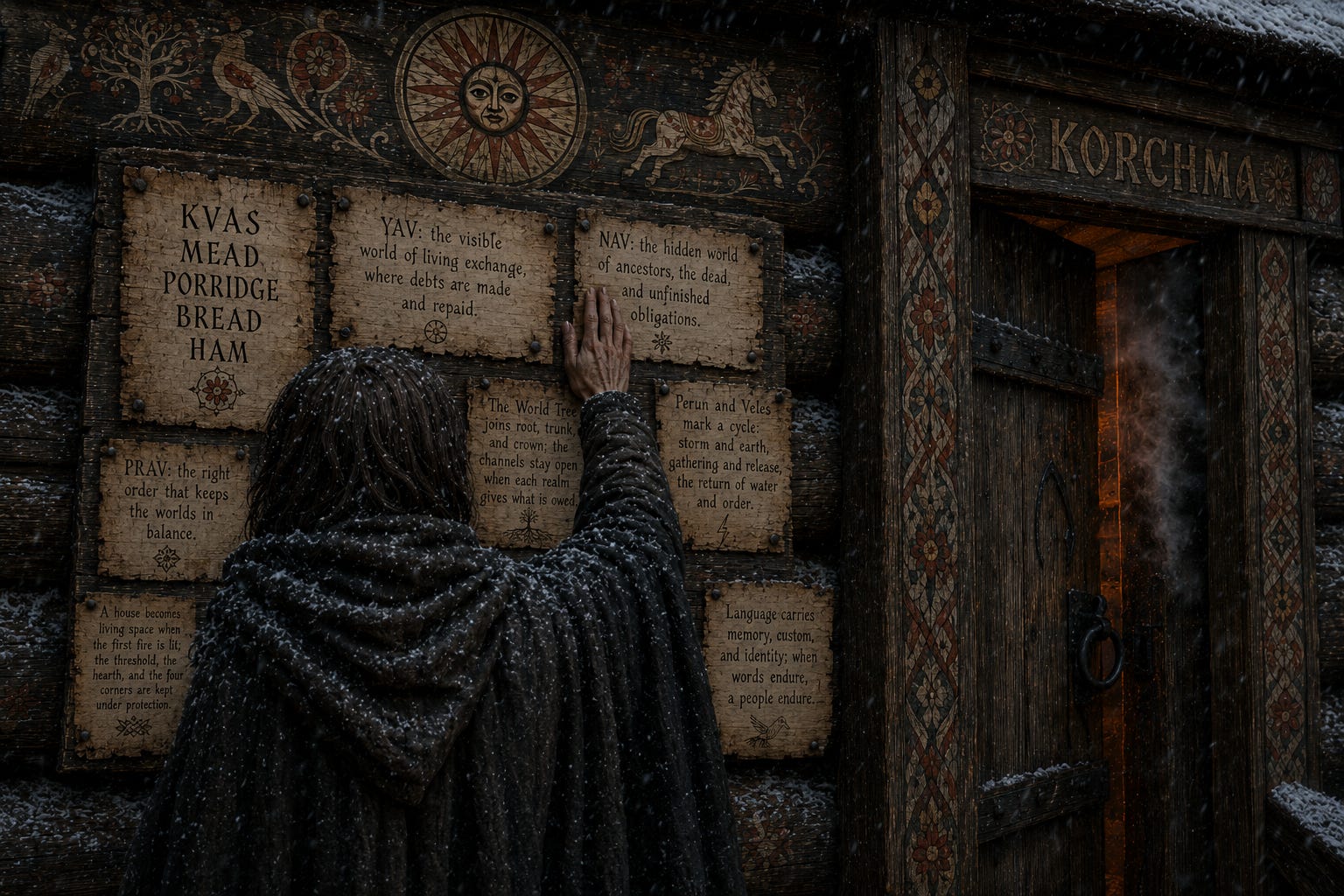
The board will be back next week.
About Me & Index with links to my other work can be found here.

Comments
Nothing yet. Say the first thing.
Sign in to join the conversation.