
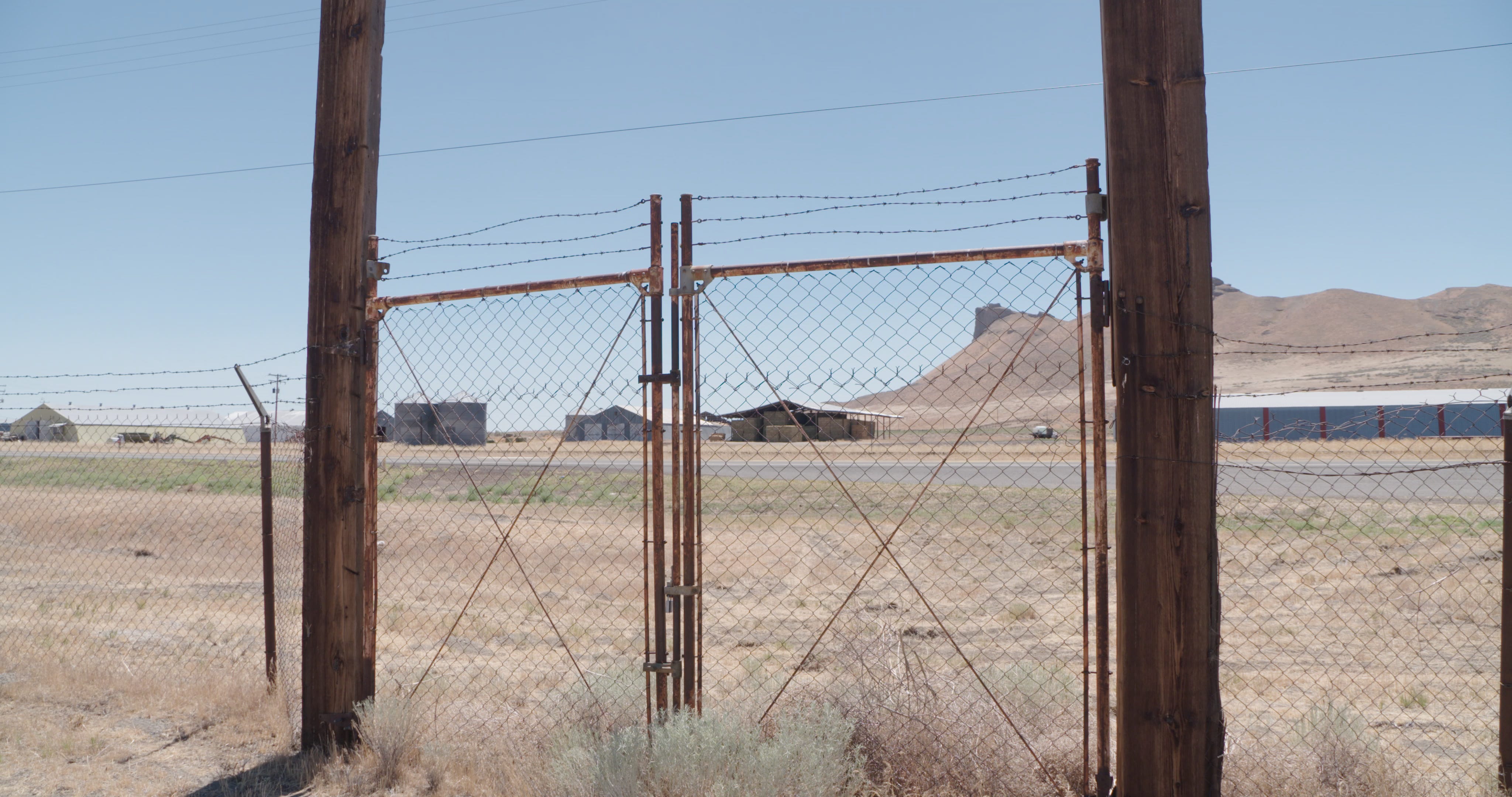
The peculiar recurring topicality of the wartime incarceration of Japanese Americans may have to do with how finite it was as a racist project. It had a pretty clear time span, and was connected with World War II, with two big anniversary dates connected to it - December 7 (everybody knows that one) and February 19 (lesser known, but it gets attention).
Incidentally today, December 7, was an almost arbitrary deadline for myself to finish this post. I’m not blithe about or dismissive of the attack on Pearl Harbor, but I don’t have anything new to say about it. The internet at large seems not to have taken notice of this year’s anniversary. I honor the lives lost in that attack as I honor those that followed in that conflict.
I honestly don’t think about topicality when planning my films. They take too long for me to make to try to time them to anything, and they’re too much work for me to undertake out of manufactured interest. But I once again find my current film project becoming more relevant than I could have imagined when I started.
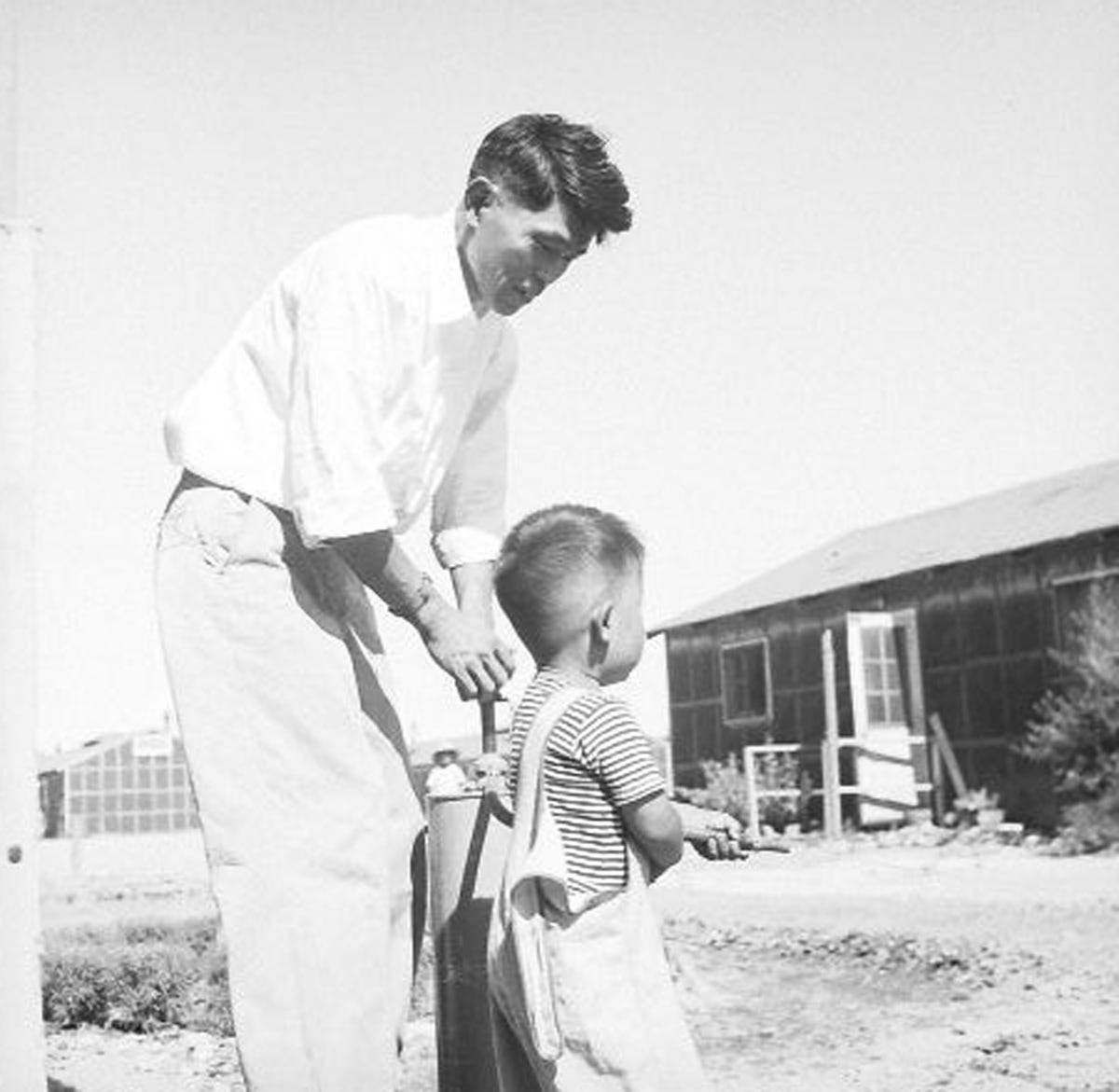
As a Japanese American storyteller, I’ve had an intimate but uneven relationship with topicality. I became a documentary filmmaker in the wake of 9/11, making the connection (along with others) between my family legacy of wartime incarceration and the domestic “War on Terror” against Muslim, Arab, and South Asian immigrants.
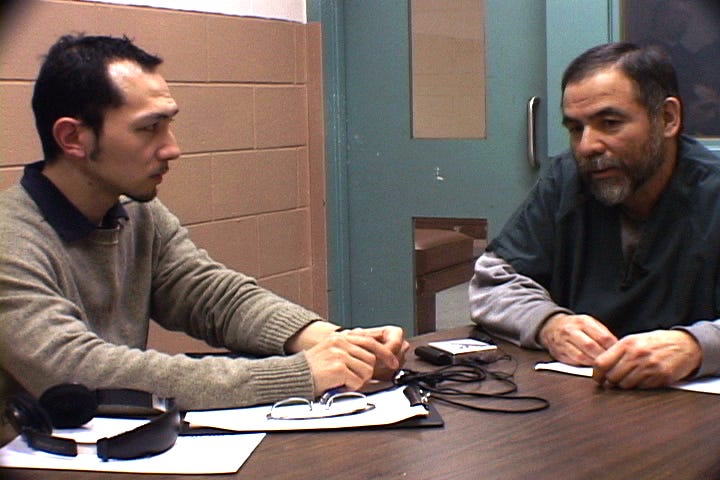
When in 2013 I got funding to start my second feature documentary, on the Tule Lake concentration camp, I wondered if there would be much conversation around Japanese American incarceration by the time I finished. And then, I was still working on the film as the first Trump administration came into power and enacted the anti-Muslim travel ban.
In summer of 2018, the Supreme Court upheld the Muslim Ban, but as a tangential consequence also overturned the 1944 Korematsu decision that had upheld the legality of the camps. In this key migration-related moment of first Trump administration it felt like Japanese American survivors and descendants of the incarceration experience became more nationally prominent than they’d been since the aftermath of 9/11.
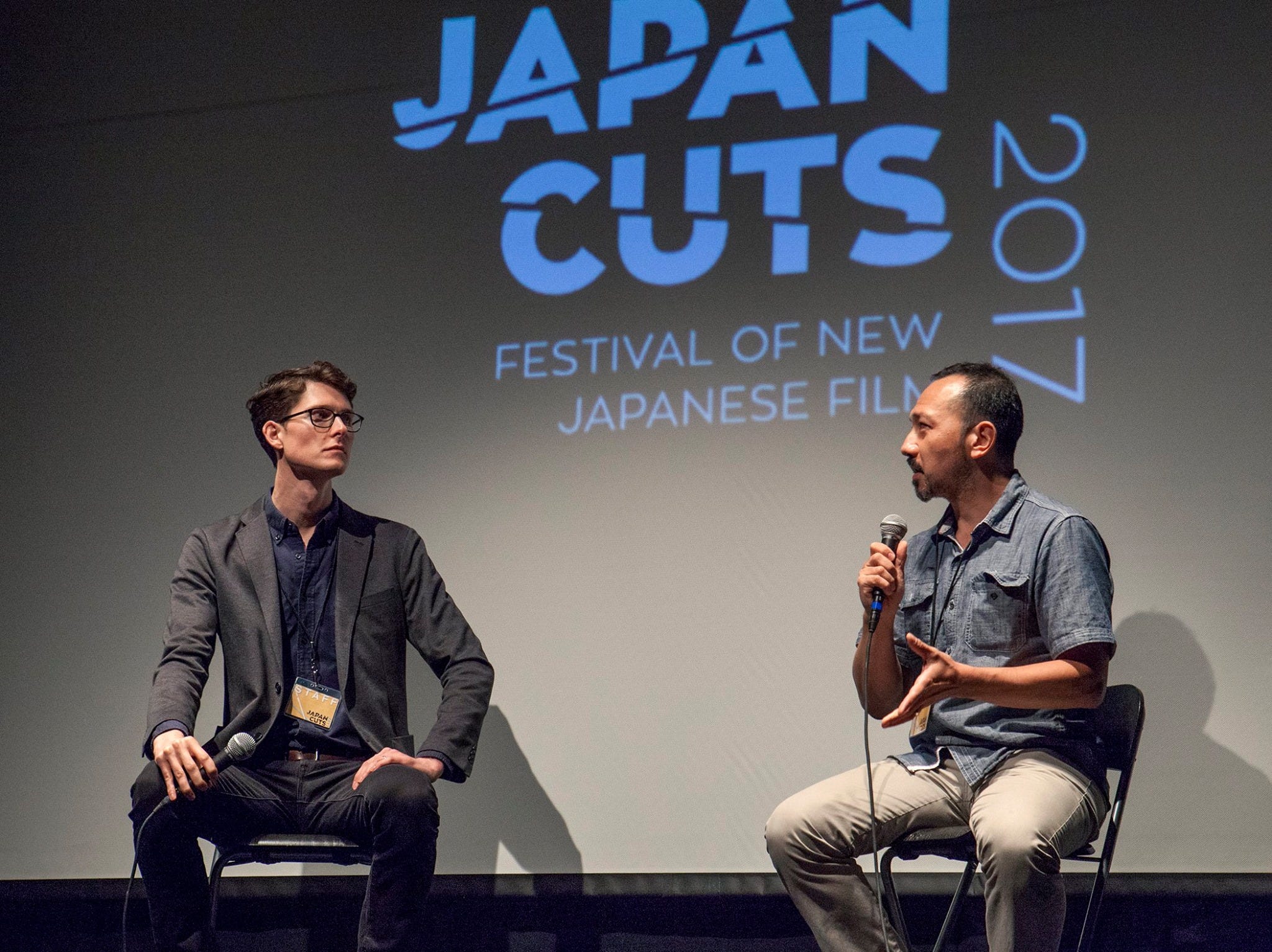
My film Resistance at Tule Lake was buoyed by that national surge of attention, giving me more attention than I’d gotten before as a filmmaker. The New York Times reviewed it; BBC interviewed me; over eighty thousand people watched my film on public television. It was a peculiar moment in my life where I was at a crossroads professionally. I suppose if I’d been more career-conscious I would have been ready with my next project to promote, or had some plan to build on my accomplishment.
But I’d started as a community filmmaker-activist, and I had this self-sacrficing mindset that seemed pervasive in my fellow Nikkei — that we were in a national emergency and we had to work to address it. I hit the road and documented my elder-led community as they exercised the moral leadership of a people who had also been targeted as a racialized threat. The Washington Post picked me up as a stringer to shoot two opinion pieces at the Tule Lake Pilgrimage. Then, at the beginning of 2019, I joined a mass convening of Japanese Americans at Crystal City, TX and the nearby, newly commissioned family detention center at Dilley.
WaPo Opinion piece shot at Tule Lake Pilgrimage, 2018 - YouTube link
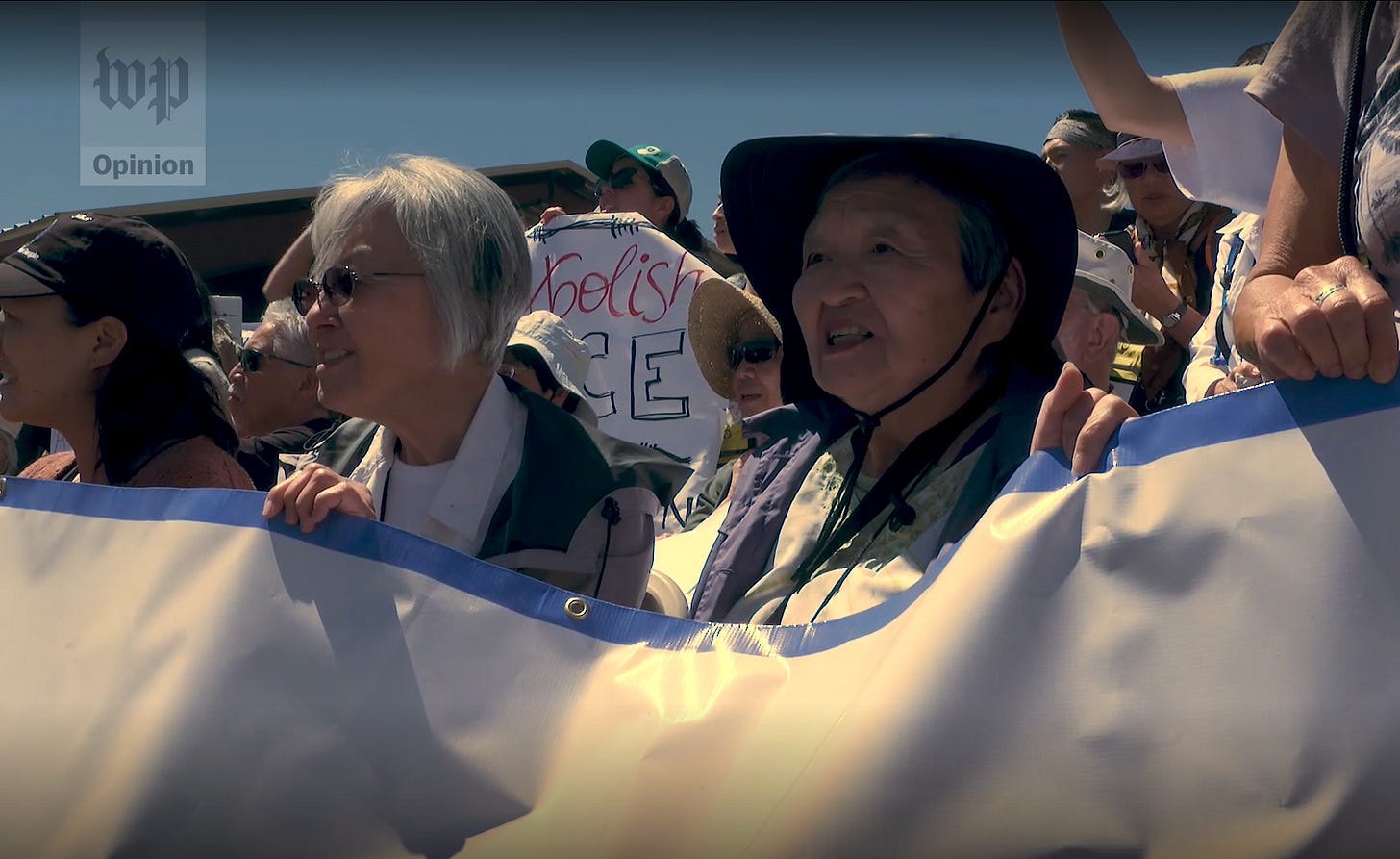
Opinion | Trump’s anti-immigrant tactics are eerily familiar to Japanese Americans
July 2018 was my fifth Tule Lake Pilgrimage (they happen every two years, except when there’s a pandemic). National media coverage of this remote gathering on the California-Oregon border had not been typical, or, I think, habitually sought. But that year, days after the Supreme Court blessing of the Muslim Ban, we staged an outward-facing protest against the Muslim Ban and family detention. A new group called Tsuru For Solidarity gathered thousands of paper cranes (tsuru) as a totem of solidarity with immigrant detainees.
The demonstration at the site was sizable, spirited, and loud. But if you pulled the lens back you’d see a demo surrounded by virtual emptiness, because it’s a sparsely populated area. The media was what gave us an audience, and I was both media and subject in a way. That year, camera crews from NBC Asian America and other dedicated media outlets started showing up to the detention sites where Japanese Americans held demonstrations, actions, and vigils. Actions at the family detention centers in Dilley, TX and Fort Sill in Oklahoma followed in 2019 got national attention.
Crystal City & Dilley, TX family detention center pilgrimage, 2019
Media coverage of these actions shifted - the same cameras didn’t follow us to Texas. We had a NHK crew covering us in Dilley, and Democracy Now! coverage at Ft. Sill. Some of us at Dilley questioned among ourselves the true impact of what we did there, which was a huge undertaking and investiment of time and money for a lot of people. I wasn’t at Ft. Sill, though I made the Asian American Life piece above using footage from that action, which was powerful and unexpectedly confrontational.
At Tule Lake, Dilley and Fort Sill, it was Japanese American organizers who made a historical connection to current government policies and called it out. My community’s work as activists and educators can be summed up as a conscious effort to make our history relevant. Today, we have survivors of incarceration, descendants, and experts from our community who speak out against anti-immigrant and xenophobic policies that echo our history.
But at least since 9/11, it’s often been white conservatives who drag us into their shit. Right-wing politicians and pundits seem to have a chronic, irresistable urge to invoke “Japanese American internment” to make whatever incoherent argument they’re babbling at a given moment, from calling for a Muslim registry to claiming the Jan. 6 rioters were wrongfully persecuted.
Sadly, this administration has also made the wartime treatment of U.S. Nikkei truly and horribly relevant again this year. Reviving the Alien Enemies Act as an authority to detain Latin American immigrants was a grab-you-by-the-throat moment in Japanese American topicality. Then, in October, came the raid on Japanese American National Museum in Little Tokyo.
MSN: "ICE raid happens outside Japanese Am National Museum"
footage of raid from L.A. Taco:
These events have rippled through the news and to me directly through people I know, as I work to complete my film centered on the arrest of a Little Tokyo immigrant father under the Alien Enemies Act. It’s hard to keep up with all that demands the attention of someone with my family legacy, but impossible to ignore.
And that’s the work I need to continue as I sit here posting. Here’s some recent, relevant established media coverage for further reading & listening:
Rachel Maddow presents: Burn Order - a podcast series on how the government ramped up to mass incarceration of Japanese Americans
New York Times - Haunted by History, Japanese Americans Fight Trump’s Immigration Crackdown
Shout-out to substacker Every. Effing. Day. who noted the lack of mention of Tsuru for Solidarity in the New York Times story, which sparked this post. In NYT’s defense I’ll say that the recent Little Tokyo activist response to the ICE raid was led by Nikkei Resisters, who are local to L.A., and that’s what much of the the story was revisiting.
When people argue and ideate about this history, one metric of its relevance seems to be how similar a current policy is to internment. But this need to find parallels isn’t always helpful. There’s misconceptions that partly stem from the need to stretch or select factoids from this history that fit the most useful talking points of the moment. So, the referencees people put out there take on some false implications. One is that Pearl Harbor happened and suddently Japanese Americans were incarcerated with a ready-made plan.
But it took about six months after war broke out before the forced removal and incarceration to take shape and get carried out. It was a years-old idea kicked around with some planning, but the full policy wasn’t ordained from the moment the attack happened. The political will and specifics came together week by week. That’s chilling in a way, because it shows how a mass incarceration can materialize from mere ideas to reality. And it’s also scary because it throws the responsibility back on each of us who oppose these racialized state violence projects. At any moment, any day, there could be something afoot that can still be stopped.
There’s more to Japanese American history than wartime incarceration, and more revelations in the preceding history of Japanese America offering insight that I’m now exploring. Assumptions, false generalizations, and distortions come up, and there are vast dark areas still. A huge one is the vast Japanese-language archive of U.S. Nikkei history that has been left out of historymaking. That’s what I’ll be referring to more in my future post.
No posts
Comments
Nothing yet. Say the first thing.
Sign in to join the conversation.