
Few small-budget filmmakers report a leisurely, serene journey from script, to funding, to principal photography. But finding my main funding source on a list of grants declared “frozen” in a White House memo added a new level of challenge. This past February I started my white-knuckle ride from work-in-progress to production of my film They Took My Father Too. It’s a literary adaptation set in the Japanese American enclave of Little Tokyo, Los Angeles, in 1942. The recently revived Alien Enemy Act plays a role in what happens in the story.
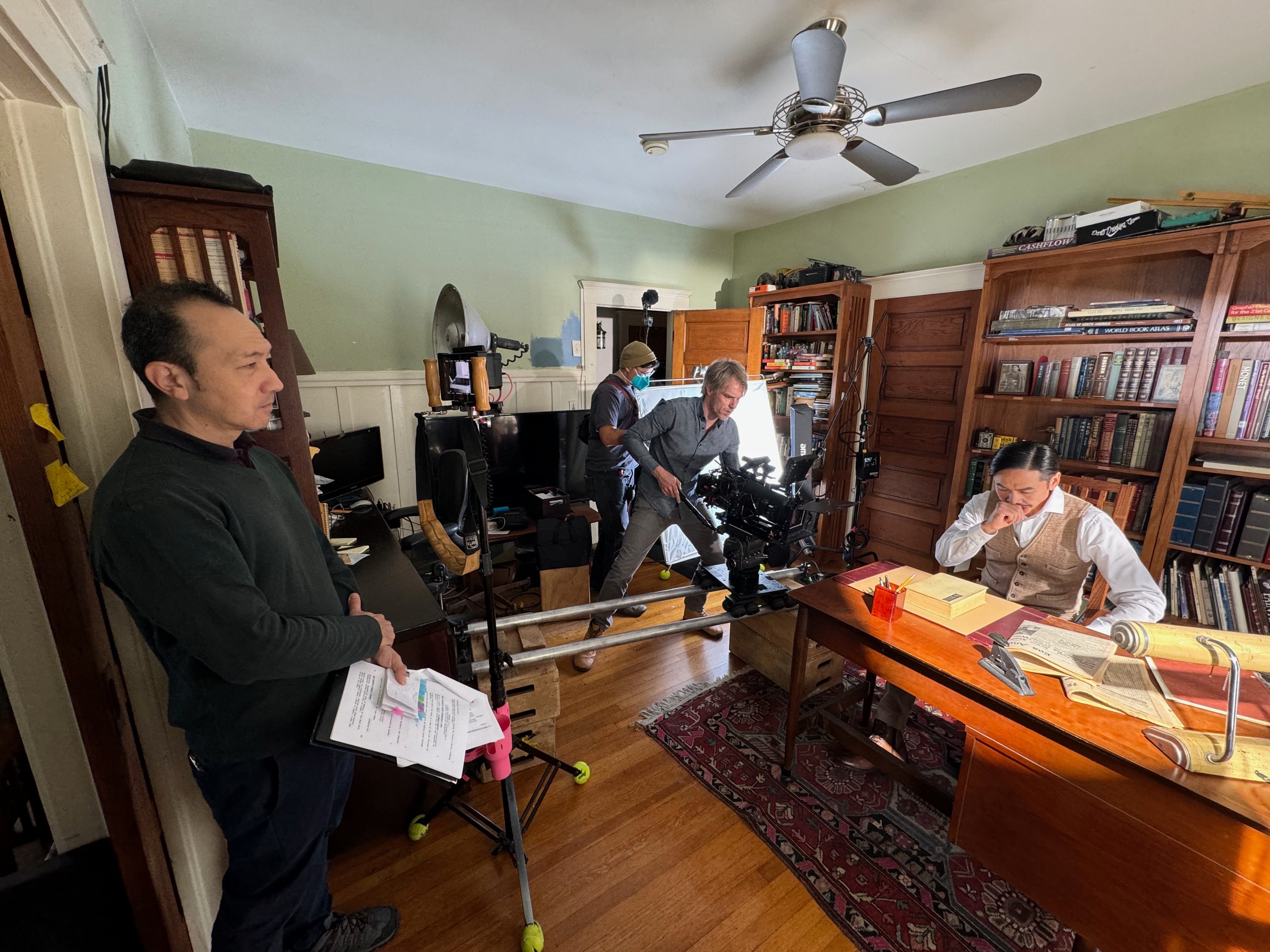
My project was awarded a grant from Department of the Interior in late 2024. It was a matching grant, which meant I had to raise cash and in-kind support to get funds. By the beginning of 2025, three individual donors had kicked in enough money for me to shoot a couple of days — my plan was to make a work-in-progress that I’d use to raise the rest of the budget.
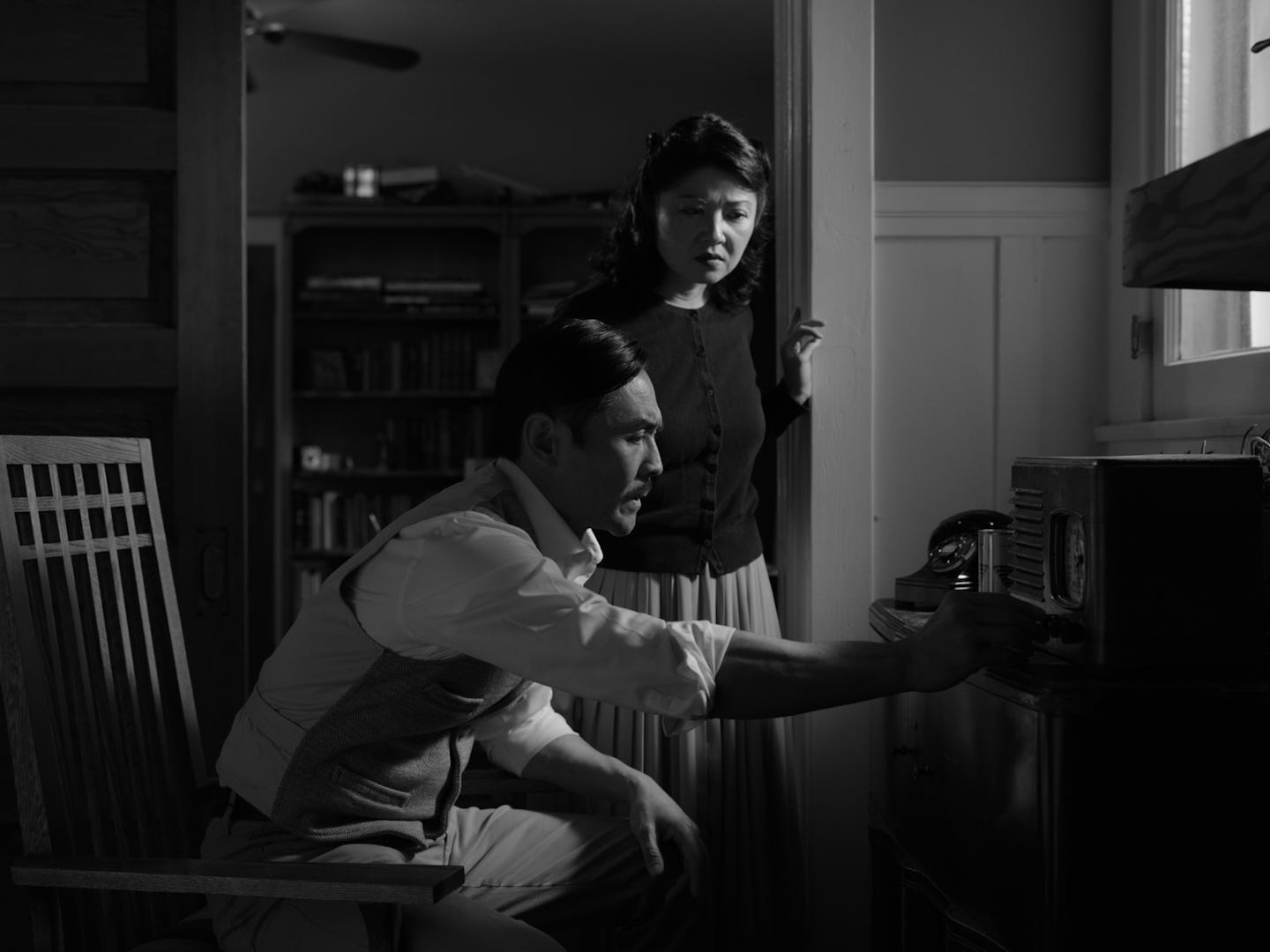
By the spring of 2024, I was exhausted but thrilled. Having completed two days of shooting, I had started to cut a work-in-progress. The footage was beautiful. The vision I’d formed of the film over several years was taking shape.
The project was in a transitory stage though. The grants I was going to apply to, if I got them, wouldn’t be disbursing any funds until the end of the year. And that would mean it’d be 2026 before we could shoot the full film. I was in a bit of a transition mentally, too. This was a period film and a bilingual translation, with layers of research and pre-production embedded in every shot, and the script needed an update. So my inner documentarian, always researching and fulminating, would have been happy to have more time. But on a practical level and taking into account this film’s beautiful little society of cast and crew, it definitely seemed preferable to keep momentum and produce within the year. The money, though, was a crucial aspect that needed figuring out, a job in itself.
Though money is, in a physical universe, like the air a production breathes to live, I’ve found that what really happens to move my projects forward is really internal. My inner readiness always feels in sync with the external circumstances that arise to carry the film forward. But the synchronicity in the progress of They Took My Father Too has felt scarily heightened, tied to the political chaos of this year.
As you’ve probably heard, this year DOGE operatives short-circuited Congress’ constitutional power of appropriations, simply breaking into government systems to defund whatever MAGA didn’t like. Publicly funded artists and producers, including people I’m close to, saw grants they had been awarded, after lengthy application and approval processes, simply blocked. My community was scrambling, and my fiscal sponsor, also a mentor of mine, rushed me their notes from an alarm-raising meeting of arts professionals.
The insane, unprecedented cancellation of federal funding put me in a freak-out level of uncertainty. But ironically, this very uncertainty became like a booster jet launching me headlong into production.
I had produced my previous documentary, Resistance at Tule Lake, with the support of this grant program. The federal match is 2-for-1, meaning for every $1 you raise, they fund $2, up to the full amount of your budget. Functionally this means you’d go do a bunch of work, then file a reimbursement request for the labor and expenses of your team. And you’d keep doing that until you finished. But in February 2024, under the MAGA regime, it wasn’t tenable to dole out money and rely on the “full faith and credit of the government” that the administration was flushing down their golden toilet.
Though my program, along with a long list of others, had been named for cancellation back in February, that order had then been blocked by a judge, and then the White House had withdrawn it. I’d also had a conference call with other grantees, including people based in D.C. who were in direct contact with government. The word was that my funding program was safe for this fiscal year.
However, in May a fresh wave of disruption rippled through my professional community when DOGE and the newly installed Reichsamt des Innern began to extralegally end thousands of programs at the Department of the Interior and across the government.
My fiscal sponsor called me with the immediate upshot of the meeting of arts nonprofits they’d attended. NEH and NEA grantees who hadn’t been defunded yet were drawing down their entire grants.
How were they doing this? By making advance requests. I’m embarrassed to say that I previously completed a feature documentary with the same grant, and never learned that was an option. But yes, it was right there in the grant manual. You could get an advance on funds to support planned work.
BUT the pretext for requesting an advance was that you would be spending it by the end of the reporting period, or you might have to give back what you didn’t spend. My reporting period was going to end on September 30. I was learning about all this in May. And I was bogged down by the fact that in the preceding work-in-progress stage, I’d hired a budget coordinator who’d left the budget in a mess. So I had to sit down over the course of several weeks to straighten it out and determine where we were on the road to raising the cash and in-kind support we needed to fund production.
Since I didn’t think I’d raised the full production budget yet, it looked like I’d have to do this drawdown as an advance, paid as retainer fees to production personnel and locations. It was going to be like a down payment on principal photography.
But when I made my first rough calculation of my available federal match, I had a jaw-dropping realization. It was looking like I had enough funding to draw on to actually shoot my film. This vision I’d been toiling over for three years, that I’d crafted in my head, on the page, and rendered in pencil sketches, that reached beyond anything I had done before — I had the funding to shoot it. A story that starts in a family’s home, takes us inside a Little Tokyo cinema, and ends at a historical detention center that had never been depicted onscreen before.
By June, I had submitted all the required paperwork — progress report, budget revision, and advance request.
Then I waited…and waited.
I had, in theory, the money to shoot my film and the clock was now ticking to shoot it by September. But it was going to take an unspecified amount of time for the grant program to process my request. And a lot of things could happen with that request —they could deny it on some pretext, they could ask for a correction, which would delay things further. They could grant the request and the newly installed MAGA head of the DOI, or a DOGE operative, could just block the payment.
Working in that cloud of uncertainty was psychically difficult. I was engaging in a form of self-justified doomscrolling by scouring the internet for breaking developments in the Department of the Interior. Learning about the week-by-week incursions into the government workplaces, and even the Department of the Treasury’s payment system used to pay out grants, fueled my anxiety:
I feel a big psychic weight of discouragement that takes effort to break through and methodically take care of necessary steps for the project. At the core I think is this foreboding sense that my [DOI] grant is being blocked. And that connects up with the whole zeitgeist and daily dreadful drumbeat of political pathology.
I was still reworking my script, but I couldn’t really plan much before I knew the money was there. That month, however, was dominated by Japanese American community- and research-focused events that I’d committed to before. Though these events were not directly related to preproduction or anything that I “should” have been doing about my narrative production,
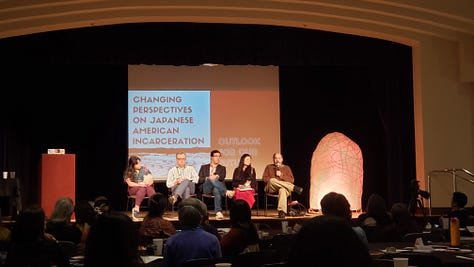
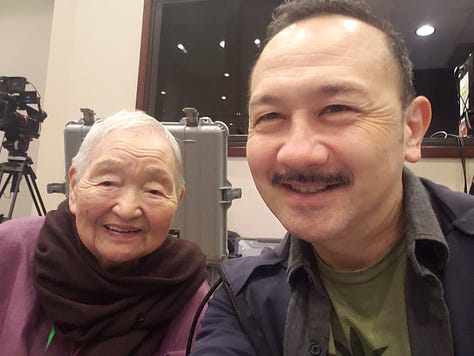
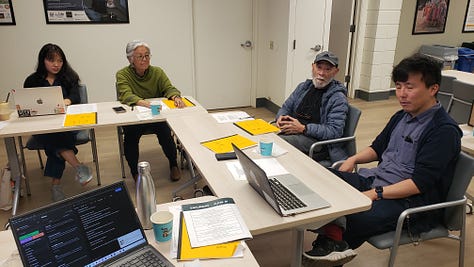
I attended the urgent Changing Perspectives conference in Oakland June 21-22 and right after that, met at UC Berkeley with the Tessaku Commmunity Advisory Board, the group collaborating around the translation of the literary journal of Tule Lake. Then I flew to L.A. to shoot an interview with a woman who could have been one of the characters in my film — she’d been a teenager in Little Tokyo when World War II broke out.
I scouted a location, and finished and submitted a funding proposal. Then I returned home to NY. The week following, my fiscal sponsor told me that the advance had been approved and was in process. It was several nail-biting days before the money was actually in the account. But I got the final word — my film about the persecution of an ethnic group by the U.S. government under the Alien Enemy Act had just pulled down production funds from the federal government.


It was a race to prepare for a shoot that had to take place within less than three months. I’ll be writing more about the origins of this film, and my struggles, victories, and insights in this journey as I proceed with pickups and post-production. I didn’t mention that this is the first narrative project of any significant size that I’ve directed. So I’ll also have thoughts to share on my journey from drama to documentary back to drama.
As we near the eve of 2026, this post is my look back at how the insanity of 2025 played out in my filmmaker microcosm. Maybe it will do someone on #Filmstack good to read a story with a happy ending, after all the stories of waiting, loss, and betrayal we’ve scrolled through. As a filmmaker, the most universal trope I can relate it to is that moment where the protagonist makes promises to God if they make it through this valley.
Here’s a bit of my artist journal in those anxious days of suspense:
A part of me is counting on this drawdown; another part will be amazed if it happens. If it gets blocked, it’s time to alert _________ and take political action. Being a progressive person with a conscience, I feel guilty about my entitlement to this money for a film when hundreds of thousands are dying because of the erasure of USAID and Drumpf just blocked billions of dollars for education of poor kids. If it comes through though, it’s my duty to make this the best project it can be. And when I’ve gotten through the hectic part, pay it forward somehow to the people who are truly suffering from the actions of this despicable criminal regime.
By sharing this I’m making my own kind of New Year’s resolution. I’m grateful to have somehow escaped the Great Defunding of 2025. As a self-abnegating Yonsei, I can only see a higher purpose in having democracy work to support my project in a time of mass betrayal. But I believe everyone has access to the helpful developments and synchronicities that have always pushed me forward. I hope you receive the full benefit of these mysterious forces in 2026.
No posts
Comments
Nothing yet. Say the first thing.
Sign in to join the conversation.