
In many Indian languages, the word for rain, varsha, is the same as the word for year. A year, in the imagination of the subcontinent, was, and perhaps still in large parts is, really just the time spent between one monsoon and the next. The subcontinent is the same, but the city has taken over much of the forests and fields and quaint and sometimes unforgiving landscapes where these words took shape and meaning.
We live not only in a different time, but perhaps almost in a different place.
Many monsoons of urban Indian millennials have been marked by variants of pakoras, and perhaps paper boats. Maybe even the unexpected treat of a “rainy day” school holiday in places where it pours heavily. And, of course, drenched crows and puddles and the hard, dusty surfaces of the human habitat washed clean, and the splotches of green still around, refreshed.
If we move back a few centuries—and in some cases, a few decades—travelling through much of India during the monsoon wasn’t just interrupted by a “rainy day”. It was four months of taboo where all but the most essential transit was avoided.
There was good reason for it, too— the rains arrived, the roads went soft and then disappeared, rivers came up over their banks, forests thickened into something nearly impassable, and the whole world turned uncertain enough that merchants postponed their journeys, pilgrims sat down where they were. In a more mundane sense, a traveller moving through the countryside in the rains risked more than wet shoes— footpaths vanished, rivers turned genuinely dangerous, disease spread fast in the standing water, food spoiled before you could eat it, and every step through a sodden field stood a decent chance of crushing something that hadn’t existed a month before. In a civilisation built around the monsoon’s arrival, staying still wasn’t passivity.
Even wandering ascetics, who otherwise spent most of the year walking from one place to the next, agreed to stop.
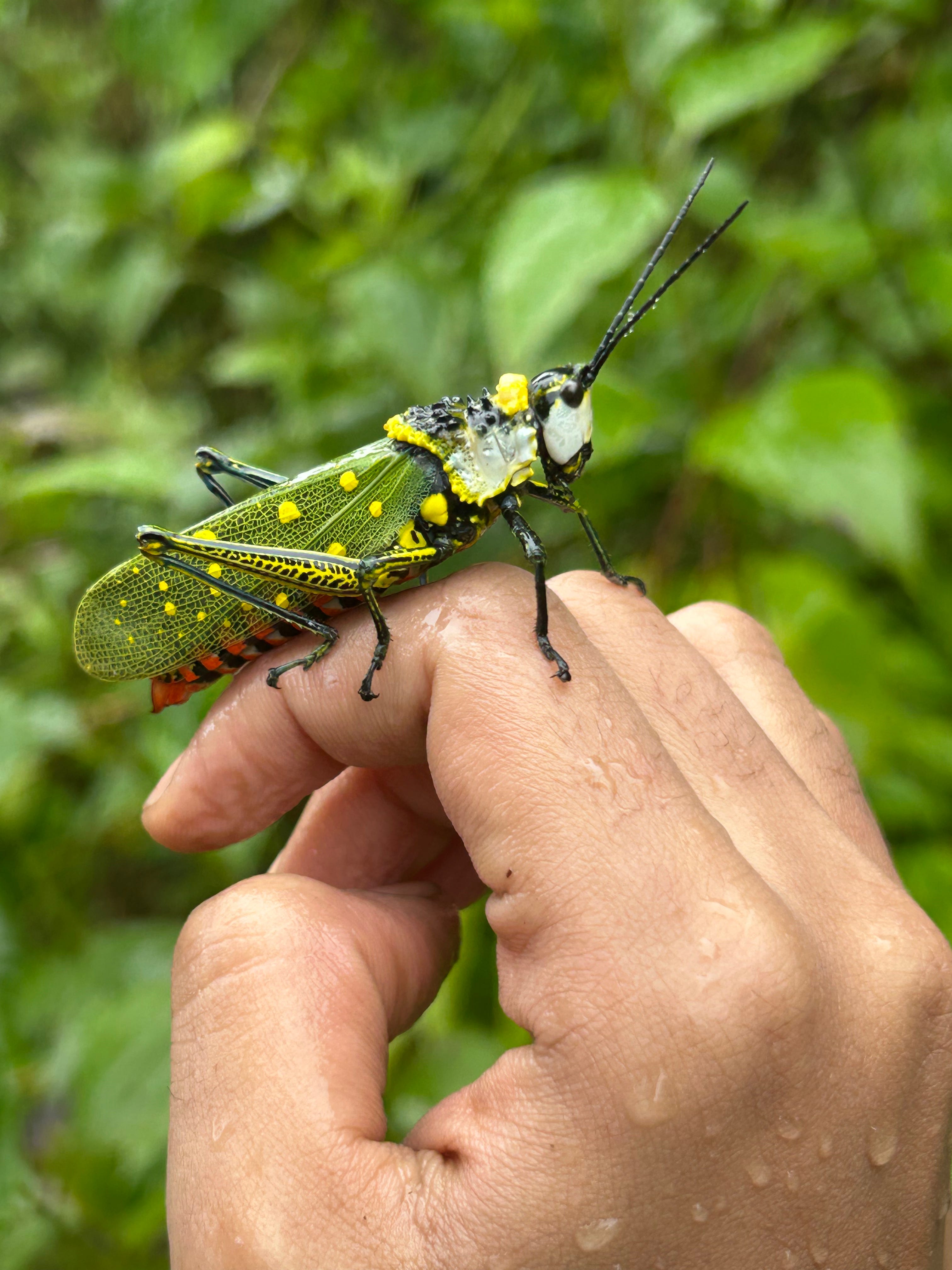
In fact, three Indic faiths follow a similar ritual of stopping to rest in one place for the four months of heavy rain. Hindu, Buddhist, and Jain traditions all follow this— many Hindus believe that during these four sacred months, Vishnu enters into a state of sleep; Buddhists believe that the Buddha set up a retreat called Vassa after laypeople complained that wandering monks were trampling new agricultural shoots and crushing the tiny creatures that surface with the first heavy rains. Jain mendicants, who otherwise typically have strict laws regarding moving from place to place, stay put in one place for much the same reason: because, however careful one may be, walking through a wet field in the rainy season means really having to crush countless saplings and tiny creatures underfoot, which is contrary to their strict vow of non-violence.
Though marked with stillness and fasting, it was, in a sense, a form of participation— the rains asked for respect, and for once, almost everyone agreed to give it.
Even Emperor Ashoka, carving his royal decrees into stone more than 2,000 years ago, set aside specific rainy-season intervals for the strict protection of animals. In certain stretches of the rainy season, he especially restricted the harming of animals inside elephant reserves and prohibited the killing and sale of fish. Which is to say, ecological sensitivity, whether in the garb of devotion, or in the form of government policy, is prominent in the history of the subcontinent— especially during the monsoons, when all things become new.
Today, we still have the same threads. Wandering ascetics still park themselves in one place, though we have moved from pillar edicts to government circulars on paper and digital media.
Every year, from roughly the first or second week of June until the end of July, the entire west coast of India—Kerala, Karnataka, Goa, Maharashtra—enforces a mechanised fishing ban during the monsoon, timed almost exactly to the fish-breeding season the rains trigger. Trawlers come in, motors above a certain horsepower are grounded, and for about two months, the sea is left mostly to itself, while small traditional boats with gill nets are still allowed out.
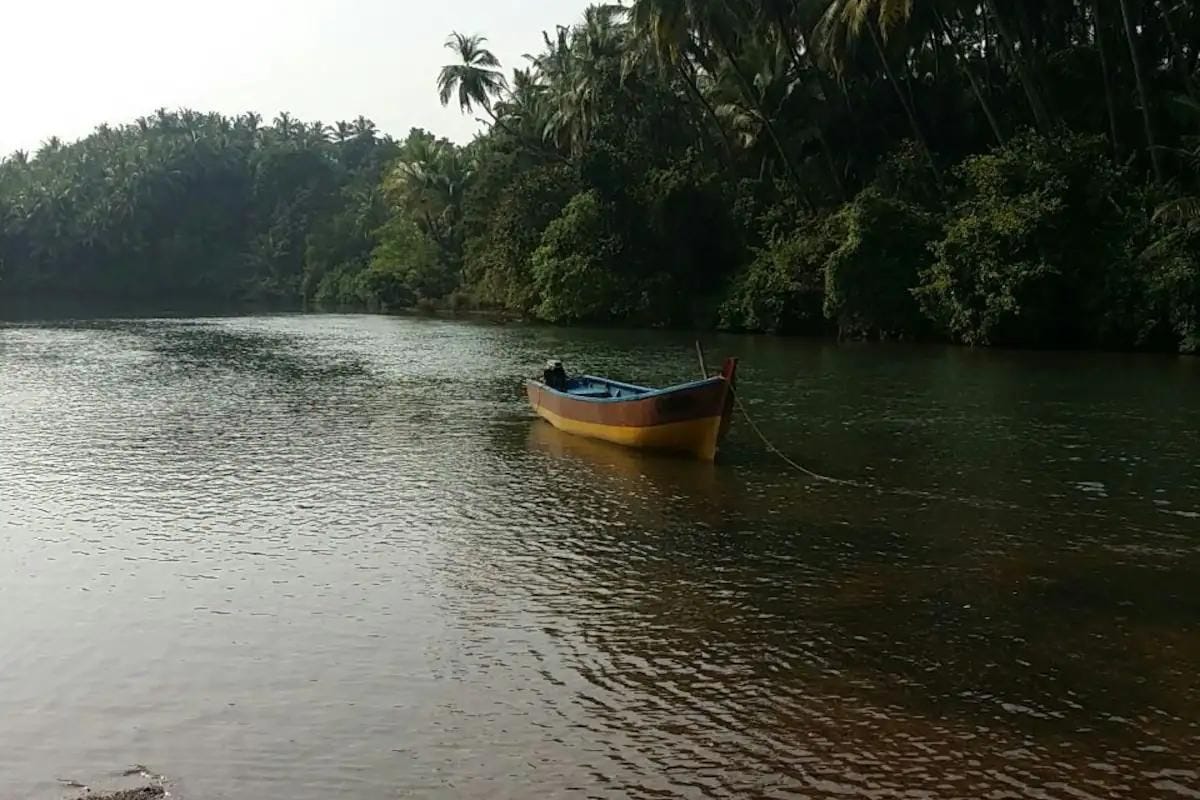
This is more or less similar to the exemption an Indian from a few centuries ago might have made for the bare necessities. It isn’t dressed up as spirituality at all— it’s marine biodiversity policy, citing breeding cycles and stock conservation… but functionally it is the same idea wearing a different uniform: this is not the season to keep taking from the water.
There’s some irony in the fact that this lands hard on the Goan coast, of all places, given that Goa already has a word for the energy this season calls for, in a sense. Susegad—rooted in the Portuguese sossegado—means roughly “unbothered”, “at ease,” content to let the afternoon happen to you rather than the other way around.
It isn’t really a monsoon-specific word, but it’s hard to imagine a better description of what the coast looks like in July, when many of the beach shacks shutter, the trawlers sit roped at the jetty, and the only sensible response to the weather is the one a lot of our Goa stays are built around in the first place.
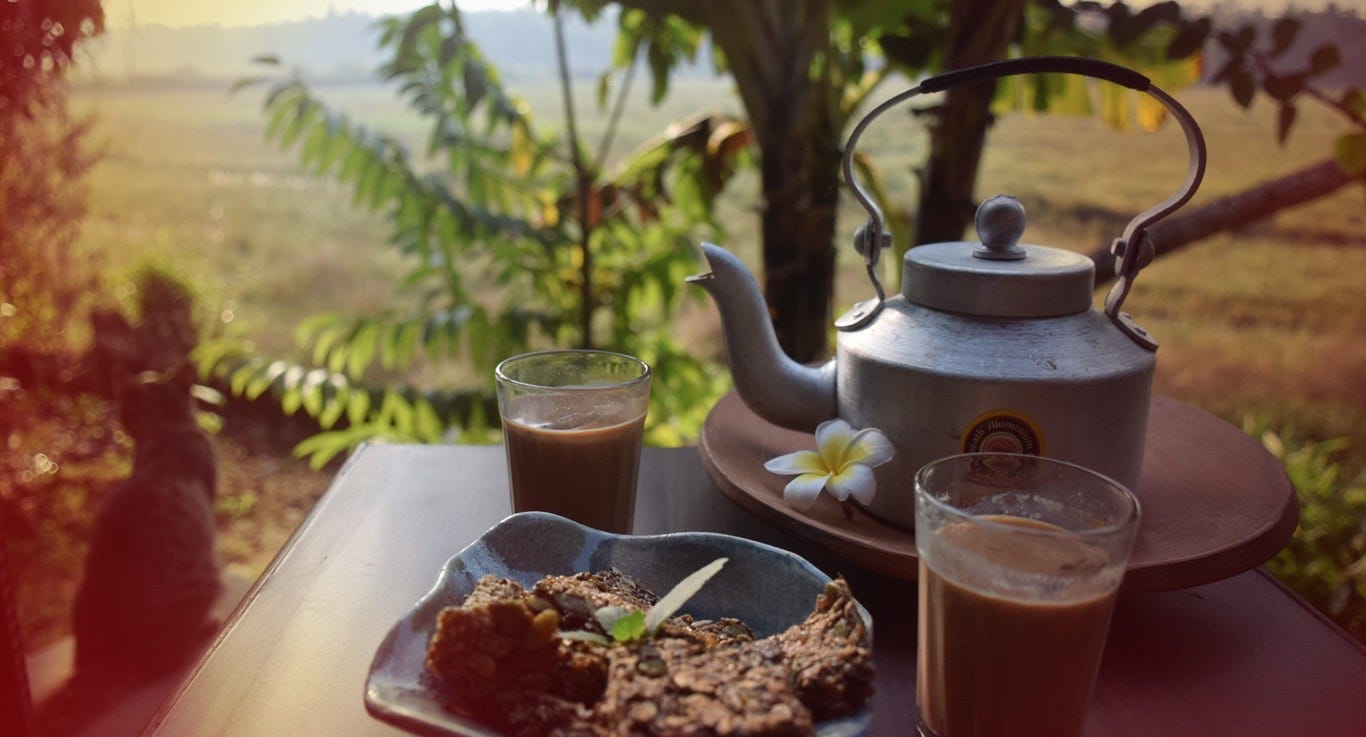
The industrial fishing ban is, in its own bureaucratic way, just telling you what the place was already going to tell you anyway: not this month, slow down, the sea is closed for a reason that has nothing to do with you.
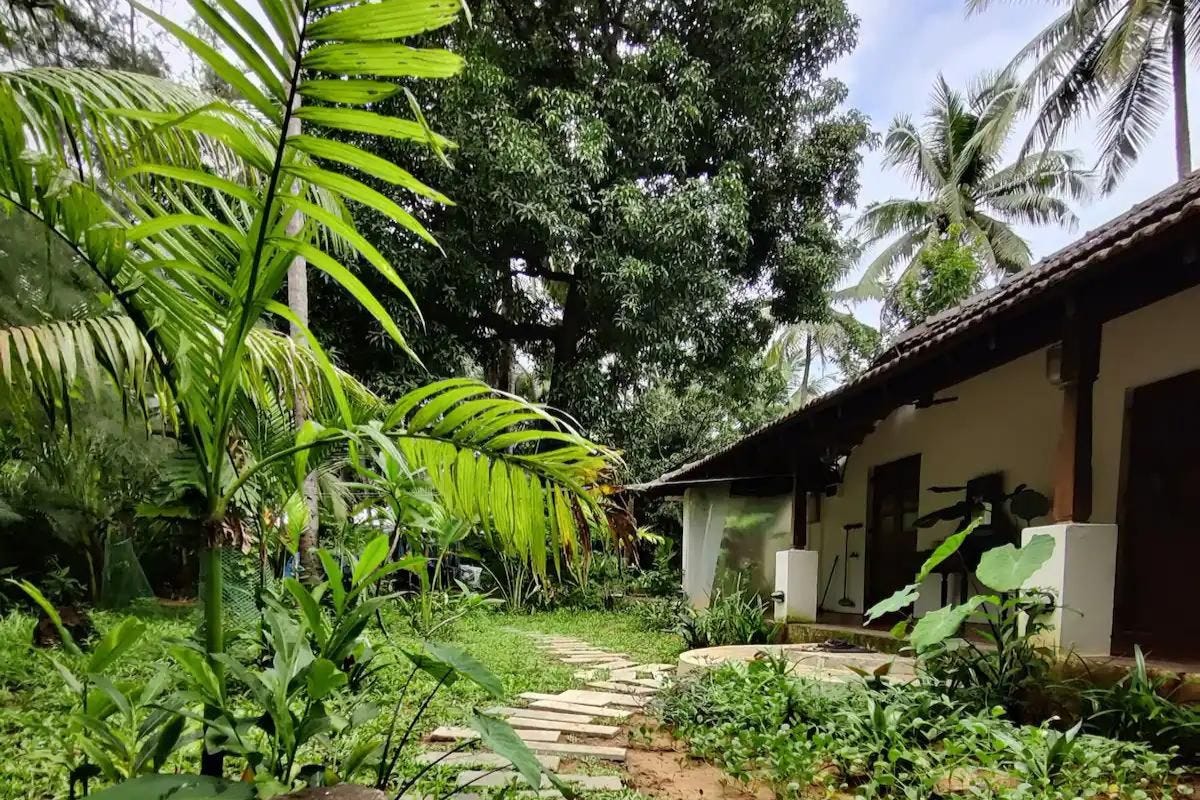
And when our outward movement slows down, we turn to inner life, which, in a sense, gets its own little rainclouds and showers and a fresh lease of life as well.
That relationship runs deep enough that some of India’s oldest writing and art are, in a real sense, monsoon writing and art— the rains are celebrated even in the earliest deciphered Indian texts, such as the Rigveda.
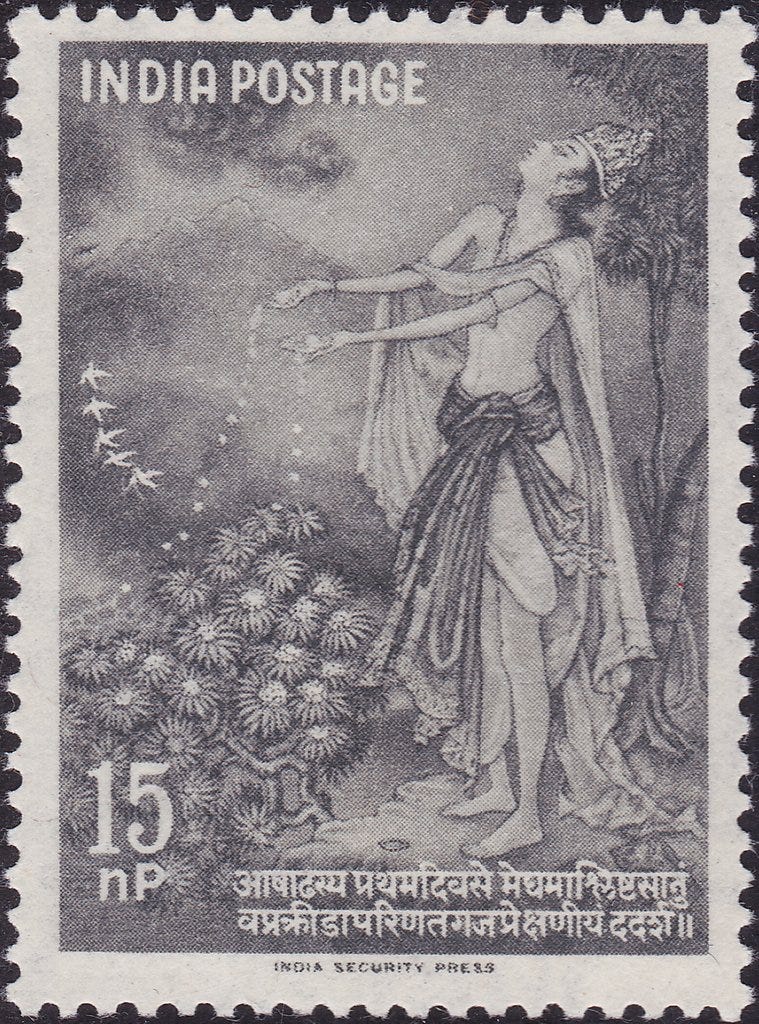
Famously, perhaps Kalidasa gave the season its definitive portrait in Meghaduta, the Cloud Messenger; it opens with a yaksha exiled for neglecting his duties, sitting out his sentence somewhere in central India, and watching the first clouds of the season gather overhead— until he decides, in his loneliness, to persuade one of them to carry a message to his wife who lives in the Himalayan abode of yakshas, far north near Mount Kailasa. What follows is a string of beautiful verses of what may be, in a way, seen as travel writing threaded through with heartbreak— the cloud is sent past the mango-covered hill, over rivers, through Vidisha and Ujjayini, north across the plains toward the mountains, a real and reasonably precise geography conscripted entirely to measure a private distance. Composed sometime around the 4th or 5th century CE, it might be one of the oldest travel itineraries in Indian literature, and it’s certainly amongst the most heartbroken ones (would Kalidasa have written a Substack?).
Even the word ‘monsoon’ is a bit of a traveller itself. It comes from the Arabic mawsim, which means “season”, and from which the Hindi word for ‘season’ (mausam) is also derived. However, mawsim took a different route in this case: the Portuguese somehow made ‘mawsim’ into ‘moncao’, which the English borrowed and made into the word we know today.
Formal musicians have their own version of a similar waiting. In Hindustani classical music there’s an entire family of ragas, the Malhars, that exist to be sung only in the rains, constructed, by tradition, to echo the roll of distant thunder and the first fat drops landing on dry ground.
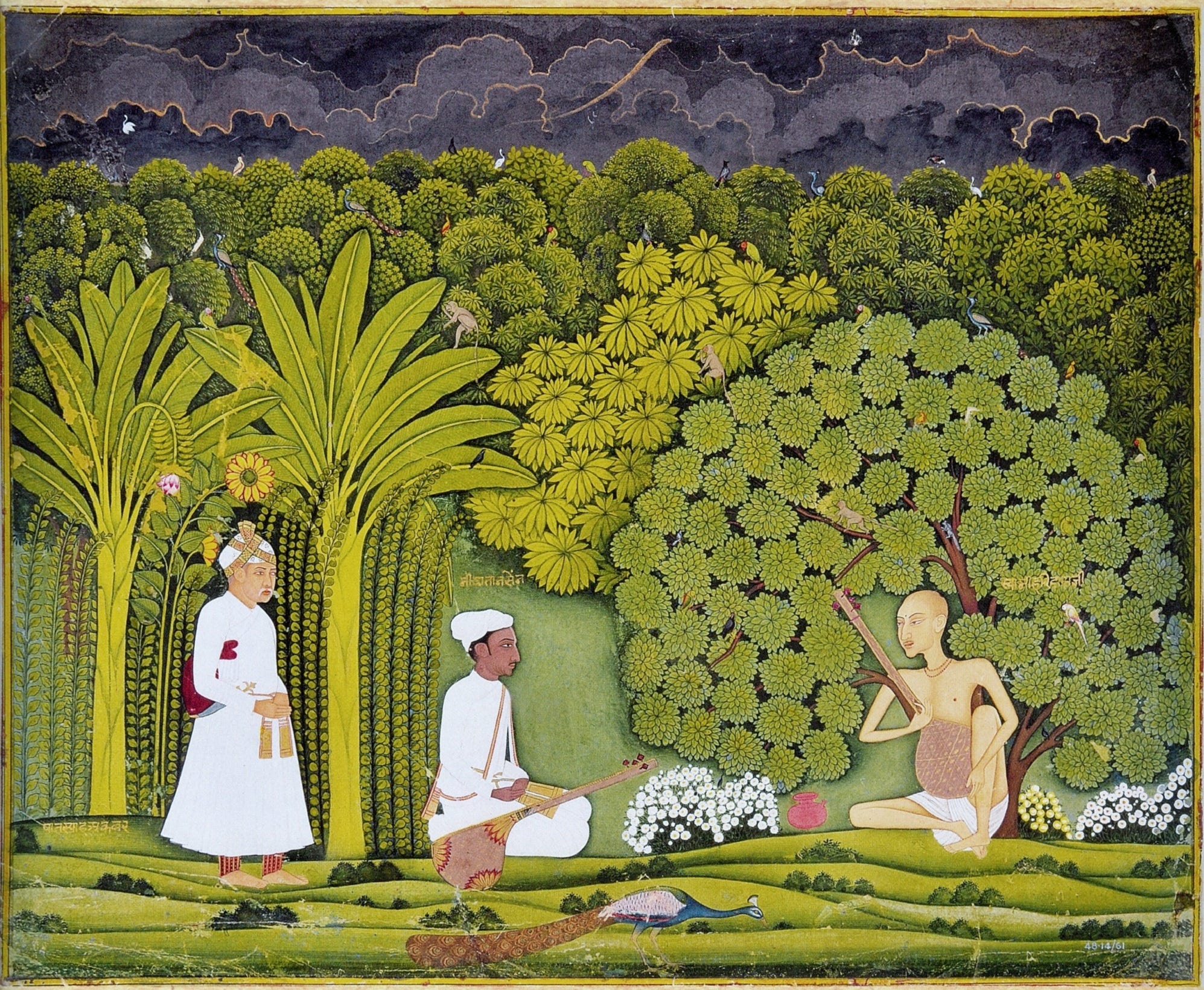
The legend of Tansen summoning an actual storm by singing Miyan ki Malhar is, in the end, probably just a legend; but one is tempted to honour the intuition behind it— the right kind of attention, held for long enough, might genuinely call something into being. One pauses to wonder, then, what attention evokes these dark clouds that bring lightning and life, rain and respite? What attention is it that can rivet an entire subcontinent in place and yet move mountains within? But the journeys it punctuates are not just between lovers and across words. The monsoon also generously yields itself to works which describe the journey between the human and the divine. In the baul-fakir traditions, and in the poetry of Sufi saints across India, the rain-swollen river becomes a metaphor for the difficult journey of life that one must cross to meet the Beloved; the melancholia of rain becomes the metaphor for the soul’s longing for the Beloved. The emotional weather is remarkably familiar: waiting, yearning, and the hope that something long absent will finally return. Sometimes, the rain itself is referred to as ‘
Rabindranath Tagore personified the monsoons and the dark clouds and rain themselves as a baul playing an ektara. He is one of the countless writers, poets, and artists of Bengal who celebrated the rain. A lot of his work is anchored in the season.
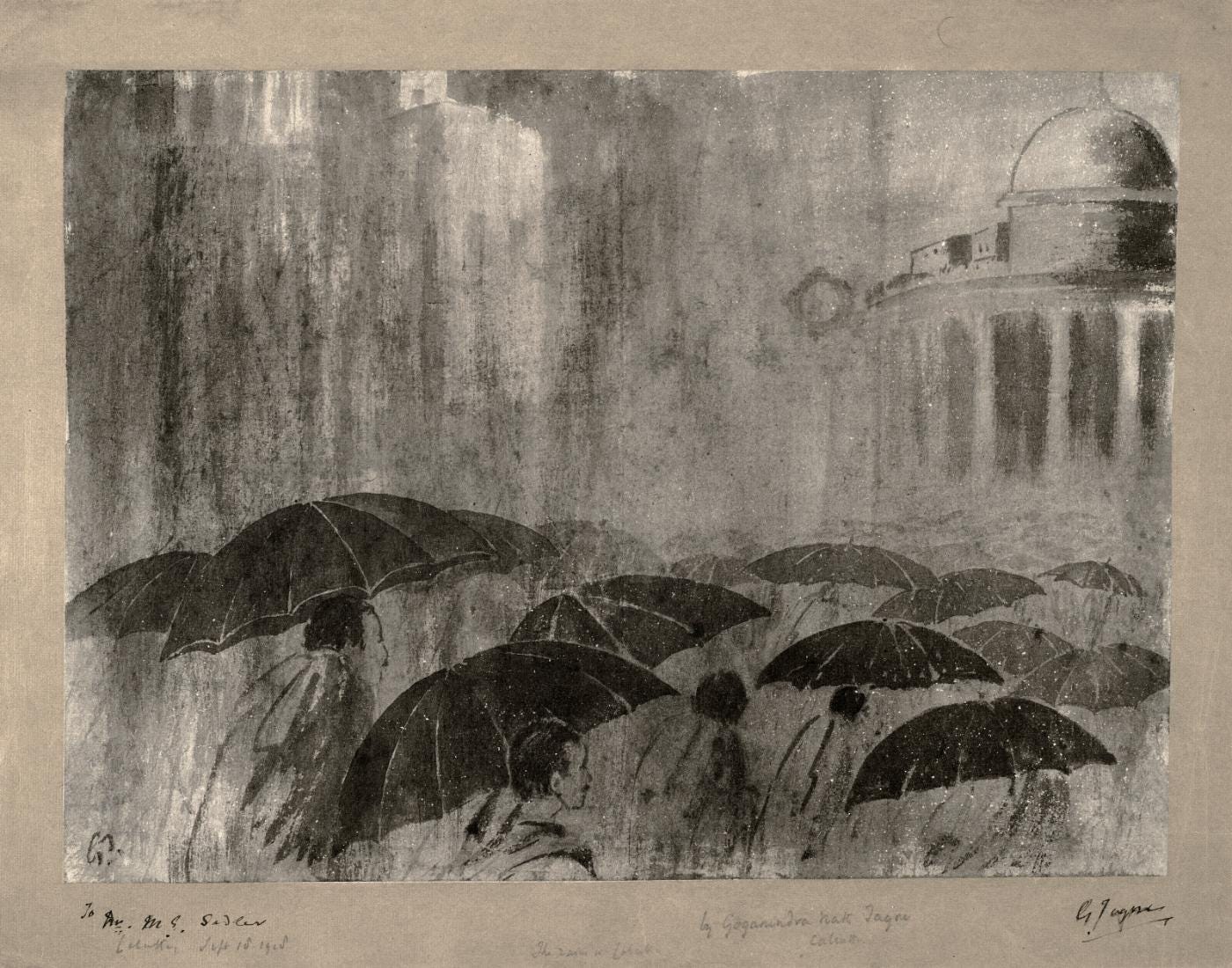
In a letter to his friend, he complained how the monsoon no longer gathers as it did when he was a child, how the frogs no longer croaked in Calcutta, and how the old riot of thunder, lightning, rain, and wind is nowhere to be seen.
He adds, thoughtfully, that as spring belongs to youth and autumn to old age, so the monsoon belongs to childhood. That the monsoon is the season of staying indoors, of imagining, of listening to stories, of playing with siblings. In the darkness of the rains, fables somehow become real. Behind the curtain of heavy rain, all the office-work of the world disappears from view.
Thank you for supporting The ⋮Knowhere Knewsletter. Please share this post, and do please let us know your thoughts about it!
Getting grounded from poetic flights is not always a bad thing, though. Definitely not a bad thing during the first rains of the season— the fragrance of the soil reaches our awareness before any of the poetry does.
What we call the smell of rain is mostly an organic compound called geosmin, produced by streptomyces, a kind of ancient soil bacterium, which play an essential role in all ecology and in many facets of human life (but that is a story for another day).
When raindrops strike the earth, they trap tiny air bubbles at the soil surface, which shoot upward as aerosols, dispersing geosmin into the wind. The smell is called ‘petrichor’, named recently, borrowing from the Greek for ‘stone’ and the mythical ‘blood of the gods’, but humans have had a nose for it probably since the earliest evolutionary antiquity.
Geosmin is detectable by the human nose at extremely low concentrations; sometimes pegged at about five parts per trillion. To put that in perspective, we are roughly 200,000 times more sensitive to the smell of geosmin than a shark is to a single part of blood dissolved in a million parts of seawater (though to be fair, this is a highly oversimplified comparison, and sometimes the metric for sharks detecting blood can be as high as one in 25 million, which, while impressive, is still markedly below the human capacity). Some evolutionary anthropologists believe this extraordinary sensitivity was a matter of life and death for our early ancestors, who had to track the scent of distant water across arid landscapes.
It’s worth saying, though, that all of this rain-soaked literary tradition is a monsoon phenomenon, and the monsoon doesn’t cover the whole country evenly, or at the exact same time, or in the same way.
Along the Coromandel Coast, this tradition is threaded with the work of the ancient Tamil Sangam poets, who mapped human emotion onto the rhythms of landscape and season. In the Sangam tradition, the rainy season belongs to Mullai, the forest landscape, where rain-laden skies and the blooming jasmine are synonymous with the quiet, aching patience of waiting for a lover to return.
The coast sits in the rain shadow of the Western Ghats during the southwest monsoon, and its real wet season is the northeast, or “retreating,” monsoon, which arrives from the Bay of Bengal between October and December and can account for more than half its annual rainfall in a single season. In a sense, “the monsoon” is really shorthand for a complex, interconnected weather system, arriving from different directions, doing same same but different things.
And in a handful of regions, including Ladakh and the Trans-Himalayas, the rain doesn’t land during this time of the year at all.
What poets and musicians understood by instinct, meteorology can now explain by mechanism, and the mechanism, it turns out, has an important anchor an ocean away. The southwest monsoon is one of the most powerful seasonal engines on the planet, and it begins, of all places, off the coast of East Africa. Each May, a vast high-pressure system near the Mascarene Islands sends air streaming north across the equator. The Earth’s rotation bends it into the Somali Jet, a great airborne river that races across the Arabian Sea carrying the breath of the ocean. Ahead lies a heat-forged low-pressure basin over northwestern India and Pakistan, drawing the moisture toward it like a vacuum; the monsoon follows close behind.
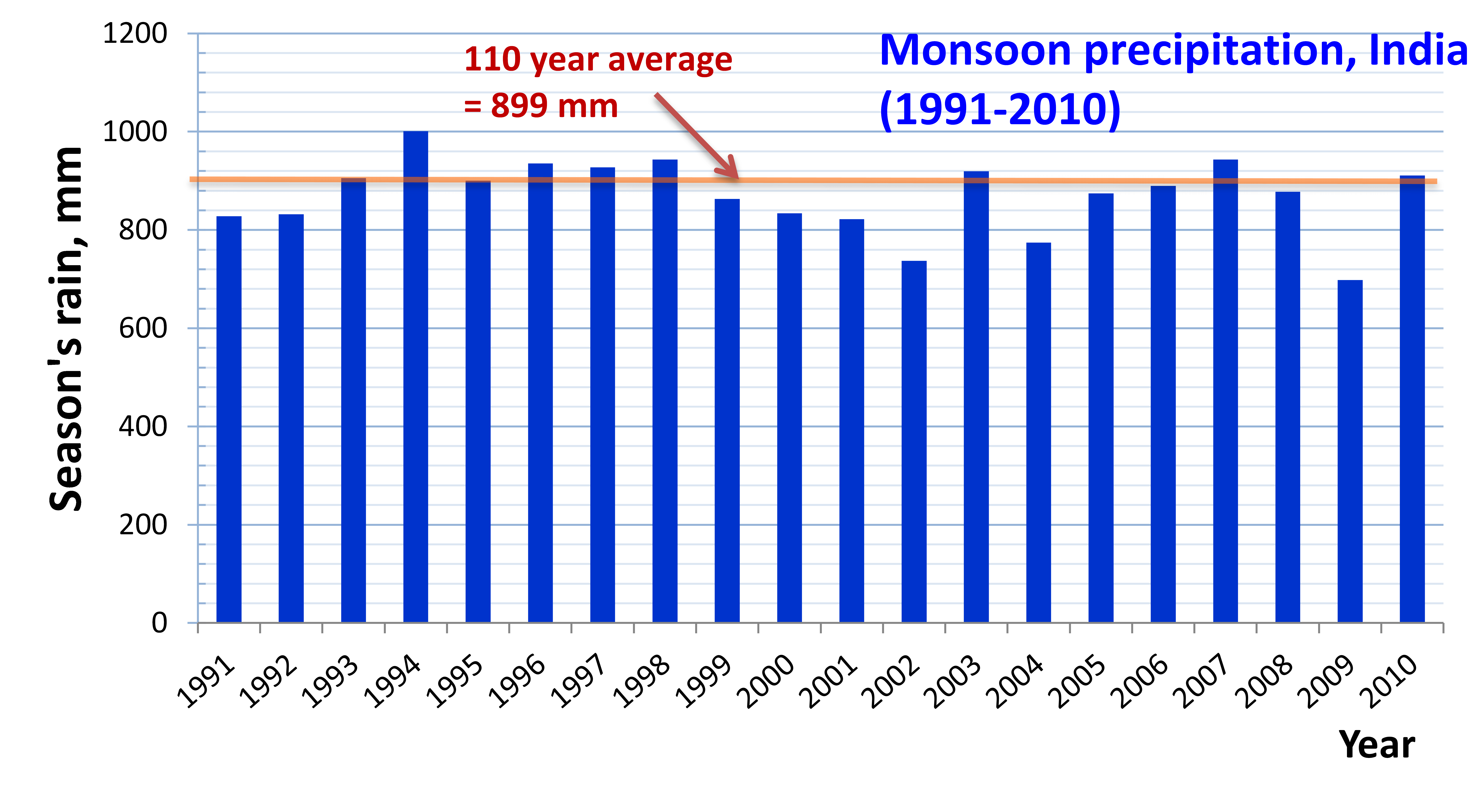
The India Meteorological Department, for its part, has reduced the entire phenomenon to a bureaucratic codification: if at least 60% of fourteen designated stations across Kerala log 2.5mm of rain or more on two consecutive days any time after May 10th, the monsoon is officially declared to have arrived. It’s helpful to have the framework, but there is some humour about that— a weather system vast enough to reverse entire global wind patterns, with origins millions of years ago, which impacts billions of human lives like it’s child’s play, is confirmed, in the end, by something that reads like a school attendance register.
And then the bureaucratic turns biblical almost overnight. Hills disappear into mist. Waterfalls that hadn’t run for months come back from apparent extinction. Backwaters darken under a sky that doesn’t really clear again for weeks.
Even putting this piece together has been difficult. There is so much to write about, like the dark, billowing clouds crowding the horizon, and there’s so much scatter, like raindrops in the wind. Still and all, one hopes that something gets across in all this.
Today, modern India mostly doesn’t stop for the monsoon. Flights operate, highways stay open, trains keep running, and we track storms on our phones and complain when they slow down the commute, same as anywhere else. And yet traces of the older relationship are still there if you go looking— a roadside stall crowded around a kettle of tea, the reappearance of roasted-corn vendors, a rain song drifting out of someone’s speaker, the smell of wet earth before the first real storm of the year, the instinctive pause mid-conversation to watch the clouds gather and the rains roll in...
Trace the country during these months and you’ll find almost every possible response to the same weather system happening at once: a coast legally pausing itself out of caution that looks remarkably like the old religious calendar wearing a fisheries permit; a mountain range turning into a frog chorus on one side and staying a bone-dry desert on the other; an island in Assam quietly losing and regaining its own shape; a hillside in Maharashtra simultaneously asking to be left alone and being chased by influencers with a phone in one hand; and somewhere in the Khasi Hills, a bridge that won’t be finished for another decade, growing very, very slowly toward the opposite bank… and so on and on and on…
For travellers, all of this adds up to a genuinely unusual proposition. Most journeys are built around movement—a list of places, a route, a pace to maintain—but the monsoon offers a different kind of itinerary, one measured in attention instead of distance. Watching a hillside turn greener between breakfast and dinner. Finally, understanding why a grandmother once refused to serve spinach in July. Noticing why the old pilgrims chose to wait rather than walk, why an entire coastline still legally pauses for the fish, why a community three thousand kilometres away decided the right response to too much water was to grow a bridge instead of build one. Reading a fifteen-hundred-year-old poem about a cloud and recognising the exact same bank of grey now crossing the windscreen. None of it requires going anywhere in particular. All of it rewards going somewhere with your eyes open.
The monsoon isn’t India’s most comfortable season, and it never really pretended to be. It might, though, be its most revealing one— about weather, sure, but also about ecology, memory, devotion, law, architecture, and the particular kind of travel that happens without moving a single step. The monsoon is a multitude, and there is so much left to say. Some things we just touched on, and others we haven’t even mentioned… so even the next month our Knewsletter will continue raining on your parade, but hopefully in the best way possible…
You can read the previous versions here:
No posts
Comments
Nothing yet. Say the first thing.
Sign in to join the conversation.