
I’ve always wanted to know how something came into being, one step further back than most people bother with, and yarn is no exception. I’ve never loved it in the “that’s so pretty” sense. What gets me is the different ways of making it. What’s actually different between worsted and woolen prep? Did the machines we use today require a particular kind of yarn that didn’t exist before the Industrial Revolution? Was the spinning wheel a step toward industrialisation, and did people just abandon spindles once it turned up? How did anyone work out how to spin in the first place? How old is spinning, even?
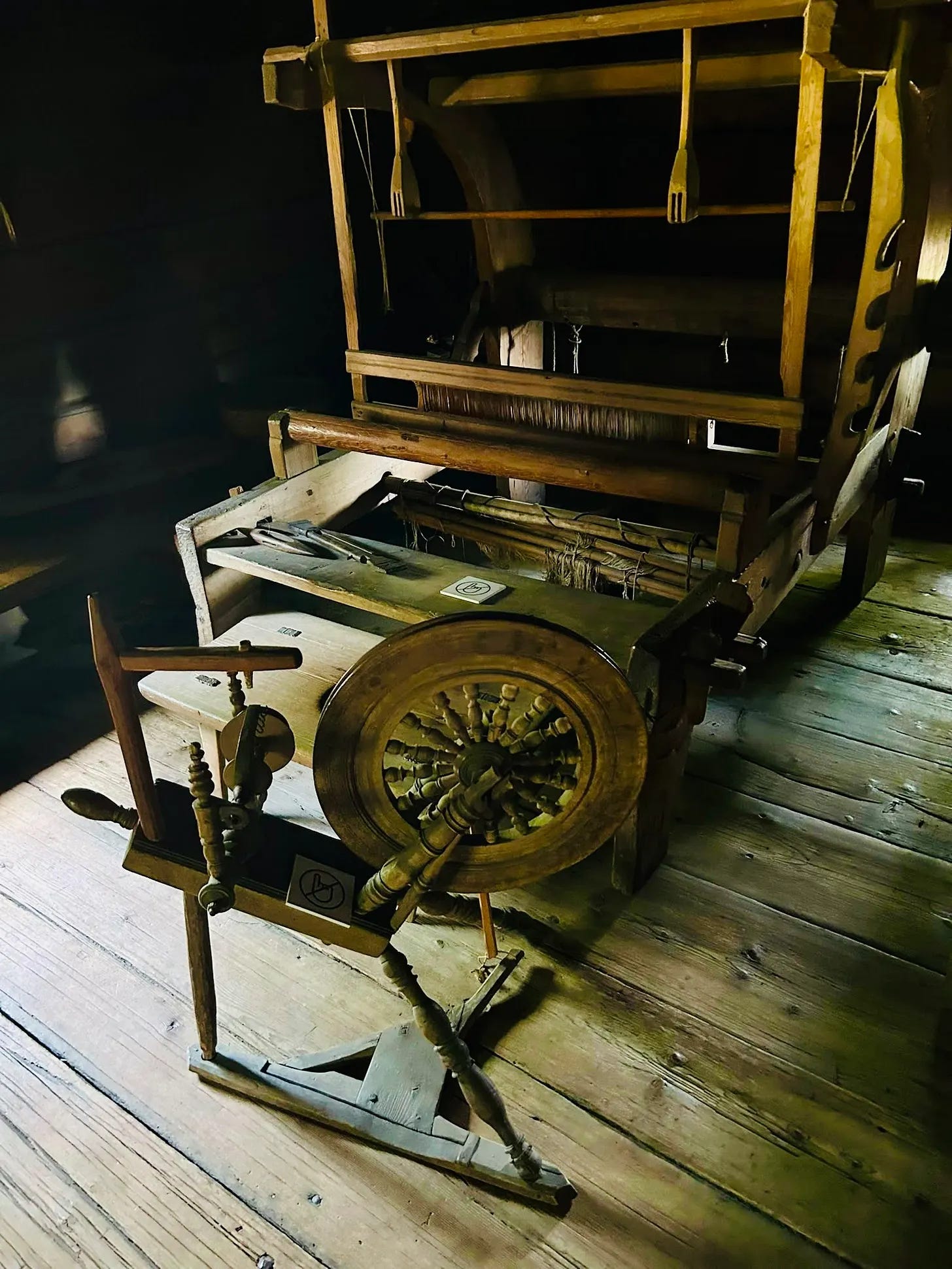
I think of this as my one-step-before habit, and it’s been with me a while. As a kid it meant sitting through documentaries about huge infrastructure projects, a new subway line being bored under a city in China, that kind of thing. They held my attention just long enough to leave me with more questions than answers. How was the tunnel boring machine built? Who thought of it first? What was the job like before machines like that existed? It must have worn out the adults around me at the time. A career in science keeps the habit fed these days, but nothing in my crafting has tested it so far quite like spinning.
With all of that circling in my head, and knitting itself, especially sweater and sock construction and the history behind them, already taking up most of my attention, I put spinning on a shelf and left it there. I had tried it before, picking up a beginner’s spindle kit a few years back with a small sampler of naturally coloured fibre. The learning curve felt enormous, and I gave up after a couple of tries.
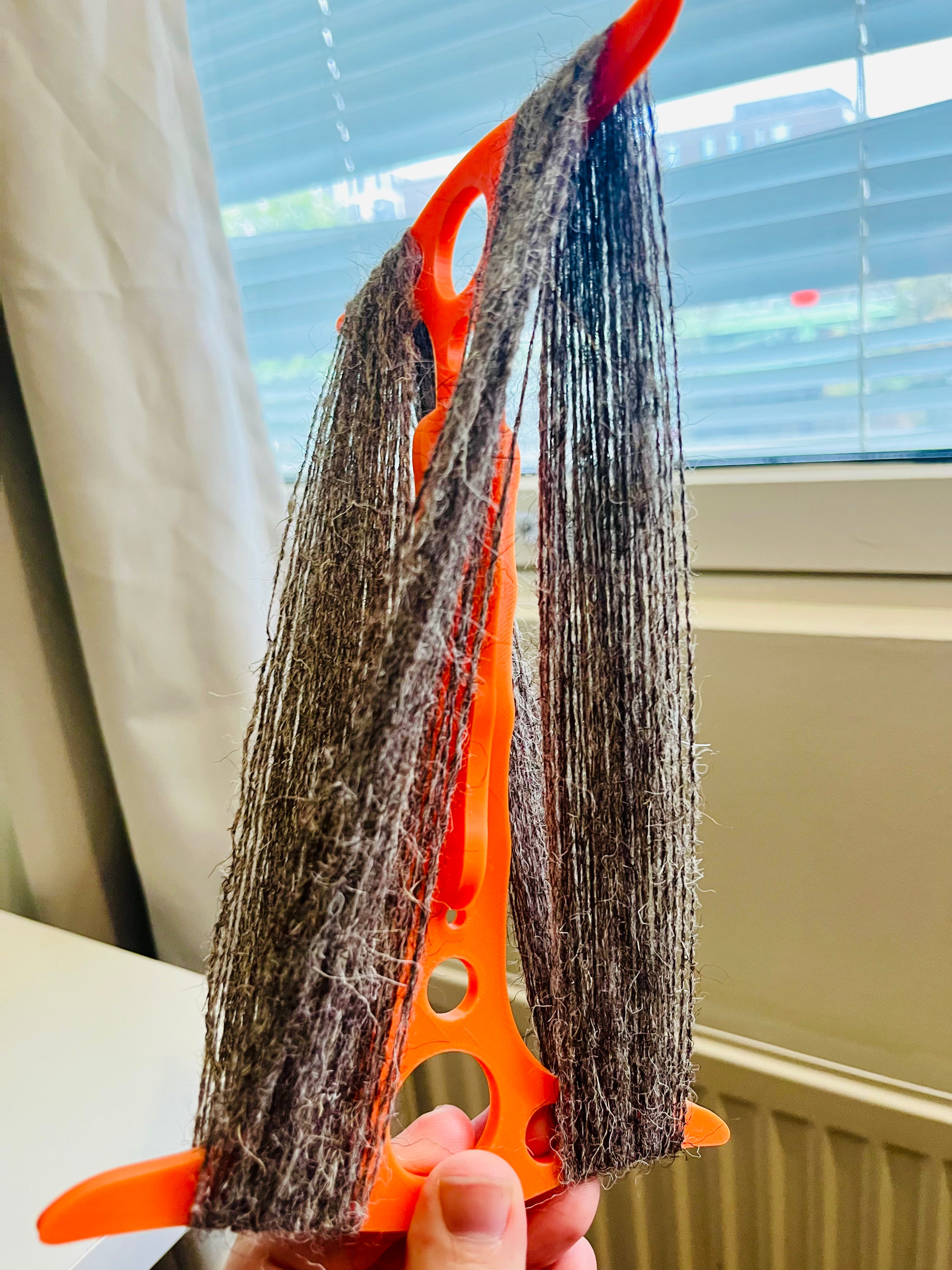
In the last spinning update I mentioned finally getting somewhere with a spindle again. The problem was the merino I’d started with: it kept slipping apart before I could get any twist into it. Swapping to a coarser Swaledale fixed that straight away. Since then it’s mostly been drafting practice, and working out what the word “drafting” even means took longer than I’d like to admit. It’s related to “draw”, as in pulling, which I’m sure I already knew, but the connection didn’t click for a while. There’s more than one way to do it, too, and plenty of beginner videos just say “draft your fibre” without explaining the motion involved, and the ones that do go into it often stop short of saying whether it’s a short forward draw or a long backward one. I’d get different advice each time I searched for help troubleshooting, which left me thoroughly confused. None of that is a knock on the people making these resources: it’s just part of learning something new. It feels impossible at first, and it’s hard to tell what you’re doing wrong from what you’re doing right.
Comments
Nothing yet. Say the first thing.
Sign in to join the conversation.