
This week: Jo, Andy and Emily are back together to pick up the thread from last week’s creator movie conversation. The Amazing Digital Circus opened for what was meant to be a four-day cinema run and has now extended to at least 18 June. It’s doing box office numbers, spawning cosplay screenings and foreshadowing a shift in who holds the leverage in IP deals.
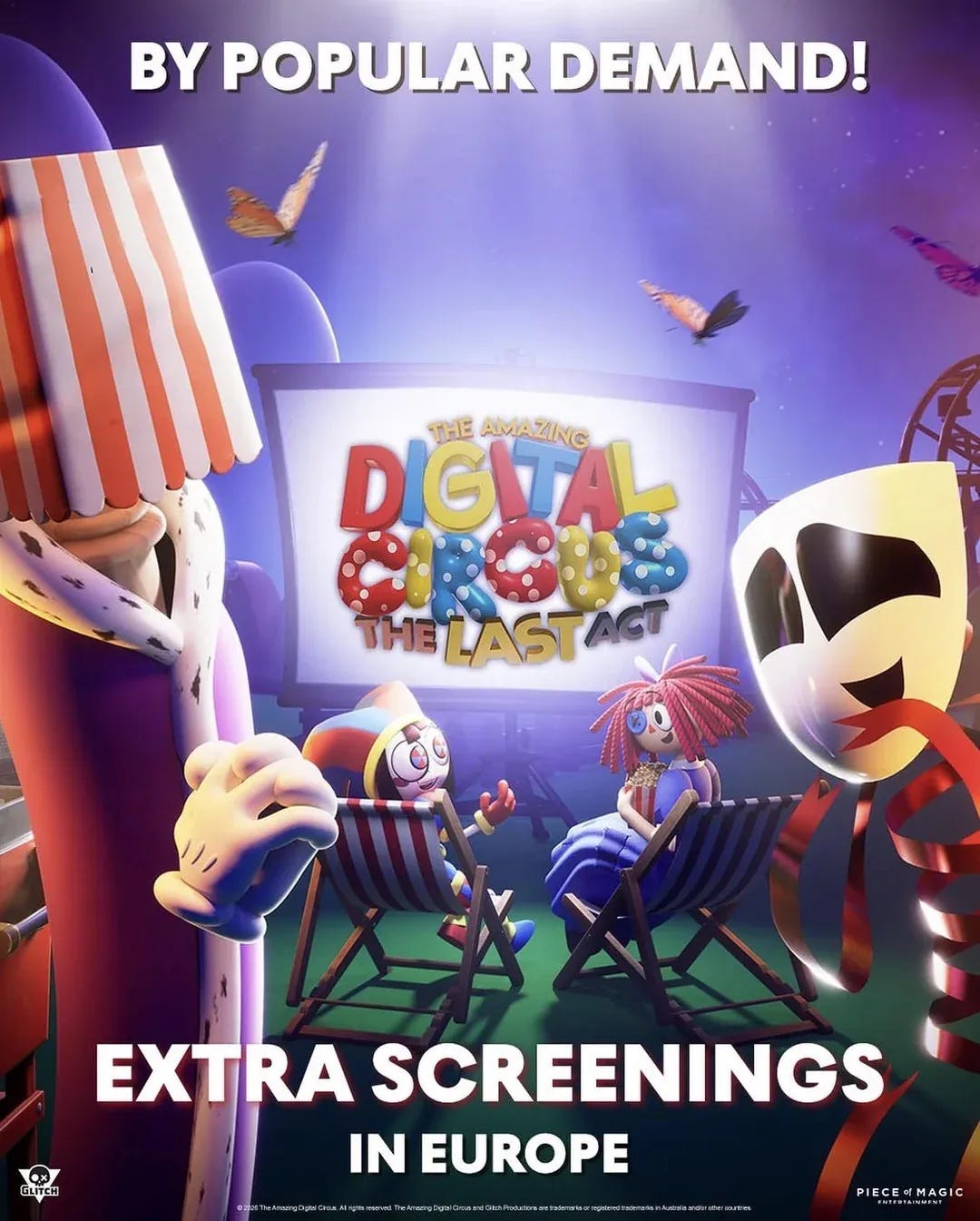
Andy noted the release has outgrossed every independent animated movie within its initial window, but behind the box office headlines is the fact that creators who own their IP are increasingly able to walk into broadcaster and studio meetings from a position of security rather than permission, and the rights conversations starting to take shape may be the biggest shift in how kids and family entertainment deals have been made in a long time.
Emily put the box office figures alongside another recent data point, The Amazing Digital Circus has pulled $36 million as of 11 June and K-Pop Demon Hunters’ sing-along cinema release brought in around $18 million, and during the same window Netflix saw an uplift in streaming viewership for the original film. The takeaway being that cinema and streaming are no longer competing for the same audience moment. With the right IP and the right fandom, both windows are additive. TADC may feasibly still be in theatres at the same time as it is on Netflix AND on YouTube.
The communal experience matters. Jo made the point that there is a limit to how many friends you fit around a phone or TV screen, but the cinema is built for shared moments. Cosplay screenings, group outings, the social obligation to see the film before your friends ruin the references at college. None of those experiences work quite as well with streaming.
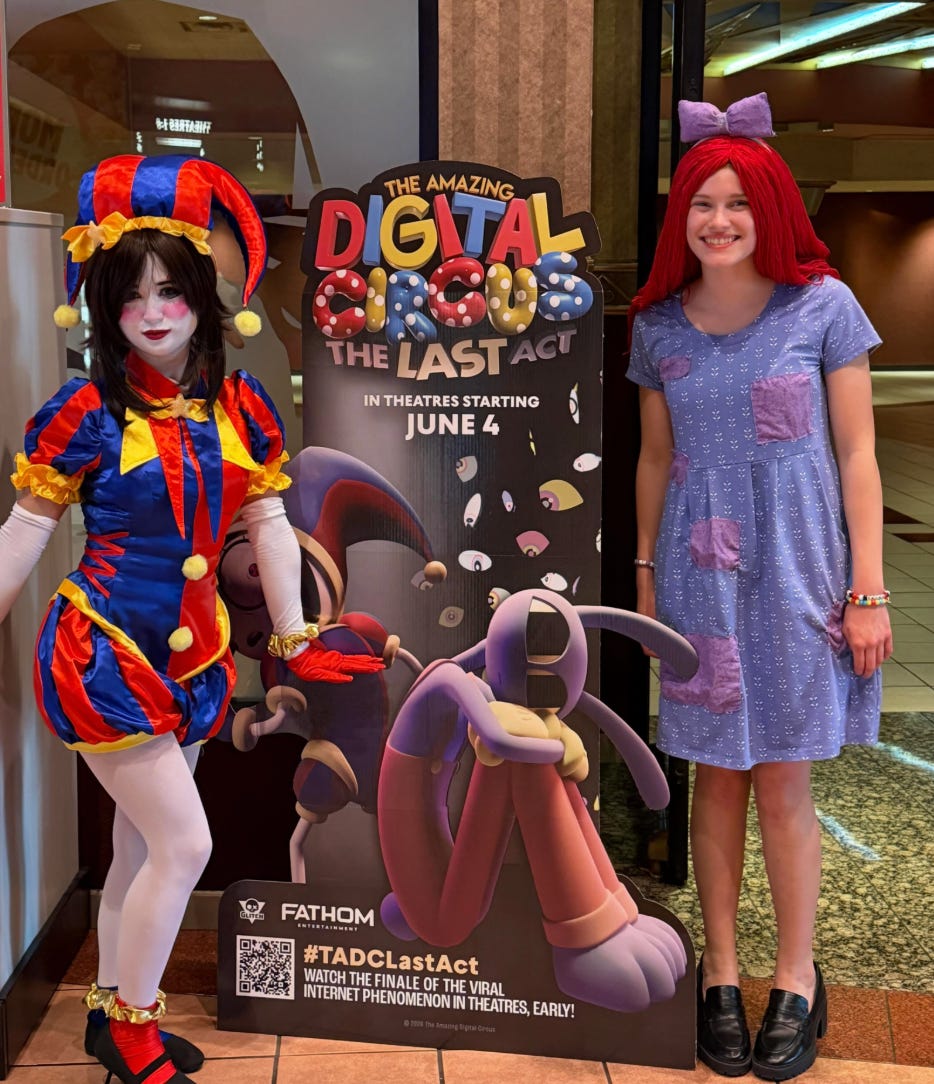
Audiences watch films multiple times across formats. They go to the cinema to dress up and share. They re-watch at home. They introduce the show to their parents to explain the meme. Each format scratches a different itch and the windows can stack rather than cannibalise. Netflix’s resistance to theatrical has historically been ideological, but in this case Netflix does not own the rights to TADC. Whatever Netflix’s preference, the cinema run continues for as long as audiences keep buying tickets.
Insight came from Emily on the difference between the creator economy and the producer economy. Creators build their audience and their content from the ground up, often around something they are so intensely passionate about they would be doing the work anyway. When a creator walks into a traditional media meeting, the dynamic flips. They are not asking for money or permission to create. They have something already firing on its own.
Producers, by contrast, have been conditioned by a system where the broadcaster or platform was the gatekeeper. To get the show made, you said yes to the deal in front of you. Digital rights, ancillary rights, format rights, signed away to satisfy the green-light process. Andy added a nuance about the hangover from the old system into the new one. Formerly Producers knew how to make shows and movies, they didn’t know how to cultivate fandom and own their audience community. Creators do, but the terms they are being offered may not reflect where the value now sits. No one is winning when YouTube rights get locked away inside broadcast deals, yet producers signed them away for years because the show needs to get made. Creators who own their IP do not face the same pressure and frankly, don’t abide by those economics.
Jo flagged another trend. A couple of years ago, chains like AMC and Cineworld faced existential questions coming out of Covid. Theatrical windows were shrinking and slate output was derisking. Now those same chains are looking at a new category of supplier. Creator-made films are booking cinemas directly, much like a theatre company books venues for a stage production. The studios and cinema chains are no longer the main players. Creators with their IP are booking the theatres, collaborating with smaller distribution partners on a more equal basis and filling the seats with their existing fanbase.
Andy drew out the theatre comparison. A venue is not a gatekeeper in the way a broadcaster has been. You raise the capital, you book the room, you put the show on. Creator-cinema operates on a similar structure. For chains long dependent on a small number of studios with most of the negotiating power, the diversification of supply matters and presents a big opportunity.
BTW, if you didn’t catch last week’s episode, you can read the summary here:
As creator IP grows in commercial value, the question of how to structure deals becomes urgent. Jo pointed to lawyers like Simon Pulman, who has been doing option deals for Roblox experiences, and Adam Starr at Do Big Studios, a lawyer who came over from traditional media law to a Roblox studio. The bench of professionals helping creators understand and protect what they have built is growing. Her view: within 12 months, the stories of creators being done over in deals will become less common. The professional infrastructure around creator IP is catching up.
Emily added we are now into the fourth wave of creators, where production sophistication and business literacy sit alongside creative talent. These are operators doing deals on their own production, premises and partnerships. The back-bedroom YouTuber image no longer reflects where the leading creators sit.
There may be a fly in the ointment however. So much of creator film success depends on social media as a marketing and community engine. Comments, shares, remixes, fan animations, the cumulative investment of fandom is what eventually converts into a cinema ticket. Restrict that mobilisation with under-16 social media bans and the creator-cinema flywheel slows.
Jo pointed out kids media has been living with this dynamic for years thanks to platform regulation around minors. A wider under-16 ban would hit older creator-led IP like The Amazing Digital Circus, where younger audiences sit alongside the core teen demographic. Whether the bans land in their proposed form or evolve as they roll out, the impact on creator film economics is worth tracking.
Emily summed up the moment: the waiter has tripped and the tray is in the air. Where the contents land will shape the next phase of the open internet. Not blanket prohibition, not the current free-for-all, but something still being written. Andy noted Kane Parsons, the Backrooms creator, taught himself Blender at 15 and kicked off the Backrooms lore. Cut off that path and you risk cutting off the next generation of creator IP at the root.
Questions to ponder this episode were whether we’ll see The Amazing Digital Circus extend again as the YouTube and Netflix releases land. Will we also see cinema chains start to actively court creator-made films as a category? And alongside that, do we expect the rights conversations between creators, studios and platforms to get sharper, faster? Those lawyers are going to be busy. Studios and platforms treating the creator conversation as a green-light process may find themselves on the receiving end of pushback, and that’s where the negotiations begin!
DID YOU KNOW that you can sponsor the Kids Media Club podcast and newsletter? Got a message to land with the industry? We can help get it to the right people at the right time.
Don’t forget to listen to the full Kids Media Club podcast episode for deeper insights into The Amazing Digital Circus, the creator-cinema flywheel and what these shifts mean for IP and rights deals in 2026.
You can also follow us via LinkedIn - search for Jo Redfern, Andy Williams or Emily Horgan. See you next week!
No posts
Comments
Nothing yet. Say the first thing.
Sign in to join the conversation.