
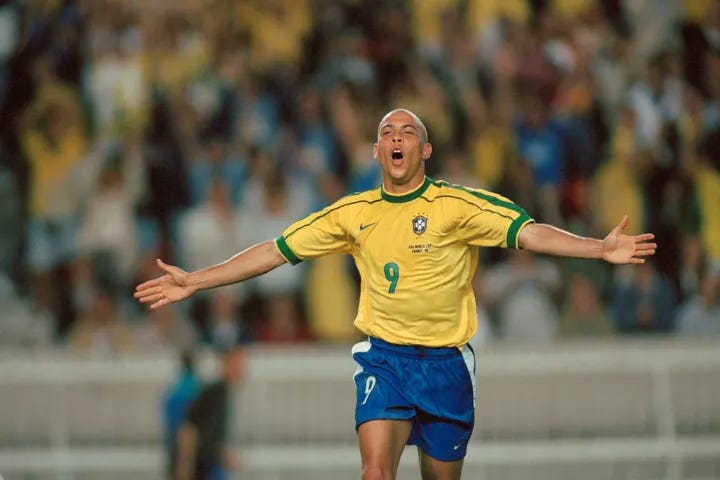
There are players who dominate football, and there are players who bend it.
Ronaldo Luís Nazário de Lima aka ‘Ronaldo’ aka ‘O Fenômeno’ aka ‘R9’ didn’t just play the game, he redefined what was physically possible within it.
Before Ronaldo, speed and technique were often separate qualities, but after Ronaldo, they became inseparable.
To follow his career through his shirts is to trace something rare in football history; not just greatness, but transformation and redemption; because every shirt Ronaldo wore seemed to capture a different version of him:
The prodig, the phenomenon, the survivor and the myth.
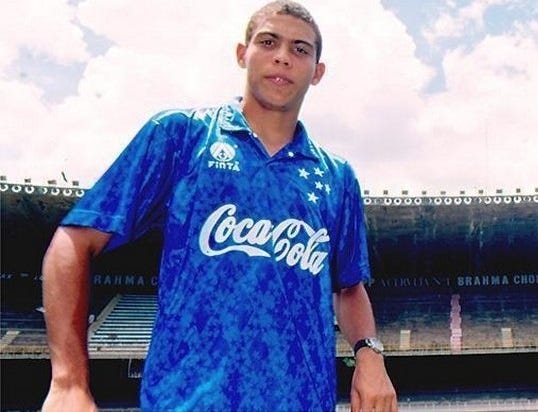
At Cruzeiro, Ronaldo was something football had never seen before; a teenager moving with the explosiveness of a sprinter and the control of a seasoned professional.
Brazil had produced great forwards before, but this time it felt different. There was a kind of violence in his acceleration. A sense that defenders were not simply being beaten, but left behind entirely.
The Cruzeiro shirt didn’t carry expectation yet, only possibility.
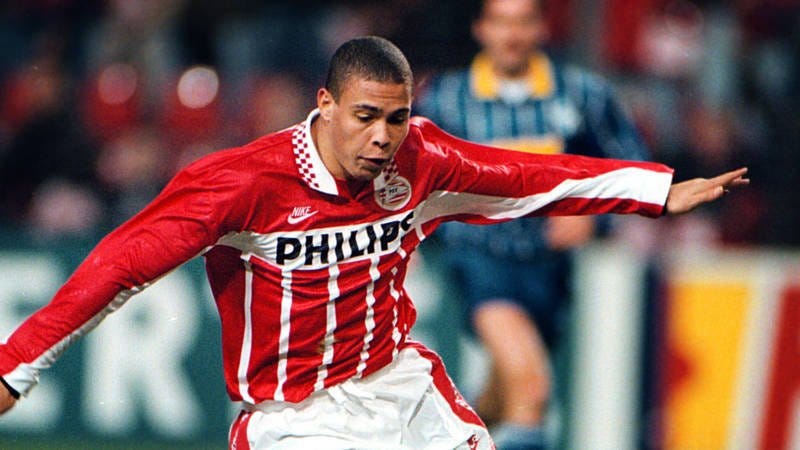
After his success at Cruzeiro, the move to PSV Eindhoven was where raw talent evolved into the birth of a legend.
For Ronaldo, European football imposed new demands; discipline, positioning, and efficiency to name a few, but Ronaldo didn’t lose his natural instinct, he refined it.
Goals came relentlessly and defenders were still overwhelmed, but now with greater consistency.
The PSV shirt represents Ronaldo as a prototype, where the world started to understand what he might become.
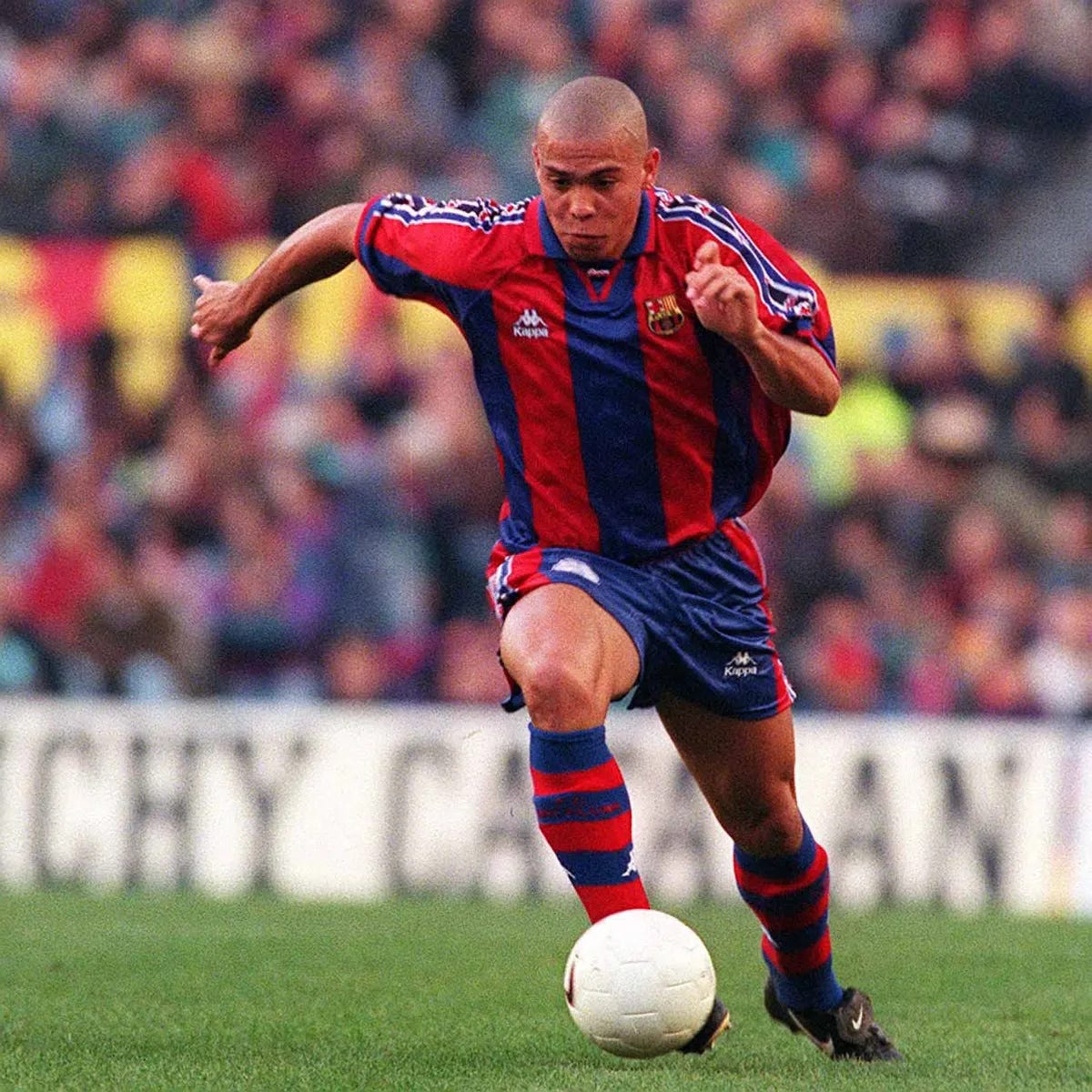
At Barcelona, Ronaldo reached something close to perfection.
The 1996–97 season remains one of the most complete individual campaigns in football history with 47 goals, but even so, statistics don’t fully capture it. This was Ronaldo at his most unstoppable.
The famous goal against Compostela on 11 October 1996 still feels unreal; the balance, the strength, the speed, and the control was out of this world. It looked less like football and more like inevitability.
Defenders didn’t fail, they simply couldn’t cope with him. The Barcelona shirt captured Ronaldo at his purest, before injury, before doubt and before limitation, just pure force.
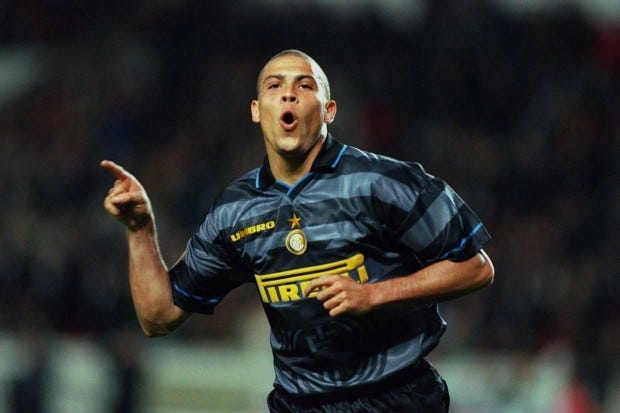
Ronaldo’s move to Inter Milan should have been the beginning of an era of sustained dominance, but instead, it became something more complicated. Serie A was the most demanding league in the world; it was tactical, physical, and unforgiving.
Initially, Ronaldo adapted; he won the Ballon d’Or and led Inter to European success in the 1998 UEFA Cup Final against Lazio, with an iconic goal and man-of-the-match performance.
However, then came the injuries; the knee, the ruptures, and the long absences. Football had seen brilliance before, but it had rarely seen brilliance interrupted so abruptly.
The Inter shirt carries a dual meaning: it represents Ronaldo at his most powerful, but also at his most vulnerable.
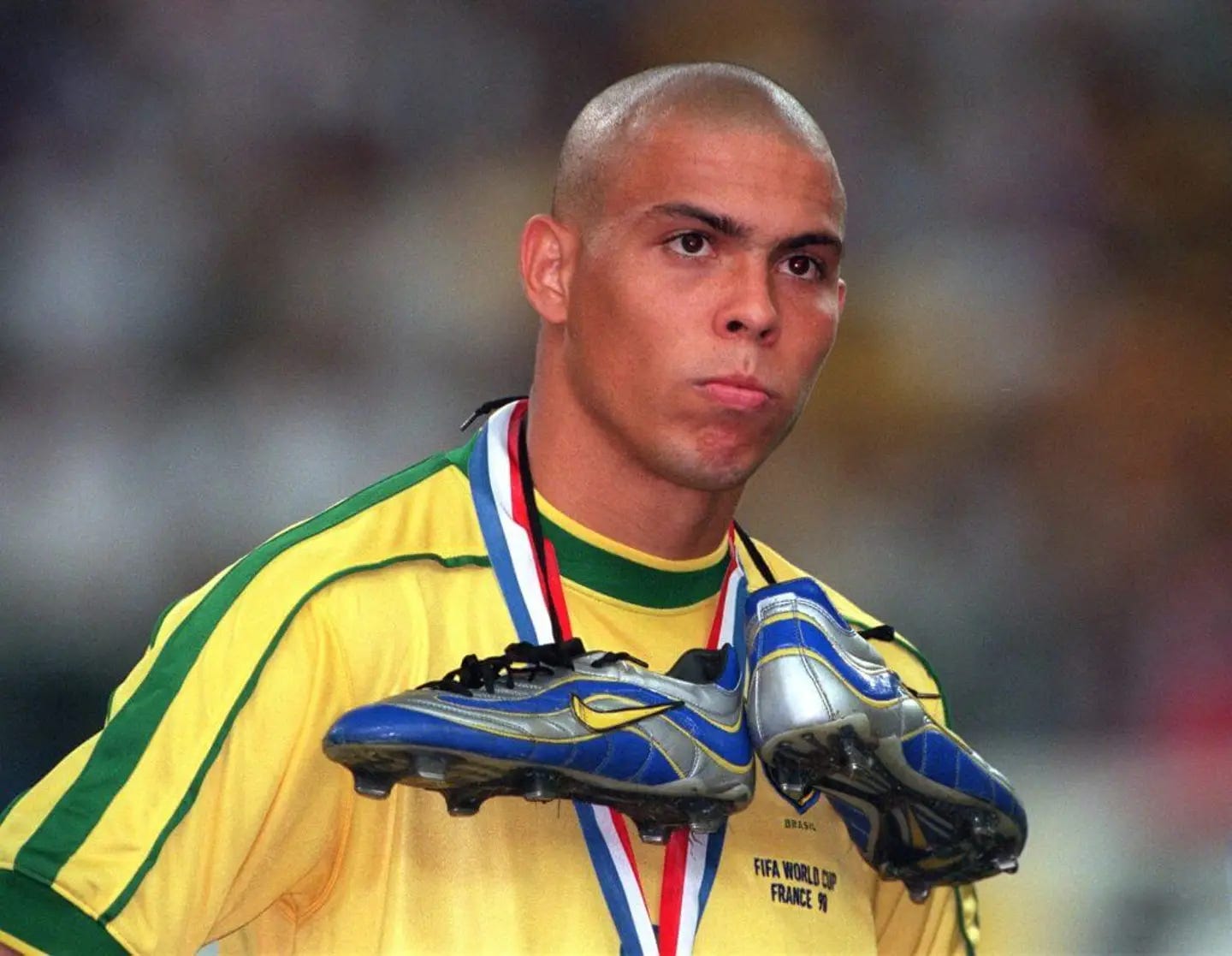
International football amplified everything.
The 1998 World Cup final remains one of football’s strangest moments; where Ronaldo, the best player in the world at the time, was reduced to a shadow of himself.
Brazil lost, the narrative fractured and questions replaced certainty. However, despite the heartbreak of 1998, football remembers the 2002 World Cup in Japan & South Korea more clearly.
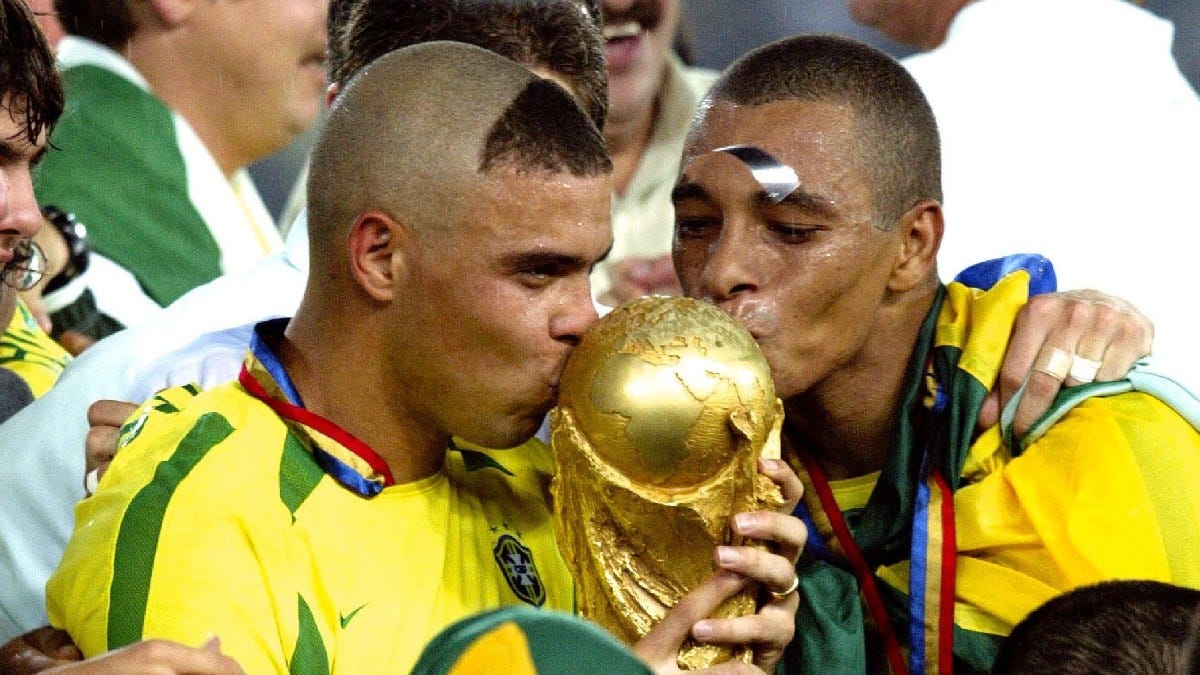
Ronaldo returned; different physically, slightly diminished in pace, but sharper and more precise. During the tournament he produced eight goals (with two in the final), an iconic haircut, and hope for an entire nation.
The Brazil shirt in 2002 represents something rare in sport; redemption. Not through dominance, but through resilience.
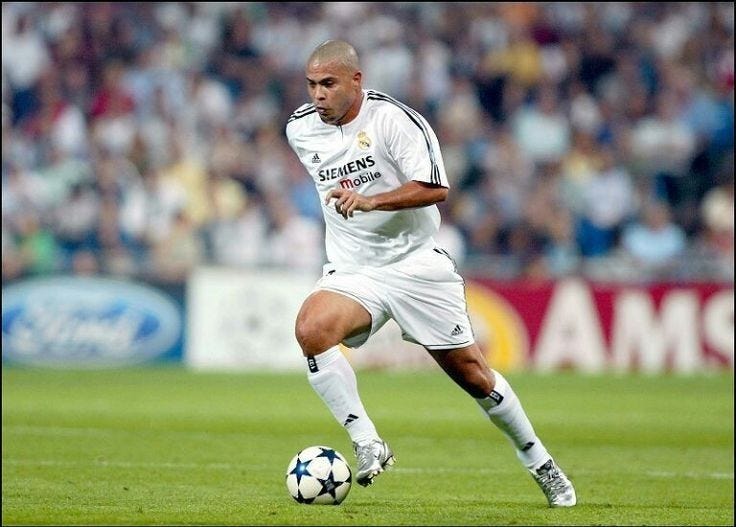
At Real Madrid, Ronaldo became part of something larger; the Galácticos era.
Stars were assembled as a spectacle, and in that context, Ronaldo’s role shifted; he was no longer the entire system, he was the finisher. The goals continued, the quality remained, but something had changed.
The explosive dribbles became rarer, the game simplified, and he became more efficient. Less chaotic, and more clinical.
The shirt reflects Ronaldo adapting to time; something no one can beat.
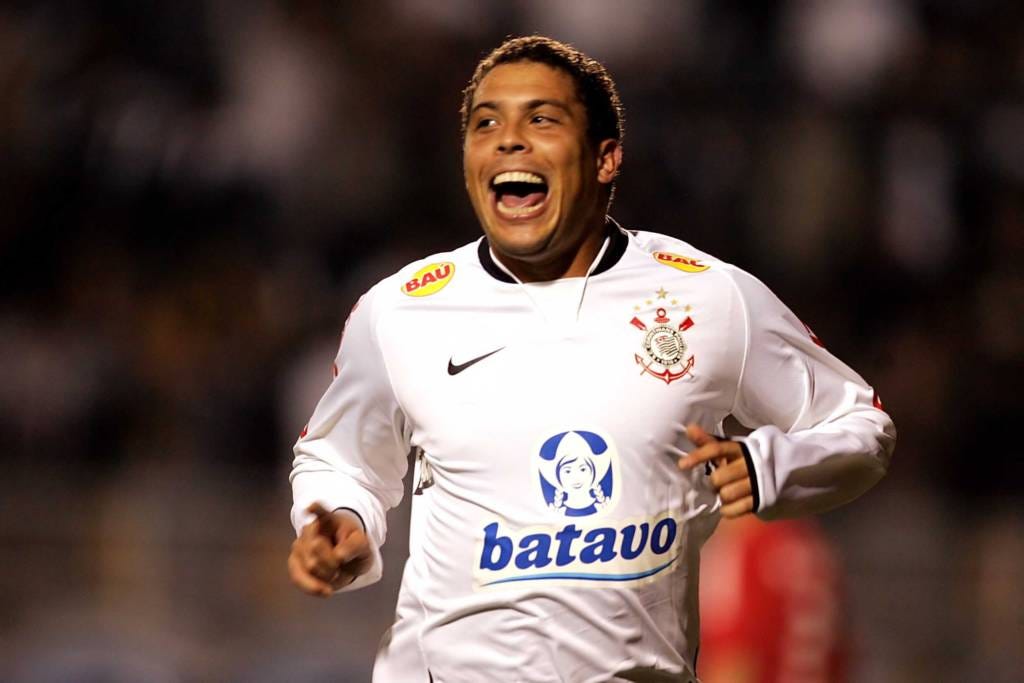
At AC Milan and later Corinthians, Ronaldo was no longer the phenomenon.
The injuries had taken their toll, his body had changed, but his intelligence remained, and the finishing instinct never disappeared.
These shirts don’t represent peak performance, they represent something else; acceptance.
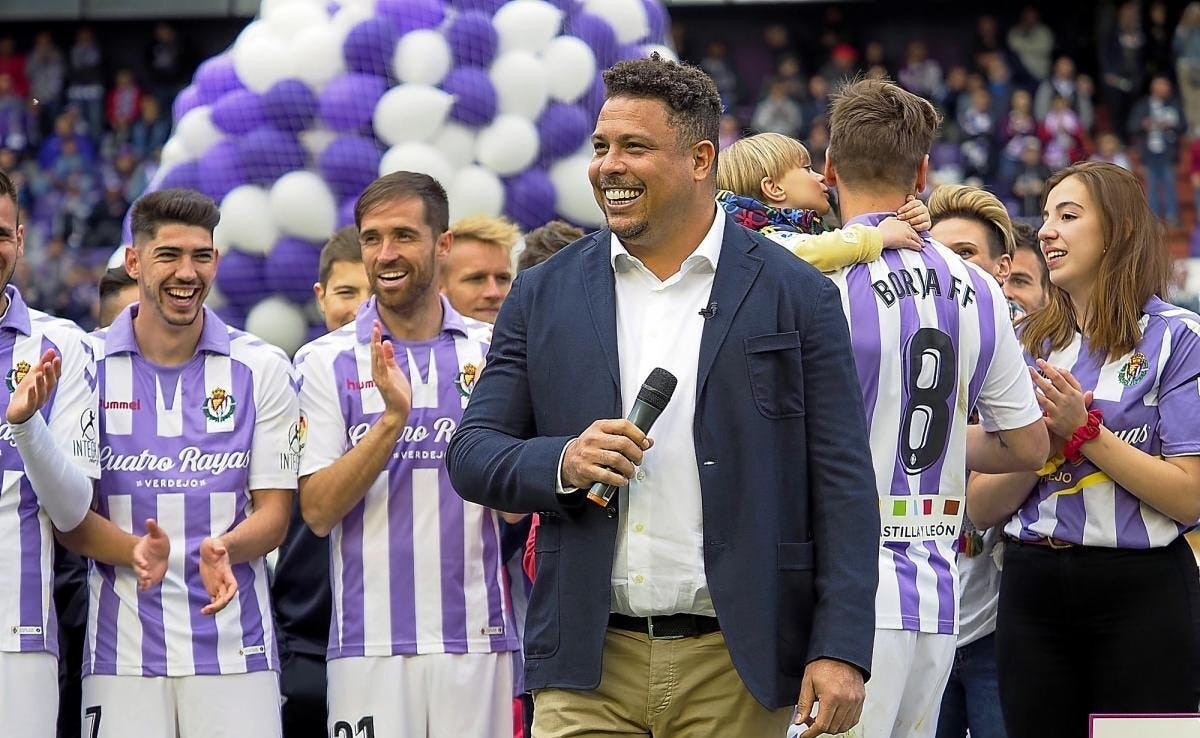
When Ronaldo stepped away from playing, he didn’t step away from football. Instead, he moved into a different role within the game’s structure. In 2018, he became majority owner of Real Valladolid, a club far removed from the glamour of his playing days, for seven years before selling his stake in 2025.
It was an interesting shift, from a phenomenon to being part of an institution. From instinct to infrastructure. Ownership demands patience, strategy and long-term thinking; the opposite of how Ronaldo played.
Yet, Ronaldo’s influence remains rooted in something much simpler; what he left behind, because Ronaldo’s true legacy isn’t measured in ownership or administration, it’s measured in imitation, as he changed what a striker could be. Before Ronaldo, forwards were often specialists, but after Ronaldo, they were expected to be complete.
He could run past defenders., he could dribble through them, he could finish with either foot, and he could create and complete the same move. That prototype reshaped the position and you can see it in modern forwards everywhere.
In Brazil, you feel it most clearly; players like Neymar carry elements of Ronaldo’s legacy. Not as replicas, but as descendants, with the confidence, improvisation, and belief that football should be expressive as well as effective.
Ronaldo didn’t just influence players, he expanded what they believed was possible.
Ronaldo was called “O Fenômeno” for a reason; he was not simply great, he was different.
A player who combined qualities that shouldn’t have coexisted:
Speed. Power. Technique. Composure.
Each shirt he wore captured a different version of that phenomenon. From explosive emergence, to refined dominance, to resilient reinvention, and finally, to something more enduring.
Influence.
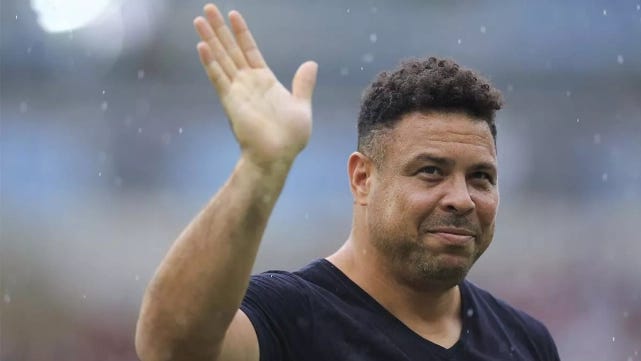
Modern football has produced many great forwards, but very few have redefined the position like Ronaldo; he reshaped movement, he redefined finishing, and he expanded expectation.
The shirts remain as markers of that evolution. Not just of a career, but of football itself, and those of us lucky enough to have watched him in his prime should never forget his influence.
Until next time
THE KIT ROOM
Which version of Ronaldo do you remember most, the unstoppable Barcelona phenomenon or the resilient Brazil 2002 finisher, or another?
Comments
Nothing yet. Say the first thing.
Sign in to join the conversation.