
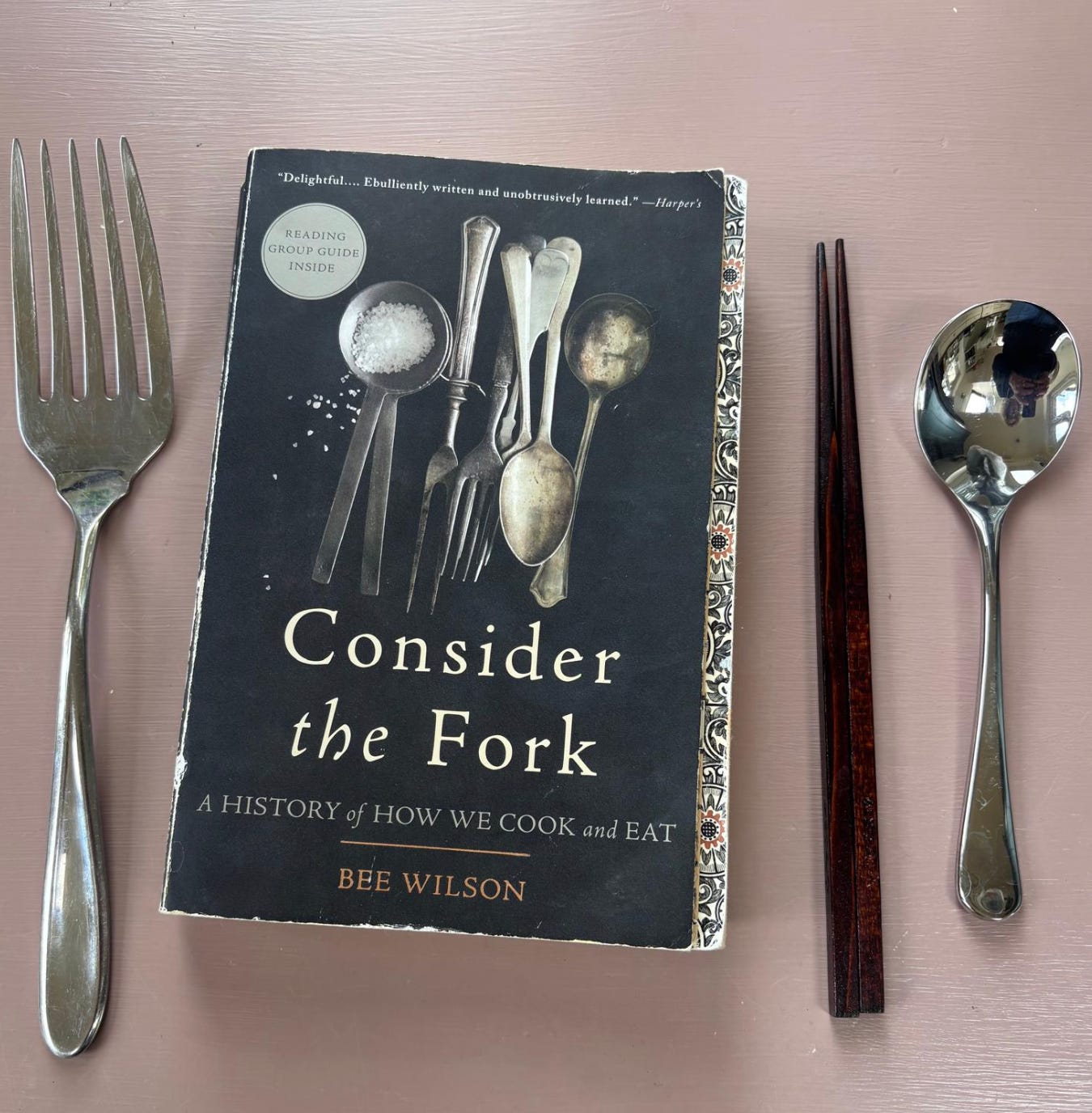
Hello and welcome to all subscribers, free and paid. If you haven’t subscribed yet but would like to (and thank you), here’s a link. This post is free to everyone.
People who eat with forks have often felt and acted superior to those who eat with their hands. And yet the testimony of those who eat all their meals with fingers suggests that forks are actually neither cleaner nor more efficient or polite . As I wrote in my book CONSIDER THE FORK, ‘Lack of cutlery does not signal lack of manners. Among people who consistently eat with fingers, performing elaborate ablutions becomes part of the rhythm of the meal’.
There’s a story about the clash of fork eaters and hand eaters that I wish I’d had room to include in the book. It involved Winston Churchill eating at a dinner in India alongside Dr S. Radhakrishnan who would go on to become India’s second President. Churchill used spoons and forks to eat his food whereas Radhakrishnan used his hands. Churchill commented that cutlery was more hygienic, to which Radhakrishnan replied “Since nobody can use my hand to eat, my hand is more hygienic than any spoon or fork you use.”
The other day, I told this story as part of this episode of the BBC Radio 4 Food programme presented by Jimi Famurewa and produced by Ishmael Soriano, now available as a podcast. The programme explored different ways of eating, from the traditions of hand eating in Nigeria to the chopsticks of China to the insane proliferation of cutlery in Victorian England (when there were even special ‘moustache spoons’ to help gentlemen with moustaches eat their soup in a more dignified manner). It was such a joy to be a part of the programme, which also featured this exhibition at the Goldsmith’s Centre (now finished) plus Nigerian writer Ify Adenuga who talked about the way that when she were growing up, her father, a civil servant, would say to her ‘One day, we will eat with a knife and a fork’ - a legacy of him having absorbed some of the colonial values of ‘how the Englishman eats’. She remembers being so frightened of eating with a fork and knife and getting it wrong.
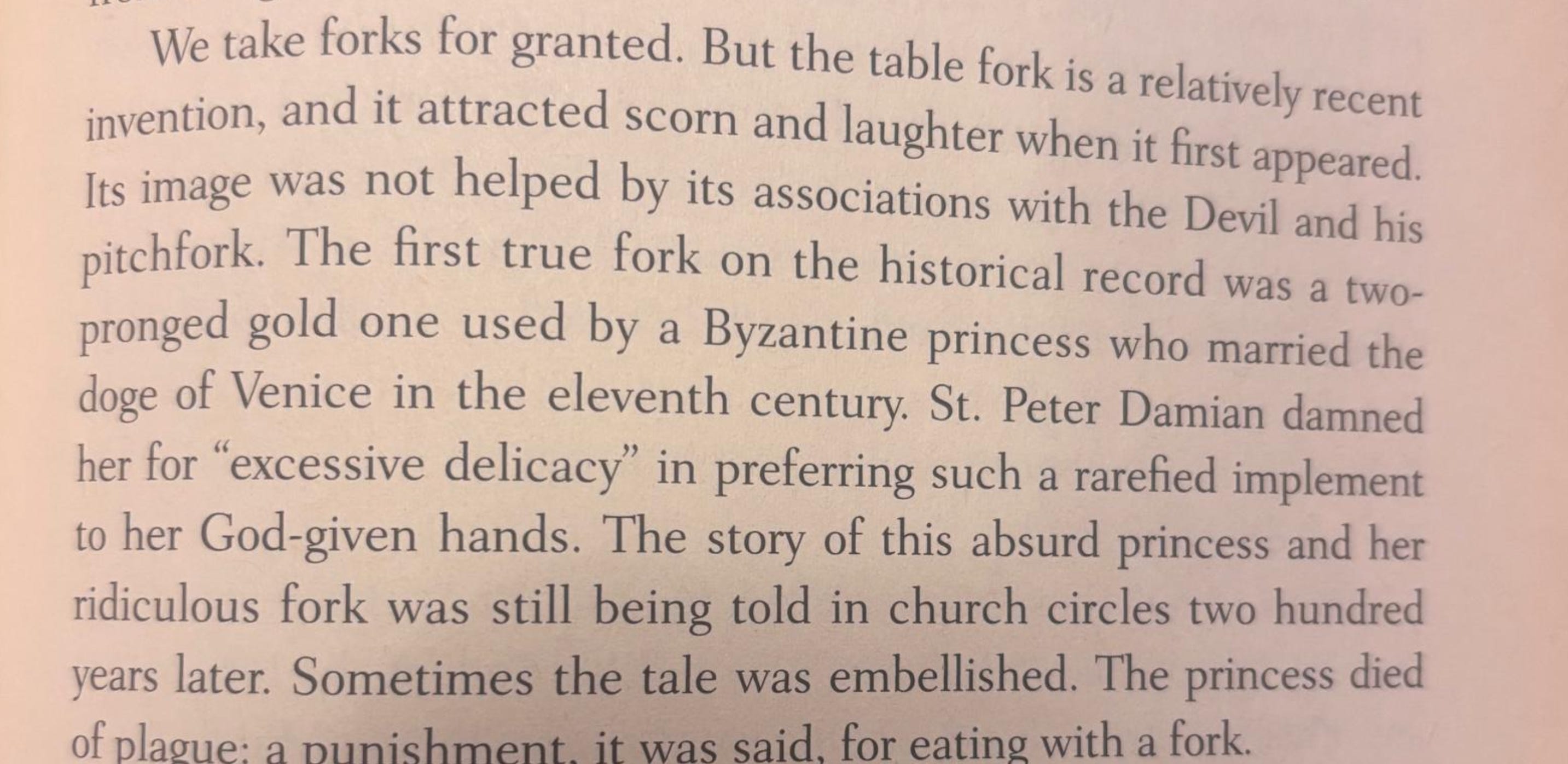
Yet for hundreds of years, white Englishmen were hand eaters too, along with almost everyone else in the world (except for the chopstick eaters of Asia - a tradition which emerged hundreds of years before Western forks). Jimi asked me about some of the extraordinary ins and outs of cutlery over the centuries, something I wrote about more than a decade ago in my book CONSIDER THE FORK (with so many thanks to those of you who tell me you continue to read it or listen to the audio). One of the stories I told was of the Byzantine princesses who were condemned as ridiculous and even irreligious for eating with golden forksinstead of using her God-given hands. Here’s the section of CONSIDER THE FORK where I discuss it.
You might think that cutlery was a dull subject, or at least a trivial one. I even felt this myself a little bit before I wrote my book. But the more I got into the subject, the more I saw that the question of how we eat ( as much as what we eat) gets to the heart of human culture, values, the class system, technology and more.
Talking with Jimi on the programme, the main thing I was reminded of was how bizarre it is that whatever implements you use to eat with - from hands to forks to chopsticks - you may well find the habits of people who do things differently a bit weird. And yet these cutlery habits are never fixed or essential. Jimi is British-Nigerian and familiar with the Nigerian traditions of eating with hands yet as he explained on the programme, he actually feels more at home eating Nigerian stews and soups with a fork and spoon.
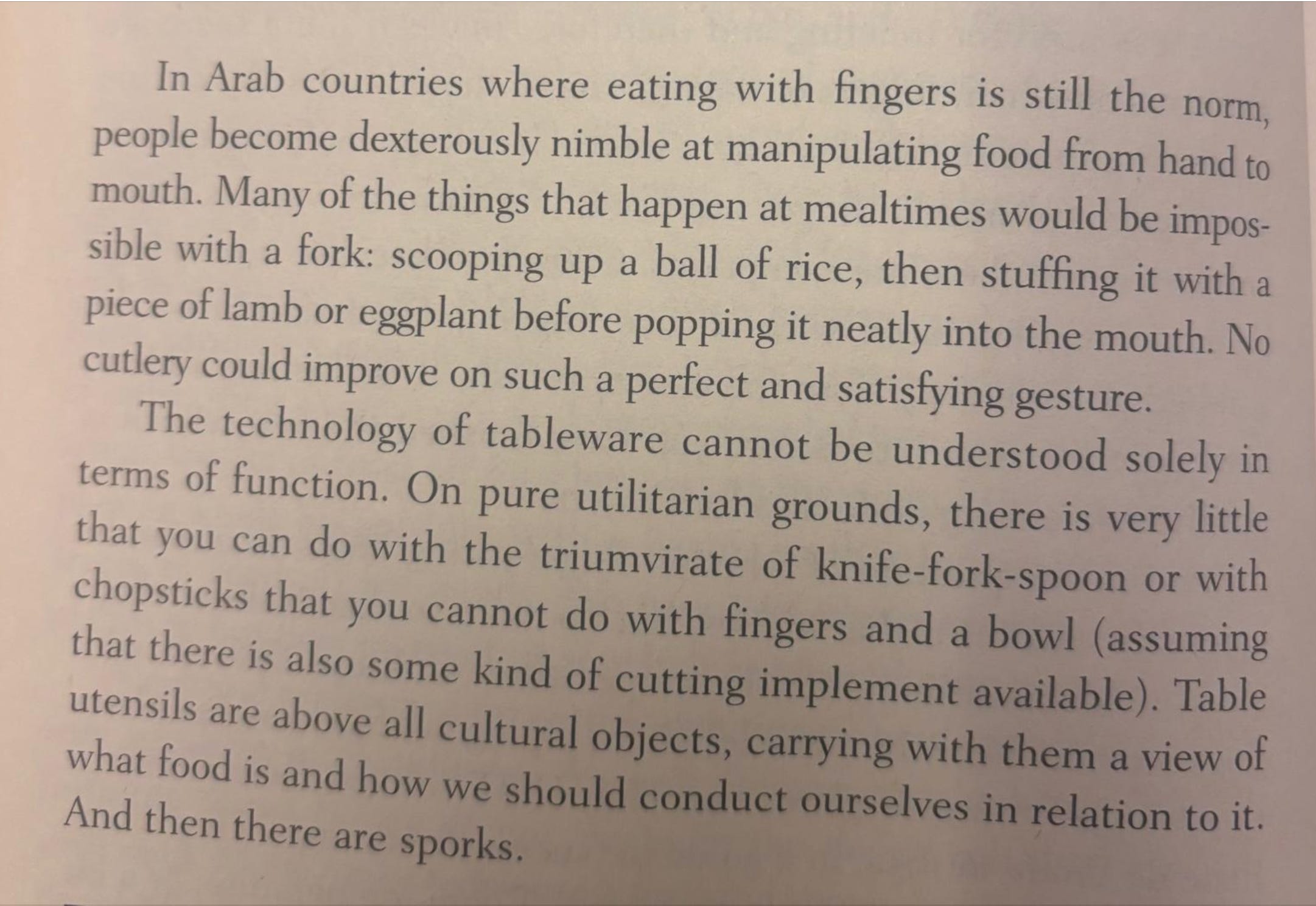
And yet the Western fork, which is now so normal to us was once seen by many as silly and strange. Why would anyone want to put metal spikes into their mouths along with the food? As Margaret Visser has observed, ‘To people who eat with their fingers, hands seem cleaner, warmer, more agiler than cutlery. Hands are silent, sensitive to texture and temperature and graceful - provided, of course, that they have been properly trained’.
Here’s another little section from the book.
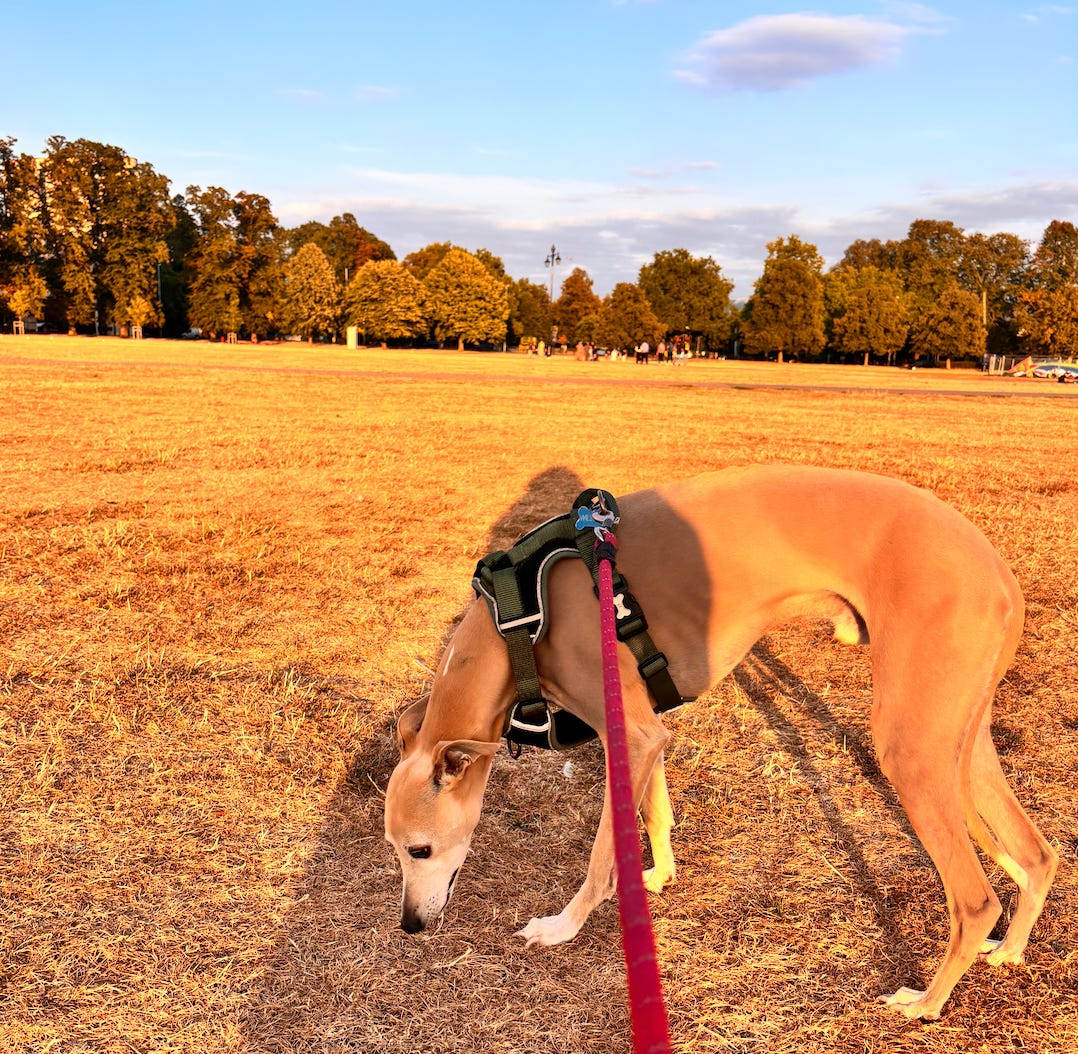
P.S. On the subject of food podcasts, here are some other episodes I’ve loved recently on my dog walks through this parched summer walking on grass as dry as yellow carpet. Some of the episodes are from this year but some were much older.
Diana Henry and Yemisi Aribisala on Nigerian Cuisine. This one, from eight years ago, makes a perfect companion to the BBC Food Programme on cutlery. I could listen to Diana and Yemisi all day and indeed wish that someone would give them their own show. They both have gorgeous voices and are so wise, funny and knowledgable about food and culture. They discuss eating soup with and without spoons, food superstitions, the Nigerian love of ‘mucilage’ and why Yemisi would never eat the food of someone who didn’t like her, because of the idea that someone’s character can transmit itself to the food. ‘I just wouldn’t bother’, she said.
This is another one from ages ago but my word, what a joy for anyone who cooks. Samin Nosrat on Milk Street Radio in conversation with Christopher Kimball from around the time that SALT FAT ACID HEAT first came out. Top Samin quotes include ‘Salt and pepper should get a divorce’ and ‘Americans prefer the taste of rancid olive oil!’
Tamar Adler on leftovers plus Hetty Lui McKinnon on vegetarian summer cooking on The Splendid Table. I could actually listen to any episode of The Splendid Table multiple times just for the calm comfort of Francis Lam’s voice and sensibility. I adore the moments when he says ‘right on!’ I particularly loved his conversation here with Tamar Adler about leftovers including her revelation that leftover salad can actually be good if you stop seeing it as something drab and soggy and think that you’ve been ceviche-ing your salad overnight! There are also many, many other useful tips not just for wasting less food but for actively embracing leftovers. Also listen to Tamar on the gilly smith podcast (Cooking he Books with Gilly Smith).
Chris van Tulleken on ultra-processed food in conversation with Patrick Holden. Evevn if you think you know plenty already about UPFS, this is scintillating. Both Patrick and Chris are on the side of ‘real food’ yet they have strong and important points of difference which makes their conversation gripping. Patrick thinks that more organic food in McDonald’s would be a win; Chris is more skeptical. Chris is particularly brilliant here on the catch-22 of trying to do something about the vast volume of UPFs in our diets and the harm it is doing. he explains that you need to change public opinion to get regulatory action; yet you also need regulatory action to shift public opinion. And this is almost impossible in any case because ‘the UPF industry itself controls and pays for much of the debate on UPF’.
If you’ll excuse me mentioning another one I took part in, I went on The Splendid Table to talk about my book THE HEART-SHAPED TIN and why my two sons have such a passionate rivalry over the family melon baller, among other subjects to do with the emotions of utensils. Francis and I also talked about the idea of eating off the best china - something I wrote about here recently in relation to Roopa Gulati and her family china.
Jacques Pépin on Everything Cookbooks. This whole podcast is a delight if you are as obsessed by cookbooks as I am (also listen to the one with Sarah Chamberlain who is fascinating on the intricacies of Americanising British cookbooks and vice versa as well as her experiences writing a romance novel featuring food, The Slowest Burn). But this might be my top episode featuring the legendary Jacques Pépin who is the author of more than 30 cookbooks who sounds so wonderfully unjaded and playful in his approach to cooking after all these years.
Do you have a favourite food podcast? I’d love to know about it, if so.
Bee xx
No posts
Comments
Nothing yet. Say the first thing.
Sign in to join the conversation.