
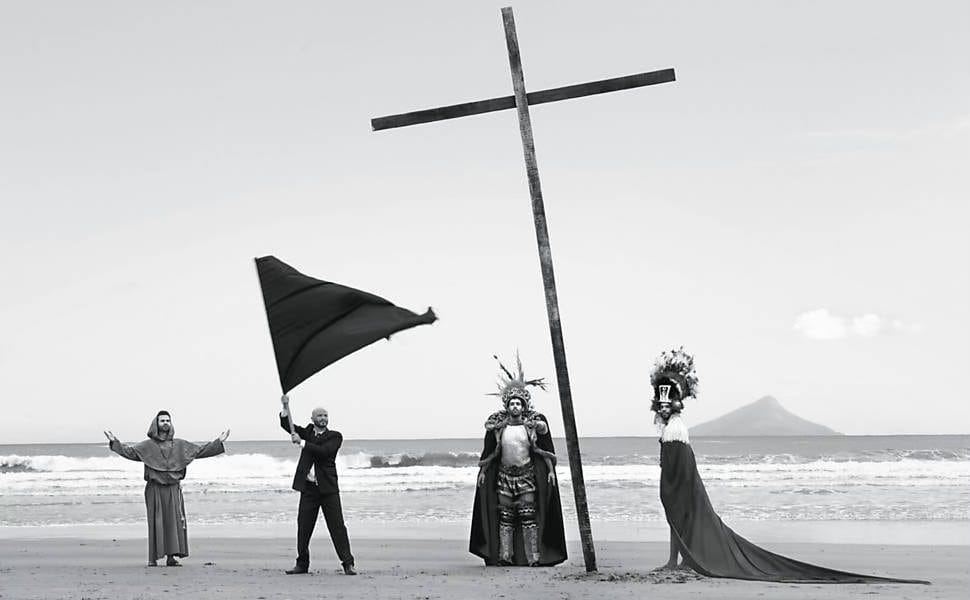
European interest in art from the “periphery” is rarely innocent. Most often, it is triggered only when this art confirms what the West already knows about itself - and about others. Nostalgia for lost authenticity, the aestheticization of poverty, a controlled dose of suffering that does not demand responsibility. What for some is a material and political experience, for others becomes a style, an atmosphere, a cultural accessory. The moment art ceases to be comfortable, it also ceases to be desirable.
Glauber Rocha called this mechanism bluntly: European viewers cultivate a taste for misery as a form, not as a social fact. Hunger, violence, and chaos are translated into the exotic language of aesthetics-acceptable as long as it does not question the power relations that produce them. This is not a problem of representation, but of reception: who is looking, from what position, and what they expect before they even see the work. European audiences recognize and accept suffering on condition that it is translated into a familiar aesthetic code, separated from its material and political causes. And European nostalgia - disguised as curiosity, solidarity, or admiration-continues to organize the cultural field along old colonial lines.
In Latin American cinema of the 1960s and 1970s, Cinema Novo films- including those by Rocha himself-were primarily interpreted at European festivals as exotic images of chaos: raw form, non-professional actors, poverty as landscape. What was intended as a political gesture-a rejection of aesthetic smoothness and an indictment of structural violence-became “tropical surrealism,” a stylistic sign of the Other. Europe was able to admire the radical form as long as it did not have to confront the fact that this chaos was a product of the global order from which it itself derived stability.
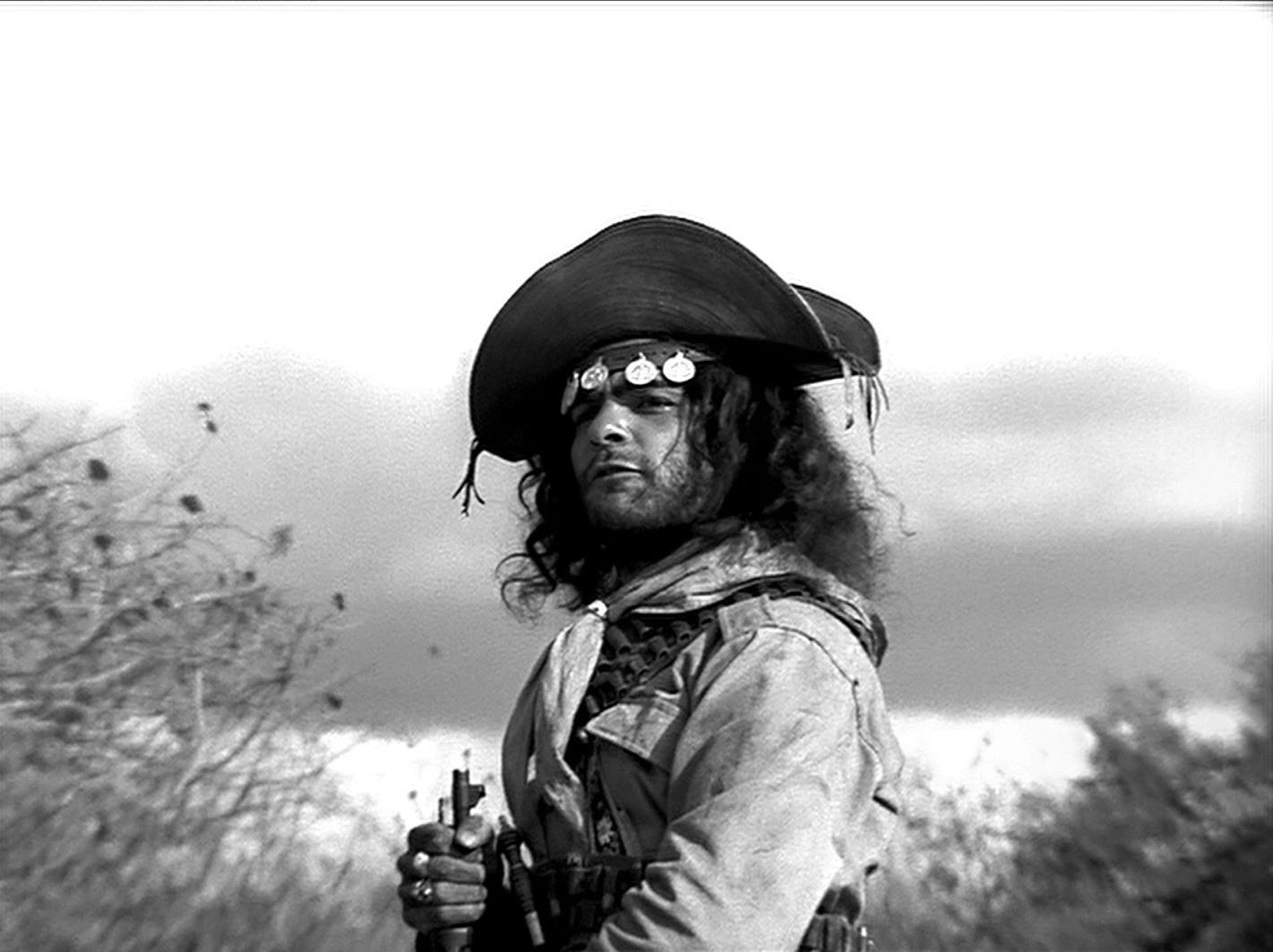
A good example is the reception of Black God, White Devil (1964). The film, which Rocha constructed as a brutal allegory of feudal power relations, messianism, and class violence in northeastern Brazil, was often described in Europe in terms of aesthetic admiration for its “barbaric energy” and “mystical chaos.” Criticism of structural poverty was defused by formal categories: expressive camera work, excess, violence as spectacle. European reception stopped at the surface of form, ignoring the fact that the film does not depict “exoticism” but a specific social order based on exploitation, religious manipulation, and historical colonial violence. As a result, what was supposed to be a political manifesto and a warning against the feudal system was interpreted primarily as an aesthetic experience: formal innovation and the drama of scenes of violence became the focus of attention, while the source and consequences of these social phenomena went unnoticed. European critics and festival audiences emphasized the surreal nature of the image, the expressive compositions of the sertão landscape, and the theatricality of the characters- thus reducing Rocha’s political intention to “tropical exoticism” and attractive visual form.
Rocha himself recognized that the problem lay not only in perception, but in the very form of art, which, in traditional colonial logic, reproduces power relations. In Estética do Sonho, he formulates the concept of decolonized aesthetics, in which the structure of a work of art is not a neutral medium, but a tool of violence or liberation. He writes that revolutionary art should be magical and capable of captivating the viewer so that they cannot bear to live in an absurd, oppressive reality, and that breaking with the rationalities of the colonizers is the only way out. For him, form is not just a vehicle for political content-it must itself challenge the logic of the center, break down predictable patterns of perception, and force the viewer to experience the world in a way that differs from that imposed by colonial categories. Through irrationalism, dreams, myths, and trances, Roch proposes an aesthetic that does not fit into the familiar models of Western narrative, thus preventing it from being reduced to “tropical exoticism” or pure visual style.
The problem, then, lies in the structural expectations imposed on art from the periphery. For Europe, peripheral art becomes legible only when it confirms ready-made narratives: suffering that can be digested, chaos that can be embellished, poverty that can be stylized. Rocha’s emphasis on a decolonized form strikes at the very core of this mechanism. By demanding that the form itself be revolutionary-dreamlike, disruptive, liberated from colonial rationality-he forces the viewer into an ethical and perceptual encounter with a reality that comfortable European aesthetic codes usually erase.
Decolonized aesthetics is not a spectacle to be passively admired. It reminds us that when art becomes legible on European terms, it risks becoming part of the very hierarchies it sought to expose. To do justice to Rocha’s vision and fully engage with the works of Cinema Novo and other peripheral practices, one must look beyond the surface of form, confront the social structures it contains, and accept the discomfort they require. Then art ceases to be a safe gratification and becomes what it was always meant to be: a tool that allows us to see and feel the world differently.
No posts
Comments
Nothing yet. Say the first thing.
Sign in to join the conversation.