
The decision comes as a thought “for yourself”: quit your job, move to another city, take a break, finally not have to. The language is ready - provided by self-help guides, Instagram, and feminism, which promises agency in every decision. A few days later, the rent, therapy payment, and fee for something that was supposed to be temporary but has been going on for three years are deducted from your account. The choice does not disappear, but it loses its lightness. It begins to weigh exactly as much as it costs. This text is not against choices or “choosing yourself.” It is about the fact that freedom of choice is rarely class-neutral, even though culture very much wants to see it that way. Choice feminism offers a language in which structural constraints sound like personal preferences and instability sounds like a stage of development. Meanwhile, the difference between autonomy and risk is not determined by courage, but by the amount of rent and the existence of support. Class does not take away women’s ambition - it takes away their margin for error. And without a margin, even the best choice begins to resemble gambling.
Rent is the most consistent critic of choice feminism - it does not respond to narratives, is not interested in intentions, and does not recognize “being in the process.” It returns every month with the same ruthlessness, reminding us that freedom of choice always comes at a cost. Junk contracts, unstable income, and living from paycheck to paycheck are not the backdrop for self-fulfillment, but the invisible architecture of choice. In this architecture, therapy, personal development, and “me time” function like luxury goods: formally universal, but in reality class-selective.
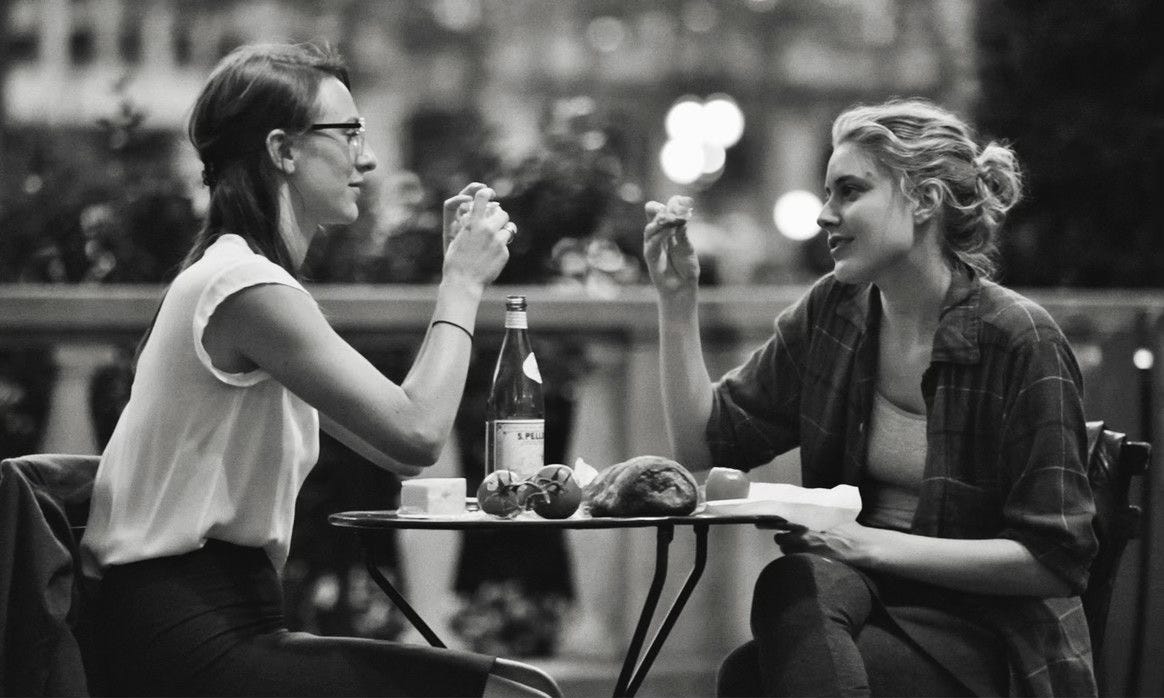
The film does not so much talk about freedom as filter it through class, rendering invisible that which is most material. In Frances Ha (2012), mobility becomes aesthetics: moving house, having no permanent place, professional impermanence form a narrative of maturation rather than a story of risk. Failure here is soft, reversible, even photogenic - there is no real economic stake, there is time to “not know yet.” The film normalizes the luxury of being unprepared, showing instability as a phase rather than a condition that could permanently take something away. Similarly, in The Worst Person in the World (2021), the identity crisis functions as a middle-class project: something that can be stretched out over time, negotiated in relationships, and tested in successive versions of oneself. Changing one’s mind does not threaten immediate degradation here, because economic amortization is already working in the background. Emotional ambivalence does not lead to homelessness, and uncertainty does not end in a loss of security. These films do not lie or idealize - they simply show freedom where it has been previously secured by capital, making it universal only at the level of the image.
Not everyone can “make the wrong choice” - and cinema clearly shows who is allowed to experience this mistake aesthetically. In films such as Frances Ha or The Worst Person in the World, a mistake does not trigger a spiral of losses, but rather a narrative of development: you can give up, change your mind, burn out, and come back as a different version of yourself. The mistake is soft, time-consuming, narratable. Risk here acts as a romantic value because it has been secured economically in advance - there is no threat of losing one’s roof over one’s head or suddenly falling out of circulation. These films do not celebrate irresponsibility, but normalize privilege: the possibility of being unprepared without immediate punishment. The problem begins when this aesthetic is rewritten as universal life advice. Feminism devoid of economic calculation readily resorts to the cinematic language of “do your thing” because it is politically convenient: it shifts the burden from inequality to individual decisions. Culture helps in this shift by turning structural barriers into emotional conflicts and a lack of courage. As a result, women whose choices are burdened with real economic stakes are left out of the frame - their caution does not look good on screen. Cinema does not lie, but it also does not show everything: the freedom we see has already been paid for, and mistakes are a luxury that not everyone can afford.
Against this backdrop, films that consistently show material limitations do not function as simple counter-narratives, but as corrections. They introduce into the feminist conversation what choice feminism often suspends: consistency. When decisions are made in conditions of economic uncertainty, autonomy ceases to look like self-expression and begins to resemble risk management. These stories do not expose a lack of agency, but its unequal distribution - they show how freedom shrinks where there is no buffer, pause, or safety net. Their feminism lies precisely in their refusal to fantasize about easy choices. They insist that decisions are always embedded in structures, and that “choosing oneself” without taking these structures into account is not radical, but incomplete. By bringing rent, work, and exhaustion back into the frame, they reveal what the aesthetics of freedom systematically erase: that for many women, the problem is not making the wrong choice, but having to choose without safeguards.
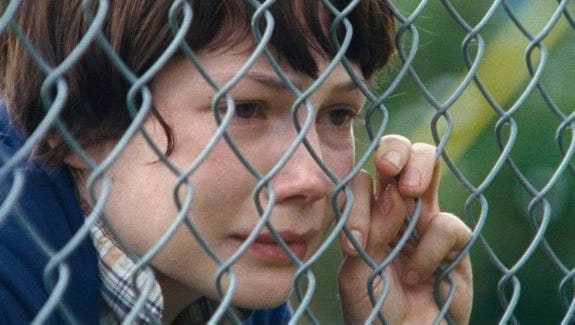
Cinema that truly problematizes choice feminism rarely focuses on spectacular emancipation, but more often on the consequences of “reasonable” decisions made under adverse conditions. In Wendy and Lucy (2008) by Kelly Reichardt, autonomy boils down to moving around and coping on one’s own, but every gesture of independence means further material degradation, not freedom. In Nomadland (2020), the apparent self-sufficiency of the characters borders on romanticization, but underneath it all lies economic coercion - the choice of lifestyle turns out to be an adaptation to exclusion rather than a transcendence of it. Fish Tank (2009), on the other hand, shows a girl’s “agency” as a reaction to structural emptiness: the protagonist’s decisions are intense, physical, impulsive, but never cost-free. What is feministically significant here is not that the characters make choices, but how narrow the repertoire of possible choices is and how quickly the narrative punishes them for transgressing it. These films do not deny the need for autonomy, but consistently strip it of its liberal illusion - showing that freedom without class backing remains a narrative of survival rather than a real emancipatory project.
In this sense, the problem is not the idea of choice itself, but its unreflective universalization. When choice feminism detaches itself from economic considerations and material living conditions, it turns into an aesthetic of decision-making rather than a politics of change - a convenient one, because it is non-confrontational. Cinema that takes consequences seriously reminds us that not every resignation is an act of courage, not every change of direction is a sign of freedom, and not every mistake is survivable. Only when we recognize that the possibility of making a “bad choice” is in itself a privilege does feminism cease to be a story about individual strength of character and begin to speak again in the language of structure, inequality, and real living conditions. And perhaps it is there - beyond the narrative that all you need is to want it - that its political stakes begin.
No posts
Comments
Nothing yet. Say the first thing.
Sign in to join the conversation.