
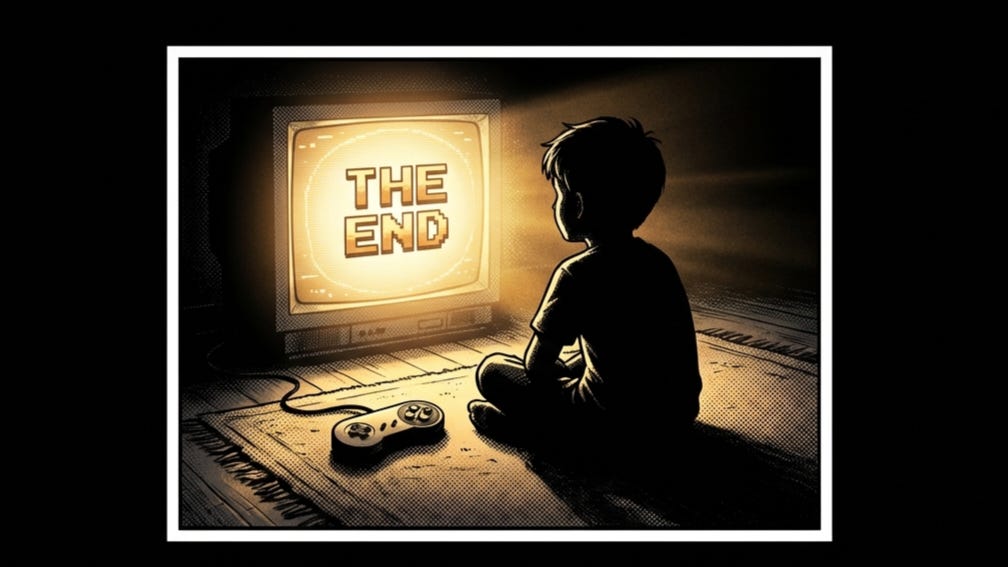
Something happened to gaming.
Not gradually. Not inevitably. It was done to it.
The suits arrived and the authors left. Committees replaced auteurs. Engagement metrics replaced creative vision. The people who built worlds because they had something to burn out of them were pushed aside by the people who studied what keeps a user session alive for eleven more minutes.
And if you have ever felt that games used to hit different, that something real was present in them that isn’t present now, you have probably been told it’s nostalgia. That your memory is lying to you. That games are better than ever. Look at the graphics. Look at the scope. Look at the production value.
They are gaslighting you.
The most dangerous part is that most people saying it’s nostalgia genuinely believe it. They are not lying consciously. They have accepted a framework that measures games by everything except the thing that made them matter. Resolution. Frame rate. Open world size. Metacritic score. None of these measure whether a human being was present in the work. None of these measure whether what you received was built to complete something in you or to keep you permanently incomplete.
Better graphics. No soul. That is not progress. That is a more expensive empty room.
The clueless will call this a conspiracy theory. We don’t do that here. We do forensic investigations.
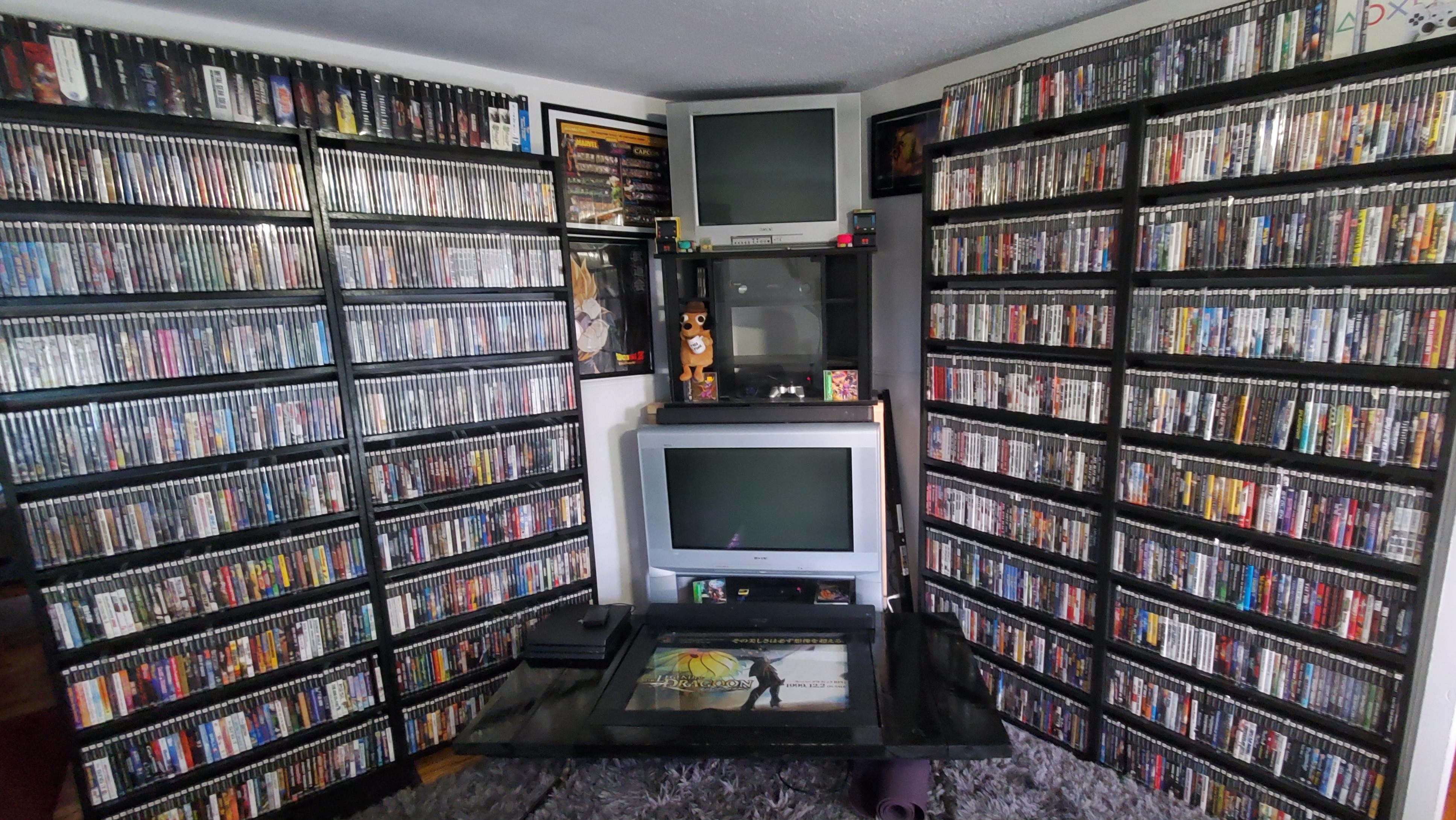
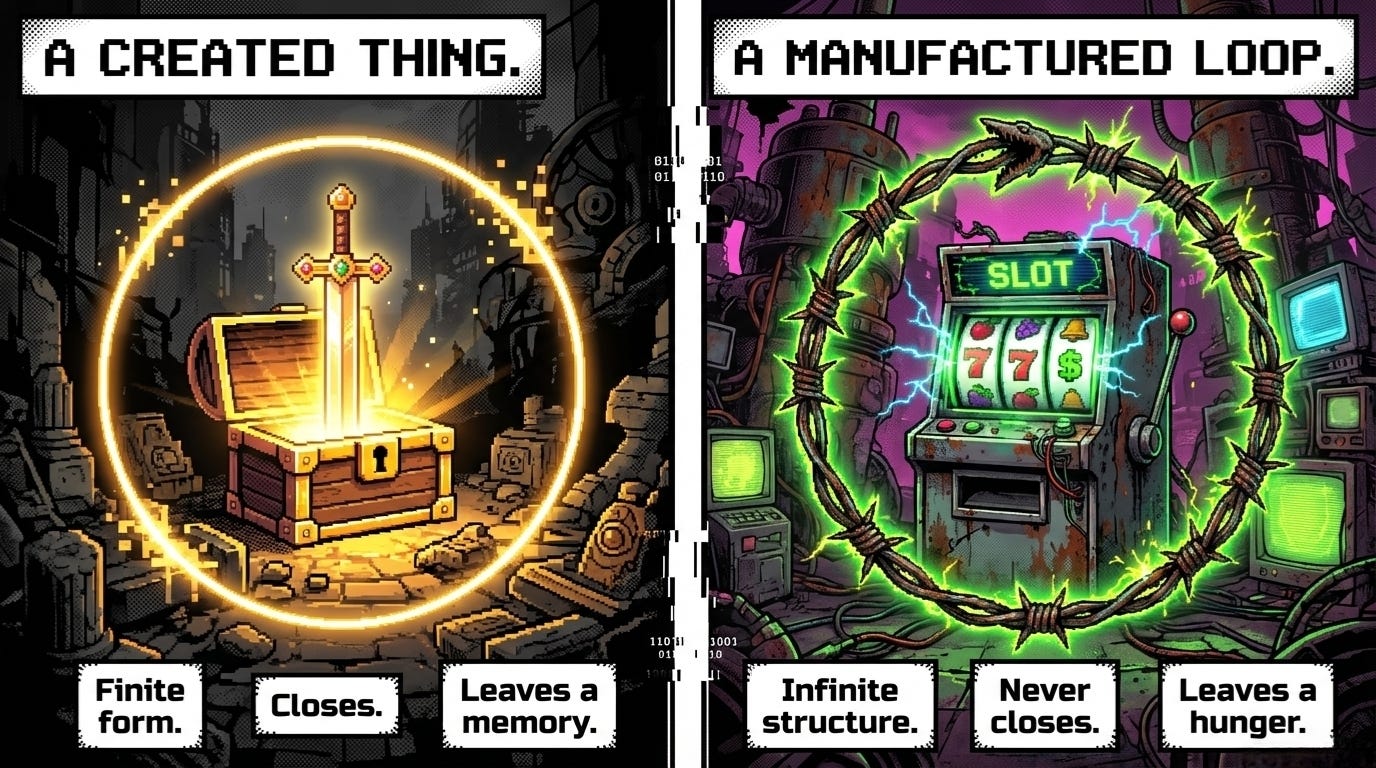
The original covenant between a game and its player was simple. Someone built a world. You entered it. When you reached the edge of what they built, the world ended. You walked away carrying something, a memory, a skill, a story you could tell.
This is what creation looks like. A maker pours something real into a finite form. You receive it whole. The transaction is clean.
The extraction model broke that covenant at the root.
The turn happened gradually enough that most people missed the moment.
Free-to-play arrived and felt like generosity. Then the updates came. Then the seasons. Then the battle pass. Then the limited-time cosmetics available only this weekend, only this rotation, only before the timer ran out.
None of this is accidental. Behavioral scientists, people who study what slot machines do to the human brain, were hired to build the loop. Variable reward schedules. The unpredictable drop. The chase that never resolves because resolution is the one thing the model cannot afford to give you.
A resolved player is a finished player. A finished player stops spending.
So the loop was engineered to never close. Not because the designers lacked skill. Because a closed loop is a dead product. The hunger you feel at the end of a session is not a bug. It is the deliverable.
You are not the player. You are the harvest.
But here is where the gaslighting enters.
They know what they took. The studios that converted beloved franchises into live service extraction engines, they were there. Some of them built the original.
So they sell it back to you.
The remaster arrives. The definitive edition. The classic server. The pixel art aesthetic on a mobile extraction vehicle wearing nostalgia like a coat. Halo. Warcraft. Tony Hawk. Diablo. The name stays. The covenant doesn’t.
They burned the house down and now they are selling you photographs of it.
Your grief for what gaming was is not incidental to their business model. It is the business model. The nostalgia is the hook. The remaster is the invoice. They need you to remember what was good so that the memory pulls you back into contact with what replaced it.
The remaster funds the live service. Your memory of the finished world subsidizes the loop that replaced finished worlds. You pay for the photograph. The photograph gets you back in the room where the burning is still happening.
The correct path through this is not retreat.
It is not swearing off screens or performing disgust at the medium. That is not discernment. That is just a different kind of performance.
The path is learning to read the machine before you walk into it.
Finished worlds still exist. Independent studios still build them. Games with a last level, a final scene, a moment where the credits roll and you sit with the weight of a completed thing — they are there. Harder to find because they cannot buy the shelf space an extraction engine can afford. But they are there.
Before you enter anything, ask one question.
Can this end?
Not “can I stop playing it.” That is a question about willpower. This is a structural question. Was this built with an ending? Did someone design a final moment, a resolution, a place where the world closes and releases you?
If yes, you are entering a created thing. Receive it.
If no, you are entering a loop. The hunger you will feel inside it was manufactured before you arrived.
Know what you are walking into.
This is what Kingdom Code: Gaming is all about.
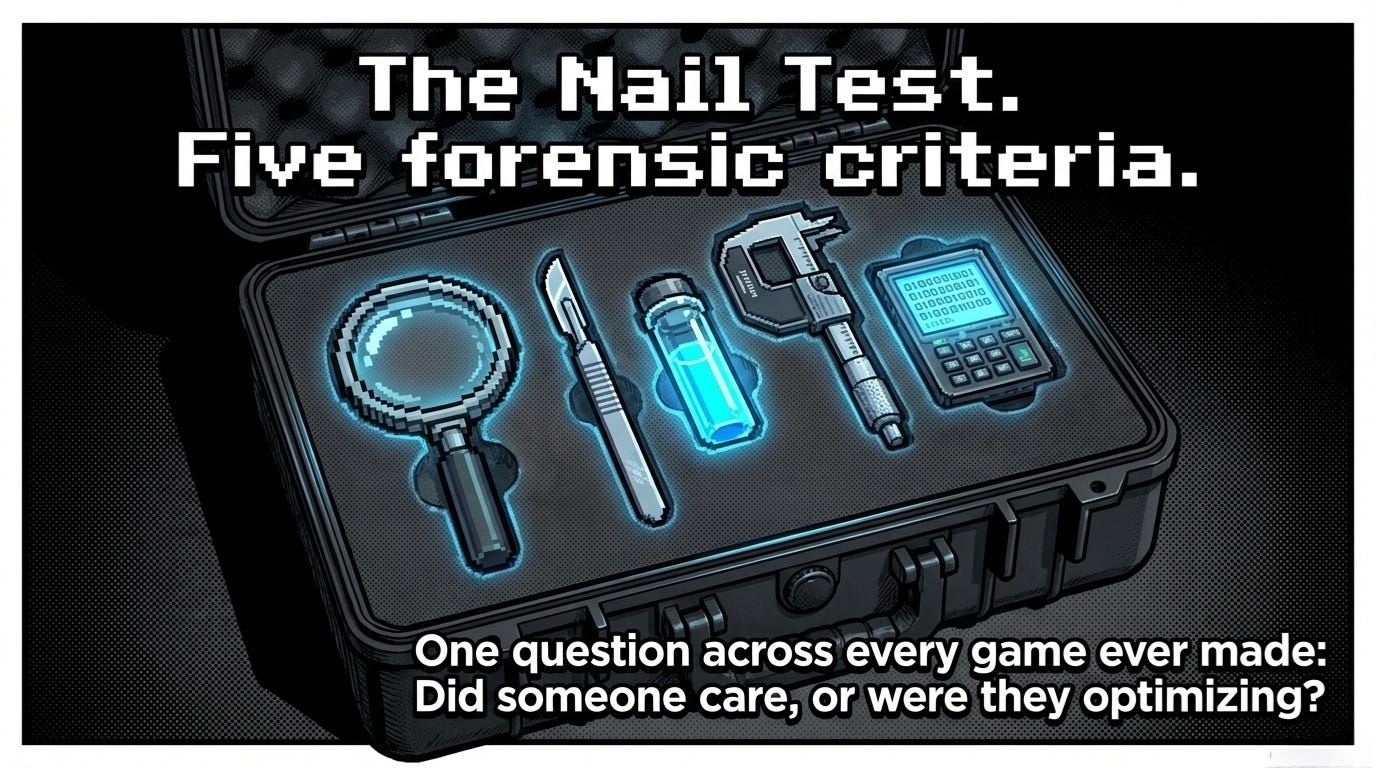
Not reviews. Not scores handed down by people with publisher relationships to protect. Autopsies. We built the Nail Test, five forensic criteria that answer one question across every game ever made: did someone care, or were they optimizing?
The finished worlds are still out there. We are going to find them, score them, and show you exactly why they hold.
The extraction engines are still running. We are going to open them up and show you the machinery inside.
The autopsies are already running. Subscribe and receive every one.
Comments
Nothing yet. Say the first thing.
Sign in to join the conversation.