
Art House Convergence and Film Festival Alliance held their annual conference, IND/EX, last week and I took so many notes that I’d like to share. I was there because Kinema worked with Art House Convergence to dream up a program where filmmakers could directly meet with and introduce their films to art houses. We piloted that program, The Booking Fair, during the conference last week.
In this newsletter I cover:
Five IND/EX conference highlights
The Booking Fair: context, early response, what’s next
12 tactics for filmmakers coming out of IND/EX
And, for fun, the best film swag I spotted (biased!)
In the spirit of Eventizing (this year’s fourth Most Hardworking Word after: Authentic, Community, and Trust), I’m paying closer attention to what makes a standout event. Here are five reasons IND/EX rose above the fray for me:
People:
I hate to include this because it doesn’t feel new or interesting, but the people you meet both informally and formally do take your event experience to another level. The Independent Film Exhibition Conference, often shortened to IND/EX, is a gathering of 800+ film professionals that feels less symposium, more family reunion in the best of ways. Both the clear missions of the two hosting organizations and the shared history in the room lead to warm, story-filled intros and open conversation. The programming itself was fantastic but, as with most in-person events, the programming is often the gravy to just being in community with people. I was frequently reminded of Carla Santiago’s advice on making sure you’re facilitating opportunities for event attendees to meet each other — it’s one part event design and one part who you’re inviting into the room.
Branding:
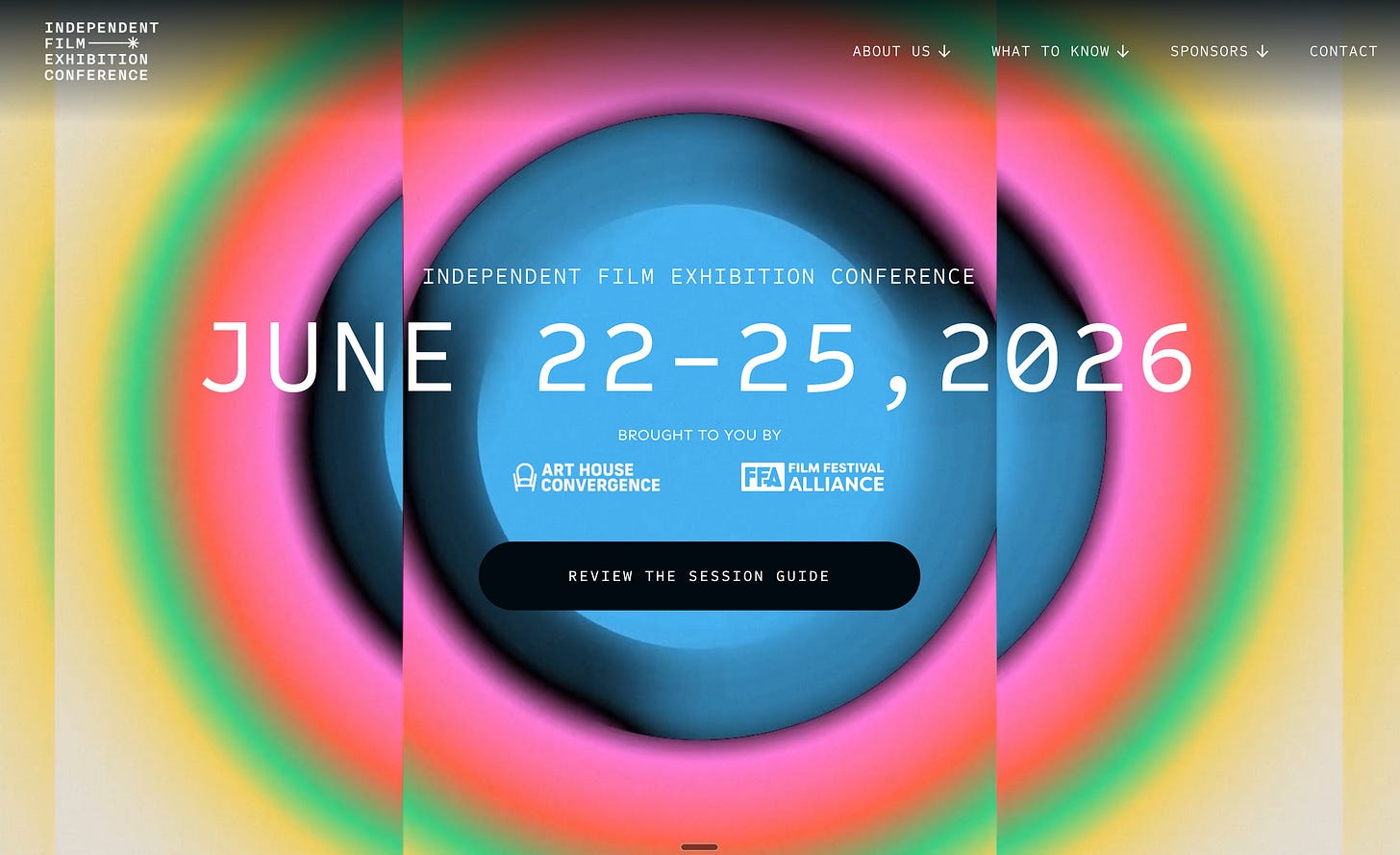
I really loved the visual design for this year’s conference and it was used everywhere, both physical (signage, programs, step & repeat) and digital (web, social, email) assets. You don’t need to be a conference with a big events crew to pull this off. There’s such comfort that comes with a consistent visual identity.
They also leaned into a part of their brand that is confusing. Specifically, people are conflicted on how to pronounce IND/EX so they used a wall in the lunch hall to capture votes. Indie Ex vs. Index: put a big colored post-it note next to the pronunciation that you’re siding with. That kind of thing could be so fun at a screening event. E.g., Team Edward vs. Team Jacob. Perhaps it’s a poster that you take from screening to screening so it builds.
Delight:
The exact sentence, “this is really good for free coffee,” was heard in more than one elevator. Truly more times than I can count, I heard people talking about how good the coffee was. I don’t drink coffee (I’m not above it, it’s just too much for me), so I can’t speak to the quality from personal experience here, but I do know that conferences, with their famously long days, run on caffeine so what a nice touch to prioritize the fancy stuff.
Fun:
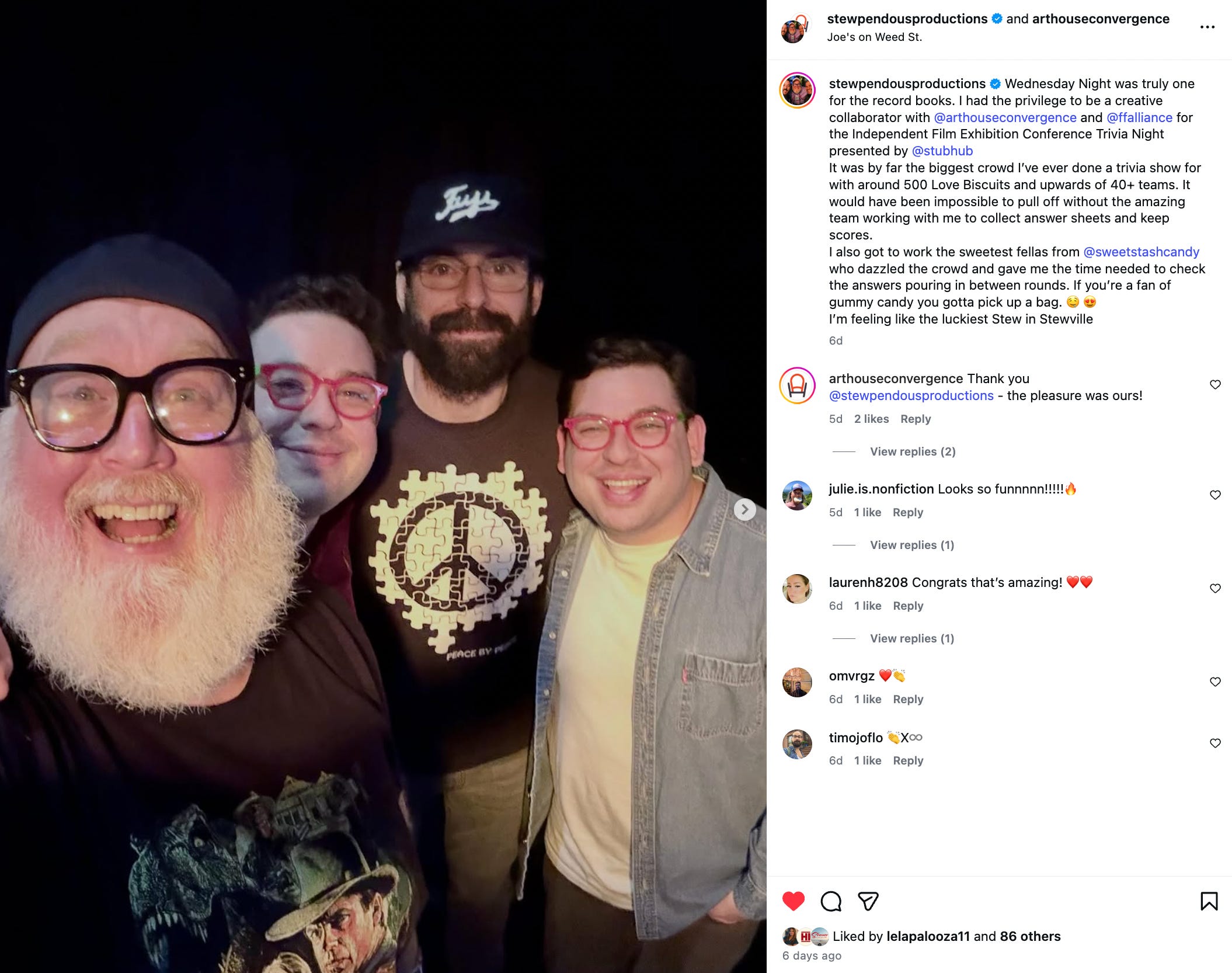
There’s so much lore around Trailer Wars, one of the evening events that was frequently described as “the one thing you have to go to.” The exhibitors make their own trailers. There’s a bracket, there’s voting, there’s defending champs, there’s even a championship belt. The competition is then followed by film trivia that was as fun as promised.
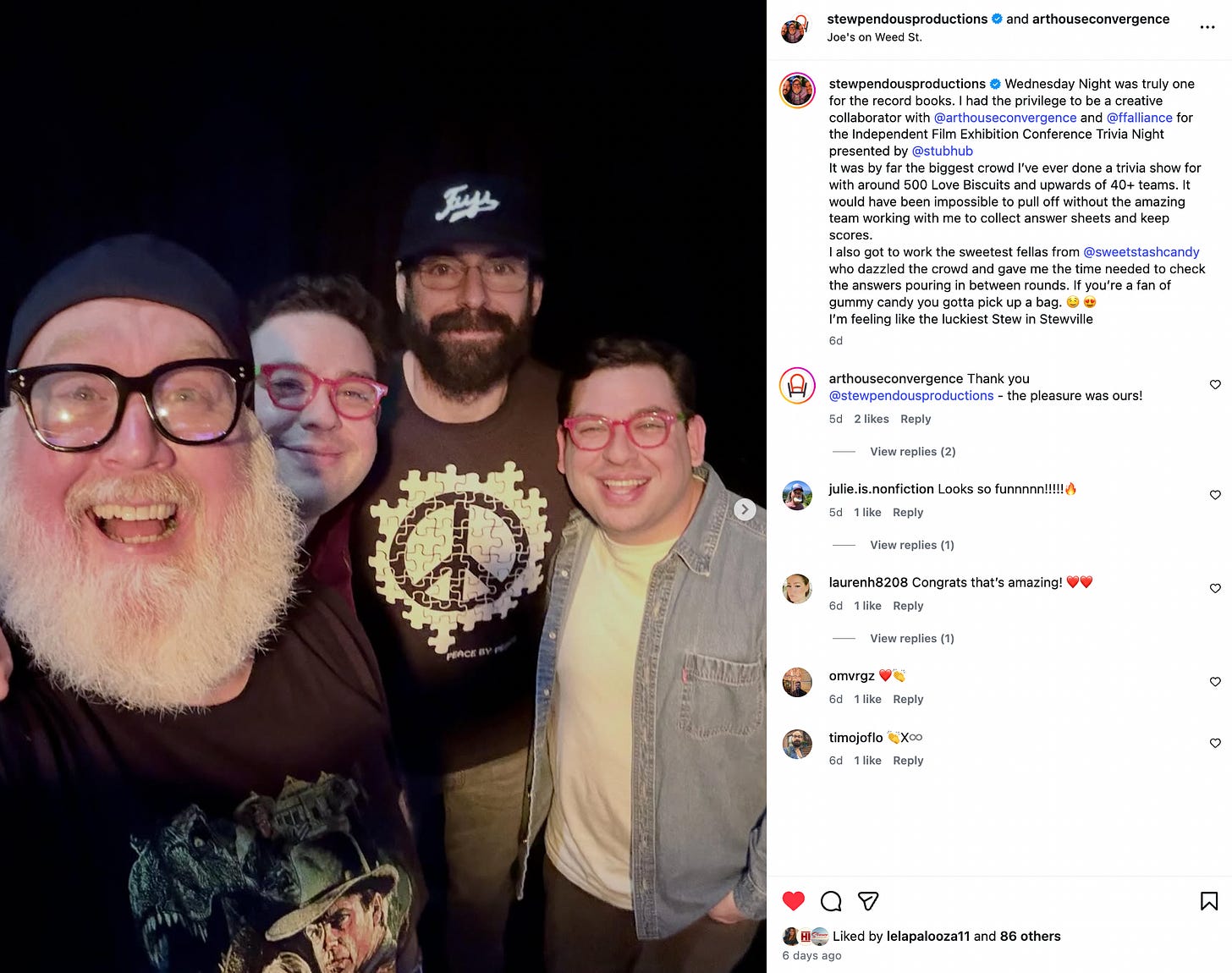
I was on Team No Name (shoutout Spirited Away) and at the halfway mark it was announced that we were in first place. We celebrated as if we won, which of course we then didn’t, causing Martin Starr to come over and disappointedly ask, “what happened guys?”
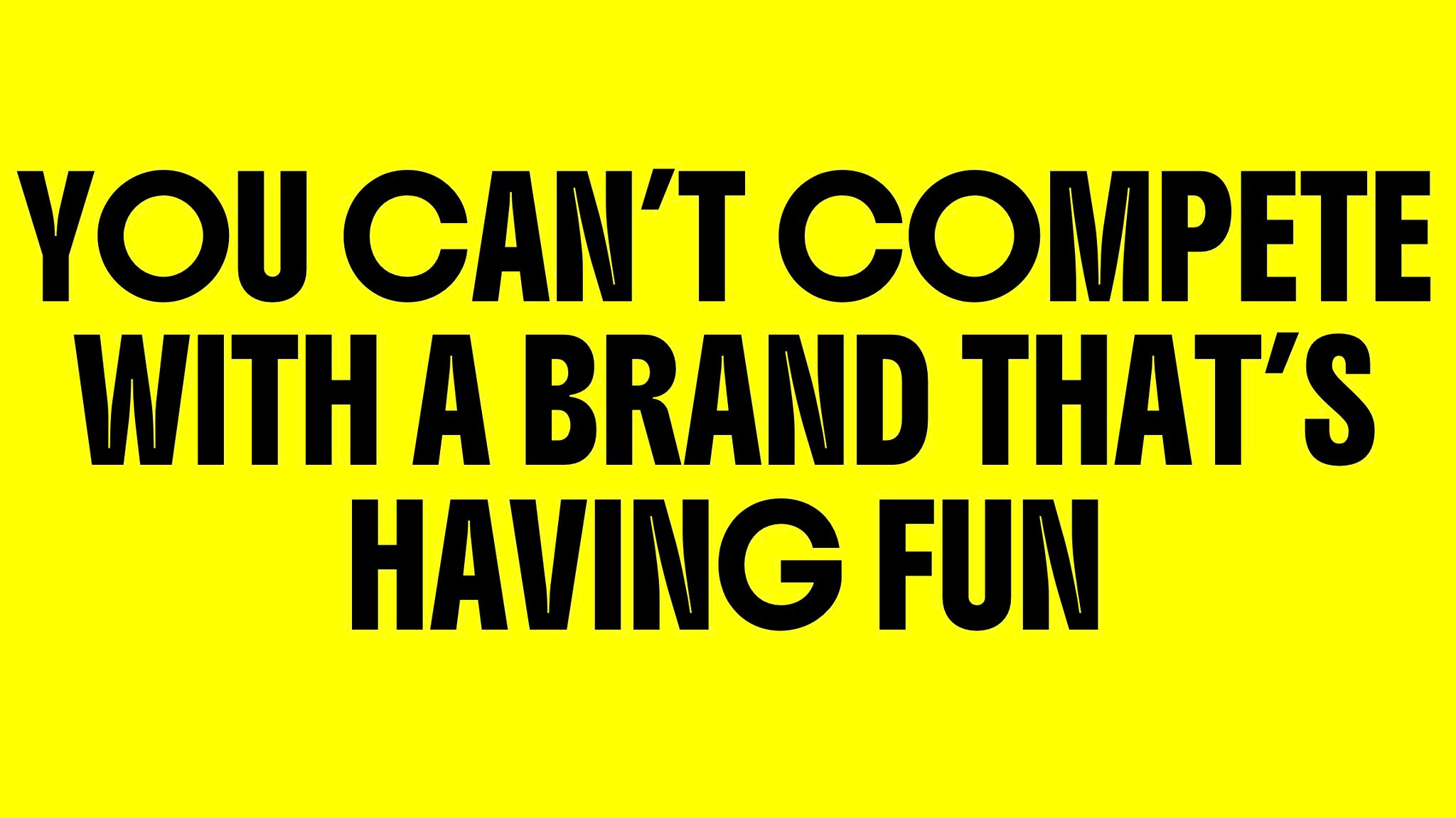
Later in the week, Rachel Karten shared this slide from her Cannes Lions presentation with Kendall Hope Tucker (Ramp) and I immediately thought about Trailer Wars.
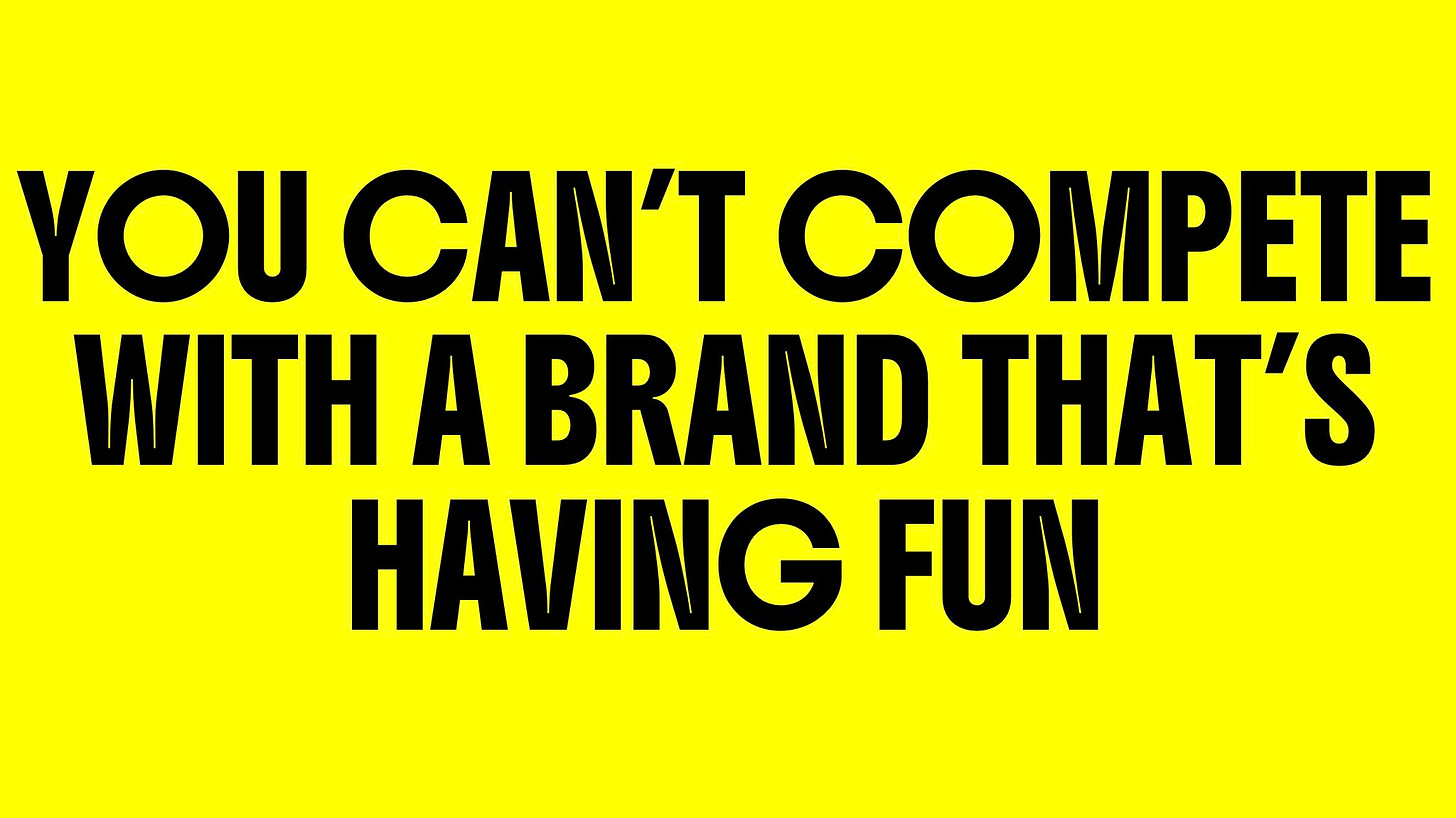
People can see when you’re having fun. They talk about fun. They remember fun. You don’t have to be a tech company with bottomless funds to do this. Think Hundreds of Beavers having a dude in a Beaver suit at every screening. Or their poster parodies with Beavers. Or Jeanie Finlay for Your Fat Friend making Hot Fat Summer a thing with bright pink koozies. And memes!
Fireside:
Tabitha Jackson (Film Forum) and Gina Duncan (The Moth) had a conversation that was completely nourishing and anchored the whole event. Firstly, these two powerhouse women had a fantastic rapport, having previously worked together at Sundance (Gina described Tabitha as being Jazz to her Funk, which later proved to be accurate). We were taken on a meandering journey, filled with poignant and funny reflections on their work histories, that all built toward the why we do this work anyway question. We talk often of the value of independent expression, but we don’t often talk of exchange. “Storytelling is a civic practice…create the conditions to not just share but to also listen.”
Last year, the question I was sitting with when I first met with Lela Meadow-Conner @mamafilm, Interim Executive Director of Art House Convergence, was, “How do I better support filmmakers around their theatrical window?” As we were talking, Lela was reminded of an idea her colleague Kate Markham, Managing Director at AHC, had been thinking about — a Scholastic Book Fair, but films. That was the seed that we ran with.
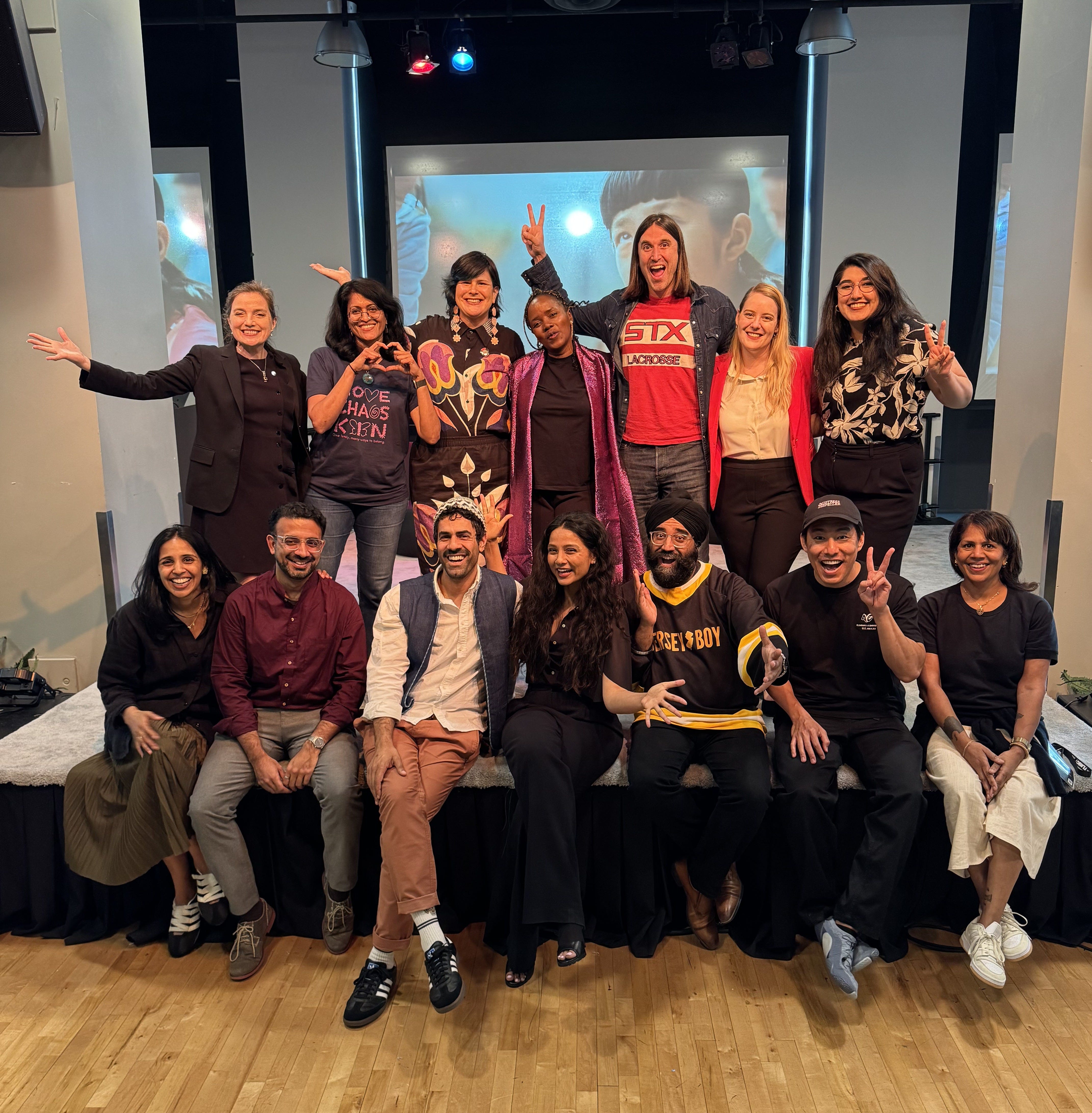
Theatrical windows are valuable. And in this moment when independent films don’t have the support of traditional distributors we were looking to build some infrastructure and knowledge for both filmmakers and exhibitors. The Booking Fair was born from that goal. The pilot program has five phases and we’ve completed the first three:
ResearchProgram DesignExecute (invite films, educate, and convene)Track
Report
For the pilot cohort, films were referred by industry partners. To be eligible, feature films needed:
Theatrical rights
A theatrical window plan for Q3 / Q4 2026
Marketing and technical assets in place
The cohort includes 10 films. Five documentaries:
Ashima (dir. Kenji Tsukamoto)
Drowned Land (dir. Colleen Thurston)
Love Chaos Kin (dir. Chithra Jeyaram)
One Woman One Bra (dir. Vincho Nchogu)
Uncommitted (dir. Razi Jafri)
And five narrative films:
Crystal Cross (dir. Richie James Follin)
Jersey Boy (dir. Jaskaran Singh)
Magic Hour (dir. Jacqueline Christy)
Pinch (dir. Uttera Singh)
Séance (dir. Vivian Kerr)
The actual event, convening the filmmakers and art houses, went really well. I’m purely going off of vibes, anecdotes, and early survey feedback. I’m also maintaining a growing list of ideas, considerations, and improvement areas.
Here’s what I know so far. On average it seems film teams were able to meet with 15-20 programmers in the allotted two hours. Anecdotally I had a programmer tell me they were really looking forward to booking 2/10 films and another tell me they’d likely book up to 8/10. Of course they need to watch screeners, dates need to line up, etc. etc. but bookings will obviously vary film to film and art house to art house. At the highest level, I plan to measure those funnel metrics on both sides to assess how successful this was for filmmakers and arthouses. What can the average filmmaker expect from ~15 in-person conversations in terms of number of bookings? What does it take to market those screening events? What can the average art house theater expect from a knowledgeable and entrepreneurial independent filmmaker?
Filmmakers have already reached out interested in participating in a future cohort, which is dope. A few art houses have also shared their support in making this an annual event. The format seemed especially valuable to art houses in smaller markets, who might not otherwise generate the same cold-email interest as some of the larger venues / markets. Overall, the response tells me we’re onto something and that there’s a real need that is being addressed here. I’m not sure what the next iteration looks like yet but what I’ll say for now is that from the beginning this has been about what we can learn and share widely. We’re focusing there first.
Watch this space.
I mentioned I took a lot of notes. Some food tactics for thought from The Booking Fair, IND/EX programming, and regular ole convos with attendees.
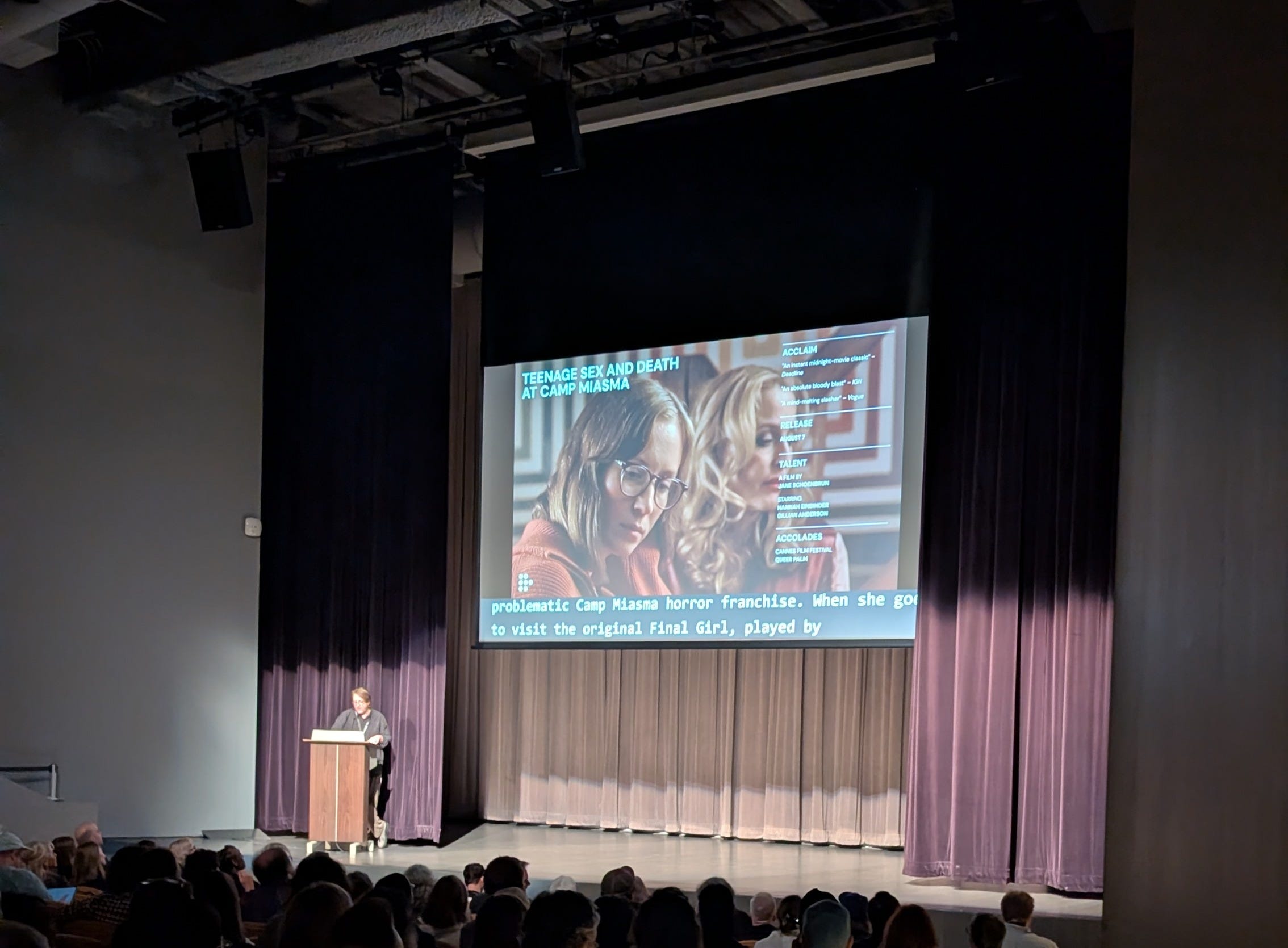
Have some humor in your pitch. I sat through a few hours of distributor presentations to see how the big dogs do it. Presentation formats were similar distributor to distributor: a slide for each title that included a great image, director, actors, and release date(s). Every so often we were shown a trailer. I’m no programmer, but I was grateful for the occasional joke and those jokes are what I remember a week later.
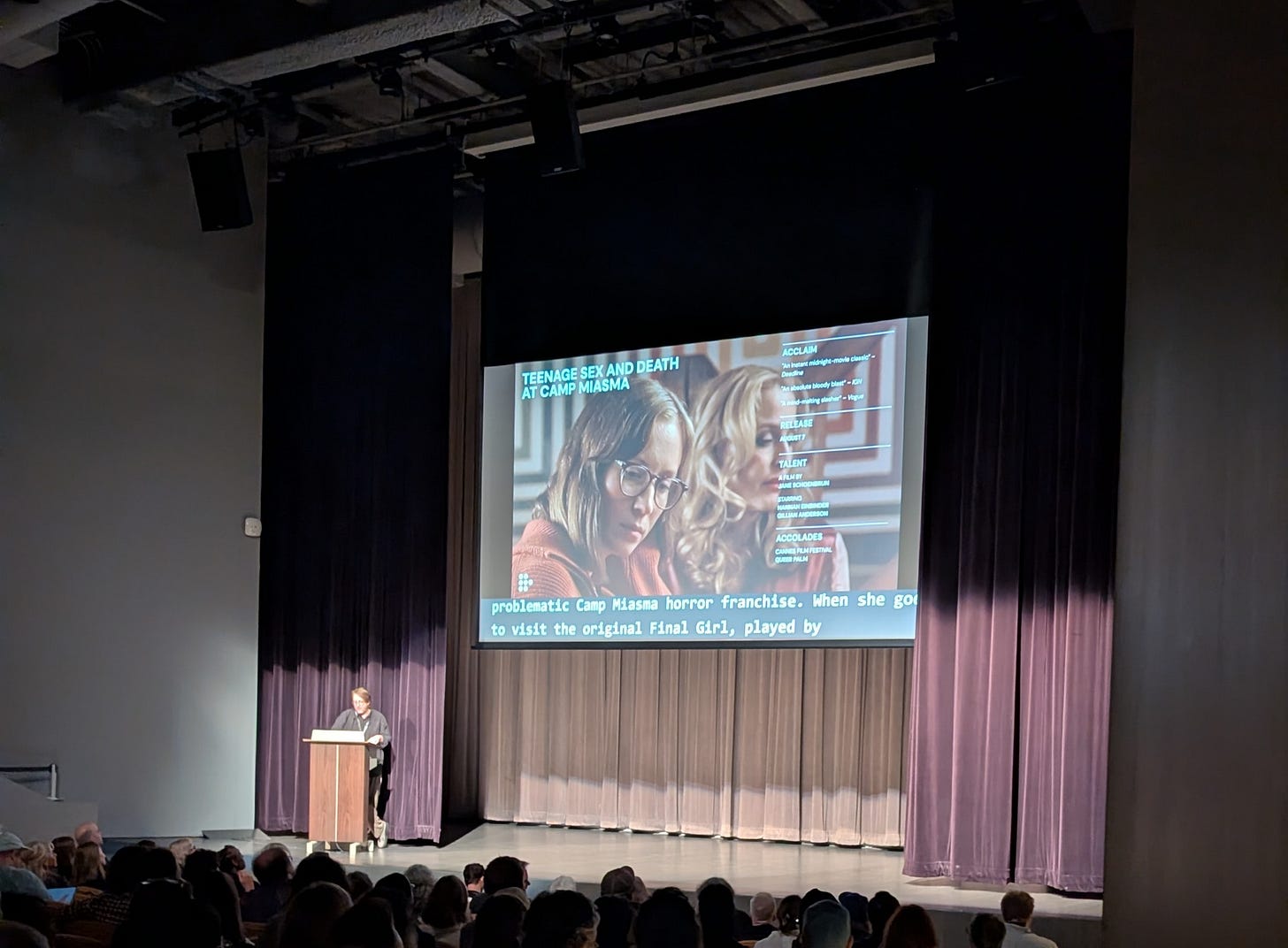
The Mubi rep really made me laugh (and not all the films were comedies). Programmers are like anyone else. They need to see or hear about something a few different times, in different ways, before they “convert” or book a title. Last week Christie Marchese shared the example F*cktoys. I spoke with one programmer who took about nine months before deciding to book that film. He had gotten a cold email, he saw the filmmakers at a few festivals, a comrade from another art house booked it, that same comrade was later happy with the screening event, and he saw the growing fanbase on social. All of it led to him decide F*cktoys would be a good fit for his community. It took time.
Programmers are inundated with cold-calls and one-off requests, which, when taken on, require real effort and expense to market. By nature these are risky for an art house. If you’re pitching a theater, de-risk your film. Make your outreach specific to that theater. Tie your film to their archive, their history, their community focus.
Not all art houses are the same. Don’t blanket email all of them. Think of it like applying to college. Figure out what each venue is great at and why your film belongs in that specific room.
A few art houses and festivals were discussing pop-up cinemas and virtual programming to extend the reach of their brand, particularly with younger audiences. Art houses are interested in opportunities to cultivate new audiences so keep that in mind as you’re thinking about how your film might benefit a theater. Who might your film invite to the theater that hasn’t previously been and why might they become loyal moviegoers?
Some unconventional venue ideas were shared: parks, abandoned malls, abandoned clothing stores, rooftops, apartment buildings, projecting on a bedsheet in any space, and on and on. These kinds of screenings are often great to do in partnership with community orgs.
“Community Engagement Manager” is becoming a more frequent and important role at theaters. They might make a great creative partner as you’re marketing your film locally.
A critic’s job isn’t to market your film. It’s to have an identity. Don’t expect or lean on positive quotes as the point.
Local critics carry real weight and can write powerful reviews even from smaller outlets (tip: Substack is a great place to look for them).
Invite critics to do talkbacks or moderate Q&As. It’s a way to build a relationship and they can perhaps pull reflections from the audience in a way a standard Q&A doesn’t. This was advice offered to art houses and film festivals but I think is also useful for a filmmaker to know and suggest.
Q&A in it’s current format is a chance for learning and appreciation, but it’s not really getting people talking to each other. The goal should be to get people actually talking.
Try a reverse Q&A: Let the director ask the audience questions.
Try different time splits: 25 minutes moderated / 5 minutes audience, or flip it — 5 minutes moderated / 25 minutes audience.
Give the audience a reason to stay: tell them up front there’ll be a Q&A, it’ll be about 30 minutes, and introduce the person who’ll be leading it during the intro so the audience knows who they’ll be looking for.
Gray Rodriguez from the Film Festival Alliance team recommended a few objects / vendors for “bang-for-your-buck branding.”
I watched Tyler and Brynne, cofounders of Hiike Independent, edit this reel which gives you a peek at the merch on offer at IND/EX. In the process I also learned about trial reels. Did you know that you can test how your IG reels perform AND try on a few different captions before posting to your feed. Not a new feature, just new to me.
Anyway merch is falling off trees. For fun I wanted to share the swag I saw people sporting that I felt personally “aligned” with.

Art House Convergence sticker. I like the copy and design. I LOVE the bright pink. (free)
Montclair Film Fest had some cool totes and tees that their team was walking around in. I did a double-take when I saw this tote and immediately complimented it. ($$)
Moleskine notebook? Yes, always! (free)
Mubi mug for The Mastermind. I liked this movie enough and importantly I collect random mugs. (free)
Super Yaki hat. Unique design. Funny / relatable copy. ($$)
Popcorn bucket purse. No notes. This Kate Spade bag belongs to theatrical booker Jessica Rosner who bought it a decade ago. ($$)
Ok that’s all from me. What have you been learning at all of the summer events?
If you’re finding this newsletter valuable, share it with a friend, and consider subscribing if you haven’t already.
Comments
Nothing yet. Say the first thing.
Sign in to join the conversation.