
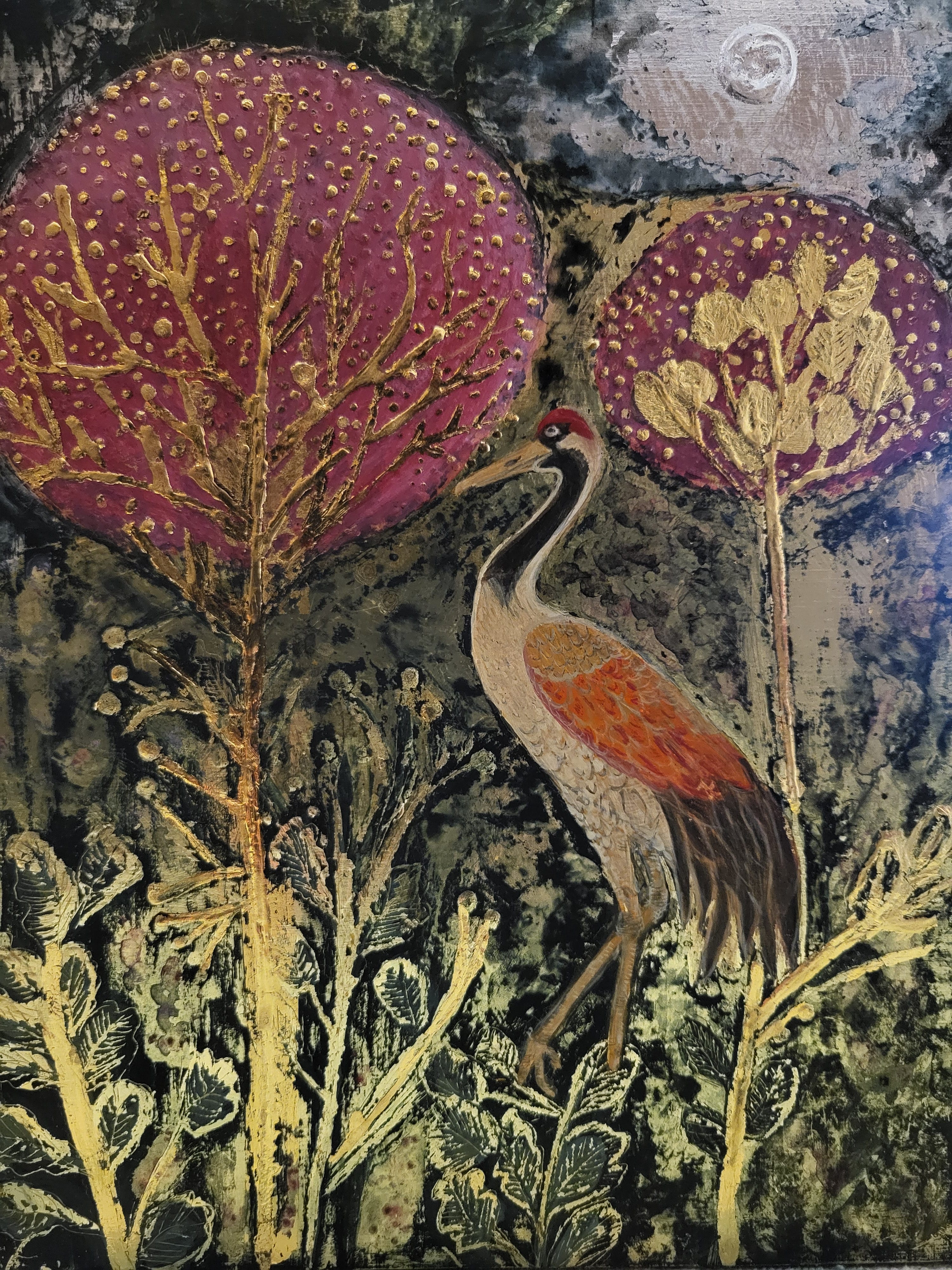
You can’t turn a donkey into a thoroughbred. Even if it wears a valuable harness, a donkey won’t become a racehorse. You can’t make a silk purse out of a sow’s ear. A leopard can’t change its spots. The willow seed won’t ever become an oak.
How many variations might there be on this kind of old proverb? Are proverbs true? True in a fashion? Pointing to some kind of truth? An indication or a finger pointing at the moon, which will never be the moon?
James Hillman writes:
“Because the traumatic view of early years so controls psychological theory of personality and its development, the focus of our rememberings and the language of our personal storytelling have already been infiltrated by the toxins of these theories. Our lives may be determined less by our childhood than by the way we have learned to imagine our childhoods. We are, this book shall maintain, less damaged by the traumas of childhood than by the traumatic way we remember childhood as a time of unnecessary and externally caused calamities that wrongly shaped us” (p.4 – The Soul’s Code).
The very Western psychological notion that our childhoods are – solely/primarily – responsible for our adult problems, and in particular the well-fed notion that mother is to blame – has never sat well with me. I know many people who are keen to pinpoint what it was in their traumatic pasts that led to their current distresses and what their parents did to them that caused them to be how they are. I’ve often wondered about this ‘interpretation’’, or ‘way of looking’.
My presentation is slightly black and white here and we have genetics to factor into the equation. But just consider how many people spend their lives dissecting their childhoods because they believe that will help them to know ‘why’ they are like they are. I’m not saying, and neither is Hillman, that trauma doesn’t count. I’m not trying to diminish what may have occurred in someone’s childhood. Rather, I’m attempting a reorientation of perspective away from, what Hillman calls the victim mentality, to something infinitely more freeing.
I have come to realise that at some point we have to ‘grow up’ and take responsibility for our lives. The Buddhist concept of karma frees us from apportioning blame to our parents for whatever it is they did to us. Our society loves to divide the world into perpetrators and victims, as it fits in well with the myth of the self-made person who, despite all odds, makes something of their lives.
Then we have the now ubiquitous idea, popularised by Bessel van der Kolk, that “the body keeps the score,” often accompanied by the reassuring claim that the body never lies. Taken at depth, this points to something important: the body registers and carries experience in ways that bypass conscious narrative. It remembers.
But in its popularised form, this idea has hardened into something extremely reductive. It encourages a quiet absolutism: if the body reacts, it must be telling the truth; if there is fear, there must be danger—if not now, then in the past. In this way, bodily response becomes evidence, and the search begins for its origin, often located—once again—in childhood, and more often than not, in the mother.
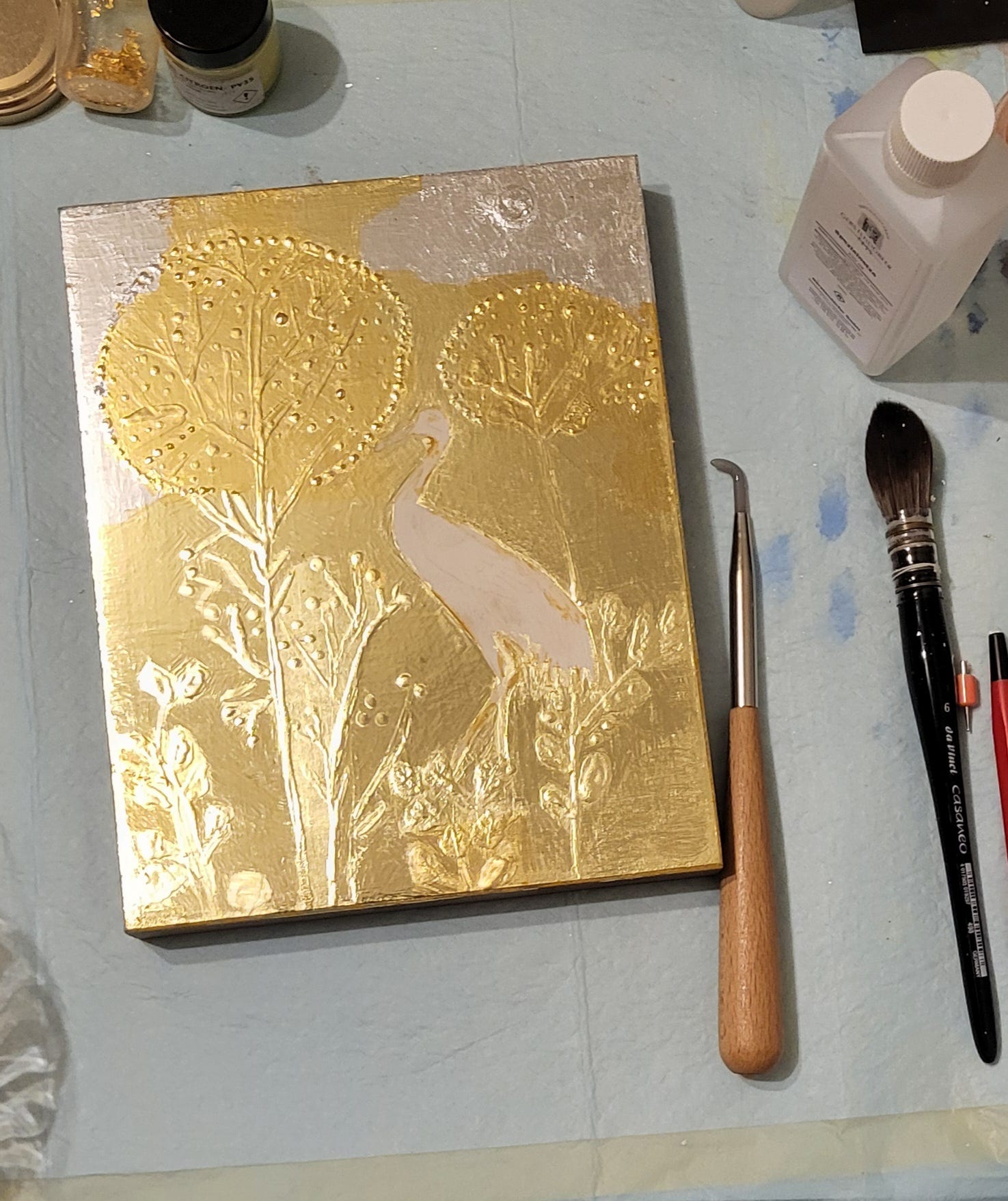
What begins as an attempt to honour experience can easily become another form of determinism. The body is treated as an unquestionable authority, its signals as facts rather than interpretations shaped by memory, conditioning, and expectation. Yet a traumatised nervous system can produce convincing signals of threat in situations that are objectively safe. The experience is real; the conclusion drawn from it is not necessarily so.
This is where a voice like James Hillman cuts across the grain. Rather than reinforcing a narrative of injury that must be endlessly traced back and explained, he invites a different move altogether: away from explanation and towards imagination, away from blame and towards responsibility. Not everything that troubles us is best understood as damage.
The body does not lie—but neither does it tell the truth in any simple sense. It expresses, it repeats, it anticipates. It speaks in the language of what has been, not necessarily of what is. If we take its every signal as proof, we risk becoming captive to a story that continually refers us backwards. But if we can hold its responses more lightly—as real, but not definitive—we create space for something else: the possibility of imagination and of responding in the present, rather than merely reliving the past.
We find Alzheimer’s deeply troubling because those ‘afflicted’ lose their memories. Memory, it seems, is what makes me me. If I can’t remember, who am I?
Yet memory not only shapes us; it can also imprison us. We rehearse the same stories over and over: where we come from, what happened to us, how we became who we are, what we love and what we fear. Memories become like habits. They harden into identity. But how reliable are they?
I am drawn to the Zen koan: What is your original face before your parents were born?
I sometimes felt that my mother’s “original face” only began to show itself when she developed Alzheimer’s. As her grip on the past loosened, so too did the weight of the stories that had more than likely constrained her. In their place came other stories—not historically “true,” but alive in the present—stories of courage, strength, and possibility. Something in her became less bound, not more. Alzheimers freed her from constricting memories.
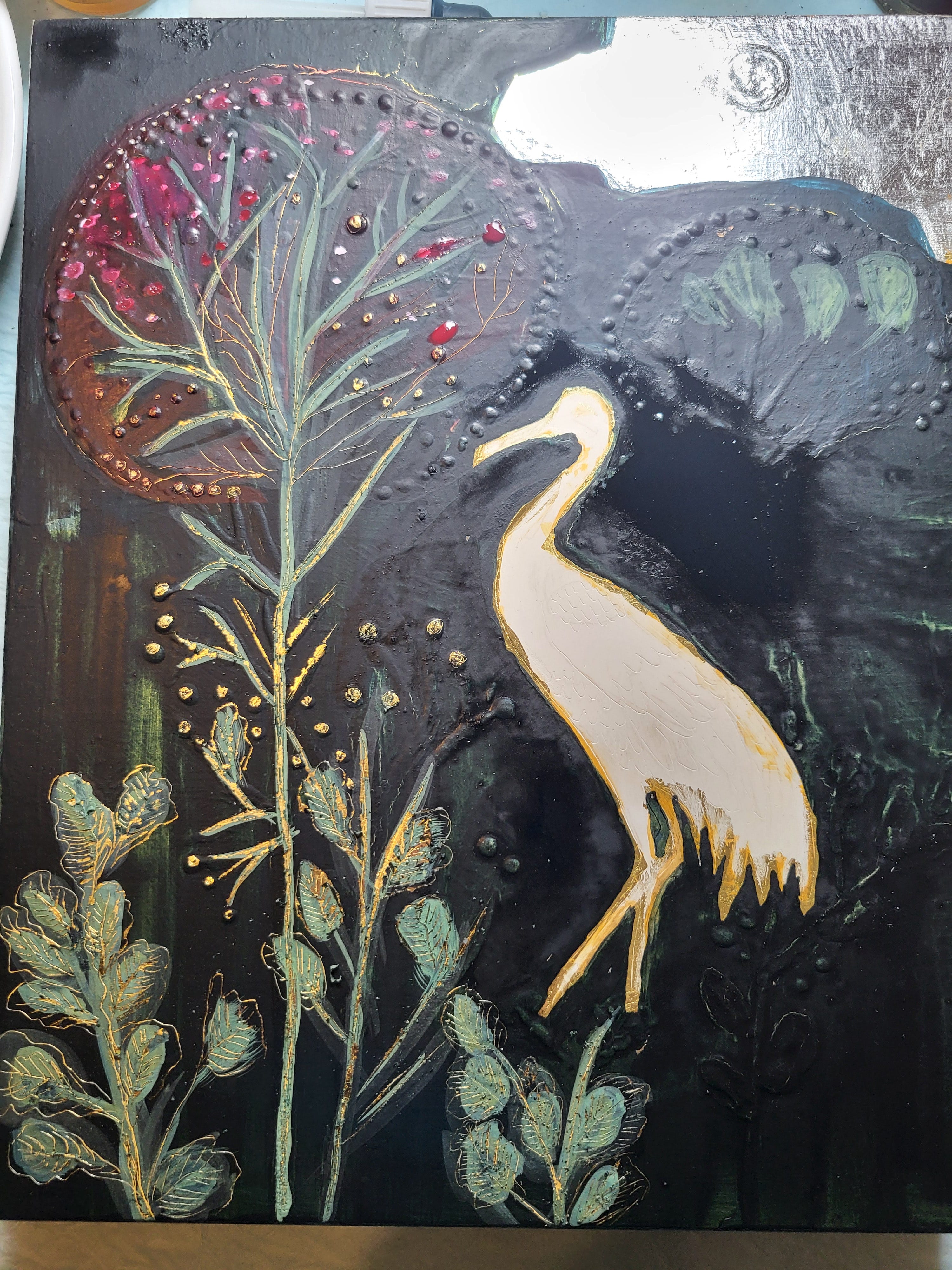
This sits uneasily alongside a culture that encourages us to continually excavate the past in search of causes, often locating them in childhood and, more specifically, in our mothers. There is, of course, truth in acknowledging what has shaped us. But there is also a point at which this backward gaze becomes its own kind of fixation.
Practices such as meditation—particularly within the Buddhist tradition—offer a different orientation. They invite us to observe the body and mind closely enough to see how reactions arise, how memory imprints itself, and how easily fear can be mistaken for truth. Over time, reactions can soften into responses, less driven by habit, more attuned to what is actually here.
In this light, the body is not an infallible witness but a conditioned one. It speaks, but it speaks from memory as much as from presence. Learning to discern the difference is part of ‘growing up’. We need to grow up just as much as we need to wake up.
When James Hillman speaks of the daimon, I hear an echo of this “original face”—something prior to our stories, or perhaps quietly running beneath them. It shows itself in our peculiarities, our longings, our gifts. It was there before the wounding.
I’m sure we would be less burdened, individually and collectively, if we sought our original face, our daimon, with the same vigour that psychologists and therapists convince us to seek the origins of our trauma. Not to deny what has been, but to loosen its claim to define our identity —and to ease the reflex to apportion blame, especially towards our mothers.
Much of contemporary psychology and therapy, for all its insights, has become preoccupied with tracing damage. It teaches us to become expert historians of our own suffering, often at the expense of discovering who we might be beyond it. Explanation is offered as a form of freedom—but the two are not the same. And history is also but a story written by the strongest protagonist.
Modern psychological therapy can offer new ways of understanding ourselves, and new narratives that are kinder, more spacious, more life-giving. This matters. But I have found that Buddhism invites a further step: to notice that even these narratives are constructions, arising and passing like everything else.
And this is the shift—from asking which story is true? to asking what happens when I no longer need to be defined by a story at all? In that space, something of the “original face” begins to show itself—not as a new identity, but as a loosening of all identities.
What is your original face before your parents were born?
Comments
Nothing yet. Say the first thing.
Sign in to join the conversation.