
Growing up in a predominantly white suburb west of Houston, I had an aversion to calling Lunar New Year by its Vietnamese name, Tết. The only people who knew what that was were the Vietnam War vets who associated it with one of the Viet Cong’s largest offensive attacks — a historic turning point in the war, for both American soldiers and Vietnamese civilians like my parents.
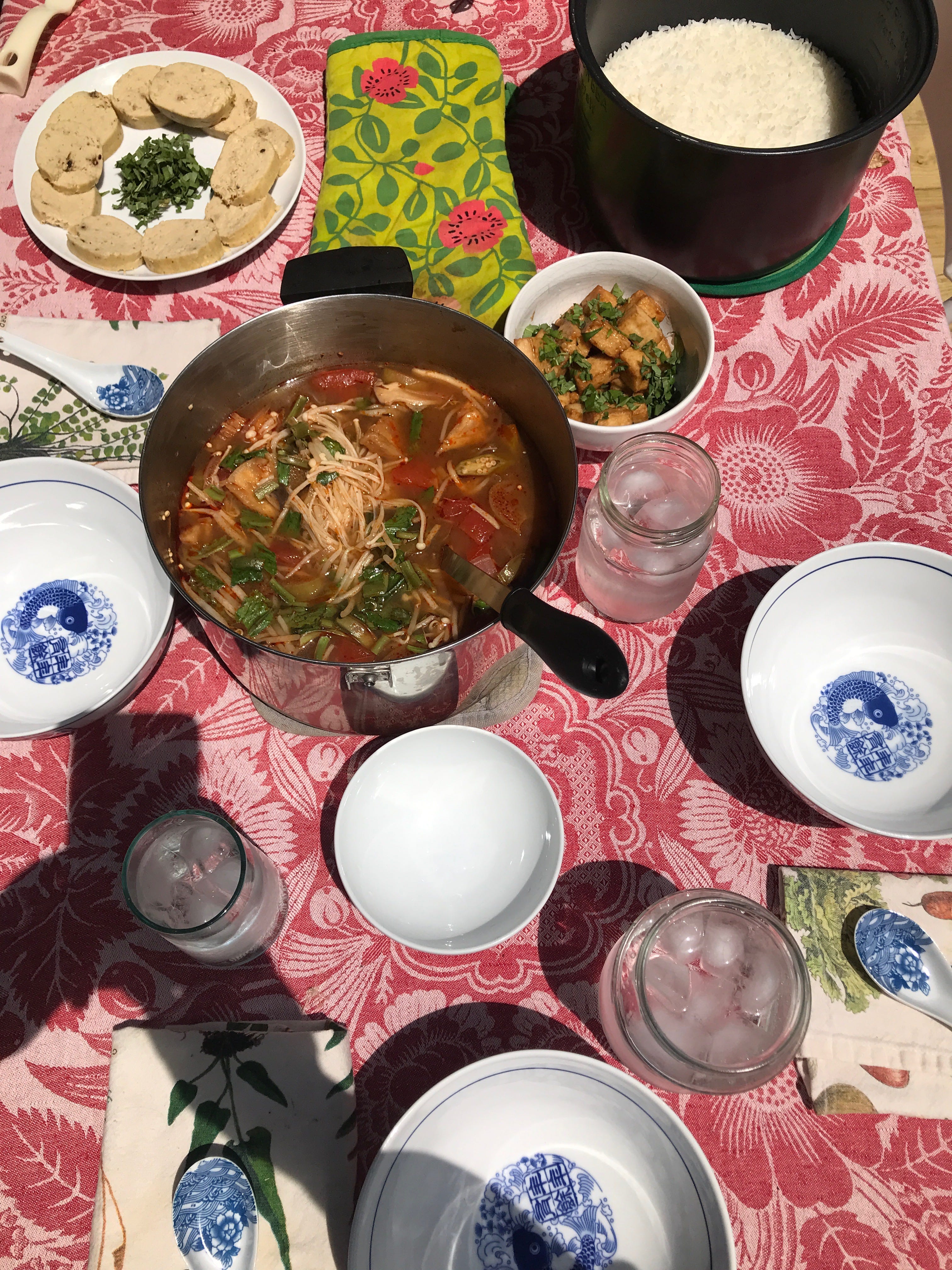
Our Tết meals varied over the years, but my mother always prepared seven to 10 dishes. Always by herself. My mother learned how to cook while my father was imprisoned in học tập. They often would talk with such pride about how my mother didn’t have to cook before he was captured because my father could afford to hire a live-in maid to care for our family. This feels unfathomable to me now, as so much of how I see my mother is through her cooking, but like many things, that all shifted after the war.
My mother is naturally self-reliant, and annoyingly independent. I wonder now if this was out of necessity since my grandmother favored my aunts over her. Regardless, how she prepared for Lunar New Year is different. Her level of commitment, dedication, time and energy were unmatched to anything else I had seen. I didn’t understand why it was so important for her to uphold this tradition until much later – for us, for me.
Every year, I watched my mother rub tiger balm on her frail, pale hands and forearms, mitigating and pushing through the pain of cramps and burns that she endured while preparing this annual feast. A food processor or a slicer was never sufficient; every carrot, broccoli, celery had to be cut by hand, thinly sliced to the length of your palm so it would stir fry perfectly in her wok.
She would shuffle around the kitchen, her 5’2 petite frame, cooking restaurant-sized dishes fit for royal dynasties that somehow my father, sister and I were lucky enough to enjoy. My father would lovingly remind her every year that she didn’t have to make such an elaborate meal. To which my strong-willed, stubborn mother would always shake off his comment so vehemently that her glasses would slide down the bridge of her nose, just enough so we could see her signature glare over the tops of her glasses.
She would cook tofu and veggie stir fry, prepared with much lovingkindness and mindfulness as if in a monastery; fry up bánh Tết, pork and mung-bean filled in brick-shaped rice dumplings wrapped in forest green lotus paper, and lap-xuong, a Chinese pork sausage filled with so much pig fat that you didn’t even need oil when you cooked it; and of course, huge baskets of dried fruit and red aluminum tin boxes filled with, red bean treats, pandan jelly, sweet rice, and tapioca pudding.
Thanks for reading Just One Breath.! This post is public so feel free to share it.
When I was a kid, I’d quietly climb on top of a white plastic footstool to sneak a bite, my short arm reaching just enough to —
“Don’t eat that! That’s for your ancestors!” my mother would yell at me in Vietnamese.
As I slowly grew into my bratty prepubescent self, I would sulk in the living room, tortured by the smell of freshly fried handmade egg rolls, not understanding why my dead grandparents had first dibs on the food. I was alive and hangry — not them.
I longingly watched my mother bop around the kitchen until the wee hours of the night, eventually dozing off to the sound of her cooking.
Click, clank. Sizzle, burble. Chop, chop, chop.
Every so often, I’d wake between dreams, to catch glimpses of her messy bun and “cooking” uniform — my sister’s old high school t-shirt, so worn and torn that the fabric was starting to become translucent.
After days of cooking till all hours of the night, every year on the eve of Lunar New Year, I’d watch my mom prepare the altar in our living room on the big wooden mantel that rested on top of the fireplace we never used in our hot and humid Houston home. I watched as she transformed our home, filling it with the smell of lemongrass, incense and an indescribable magic.
A fragrant concoction of anticipatory joy.
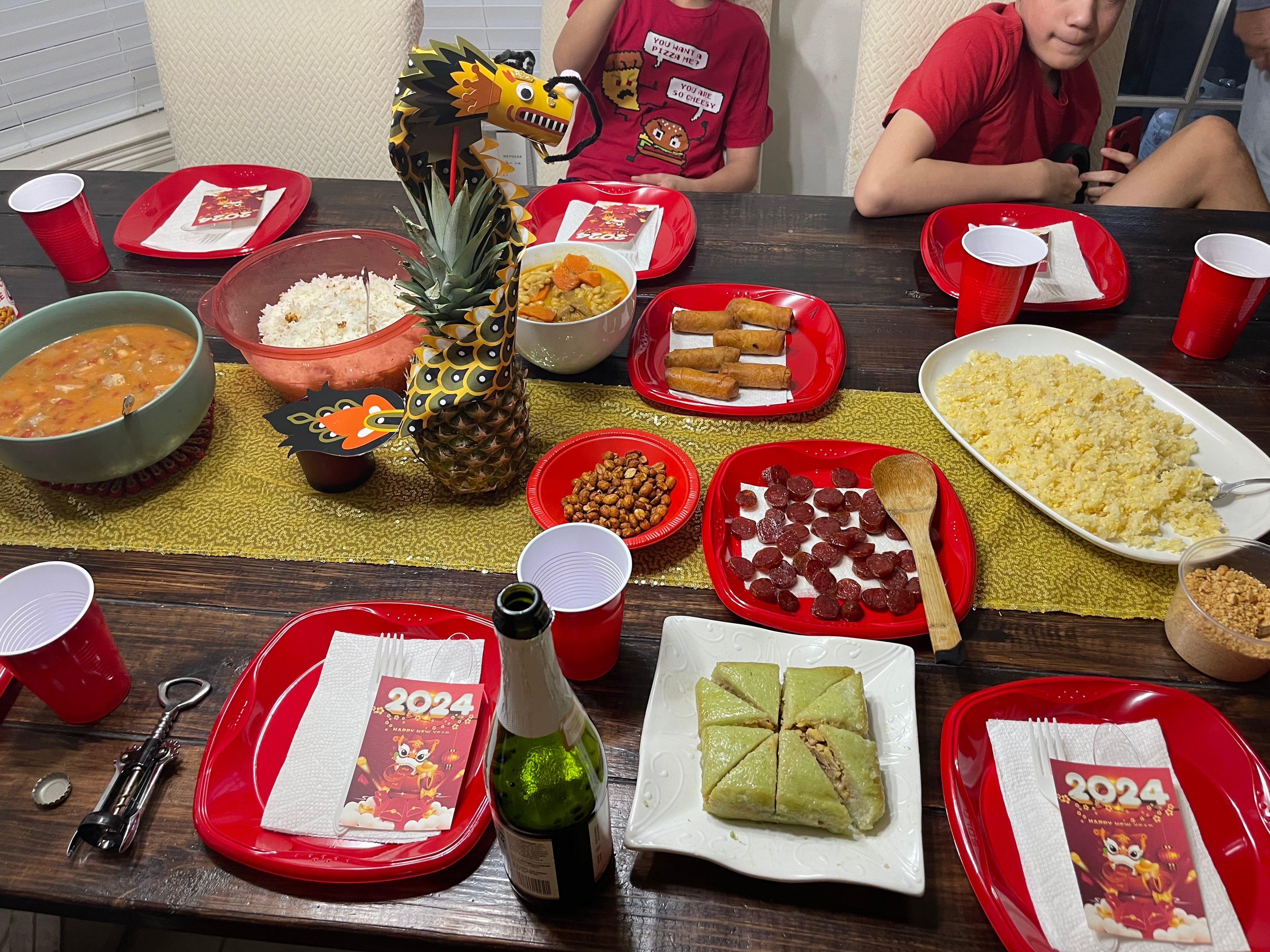
Once everything was in position, my mother would light three sticks of incense, and then strike the bell on the altar three times to begin her prayers — a signal for us kids to be quiet so she could express her gratitude and ask for good fortune in the coming year. I wouldn’t understand the significance of this ritual until much later when I embarked on my own Buddhist path.
I watched her softly whisper out her prayers for her, my father, me, my sister, my nephews, my aunts, my uncles, their families — for everyone to have a healthy and prosperous life. With every word, I could see her intention, how deeply she wanted these prayers to come to fruition. She would also pray for my grandparents’ souls to be ushered into their next life in the kindest and gentlest way possible.
In some way, through her prayers, it was like my grandparents were still with us in this life and would be in the next.
My mother bowed down to the altar three times and placed the incense into the bowl filled with rice and ashes, as if she was planting her prayers into the universe’s cosmic soil.
My father went next, moving through the exact same ritual: lighting three incense sticks, ringing the bell three times, and praying, with full presence, full intention.
When I was old enough, my parents invited me to join them.
Nam Mo A Di Đà Phật
Nam Mo A Di Đà Phật
Nam Mo A Di Đà Phật
This translates to: I am and am with the Buddha.
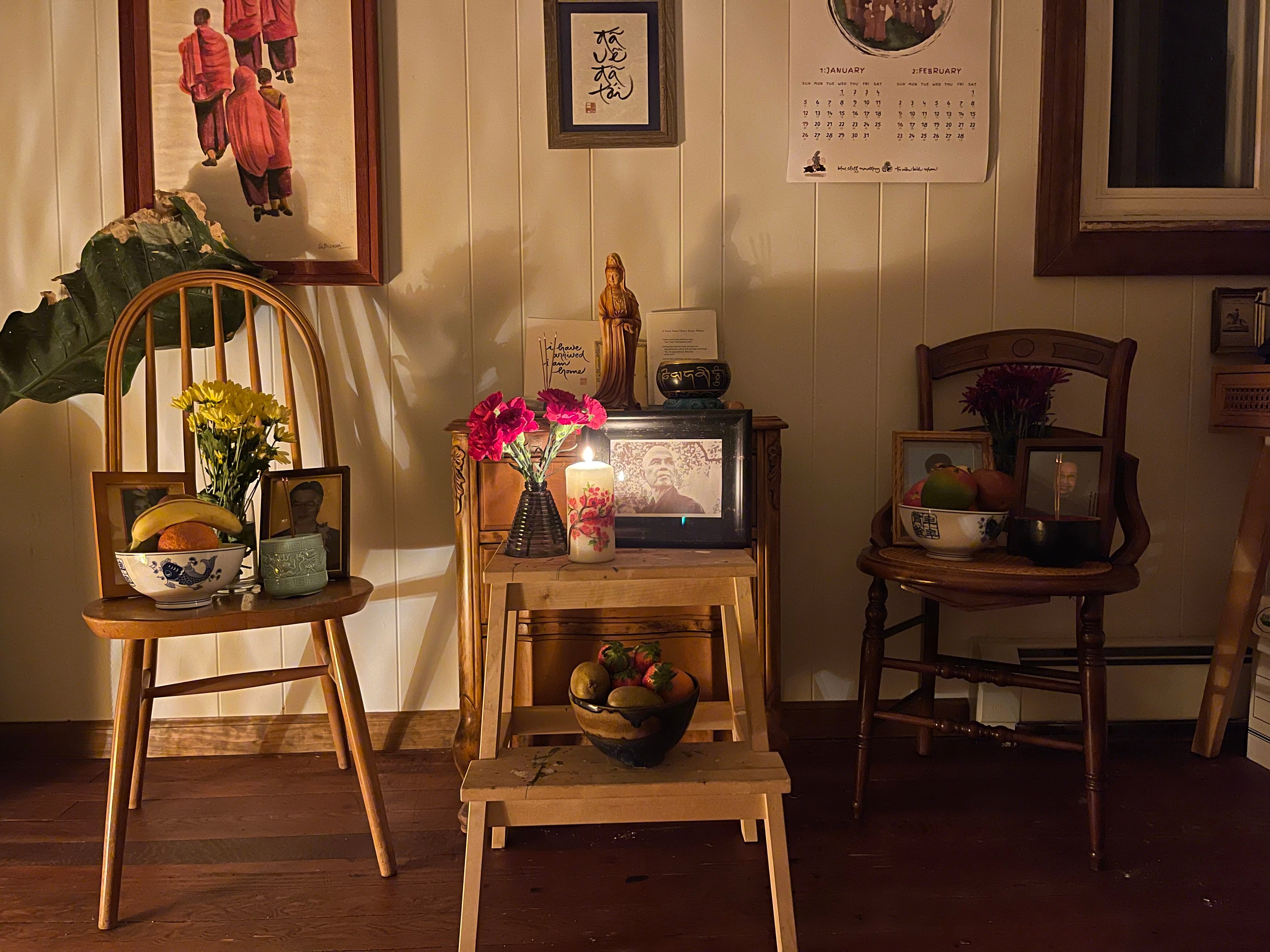
Since these formative years, as I was searching for community and wanting to connect to my Vietnamese identity and heritage, Lunar New Year has become an essential part of my life. I have learned since those early years that it is the most important holiday in Vietnamese culture and have found ways to honor that in my own way since I moved away from home.
Whether it’s inviting friends over for a big meal, or decorating our house, or giving my nephews Li Xi1, Tết2 has become a ritual. In recent years, creating an altar for my ancestors and going to the monastery has taken over my previous attempts at cooking a massive meal for those around me.
This new ritual invites me to dive deeply into that prayer that I heard so many years ago — Nam Mo A Di Đà Phật — and for me to sit with how I want to move through this coming year.
Last year, the Year of the Wood Snake3 , invited me into an intense period of shedding and letting go. It was, like for so many in my immediate community, but also globally, a challenging year. We saw violence and corruption happen at a rapid pace as our American democracy has unraveled before our eyes while children, families and those most marginalized from immigrant, trans, and Muslim communities have been literally kidnapped off the streets and wrongfully imprisoned and tortured. We saw war, famine and inhumanity peak with the genocide in Gaza, the atrocities in Sudan and the continued terrorizing of Ukraine. The shedding here, you could argue, is an intentional dismantling of the longstanding systems and geopolitical power dynamics that have caused its own level of oppression. To what end? It’s hard to make sense of it all.
But as we transition into the Year of the Fire Horse4, I am reflecting on what I have begun to let go of that will serve me into this next year and really the rest of my life. (Awesome astro reading for the year here, if you’re interested.)
For me, the energy of the Fire Horse invites momentum. I’ve never ridden a horse but but I know that when you’re riding a fast horse, the last thing you want to do is panic or try too hard to control the horse, as it’ll inevitably buck and throw you onto the ground. Instead the guidance is to stay calm, maintain a deep seat, and use alternating, gentle pressure to slow them down.
In other words, how can we ride the fire?
To me, this is truly symbolic and invites us to consider one of the biggest teachings in the dharma5 — non-attachment. It’s one of the hardest things to do in our contemporary life, where we are all trying to make sense of the world, juggling all the things, and if you’re like me, trying to live a life filled with intention.
But I have, at times, held onto intentions too tightly, with a certain rigidity, too firm of a grasp, that it has created a different kind of suffering — one in which I get frustrated either with myself or my circumstance because the outcomes are not what I hoped they would be, despite all the intention and energy I put in it. And so then I spiral further into my dissatisfaction, deepening my attachment to what I want versus being exactly where I am.
I wanted that horse to slow down, but instead I pulled on the reins too hard out of frustration and made it buck and throw me from its saddle. You see what I mean?
If we remember that the aim of the teachings, of Buddhism, it is to find ways for us to relieve and hopefully end our personal and collective suffering, that these practices provide a pathway to that. So it makes sense that the practices are hard, but that is also the reason why they are crucial.
To me, to want is one of the most human things we can do. It is why this practice of non-attachment, of letting go, is, in my humble opinion, the hardest practice in mindfulness and one that we must come back to again and again.
And of course, the key isn’t just to get off the horse and ignore all your problems. To me, this year invites the question of: How do you ride and be with this powerful Fire Horse energy? Instead of trying to control it?
The Year of the Fire Horse also invites us to consider how to navigate our world on fire: How do I be with the fire and not be overwhelmed by it? Not check out? How can we harness the spirit of the Fire Horse to build momentum around compassion and lovingkindness for our communities? For ourselves? How can we remain grounded and access joy amidst the fire?
These are the questions I will be sitting with as we gallop into the new Lunar New Year and I’d invite you to sit with them, journal about them, talk about them with friends. Comment here with your reflections. We must stoke this energy — just like a fire — to keep it alive. So let’s do it together.
Thank you for your practice and thank you for reading.
For this Lunar New Year, I wish you all, my dear readers, much courage to ride the Fire Horse, to touch wild joy, and continue to deepen your practice. May you touch peace in your breath and remember what a gift it is to be alive.
Li Xi (or Lì xì) refers to the Vietnamese tradition of giving “lucky money” in red envelopes during the Lunar New Year (Tết) to symbolize wishes for health, prosperity, and luck. Usually given by married adults to children or unmarried individuals, this custom is a cornerstone of Vietnamese New Year celebrations.
The Year of the Wood Snake (beginning January 29, 2025) signifies a period focused on wisdom,, strategic growth, and profound personal transformation. Combining the intuitive, calculating nature of the Snake with the expansive, creative energy of Wood, this year encourages thoughtful planning, fostering, and,,, sustained progress rather than reckless risks.
The Year of the Fire Horse (next in 2026) signifies a 60-year cycle of intense energy, characterized by strong, independent, and often tumultuous action. It merges the Horse’s traits of speed and freedom with Fire’s passion and volatility, symbolizing, according to a 2026 forecast, intense innovation.
In Buddhism, Dharma is multifaceted, primarily meaning the Buddha’s teachings (the path to liberation from suffering) and the fundamental truth or reality of the universe, including principles like karma and impermanence, serving as a guide for ethical conduct and awakening.
No posts
Comments
Nothing yet. Say the first thing.
Sign in to join the conversation.