
I’ve been thinking about home since Edie (20) told me she is “going home” to NYC. Back to college and to her life. The city is her home now. The irony here is that I, too, left my parent’s house, and my small town, and escaped to have a love affair with the city.
Despite having made the same decisions, I felt a pang deep in my chest when Edie said it. How could her home be in a place without the rest of us? Without me? Good God, this child was barely off of me the first ten years of her life. And yet, I know. The young go off and make their own home. This is the whole point.
Our home will be part of her nostalgia, the family home for holidays maybe, and summer breaks, or suppers with grandkids, but her relation to it will change, as our relationship to it changes. Our house will be a mausoleum of her childhood photos, a place to bring a new love to introduce them to her history, to see the kitchen wall with all the height marks that note everyone growing up and away. Our home can represent deep comfort, or be a prison or a duty, which was my experience returning home. A place she might miss in some abstract day dream, but no longer needs or wants to live in.
She is like me in so many ways, the way she misses home and then returns and wants to leave it. We, of the unsettled souls. This house is a place that feels more ours than hers, as we change rooms, re-decorate, re-utilize the spaces, and continue our journeys in parallel.
Edie took her birth certificate back with her to New York. I watched her open the lock box and gather her papers. My instinct was to want to hang onto it, so she wouldn’t lose it. A solid parent move. But I stopped myself. She’s an adult. This is her paper.
This is her life. And now, ours.
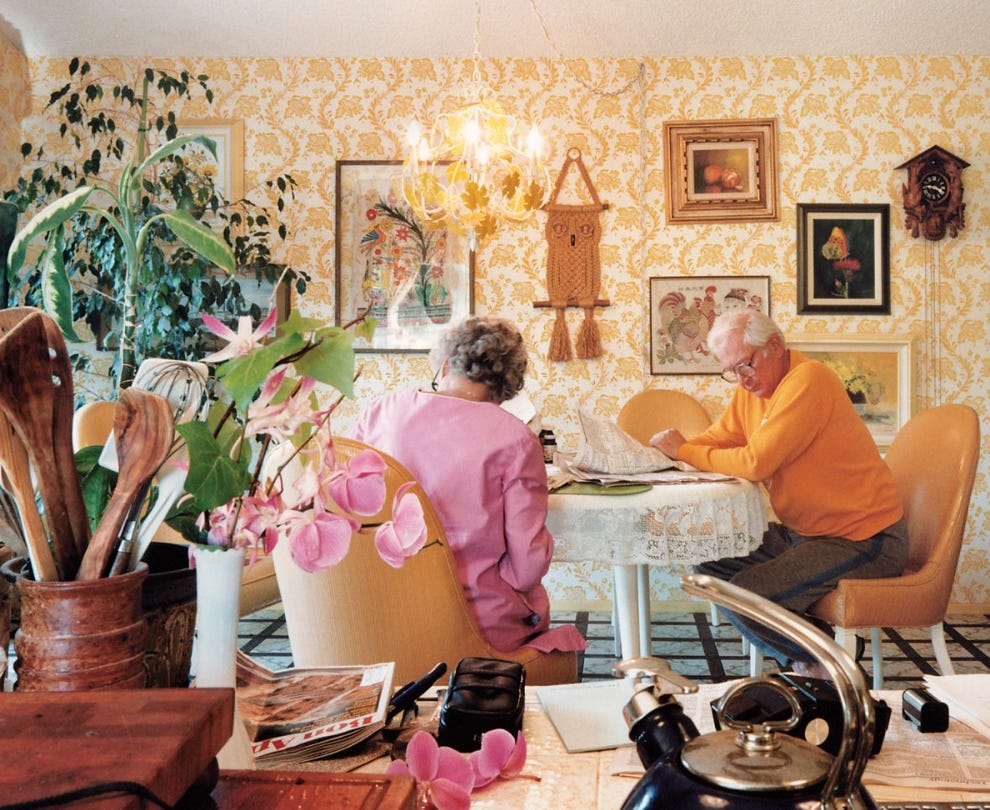
There’s this trend on social media #dormtok that has people all bent out of shape and discussing, and it, too, plays with this idea of home and its meanings.
Parents are dropping off their kids at college with full-on room decor. Tiny crystal-laden rechargeable sconces, custom upholstered leather headboards, handstitched monogrammed velvet Euro shams, scalloped credenzas that serve as in-room coffee stations, flowing bedskirts, valances hung across windows on tension rods, and microwaves stowed inconspicuously inside antique mahogany cabinets. These rooms are elaborate, thoughtful, and not cheap. Some families hire designers to design and furnish the dorm room for, what could be, up to $20,000.
These particular families go to predominately Southern universities. Think: Ole Miss, Texas State University, Southern Methodist University, and most famously, University of Alabama, where its sorority Delta Zeta house, spent $17 million-dollar, 40,000-square-foot renovation boasting a grand entrance foyer with a sweeping staircase, massive crystal chandeliers, and custom leaded-glass windows, along with fire places, oak study rooms and lavish private bedrooms.
The elaborate dorm design comes hand-in-hand with a generation of parents struggling to let their kids run their own lives. In “college mom” chat rooms across the internet, parents ask university admins what directions their child’s dorm room faces, the window measurements for curtains. They compare design hacks for covering dingy cement block walls.
I scrolled these photos, they are white and petal pink, thick bed skirts and embroidered pillows. Hyper-femininity. Homogeneity. Minimal study space, not a textbook in sight, but darling tiny tables that will never endure the drunk boyfriend clamoring over them in the dark middle of the night. Fuzzy throw pillows destined to be ruined by homecoming red cup punch vomit.
I get why the parents spend the cash if they have it (although it feels ridiculous to me personally); they want their kids to feel safe, enveloped, cared for. They want to extend parental care to their kid’s new home, even as the point of living away from the family home is to feel the actual rift from childhood. The parents also recognize something that most parents get intrinsically at this time - our young adult may be an adult legally, able to join the military and be put on death row for capital murder, but they are still immature and kinda clueless and impetuous. Home still has a role and we know this.
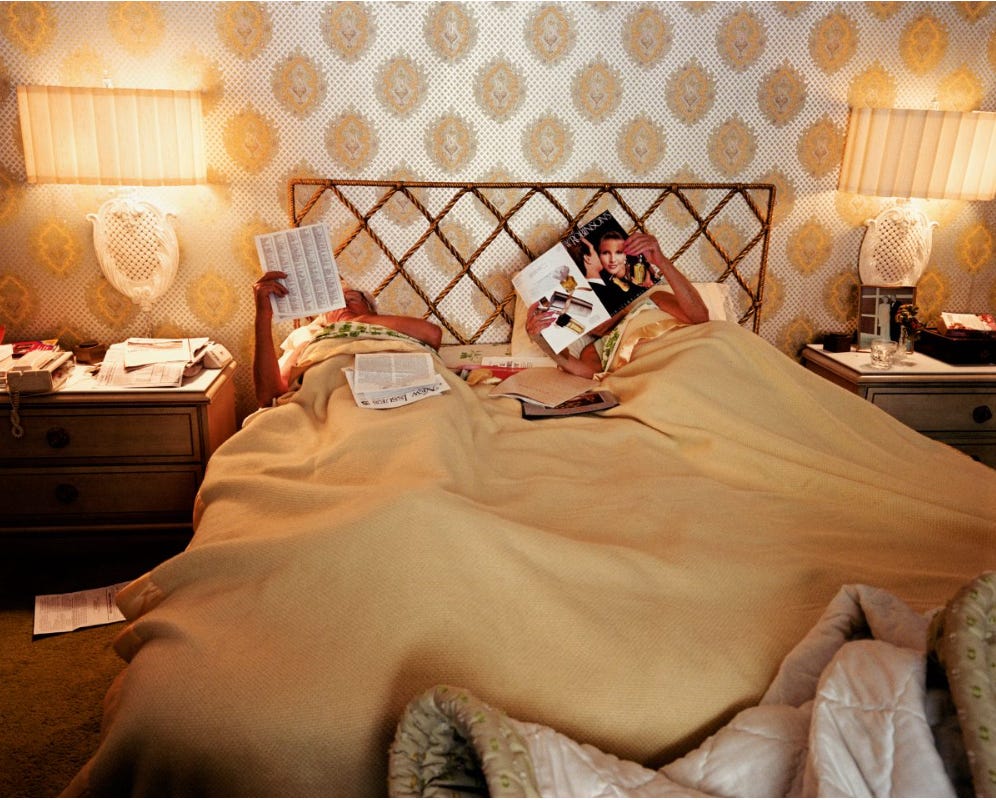
#Dormtok signals a different idea about what home is though.
The home used to be only private, unless you were chosen for a spread in Dwell or Architectural Digest, only people you knew came inside. Now, the dorm room functions as a brand, assurance of an entire lineage of wealth, taste, and care. These students are loved, and someone cares enough to go the extra distance, is part of the message.
These students aren’t exactly trad wives, but the curation of their room by mothers and designers, signals a kind of hyper-domesticity that is a cousin to tradwifery. The home is not just safety and comfort, as much as it is the public performance of comfort as an identity. And that identity is elite, maximalist and expensive (or at least expensive-looking.)
The idea of home is portable and public. It isn’t this one building that holds the history and the memories, the day-in-day-out ruts of living, the wear and tear, the things that break and smash, the couch stains, broken chair legs, tables that never sit quite right, for better or worse. It’s not a home that carries the scars of dysfunction and dysregulation or conflict, divorce, brokenness. There is no friction here. These are new home-like environments made with twinkle lights and signs with uplifting messages written in script. Home, it seems, can be made by simply consuming on Dormify or Target, with the understanding that the dorm dumpster in May will be filled with all of it, stained, discarded and replaceable.
Home has morphed into an undisturbed flow of performance luxury and womb-like comfort, that happens first in childhood (if the middle to upper classes can get it done) and extends through early adulthood. We hate discomfort. We love consumption. Consumption feels like the curation of comfort.
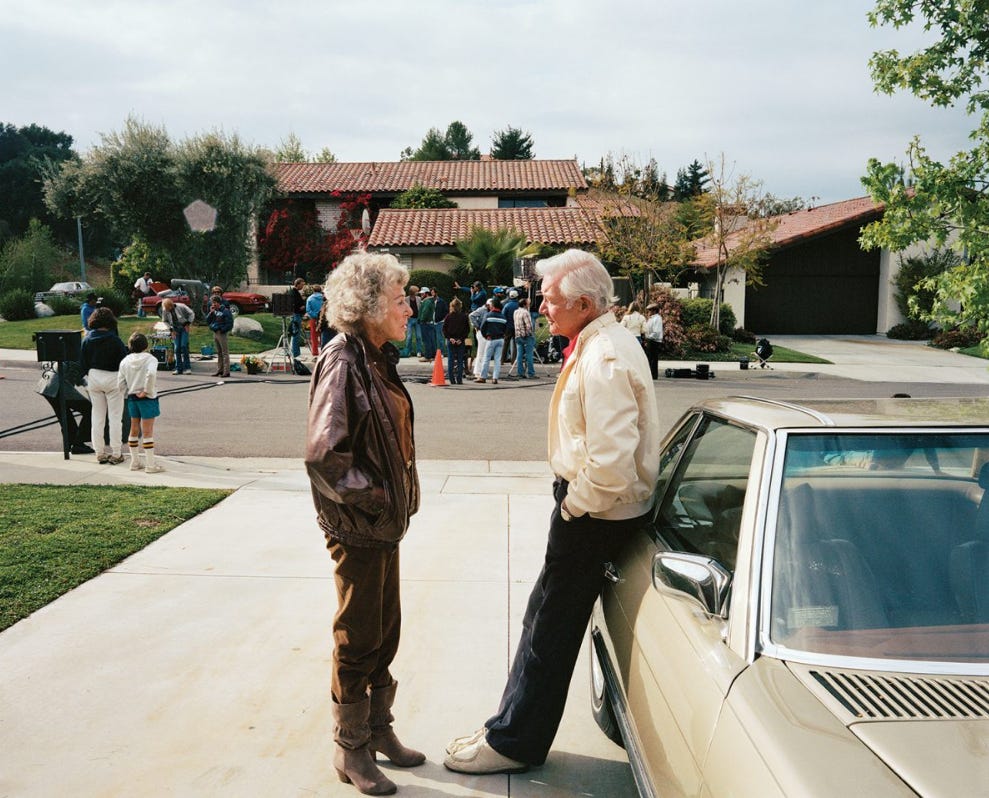
The #dormtok images have been in my thoughts a lot this week because of Edie leaving again, but also Chase.
Two nights ago this 21-year-old kid stayed at our house after being locked out and evicted from the apartment he shared with his mother. All of his things he stuffed into a black trash bag. He showered, ate. I washed his clothes.
Chase has been living on the edge for awhile. Foster care for most of his teen years. His mom in active addiction. His younger siblings are in foster care, he pays the rent with his part-time job at a supermarket. But mom kept making trouble, bringing her drug friends and her dealer boyfriend into the apartment. One late payment by Chase, and the property manager had enough.
Chase is gregarious, and he has formed a little circle of people who watch out for him. Johnnie who he works with, Trevin a bearded addict in recovery at his church, Tina his old foster mom. Me. I called in a chip and yesterday he went into a 90-day transitional living apartment. He has a caseworker. I think we both expected it to be a band-aid. A sterile temporary fix. An impersonal home that is better than no home at all.
But then we met Fernanda, a former unhoused mom, who raised her kids in her car, now director of the program. Her office in the old motel on Fremont East was like an Ole Miss dorm room without the beds. Chase was in wonder. Plush velvet lounge chairs, posters with uplifting messages written in script, diffusers with citrus misting the air, a forest of plants.
“A local business woman was re-doing her office and gave us all this,” she told us after Chase looked around like this was the fanciest place he had ever been.
“It was folding chairs before this,” Fernanda said.
What accompanied the surroundings was Fernanda’s deep sense of comfort. The way she told Chase that he would be okay. That he was not alone. He will get bus passes, help getting another part-time job, she will put him in therapy, there is laundry on site, communal activities like a journaling class, which excited him because he keeps a journal. He got excited about the idea of having a roomate.
“I’ve been so lonely,” he told Fernanda. There’s a good chance he is going to talk his new roomate’s ear off.
Fernanda told Chase he could stay for three months and they will help him find an apartment, maybe even one big enough to bring in two of his older siblings who are in the system. Fernanda and her team will stay with him three more months after he moves for support, to make sure he will be solid. They will pay the deposit and first month’s rent.
“This is vacation,” he said laughing, unable to get handle on what was happening.
Both Chase and I were struck by how welcoming it all was. How much comfort there was in Fernanda’s words and gestures. It was purposeful.
“When I was living in my car with my two little kids,” she told us, “I used that feeling, those needs, to inform how we built this program.”
Chase’s reaction went from wonder to relief. What did it mean to him that Fernanda had also been at the hell-bottom of her life and somehow ended up okay?
“Remember when I said I woke up thinking this would be the hardest day of my life?” he asked me on the way to the car to get his things, which we took out of the garbage bag, and transferred to one of David’s old duffle bags.
“I was wrong,” he said.
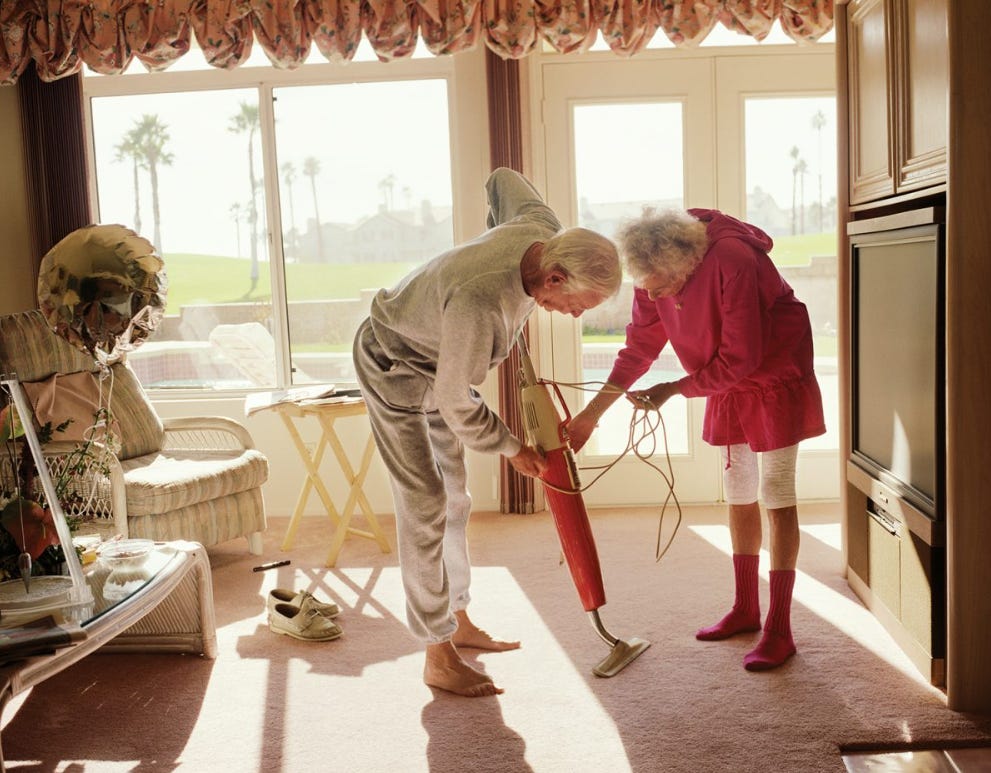
Home, for Chase, and for most of us, is being embraced, seen, and responded to.
It is the sentient part of the home that makes it so. And it is portable. We can create it anywhere, in a high-rise, or a tenement, or a 90-day transitional living program in Las Vegas. Home isn’t tear drop sconces and monogrammed throw pillows, but it also IS those things. Fernanda uses beautiful set pieces to signal to new residents that there is a shift in the struggle. She told Chase and I that she hunts FB marketplace and pay-nothing groups to fill apartments with a sense of home. The nice things we buy, the way we curate our home and our dorm rooms, are connected to a sense of control, comfort and a sense of self. They are part of home, too.
In it’s best iterations, home allows us to find ourselves again. It remains open to us leaving, and returning, it accomodates our weirdnesses, it sees us for where we are as we shift and change ourselves, and allows us to recast its meaning to suit our journeys in the world.
I hope our kids feel they always have a home with us, a place to retreat from the hardness of living. But mostly, I hope they know the satisfaction of creating their own bulwark against the hardness of the world, and that they can populate it with with people who see them and love them.
I hope this for the college girls of the Southern colleges, and for their yearning parents. And Chase, too. We all deserve sanctuary and some good, fluffy pillows.
Thank you, as always, for reading and supporting. xo Kim

Comments
Nothing yet. Say the first thing.
Sign in to join the conversation.