
I’m trying something new with this one. Most of what I write here is itineraries, travel trends, tips, the usual toolkit. But some of the best parts of traveling and eating my way through a city aren’t things you can put in a checklist, they’re the people. This time I got invited into the room, so I’m bringing you into it too, recap and conversation both. I sat down with Chef Reggie Miller and culinary entrepreneur/event designer Gabby Smith afterward, so you’re getting the night through my eyes and then straight from theirs.
It’s cancer season, and true to form, the universe has been showing up for your girl in the best ways.
So when I got the call that I’d been selected as a media and influencer partner for the South Carolina Aquarium’s Good Catch dinner series, I didn’t hesitate for a second. I said yes, got dressed, and showed up early.
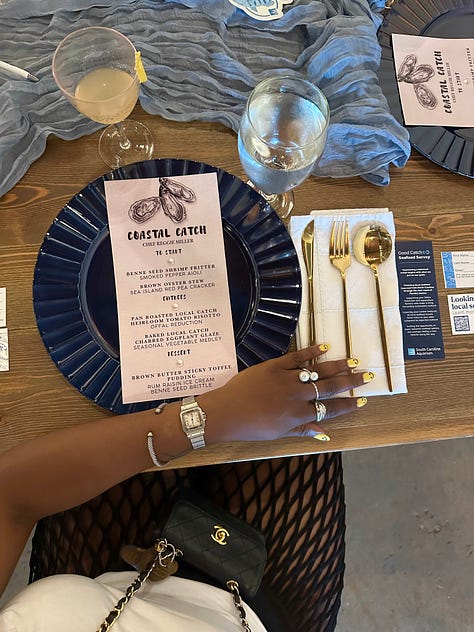
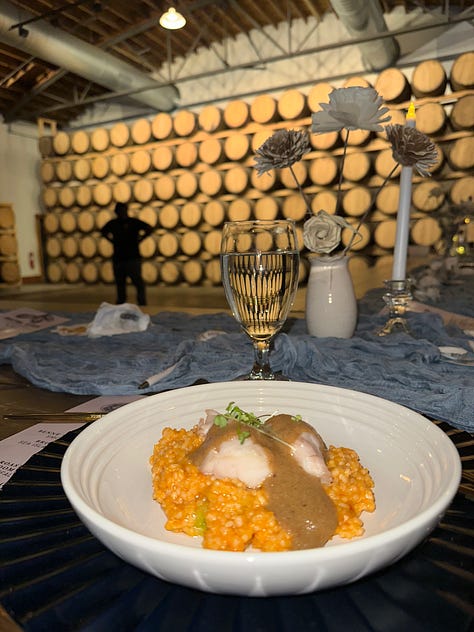
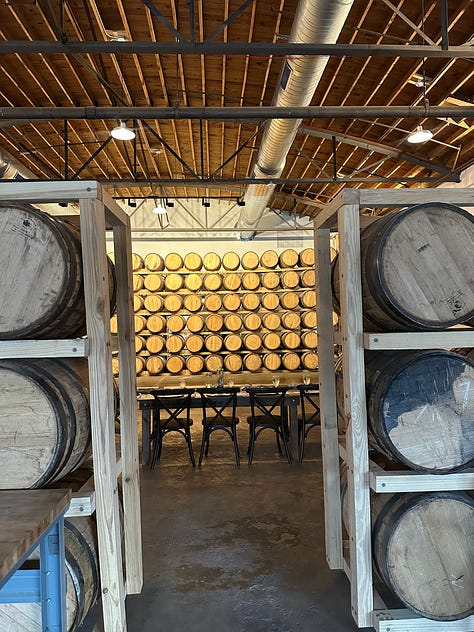
Good Catch, quick context: it’s the Aquarium’s initiative around sustainable, local seafood, backing fishermen from the Carolinas down to Florida who work under real harvest limits. That’s the framework. The real story of the night was what Chef Reggie built on top of it.
The dinner was held at High Wire Distilling Co., a grand U-shaped king’s table wrapped around the barrels in a moody, beautiful room. The kind of space that makes you want to sit up a little straighter and savor every moment. Shoutout to Gabby, who designed the entire tablescape, coordinated with the Aquarium, and ran the staff that evening, all while still a culinary student at Johnson & Wales. The details were immaculate.
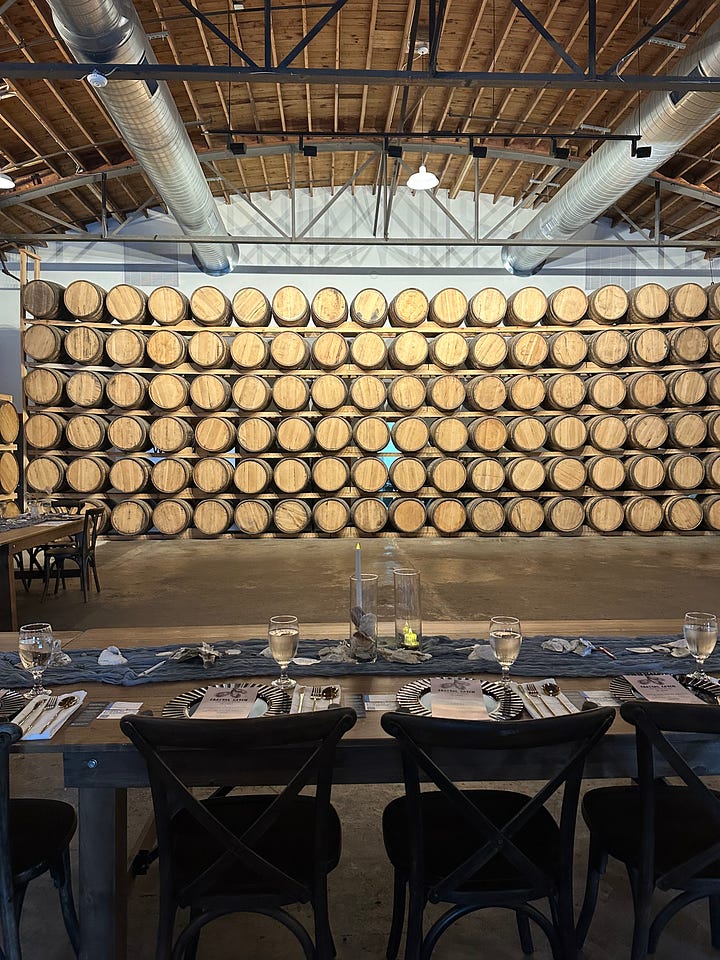
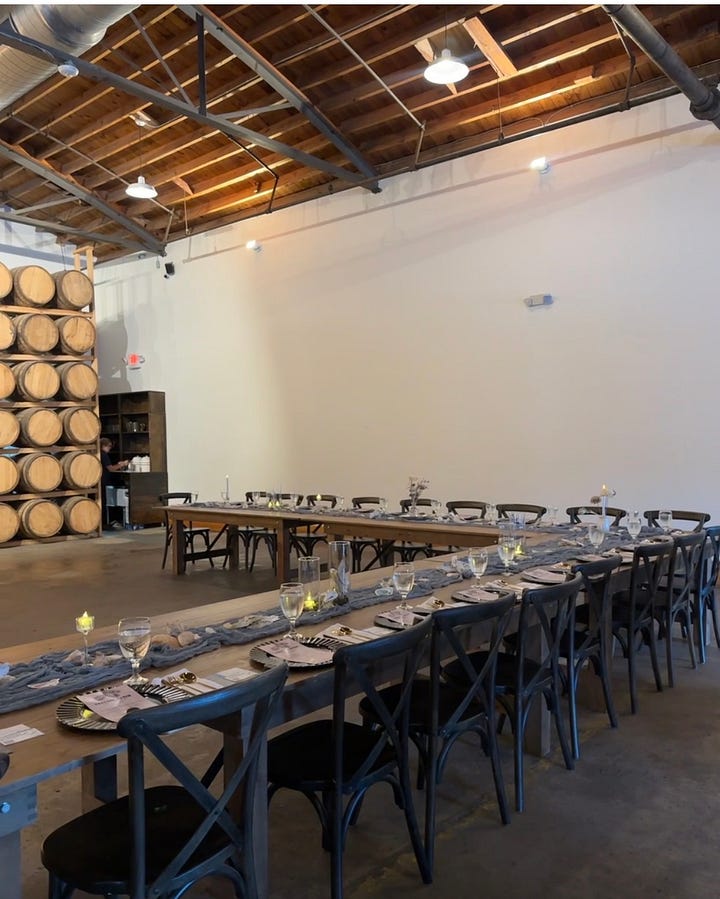
The evening was called Coastal Catch, and it was, at its core, a love letter to Gullah Geechee culture. Chef Reggie built the menu around the people he was honoring at the table, letting their stories shape the food as much as the sustainability mission behind it. Terrell Brown, the Gullah Geechee oysterman behind Browns Oyster Supply on Johns Island, sat with us that night, and Chef Reggie built the brown oyster stew specifically to let his wild oysters carry the dish, no added salt, just what the Lowcountry water already gave them. Same story with John Fuss of Holy City Fishing Charters. When the golden tilefish wasn’t available, Chef Reggie swapped in sheepshead using knowledge John shared about which fish share a flavor profile, since both feed on crustaceans. That kind of substitution only happens when the relationship between chef and fisherman runs deeper than a supply order.
Now let’s talk about the food, because I need you to understand.
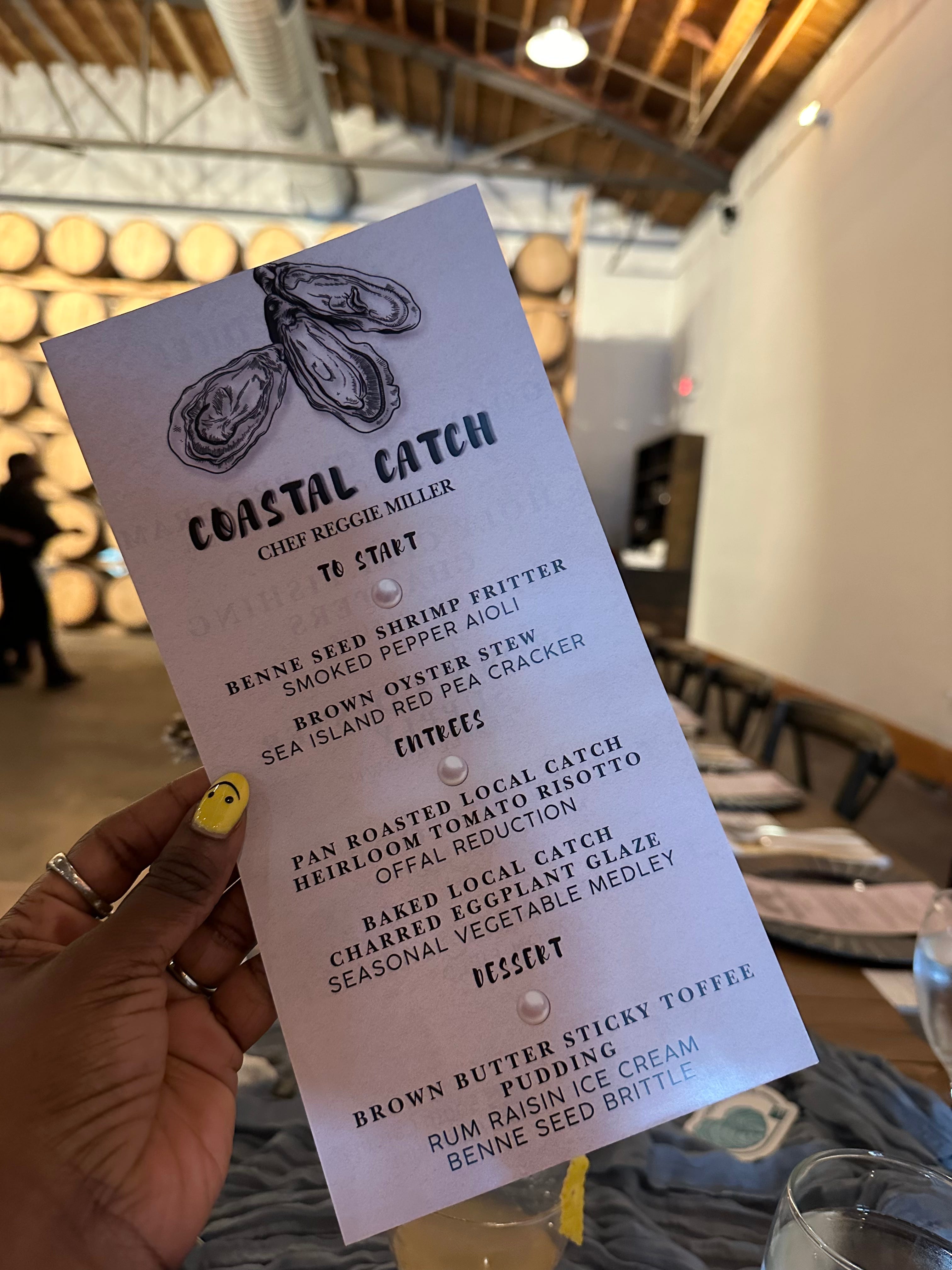
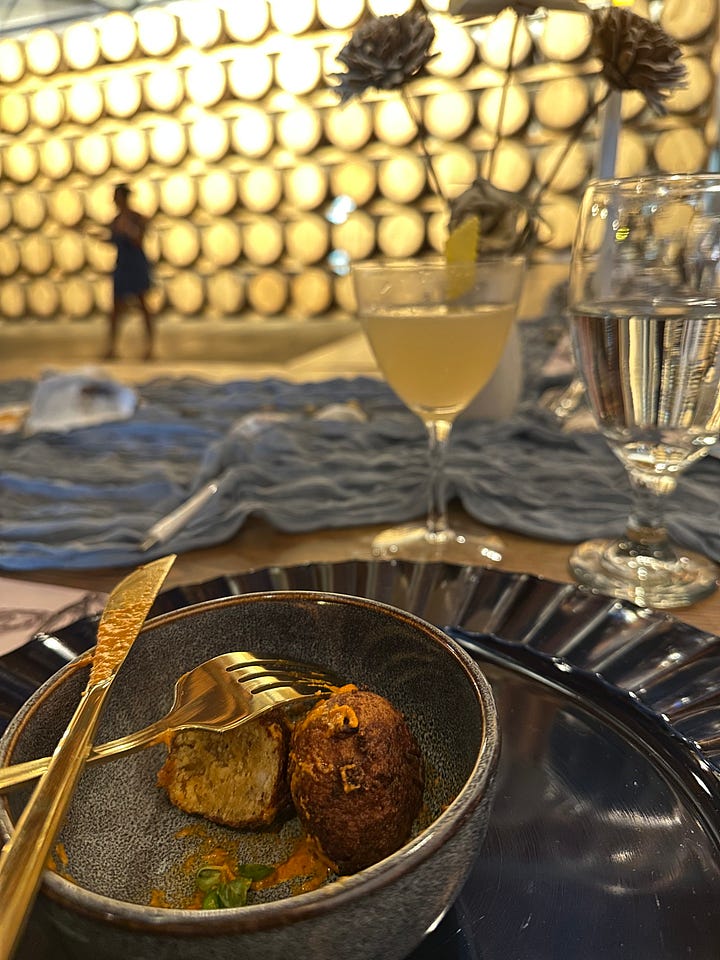
We opened with shrimp fritters made with shrimp sourced from Miss Paula’s Shrimp at Tarvin Seafood Co., a perfect nod to the Lowcountry and a strong first move. Then came the brown butter oyster stew, and I need to pause here because that was my highlight of the entire evening. Those oysters came straight from Terrell Brown’s supply, and you could taste the intention in every spoonful. Rich, coastal, deeply soulful.
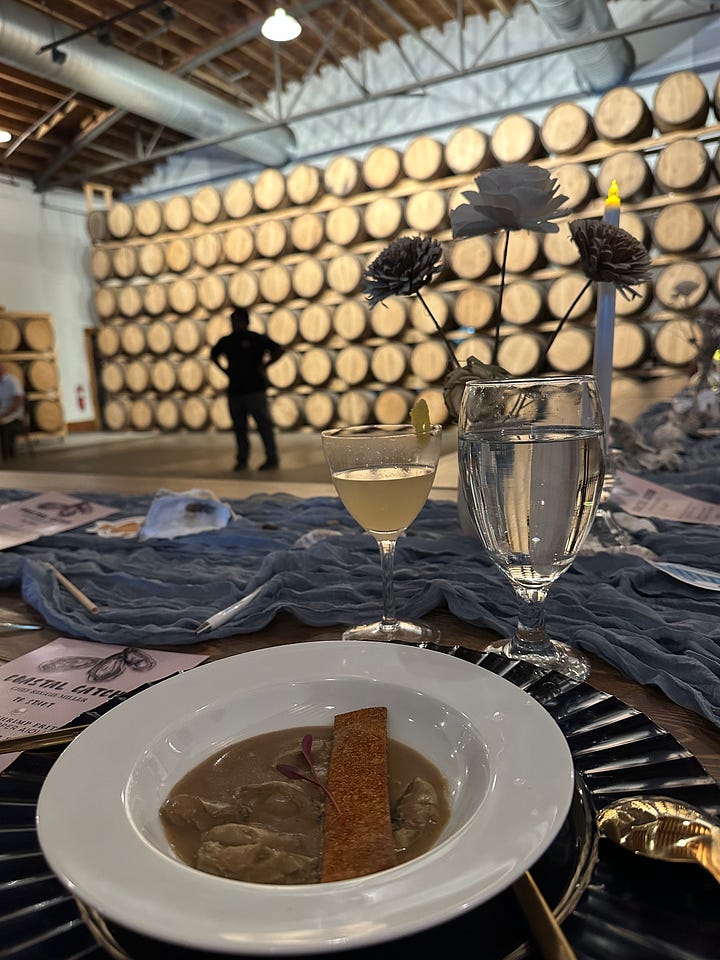
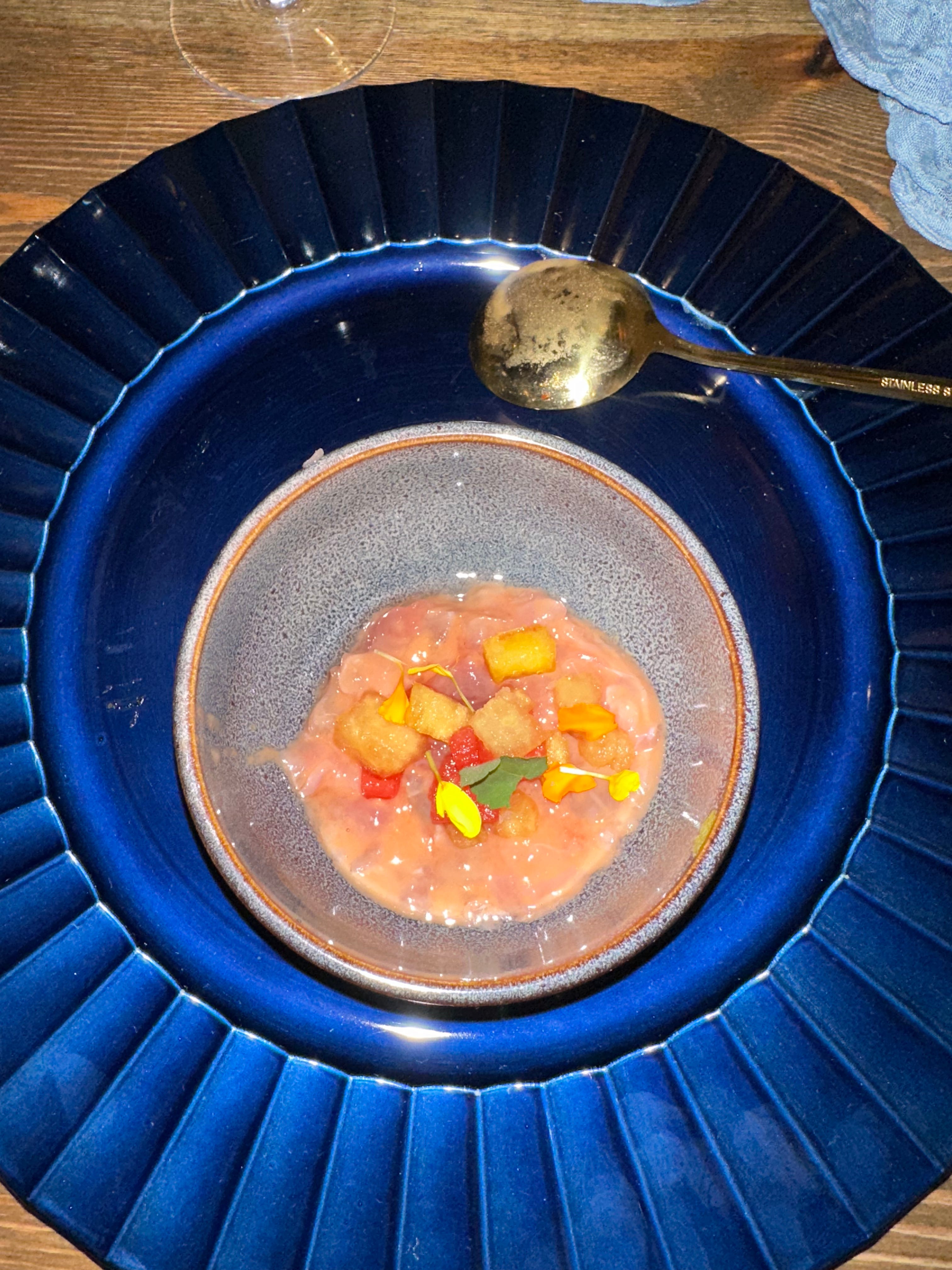
We moved into pan-roasted local catch over heirloom tomato risotto, followed by a bright, clean tuna ceviche that was the perfect palate refresh.
And we closed with brown butter sticky toffee pudding, which, full transparency, I boxed up and took home to enjoy with my coffee the next morning. Zero regrets.
Every course told a story. Every ingredient had a home. And every bite was a reminder that when food is intentional, it feels different.
Gullah Geechee food & culture ran through this entire night as the actual blueprint for how Chef Reggie cooked with intention, not a theme layered onto a sustainability dinner. I’m genuinely excited to see what the next dinner brings and which chef steps into this space next.
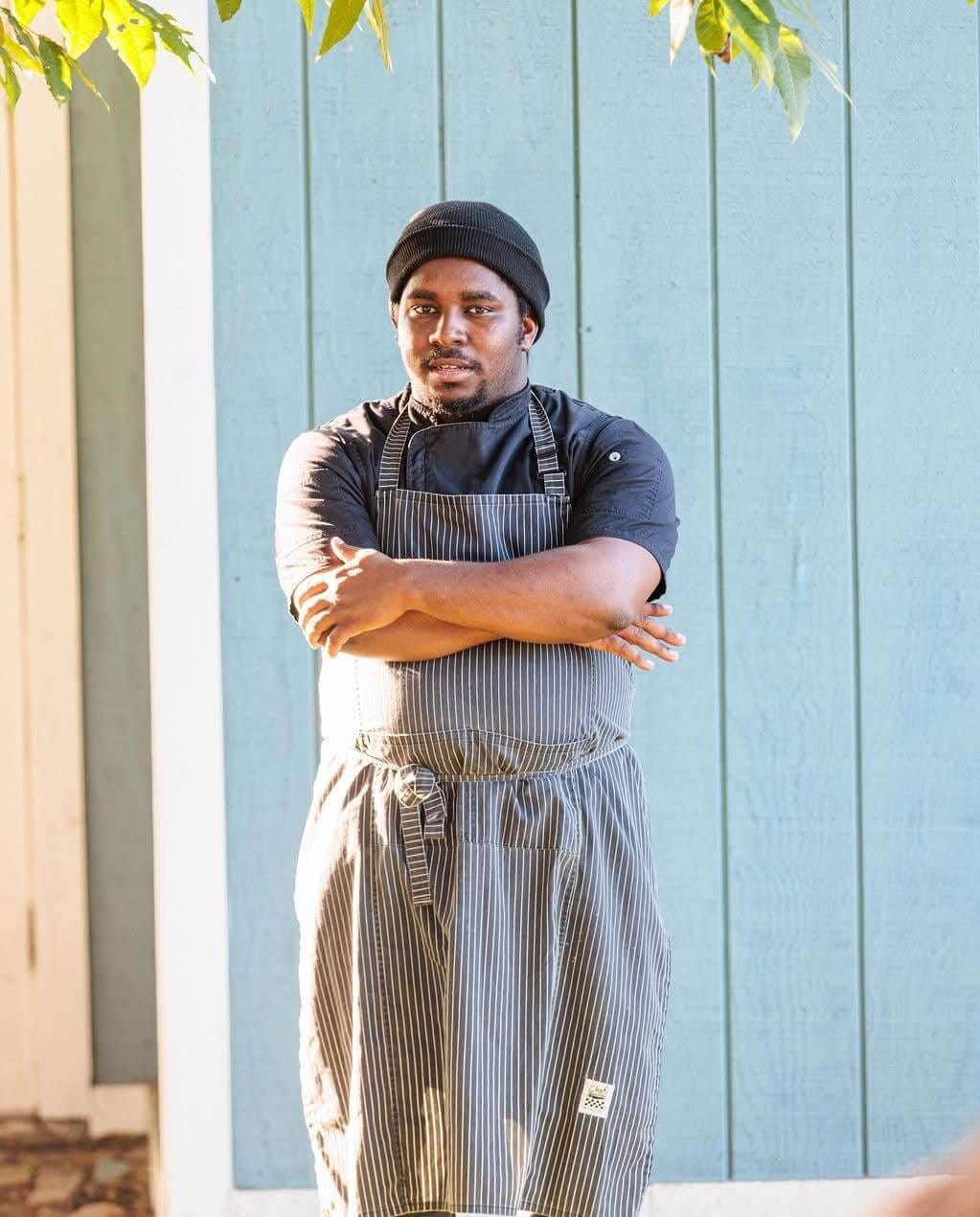
1. The menu felt like a love letter to Gullah Geechee culture, how intentional was that, and what does it mean to you personally to tell that story through food in a city like Charleston?
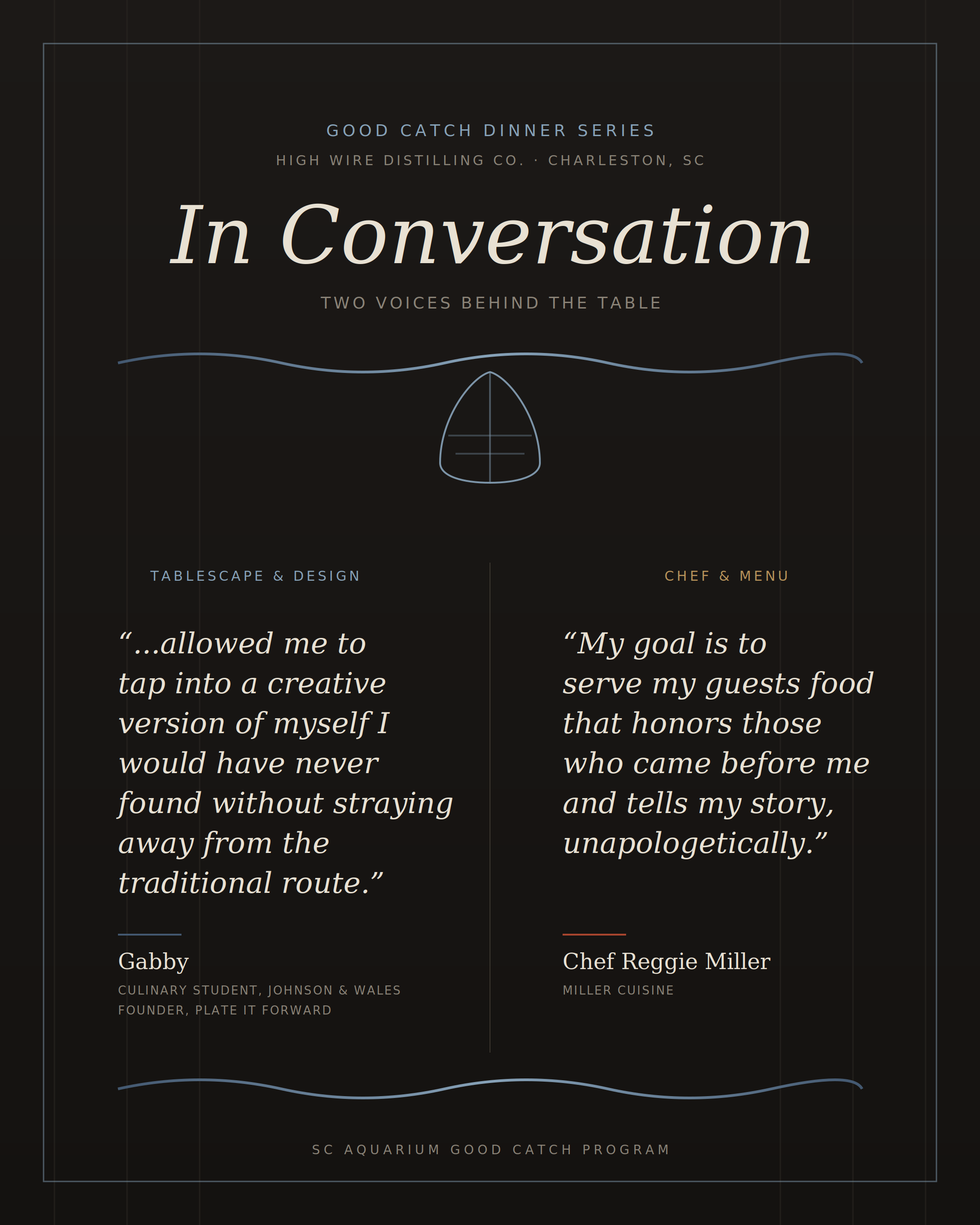
Although the Gullah Geechee culture is an important part of my career and personal identity, my dinner in partnership with the South Carolina Aquarium’s Good Catch Program celebrated SC waterways, sustainable food systems, local fishermen, and purveyors. The intention I put into the menu was inspired by the people we were able to honor at the dinner. We were fortunate enough to have Terrell Brown, owner of Browns Oyster Supply, a local Gullah Geechee oysterman based on Johns Island, SC. While building the menu, I took into account the salty waters we have here in the Lowcountry. In the brown oyster stew I created to celebrate Browns Oyster Supply, the natural saltiness of the wild oysters seasoned the dish, without any added salt. Having Terrell at the table spoke volumes to our other guests. He is a testimony to how vibrant, thriving, and authentic the Gullah Geechee culture and foodways is, and contributed to the story we told through the menu, food, and table decor that night.
2. Having the fishermen who sourced the ingredients actually at the table, how does that relationship between chef and fisherman shape the way you approach a menu like this?
As a chef that creates their menus around what’s in season, I believe that building a strong relationship with your local fishermen is critical. It helps the chef have a deeper understanding of the ingredient and learn the tales of our local waterways from the person that works the water every day. Having John Fuss, owner and operator of Holy City Fishing Charters, our local fisherman and friend, at the table was our way of showing respect and honoring his hard work and dedication to the preservation of our waterways. John educates his chef partners and clients on fish substitutions and similarities, so as consumers we don’t have to rely on a limited selection of fish.
During the dinner I had to replace the golden tilefish with sheepshead. With the knowledge John shared, I learned that both sheepshead and tilefish eat crustaceans, which results in them having a similar flavor profile, creating a seamless substitution for my guests.
3. Charleston’s food scene is having a real moment right now. As a chef rooted in this culture, how do you protect the authenticity of Lowcountry cuisine while the city continues to grow and change around it?
Charleston’s food scene is forever evolving. One of the things I enjoy about this city is how transformative the culinary industry is becoming. I am seeing more cultural cuisines and dishes from around the world being represented by talented chefs all throughout the Lowcountry. However, Lowcountry cuisine represents the origins and adaptations of those who live and have been living in the Lowcountry for decades. Gullah cuisine and foodways are foundational and beautiful in their own respect, much different from Lowcountry cuisine and Southern food. Honoring the land and farmers our food comes from is important in the Gullah Geechee culture; the practice of whole animal cookery and sustainability shows up there as well. Among all else, I am preserving and protecting my culture by growing and evolving with it, implementing practices my ancestors have been using for centuries in my private cheffing and catering, while simultaneously combining those practices with new techniques I’ve learned, merging and mending different cultures with mine to create something new. My goal is to serve my guests food that honors those who came before me and tells my story, unapologetically.
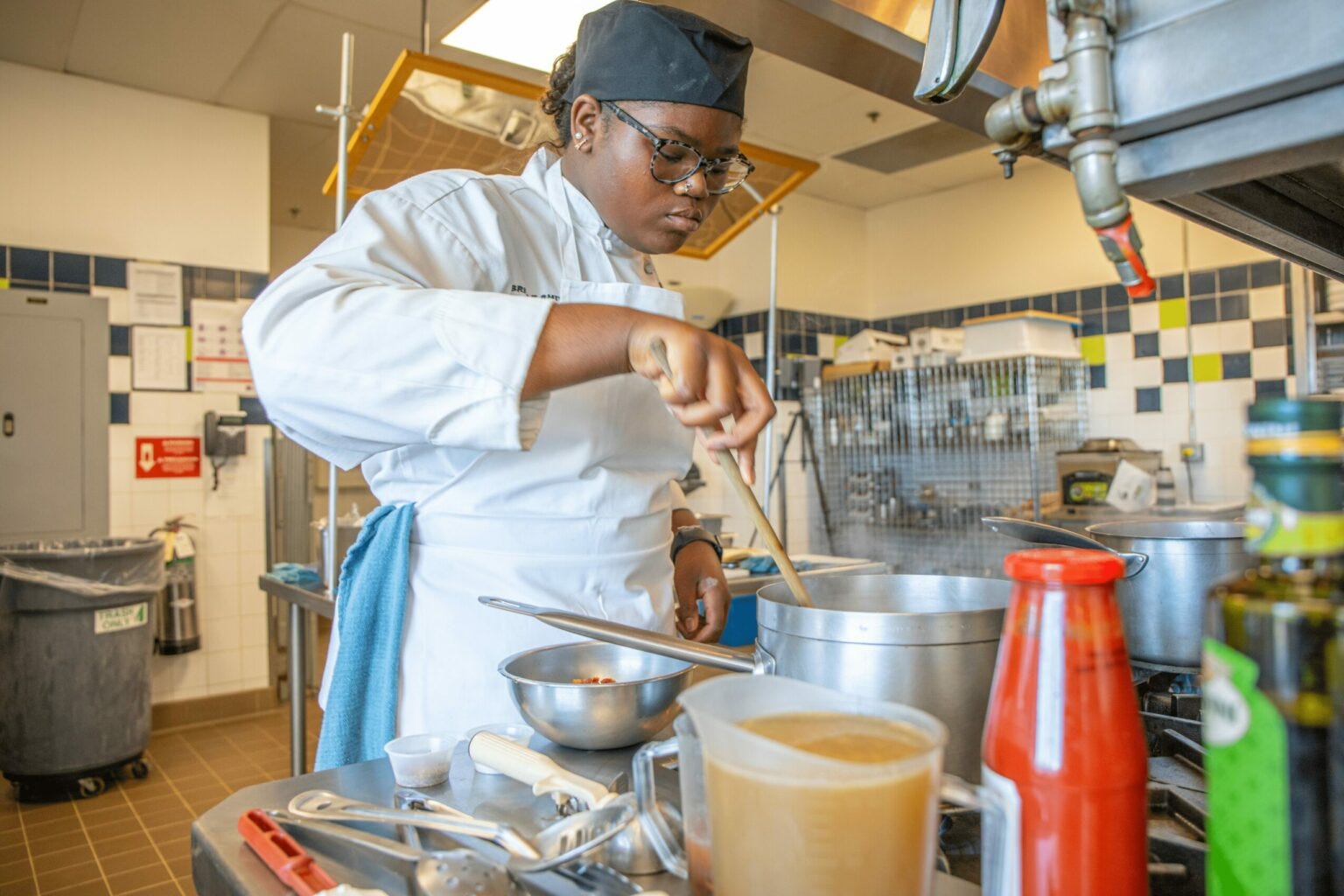
1. You’re currently studying at Johnson & Wales while already executing at this level, coordinating with the Aquarium, designing the tablescape, running the staff. What does it mean to you to be doing real, meaningful work in the industry while you’re still in school?
I found myself reflecting on this question a lot throughout the school year, especially my senior year at Johnson and Wales Providence this past spring. In a place where students are encouraged by instructors to take a more traditional route. Encouraged to work in restaurants until some imagined utterance says you are ready to pursue your own dreams or aspirations, whatever and whenever that may be. This is the standard in the food and beverage industry. The pipeline from student, cook, chef, to restaurateur. But to me, that couldn’t be the only way.
Being born and raised in Charleston, one of the most celebrated cities, rich with history and rooted in culinary excellence, has awakened opportunities to work with celebrated chefs, food historians, scholars, hospitality professionals, entrepreneurs, creatives, and the lot. I have worked in kitchens in downtown Charleston, worked as a server, hostess, and barista in North Charleston, at some of Charleston’s most breathtaking venues, and under the tutelage of amazing leaders, entrepreneurs, and chefs, who have shown me and continue to show me how broad and beautiful the world of the food service industry is. I am grateful for my formal education at Johnson & Wales University. However, as a graduate, and young emerging leader in the food and beverage industry, I believe the work done, the lessons learned, and the connections made outside the walls of the culinary labs and classrooms have forever made an impression on my career and have birthed a newfound love for people management, systems building, leadership, and allowed me to tap into a creative version of myself that I would have never found without straying away from the traditional route.
2. The tablescape told its own story that night, everything felt intentional and connected to the culture. How do you approach the visual side of an event like this, and how do your Southern roots show up in the way you design a space?
I loved every part of designing the tablescape for Chef Reggie’s Good Catch Dinner! This event was in partnership with the SC Aquarium so I thought it was very important to execute a natural tablescape: utilizing real materials from our local waterways, portraying the fluidity and movement of water in the tablescape, using colors we find in nature, while simultaneously honoring those who sat at the table. The oyster clusters we utilized in the tablescape were sourced from Browns Oyster Supply, a Gullah Geechee oyster purveyor based on Johns Island, SC. The owner Terrell Brown and his fiancé Jodie Holder joined us at the dinner table! The oysters were shucked for the guests to enjoy in their brown oyster stew, by Chef Reggie, and then cleaned and sanitized for the tablescape. Chef Reggie and I both practice sustainability in whatever project, dinner, or event we are executing; working with the South Carolina Aquarium’s Good Catch Program was no exception. The seemingly minor details in the tablescape, the blend of polished and rustic elements worked into the tablescape, were all intentional. The procurement of all of our decor and ingredients contributed to the experience we envisioned for our guests.
3. Your brand is Plate It Forward, I love that. What does that mean to you, especially in a city like Charleston where the culinary tradition runs so deep and the next generation of chefs is watching?
Building my personal brand Grits and Gabs, Reimagining Gullah Cuisine, honors the past and merges the present and future together. That is my legacy. However, Plate It Forward was born out of a need to fill a leadership and professional development gap in the food and beverage industry. Plate It Forward is a professional development software designed to propel the future of the food service industry forward. The systems and curriculum are all designed by, and tested for, real lives, real schedules, and real food service workers in mind. Both Grits and Gabs and Plate It Forward are examples of how multifaceted the food and beverage industry is, and how fortunate I am at 20 years old to be able to show up and do what I love, in addition to continuing to grow and find my purpose within this industry.
Comments
Nothing yet. Say the first thing.
Sign in to join the conversation.