
Voters, taxpayers, retirees, workers, small-business owners, caregivers, veterans, students, public servants, and families who want government to work are asking a fundamental question: can we trust that decisions in Washington are being made for the public interest rather than for wealthy special interests, insiders, lobbyists, or personal financial gain? The Primary Election is August 18, 2026. The General Election is November 3, 2026. Voters deserve the transparency.
Here is where I stand.
· Influence of money in politics and undisclosed political spending.
· Dark money, online political advertising, and voter transparency.
· Congressional stock trading and personal financial conflicts.
· Lobbyist influence and revolving-door politics.
· Public contracts, procurement transparency, and protection of taxpayer dollars.
· Waste, fraud, abuse prevention, and strong oversight.
· Public schedules, town halls, and constituent accessibility.
· Voting rights, fair districts, and accountable representation.
· Supreme Court ethics, recusal, and transparency.
· Public trust in government and confidence that decisions are made in the public interest.
· The Democracy for All Amendment, to address the impact of Citizens United and restore the ability of federal and state governments to regulate election spending.
· The Freedom to Vote Act, to strengthen voting access, anti-corruption protections, and democratic participation.
· The Honest Ads Act, to bring meaningful transparency to online political advertising.
· The DISCLOSE Act, to require stronger disclosure of major political spending, including by dark-money groups.
· Reforms to strengthen the Federal Election Commission so campaign finance rules can be enforced effectively.
· The Stop Super PAC-Candidate Coordination Act, to prevent outside spending groups from functioning as de facto arms of candidate campaigns.
· Small-dollar matching funds and voucher programs so more ordinary voters can have a voice in elections.
· The Anti-Corruption and Public Integrity Act, to reduce conflicts of interest, close revolving-door loopholes, reform lobbying rules, improve judicial integrity, strengthen enforcement, and boost transparency.
· A ban on Members of Congress trading individual stocks while serving in office.
· Supreme Court ethics, recusal, and transparency reforms, including clear standards for disclosure, recusal, and public confidence in judicial integrity.
· A ban on Members of Congress becoming lobbyists after leaving office.
· Restrictions on foreign government gifts connected to Presidents, Vice Presidents, Supreme Court justices, or Members of Congress without congressional approval.
· Public tax-return disclosure by Presidents and Vice Presidents before, during, and after service.
· A ban on Members of Congress, Presidents, and Vice Presidents releasing memecoins or similar crypto-related products while holding public power.
· The John Lewis Voting Rights Advancement Act and the Voter Empowerment Act, to strengthen voting rights and expand access to the ballot.
· DC statehood and a fair process for drawing congressional districts that creates truly representative districts.
I believe candidates should live by the same reform standards they ask others to adopt.
Too often, campaigns talk about accountability, transparency, and public trust while continuing to rely on the systems that allow wealthy special interests, insider relationships, and political gatekeepers to shape public policy. Reform cannot begin only after Election Day. Reform begins with how candidates campaign, how they fund their campaigns, how they engage voters, and whether they are willing to hold themselves to clear standards of accountability.
My campaign reform commitments are simple: I do not accept contributions from corporate PACs. I do not accept contributions from trade association PACs. I do not accept contributions from federally registered lobbyists. I support a commitment that I and my immediate family members refrain from trading individual stocks while I serve in Congress. If elected, I will support making my official schedule public to the extent consistent with safety and security. I support holding regular town halls and community meetings throughout the district. I support stronger disclosure rules so voters know who is spending money to influence elections. I support reforms that reduce the influence of dark money and restore the voice of ordinary voters.
A trade association PAC is not the same as a union PAC. Trade association PACs are generally connected to business or industry associations. Union PACs are connected to labor organizations representing workers. I believe workers have a legitimate right to organize and participate in democracy through their unions. I also believe voters deserve transparency about all political spending and accountability from every elected official.
The standard I am setting for my campaign is clear: my decisions should be guided by the people of Florida’s 12th Congressional District, not by corporate PACs, trade association PACs, lobbyists, or insider pressure. Public office is a public trust. I am asking voters to trust me with their voice in Congress, and that means I have an obligation to be transparent, accountable, accessible, and focused on the people I serve.
Trust is the foundation of democracy. When people believe government is influenced by money, special interests, insider relationships, or personal financial gain, public trust erodes. When voters lose confidence that government is working for them, every public challenge becomes harder to solve.
Ethics and accountability are not separate from the issues families discuss around their kitchen tables every day. They help determine whether government can effectively address those issues in the first place.
Families in Florida’s 12th Congressional District are worried about rising housing costs, homeowners insurance premiums, healthcare expenses, childcare costs, transportation costs, retirement security, and whether wages are keeping pace with the cost of living. Seniors are concerned about protecting Social Security and Medicare. Veterans want confidence that promises made to them will be kept. Small-business owners want a fair chance to compete and grow without feeling that insider access determines opportunity. Workers want confidence that their voices are heard in the halls of power.
When government is dominated by wealthy special interests, dark money, hidden influence, or conflicts of interest, people begin to doubt whether decisions are being made in the public interest. When that happens, public participation declines, civic trust weakens, and confidence in democratic institutions suffers.
This article is not simply about ethics laws. It is about whether government remains accountable to the people it serves. It is about protecting the integrity of our institutions, ensuring voters know who is influencing elections, strengthening public trust, and making sure democracy continues to work for ordinary people rather than powerful insiders.
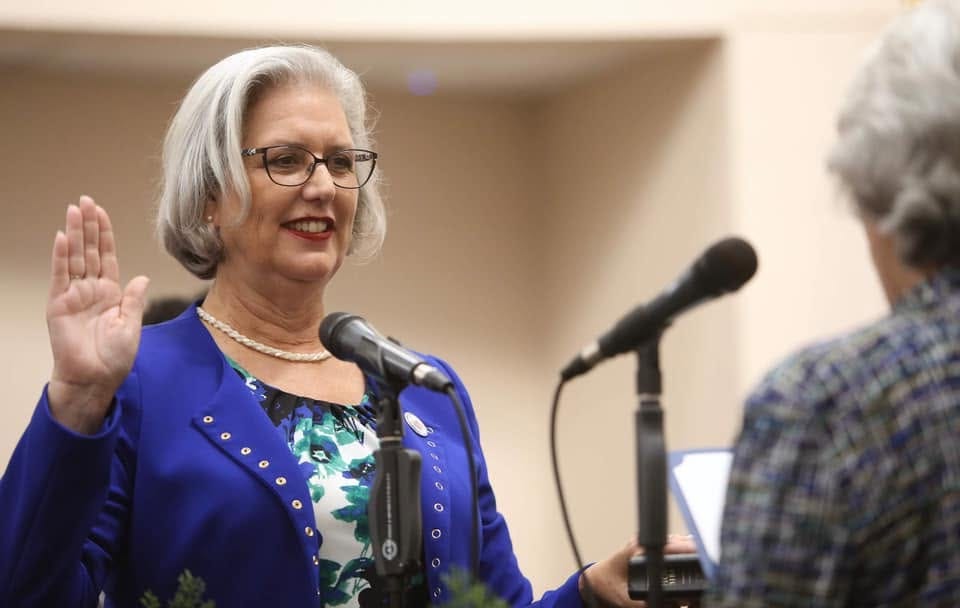
As a retired financial professional who practiced as a Certified Financial Planner, I understand what fiduciary responsibility means. When families place their trust in someone for financial guidance, that trust carries a serious obligation: put the client’s interest first, disclose conflicts, act honestly, and protect the long-term wellbeing of the people being served.
Public service should be held to the same standard. Elected office should never become an opportunity for personal enrichment, insider access, special-interest favors, or political self-dealing. Voters deserve confidence that elected officials are making decisions based on public need, not personal portfolios, lobbyist influence, dark money, or pressure from wealthy donors.
As a former Hillsborough County Commissioner and Commission Chair, I helped oversee public budgets, procurement processes, public investments, and taxpayer resources. That experience taught me that transparency is not optional. It is how government earns trust.
I also believe representation requires more than meeting the minimum legal qualifications to appear on a ballot. Representation is not just a technical requirement. It is a relationship. It is showing up before asking for votes. It is serving before seeking power. It is listening to residents long enough to understand the issues that shape their lives.
When candidates are funded by insiders, when voters do not know who is paying for political ads, when elected officials trade individual stocks while shaping national policy, when lobbyists turn public service into private influence, when courts lack strong ethics standards, and when voting rights are weakened, people lose confidence that government is working for them.
I am running for Congress because Florida’s 12th Congressional District deserves leadership that listens, leadership that knows this community, and leadership that treats public office as a public trust.
As a Hillsborough County Commissioner and Commission Chair, I helped oversee county budgets, procurement processes, public investments, and taxpayer resources. I supported transparency, public engagement, accountability for public spending, and responsible stewardship of public dollars.
My record is grounded in open government, fiscal responsibility, and public accountability. Local government taught me that trust is earned through clear information, accessible public meetings, responsive constituent service, transparent decision-making, and follow-through.
That experience informs my support for federal reforms that reduce the dominance of Big Money, strengthen disclosure, improve campaign finance enforcement, close coordination loopholes, protect voting rights, and restore public trust.
The Constitution sets the legal qualifications for service in the United States House of Representatives. Members must be at least twenty-five years old, have been a United States citizen for seven years, and be an inhabitant of the state they represent when elected. The Constitution does not require a Representative to live inside the exact congressional district represented.
Legal eligibility, however, is not the same thing as effective representation. Voters can and should expect more than the bare legal minimum.
Representation is about trust, service, familiarity, accountability, and lived connection to the people whose voices a Member of Congress is asking to carry into Washington. A candidate seeking to represent Florida’s 12th Congressional District should understand the communities of Pasco and Hillsborough Counties, the affordability pressures on working families and seniors, the needs of veterans and caregivers, the importance of public schools, the impact of transportation and housing costs, and the frustration voters feel when government seems disconnected from their lives.
The issue is not only the technical legal rule. The deeper question is whether a candidate has shown up, served, listened, built relationships, and earned trust. That is the spirit of representation. And it is worth defending.

I support a comprehensive agenda of ethics, transparency, accountability, and democracy reforms designed to strengthen public trust and ensure government works for the people it serves.
My priorities include reducing the influence of Big Money in politics, increasing transparency in campaign spending, strengthening disclosure requirements, preventing conflicts of interest, banning congressional stock trading, limiting revolving-door lobbying, strengthening ethics standards across government, protecting voting rights, supporting fair districts, expanding democratic participation, and ensuring public officials remain accountable to voters.
These reforms are not ends in themselves. They are tools that help government better solve the real problems facing our communities. Public office is a public trust. Government should be transparent, accountable, responsive, and focused on delivering results for the people it serves.
Public office should never be an opportunity for personal enrichment. Officials should avoid conflicts of interest, disclose financial relationships, place the public interest first, and treat taxpayer resources with the seriousness they deserve.
As a financial professional, I was expected to understand and honor fiduciary responsibility. As an elected official, I believe the same principle should guide public service. Voters deserve leaders who treat public trust as an obligation, not a talking point.
The influence of Big Money distorts democracy when wealthy donors, corporations, outside groups, and gatekeepers can drown out ordinary voters. I support reforms that restore the ability to regulate election spending, strengthen the voice of ordinary voters, and reduce the dominance of concentrated wealth in politics.
The goal is not to silence participation. The goal is to make sure democracy is not dominated by those with the deepest pockets.
Voters have a right to know who is financing campaigns and political advocacy intended to influence elections and public policy. Dark money undermines that right by hiding the true source of political spending.
When voters do not know who is paying for ads, mailers, online content, and outside political attacks, it becomes harder to evaluate the message and the motive. Transparency is basic democratic infrastructure.
Political advertising should not become less transparent just because it appears online. Voters deserve to know who is paying to influence them whether the message reaches them through television, mail, radio, text, social media, or digital advertising.
Online platforms and political campaigns should be subject to meaningful transparency standards that help voters understand who is behind the messages they see.
Campaign finance laws only matter if they are enforced. I support reforms that strengthen enforcement, reduce gridlock, and ensure campaign finance rules are not treated as optional.
I also support closing loopholes that allow Super PACs and outside groups to operate as de facto arms of candidate campaigns while claiming independence. Voters deserve honest rules and real enforcement.
I support banning Members of Congress from trading individual stocks while serving in office and strengthening financial disclosure requirements.
Public service should not be an investment strategy. Members of Congress should not use access to briefings, legislation, committees, or inside information to enrich themselves or their families.
I support stronger restrictions on revolving-door lobbying practices that allow insider access to be monetized after public service.
Public service should not become a steppingstone to selling influence. Stronger rules can help restore confidence that elected officials are making decisions for the public, not preparing for private-sector lobbying careers.
No branch of government should be above ethical standards. I support stronger Supreme Court ethics, recusal, and transparency rules, including clear standards for gifts, income, conflicts, recusal, public disclosure, and public confidence in judicial integrity.
Public confidence in the courts depends on integrity, independence, accountability, and the belief that justice does not depend on wealth, political connection, or undisclosed influence.

I support reforms that guard against foreign influence, conflicts of interest, and financial self-dealing by public officials. That includes stronger restrictions on foreign government gifts connected to high-ranking officials, tax-return disclosure by Presidents and Vice Presidents, and protections against officials using public power to promote personal financial products or crypto-related schemes.
The public deserves confidence that national leadership is not compromised by hidden financial interests, foreign influence, or personal profit opportunities.
I support competitive bidding, independent auditing, public disclosure of major contracts, contractor accountability, and strong conflict-of-interest protections.
Taxpayer dollars should serve the public interest. Public contracts should be awarded fairly, monitored carefully, and protected from favoritism, waste, fraud, and abuse.
Ethics reform and voting rights belong together. If voters cannot participate fairly, and if elected officials are not accountable after elections, democracy does not work.
I support voting rights protections, fair districts, accessible elections, and representative district maps. Voters should choose their representatives, not the other way around.
Residents want confidence that contracts are awarded fairly, taxpayer dollars are spent responsibly, campaign contributions do not buy influence, and ethics rules apply equally to everyone.
Families also want elected officials focused on the issues that shape their daily lives: affordability, housing, insurance, healthcare, childcare, transportation, wages, public education, Social Security, Medicare, veterans’ services, public safety, and economic opportunity.
Ethics reform matters because voters want confidence that those decisions are being made for the public good, not for donors, lobbyists, insiders, or personal financial interests.
A retiree should trust that Congress is making decisions about Social Security, Medicare, prescription drugs, and healthcare based on public need, not donor pressure or personal financial interests.
A small-business owner should be able to compete fairly without believing insider access determines opportunity.
A taxpayer should know that public contracts are awarded fairly and taxpayer dollars are protected.
A voter should know who is paying for political ads, mailers, digital messages, and election communications before Election Day.
A worker should trust that wage, safety, labor, and union issues are not being undermined by special-interest money.
A parent should believe elected officials are focused on housing, insurance, childcare, education, healthcare, and wages, not political donors.
A resident should have access to town halls, public schedules, and responsive representation.
A voter should know district lines are drawn fairly and voting rights are protected.
Ethics reforms are designed to prevent public officials from using insider information for personal financial gain, steering contracts to favored vendors, failing to disclose conflicts of interest, accepting gifts or benefits tied to official actions, using public resources for private purposes, and granting special access to major donors.
The point is not simply to punish misconduct after it happens. The point is to build systems that reduce corruption risks, make wrongdoing harder, and make accountability more likely.
Ethics and accountability should apply consistently across every level and branch of government. No public official, agency, branch, or institution should be above clear standards of transparency, disclosure, conflict avoidance, and integrity.
Public trust requires consistent rules and meaningful enforcement.
Campaign finance reform, transparency, voting rights, fair districts, ethics, and accountability are interconnected. Voters must be able to participate fairly in elections, understand who is trying to influence them, and hold elected officials accountable after Election Day.
Democracy does not end when ballots are counted. It continues through oversight, public engagement, constituent service, ethical conduct, and accountability.
Good ethics policies should be measured by outcomes, not by press releases, slogans, or campaign promises. If reform is working, voters should be able to see tangible improvements in transparency, accountability, public trust, and democratic participation.
Transparency metrics should include public access to government information, timely disclosure of conflicts of interest, public disclosure of major political spending, public disclosure of major government contracts, access to public meetings and records, accurate election information, and public visibility into how taxpayer dollars are spent.
Accountability metrics should include enforcement of ethics laws and disclosure requirements, compliance with conflict-of-interest standards, reduction in waste, fraud, and abuse, independent ethics oversight, and meaningful consequences when public officials violate ethical standards.
Democracy metrics should include voter participation, voter registration, accessibility of elections, public understanding of representation, confidence in election administration, fair districts, and meaningful opportunities for public participation.
Public trust metrics should include whether residents believe their voices matter, government listens, public officials tell the truth, decisions are made in the public interest, public money is spent responsibly, rules are enforced fairly, and elected officials remain accountable to voters rather than special interests.
The central question is simple: Is government becoming more transparent, more accountable, more representative, and more responsive to the people it serves? That is the standard I believe government should meet.
If elected to Congress, I will approach public service the same way I approached my work as a Certified Financial Planner, small-business owner, Hillsborough County Commissioner, and Commission Chair: with transparency, accountability, careful stewardship of resources, and a commitment to serving the people who placed their trust in me.
I will support policies that strengthen transparency, reduce corruption risks, improve campaign finance disclosure, strengthen ethics enforcement, protect voting rights, support fair representation, and increase accountability throughout government. I will support reforms that help voters understand who is influencing elections, how public funds are being spent, and how public decisions are being made.
I will remain accessible to the people of Florida’s 12th Congressional District through regular community engagement, public meetings, town halls, constituent services, and transparent communication. Representation is not simply about casting votes in Washington. It is about listening, learning, showing up, and remaining accountable to the people who elected you.
I also believe effective representation requires more than meeting minimum eligibility requirements. It requires understanding the communities you serve, knowing their challenges, respecting their experiences, and maintaining a long-term commitment to their success.
Leadership matters because trust matters. Democracy works best when people believe their voices matter, their votes matter, and their government is accountable to them. I will work every day to earn that trust and to ensure government remains focused on the people it serves rather than the special interests that seek to influence it.
Help send Overman to Washington
Families in Pasco and Hillsborough Counties deserve confidence that government serves the public interest rather than special interests. Ethics, transparency, and accountability are essential to earning that trust.
Florida’s 12th Congressional District deserves a representative who understands our communities because she has lived, worked, and served here. The challenges facing families in this district are not abstract policy debates. They are the rising cost of living, the affordability of healthcare, the security of Social Security and Medicare, the strength of our local economy, and the opportunities available to the next generation.
I am running for Congress because I believe effective government can help solve these challenges when leaders are willing to listen, work across differences, and focus on results. Government should work for people, not special interests.
I am asking for your support and vote. Kimberly Overman for Florida Congressional District 12.
Learn more: kimberlyoverman.com
Volunteer: kimberlyoverman.com/volunteer
Contribute: secure.numero.ai/contribute/Overman-for-Congress
Paid for by Overman for Congress.
Comments
Nothing yet. Say the first thing.
Sign in to join the conversation.