
Last updated: June 2026
Chat, let’s be so fr.
The adults heard Gen Alpha say “skibidi Ohio rizzler” and suddenly we’re all clutching our pearls.
Bestie, respectfully, you said “cool beans.” You said “doggo.” You literally said “AMAZEBALLS” and thought you ate.
Honestly, it’s giving amnesia.
Every generation has had brainrot. The kids are not cooked. The language is not cooked.
Thinking our slang was normal and theirs is the problem? Deeply delulu.
The lore continues.
Slang has always been part of how young people create identity, signal belonging, play with humor, and separate themselves from adults. Linguist Amelia Tseng describes slang as a “change from below,” meaning it usually comes from everyday speakers, youth cultures, and subcultures rather than from schools, dictionaries, or institutions. She also notes that slang often carries identity, cultural expression, solidarity, and wordplay. [1]
In other words: kids are not ruining language. They are using it.
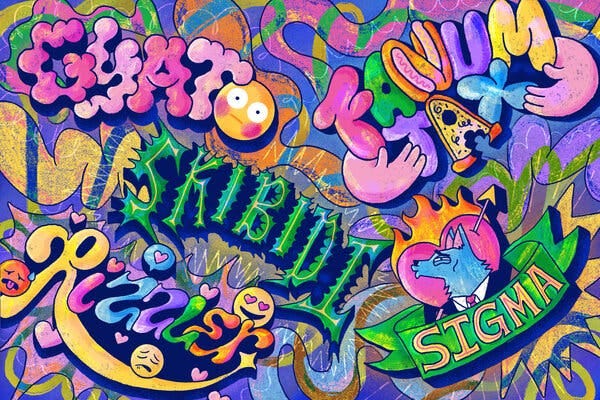
This is not an expertly organized academic source, a definitive dictionary, an exhaustive list, or a recommendation that adults start saying any of these words out loud.
Please do not walk into your child’s room and say “skibidi Ohio rizzler.” I cannot protect you from the consequences.
This is a working glossary I made mostly for fun, and partly because parents and teachers often hear kids using words we do not understand. Sometimes it is harmless nonsense, humor, or social belonging. But sometimes it is exclusion, insult, or discomfort hiding underneath a joke.
The goal here is not to perform kid slang.
The goal is to understand enough to stay curious, connected, and aware.
Not all slang has the same roots.
Some comes from cultural spaces that deserve credit, not flattening: AAVE, Black internet culture, queer and ballroom culture, gaming communities, creator culture, regional slang, and fandom spaces.
That does not make those spaces harmful. Quite the opposite. Many of the most creative, expressive, and enduring parts of American slang have come from communities whose language is often copied, commodified, and then stripped of context.
The caution is not “these origins are bad.”
The caution is: adults should know when words have been lifted from specific communities, when meanings have shifted, and when kids may be using language without understanding its full context.
For example, “clock tea” has roots in New York ballroom culture, where it meant noticing or discovering the truth. It has since moved into broader internet and middle school slang with a slightly shifted meaning closer to calling something out. [3]
Similarly, many widely used American slang terms have roots in African American English, even when those roots become invisible after the words go mainstream. [1]
Understanding origins is not about scolding kids for every word they say. It is about refusing to treat language as if it appeared out of nowhere.
The purpose of this glossary is to:
understand (not to perform)
ask better questions
notice tone and context
tell the difference between silly, mean, sexualized, exclusionary, or genuinely concerning language
And remember: by the time you finish reading this, at least three of these words will probably already be uncool.
Let’s get into it.
These are the words that often make adults feel like they missed an entire civilization.
Some have loose meanings, some are mostly vibes, some are funny because they are confusing, and mostly they are funny because adults are confused by them.
A mostly nonsensical phrase used as a joke, chant, reaction, or insider signal. It is often written as 6-7, 6 7, 67, or six-seven, but it is pronounced “six seven,” not “sixty-seven.” Dictionary.com named “67” its 2025 Word of the Year and connected its modern popularity to Skrilla’s song “Doot Doot (6 7)” and viral TikToks. [4]
Adult translation: “I am participating in the current joke.”
A nonsense internet term from the YouTube series Skibidi Toilet. It can mean weird, chaotic, cool, bad, funny, or nothing at all depending on context. Merriam-Webster describes it as a nonsense internet term, and Cambridge Dictionary added “skibidi” in 2025. [5] [6]
Adult translation: “This is absurd, and that is the joke.”
The YouTube/meme universe that popularized “skibidi.” It features surreal human-headed toilets and camera/speaker-headed figures. Adults do not need to fully understand this. Honestly, I am not sure anyone does.
Low-quality, overstimulating, absurd internet content; also the feeling of being mentally fried by consuming too much of it. Oxford named “brain rot” its 2024 Word of the Year, defining it as both low-value online content and the perceived mental effect of consuming that content. [7]
A 2025 style of AI-generated meme content featuring bizarre animal/object hybrids with pseudo-Italian names and chaotic voiceovers. Know Your Meme describes Italian Brainrot, also called AI Italian Animals, as AI videos, art, and memes combining animals with objects and anthropomorphic features. [8]
These usually function more like meme passwords than vocabulary. They are often not words with stable meanings. They are names, sounds, or phrases that signal participation in a specific meme ecosystem.
A few examples:
Tralalero Tralala
Brr Brr Patapim
Tung Tung Tung Sahur
Ballerina Cappuccina
Cappuccino Assassino
Chimpanzini Bananini
Lirili Larila
Bombombini Gusini
Boneca Ambalabu
Trippi Troppi
Frigo Camelo
Orangutini Ananasini
Important note: Some Italian brainrot audio can include offensive, violent, religious, or politically charged content depending on the version. Adults should be careful about repeating these without checking context.
Used to describe something weird, cursed, chaotic, or deeply cringe.
Adult translation: “That is strange in a cursed internet way.”
Taking a bite of someone’s food, stealing a snack, or joking that you are entitled to part of what someone else has. Merriam-Webster defines “Fanum tax” as a humorous internet slang term for stealing someone’s food or feeling entitled to some of it. [9]
Adult translation: “I am stealing a fry.”
Trying to cultivate coolness, mystery, or impressive presence. In 2025, the phrase became closely associated with a viral Indonesian boat-racing dancer whose calm confidence was described online as “aura farming.” [10]
Adult translation: “Trying to look effortlessly cool.”
Some slang is silly, but some of it is emotional shorthand.
A kid saying “I’m cooked” may be joking. But they may also be saying, “I’m overwhelmed,” “I’m embarrassed,” “I feel doomed,” or “I think I am in trouble.”
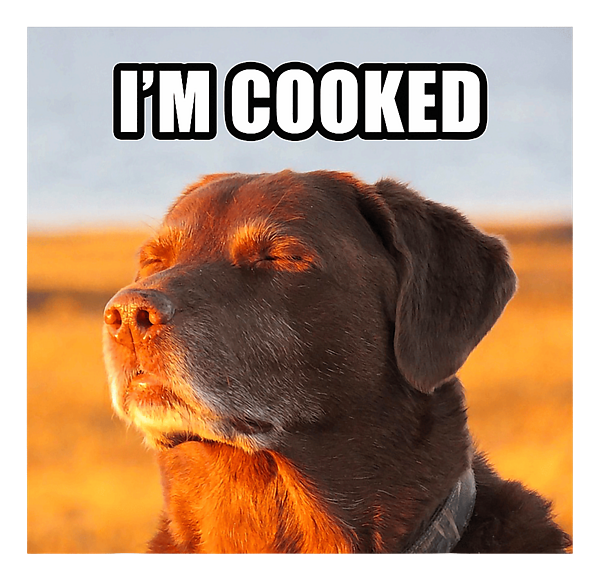
Done for, ruined, tired, overwhelmed, unprepared, or in trouble.
Examples:
“I’m cooked.” = I’m doomed / exhausted / overwhelmed.
“You’re cooked.” = You are in trouble.
“The project is cooked.” = This is not going well.
Let someone keep going. They might be onto something.
You did well.
To lose control emotionally, snap, melt down, or become suddenly angry or distressed. Merriam-Webster’s slang entry defines “crash out” as becoming suddenly, uncontrollably angry or distressed. [11]
Adult translation: “I am about to lose it.”
Be serious.
Be really serious.
For real / for real for real.
No lie. For real.
A lie.
“On God,” meaning seriously or I swear.
Kind of, secretly, casually, or quietly.
Very, obviously, strongly.
A blend of “lowkey” and “genuinely.” Merriam-Webster defines it as saying something sincere in a low-key way. [12]
Adult translation: “I mean this sincerely, but I am trying not to make a big deal about it.”
Playfully delusional, overly hopeful, or believing something because you want it to be true. Cambridge added “delulu” in 2025. [6]
Adult translation: “I know this may not be realistic, but let me have this.”
Messy, unpolished, lazy, feral, or shamelessly low-effort behavior.
Adult translation: “I am not trying to be polished right now.”
I can’t lie.
Not gonna lie.
I swear to God.
Whatever.
At this point.
Right now.
In real life.
I just burst out laughing.
Focused, committed, or mentally ready.
Adult translation: “I’m concentrating.”
Focused or performing well.
That’s hilarious.
Laughing hard.
“I’m dead,” meaning something is funny or shocking. Aleksic notes that the skull emoji has shifted in some internet use to mean “I’m dead from laughing,” rather than literal death. [2]
Often used for laughter, drama, or exaggerated emotion.
Reaction to discomfort, embarrassment, or bad news.
A remix of “dang,” usually used to express surprise, disbelief, or amazement.
Example: “Zang, you finished already?”
That’s unfortunate.
Very awkward, concerning, or embarrassing.
Awkward, bad, or concerning.
Go outside. Reconnect with reality. Get offline.
Too shaped by internet culture; out of touch with offline norms.
A more extreme version of chronically online.
A lot of kid slang is about status.
Who seems cool?
Who embarrassed themselves?
Who did well?
Who failed?
Who has confidence?
Who lost aura in the group chat?
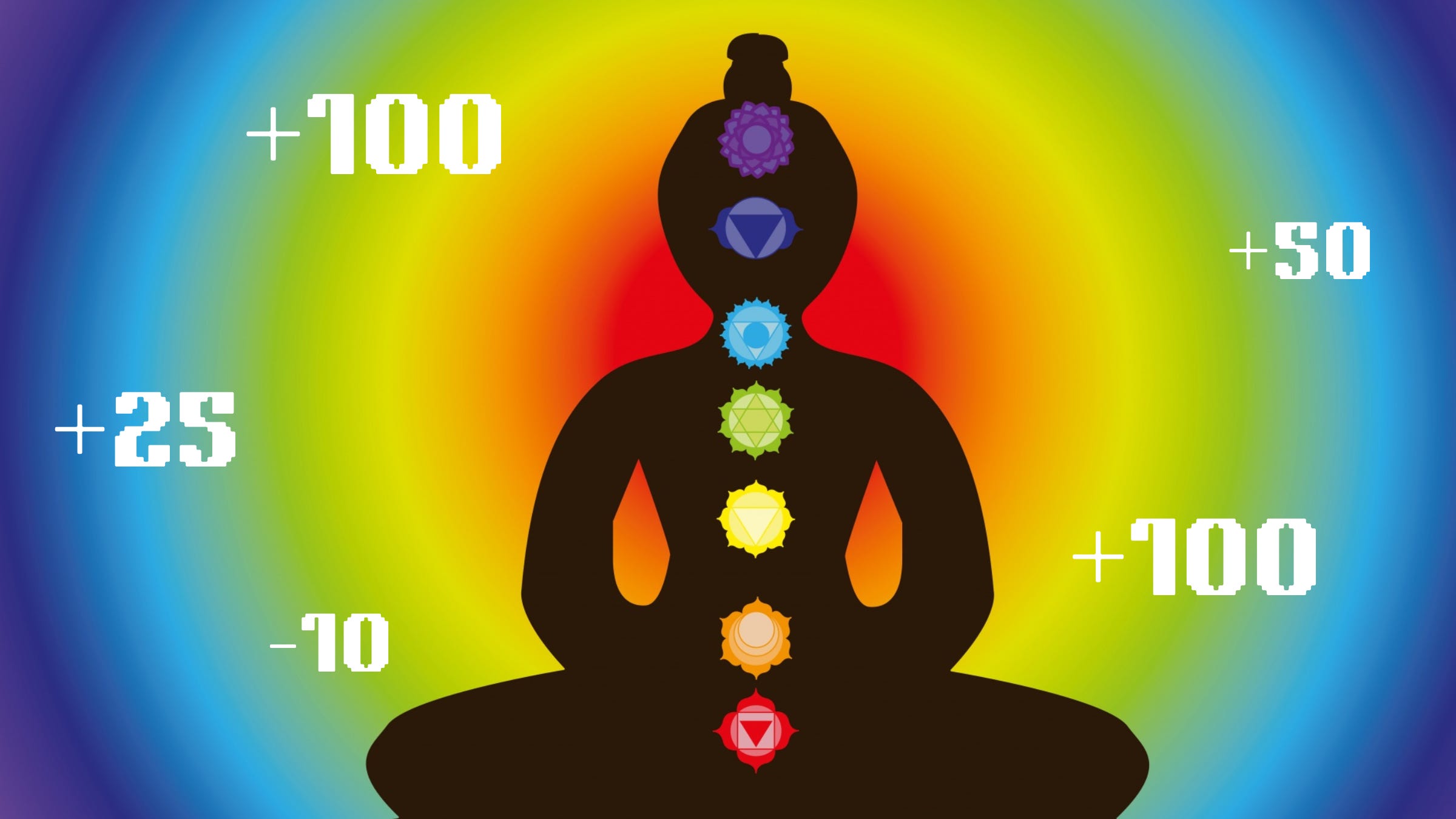
Coolness, confidence, presence, or social energy.
Imaginary points gained or lost based on how cool or embarrassing something is.
Examples:
“+100 aura” = You looked cool.
“-1000 aura” = That was embarrassing.
Charisma or charm. Oxford named “rizz” its 2023 Word of the Year and defined it as style, charm, attractiveness, or the ability to attract a romantic or sexual partner. [13]
Adult translation: “Charisma.”
Someone with strong rizz, or a meme character associated with rizz culture.
Charisma without trying or speaking.
The opposite of charm; accidentally making yourself less appealing.
Good charm / bad charm.
Usually nonsense. Weird, chaotic, or meme-flavored charisma.
Awkward, strange, or cringey charm.
Bad, messy, unattractive, low-quality, or ruined. This one can be appearance-based, so I would be careful with it around kids.
Adult translation: “That is not looking good.”
A worse or off-brand lookalike of someone or something. Merriam-Webster lists “choppelganger” in its slang/trending section as a less attractive version of someone or something. [14]
Mediocre. Not terrible, not impressive.
Excellent. The best version of something.
Good, exciting, impressive.
Great, hype, excellent.
Really good, usually about food.
Embarrassing, awkward, trying too hard.
Suspicious, questionable, or off.
Confidence, presence, or acting like the center of the story.
Someone behaving like the star of the moment.
Someone secondary, unnoticed, or not driving the action.
Something that feels destined, formative, or unavoidable in someone’s life.
Backstory or context.
Someone’s face or appearance.
Someone always looks good.
Presenting a strong look, mood, or aesthetic.
Do well, look good, succeed.
Did something extremely well.
Performed flawlessly.
An even stronger version of “ate.”
It has the vibe of.
Mood, feeling, or social energy.
Assessing the mood or energy.
A sudden turnoff or feeling of dislike.
Warning sign.
Good sign.
Odd but not necessarily bad trait.
Positive transformation.
Negative transformation.
Style, clothing, accessories.
Stylish.
Cool, impressive, stylish, admirable, or well done. Usually a compliment.
Outfit.
Showing the outfit.
Outfit of the day.
A period of failure, awkwardness, or not being at your best. Merriam-Webster lists “flop era” as a period of diminished success, popularity, or relevance. [14]
A phase of recovery, reflection, or self-improvement.
Prioritizing oneself, setting boundaries, or being less people-pleasing. Sometimes sincere, sometimes joking.
Gen Alpha’s language is deeply shaped by online spaces. Kids are not just using slang from school. They are borrowing from gamers, streamers, TikTok creators, comment sections, Discord chats, Roblox, YouTube, and algorithms that move language faster than adults can track.
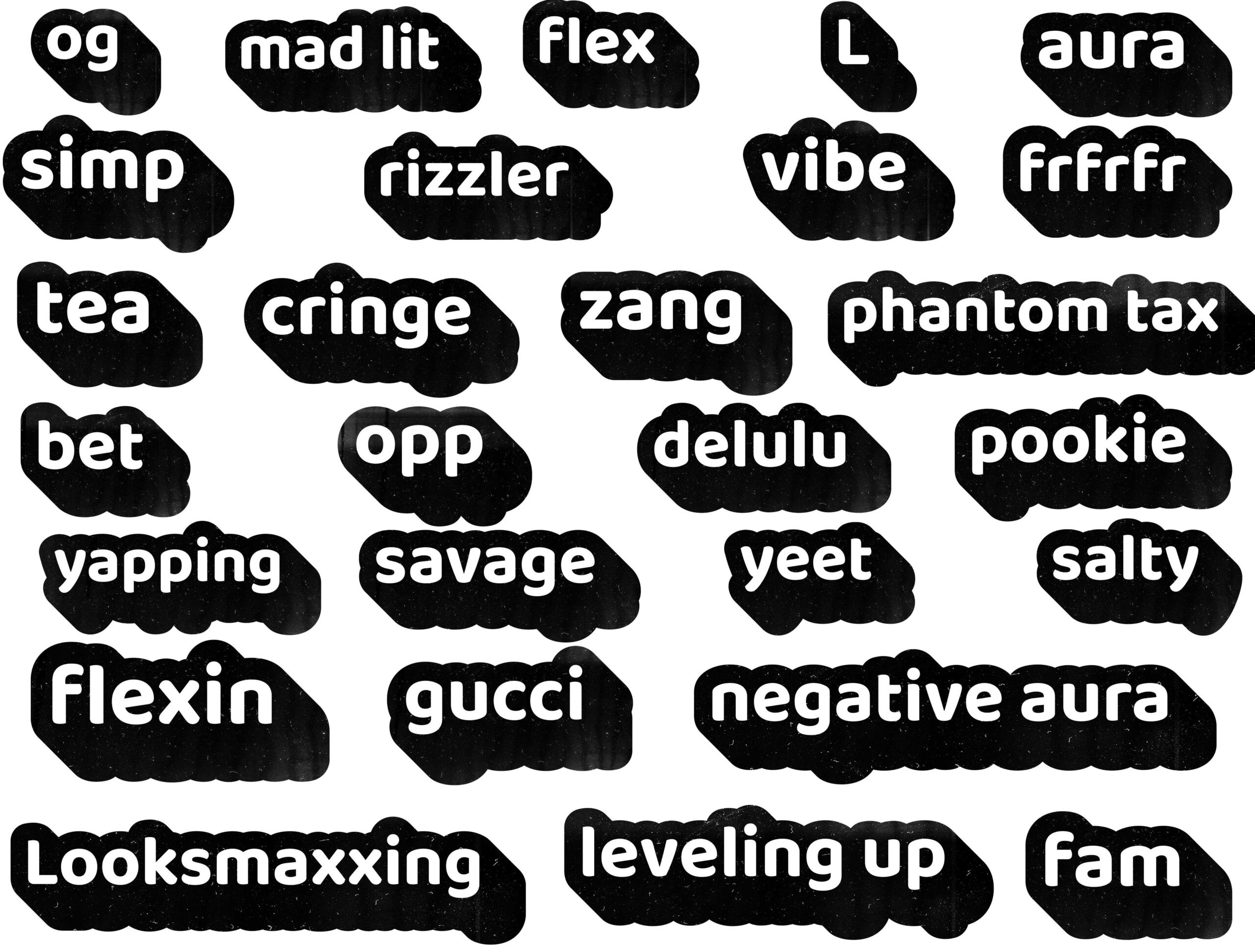
A way of addressing the group, like a streamer talking to an audience.
Example: “Chat, am I cooked?”
Adult translation: “Everyone, please witness what is happening.”
Friend, close peer, or someone you relate to.
Affectionate or joking nickname.
Someone acting old or out of touch. Merriam-Webster notes that “unc” comes from “uncle” and was already used in African American English before Gen Alpha popularized it more broadly. [5]
Talking too much.
Someone who talks a lot.
A long conversation or rant.
Stop talking. Wrap it up.
Teacher note: I would understand this one, but I would not use it toward kids. It can feel dismissive.
Notice the truth. Call out what is really happening.
Noticed, exposed, or accurately read.
Notice the truth or call out what is really going on.
Gossip, truth, or inside information.
Judgment, suspicion, or disapproval.
Dramatic judgment or suspicion.
Exposed with proof.
Evidence, screenshots, or proof.
Saving proof.
Revealed or caught.
Public criticism or correction.
Unhealthy, harmful, or emotionally draining.
Keep something exclusive or refuse to share information.
Something meant to provoke a reaction.
Content designed to make people angry.
Content designed to lure clicks.
Reacted to something that was meant to provoke you.
When a reply or response gets more attention than the original, usually implying the original was bad.
You lost and everyone agrees.
Win. Good thing.
Loss. Bad thing.
Accept defeat.
A predictable win from someone who often does well.
A predictable loss or mistake.
You failed because you need more skill. Often teasing.
Away from keyboard.
Good game / good games.
Easy. Often used jokingly or competitively.
To succeed under pressure.
One person does most of the work for the team.
Won because someone else did the work.
Playing badly or causing a loss, sometimes on purpose.
Intentionally ruining a game or experience for others.
Repeatedly attack players where they reappear.
Weaken a character, item, or ability.
Strengthen a character, item, or ability.
Overpowered.
The most effective or popular strategy.
True to the established backstory or power level.
Competitive mode.
Slow or glitchy. Also used socially: “My brain is lagging.”
Acting weird or malfunctioning.
Arrived suddenly or awkwardly.
A random task or adventure unrelated to the main goal.
Rewards, items, or stuff collected.
New release or item reward.
Player who waits in one spot.
Challenge me directly.
Exciting or hype. Slightly older Twitch slang, but still recognizable.
Good streamer.
Bad opinion.
Controversial or bold opinion.
Common or obvious opinion.
Save that moment.
Doing something mainly to create a viral clip.
Treating real life like content.
Point of view. Often used to set up a skit or scenario.
Get ready with me.
A personal story format.
A cheaper alternative to a product.
Minimal, polished style.
Bows, lace, soft hyper-feminine aesthetic.
Soft, rural, nature-inspired aesthetic.
Moody, bookish, old-school academic aesthetic.
Emotional montage-style internet aesthetic.
A random snacky meal.
A joke counterpart to “girl dinner,” often low-effort or protein-heavy.
Playful, irrational budgeting logic.
Joke about contradictory or funny male logic.
Something someone thinks about constantly.
Living in your mind constantly.
Doing something for the experience or story.
As part of the “official” storyline of someone’s life.
A phase of life.
Hinting at a relationship or reveal without fully showing it.
Fully revealing something publicly.
A casual group of photos posted together.
TikTok or photo carousel post.
An empty, eerie, transitional place.
Internet horror setting of endless strange rooms; often referenced as a vibe.
Language shaped by algorithms or used to avoid content filters. Merriam-Webster describes algospeak as coded or self-censored language used to bypass moderation; Aleksic argues it is also part of the larger way social media infrastructure shapes language. [14] [2]
Low-quality AI-generated digital content. Merriam-Webster named “slop” its 2025 Word of the Year, reflecting the rise of low-quality AI-generated material online. [15]
Opponents, enemies, rivals, or people someone is “against.”
Adult translation: “People I have conflict with.”
Teacher/parent note: This one can be casual or joking, but it can also signal conflict, beef, exclusion, or more serious social dynamics depending on context.
Not every slang term belongs in the “funny kid language” category.
Some words come from corners of the internet that adults should understand with more caution: appearance-ranking spaces, sexualized slang, identity-mocking language, body-shaming, self-harm algospeak, and dehumanizing insults.
That does not mean we panic every time a child repeats a word they heard online.
It means we ask better questions.
Is this silly or unkind?
Is this bonding or excluding?
Is this a joke or a warning sign?
Is this a word I need to understand, but absolutely never repeat?
Short for “negative canthal tilt,” referring to the angle of the eyes. Online, it is often used in looksmaxxing or appearance-ranking spaces to judge someone’s face.
Teacher/parent note: I would understand this term, but I would not normalize it. If kids are using it to describe themselves or others, it may be worth paying attention to body image, comparison, teasing, or appearance-based status language.
Trying to maximize physical attractiveness. Sometimes this means ordinary grooming or style advice, but the term can also lead into extreme appearance analysis, body comparison, or status-ranking. Merriam-Webster defines “looksmaxxing” as efforts, sometimes extreme, to look more attractive. [16]
An exclamation of surprise or admiration, most often about someone’s body.
Adult translation: “This is body-focused slang.”
Teacher/parent note: I would understand this term, but I would not include it in the fun/main glossary. It is commonly used in a sexualized or body-commenting way, so it belongs in the caution section rather than the playful slang section.
A tongue/jaw posture trend meant to sharpen the jawline. Often used as a joke or silent gesture, but it is also connected to appearance-optimization culture.
Outshining, outclassing, or making someone else look worse by comparison, often in appearance, fitness, confidence, or status.
Adult translation: “Trying to win a comparison.”
Teacher/parent note: I would understand this term, but I would not normalize it. It comes from looksmaxxing/status-ranking spaces and can feed appearance comparison, body insecurity, and social hierarchy.
Someone acting robotic, basic, unaware, or like a background character.
Teacher note: I understand why this one is common, but I would be cautious with it. Calling people NPCs can become dehumanizing quickly.
Someone acting robotic, fake, repetitive, or bad at something. Like NPC, this can be funny in a game context but dehumanizing when aimed at a person.
I did not include every term kids might hear online.
Some words are too sexualized, body-shaming, self-harm-related, identity-mocking, or prejudice-coded to casually define in a parent/teacher glossary. Adults do not need a script for repeating those words. We need enough awareness to recognize when language has moved from silly into harmful.
The categories I would handle with more caution include:
Sexualized slang
Body-focused insults
Identity-mocking language
Ableist or neurodivergence-mocking slang
Self-harm and eating-disorder algospeak
Manosphere/status-hierarchy language
Dehumanizing insults
Terms kids may use jokingly without understanding the adult context
This does not mean we panic every time a child repeats a word they heard online. It means we pause long enough to ask:
Is this bonding or excluding?
Is this funny or unkind?
Is this nonsense or harm disguised as a joke?
Is this a word I need to understand, but absolutely never repeat?
When you hear a term you do not understand, you do not need to immediately correct it, adopt it, or pretend you know what it means.
You can say:
“Wait, what does that mean?”
“Is that funny or mean?”
“Where did that come from?”
“Is this one I should know, or one I should definitely never say?”
“Are you using that as a joke, or are you actually overwhelmed?”
Kids often enjoy explaining the rules of a world adults do not fully understand. Sometimes, the explanation tells you much more than the word itself.
The point is not to keep up perfectly. We will not. If my students saw this list they would roast me to oblivion.
The point is to stay close enough to be curious.
Kids have always used language to build little worlds adults do not fully understand. That is part of growing up. But when we dismiss all of it as nonsense, we miss what their language is doing: creating belonging, testing identity, marking status, hiding embarrassment, making jokes, and sometimes signaling something more serious underneath.
So please don’t start saying “6-7.”
But understanding what kids mean is one more way of staying connected to the world they are actually living in.
[1] American University’s interview with linguist Amelia Tseng supports the broader argument that slang often comes from youth and subcultures, functions as identity and solidarity, spreads faster through social media, and often has roots in African American English.
[2] Science Friday’s interview with linguist Adam Aleksic supports the algospeak/algorithm framing, including how platforms shape language, how moderation can drive euphemistic language, and how emojis/slang shift through online use.
[3] Reporting from Them and People supports the ballroom/queer-culture context for “clock it,” “tea,” and related terms, including how those expressions can become detached from their original communities when they go mainstream.
[4] Dictionary.com named “67” its 2025 Word of the Year and explains the spelling/pronunciation, the “so-so/maybe” interpretation, the hand gesture, and the connection to Skrilla’s “Doot Doot (6 7).”
[5] Merriam-Webster’s Gen Alpha slang explainer covers “skibidi,” “unc,” “bop,” “mog,” and other terms, while also flagging that some popular words have offensive or harmful uses.
[6] Cambridge Dictionary announced that it added thousands of words in 2025, including “skibidi” and “delulu.”
[7] Oxford University Press named “brain rot” its 2024 Word of the Year and defines it around low-quality online content and the perceived effect of consuming it.
[8] Know Your Meme’s entry on Italian Brainrot / AI Italian Animals describes the 2025 trend as AI videos, art, and memes combining animals with objects and anthropomorphic features.
[9] Merriam-Webster defines “Fanum tax” as a humorous internet slang term for taking someone else’s food or feeling entitled to some of it.
[10] Reporting on “aura farming” connects the 2025 viral phrase to Rayyan Arkan Dikha, the Indonesian boy whose boat-racing dance became a global meme.
[11] Merriam-Webster defines “crash out” as becoming suddenly, uncontrollably angry or distressed.
[12] Merriam-Webster defines “lowkenuinely” as internet slang combining “low-key” and “genuinely,” meaning sincere in a low-key way.
[13] Oxford University Press named “rizz” its 2023 Word of the Year and defines it as style, charm, attractiveness, or the ability to attract a romantic or sexual partner.
[14] Merriam-Webster’s slang pages include entries such as “flop era,” “algospeak,” and “choppelganger.”
[15] Cambridge’s 2025 dictionary update notes the AI-related definition of “slop,” and the broader source list tracks how “slop” has become tied to low-quality AI-generated digital content.
[16] Merriam-Webster’s Gen Alpha slang coverage and slang pages define appearance/status terms like “looksmaxxing” and explain how some of this language comes from more troubling online spaces.
No posts
Comments
Nothing yet. Say the first thing.
Sign in to join the conversation.