
After the Vedic revelation and the Upaniṣadic inward turn toward Brahman and Atman, the spiritual history of humanity entered a phase of critique, purification, and gradual reintegration. Buddhism and Jainism arose as necessary Śramaṇa correctives to ritual excess and priestly mediation, intensifying ethics, renunciation, discipline, and contemplative realization while rejecting the Creator principle. Their appearance purified the religious field but also exposed the limit of negation: liberation was sought, yet the Source remained unnamed. It was at this point that the Bhagavad Gītā and the Purāṇas emerge. The Gītā responds by reintegrating Gyan, Karma, and Bhakti under the sovereignty of a personal Divine, Bhagavān, while the Purāṇas translate metaphysical truth into lived devotion through Avatāra-līlā, sacred history, and the lives of exemplary Sants. Through Krishna’s divine play, through the descents of Viṣṇu as Rāma and Nṛsiṃha, and through the exemplary devotion of Prahlāda, Dhruva, and Janaka, the Purāṇic imagination makes the Infinite intimate and morally present within history. In the medieval period, this current flows onward through the Bhagats—Kabīr, Nāmdev, Ravidās, and others—who reject ritualism, caste, and formal theology in favor of direct love of Hari.
As the Rāmāyaṇa and the Mahābhārata rose to pan-Indian prominence, their heroic figures—Rāma and Krishna—came to dominate the religious imagination as incarnate embodiments of Dharma. Revered as Avatāras of Hari–Viṣṇu, they crystallized devotion around exemplary lives, moral drama, and salvific intervention in history. Yet Avatāra-līlā—the play of incarnates—confines the Divine to time and form, while Purāṇic devotion proliferates manifestations without resolving the metaphysical question of the One. It is here that Guru Nanak appears—not as another Avatāra, prophet, or reformer, but as the Satguru who completes all prior modes of revelation and guides humanity as a whole. In him, the ethical rigor of the Śramaṇas, the synthesis of the Gītā, the devotional world of the epics and Purāṇas, the love of Bhakti, and the protest of the Bhagats are gathered into a single, uncompromised disclosure of Ik Oaṅkār—One without a second, unborn, beyond incarnation, yet immanent in all.
The essay that follows traces this entire arc: from Vedic truth to Śramaṇa negation; from epic Dharma and Purāṇic Avatāras to Prahlāda, Dhruva, and Janaka; from the Bhakti-Sants to Guru Nanak—demonstrating through scripture, philosophy, and lived transmission that what appeared earlier as descent, myth, saintliness, or partial illumination finds its final resolution in Gurmat. Guru Nanak’s supremacy is not asserted through lineage or miracle, but proven through fulfillment: the end of Avatāra, the completion of Bhakti, the unification of Knowledge and devotion, and the establishment of a universal Panth grounded in Naam and the eternal Gurū. What was once revealed in portions and persons stands disclosed in fullness, without remainder, through the Satguru who reveals the One as all.
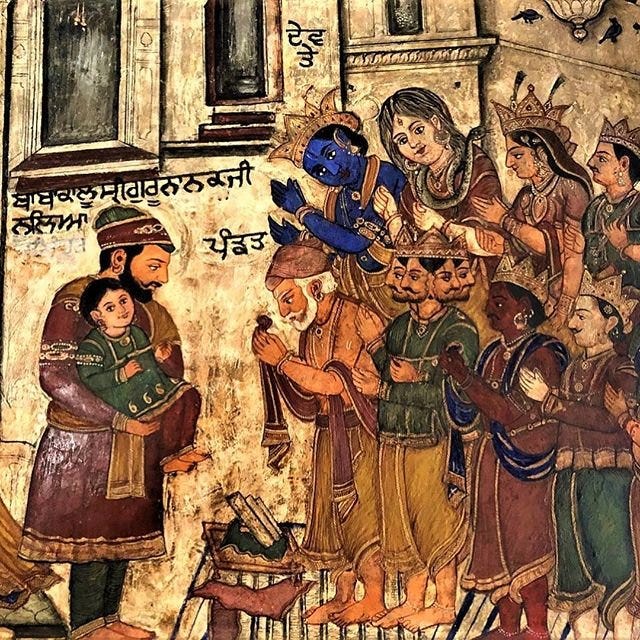
The Bhagavad Gītā occupies a place in the evolution of spiritual consciousness as a moment of profound integration. Historically embedded within the Mahābhārata, the Gītā emerges after the rise of the heterodox Śramaṇa movements and may be read as an attempt to absorb their ethical rigor, interior discipline, and renunciatory insight back into the mainstream of philosophical thought. Rather than rejecting these developments, the Gītā rearticulates them through the voice of Krishna, who speaks as Bhagavān.
Structured as a dialogue between Arjuna and Krishna, the Gītā frames spiritual instruction as a living transmission: guru and disciple, Bhagavān and bhakt, divine teacher and struggling human agent. Within this setting, it forges a synthetic path that unites action (Karma), knowledge (Gyan), and devotion (Bhakti), presenting not mutually exclusive paths but complementary dimensions of a single spiritual life. In this dialogical and devotional context, Krishna functions as the Iṣṭa—that is, the personally chosen Lord who serves as the concrete focus of devotion and spiritual allegiance—through whom metaphysical truth is rendered accessible and authoritative. The Gītā thus reorganizes earlier traditions of Vedic duty, Upaniṣadic insight, and Śramaṇa seriousness into a coherent vision of responsible engagement, inward detachment, and surrender to the divine will. Situated within the wider bhakti current that developed across India, the Gītā’s integrative framework constitutes part of the spiritual milieu in which Guru Nanak emerged. Accordingly, concepts such as karma, gyan, and bhakti appear in Gurmat not as borrowed doctrines but as reconfigured principles, articulated within a non-incarnational and non-sectarian affirmation of Hari. These themes therefore recur throughout Gurbāṇī as core elements of a unified spiritual vision, rather than as distinct or hierarchical paths.
The Gītā is fundamentally similar to the teachings of the Gurus because, at the time of its revelation, it signals a critical shift away from ritual absolutism and toward interior realization, a move that brings it into partial alignment with the Śramaṇa critique even as it re-centers devotion on the Creator. Krishna explicitly minimizes Vedic ritual authority when he declares,
The Vedas deal with the three guṇas; rise above these three guṇas, O Arjuna
-Bhagavad Gītā 2.45
He further insists that liberation is not attained through external observance but through inward discipline and discernment. Like the Buddhists and Jains, the Gītā emphasizes renunciation of ego, mastery of desire, and freedom from illusion (māyā), yet it reintegrates these discoveries into a theistic framework, grounding liberation in devotion to the Supreme rather than in metaphysical negation alone. Liberation is therefore no longer conceived as escape from the world, but as conscious alignment with the very rhythm through which existence unfolds. Thus Krishna draws ascetic insight back toward surrender to the divine source, when ātman meets Paramātman.
Both traditions also affirm the immortality of the soul, ātman.
The soul is neither born nor does it die; it is eternal and cannot be destroyed
-Bhagavad Gītā 2.20
ਨਹ ਕੋ ਮੂਆ ਨ ਮਰਣੈ ਜੋਗੁ ॥ ਨਹ ਬਿਨਸੈ ਅਬਿਨਾਸੀ ਹੋਗੁ ॥
No one dies; no one is capable of dying. The soul does not perish; it is imperishable.
-Raag Ramkali, Mahalla 5
Where the Bhagavad Gītā affirms the ātman as eternal and indestructible—free from birth and death and untouched by the constraints of Māyā, as a fragment of Paramātman—Gurmat fully concurs with this ontological claim. Both traditions affirm the soul’s imperishability and its transcendence of illusion; both also situate bondage not in the soul itself, but in its entanglement with karma. Where Gurmat extends the teaching is in articulating its fulfillment: metaphysical knowledge is transformed into lived realization, and devotion becomes the means by which karmic entanglement is overcome and the soul’s unity with the Infinite is consciously realized.
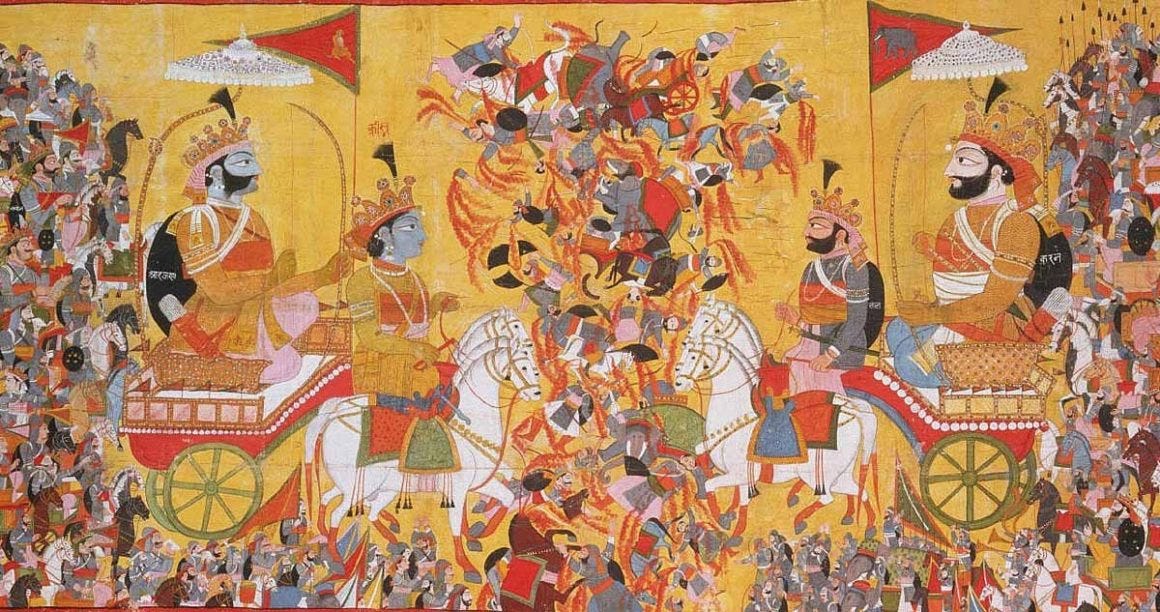
The Gītā’s articulation of Karma yoga—selfless action performed without attachment to results—marked a decisive break from ritualism.
Krishna teaches,
You have the right to perform your prescribed duties, but you are not entitled to the fruits of your actions
-Bhagavad Gītā 2.47
Gurmat situates action entirely within divine sovereignty:
ਜੋ ਤਉ ਭਾਵੈ ਸੋਈ ਥੀਸੀ ਜੋ ਤੂੰ ਦੇਹਿ ਸੋਈ ਹਉ ਪਾਈ ॥
Whatever pleases You comes to pass. As You give, so do we receive.-
Raag Asa, Mahalla 4
The Gītā teaches renunciation of reward; Gurmat reveals a deeper truth—that the fruit of action never belonged to the individual to begin with. Even the power to act is itself divine grace. Action thus becomes not merely detached duty, but loving participation in Hukam.
Krishna, as Prabhu, declares,
I am the source of all; from Me all things proceed. Understanding this, the wise worship Me with devotion
-Bhagavad Gītā 10.8
The physical-manifest Divine that is present in creation itself provides a dialogue to enlighten his devotee. This presents Hari as both personal and cosmic: the transcendent source from which creation flows and the immanent Lord worthy of devotion. The realization of this unity—of the Absolute as simultaneously beyond and within the world—is articulated in both the Gītā and Guru Nanak’s bāṇī as gyan, a mode of knowledge that is not merely conceptual but transformative.
Guru Nanak affirms this vision while radically deepening it:
ਪ੍ਰਣਵਤਿ ਨਾਨਕ ਗਿਆਨੀ ਕੈਸਾ ਹੋਇ ॥
Prays Nanak, what is the Gyani like?
ਆਪੁ ਪਛਾਣੈ ਬੂਝੈ ਸੋਇ ॥
They are self-realized; they understand God.
-Raag Shri, Mahalla 1
Where the Bhagavad Gītā presents the Divine as the supreme source from whom all proceeds, Gurmat discloses the fuller implication of that truth: the Creator and creation are not ultimately separate. In the Gītā, divine self-revelation occurs within a dialogical exchange between Krishna and Arjuna, a disclosure addressed to a single disciple in a moment of crisis. By contrast, Guru Nanak articulates this realization openly to the saṅgat, transforming what was once a private revelation into a shared and enduring disclosure of the One Reality manifesting as all. The personal God of devotion remains an accessible focus for bhakti, yet in Gurmat this personal form is not final; it is understood as the self-expression of the indivisible Ik Oaṅkār, apprehended collectively rather than revealed selectively.
At the same time, the Gītā establishes a clear spiritual typology of the saint or Sant, describing the realized devotee as one who is free from hatred, ego, and attachment,
Who is the same to friend and enemy, pleasure and pain
-Bhagavad Gītā 12.18–19
Such figures are repeatedly praised as those who truly know God, not by birth or learning, but by inner transformation. Yoga—understood not merely as technique but as disciplined union—is presented as the practical means of realization. In this way, the Gītā provides a stable foundation for devotional practice in which ethical action, contemplative discipline, and loving surrender converge. It is precisely this synthesis—Śramaṇa inwardness reclaimed for devotion to the One—that later resonates deeply with Guru Nanak, who affirms the same rejection of empty ritual and the same primacy of realized devotion, while carrying these insights to their non-incarnational and universally accessible conclusion in Gurmat.
Krishna’s final call to surrender—
Abandon all duties and surrender unto Me; I shall free you from all sins
-Bhagavad Gītā 18.66
—finds its deepest expression in Guru Nanak’s teaching of Hukam:
ਹਰਿ ਤੁਧਨੋ ਕਰਹਿ ਸਭ ਨਮਸਕਾਰੁ ਜਿਨਿ ਪਾਪੈ ਤੇ ਰਾਖਿਆ ॥
Hari, everyone bows in reverence to You, who saved us from sin.
-Raag Shri, Mahalla 3
What is presented as surrender to a personal Lord becomes, in Gurmat, surrender to the all-pervading Divine itself. Yet Guru Nanak does not fixate on the personal form of God, Bhagavān; rather, he repeatedly redirects devotion beyond any singular manifestation toward the ultimate reality of Brahman, the true indivisible Creator that is Ik Oaṅkār. Not only Krishna, but many others—Avatāras of the Divine—yet do not forget the real Creator.
ਕਈ ਕੋਟਿ ਹੋਏ ਅਵਤਾਰ ॥
Many millions are the divine Avatāras.
ਕਈ ਜੁਗਤਿ ਕੀਨੋ ਬਿਸਥਾਰ ॥
In so many ways, He has unfolded Himself.
ਕਈ ਬਾਰ ਪਸਰਿਓ ਪਾਸਾਰ ॥
So many times, He has expanded His expansion.
ਸਦਾ ਸਦਾ ਇਕੁ ਏਕੰਕਾਰ ॥
Forever and ever, He is the One, the One Universal Creator.
-Raag Gauri, Mahalla 5
Both scriptures affirm Divine Immanence. Krishna teaches:
By Me, in My unmanifested form, this entire universe is pervaded. All beings are in Me, but I am not in them
-Bhagavad Gītā 9.4
The philosophical insight of pervasion becomes, in Gurmat, direct experience: Paramātman is not a Lord standing apart from creation, but the very essence saturating all being.
In both traditions, Knowledge and Devotion are united. Krishna declares:
There is no purifier like Knowledge
-Bhagavad Gītā 4.38
Guru Nanak reveals the source of that Knowledge:
ਜਿਉ ਅੰਧੇਰੈ ਦੀਪਕੁ ਬਾਲੀਐ ਤਿਉ ਗੁਰ ਗਿਆਨਿ ਅਗਿਆਨੁ ਤਜਾਇ ॥
Like a lamp lit in the darkness, the spiritual wisdom of the Guru dispels ignorance.
-Raag Shri, Mahalla 3
Wisdom is no longer achieved through effort alone but received as illumination through the Satguru, who dispels ignorance like a lamp in darkness.
Through these parallels, it becomes clear that the Bhagavad Gītā is not the ultimate or final revelation, but a luminous preparation—a decisive stage in the Divine education of humanity. Composed as a brief yet conclusive teaching, the Gītā distills complex spiritual traditions into a concentrated dialogue between a devotee and his Iṣṭa, presenting accessible disciplines of Dhyāna, Brahman-realization, ethical action (Karma), Knowledge (Gyan), Yoga, and Devotion (Bhakti). Krishna’s voice on the battlefield awakens moral courage, disciplined action, and devotion amid duty. Guru Nanak’s voice, by contrast, awakens the timeless realization that the battlefield, the warrior, and the Lord are themselves expressions of One Light. The Gītā’s synthesis of Gyan, Karma, and Bhakti thus reaches its fulfillment in the Guru’s articulation of Hari, Naam, and Ik Oaṅkār, where action becomes worship, devotion becomes universal, and knowledge becomes direct vision.
Thus, the current of Divine Truth that flowed through the Vedas, the Upaniṣads, and the Bhagavad Gītā moved steadily toward its destined fullness in Guru Nanak—the Satguru through whom the One revealed Himself completely, beyond caste, creed, or boundary. In him, the scattered lights of earlier wisdom converged into the radiant sun of Truth. Yet before this final unveiling, that same current sought expression through devotion, story, and sacred memory.
At this point, an unavoidable question arises—especially for the orthodox Sikh reader: why Krishna? Why does devotion crystallize so powerfully around Krishna as an incarnate Lord? Or even Rāma, another figure of the Vaiṣṇava pantheon? Why is a historical figure, acting within time, elevated to Divine status—and why does Gurbāṇī itself at times appear to speak in a devotional language that resonates with Krishna-bhakti? Is this admiration a concession to Hindu theology, a symbolic inheritance, or something more precise and intentional?
The section that follows turns to this Purāṇic flowering of Bhakti—not as a rival revelation, nor as an intrusion into Gurmat, but as a necessary stage in the Divine Process.
Yathā piṇḍe tathā brahmāṇḍe, yathā brahmāṇḍe tathā piṇḍe
That which is in the body is in the cosmos;
that which is in the cosmos is in the body-Puranic Saying
ਜੋ ਬ੍ਰਹਮੰਡੇ ਸੋਈ ਪਿੰਡੇ ਜੋ ਖੋਜੈ ਸੋ ਪਾਵੈ ॥
The One who pervades the Universe also dwells in the body; whoever seeks Him, finds Him there.
-Raah Dhanasri, Pipa
The Purāṇas became a step in the unfolding of religious consciousness, both historically and theologically. Composed and compiled over a long period, they arise after the Vedic Saṃhitās, the Upaniṣads, and the great epics, the Rāmāyaṇa and the Mahābhārata. The Purāṇas respond to a transformed religious landscape shaped by Śramaṇa critiques, expanding devotional movements, and the need to communicate metaphysical truth to a broad and socially diverse population. Through myth, poetry, genealogy, and sacred history, they translated philosophical insight into lived religion, bringing the Infinite into the moral and emotional life of ordinary people.
Where the Upaniṣads articulated Brahman primarily through abstraction and interior inquiry, the Purāṇas presented that same Reality in relational and narrative form—as the compassionate Īśvara who enters history through Avatāra to restore Dharma. In doing so, they shaped the mythological and devotional imagination of India, establishing figures such as Rāma and Krishna, along with the many epithets and manifestations of Viṣṇu, as enduring exemplars of righteous action, moral struggle, and loving surrender to one’s Iṣṭa. The Purāṇas thus provided practical religious orientation—models for devotion, ethics, kingship, household life, and remembrance of the Divine.
This Purāṇic devotional world forms the cultural and theological backdrop against which the Bhagavad Gītā articulates its celebrated synthesis of Knowledge, Action, and Devotion. While the Gītā philosophically integrates Gyan, Karma, and Bhakti within the voice of a personal Lord, the Purāṇas diffuse that integrative vision across society through story and memory, enabling entire communities—not merely philosophical elites—to live disciplined, righteous, God-centered lives oriented toward their chosen Lord. Together, the epics, the Gītā, and the Purāṇas shaped the devotional ethos that dominated religious life.
From this matrix emerged the Bhakti-Sants, who inherited Purāṇic imagery and Gītā-inspired devotion while rejecting ritualism, caste hierarchy, and sectarian exclusivism. Sants such as Kabīr, Nāmdev, and Ravidās retained the language of Hari, Rām, and Krishna. It is within this long historical continuum that Guru Nanak appears. Guru Nanak draws upon the shared devotional vocabulary shaped by the Purāṇas and refined by the Gītā, but decisively reorients it: devotion is no longer anchored to any incarnate Iṣṭa or mythic descent, but to the formless, unborn, all-pervading One. Thus, while the Purāṇas were essential in educating humanity in righteous, God-centered living, and the Gītā in integrating devotion with disciplined Action and Knowledge, Gurmat completes this historical trajectory by universalizing devotion itself.
This Hari, who is the most immediate of all the energies of Brahman, is His embodied shape, composed entirely of His essence; and in Him therefore is the whole world interwoven; and from Him, and in Him, is the Universe; and He, the Supreme Lord of all, comprising all that is perishable and imperishable (Viṣṇu Purāṇa 1.22).
Across the Purāṇic corpus as a whole—Vaiṣṇava, Śaiva, Śākta, and mixed—the Purāṇas introduced a new spiritual architecture that grounded religion in concrete, systematized ways. They articulated Īśvara as an actively governing, responsive Lord. The Purāṇas formalized Avatāra theory, Divine manifestation in multiple forms, and Līlā, Divine earthly play, as a means of moral and cosmic restoration, while simultaneously affirming the transcendence and immanence of the Divine (Nirguṇa–Sarguṇa synthesis). They systematized cosmology and expanded ideas of Yugas and karmic retribution across lifetimes, making ethical Action cosmically consequential. They elevated Nāma-smaraṇa (Naam Simran of the Sikhs), Stuti (hymns praising the Lord), Kīrtan (devotional singing and music), Pūjā (worship), Vrata (fasting), and Tapas (austerities) as accessible disciplines, and ranking devotional intent over technical correctness. Socially, the Purāṇas redefined spiritual authority through exemplary figures—kings, women, children, ascetics, and outcastes—thereby weakening birth-based hierarchy in favor of character, devotion, and divine favor. Finally, through tīrtha-māhātmya, temple-centered worship, and kathā traditions, the Purāṇas sacralized geography, time, and daily life, embedding spirituality within the rhythms of society rather than isolating it in renunciant or scholastic spheres.
Harer nāma harer nāma harer nāmaiva kevalam |
kalau nāsty eva nāsty eva nāsty eva gatir anyathā ||
The Name of Hari, the Name of Hari, the Name of Hari alone;
in the age of Kali there is no other way, no other way, no other way
-Bṛhan-Nāradīya Purāṇa
ਕਲਿਜੁਗ ਮਹਿ ਇਕ ਨਾਮਿ ਉਧਾਰੁ ॥
In this Kali Yuga, the Name alone shall save you.
-Raag Bhairau, Mahalla 5
utpattiṃ pralayaṃ caiva bhūtānām āgatiṃ gatim |
vettiṃ vidyām avidyāṃ ca sa vācyaḥ bhagavān iti ||
He who understands the creation and dissolution, the appearance and disappearance of beings, the wisdom and ignorance, should be called Bhagavān.
— Viṣṇu Purāṇa 6.5
Bhagavān represents the expressed revelation of God, distinguished from Brahman, the impersonal Absolute which, being without attributes, remains ultimately unexpressed. Whereas Brahman denotes transcendence beyond form and qualification, Bhagavān names the Divine as knowable, relational, and communicable—the personal Lord who can be loved, addressed, and followed. Within this framework, the appeal of Bhagavān for the bhakta becomes intelligible. The supreme Brahman is understood as the ultimate source of all existence, having brought forth creation, the moral order, karmic law, and the processes of nature that govern worldly life. As such, Brahman remains transcendent, impartial, and unconditioned, leaving beings to experience the consequences of their actions within this cosmic order. Bhagavān, by contrast, represents that same supreme Reality rendered personal and accessible—a manifestation through which the Divine actively engages the world. It is precisely because a portion of the Absolute is understood to enter manifestation that the devotee turns toward Bhagavān: not to negate cosmic law, but to encounter compassion, guidance, and grace within it. Devotion thus arises not from metaphysical ignorance, but from the human need for a relational point of contact with the Infinite.
Importantly, this definition of Bhagavān was not limited to belief in a creator-deity. Buddhist and Jain traditions—despite rejecting a creator God—conferred the title Bhagavān upon their awakened teachers, precisely because such figures fulfilled the same criteria of total insight, mastery over ignorance, and liberative knowledge. The term thus came to signify supreme realization, whether expressed theistically or non-theistically. It is within this broad semantic and theological field that Guru Nanak operates. Guru Nanak employs Bhagavān both for the Divine and, at times, in relation to the Guru—not to divide authority, but to collapse the distinction between knower, knowledge, and known.
ਜਾ ਕੈ ਹੀਐ ਦੀਓ ਪ੍ਰਭ ਨਾਮ ॥
One whose heart is filled with Prabhu’s Name,
ਨਾਨਕ ਸਾਧ ਪੂਰਨ ਭਗਵਾਨ ॥
O Nanak, that Sadhu is the complete Bhagwan.
-Raag Gauri, Mahalla 5
In Gurmat, Bhagavān, Guru, and the Divine Reality are ultimately one: the personal God points beyond Himself to the One Light pervading all, while the Guru embodies and discloses that same Reality. Thus, Guru Nanak neither rejects the Purāṇic and Gītā conception of Bhagavān nor simply repeats it, universalizing and non-dualizing it; dissolving the illusion (Māyā) of separation and guiding the seeker toward direct realization.
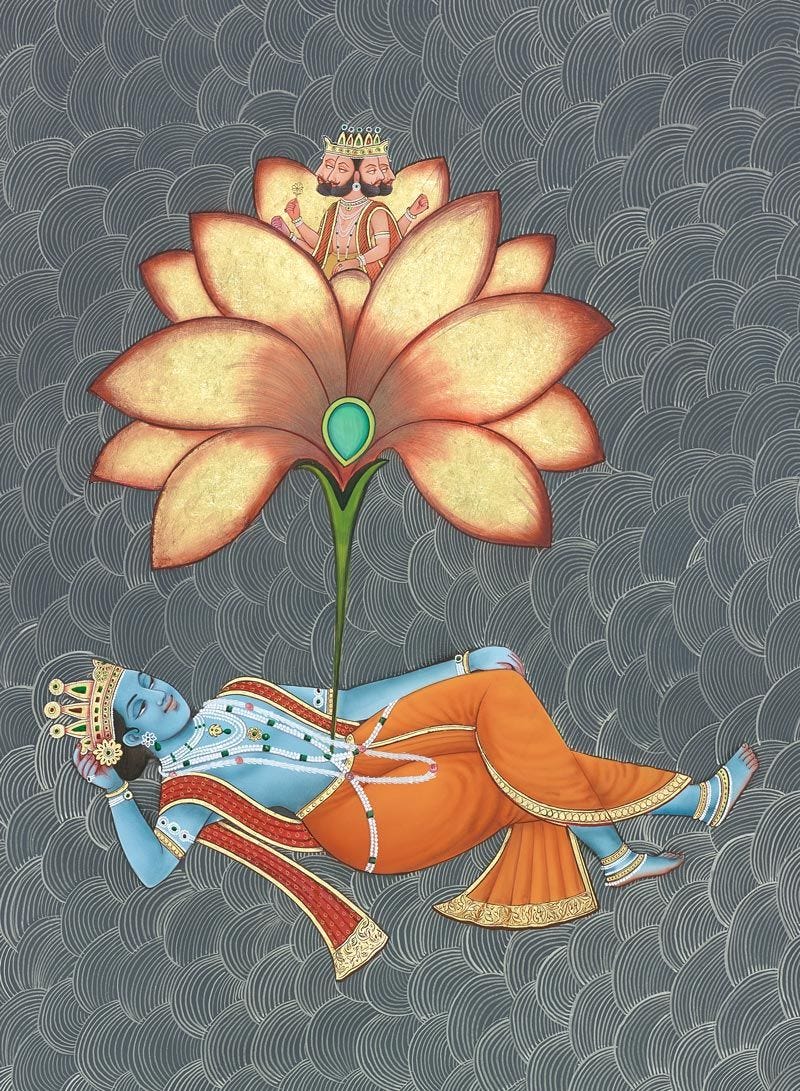
ਨਾਭਿ ਕਮਲ ਤੇ ਬ੍ਰਹਮਾ ਉਪਜੇ ਬੇਦ ਪੜਹਿ ਮੁਖਿ ਕੰਠਿ ਸਵਾਰਿ ॥
From the lotus of Vishnu’s navel, Brahma was born; He chanted the Vedas with a melodious voice.
-Raag Gujri, Mahalla 1
The Yoga of Devotion (Bhakti-Yoga) reaches a decisive articulation in the Bhāgavata Purāṇa, which expands upon the theological foundations laid in the Viṣṇu Purāṇa and the integrative vision of the Bhagavad Gita. Central to the Bhāgavata is the principle that devotion is reciprocal: if the Bhāgavata—the devotee of Bhagavān—yearns for the Lord, then Bhagavān Himself actively seeks and responds to His devotee.
ਗੋਬਿੰਦ ਭਾਉ ਭਗਤਿ ਦਾ ਭੁਖਾ ॥
Krishna says, “The Gobind is hungry for loving devotion”.
-Bhai Gurdas
This text systematizes Vaiṣṇava theology by presenting devotion not merely as reverence, but as a living relationship grounded in grace, remembrance, and divine responsiveness. Where the Vishnu Purāṇa codifies the Gītā’s philosophical synthesis into a coherent cosmology, the Bhāgavata intensifies that vision by placing Bhakti—expressed through Nāma, kīrtana, and loving remembrance—at the very center of spiritual life, especially in the age of Kali.
kalau doṣa-nidhe rājan
asty eko mahān guṇaḥ |
kīrtanād eva kṛṣṇasya
mukta-saṅgaḥ paraṃ vrajet ||
Despite Kaliyug’s faults, there’s one great virtue in it: by kīrtan of Krishna’s name, one attains liberation.
-Bhāgavata Purāṇa 12.3.51
ਕਲਜੁਗ ਮਹਿ ਕੀਰਤਨੁ ਪਰਧਾਨਾ ॥
In Kali Yuga, the Kirtan is most exalted.
-Raag Maru, Mahalla 5
Historically, the Bhāgavata Purāṇa proved enormously influential in shaping the devotional imagination of medieval India. Its stories deliberately center figures on the margins of ritual respectability, demonstrating that liberation is grounded not in status, birth, or ascetic attainment, but in wholehearted devotion to Hari. The deliverance of Gajendra the elephant recounts how a helpless creature, seized by a crocodile and exhausted of all strength, turns in utter surrender to the Lord; Hari responds immediately, affirming that sincere remembrance alone calls forth divine grace.
ਕਹੁ ਨਾਨਕ ਅਬ ਓਟ ਹਰਿ ਗਜ ਜਿਉ ਹੋਹੁ ਸਹਾਇ ॥
Says Nanak, now, Hari you are my support; Help me, as you did the elephant.
-Mahalla 9
The story of Ajāmila goes further still: though a fallen man who has abandoned all moral discipline, he is saved at the moment of death simply by calling out the name “Nārāyaṇa,” unintentionally invoking the Name and thereby overturning the claim of death and punishment through Nāma alone. When the messengers of Yama (Yamadūta) arrive to seize his soul for judgment, Ajāmila instinctively calls out the name “Nārāyaṇa”—the name of Hari—addressing his young son, yet unintentionally invoking the Divine. At once, the messengers of Viṣṇu (viṣṇudūtas) appear and forbid the yamadūtas from taking him, declaring that one who has uttered the Naam, even unknowingly, is no longer subject to punishment. Ajāmila is thus freed from the jurisdiction of Yama, the deity of death and moral recompense (Dharmarāja), and granted the opportunity for liberation.
ਸਾਜਨਿ ਮਿਲਿਐ ਸੁਖੁ ਪਾਇਆ ਜਮਦੂਤ ਮੁਏ ਬਿਖੁ ਖਾਇ ॥
Meeting your Lord as a friend, you shall find peace; the Yamadūtas will take poison and die.
-Raag Shri, Mahalla 1
Earlier Śramaṇa traditions, particularly Buddhism, had articulated a detailed moral cosmology of hells, retribution, and karmic judgment governed by Yama, as Dharmaraj, and enforced by fearsome agents. The Bhāgavata does not deny moral law, but radically reframes it: karma and its punishments are not ultimate, because Bhagavān actively intervenes on behalf of the devotee. Divine grace supersedes punitive justice, and the Lord is shown not merely as cosmic witness, but as personal guardian and protector.
There also is the striking account of Gaṇikā, a prostitute who attains liberation not through ritual purification or renunciation, but through the gradual transformation by Simran of the Name, Hari - demonstrating that even those deemed impure by social convention are fully capable of salvation through devotion. Collectively, these narratives dismantle caste hierarchy, ritual exclusivism, and moral elitism, presenting bhakti as universally accessible.
ਅਜਾਮਲੁ ਗਨਿਕਾ ਜਿਹ ਸਿਮਰਤ ਮੁਕਤ ਭਏ ਜੀਅ ਜਾਨੋ ॥
Remembering Hari, even Ajamila and Ganika were liberated; let your heart know this.
-Raag Bilaval, Mahalla 9
In explicitly identifying Nāma-simran and kīrtan as the salvific means for Kali Yuga, the Bhāgavata establishes a devotional grammar that reverberates far beyond sectarian Vaiṣṇavism. Its repeated emphasis on Hari as the all-merciful Lord—responsive to even accidental or imperfect devotion—forms part of the shared religious vocabulary later encountered in the Guru Granth Sahib and the writings of Bhai Gurdas. While Gurmat decisively rejects incarnation as ultimate, the language of Hari, Nāma, kīrtan, and divine grace reflects a devotional inheritance shaped in no small part by the Bhāgavata’s Bhakti-centered worldview. What Gurmat transforms is not the power of Nāma itself, but the theological framework around it—universalizing devotion while releasing it from dependence on avatāra or sectarian Iṣṭa.
ਧਨਿ ਧਨਿ ਮੇਘਾ ਰੋਮਾਵਲੀ ॥
Blessed, blessed is the wool of the sheep;
ਧਨਿ ਧਨਿ ਕ੍ਰਿਸਨ ਓਢੈ ਕਾਂਬਲੀ ॥੧॥
blessed, blessed is the blanket worn by Krishna. ||1||
ਧਨਿ ਧਨਿ ਤੂ ਮਾਤਾ ਦੇਵਕੀ ॥
Blessed, blessed are you, O mother Devki;
ਜਿਹ ਗ੍ਰਿਹ ਰਮਈਆ ਕਵਲਾਪਤੀ ॥੨॥
into your home the God, consort of Lakshmi (Vishnu) was born. ||2||
-Raag Mali Gaura, Namdev
At the theological level, the Bhāgavata Purāṇa radicalizes an idea already present in the Gītā: that the Divine assumes sarguṇa form—not as a limitation, but as a compassionate self-disclosure—so as to intervene in the karmic lives of devotees and preserve dharma. Krishna, as the central deity of the Bhāgavata, is presented as Bhagavān in fullness: the source of creation, the indwelling Lord of all beings, and the intimate beloved of the devotee.
ਏਕ ਕ੍ਰਿਸਨੰ ਸਰਬ ਦੇਵਾ ਦੇਵ ਦੇਵਾ ਤ ਆਤਮਾ ॥
The one Krishna is the Deva of Devas; He is the Deva of the Atma.
ਆਤਮਾ ਬਾਸੁਦੇਵਸੵਿ ਜੇ ਕੋ ਜਾਣੈ ਭੇਉ ॥ ਨਾਨਕੁ ਤਾ ਕਾ ਦਾਸੁ ਹੈ ਸੋਈ ਨਿਰੰਜਨ ਦੇਉ ॥
The Atma is Vasudeva. Nanak is a servant of whoever can understand this; he himself is Niranjan
-Raag Asa, Mahalla 2
It is therefore unsurprising that Krishna appears repeatedly in Gurbani. Gurbani alludes to Krishna precisely where it seeks to affirm the power of love over ritual, remembrance over renunciation, and grace over spiritual pride.
ਲਖ ਚਉਰਾਸੀਹ ਜੀਅ ਜੋਨਿ ਮਹਿ ਭ੍ਰਮਤ ਨੰਦੁ ਬਹੁ ਥਾਕੋ ਰੇ ॥
Wandering through 8.4 million incarnations, Krishna’s father Nand was totally exhausted.
ਭਗਤਿ ਹੇਤਿ ਅਵਤਾਰੁ ਲੀਓ ਹੈ ਭਾਗੁ ਬਡੋ ਬਪੁਰਾ ਕੋ ਰੇ ॥
Because of his devotion, the Lord incarnated in his home; how great was the good fortune of this poor man!
-Raag Gauri, Kabir
Seen within the long evolution of Dharma, the Bhāgavata Purāṇa represents a crucial stage: it teaches that God is attainable through love, that the Divine responds to the cry of the devotee, and that remembrance of the Name alone can liberate in an age of spiritual decline. At the narrative level, this vision is embodied in its exemplary Bhakts, such as Janaka, Prahlāda, and Dhruva, who are repeatedly referenced in the Gurbani of the Gurus.
na me ’bhaktaś catur-vedī mad-bhaktaḥ śva-pacaḥ priyaḥ
A non-devotee, even if learned in the Vedas, is not dear to Me; My devotee, even if of a socially despised background, is dear to Me.
-Bhāgavata Purāṇa 11.14.18
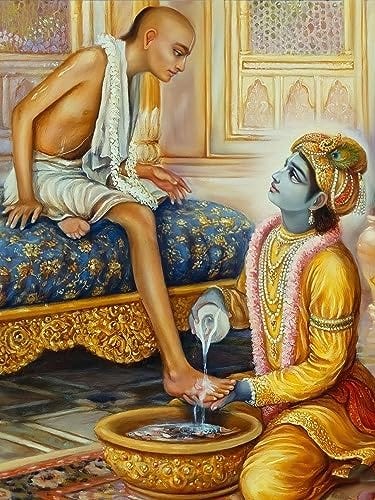
ਦੂਰਹੁ ਦੇਖਿ ਡੰਡਉਤਿ ਕਰਿ ਛਡਿ ਸਿੰਘਾਸਣੁ ਹਰਿ ਜੀ ਆਏ।
Seeing him from a distance, Hari Ji, prostrated and leaving his throne came to greet Sudama.
-Bhai Gurdas
One of the most enduring contributions of the Bhāgavata Purāṇa was the elevation of exemplary devotees as spiritual ideals, thereby inaugurating a living tradition of bhakts understood not merely as worshippers, but as realized saints who discover God and guide others toward Him. Figures such as Prahlāda, Dhruva, Janaka, and Śukadeva are presented as embodiments of devotion tested and perfected within the world itself.
ਰਾਮ ਜਪਉ ਜੀਅ ਐਸੇ ਐਸੇ ॥ ਧ੍ਰੂ ਪ੍ਰਹਿਲਾਦ ਜਪਿਓ ਹਰਿ ਜੈਸੇ ॥
Chant “Rama”. Just as Dhruva and Prehlada chanted Hari’s name.
-Raag Asa, Kabir
The Bhāgavata venerates Dhruva as the boy-sage whose unwavering concentration upon the Lord leads to divine realization; Prahlāda as the fearless child who perceives God everywhere, even amid persecution; and Janaka, father of Sītā, consort of Rāma, as the royal Yogī who remains inwardly detached while exercising sovereign power. Through such narratives, Bhakti is shown to be compatible with childhood and kingship, suffering and responsibility alike.
ਜਪਿਓ ਨਾਮੁ ਸੁਕ ਜਨਕ ਗੁਰ ਬਚਨੀ ਹਰਿ ਹਰਿ ਸਰਣਿ ਪਰੇ ॥
Suk-deva and Janak meditated on the Naam; following the Guru’s Teachings, they sought the Sanctuary of the Lord, Har, Har.
ਦਾਲਦੁ ਭੰਜਿ ਸੁਦਾਮੇ ਮਿਲਿਓ ਭਗਤੀ ਭਾਇ ਤਰੇ ॥
God met Sudama and removed his poverty; through loving devotional worship, he crossed over.
-Raag Maru, Mahalla 4
These same figures are remembered with reverence in the Gurbani, where they appear as precursors of true devotion—those whom Gurbāṇī would later call Gurmukhs, individuals oriented toward Divine wisdom (Gurmat) rather than ego or ritual pride.
ਗੁਰਮੁਖਿ ਪ੍ਰਹਿਲਾਦਿ ਜਪਿ ਹਰਿ ਗਤਿ ਪਾਈ ॥
As Gurmukh, Prahlaad meditated on the Lord, and was saved.
ਗੁਰਮੁਖਿ ਜਨਕਿ ਹਰਿ ਨਾਮਿ ਲਿਵ ਲਾਈ ॥
As Gurmukh, Janak lovingly centered his consciousness on the Lord’s Name.
ਗੁਰਮੁਖਿ ਬਸਿਸਟਿ ਹਰਿ ਉਪਦੇਸੁ ਸੁਣਾਈ ॥
As Gurmukh, Vashisht taught the Teachings of the Lord.
-Raag Vadhans, Mahalla 3

By invoking their names, the Guru acknowledges a continuous current of devotion flowing through history that preserved the flame of Truth even when religious life became obscured by formalism and superstition. The Purāṇic bhakts themselves encountered the Divine through specific manifestations of Hari: Prahlāda through Nṛsiṃha, Dhruva through Viṣṇu, and Janaka with Rama. Their devotion unfolded in relationship to these concrete forms, through which divine protection, grace, and instruction were experienced within history. Yet Gurmat also offers a decisive clarification. While honoring the purity and sincerity of these devotees, it recognizes that their realization grasped only aspects of the Infinite as disclosed through particular descents.
The Purāṇic imagination still framed the Divine through multiple forms and episodic avatāras; Guru Nanak discloses that the True One neither descends nor incarnates, but eternally pervades all as the timeless Akāl Purakh. That these bhakts are nevertheless praised in Gurbani raises a profound question rather than resolves it: if devotion mediated through avatāra is honored, yet incarnation itself is denied, what precisely is the status of avatāra within Gurmat? How is bhakti to be understood by Sikhs of Guru Nanak when its earliest exemplars loved the Divine through historical forms?
The Purāṇas spoke of Avatāras who appear and withdraw, dramatizing divine intervention within history; Gurmat discloses the Eternal One who never departs. What the Purāṇic imagination externalized as episodic descent, Guru Nanak internalizes as Hukam—the continuous, all-pervading activity of the Creator within creation itself. In Gurbani, the great Avatāras are considered to be in line with, and even followers of, Gurmat; affirming that earlier incarnations and their activities were confirmation of the supremacy of the Guru.
ਗੁਰਮਤਿ ਕ੍ਰਿਸਨਿ ਗੋਵਰਧਨ ਧਾਰੇ ॥
Through Gurmat, Krishna lifted up the mountain of Govardhan.
ਗੁਰਮਤਿ ਸਾਇਰਿ ਪਾਹਣ ਤਾਰੇ ॥
Through Gurmat, Rama floated stones across the ocean.
ਗੁਰਮਤਿ ਲੇਹੁ ਪਰਮ ਪਦੁ ਪਾਈਐ ਨਾਨਕ ਗੁਰਿ ਭਰਮੁ ਚੁਕਾਇਆ ॥੧੦॥
Accepting the Gurmat, the supreme status is obtained; O Nanak, the Guru eradicates doubt. ||10||
-Raag Maru, Mahalla 1
At the same time, Gurmat offers a decisive reinterpretation: the many divine forms celebrated across the Purāṇas, often set in theological tension with one another, are understood not as competing ultimates but as expressions arising within the one supreme consciousness—Brahm—which manifests as gods, worlds, and human beings alike. In this way, Gurmat affirms all prior developments while decisively transcending them, announcing not another incarnation, but the full disclosure of the One who was always present. Even the followers of Guru Nanak consider him an avatara and one who came to complete this transmission which has lasted ages.
ਸਤਜੁਗਿ ਤੈ ਮਾਣਿਓ ਛਲਿਓ ਬਲਿ ਬਾਵਨ ਭਾਇਓ ॥
In Sat Yuga, You were pleased to deceive Bal the king, in the form of a dwarf.
ਤ੍ਰੇਤੈ ਤੈ ਮਾਣਿਓ ਰਾਮੁ ਰਘੁਵੰਸੁ ਕਹਾਇਓ ॥
In Treta Yuga, You were called Rama of the Raghu dynasty.
ਦੁਆਪੁਰਿ ਕ੍ਰਿਸਨ ਮੁਰਾਰਿ ਕੰਸੁ ਕਿਰਤਾਰਥੁ ਕੀਓ ॥
In Dwapur Yuga, You were Krishna; You killed Mur the demon and saved Kansa.
ਉਗ੍ਰਸੈਣ ਕਉ ਰਾਜੁ ਅਭੈ ਭਗਤਹ ਜਨ ਦੀਓ ॥
You blessed Ugrasain with a kingdom, and You blessed Your humble devotees with fearlessness.
ਕਲਿਜੁਗਿ ਪ੍ਰਮਾਣੁ ਨਾਨਕ ਗੁਰੁ ਅੰਗਦੁ ਅਮਰੁ ਕਹਾਇਓ ॥
In Kali Yuga, You are known and accepted as Guru Nanak, Guru Angad and Guru Amar Das.
-Bhatt Kal
Guru Nanak has the clear position of Satguru in this age, he stands as the inheritor and fulfiller of this entire legacy, revealing that even those once regarded as divine must turn inward and become Gurmukhs.
ਗੁਰ ਸੇਵਾ ਆਪਿ ਹਰਿ ਭਾਵੈ ॥
Service to the Guru pleases Hari himself.
ਕ੍ਰਿਸਨੁ ਬਲਭਦ੍ਰੁ ਗੁਰ ਪਗ ਲਗਿ ਧਿਆਵੈ ॥
Even Krishna and Balbhadra meditated, attaching themselves to the Guru’s feet.
ਨਾਨਕ ਗੁਰਮੁਖਿ ਹਰਿ ਆਪਿ ਤਰਾਵੈ ॥
O Nanak, Hari himself saves the Gurmukhs.
-Raag Gauri, Mahalla 4
ਕਿਸਨੁ ਸਦਾ ਅਵਤਾਰੀ ਰੂਧਾ ਕਿਤੁ ਲਗਿ ਤਰੈ ਸੰਸਾਰਾ ॥
Vishnu is always busy reincarnating himself - who will save the world?
-Raag Vadhans, Mahalla 3
At times, Guru Nanak freely employs names such as Hari, Prabhu, and Rām—and even alludes to Krishna—to refer to the Divine. Yet later in Gurbani, these same figures appear to be relativized or even described as mere creation.
ਕੇਤੇ ਪਵਣ ਪਾਣੀ ਵੈਸੰਤਰ ਕੇਤੇ ਕਾਨ ਮਹੇਸ ॥
(There are) so many winds, waters and fires; so many Krishnas and Shivas.
-Japji Sahib
This is not a contradiction but clarification. For Guru Nanak, the moment Bhagavān manifests in physical form, that manifestation belongs to Māyā; what becomes defined by form, name, and image risks being reduced to an object of worship rather than recognized as the Formless One. Within the Purāṇic framework itself, even the Avatāras of Viṣṇu are understood not as the totality of the Divine, but as partial manifestations or portions of His being. Gurmat radicalizes this insight further: just as Avatāras represent only fragments of Viṣṇu’s expression, so too the Sarguṇa Hari—God encountered through name, quality, and devotion—remains only a partial disclosure of the Nirguṇa Absolute. To identify Vishnu or Krishna as Brahman in themselves collapses non-duality into form, turning the Infinite into a finite figure—a move fundamentally at odds with Gurmat. The names Hari, Prabhu, Rām, or even Krishna remain valid as pointers to divine qualities—destroyer of pain, sovereign Lord, inner king, playful compassion—but when that savior is fixed as “Vishnu,” complete with four arms, weapons, ornaments, and attire, the mind begins to mistake form for Reality.
ਪਵਣੁ ਪਾਣੀ ਅਗਨਿ ਤਿਨਿ ਕੀਆ ਬ੍ਰਹਮਾ ਬਿਸਨੁ ਮਹੇਸ ਅਕਾਰ ॥
He created air, water and fire, Brahma, Vishnu and Shiva - the whole creation.
-Raag Gujri, Mahalla 1
Just as the color black is fluid and meaningful when understood only as depth, absence of light, or the vastness between stars, yet becomes limiting when reduced for the human mind when given the term “black”, so too the Divine Name loses its liberating power when confined to imagery. In this way, Guru Nanak affirms devotional language while rejecting devotional fixation: the bhakt is not condemned for loving Krishna or Hari, but the Gursikh is warned against equating any manifested form with Ik Onkar itself. Devotion is preserved, while non-duality is protected.
From the synthesis of karma, jñāna, and bhakti articulated in the Bhagavad Gita, and from the devotional culture of Hari-worship elaborated in the Purāṇas, a continuous current of dharma took shape in history. The Gītā integrated action, knowledge, and devotion into a disciplined moral and spiritual life, while the Purāṇas translated this synthesis into accessible practice through Nāma, Kīrtan, sacred narrative, and exemplary devotees. Together, they cultivated a religious imagination oriented toward righteous living, personal devotion, and divine grace operating within the moral order of the world.
This current persisted and was refined through successive generations of Bhakts, whose hymns and teachings emphasized inward devotion over ritual form. In Guru Nanak, these dispersed developments reach systematic coherence. The partial insights of the Gītā, the Purāṇas, and the bhakti saints are gathered into a universal articulation of Dharma: devotion is affirmed without reliance on incarnation, Nāma is disclosed as the direct presence of the Divine, and the One is understood as manifest in all without being confined to form. Where earlier traditions expressed truth through Avatāra, myth, or saintly exemplar, Gurmat presents a non-incarnational and universally accessible realization of the Divine.
Seen in this light, the historical movement from Janaka and Prahlāda, through Purāṇic bhakti and medieval devotion, to Guru Nanak represents the progressive clarification of Brahmgyān. Each stage articulates the same Truth under different conditions of historical readiness. Gurmat marks not a rupture with this lineage, but its completion: the point at which devotion, knowledge, and action are unified without remainder in the realization of Ik Onkar.
The following section turns from this historical synthesis to praxis, examining the disciplined and theurgical means by which this realization is cultivated—how devotion, knowledge, and inner practice converge in lived experience of Hari through Nāam.
Ācārāṅga Sūtra.
Jacobi, Hermann, trans. Jaina Sūtras, Part II. Sacred Books of the East, Vol. 22. Oxford: Clarendon Press, 1884.
Bhagavad Gītā.
Radhakrishnan, Sarvepalli, trans. The Bhagavadgītā. Oxford University Press.
van Buitenen, J. A. B., trans. The Bhagavadgītā. In The Mahābhārata, Vol. 2. University of Chicago Press.
Miller, Barbara Stoler, trans. The Bhagavad-Gītā: Krishna’s Counsel in Time of War. Bantam Classics.
Bhāgavata Purāṇa.
Bryant, Edwin F., trans. The Bhāgavata Purāṇa. Penguin Classics / Motilal Banarsidass.
Bhai Gurdas Vārāṅ.
Vārāṅ Bhāī Gurdās. Standard critical Punjabi edition. Amritsar: Shiromani Gurdwara Parbandhak Committee (SGPC).
Bṛhan-Nāradīya Purāṇa.
English selections and Sanskrit text. Delhi: Motilal Banarsidass.
Dhammapada.
Easwaran, Eknath, trans. The Dhammapada. Nilgiri Press.
Early Sikh Tradition.
McLeod, W. H. Early Sikh Tradition: A Study of the Janam-sākhīs. Oxford University Press, 1980.
Guru Nanak and the Origins of the Sikh Faith.
Singh, Harbans. Guru Nanak and the Origins of the Sikh Faith. Bombay: Asia Publishing House, 1969.
Indian Philosophy.
Radhakrishnan, Sarvepalli. Indian Philosophy, Vols. I–II. Oxford University Press.
Mahābhārata.
The Mahābhārata. Critical Edition. Pune: Bhandarkar Oriental Research Institute (BORI).
van Buitenen, J. A. B. et al., trans. University of Chicago Press.
Nārada Bhakti Sūtra.
Prabhavananda, Swami, and Christopher Isherwood, trans. Nārada Bhakti Sūtra. Vedanta Press.
Padma Purāṇa.
A Padma Purāṇa. Translations in the Ancient Indian Tradition and Mythology Series. Delhi: Motilal Banarsidass.
Rāmāyaṇa.
The Rāmāyaṇa of Vālmīki. Critical Edition. Baroda Oriental Institute.
Goldman, Robert P. et al., trans. Princeton University Press.
Saṃyutta Nikāya.
Bodhi, Bhikkhu, trans. The Connected Discourses of the Buddha. Wisdom Publications, 2000.
Songs of the Saints of India.
Hawley, John Stratton, and Mark Juergensmeyer, trans. Oxford University Press.
Sri Guru Granth Sahib.
Śrī Guru Granth Sāhib. Standard recension. Amritsar: Shiromani Gurdwara Parbandhak Committee (SGPC).
(Cited by Ang; translations consulted: Manmohan Singh, Gopal Singh, Sant Singh Khalsa.)
The Bhagavad Gita in the Mahabharata.
van Buitenen, J. A. B. The Bhagavad Gītā in the Mahābhārata. University of Chicago Press.
The Presence of Śiva.
Kramrisch, Stella. The Presence of Śiva. Princeton University Press.
The Purāṇas.
Rocher, Ludo. The Purāṇas. Wiesbaden: Otto Harrassowitz, 1986.
The Sikhs.
McLeod, W. H. Sikhism. Penguin Books, 1997.
Viṣṇu Purāṇa.
Wilson, H. H., trans. The Viṣṇu Purāṇa. Revised edition. Delhi: Motilal Banarsidass.
Comments
Nothing yet. Say the first thing.
Sign in to join the conversation.