
In the first article of this series, we examined one of the most overlooked turning points in modern Islamic history. As the Ottoman Empire weakened, Egypt under Muhammad Ali Pasha emerged as the strongest Muslim power in the region. After suffering military defeat, the Ottoman government appealed to Europe’s great powers, whose intervention halted Egypt’s expansion and preserved the Ottoman dynasty.
That story naturally raises another question. Was Muhammad Ali Pasha himself a betrayer? Many Muslims answer that question without hesitation.
“He rebelled against the Caliph.”
“He attacked the Ottoman Empire.”
“He divided the Muslim world.”
At first glance, these accusations appear straightforward.
But if we apply the same standard consistently across Islamic history, we arrive at a surprising conclusion. Much of Islamic political history would also have to be called betrayal. The historical record is far more complicated.
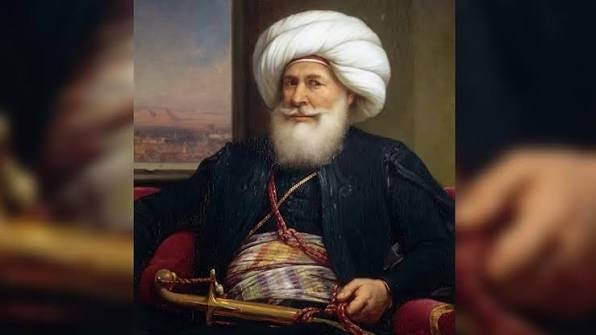
Many Muslims today unconsciously view the Ottoman Empire as though it represented a permanent and unquestionable political order. This perspective is understandable.
The Ottomans ruled for more than six centuries. They governed the Holy Cities. They claimed the title of Caliph. By the nineteenth century, they had become synonymous with political leadership in much of the Muslim world.
Yet the Ottoman Empire itself came to power by replacing another Muslim empire. Before the Ottomans came the Mamluks. Before the Mamluks came the Ayyubids. Before them came the Fatimids in Egypt, the Abbasids in Baghdad, and before them the Umayyads in Damascus.
The Muslim world has never remained under one political dynasty forever. Leadership changed repeatedly. Sometimes peacefully. More often through war.
History is filled with Muslim rulers fighting other Muslim rulers. The Umayyads defeated rivals during the First Fitnah and established their dynasty. The Abbasids overthrew the Umayyads through revolution. The Seljuks became the military protectors of the Abbasid Caliph while exercising the real political authority. The Mamluks seized power in Egypt after the decline of the Ayyubids.
Then, in 1516 and 1517, Sultan Selim I and the Ottoman armies defeated the Mamluk Sultanate. As a result, Egypt, Syria, the Hijaz, Mecca, Medina, and Jerusalem all passed into Ottoman control.
Today, very few Muslims describe Selim’s conquest of the Mamluks as betrayal. Instead, it is generally understood as a transfer of political leadership from one Muslim dynasty to another.
Why?
Because throughout Islamic history, Muslim political authority was rarely fixed forever.Strong states replaced weaker ones. The religion continued even when dynasties changed.
This raises an important distinction. Were Muslims expected to remain loyal to a particular dynasty? Or were they expected to preserve Islam itself? These are not identical questions. Throughout Islamic history, dynasties rose and fell. The Umayyads disappeared. The Abbasids declined. The Fatimids vanished. The Mamluks lost Egypt. The Ottomans eventually collapsed.
Yet Islam endured. Mosques continued to function. Scholars continued teaching. Courts continued applying Islamic law. Pilgrims continued traveling to Mecca.
The continuity Muslims sought to preserve was ultimately the religion, not necessarily a particular ruling family.
This does not mean rulers were unimportant. Stable government matters. Civil war can devastate societies. Islamic scholarship has long warned against unnecessary rebellion because of the bloodshed and chaos it often produces. But history also shows that political leadership itself was never permanently attached to one dynasty.
Muhammad Ali Pasha certainly fought the Ottoman Empire. That fact is undisputed. But how different was his conflict from earlier struggles between Muslim dynasties? He did not invade alongside European armies. He did not seek to divide Muslim lands among foreign powers. His army was overwhelmingly Muslim. His government administered territories through Islamic institutions of the period. He ruled Egypt, the Hijaz, and much of Greater Syria.
Whether his ambitions were primarily personal, dynastic, or connected to a broader vision for the Muslim world remains debated. What is not debated is that conflicts between Muslim rulers had occurred for centuries before him.
If every attempt to replace a weakened Muslim dynasty is automatically labeled betrayal, then consistency would require applying the same label to numerous earlier transitions in Islamic history.
Few historians do so.
This distinction matters. Political rivalry is not automatically the same as betrayal.
Suppose one Muslim ruler attempts to replace another because he believes he can govern more effectively or because he seeks greater power. That may be morally right or morally wrong depending on the circumstances. But historically, it falls within a long-established pattern. Betrayal usually carries a different meaning.
It suggests knowingly siding with outside enemies against one’s own civilization or deliberately helping foreign powers dominate Muslim lands. That distinction explains why many historians treat Muhammad Ali differently from later political movements that openly depended upon European sponsorship.
His conflict was initially a struggle between Muslim powers. The decisive European role came afterward. Ironically, it was the Ottoman government, not Muhammad Ali, that ultimately sought large-scale military assistance from Europe’s great powers to preserve its position. That does not make the Ottomans traitors either.
It illustrates how complex political survival had become during the nineteenth century.
Another modern misconception is that the ruler of the Muslim world was always its greatest scholar or most pious individual. History says otherwise. Islam established ideals for leadership.
Justice.
Knowledge.
Consultation.
Protection of religion.
Care for the people.
But rulers usually came to power because they possessed military strength, political skill, tribal support, economic resources, or administrative ability.
Religious legitimacy often followed political success rather than creating it. The Umayyads were not the most knowledgeable scholars of their age. Neither were the Abbasids. Nor the Mamluks. Nor the Ottomans. Their legitimacy rested largely upon their ability to govern, defend territory, and maintain order while receiving recognition from scholars and religious institutions.
Meanwhile, many of Islam’s greatest scholars deliberately avoided political office. Abu Hanifa refused judicial appointments. Malik ibn Anas maintained scholarly independence. Ahmad ibn Hanbal endured imprisonment rather than surrender his principles. Al-Nawawi challenged rulers despite holding no political office himself.
These men became authorities because of knowledge, not because they ruled states. The scholar and the ruler occupied different roles. Sometimes they cooperated. Sometimes they clashed.
This is the question that often makes people uncomfortable. No one can answer with certainty. Muhammad Ali never publicly declared himself Caliph. He never secured broad recognition from scholars throughout the Muslim world. His rule was authoritarian. His economic reforms imposed heavy burdens upon ordinary Egyptians. He was certainly ambitious. Yet history often turns on possibilities rather than certainties. Had the Ottoman Empire collapsed during the 1830s, Egypt possessed many of the practical characteristics that previous Muslim empires had relied upon.
Military superiority.
Administrative competence.
Economic resources.
Control over the Holy Cities.
Influence over much of the Arab heartland.
That does not prove he would have become Caliph. Nor does it prove he would have governed justly. It simply explains why both the Ottoman government and Europe’s great powers viewed Egypt as a genuine threat.
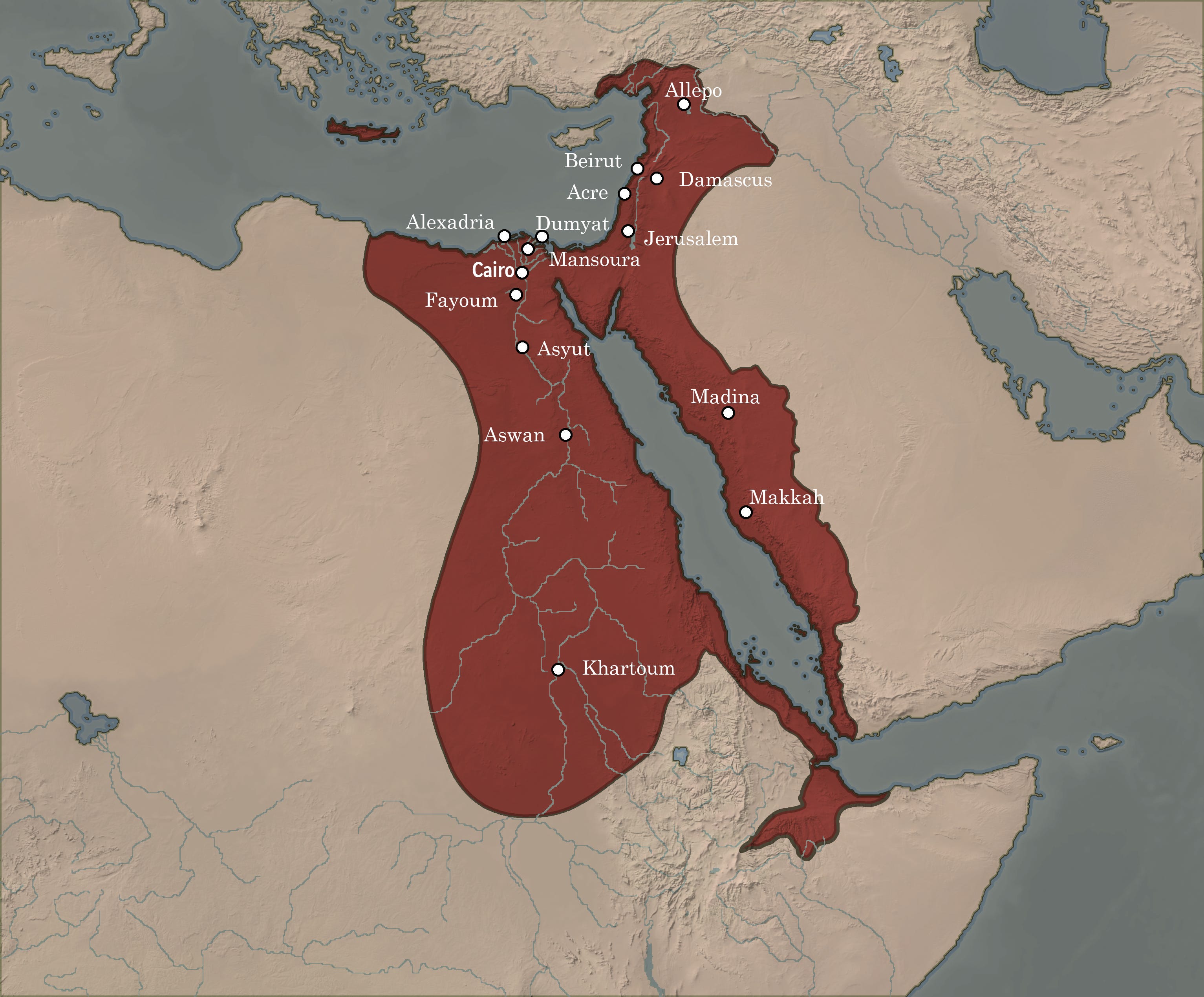
Perhaps the most important question is not whether Muhammad Ali fought the Ottomans. Muslim rulers had fought one another for centuries. The real turning point came afterward. Previous transitions between Muslim dynasties were usually decided by Muslim armies. The struggle between Muhammad Ali and the Ottomans was ultimately settled in European capitals.
Britain.
Austria.
Prussia.
Russia.
Later joined diplomatically by France.
The future of the leading Muslim empire was no longer determined solely by Muslims. European governments had become decisive participants in Muslim political succession. That was something genuinely new. It marked the beginning of a different era.
History is often reduced to simple heroes and villains. The Ottomans become symbols of unity. Muhammad Ali becomes a rebel. The Arabs become traitors. Europe becomes the external enemy. Reality is rarely that simple. Muhammad Ali was an ambitious ruler. The Ottoman Sultans sought to preserve their dynasty. European powers pursued their own interests. Each acted according to political calculations shaped by the realities of the nineteenth century. Rather than asking whether Muhammad Ali was simply a betrayer, perhaps the better question is this:
How had political leadership traditionally changed throughout Islamic history?
Once we ask that question, we discover that military competition between Muslim dynasties was not unusual. What was unusual was allowing Europe’s great powers to determine which Muslim dynasty would survive. That is the true historical significance of the conflict. It marks one of the earliest moments when the balance of power inside the Muslim world ceased to be decided primarily by Muslims themselves.
This series has explored two connected questions.
First, how European intervention preserved the Ottoman Empire and prevented Egypt’s rise.
Second, whether Muhammad Ali’s conflict with the Ottomans truly fits the label of betrayal.
Both discussions point toward a larger issue that shaped the modern Muslim world.
Who has the authority to lead?
Is legitimacy inherited through dynasties?
Earned through scholarship?
Established through military power?
Or does Islamic political thought offer a more nuanced answer?
Those questions deserve their own discussion because they continue to influence how Muslims think about leadership, unity, and political authority today.
Thanks for reading The Muslim Observer! This post is public so feel free to share it.
No posts
Comments
Nothing yet. Say the first thing.
Sign in to join the conversation.