
Last week I saw Maggie Gyllenhaal’s The Bride!, which reimagines the 1935 Bride of Frankenstein, centering the titular bride in a way the first movie didn’t. “I don’t know if I liked it or not,” my friend Lindsay said as we walked out, capturing my feelings, too. With a little hindsight I’m having the unusual experience of enjoying thinking and writing about the movie more than I liked watching it—despite creating a lush visual spectacle and raising interesting ideas, it didn’t hold together for me—but maybe more on that some other time.
In one scene that moved me (as it was designed to do) Frankenstein’s monster, in this movie called Frank, meets the Fred Astaire-esque musicals star he has worshipped for decades1. It’s ultimately a don’t-meet-your-idols moment, but before things go bad Frank, who we know has spent a century wandering the earth loveless and lonely, tells the dancer that seeing him perform saved his life2.
I’ve been experiencing a period of deep personal sadness. It has sometimes been hard to get out of bed. While I wouldn’t hyperbolize to say that art has been saving my life, in recent weeks it has consistently made me feel alive and connected in a way I otherwise would not have.
I felt this acutely while at the Portland Museum of Art’s exhibit, Ming Smith: Jazz Requiem in Blue, curated by Daisy Desrosiers. Smith, who doesn’t disclose her exact age but is around 75 (chic!), has been described as a street photographer, a collage artist, and a portraitist—she has photographed figures from Brassaï, one of her great influences, to Grace Jones. To my mind she captured her own work best in a 2023 interview with Lovia Gyarkye for T on the occasion of her MoMA solo show. “I paint with light,” she said.
It doesn’t come through on a screen, the way light spills out of Smith’s photographs. A field of backlit sunflowers glows as though ablaze, Sun Ra looks to be walking through a shower of gold. Standing in front of one of my favorite images, “Roxbury Interior (Boston, MA),” 1978, sunlight pours in through an open window and, it seemed, onto me.
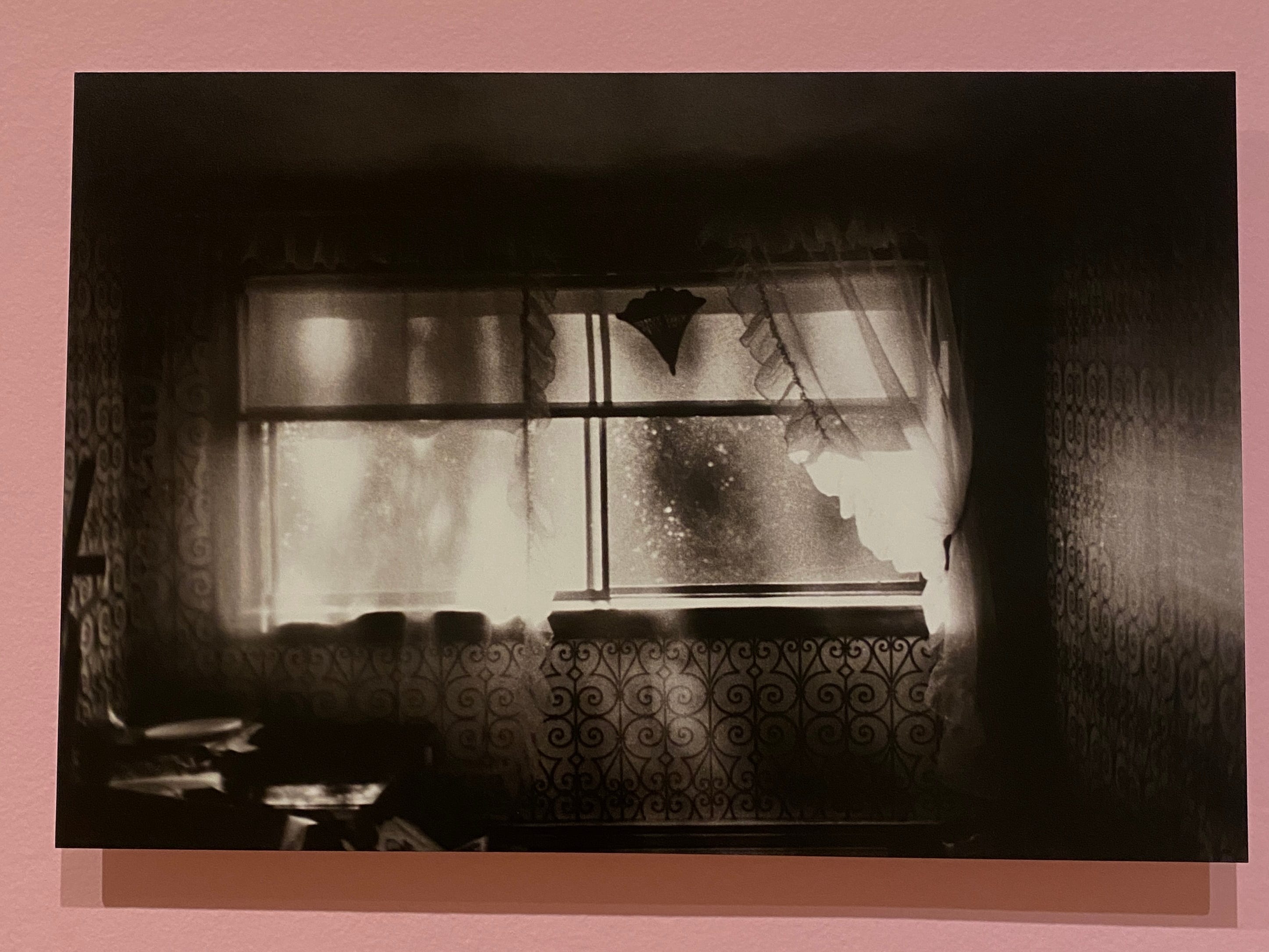
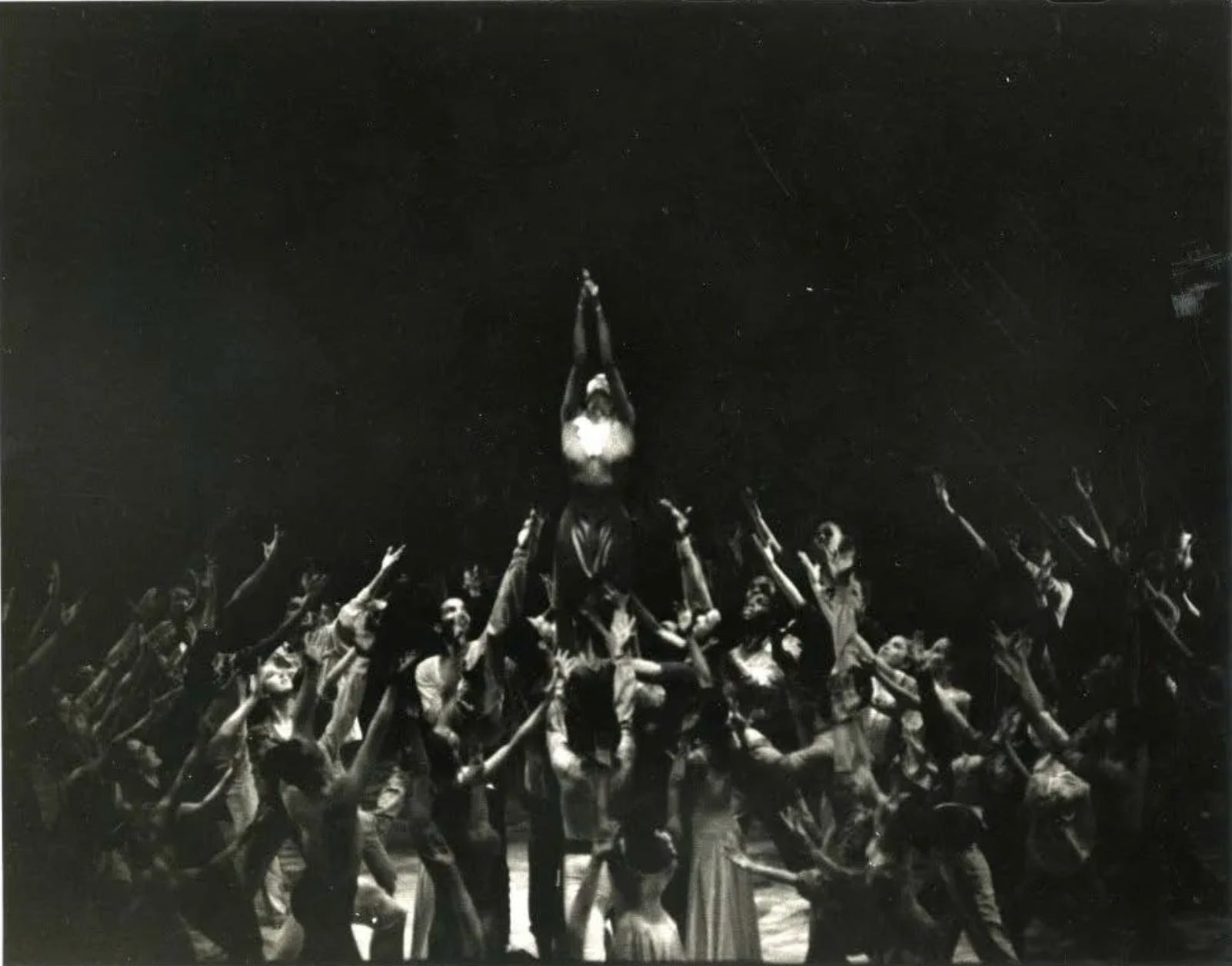
“She likens her process to a jazz musician’s surrender to instinct when chasing an ephemeral feeling or mood,” Gyarkye writes. In her photographs of Alvin Ailey dancers, a few of which appear in the PMA show, she transmits the extraordinary experience of watching that company perform Revelations.
In a nice artistic linkage, I had just reread Swing Time by Zadie Smith for the first time since its publication in 2016. The book opens with the unnamed narrator watching a clip from the 1936 musical Swing Time starring Fred Astaire and Ginger Rogers. Astaire looms large over the novel’s narrative, but towards the end of the book the narrator also recounts seeing Ailey’s Revelations, and at that performance meeting a couple named Darryl and James who end up giving her a place to stay during a difficult time.
It was only upon my recent reread that I realized these two are a fictionalized version of the writers Darryl Pinckney and James Fenton; I hadn’t yet read their work back in 2016. I didn’t know, then, that the book’s description of the “Edith Wharton-era wreck” they bought in Harlem mirrors their real life years-long home restoration.
In the decade since I first read Swing Time, I’ve had the pleasure of interviewing both Zadie Smith (for Elle) and Darryl Pinckney (for Vanity Fair), conversations that I think about not infrequently, because they were both generous in answering the questions of a younger person who was asking, essentially, how does one become a real writer, and what is it all for? When I talked to him, Pinckney had just written a memoir called Come Back in September about his relationship with his writing mentor, Elizabeth Hardwick, in 1970s New York City.
Pinckney [on how he decided when to end his memoir]: I think I wanted to stop before the scene darkened. And then, it was one thing to fail when you’re in your twenties, but then when you’re still failing in your thirties, it’s another story.
VF: Did you feel like you were failing in your thirties?
Yes. I’ve always felt as though something—that I kind of, you know, failed.
I wonder if everybody who has a very high standard for the work that they do feels that way.
Well, I’m sure you’re right. Probably. I mean, sometimes you forget you’ve written something, you look at it and you’re surprised how much work you did on it. The memory of that comes back.
I also feel very fortunate in the life I’ve had. Largely through the people I’ve known and just the sheer luck of certain circumstances. When I was born, and where, and what was happening, all things that I had no particular control over. And so it makes the sense that maybe I wish I could have used the time better a rather bitter one, or a little rueful—bitter’s the wrong word. And then what [Hardwick] said herself, I wish I’d written more. But you can’t. If you haven’t, then you haven’t. So the struggle for self-acceptance, if you’re a writer, is never over, I think. I mean, you know that.
Before going to the Ming Smith show, Dan and I stopped into Bold Magazine Shop, a really wonderful new periodical store on Congress. I picked up the second issue of the South Portland-based Pencil Magazine, “a print publication in which all contents—text and images—are created with graphite pencils on paper.” Flipping through, I found my writing mentor Paul La Farge looking back at me, as sketched by Amanda Stern in a piece called “All My Friends Are Dead.” In it she writes, “Dead means absent, but my friends are like pollen: diffusely present.”
Last year I attended a launch party for Pencil with my friend Gracie, a designer at the PMA. In the museum gift shop there’s a poster of staff recommendations accompanied by illustrations of their faces, which Gracie drew. Hi Gracie, I thought to myself, and then I went to see Ming Smith’s photographs of people, of light.
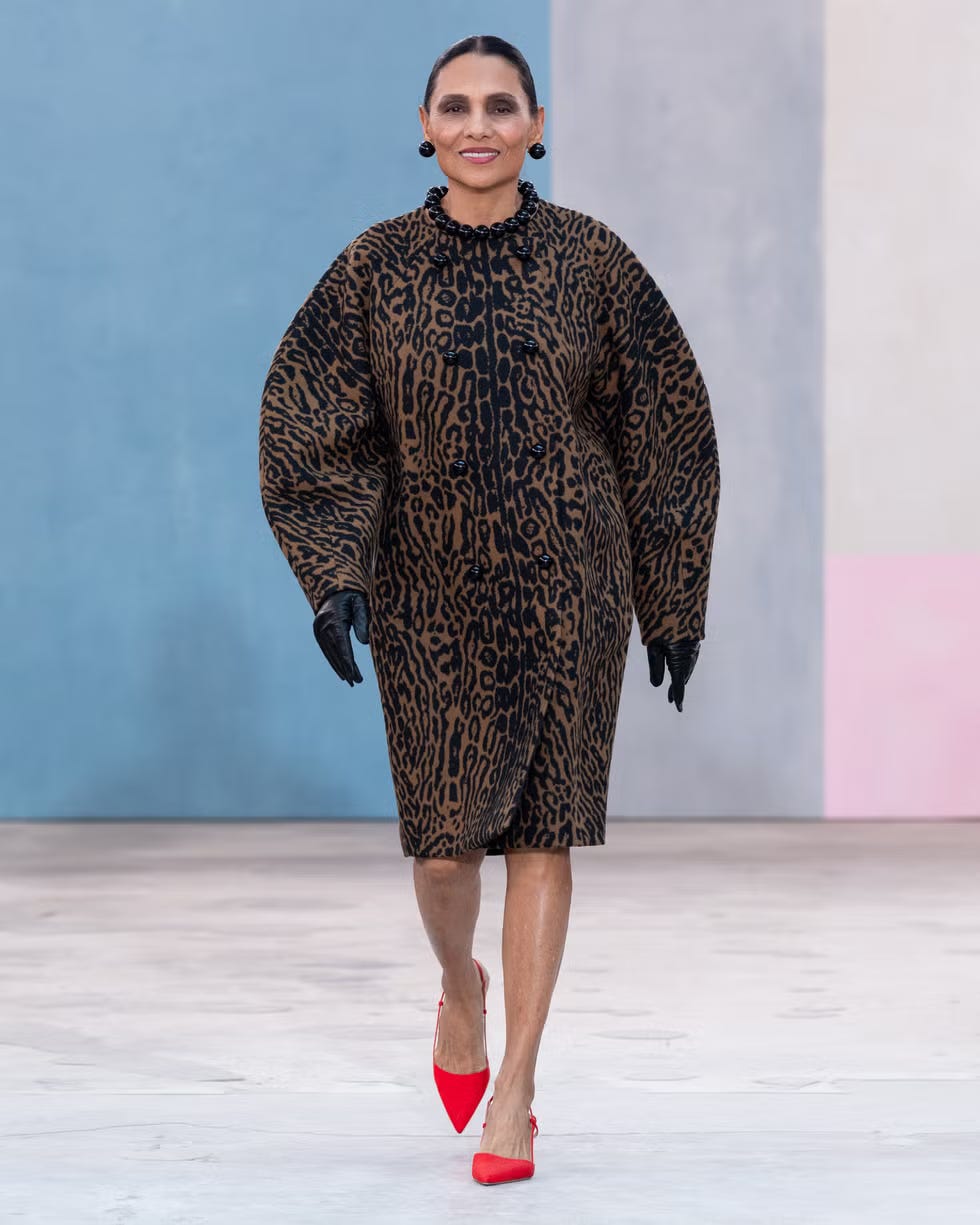
I started writing this in bed a few hours after sunrise on Saturday. It snowed in the night and I had just eaten the almond croissant Dan picked up early that morning from Standard. I’m finishing the post on Sunday morning, also in bed, a little later in the day. I’ve been looking through images of the Carolina Herrera Fall 2026 show, in which creative director Wes Gordon asked various women artists who inspired the season, including Ming Smith, to walk. In a moment I’ll read some Ulysses and then get back to revisions on my novel, which is being fed by these various writers and artists, these literal and figurative conversations with friends and acquaintances. Later I’ll take a walk with Gracie and our dogs. There is so much for which to feel grateful and lucky.
I have a lot of questions about this movie, but the most nagging and probably least interesting is: Jake Gyllenhaal, who plays the musicals star, is Maggie Gyllenhaal’s brother. Elsewhere in the movie a character named Jake is played by Peter Sarsgaard, Maggie Gyllenhaal’s husband. The monster calls the Bride character Penelope, a name they discuss at relative length as they flee a lady detective played by Penélope Cruz. This baffled and distracted me during the film—was the point merely to underscore that we were watching a movie in which real people play fictional people?—but I’m wondering now if Maggie Gyllenhaal just wanted to call out the names of people who mean a lot to her.
The moment is gutting, but also played for laughs, given that the cliché is deployed by a more than one hundred year old man who is made of cadaver body parts.
Comments
Nothing yet. Say the first thing.
Sign in to join the conversation.