
A board member at a major F500 retailer saw some of what we’ve built at Mighty & True recently and asked me to write it up for his company’s CRO. As I started writing, I realized the explanation was bigger than our shop. It’s a map of where the service industry is right now and where it’s going fast.
So here it is.
Walk into the average agency and you’ll find a mess. No real SOPs. Decisions made in someone’s head and never written down. A shared drive full of files named “final_FINAL_v3.” The institutional knowledge walks out the door every time someone quits. The system is whoever’s been there longest and answers Slack the fastest.
We ran M&T that way for seven years. Client work always felt more urgent than fixing how we operated. It usually does. Then one day you look up and realize the business only works because of three specific people, and if any of them leave, you’re in serious trouble.
Two books changed how we thought about this. Traction and E-Myth both make the same argument: a business that depends on heroic individual effort isn’t a business. It’s a job with employees. Real businesses run on documented processes that produce consistent results regardless of who’s executing them.
Three years ago we rebuilt. Documented how we work. Wrote down everything that lived in people’s heads. Built repeatable delivery. Unglamorous work that took longer than we expected.
It also turned out to be the prerequisite for everything we’re doing with AI now.
You can’t encode a process that was never written down. You can’t automate a workflow that runs differently every time depending on who’s handling it. The agencies struggling most with AI right now didn’t have an AI problem. They had an operations problem they never fixed. AI just made it visible.
We fixed ours first. That’s why the AI layer went in clean.
There’s a real difference between buying software to do your job and building software that encodes how you work.
The first one makes you faster at the same tasks. The second one gets smarter every time you use it, compounds across every client engagement, and belongs to you.
Across 25 repositories, here’s what we’ve actually built.
The old way a strategy engagement starts: a senior person spends two weeks getting up to speed. Auditing the web presence, reading competitive messaging, talking to stakeholders, synthesizing what buyers actually say versus what the brand thinks they say. Good work. Necessary work. Work that happens mostly in one person’s head.
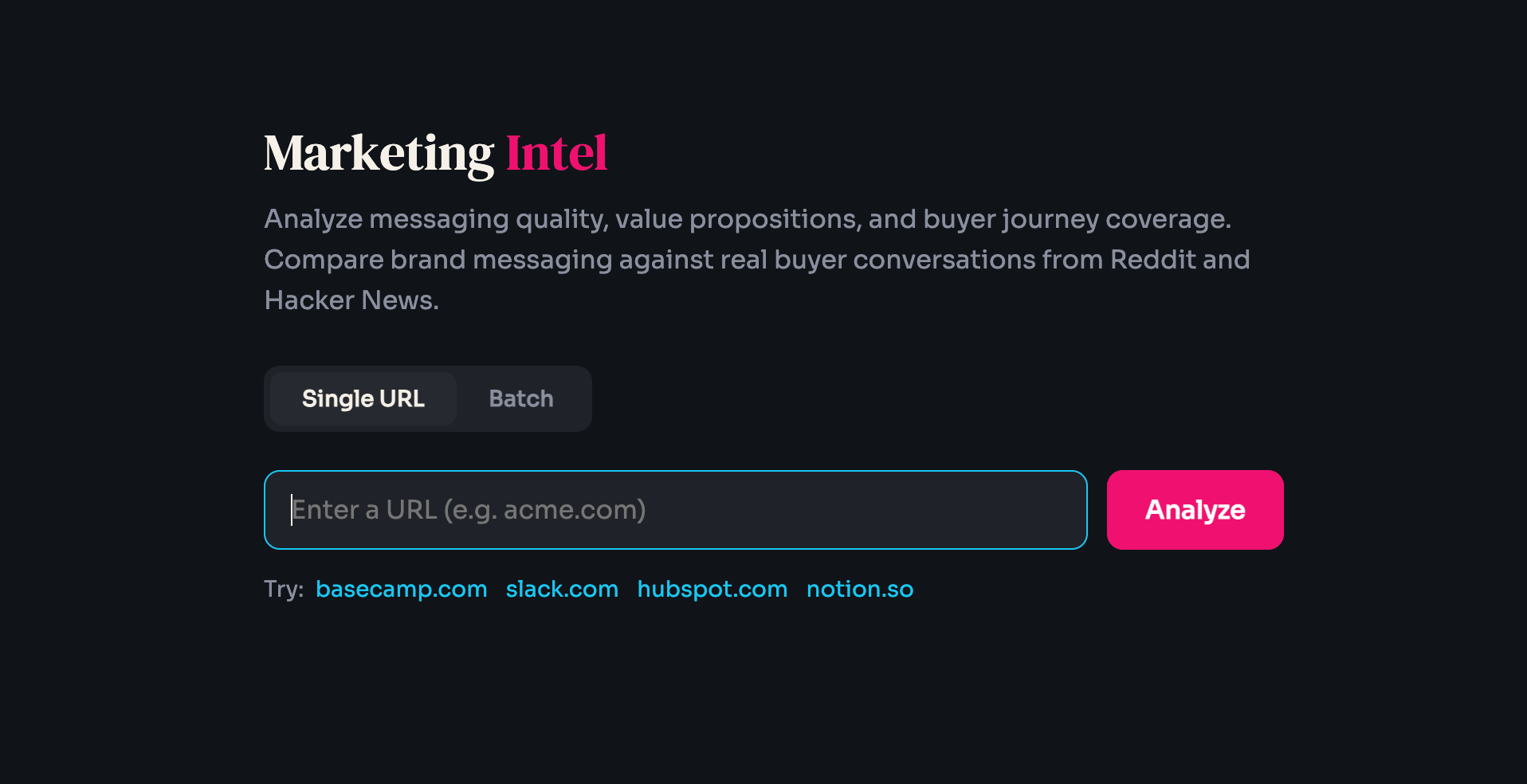
We built tools that do the information-gathering part in minutes.
A Site Analyzer that audits any brand’s web presence on demand. A Marketing Intel tool that cross-references what a brand claims against what buyers actually say. A Solutions Messaging OS that ingests client assets and builds a full strategic framework. BrandSentry that keeps creative output on-strategy after the work is set.
None of these are generic AI tools. They encode our specific methodology. They produce outputs that used to take a senior strategist most of a day, before the first client call.
The senior strategist still does the strategy. They just start on day one instead of week three.
Most teams using AI in production are doing it the same way; a writer drafts something in Claude, a designer generates concepts in Midjourney, a developer autocompletes in Cursor. Real gains. But every project still starts from scratch. Quality still depends on whoever touched it last.
We built our production system differently.
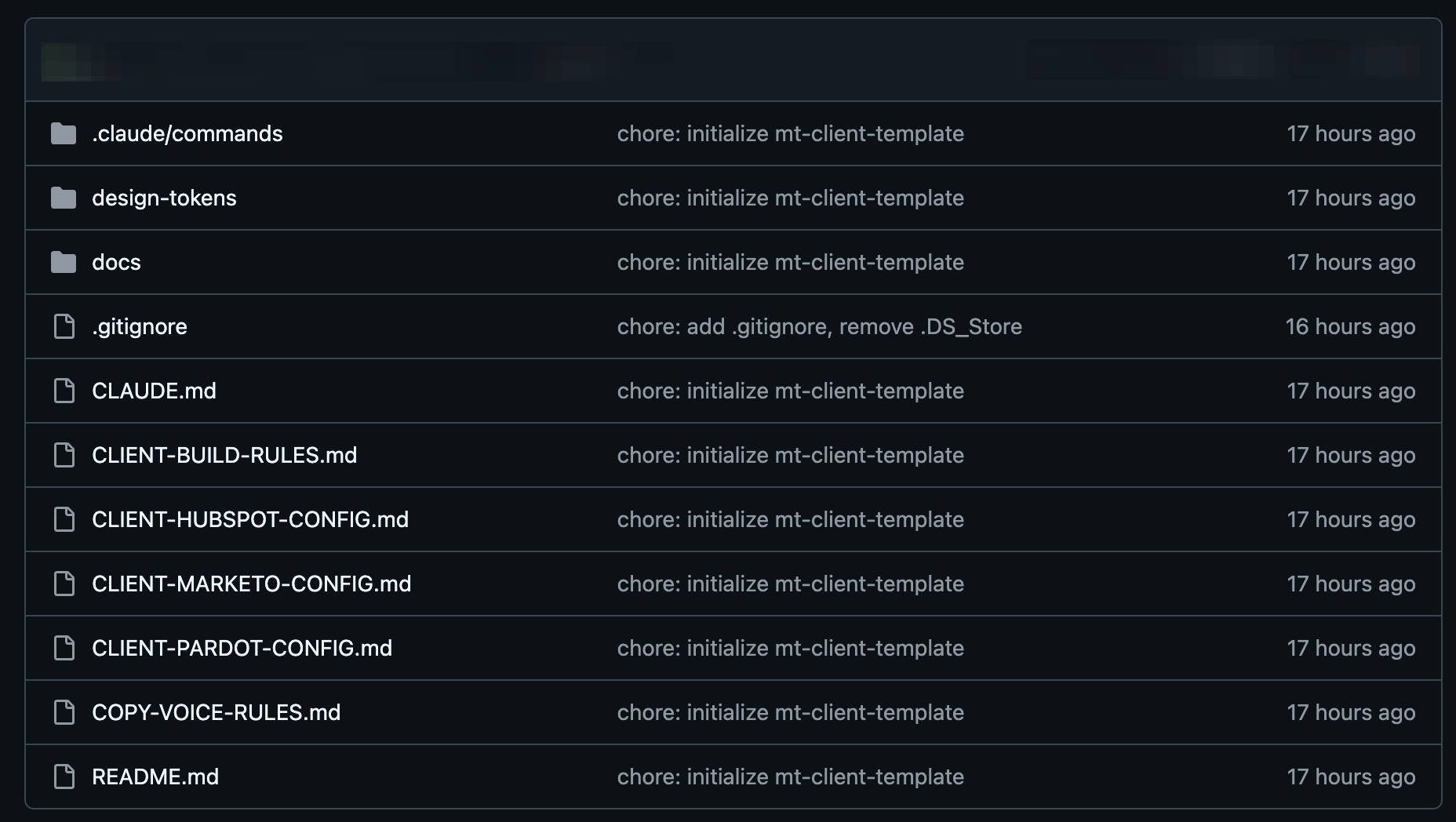
Brand rules, voice guidelines, and design tokens get extracted once at the start of a client engagement. Then they travel through every deliverable. When a new project kicks off, Claude Code isn’t starting from a blank context. It’s starting from a structured foundation that already knows how that client communicates, what they build, and what good looks like for them. We wrote a blog on our context system here.
First-pass quality is high because the context is already loaded. The work doesn’t live in anyone’s inbox. It lives in the system.
This is what agencies lose when they grow past a certain size… consistency. Every senior person does it slightly differently. Every new hire has to relearn it. We built a system that holds the standard regardless of who’s executing.
Layers 1 and 2 are about client work. This layer is about everything else.
In any service business, a significant chunk of senior time goes to things that don’t generate client value. Email. Meeting prep. Task tracking. Outbound campaigns. Internal reporting. It’s real work, but it’s not the work you’re actually selling.
Albert, my Chief of Staff AI, handles email triage, meeting prep, and task memory. Outbound campaigns across 40+ conferences a year run without someone manually driving them.
FlowOS, our internal ops platform, is being rebuilt as an AI-native tool rather than a dashboard bolted together from workarounds. Our AI / automation stack, n8n and Supabase is self-hosted, fully owned, and gets more capable as we build more on top of it.
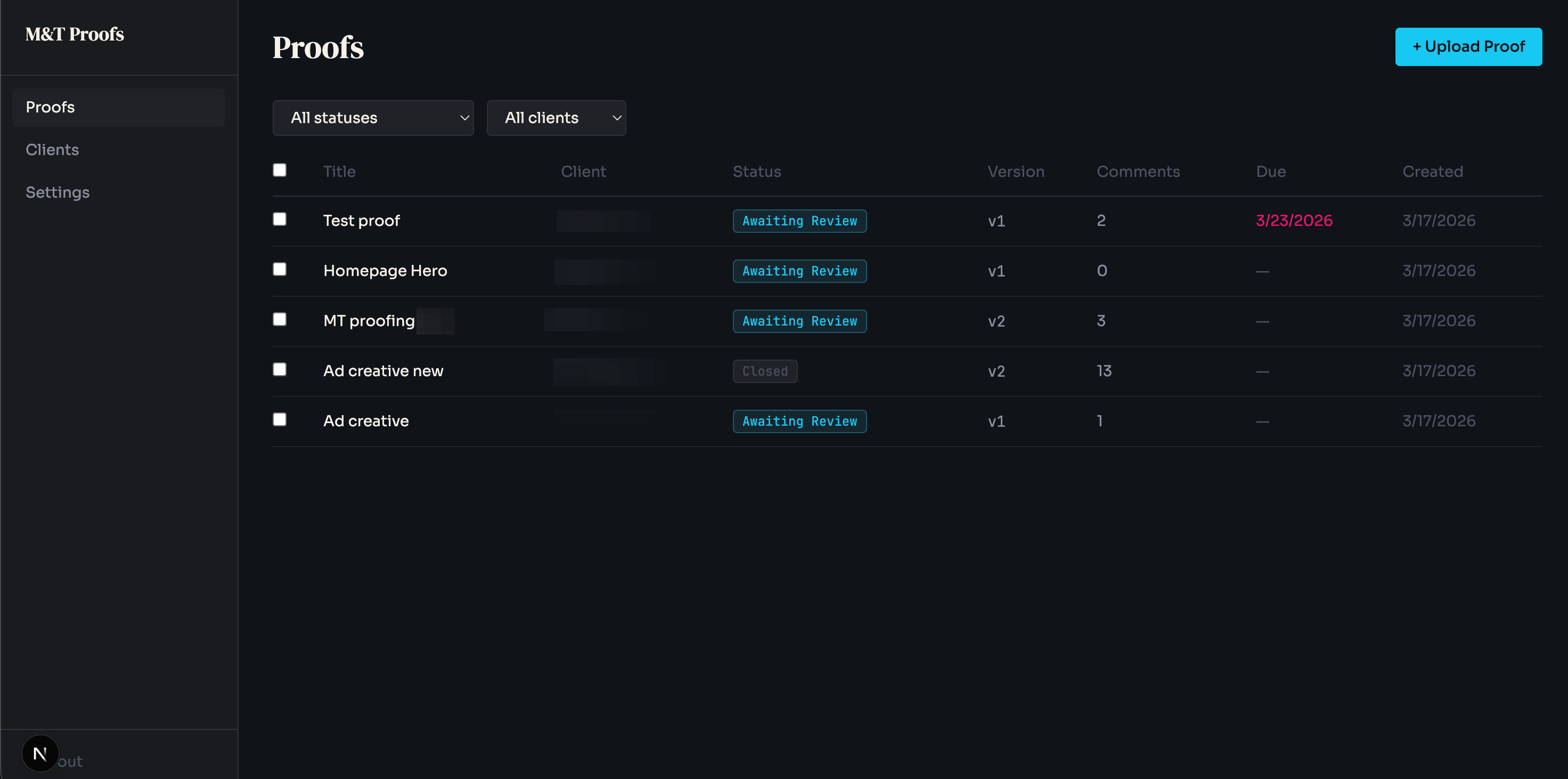
We’re also replacing a $6,000-per-year SaaS proofing tool with something we built ourselves, purpose-built for how we actually work.
The economics of this matter. When you run on owned infrastructure with direct API access to foundation models, costs go down as you scale. Most SaaS-dependent operations work the opposite way, more clients means more seats means more cost. We own the stack. It gets cheaper per engagement as it gets smarter.
Better intelligence going into an engagement means stronger strategy and outcomes coming out. Stronger strategy means faster production. Faster production means more capacity. More capacity means more client work. More client work means more signal fed back into the tools.
Each layer feeds the others.
We built 25 repositories over 18 months. Some of it is messy and still in progress. But the compounding has started, and it gets harder to replicate the longer it runs.
If you’re evaluating a partner or thinking about how your own operation should be using AI, these are worth asking.
Can you show me how your AI tools connect — or is it just a list of subscriptions your team uses independently?
If two senior people left next month, where would the institutional knowledge go?
Are you adding headcount to add capacity, or does your capacity grow without it?
Most firms don’t have complete answers yet. The ones that do are worth paying attention to.
We’re still building. The system isn’t finished and probably never will be. That’s the point. But the original question has a clearer answer every month.
What does a marketing agency look like if you design it from scratch in 2025, assuming AI is the default?
It looks like a systems company that produces marketing outcomes. Not a staffing model with software subscriptions.
That’s what we’re building.
Mighty & True is a B2B tech marketing agency. Expert marketers. Modern tools. Only for tech.
No posts
Comments
Nothing yet. Say the first thing.
Sign in to join the conversation.