
We ran another Builder’s Table dinner last night, this one in Santa Clara at Mastro’s, with our partners at Lead2Pipeline. We had some great tech brands in attendance including Okta, NTT, User Testing, Workday, Dialpad, Wrike and a few others.
The setup is always the same as our last dinners. One long Jeffersonian-style table, no slideshow, nobody pitching. A few podcast clips to get us going, good food, and a few hours of senior B2B marketers being honest about what’s working and what isn’t.
The theme was “Past the Pilot,” meaning what people are doing now that the AI experimentation phase is winding down. Most of the room was already there. Nobody asked whether they should be using this stuff. They’d moved on to the harder questions: who owns it, what it’s actually good for, and what to tell their teams on Monday.
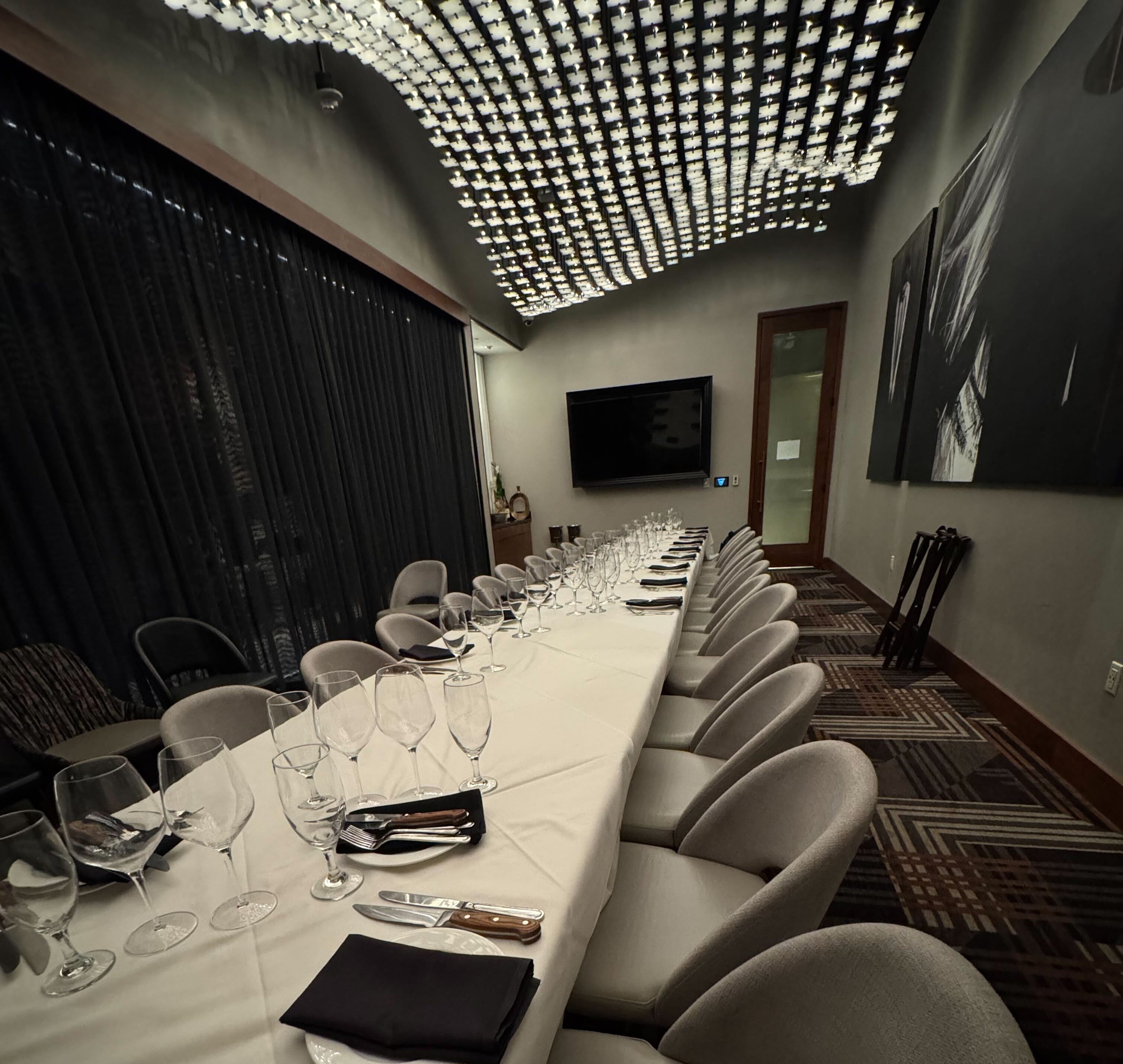
Here are the highlights:
Some of the night;s discussion ended up right where you’d guess.
Shadow AI is keeping people up. One operator described rolling out enablement that told the team where they were allowed to use AI, and somebody immediately asked, “so should I stop using my personal tools?” Now you’ve lost track of where it’s running. Most people aren’t responding with a ban. They’re going after governance and a seat at the table when the tools get standardized.
Everyone is checking the work. “I triple-check it,” one leader said, “because I’ll look at the output and go, wait, this doesn’t look right, and only a human will know.” The line that came up more than once was treat your agents as agents. The manager using the tool for a repeatable output still owns that output. The agent doesn’t.
And the thing the whole room seemed to nod along to: AI is winning in the back and losing in the front. On backend analysis and workflow, people are bullish. On customer-facing generative content, much less so. That split ran through the entire night.
These are the not so expected discussions and outcomes from the attendees:
1. Nobody’s making more content than before. One attendee runs a survey on this and asked for a show of hands. Do you think we’re producing more content than we were pre-ChatGPT? Most of the room said yes. Most of the room was wrong. “We’re producing about the same amount,” he said. Roughly a blog post a week, social every day, long-form a couple times a quarter, one webinar a month. The reason was blunt. Audiences can’t absorb more than that, and the old bottlenecks never left. Same approval chains. Same fear of putting something bad into the market. Speed was rarely the thing holding teams back.
2. The metrics fights are the same fights. We played a clip asking whether the MQL is dead, and the table barely reacted. “Nothing is dead,” someone said. “It’s just who’s reporting it, and whether it’s actionable.” Several people have quietly stopped pushing MQLs up the chain and switched to sourced pipeline and bookings. One walked through moving a top-to-bottom conversion rate from about 2% to 30 or 40%, mostly by forcing the team to multi-thread the buying group before a lead even counts.
3. The real edge is your own data, not the model. This was my favorite part of the night. When you ask an LLM for content ideas, you get the average. The most popular stuff, the statistical mean. And the mean is almost never what someone in an actual buying window is searching for. People in a buying window are under 5% of all searches. So their move is to ask the LLM to produce the content they should never make, then go find the real signal where it already lives, in the first-party Google Analytics clickpath data from inbound leads. “Don’t ask ChatGPT,” he said. “Ask your own data. That’s the unlock.”
4. The org chart is starting to move. A few teams are formally splitting the work into an AI innovation lead who owns what we build and why, and an AI enablement lead who owns how. One company has named an owner for every AI thing they ship, the way you’d assign a product manager. The career insight that got the most heads nodding: pair a young, AI-curious person with someone who has real business context and you get something close to gold. The kid moves fast. The veteran keeps them from shipping the wrong thing.
5. The angriest words of the night were aimed at generative AI. A head of content noted that, to him, generative AI has gone from a novelty to something he can’t stand, and that he’s pulling back to write the old way for the work that matters. His read: if you’re new, AI can close the gap that used to take ten years of writing down to about two, which is real. But once you’ve been at it a while, the returns disappear and the output reads cheesy. Somebody else admitted the obvious problem out loud. “I realized I’m now being mean to a chatbot.” Everybody laughed, but the point was serious. Kids are very good at sniffing out anything inauthentic, and that whiff is starting to show up in the work.
A few things worth stealing:
Book the hour. The best advice of the night was a surfing comparison. You don’t learn to surf from a PowerPoint, you get on the board. Put one hour a week on your calendar that you can’t move, and use it to play with the tools. Order a pizza with an AI agent if that’s what it takes. Senior or junior, no exceptions.
Go small to go faster. Narrow the target, run the pilot, prove it, then expand it and hand it to the regions. One team said that single habit changed how much their global function was trusted.
Fish with a laser, not a net. Better leads beat more leads. Build the play, measure it at the opportunity level, and benchmark it against the rest of the company.
Spend on the analysis layer. The person with the biggest AI portfolio in the room had most of their agents pointed at strategy and data work, talking to dashboards through MCP connections, doing the job of a senior analyst. Very little of it was aimed at writing copy.
Use your first-party data. Worth repeating because it reframes the whole content problem. Your own data is the edge.
The pilots are over. The interesting part is what we build next, which is the whole reason we run these dinners in the first place.
The Builder’s Table is our invite-only dinner for senior marketing leaders at technology brands. One table, no slides, no sponsors at the podium, just a few hours of peer conversation worth your evening. We’ve done them in Austin, Dallas, and now Santa Clara.
Next up is Boston on August 20th. If you lead marketing at a tech company in the area and you want a seat at the table, register here / request an invite.
Still figuring AI out? Good. So was everyone worth talking to last night. Come anyway.
No posts
Comments
Nothing yet. Say the first thing.
Sign in to join the conversation.