
This week’s Signer of the Declaration of Independence is the often overlooked New York statesman, William Floyd. Floyd was born on December 17, 1734 in Brookhaven, New York to a family of Anglo-Welsh descent that initially settled in Jamestown, Virginia. Despite his family’s prominence, Floyd lacked an extensive education, mostly being taught by his father or learning on his own. When his father died in 1753, he became a land proprietor and was eventually made an officer in the militia. He became quite popular in New York society and often hosted parties for his fellow militia officers and local landowners in the home built by his father, known as the Nicoll Floyd House or Mastic Beach House, depicted in his portrait, below. He married Hannah Jones in 1760, with whom he had five children. She would tragically die in 1781 at the young age of 41. He remarried a few years later to Joanna Strong, and had two surviving children with her.
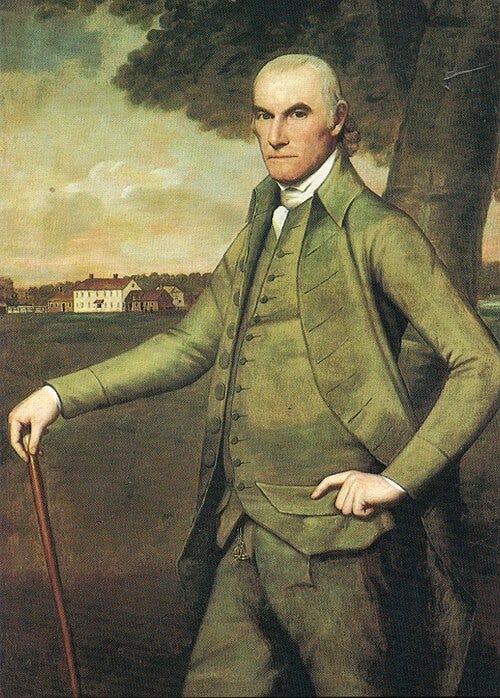
A portrait of William Floyd by Ralph Earle, 1792.
When troubled times of Great Britain’s tyranny began, Floyd ardently sided with the colonies. Though at the time he held no major political position, he voiced his opinion on the matter openly and it won him much admiration. He was elected to Continental Congress in 1774 and again the following year, He was noted for rarely taking part in the debates of Congress, though he served on several committees. During 1775, he became a colonel in the Suffolk County Militia. He signed the Olive Branch Petition July 8, 1775.
New York had no delegates present on July 2, 1776, when the vote for independence occurred. However, Floyd was one of the four New York delegates who signed the engrossed copy of the Declaration of Independence on August 2, 1776.
When the British attacked Long Island on August 27, 1776, Floyd led the militia to drive them off. Shortly after the American defeat, the British confiscated his gorgeous home, and it was used by the British cavalry as a barracks for seven years, with all his livestock used to feed enemy soldiers. The estate was left in a ruinous condition.
During the war, despite the fact that his property was being held by the British, he would continue to serve in Congress but was also made a senator for New York and a major-general of the Long Island militia. Throughout all this confusion, Floyd worked himself to the bone to keep the New York government organized.
After the Revolutionary War, Floyd continued to serve as a senator for his home state, a position he would hold until 1808. In 1783, he was able to return to his Long Island farm and begin restoration.
He purchased new land in 1784 along the Mohawk River from the Oneida and Tuscarora Indians, and lived there for the rest of his life. Floyd served in the first United States Congress, 1789-1791, but declined re-election. He was also a delegate in the New York Constitutional Convention in 1801 and was a presidential elector many times up until 1820. He was a firm supporter of Thomas Jefferson in his 1801 race against Aaron Burr, and a staunch proponent of Jeffersonian Republicanism.
Much of Floyd’s later life is unknown. He was asked to be a presidential elector in 1820, but failed to attend the electoral college. He died on August 4, 1821 at the remarkable age of eighty-seven years old. He is buried at the Westernville Cemetery in Oneida County, New York.
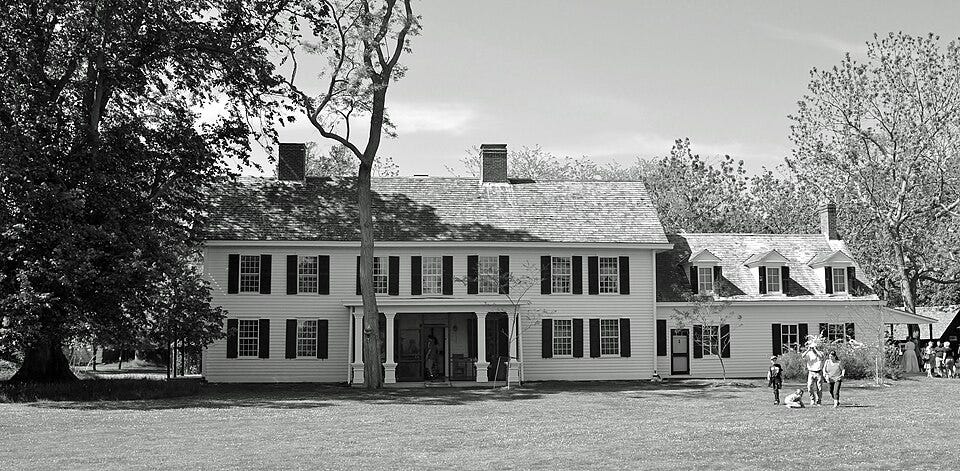
William Floyd House, 20 Washington Avenue, Mastic Beach, Long Island. CC BY_SA 3.0
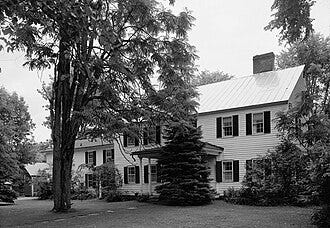
General William Floyd House, Westernville, Oneida County, New York, ca. 1794. Historic American Buildings Survey. Survey No. HABS NY-5513. Library of Congress call No. HABS NY,33-WESV,1-1.
Thanks for reading Kent's Substack! This post is public so feel free to share it.
No posts
Comments
Nothing yet. Say the first thing.
Sign in to join the conversation.