
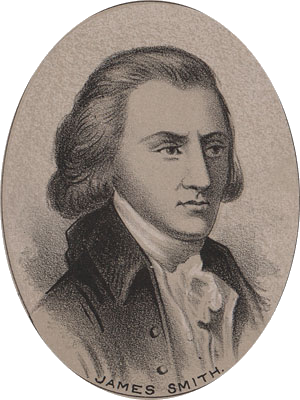
An Engraving of James Smith by Ole Erekson, 1876, Library of Congress
This week’s Signer of the Declaration is the lesser-known Pennsylvania delegate, James Smith. Smith was born in the year 1719, though the exact date is unknown. He was born in the province of Ulster in Ireland. His family moved to Pennsylvania when he was ten years old and lived on a farm along the Susquehanna River. Smith was educated quite well at a school in New London, Pennsylvania. He began studying law under a man named Thomas Cookson and was eventually admitted to the state bar. He opened a law practice in York, Pennsylvania, and was reportedly the only lawyer in the town. He married a Delaware woman named Eleanor Armor and they would have five children together.
Throughout Britain’s harsh treatment and taxation of the colonies, Smith openly opposed them. Though he was not active in politics outside of his law practice, he was invited to join the Pennsylvania Assembly to discuss what was to be done about Britain. While many Pennsylvanians wanted a peaceful reconciliation with the British Crown, Smith was one of the few at the time who foresaw that peace would not be the case. In fact, he immediately began raising the first state militia to prepare for the war he knew was coming. For his outspokenness on the matter, he was elected to Continental Congress in 1774 to represent Pennsylvania, though he initially did not attend as he was still busy raising troops. He did, however, attend the Second Continental Congress where he voted for independence and signed the Declaration. He was also elected to the Pennsylvania Provincial Conference to help draft the state constitution.
When Congress had to evacuate Philadelphia in late 1776, Smith hosted the members of Congress at his home in York. He was noted by his fellow Founding Fathers as being incredibly witty and somewhat eccentric. They enjoyed their stay at his home immensely. He was elected to the Board of War for his diligence in raising the Pennsylvania militia and was also elected to the Committee of Foreign Affairs. However, in 1778, he resigned his political stations and returned to his law practice. The war largely didn’t affect his life and presumably practiced his law in relative peace.
When the war was concluded and independence was won, Smith found himself back in political affairs. He served as a state representative and a member of the Pennsylvania High Court. However, he was getting old and he declined any further elections. He had lost a good deal of wealth in investments, though his law practice prevented him from going into any serious debt. His office would tragically burn down in 1805 and he died a year later on July 11, 1806, at eighty-seven years old.
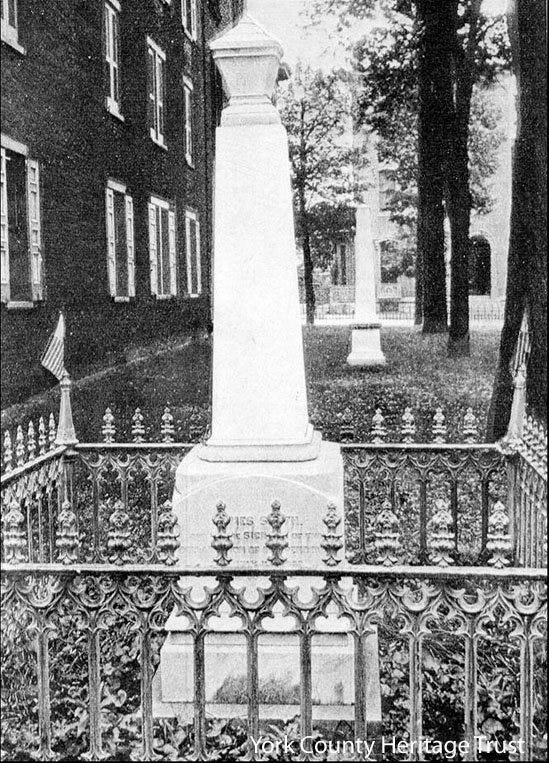
Smith is buried in the churchyard of the First Presbyterian Church located at 225 E. Market Street in York, Pennsylvania.
Thanks for reading Kent's Substack! This post is public so feel free to share it.
No posts
Comments
Nothing yet. Say the first thing.
Sign in to join the conversation.