
June 10, 2026
“Do you hear that?”
The wife looked at me, suspiciously, but stopped to listen.
We’d been hiking for a half hour from where we parked, picking our way along the Arizona Trail from Scotia Canyon to Sunnyside Canyon in the middle of the afternoon on one of the hottest days of June. So far. She came for Pronghorn Pizza at Dos Cabezas Winery in Sonoita and then an evening of canoeing on Parker Canyon Lake—two of her favorite activities of late (eating woodfired sour-dough pepperoni pizza and reading a novel from the bow of a boat while I paddled). I talked her into a little jaunt for birds.
“Since we’re so close,” I said. “We can search for warblers and trogons,” I suggested.
The truth is, these canyons on the western flanks of the Huachuca Mountains a few miles from Mexico and an hour or so from our home in Bisbee are one of my favorite places in southeast Arizona. Remote. Rugged. Cut by wet drainages. Full of wildlife. Full of birds.
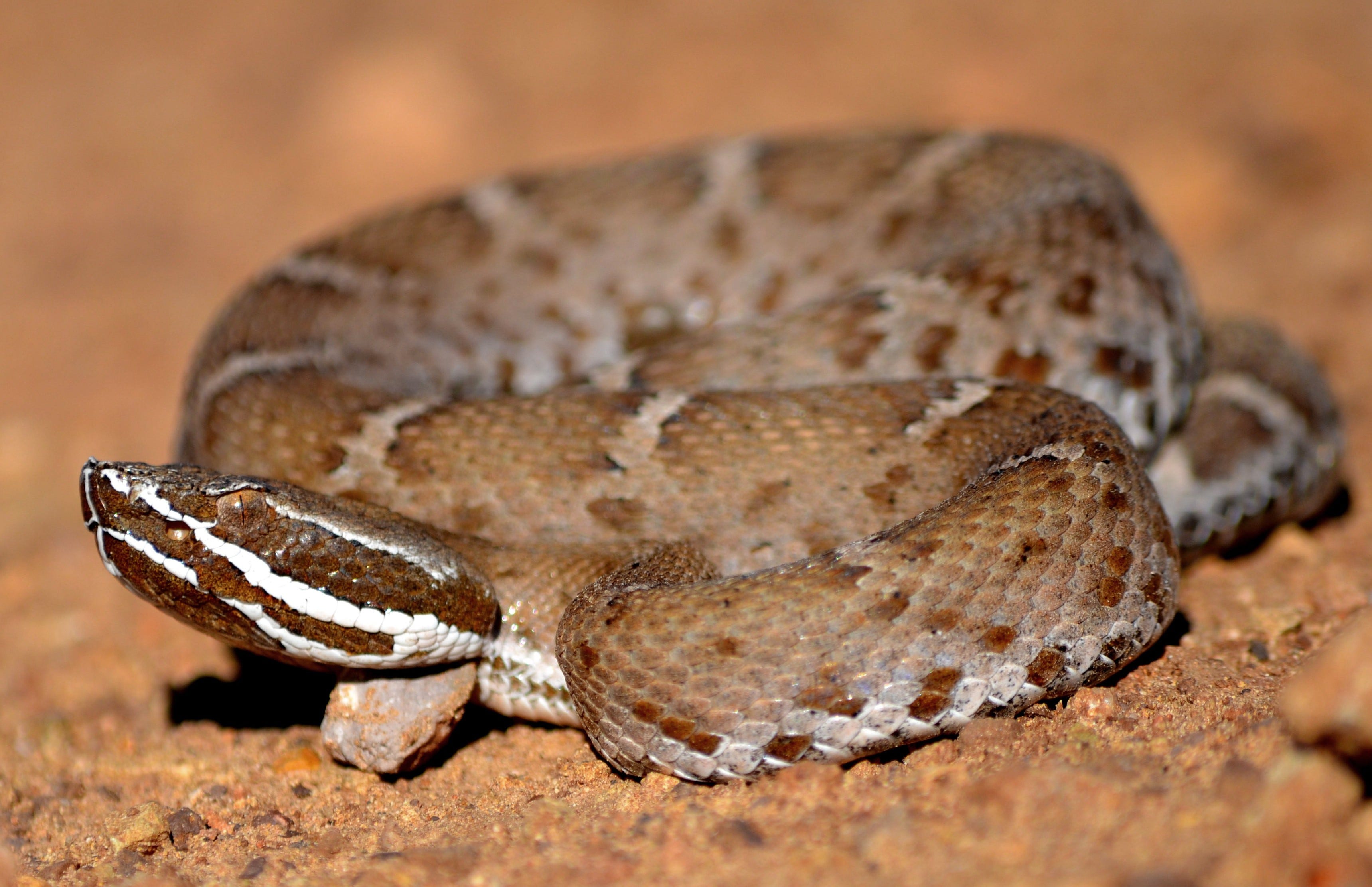
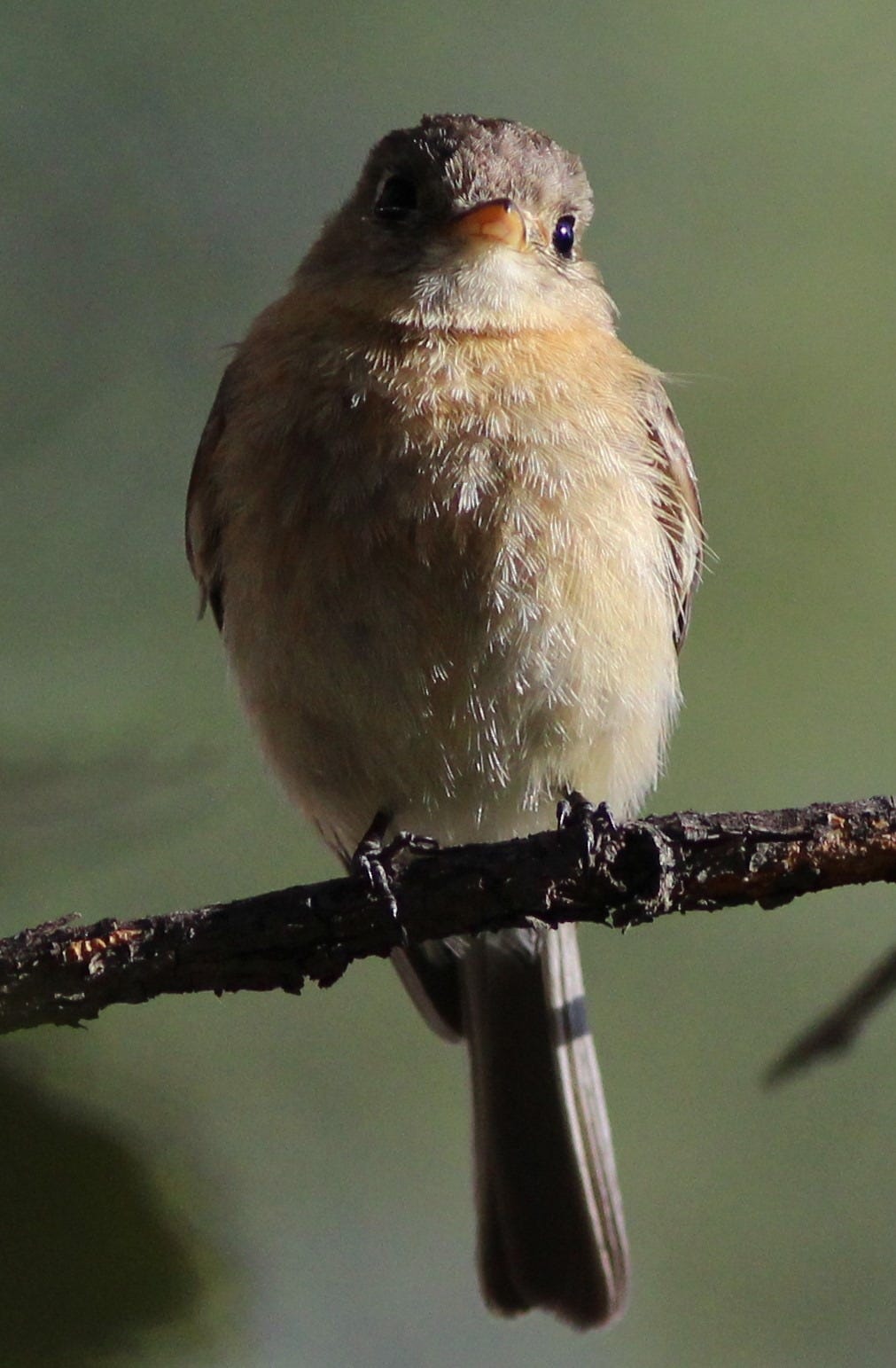
This is where I saw my first ridge-nosed rattlesnake. My first buff-breasted flycatcher.
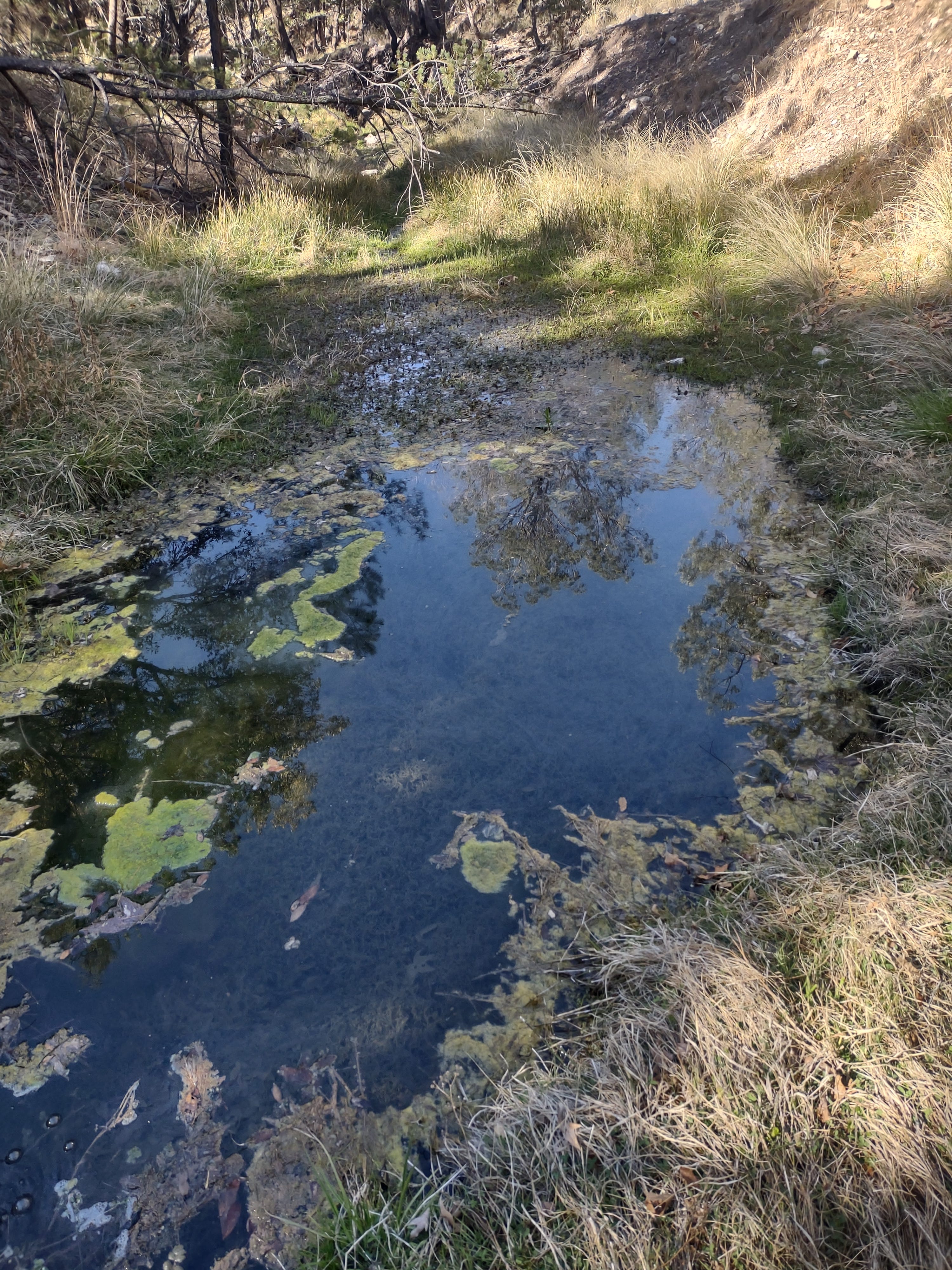
After reaching Sunnyside Canyon, we hiked along an algae-choked creek among parched oaks and pines in search of neotropical birds, newly arrived at their breeding grounds. Except for the dive-bombing flies, the woodland was strangely quiet. No calls of kingbirds or gray hawks or warblers. We heard only the melancholy whistles of dusky-capped flycatchers.
And then, far downcanyon, the cranking, throaty call of a trogon.
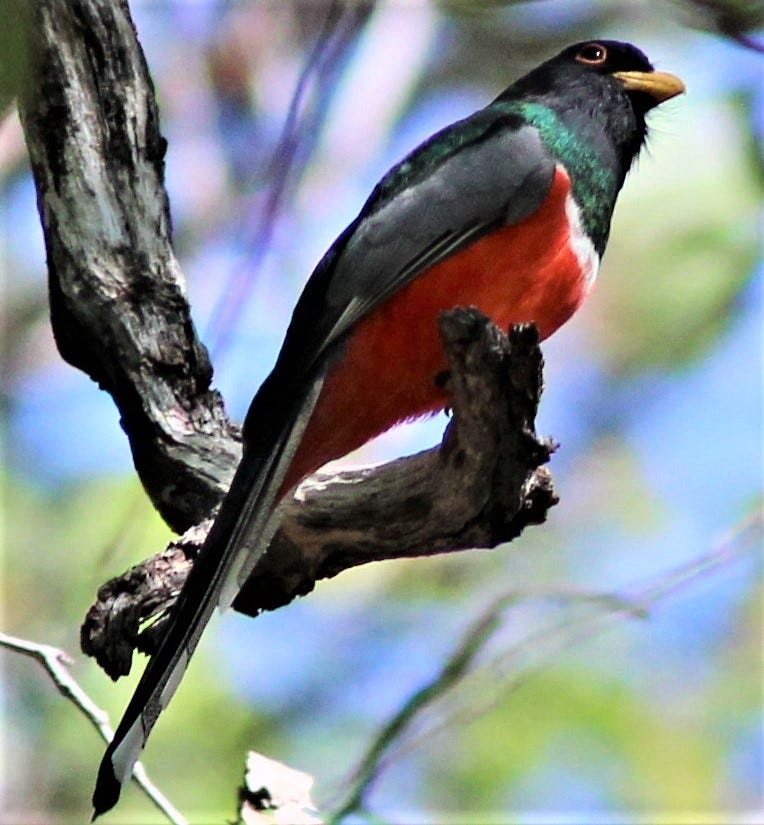
This colorful tropical bird that looks too parrotlike for the desert was known as a coppery-tailed trogon when I searched for my first in the early 1980s. Then, in 1983, the American Ornithologists Union (now the American Ornithological Society or AOS) lumped the northern U.S./Mexico population with Central American birds, calling them all “elegant trogon.” Then, in 2025, the experts split the lump again into two distinct populations and gave us back the coppery-tailed trogon.
In the US, it arrives in April to breed in our sky islands, including the Chiricahua, Santa Rita, and Atascosa Mountains—and right here in the Huachucas.
I should also include the Mule Mountains—at least for visiting—since I’ve photographed them in the yard.
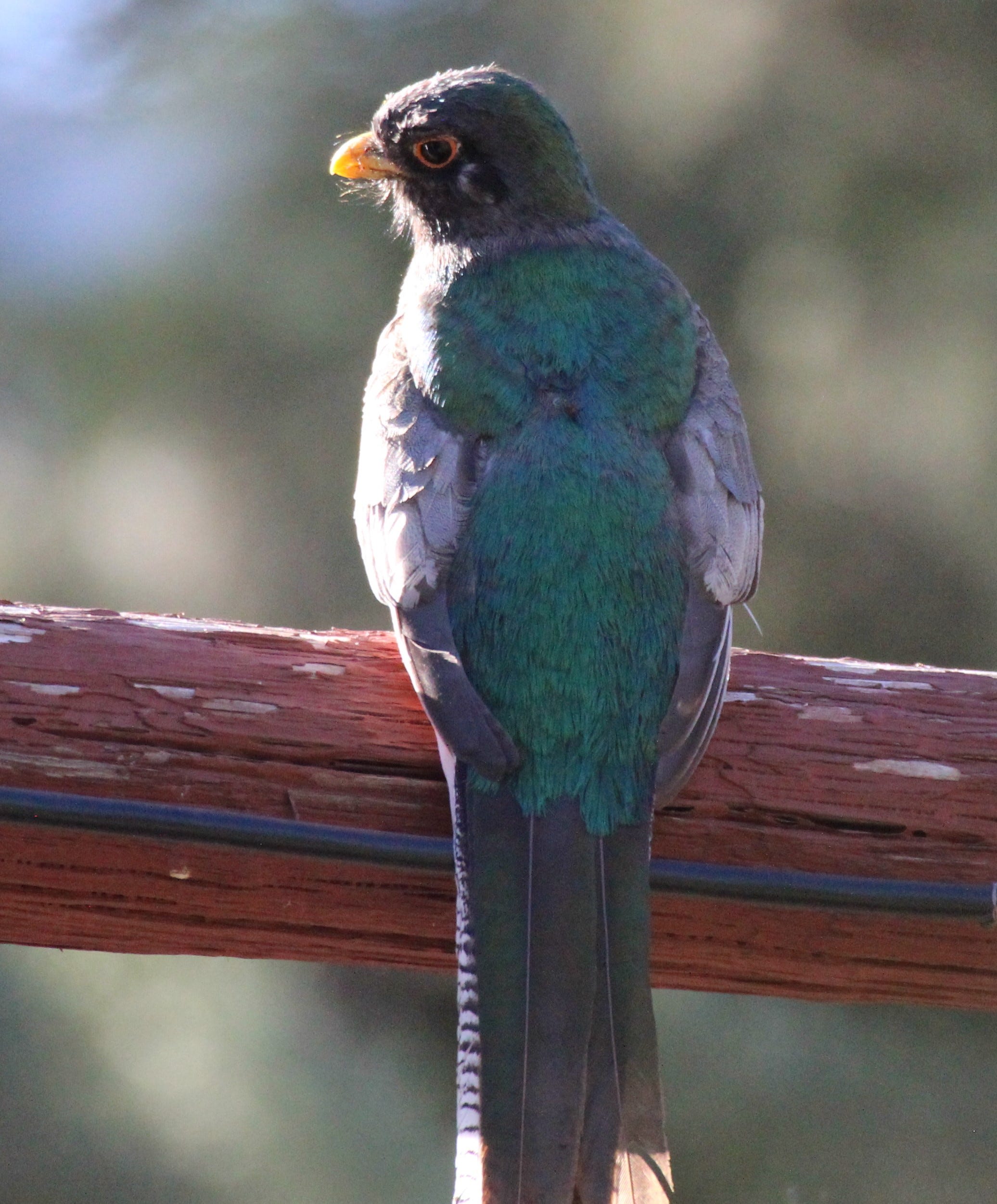
“I hear a bird,” she said, turning her blonde head to look downstream. We were resting in the shade of an oak by a quiet pool, allowing the birds to come to us.
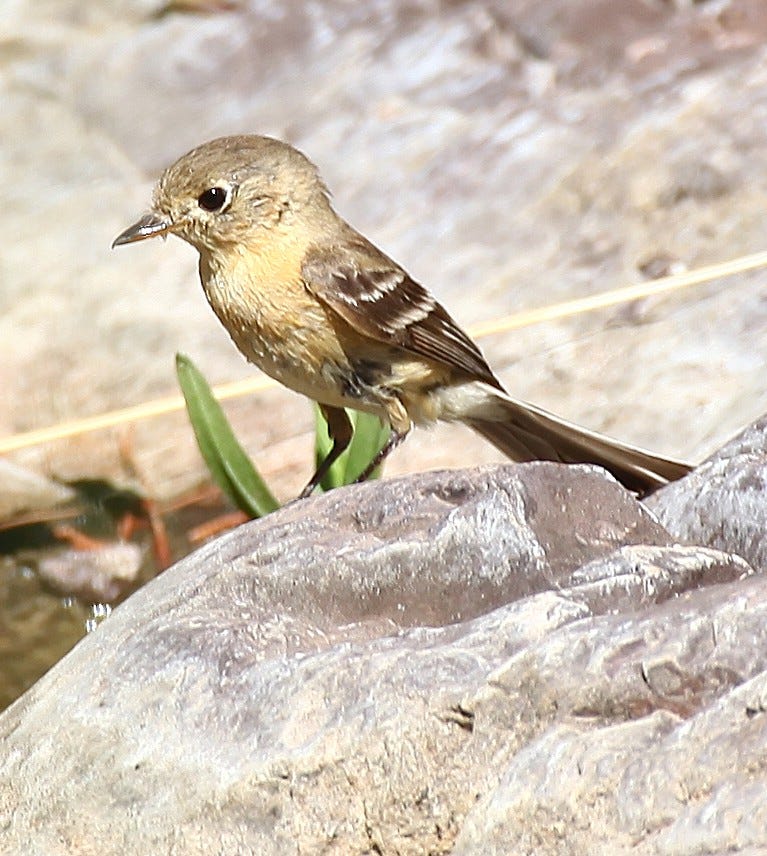
“There it is!” I said, pointing my camera across the creek. “A buff-belly!”
The bird flew to the far edge of the pool and dipped into the water. Then again and again, shaking out its cinnamon-dusted feathers each time. Our smallest Empidonax, all the way from southern Mexico and Guatemala to this tiny corner of Arizona.
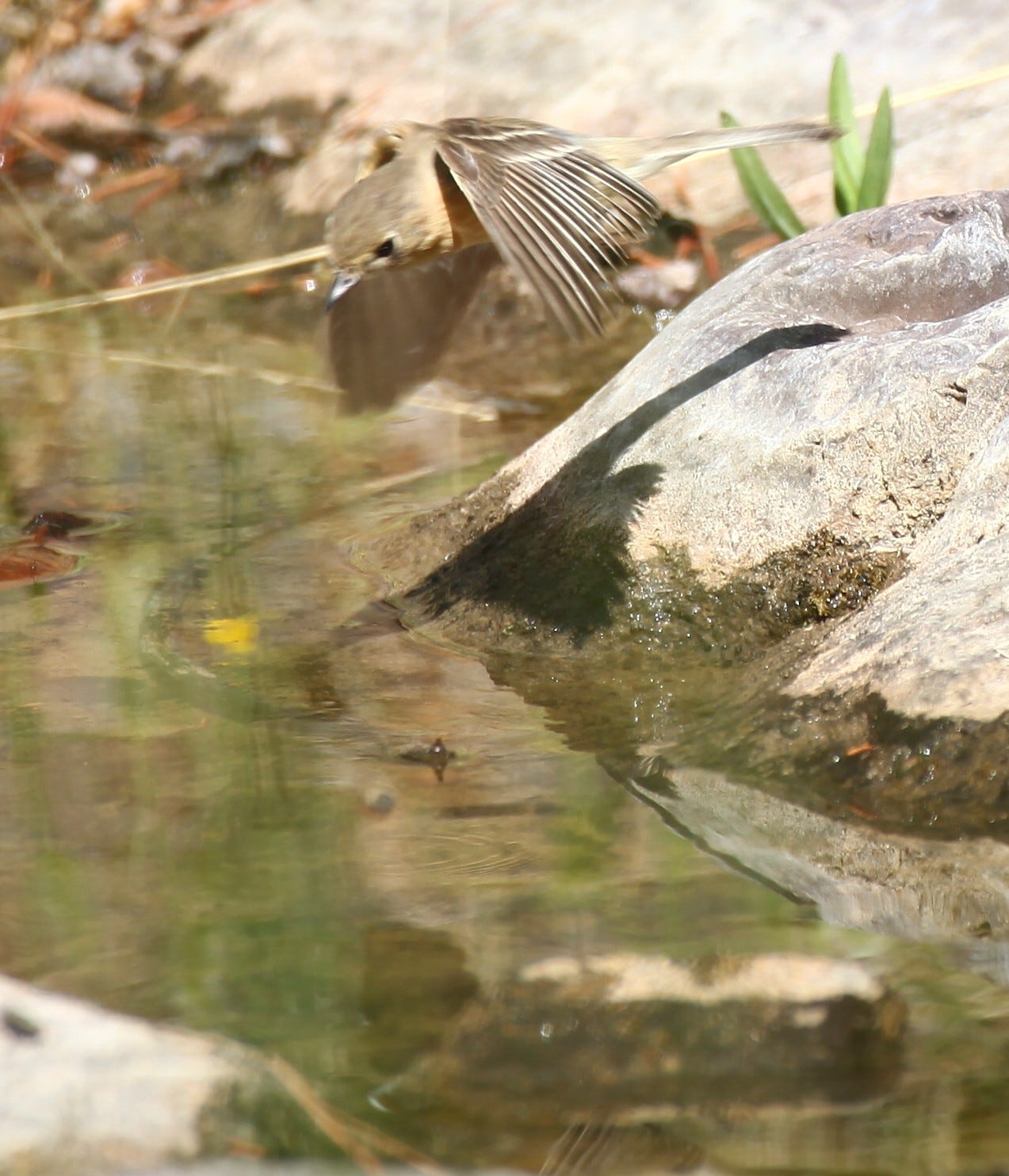
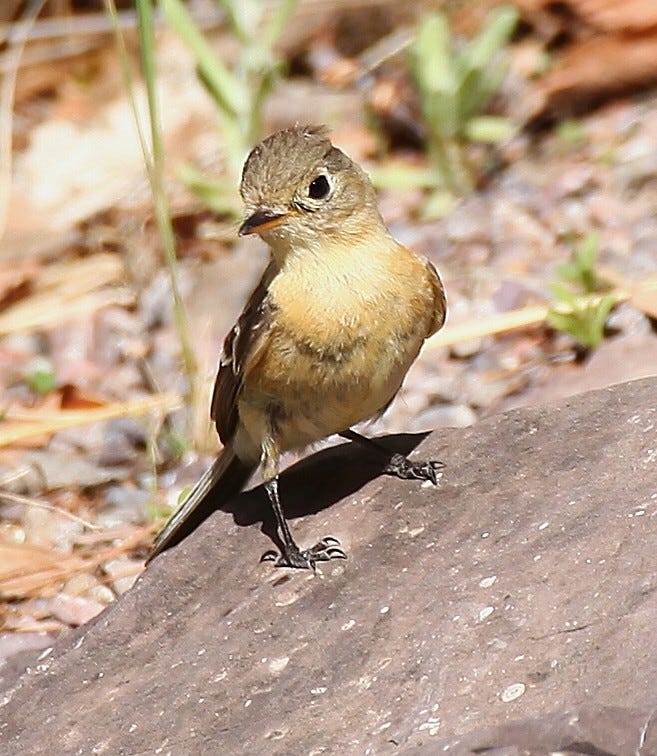
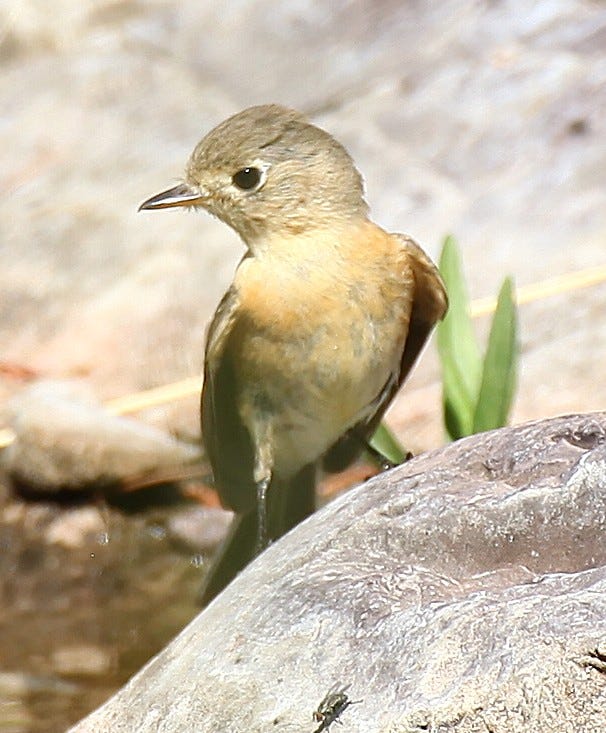
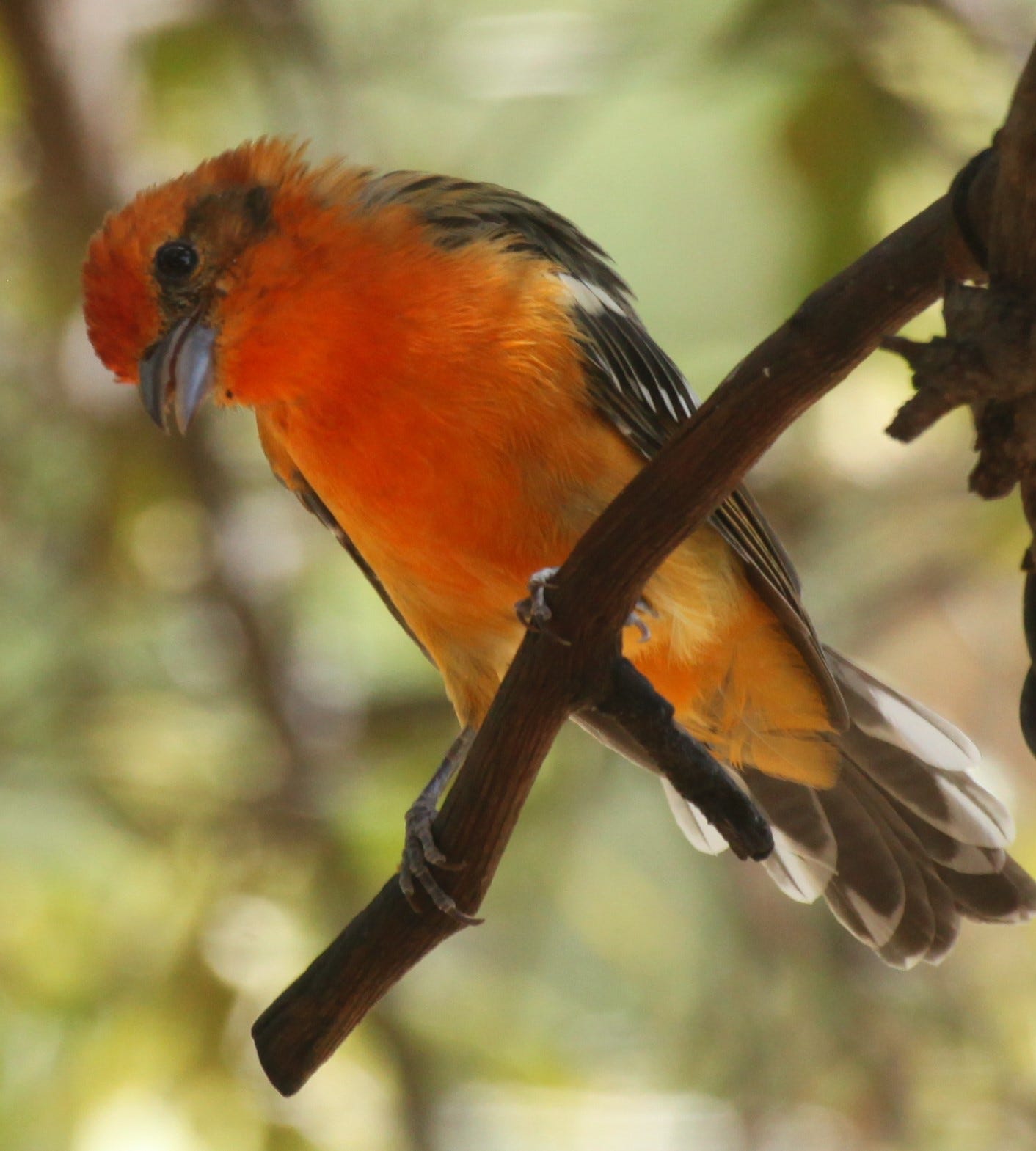
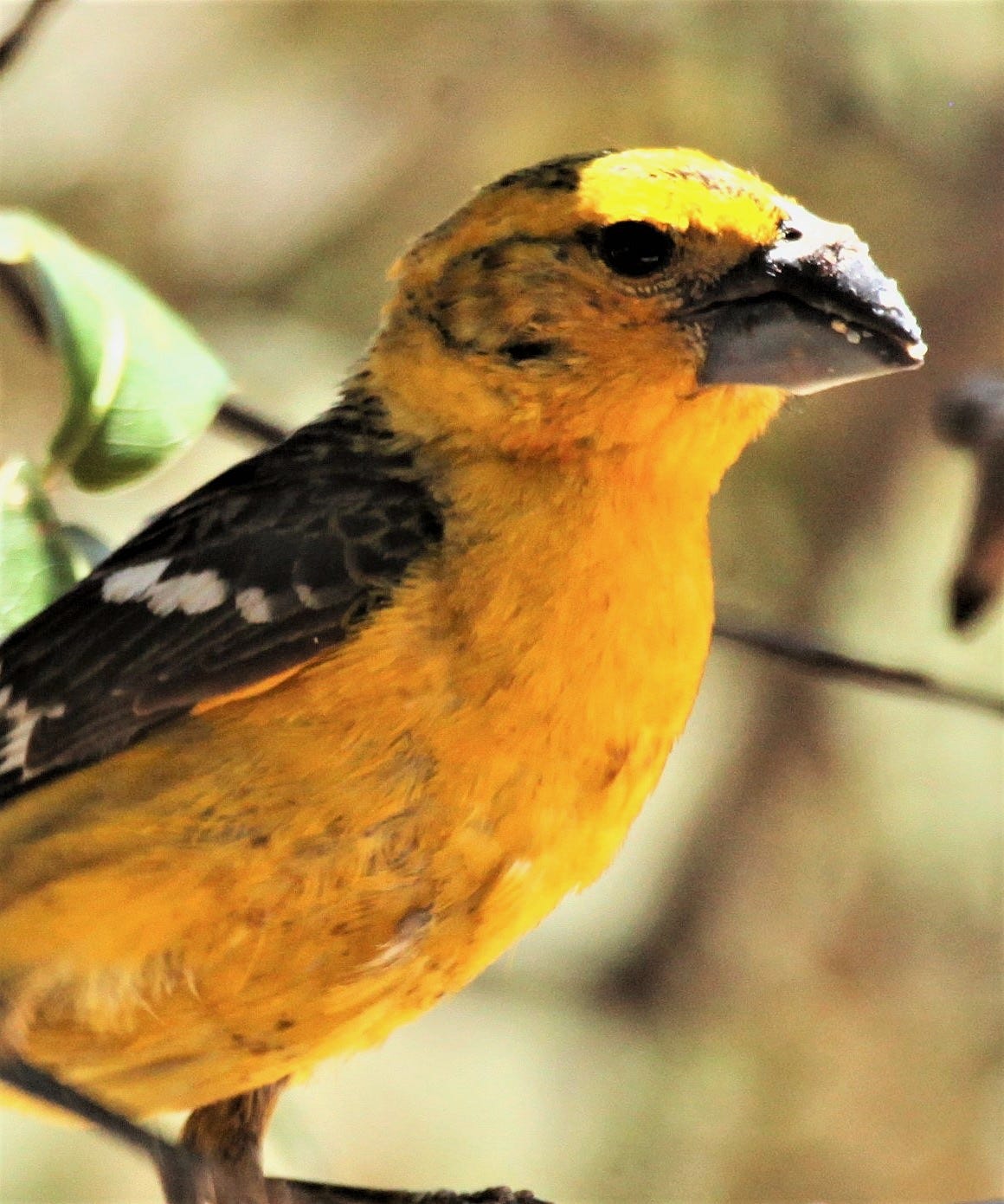
Water, they say, is a holy thing in the desert. Which is why I spend so many mornings at home watching my trickling stoup, waiting for the next unexpected miracle, like another flame-colored tanager. Or that rare yellow grosbeak, which manifested itself here on this date three years ago.
You just never know.

Thanks for joining me for this week’s adventure! I’m off for a long weekend to the East Fork of the Black River, another of my favorite places in Arizona. There will be kids and grandkids. And fly fishing! And birds!
More to come!
No posts
Comments
Nothing yet. Say the first thing.
Sign in to join the conversation.