
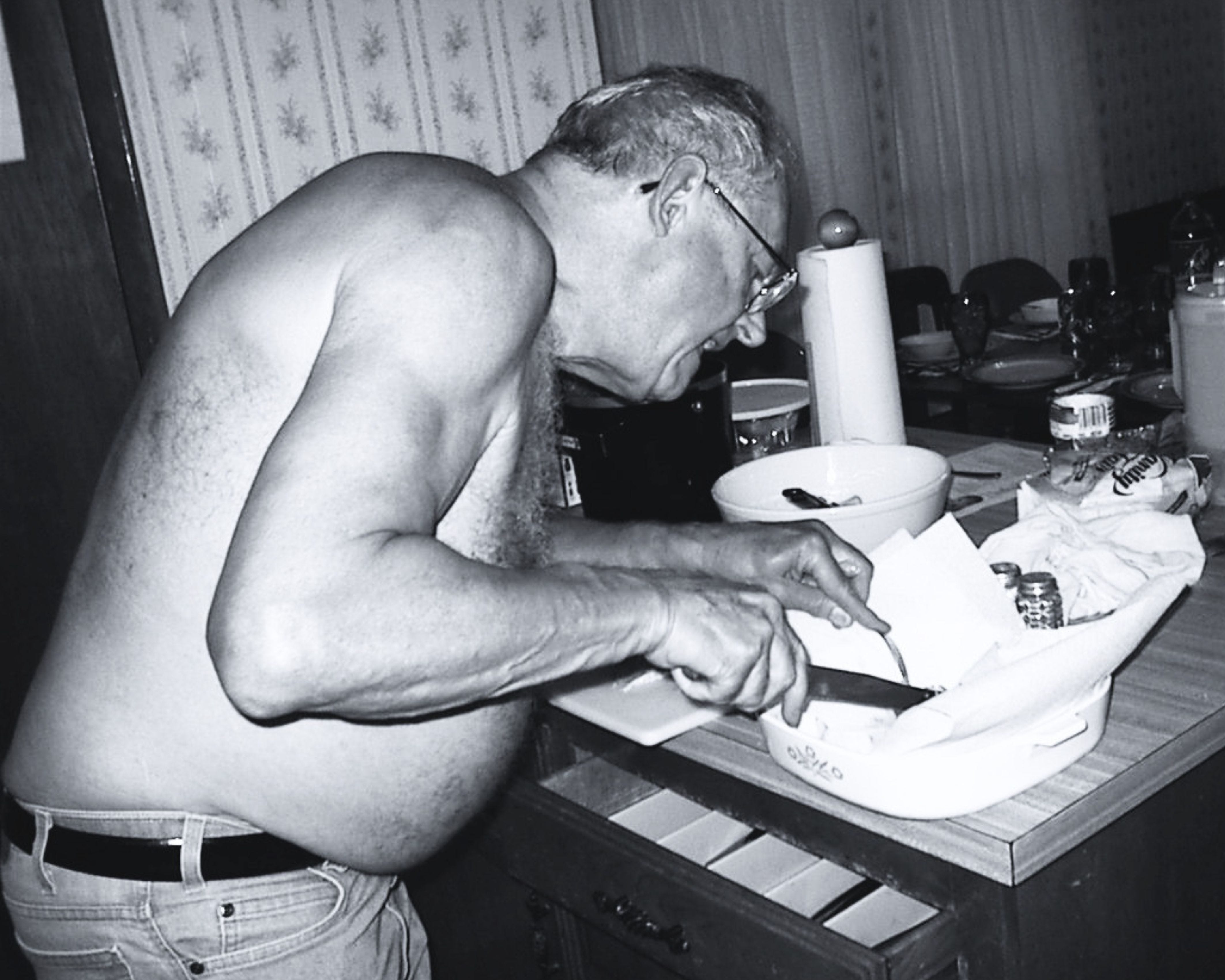
My grandfather in Texas formalwear.
My grandfather worked the broiler. White bread laid across a baking sheet topped with thick, unnaturally orange slices of cheese bubbling and blistered at the edges. It was cheap, a little bit trashy, and delicious.
My grandfather’s belly, deeply tanned by the unforgiving Texas sun, jiggled as he moved around the stove with his shirt off. He used to flick his tongue lightly across his bottom lip whenever he concentrated, while pouring hotcake batter, flipping a steak, or fishing something out of the oven with his bare hands. It was such a small thing, but something I’d always remember.
Every few minutes he’d call out to my grandmother, “Carolyn, keep those eggs moving!” or “I’ve got to get the roast out of the oven!” and she’d rush in from behind him to help shuffle around mixing bowls and clear counter space. Her perfectly coiffed silver hair bobbed aggressively as she hurried to keep pace with him.
My parents divorced when I was five, and on the weekends we spent with mom, she would bring my younger sister and I to her parents’ house. I spent my childhood shuffling between homes and got used to packing my bag every other weekend, chasing a feeling of belonging. I didn’t know how to name it then, but what I wanted was simple. I wanted to feel safe at the table, no matter whose kitchen I was in.
One of my favorite rituals was watching Diagnosis Murder with my grandmother, a diehard mystery fan, while excitedly awaiting my grandfather’s cheese toast. My grandmother, mother, sister, and I sprawled across the living room couches, watching Dick Van Dyke’s eyebrows dance with intrigue as the smell of browning cheddar drifted in from the kitchen.
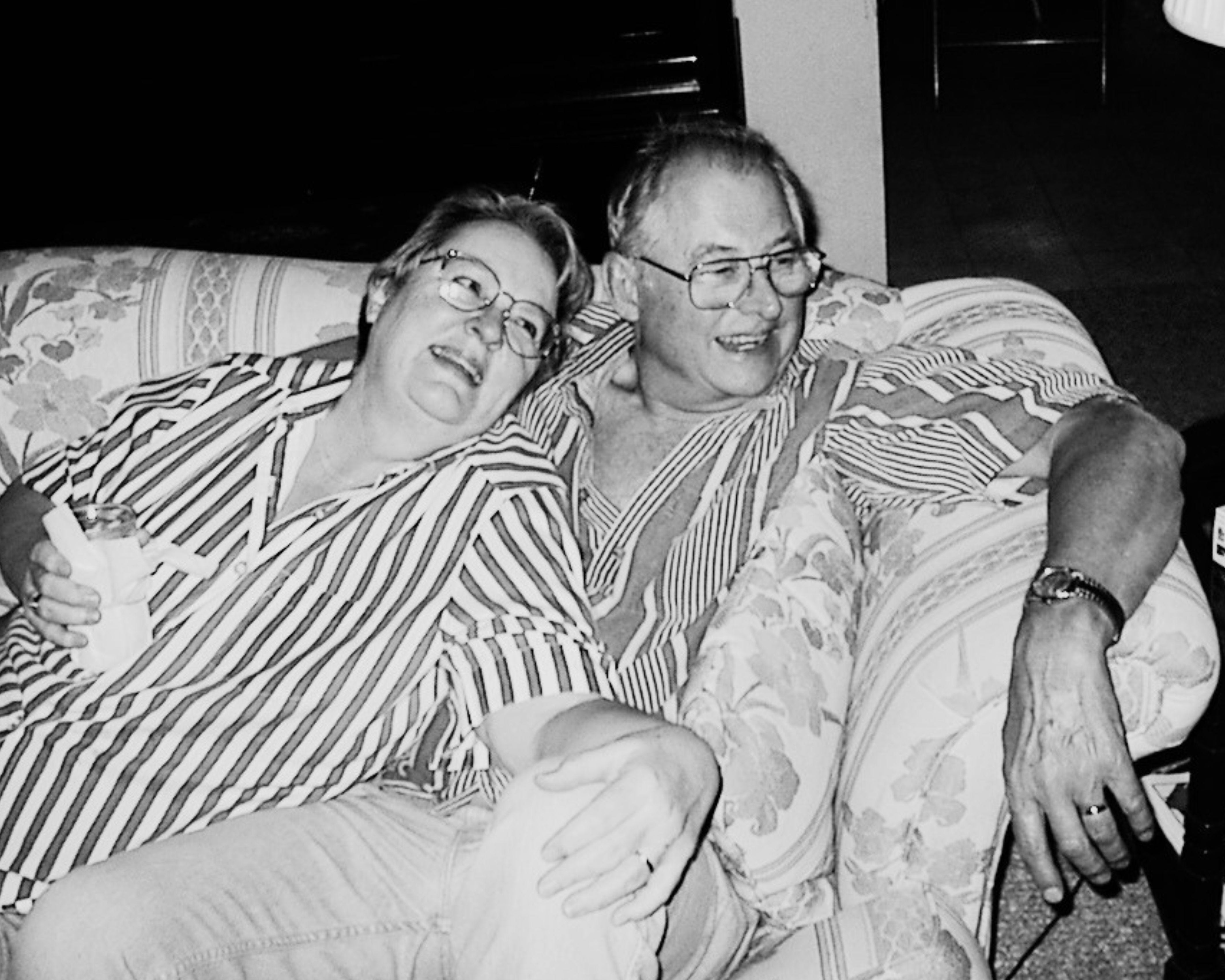
This is how I remember my grandparents: fat, happy, and in matching outfits.
And then, inevitably, the desperate, undignified race for the hall bathroom. We all lined up clutching our gurgling stomachs. Three generations of lactose intolerance stacked up in a queue, listening to the toilet flush.
We never connected what we put in our mouths with what came out the other end. Digestion wasn’t something anyone discussed; the body’s consequences were private, impolite, and almost theoretical. The bathroom reckoning always came as a shock. Maybe nobody talked about it because food wasn’t something you questioned. You ate what was there, especially when it was offered with love. And maybe, too, because naming the problem would have broken the spell. We needed to believe that what fed us couldn’t also hurt us.
How many times had we raced for the bathroom after buttermilk hotcakes, green bean casserole, or creamy mashed potatoes? I was only a preteen, but my mother and grandmother had been doing this all their lives. Quitting cheese wasn’t even on the table. It was basically a family religion. Just the thought of that sweaty orange slab in its plastic skin sent us rushing back to the fridge. We were three generations of Texans that couldn’t digest dairy, but by God, we’d die trying.
At my grandparents’ house, the danger was diarrhea. At my mother’s trailer an hour outside of town, it was more sinister. Not just greasy fast food bags, freezer-burned pizzas, and Pop-Tarts eaten straight from the foil, but habits—and hazards—that would follow us long after childhood.
I have no memories of my mother cooking, except boiling water for Kraft mac and cheese or preheating the oven for a frozen pizza. After she died many years later, my aunt told me what an amazing baker she’d been, specializing in our family recipes for chocolate crinkle cookies and spiced nuts. I didn’t believe her. That woman never baked me a thing.
What I do remember is decadence. Most mornings we made Malt-O-Meal with spoonfuls of butter and brown sugar. Every time we ate down a layer of the bowl, we’d add more sugar and bury it again under another blanket of hot grainy cereal. My mother taught me that trick. She also showed me how to pour full fat cream over our Grape Nut Flakes, then drink the sweet leftovers from the bowl.
My mother’s kitchen was tiny. The carpet was shredded into strings where our rescue cats (usually dumped in our front yard by people who knew my mom had a soft spot for strays) had sharpened their claws. The few bags of flour and sugar in the pantry were riddled with weevils, and you never knew when a cockroach would come sprinting out from under the rattling fridge. The stainless steel sink clogged constantly. My fault, a suburban kid who thought the drain had a garbage disposal and believed grinding up leftovers was a God-given right.
Large stainless steel pots sat on the floor along the wall, though not for cooking. We only ever used them to put out grass fires outside the trailer, which happened once or twice a summer, until the day my mom’s boyfriend came home and yelled at us to grab the hose. The thought had never crossed our minds even as flames licked the dry grass just beyond the front door.
The little gray cat we called “Critter” liked to curl up in those pots or sneak into the pantry after, well, some other critter, and get stuck inside. This situation was much easier to remedy than the year she went into heat for the first time and, desperate to find a way outside to go tomcatting, climbed through the space behind the stacked washer and dryer and got stuck inside the cheap dry wall. I’ll never forget sitting down to pee and a long, gray, furry arm reaching through the space where the caulk had worn down along the edges of the bathtub and wall. I still don’t remember how we got her out of there.
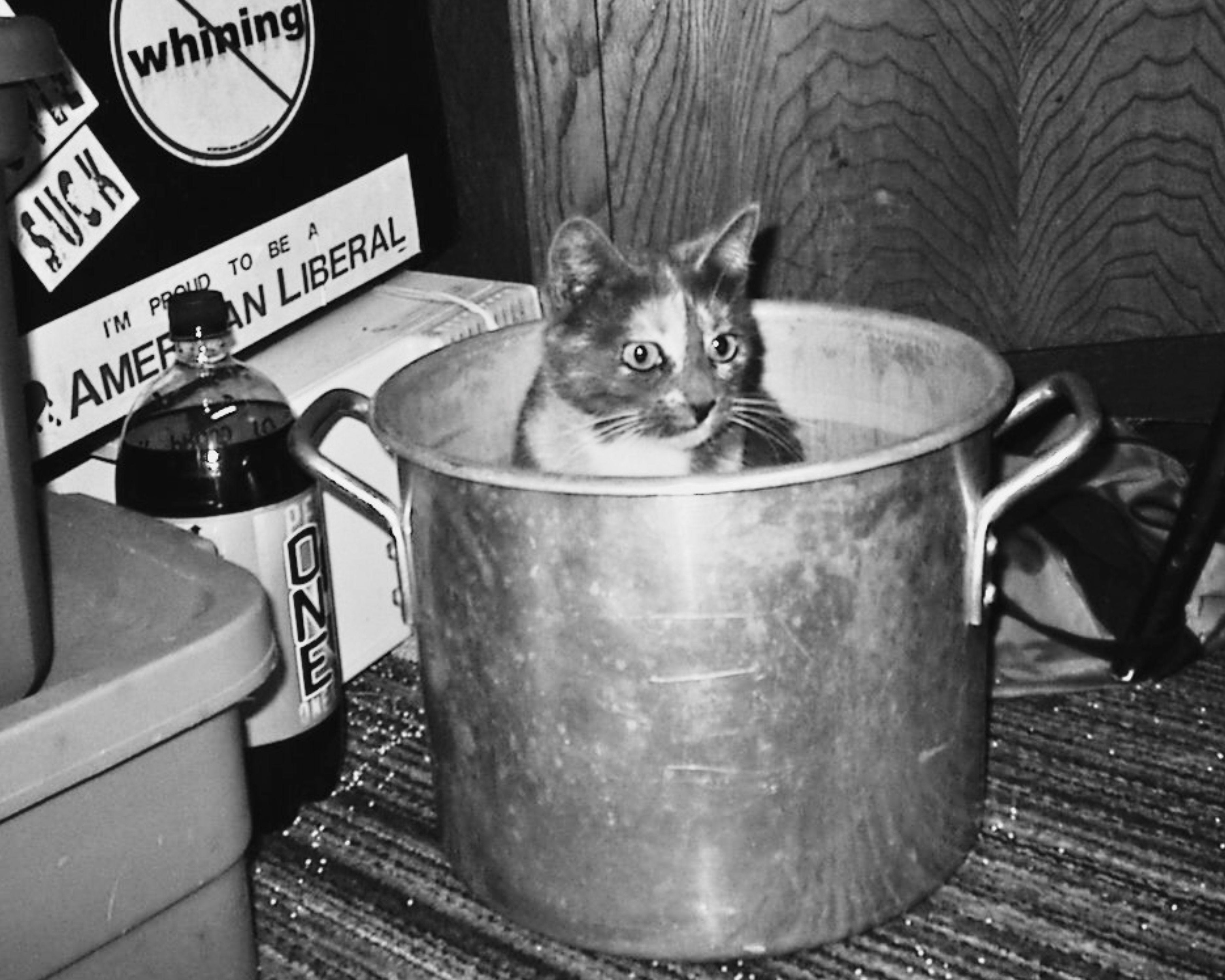
One of my mother’s rescue cats, proudly raised beneath a bumper sticker that confused most of our neighbors.
The cutout over the kitchen sink which faced into the trailer’s living room did hold one thing I loved: a mesmerizing fish tank. I was obsessed with the dojo fish, a long, snakelike creature with whiskers like a cat. We had a red-tail shark that occasionally hurled itself against the plastic lid with a hollow smack, and a couple of thick black sucker fish that clung to the glass like gothic wallpaper.
Until the day the tank lightbulb fell in and electrocuted them all. The cats and I were devastated.
At my grandparents’ house, food was never scarce. They cooked like the world might end at dinner. Huge chicken fried steaks, biscuits and sausage gravy, and three kinds of pies for dessert. My mother barely cooked at all. Food wasn’t a ritual of love in the trailer; it was fast, greasy, and prepackaged. It was a way to numb ourselves from the realities of poverty pressing in on every side.
During the summer and winter breaks from school, my sister and I worked the fireworks stand. It was a little business my mom’s long-term boyfriend, Ben, had started on his property where our trailer home sank slightly into the earth. My earliest memory of the fireworks stand is a white, one-window shack with stained pink carpet and a hole in the floor. I must have been in fifth or sixth grade.
After a few years of steady business, and a feature spread in The Azle News, Ben expanded the shack to eight windows. It was still carpeted, still shaky, but now with a cash box and a loaded pistol on the counter. My mom, sister, and I would sweat for twelve hours a day hauling boxes of Black Cats and picking June bugs out of our hair while the line of customers stretched to the ditch alongside Jacksboro Highway. It was exhausting, and we always worked up an appetite.
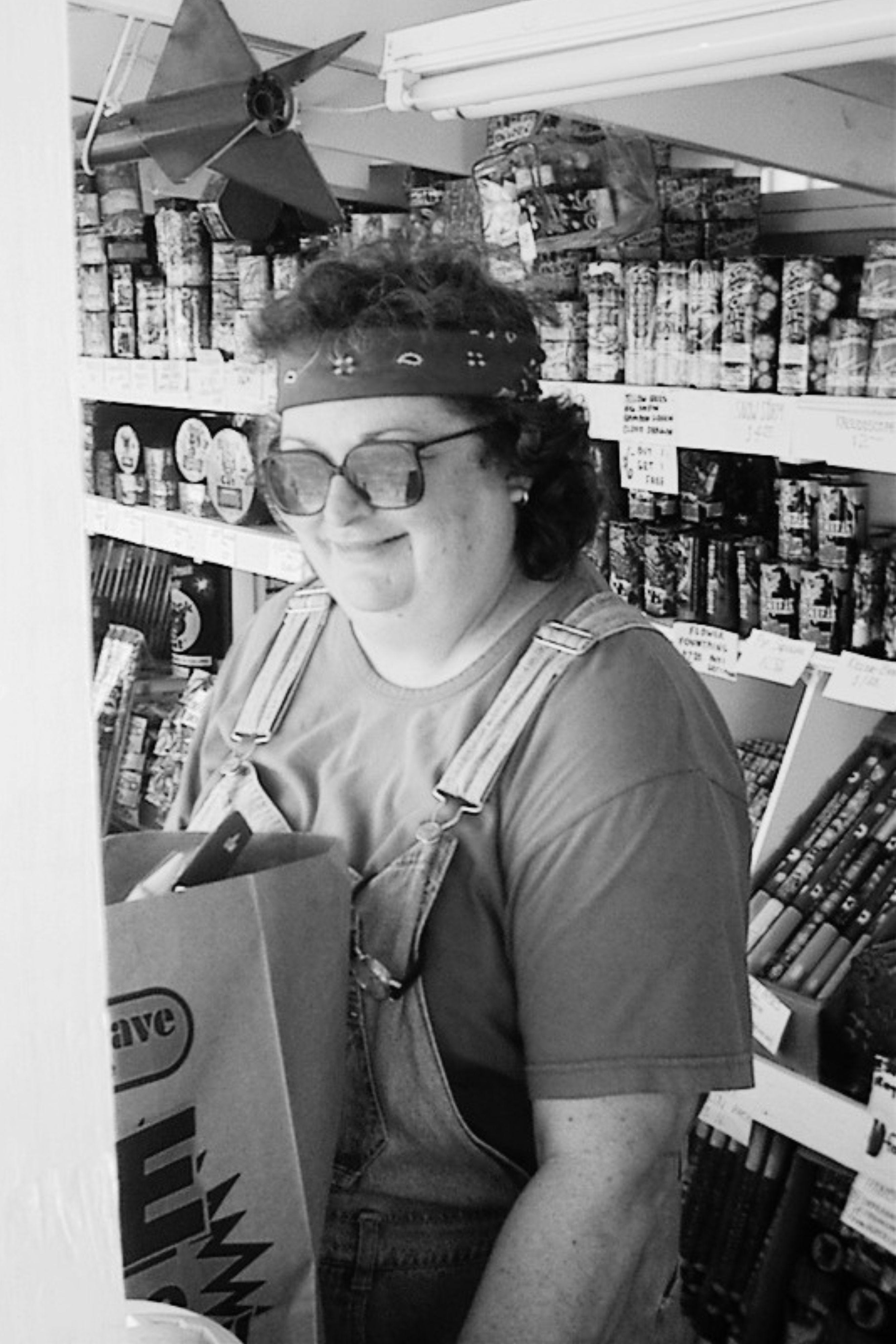
Not every nurse spends her vacation selling explosives. My mother did.
In the hundred-degree Texas summers, we’d find any excuse to duck back into the trailer, for iced jasmine tea, peanut butter and jelly sandwiches, or just to sit in front of the old AC unit rattling behind the couch. Later, they parked a camper trailer by the stand with its own laboring window unit, so Ben could sleep there at night and ward off break-ins. My sister and I used it for our own brief breaks, sitting inside just long enough to let the sweat evaporate off our foreheads.
Directly across the highway, tucked between a Christmas tree farm and a patch of woods that flooded with egrets every summer, sat two landmarks of my childhood: a barbecue restaurant and a hair salon housed together in a new wooden building. Together they marked the edge of our little world, brisket smoke and Aqua Net, before the road slipped back into fields and trailer homes.
Sometimes, after long days during fireworks season, we’d cross over to the restaurant. I was already a self-proclaimed vegetarian by then, so while my mom and sister shoveled down plates of brisket and fried chicken, I stuck to potato wedges and chunky potato salad.
One night, lying on the cot in my mother’s room, I heard a loud crack. Highway noise was constant as muffler-less trucks shook the walls at all hours. So, I didn’t think much of it. The next day, we learned the brother of the restaurant’s owner had been shot dead at the counter inside, the same place where we’d just ordered our food less than 24 hours before. I don’t remember what happened afterwards, only that my sister and I spent the day eating popsicles and counting police cars while my mom worked over an hour away as a nurse at a family clinic.
My life in that rural Texas town of just over a thousand people couldn’t have been more different from the one I lived in my father’s expensive suburban home, or even my grandparents’ cheaply-built one. But the desire was the same. To feel safe, fed, and wanted.
Share this with someone who still can't quit the foods that raised them.
My father’s kitchen was the opposite of my mother’s. It was spacious, bright, and aggressively suburban. I lived there with him, my stepmother, two stepsisters, and my younger, biological sister. It was one of the first houses in a new development, and my sisters and I walked to school among active construction sites for years.
The floor was tiled, the wallpaper patterned, and brand-new green countertops gleamed around an island. A nearly floor-to-ceiling window faced directly into the neighbor’s easement, and a huge cutout looked into the living room where the television grew larger with each passing year.
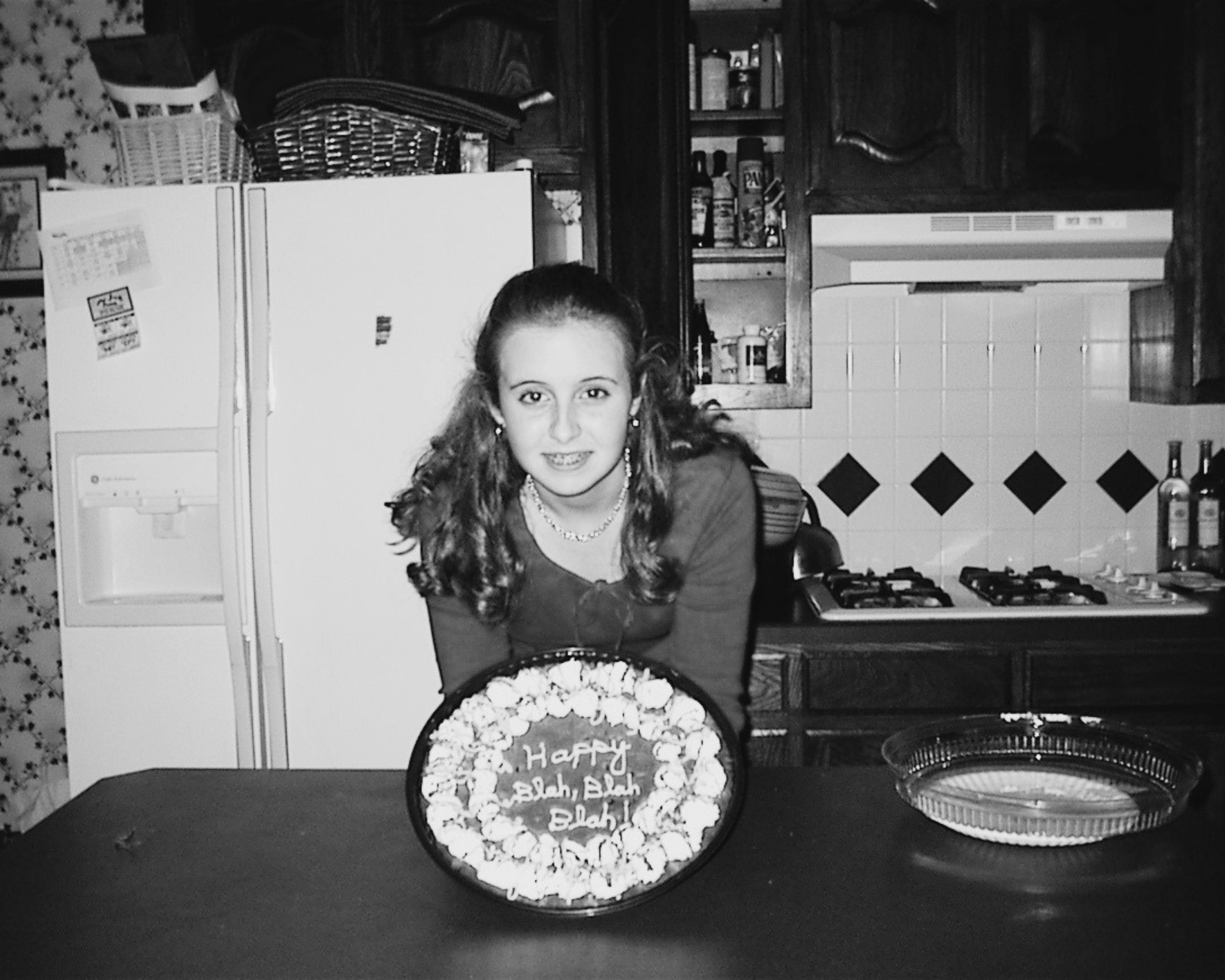
Ridicule was often mistaken for intimacy in my father’s kitchen. Nothing says “sweet sixteen” quite like “Happy Blah, Blah, Blah.”
It was a room built to impress, and my father made incredible meals there. Buttermilk fried okra, medium-rare steaks and cast-iron cornbread, tortilla chips warmed and spritzed with lime. He loved to experiment with techniques picked up from his insomniac Food Network marathons after which I often found him at five a.m., passed out on the couch in his tighty-whities.
But for us kids, learning in that kitchen was impossible. My father was either silent or explosive; there was never anything in between. Fear makes a terrible teacher, and everything from the angle of your knife to the volume of your breathing could set him off. He called us names that lodged under the skin, threw newspapers at our heads when we made mistakes, and sometimes pinned us against the counter with all 6 feet 5 inches of his lanky body, just to prove a point.
One Thanksgiving, he locked my teenage stepsister out of the house after a screaming fight in the kitchen. She pounded on the front door just a few feet from where we sat at the dining table, crying and begging to be let in. No one moved. Not her mother, not her aunt and uncle, not even my step-grandmother. Everyone just kept chewing in silence, eyes fixed on their plates, pretending not to hear.
The paradox of my father’s kitchen was that it contained the best food I’ve ever eaten and the worst moments I’ve ever experienced.. Birthdays meant fried chicken fingers, perfectly crisp on the outside, steamy and tender on the inside. Weeknights might bring twice-baked potatoes with shreds of cheddar and neat little rings of scallion, or steak grilled with the kind of precision you can’t learn from a cookbook. He gave us luxury on shiny new plates, but it never felt like love. It felt like a test.
I didn’t understand it then, but each of my family’s kitchens had its own language for love, one that fed us and failed us in the same breath.
When he wasn’t cooking, my father drank whiskey and water over crushed ice, dispensed from the automatic ice machine in the refrigerator door. Twenty years later, automatic ice machines still feel like the height of luxury to me. My stepmother preferred boxed rosé, poured into a stemmed wine glass which she carried back to their bedroom where they binged bad television. She was thin, the kind of woman who blow-dried her hair before work and reapplied lipstick before dinner. She worked at a bank and kept everything in its place: her nails, her pocketbook, her affection. She was everything my mother was not.
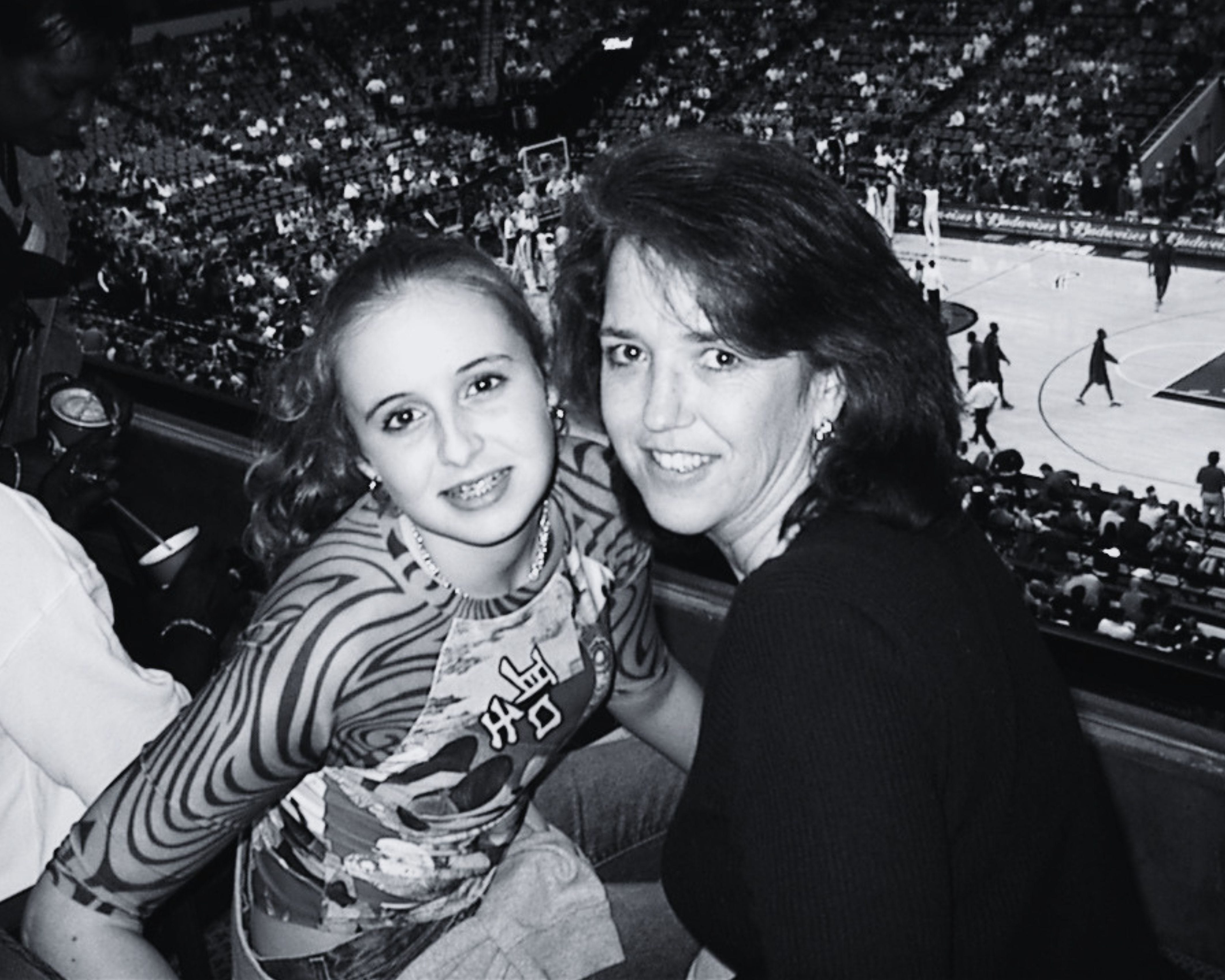
The only picture I have of my stepmother and I together. Proof that free NBA tickets can accomplish almost anything.
Every Wednesday night, my mother drove an hour into the suburbs to pick us up from my dad’s house for dinner. It was court-ordered visitation by way of fast food. She wasn’t allowed inside my father’s house. He made me tell her that in sixth grade, a humiliation I’ll never forget. I remember her trying to step over the threshold, me standing there with my small body braced against the round hump of her stomach, pushing back as gently but firmly as I could. “Move, Kelsey!” she said, irritated. And that was when I had to deliver it: “Dad says you can’t come in.”
My parents hadn’t spoken since their divorce seven years earlier except through handwritten notes my sister and I passed as the unlucky go-betweens. That day, my mother stepped inside just long enough to burst into tears and collapse onto the living room couch while my stepmother looked on with impatience and my father with nothing at all, just silence, waiting for her to leave. After that, she idled at the curb on Wednesday nights until we piled into her station wagon.
For one meal each week, we traded one set of neuroses for another. My mother was awkward, messy, and emotional. She let us order whatever we wanted, laughed too loud, and sometimes cried in the middle of a booth. Compared to my father’s cold, withholding silence, her chaos felt like relief. She got to be the hero, however briefly, because she showed up as her bumbly, too-much self even if she also left us behind when the meal was over.
I loved her, even when she embarrassed me so badly I wanted to slide under the sticky vinyl booth and hide. I was grateful for her as a counterweight to my icy, terrifying father, even if I sometimes wished she loved us enough to take us home with her. To free us from the fear and cruelty of his house even if it meant a poor school district, a sagging trailer, and her oddball liberal-redneck boyfriend who grew banana plants and sold fireworks. That life would’ve been messy, maybe even damaging in its own way, but as a teenager, I just wanted her to save us.
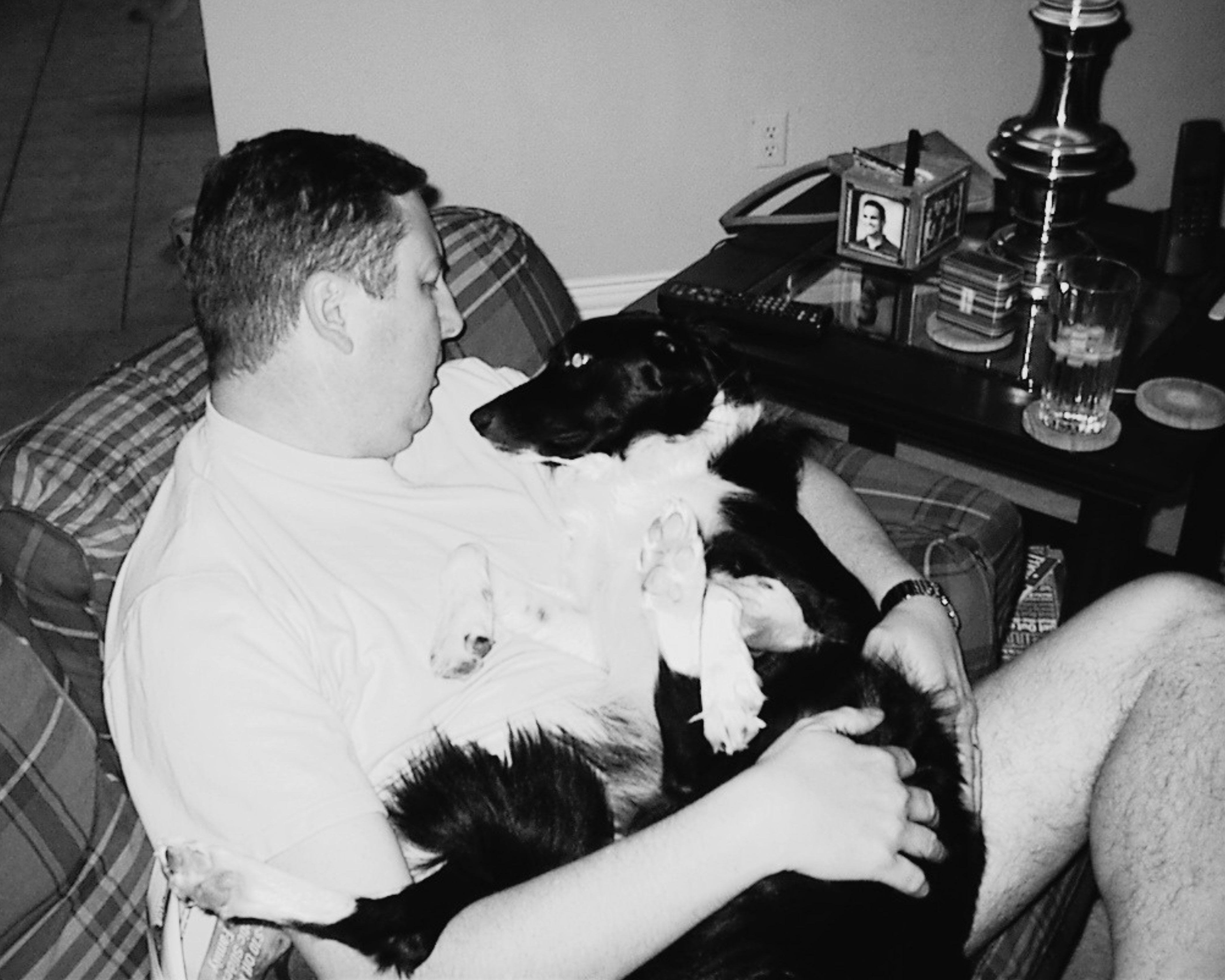
The only relationship in my father’s life that never seemed particularly complicated.
But love in my family was always tangled up with appetite. The things we craved, the things we silenced, and the things we survived. My mother had already survived two suicide attempts, an ugly divorce, and the isolation of being a liberal in the conservative countryside of Northwest Texas.. She would go on to survive obesity too, at least for a time, until its companion diseases wore her down.
I always felt safest at my grandparents’ house, and I think my mother did too. The kitchen there smelled like cheese and browned butter and deep comfort.
When fireworks season ended and I didn’t yet have to return to my father’s suburban terror, we’d spend long summer days back at my grandparents’ house while my mother worked at the family clinic. Lunch was oversized hamburgers served with salty, ridged Ruffles potato chips. My grandparents drank what I thought was Sprite out of insulated Dairy Queen travel mugs; only years later did I learn it was spiked with vodka. My sister and I happily rollerbladed up and down the driveway, while they sipped and read their paperbacks, tucked into folding lawn chairs.
It was calm there, at least. A house with full bookshelves and homemade snacks, with pimento cheese sandwiches and lazy afternoons tangled into the couch beside my grandmother, her soft body smelling faintly of Lubriderm. On the hottest days, my grandfather would load us into his pontoon boat and drag us across the lake on an inflatable tube, our neon life vests riding up to our chins. The water was always murky, teh breeze hot and humid, but my grandparents radiated joy just being out on the water. I remember the taste of Ruffles the most, salty and sharp, and the Sprite before it was hidden from the grandkids.
Most of all, I remember being back at their house and sharing the anticipation with my grandmother as we waited for my grandfather’s perfect cheese toast. I used to think it was just a funny oddity of my family. Now I think it was a kind of devotion. Our way of saying love was worth the ache. We’d sprawl on the couch under the hum of central AC with Murder, She Wrote flickering on the TV. We’d watch Angela Lansbury outsmart everyone on screen while keeping one ear tuned to the broiler’s hiss. He wouldn’t pull it out until the cheddar was bubbling, crisped at the edges but not yet burnt. Then we’d eat together, bellies soft and full, just before the inevitable rumble sent us racing down the hall.
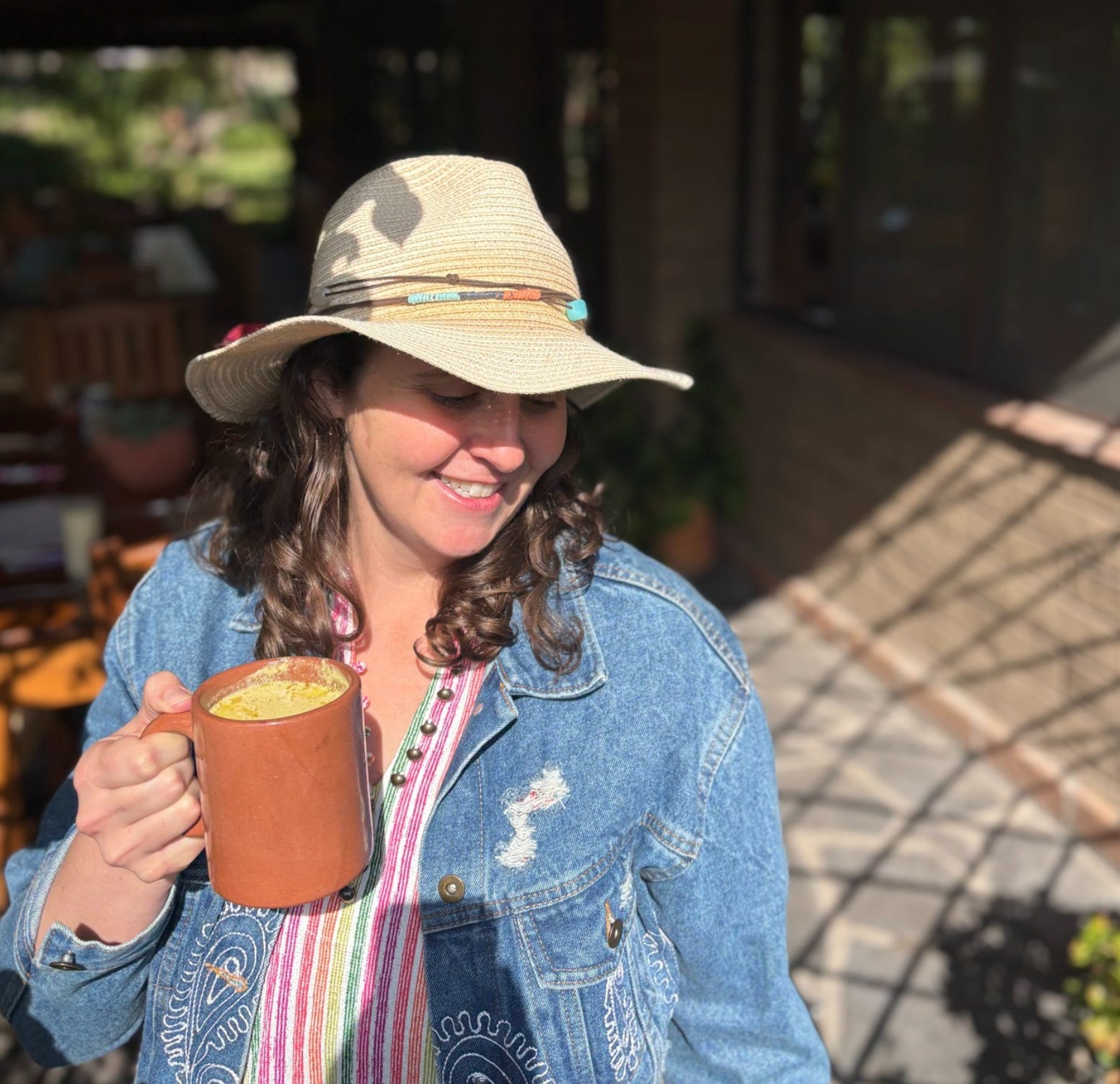
Still here? Bless your heart. If you’d like more Cheese Toast with White People, more odd family stories, or more ways to work with me before the cheddar burns, here’s where to go next.
August 7 & 28: I'm teaching a two-part DIY Cookbook Proposals workshop with the Food Writers Business Lab for cookbook authors who want to build a proposal for traditional publishing.
September 9: Write Up’s Book Proposal Intensive begins again. Join our 12-week workshop for turning your book into a polished, submission-ready proposal with community support and personalized feedback.
October 2: I'm moderating The New Landscape of Food Memoir, a conversation with editor Vivian Lee and memoirists Hannah Howard and Krys Malcolm Belc about writing and publishing food memoir today.
October 27: I'll be joining a national panel on ghostwriting for the Women's National Book Association, discussing the craft and business of collaborative writing.
Anytime: Join our Write Up circle community. A cozy, chaos-free corner of the internet for anyone working on their first book! Two ways to join.
Want more? My newest essays cover boundaries for ghostwriters for the Authors Guild and grief, motherhood, and family for TalkDeath.
Thanks for being here.
Comments
Nothing yet. Say the first thing.
Sign in to join the conversation.