

The other morning on my commute into the city, I looked around the train carriage and realised almost everyone was staring at a screen.
I’d guess around 95% of the passengers had their heads tilted down, scrolling through something. TikTok. Instagram. Emails. News. Games.
Every few stops, someone would briefly look up before instinctively returning to their phone.
Occasionally, I’d spot someone reading a book, and it almost felt refreshing. Then another thought crossed my mind. I can’t remember the last time when the normal thing to see in a waiting room, train station or bus was people not on their phones.
When did we become so uncomfortable with simply... waiting?
There was a time when waiting wasn’t something to fill. You’d look out the window. People-watch. Let your mind wander. Maybe you’d strike up a conversation with a stranger or simply sit with your thoughts.
Now, almost every spare moment has become another opportunity to consume.
Research suggests we now spend an average of 4 hours and 47 minutes on our phones every day. Short-form video has become one of the most dominant forms of media, with almost 87% of internet users watching it each week. What began as a quick distraction has quietly become the backdrop of everyday life.1
Platforms like TikTok, Instagram Reels and YouTube Shorts aren’t just entertaining—they’re incredibly effective at holding our attention. Every swipe offers something completely different: a travel video, a recipe, a funny clip, breaking news, life advice or a story that ends in a cliffhanger. That constant novelty keeps our brains anticipating the next reward.
Researchers call one consequence of this scroll immersion—a state where people lose track of time and continue scrolling much longer than they intended. The issue isn’t necessarily how many hours we spend online. It’s when checking our phone becomes automatic, when we unlock it before we’ve even asked ourselves why.2
I’ve caught myself opening Instagram, closing it, then reopening it a few minutes later. Not because I wanted to see something. Simply because my brain had learned that every quiet moment should be filled.
The more I noticed that pattern, the more I realised I didn’t actually want to spend less time on my phone because phones are “bad.” I work in social media, and I’m grateful for what my phone has given me—staying connected with people and even helping me make a living.
What I wanted was to stop craving it.
I wanted to feel like I was choosing when to pick it up instead of reacting automatically.
So instead of attempting a dramatic digital detox, I’ve been making small changes that gently retrain my habits. None of them is groundbreaking, but together they’ve made my days feel calmer, more intentional, and surprisingly more creative.
For this week’s newsletter, I’m continuing my anti-rot agenda series, sharing a few ways to support yourself if you’ve been struggling with phone addiction. It’s an extension of what I’ve been exploring over on Instagram and here on Substack—looking at how to reduce screen time and slowly replace the urge to doomscroll with something more intentional.
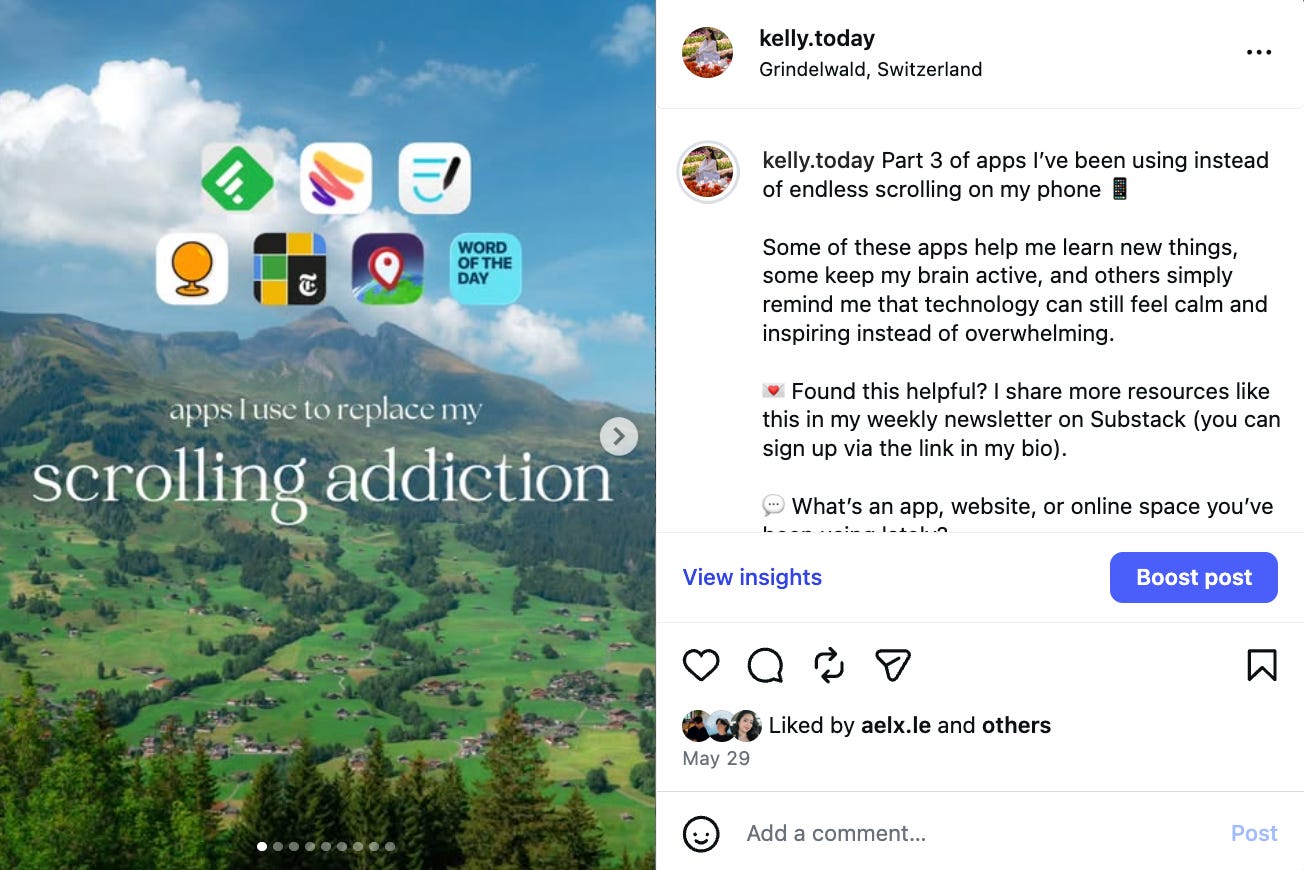
This post is part 4 of my anti-rot agenda, a monthly series where I share tips, habits and resources to help you elevate your life.
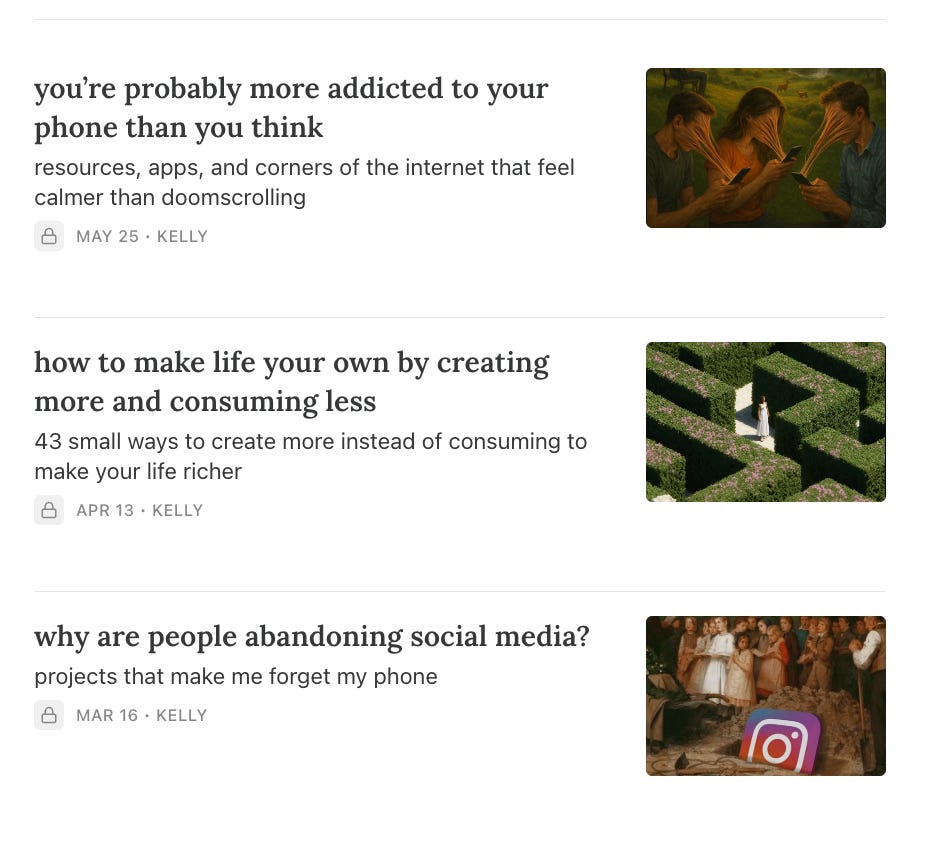
Helpful resources for you:
track all your favourite films and shows using a media tracker template.
organise all your reading and books with my book notion template
earn cash shopping with your favourite brands online with TopCashback

In case you’ve missed out, here are a few popular posts loved by you:
things I never expected to be grateful after living in South Korea
Part 2 of free resources you should know about that make learning and reading feel easier
Here’s what it’s like to experience glamping in Western Australia
Long-form content
Part 15 of articles worth reading in your twenties
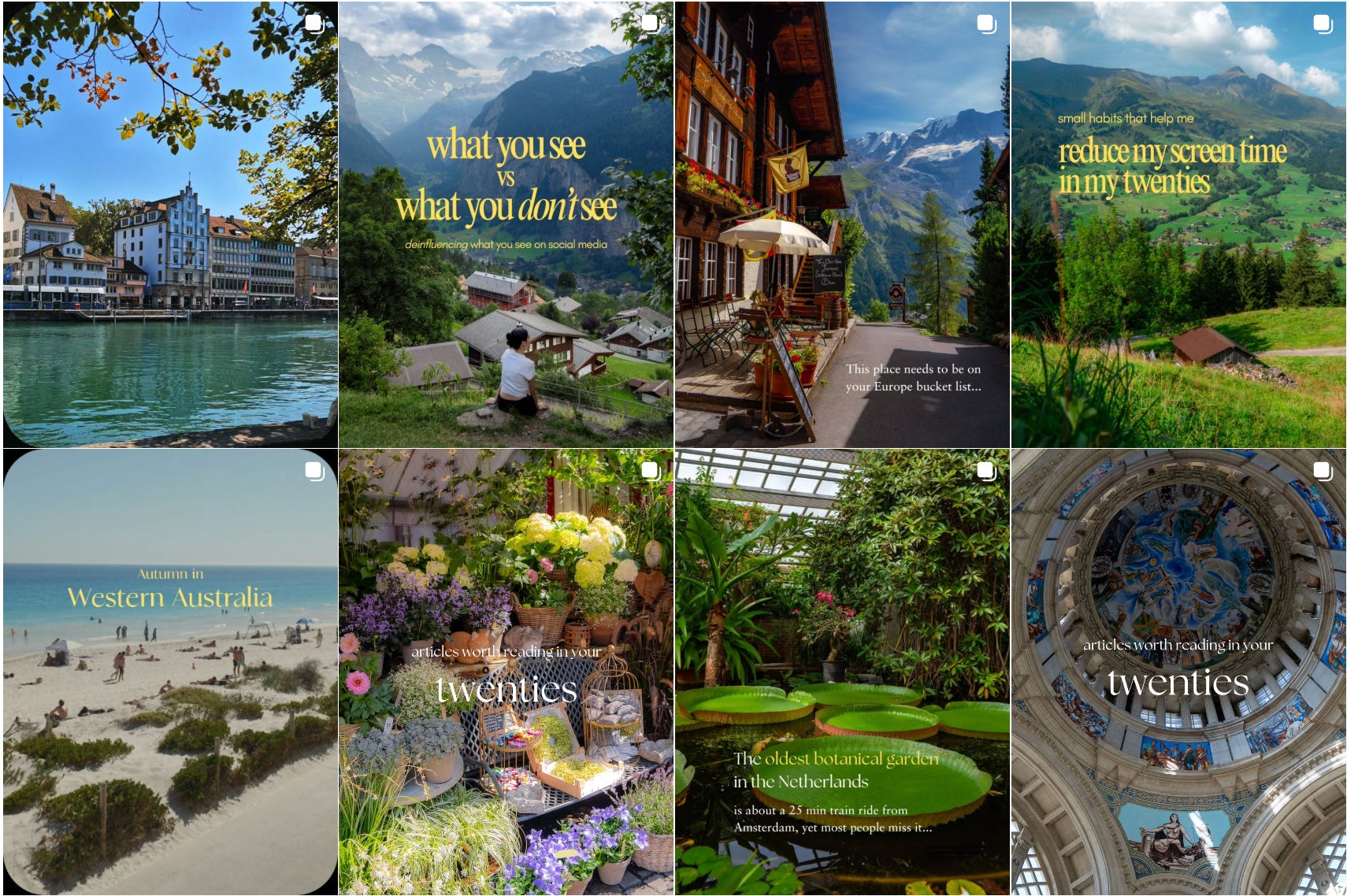
The rest of this post is for paid subscribers, and here’s what you can expect:
List of habits to help reduce your screen time on your phone
List of helpful resources for replacing your scroll addiction
Access to my full archive of previous pay-walled content.
An exclusive growing collection of community Q&As, where I respond to reader questions (and you’re always welcome to send your own). Here are past questions I’ve answered in my paid newsletter:
You’ve shared tips before on how to start investing with small amounts of money. Do you have any tips on what to look at when choosing individual stocks?”
What are some lifestyle shifts you should make in your twenties to prepare for your thirties?
Could you share more about your investment journey (how to start) and your financial goals?
It’s $7 for the month (the price of a cup of coffee), but the knowledge you might learn might change your career, productivity and life in between for the better, just like it did for me!
Comments
Nothing yet. Say the first thing.
Sign in to join the conversation.